





About this worksheet
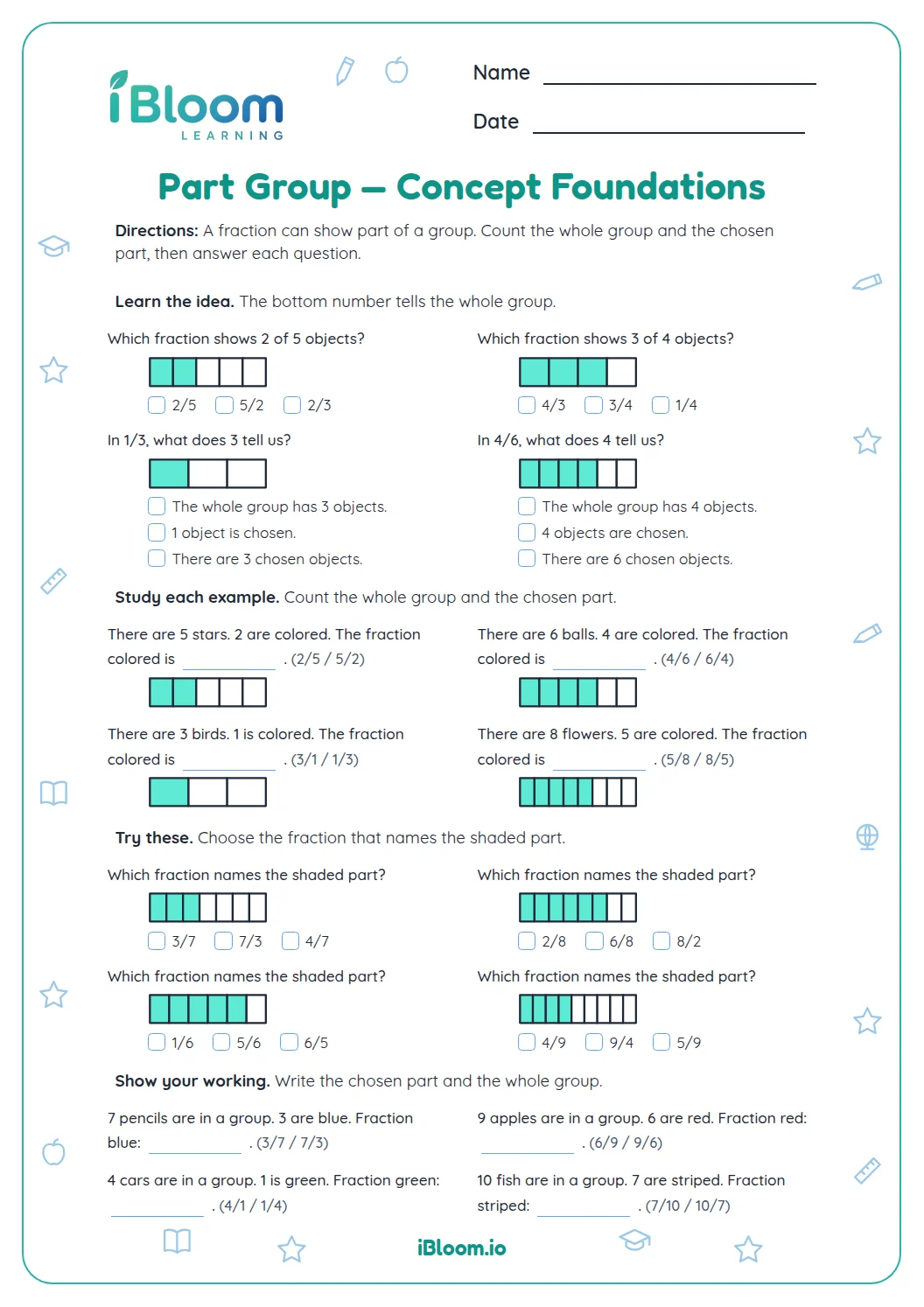
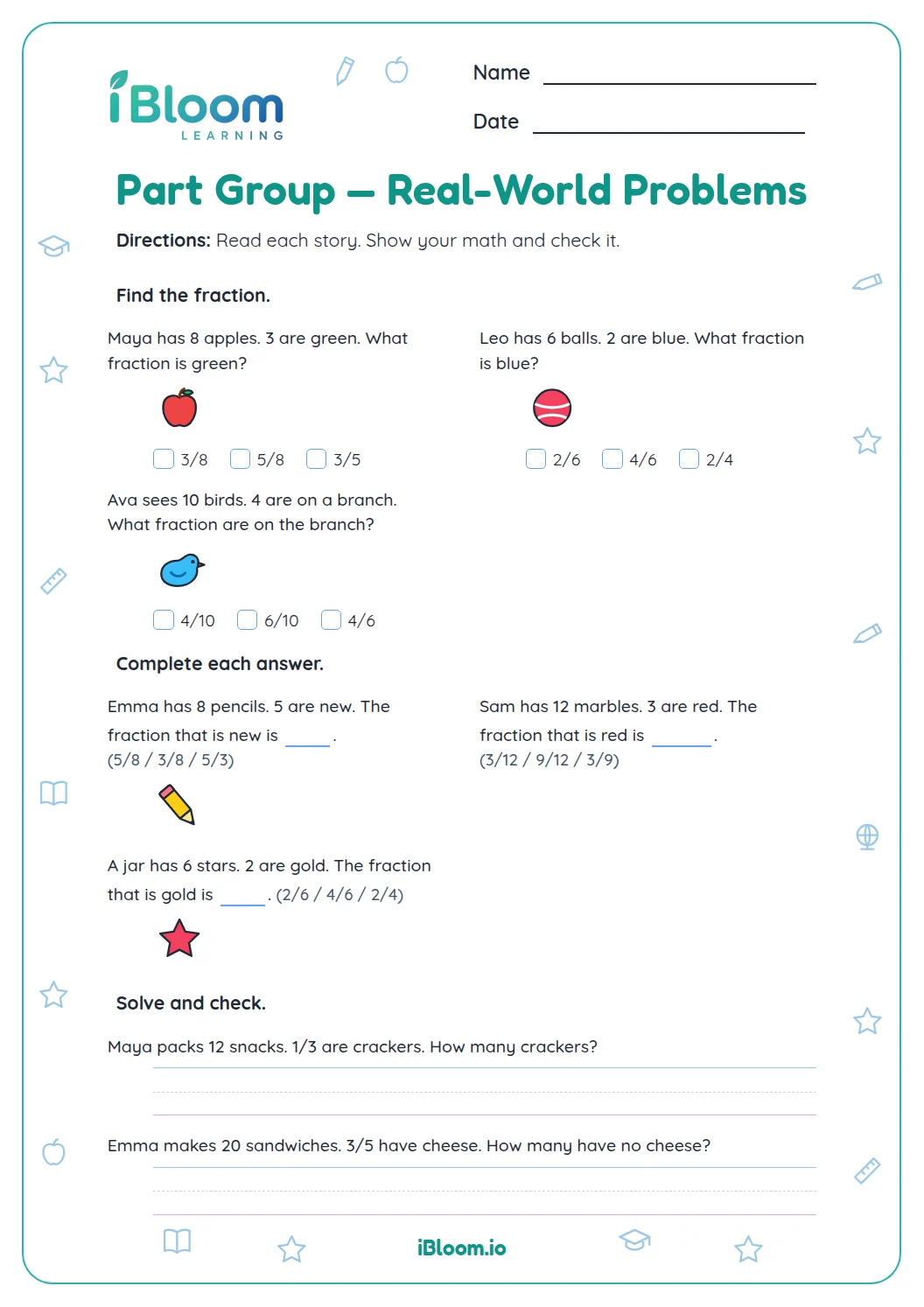
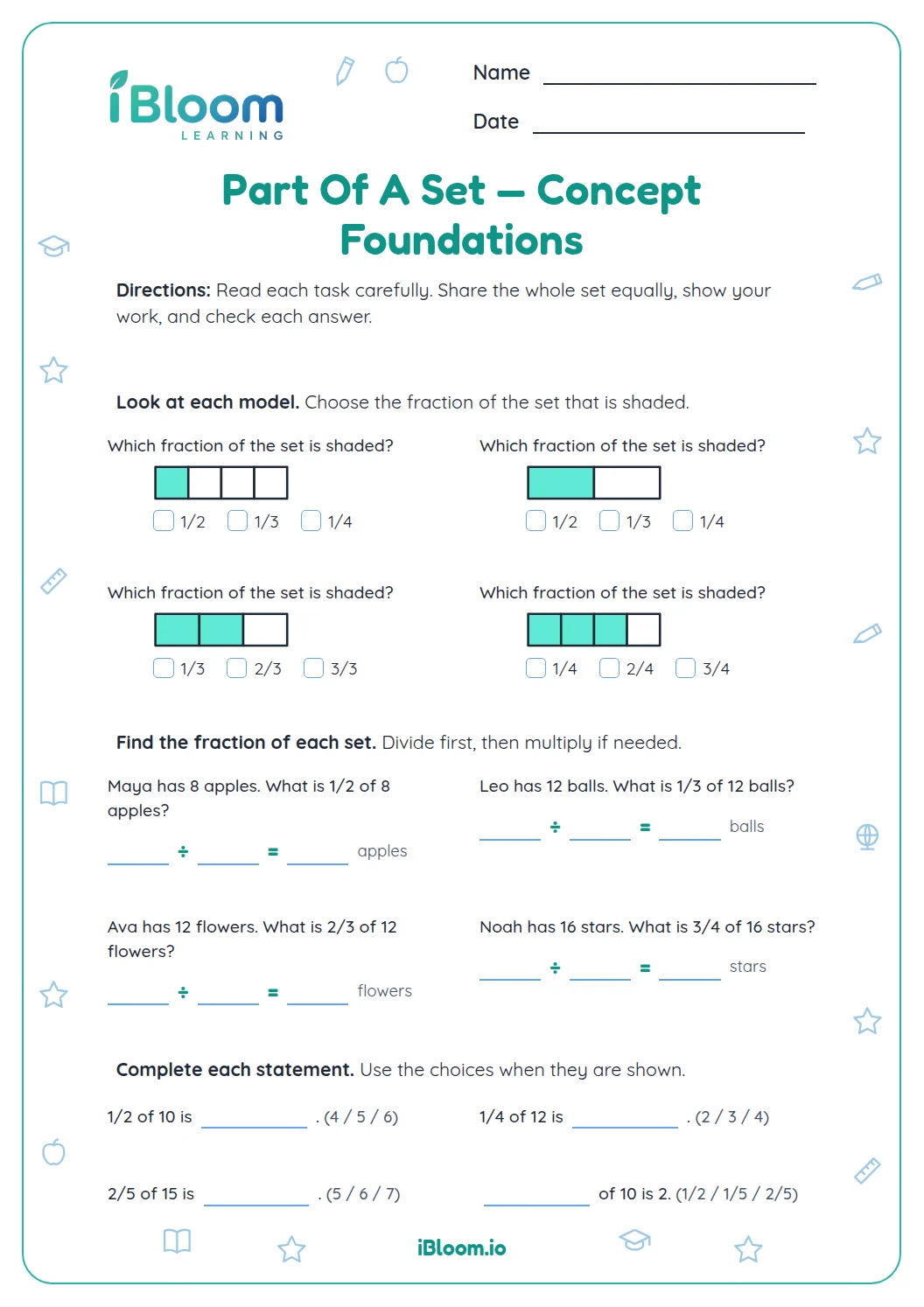
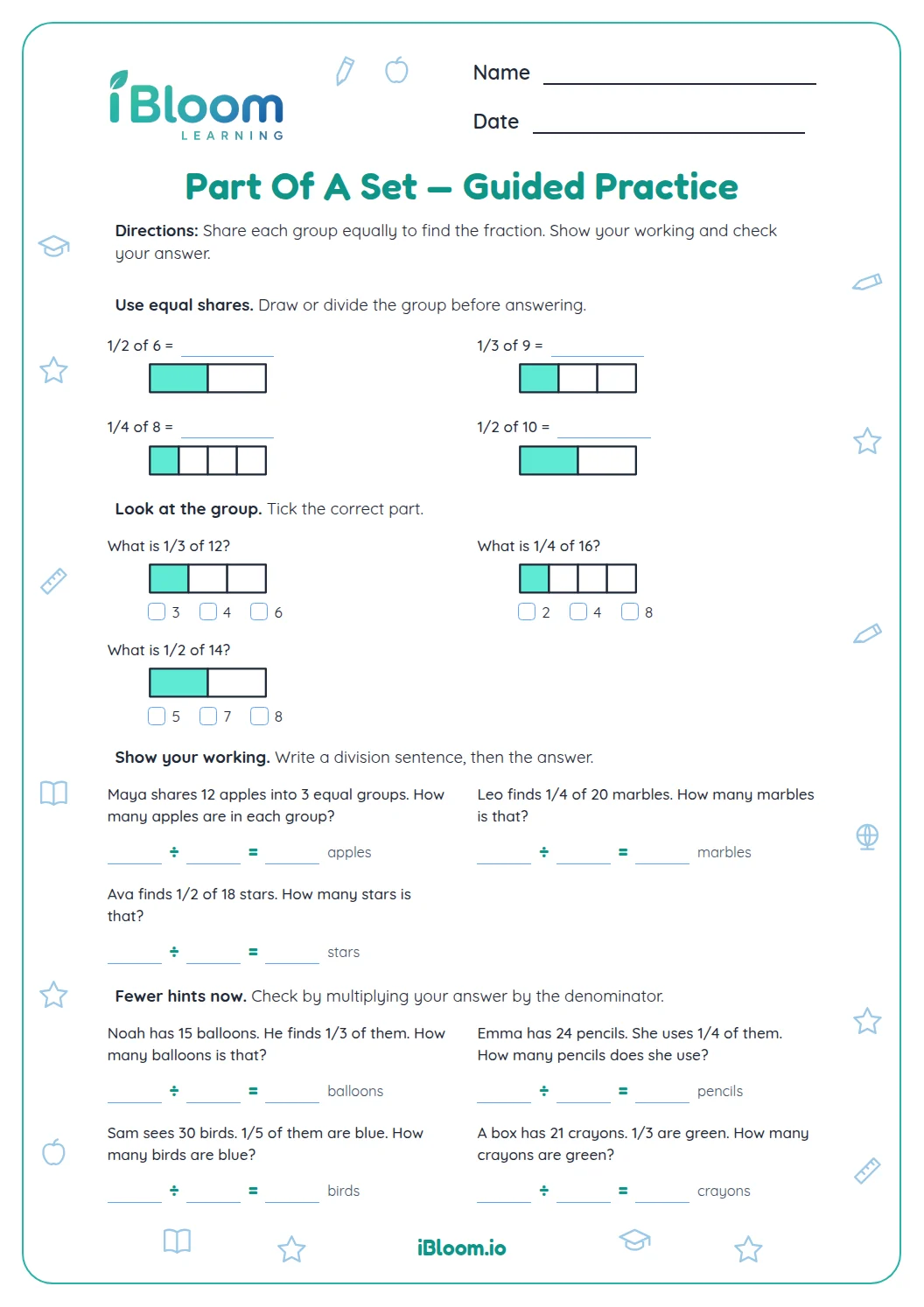
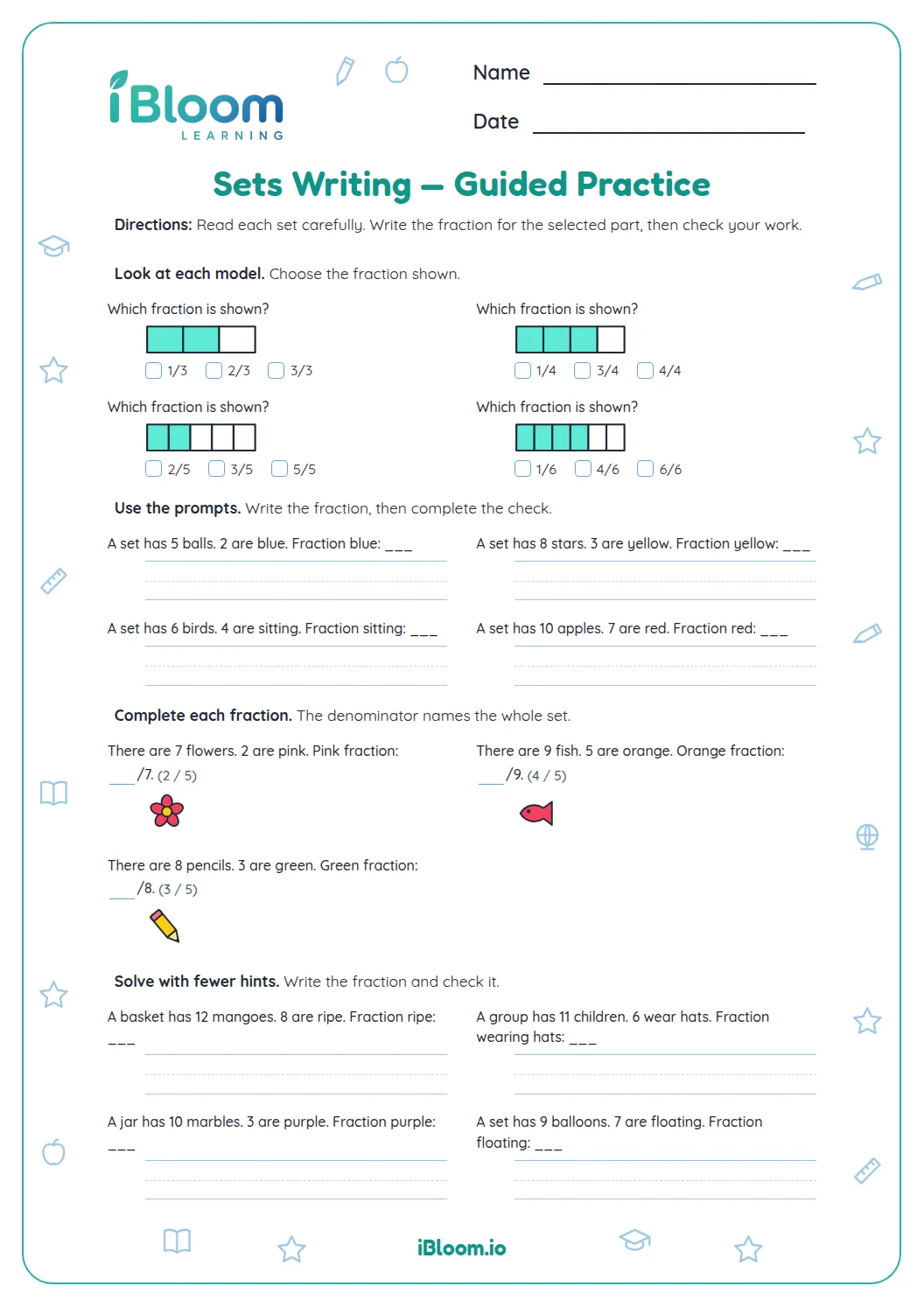
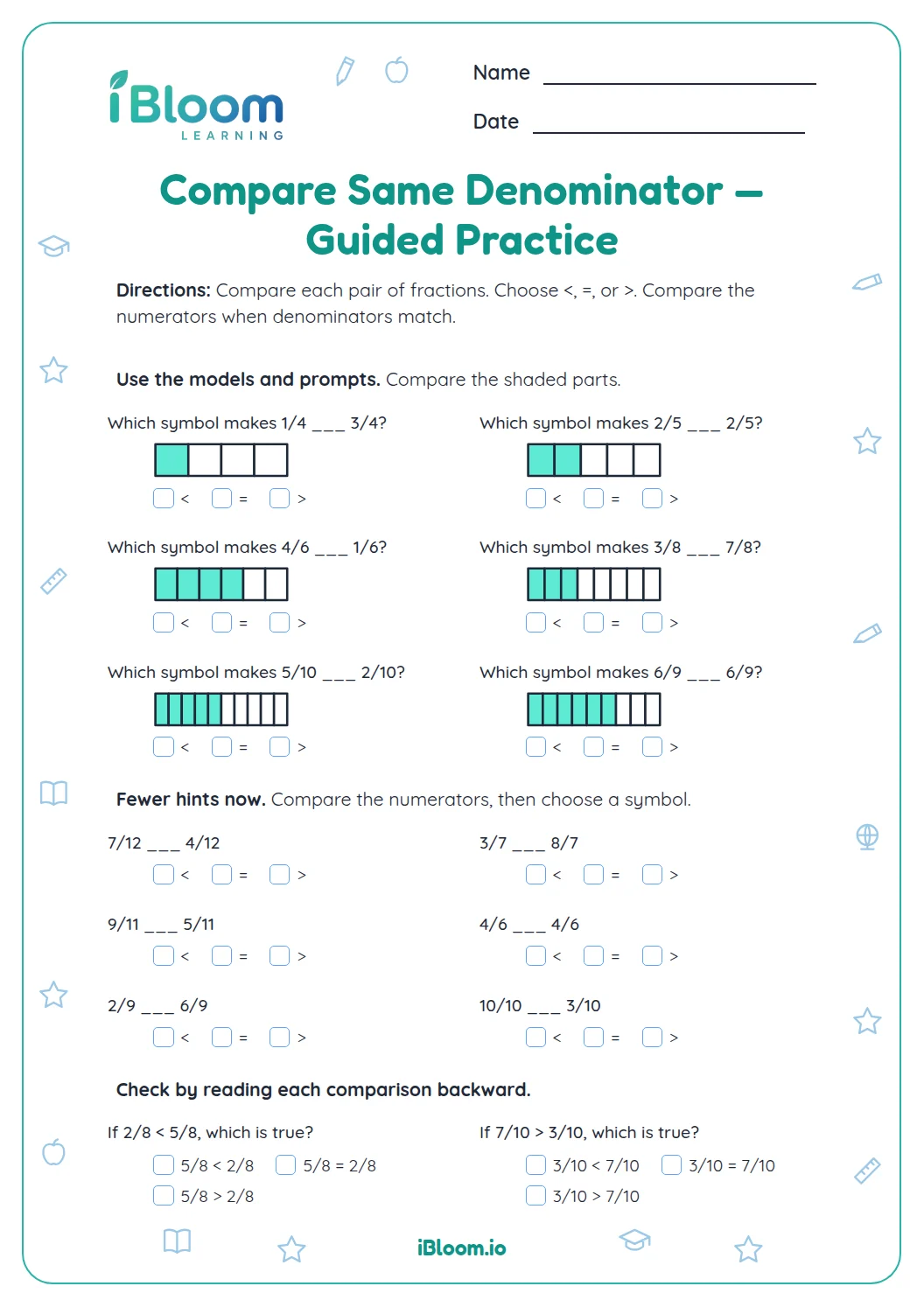
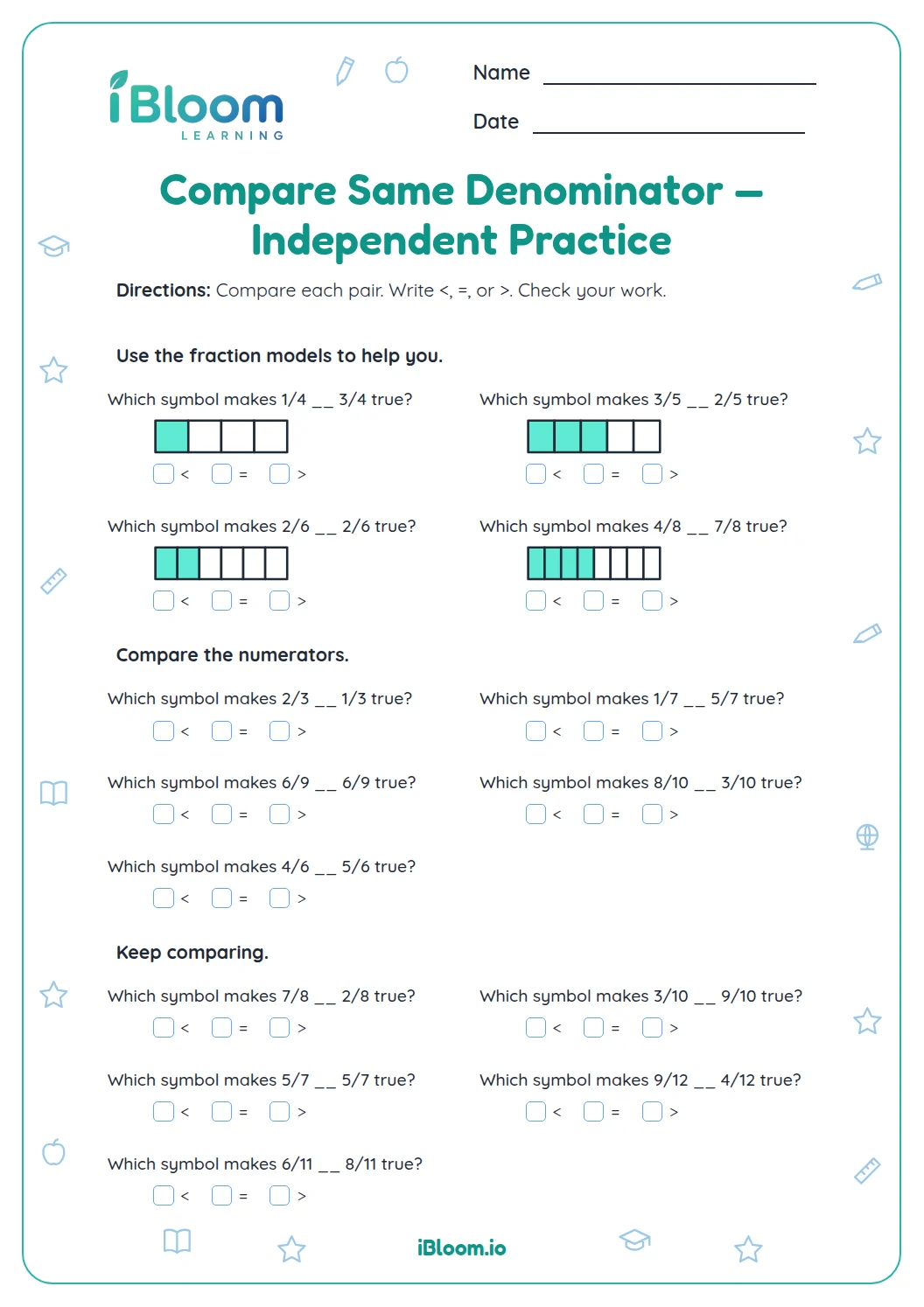
This Grade 2 fraction worksheet begins with four shaded bars, then gives ten short descriptions of groups. Children count the selected objects for the numerator and all objects for the denominator, then choose the matching fraction. The separate answer key marks the correct fraction for each model and group.
Aligned to 3.NF.A.1
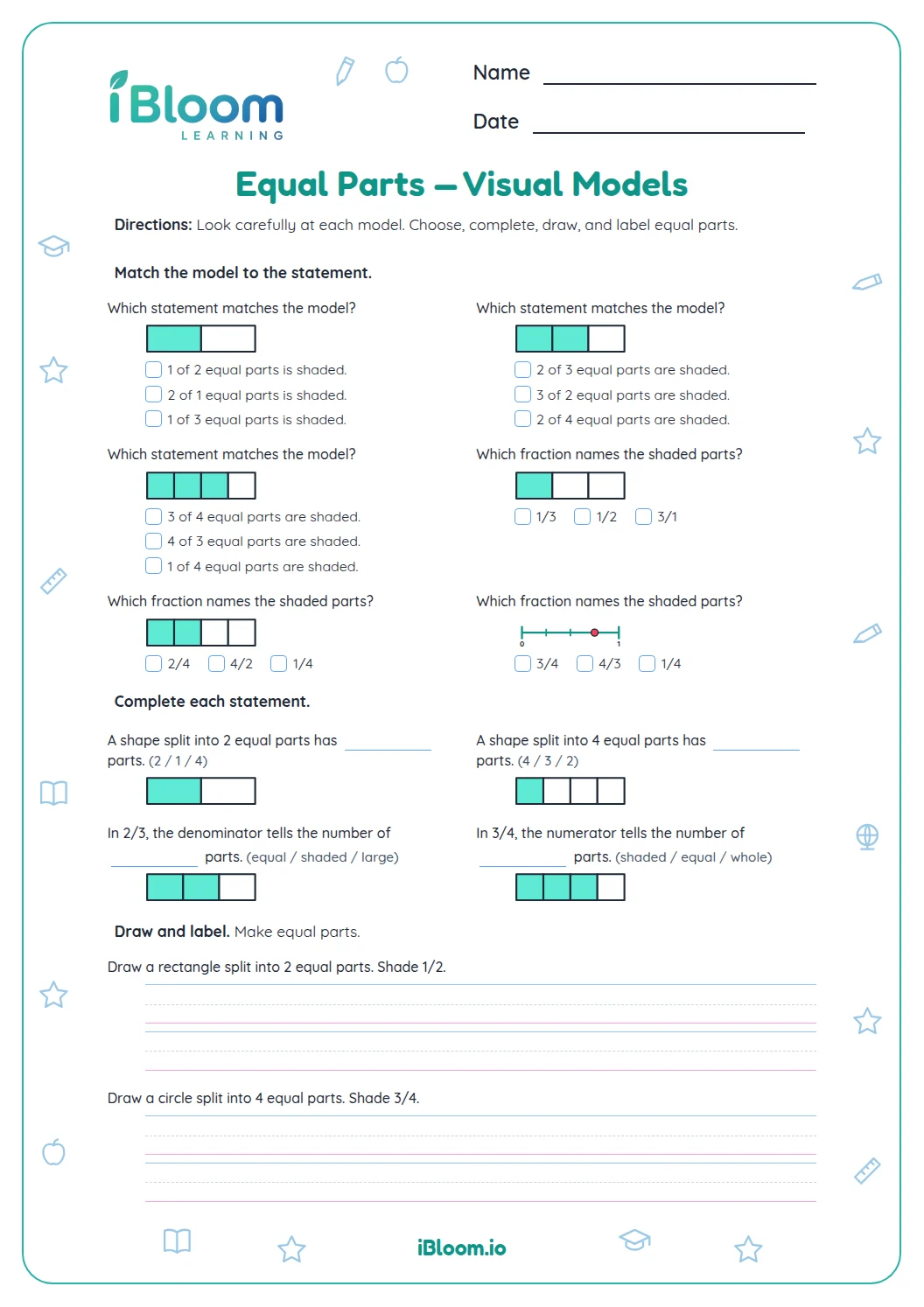
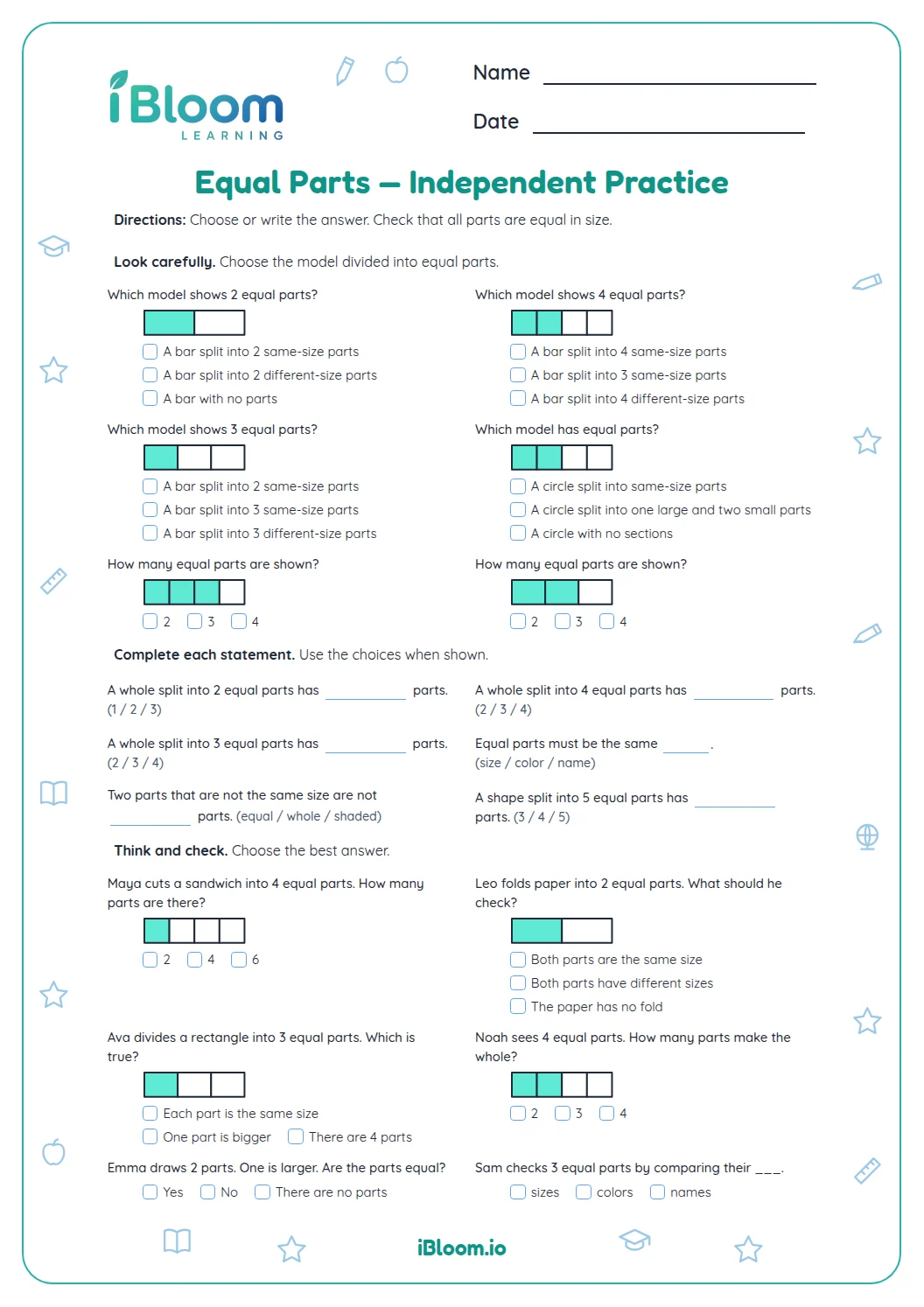
What is the whole in each bar?
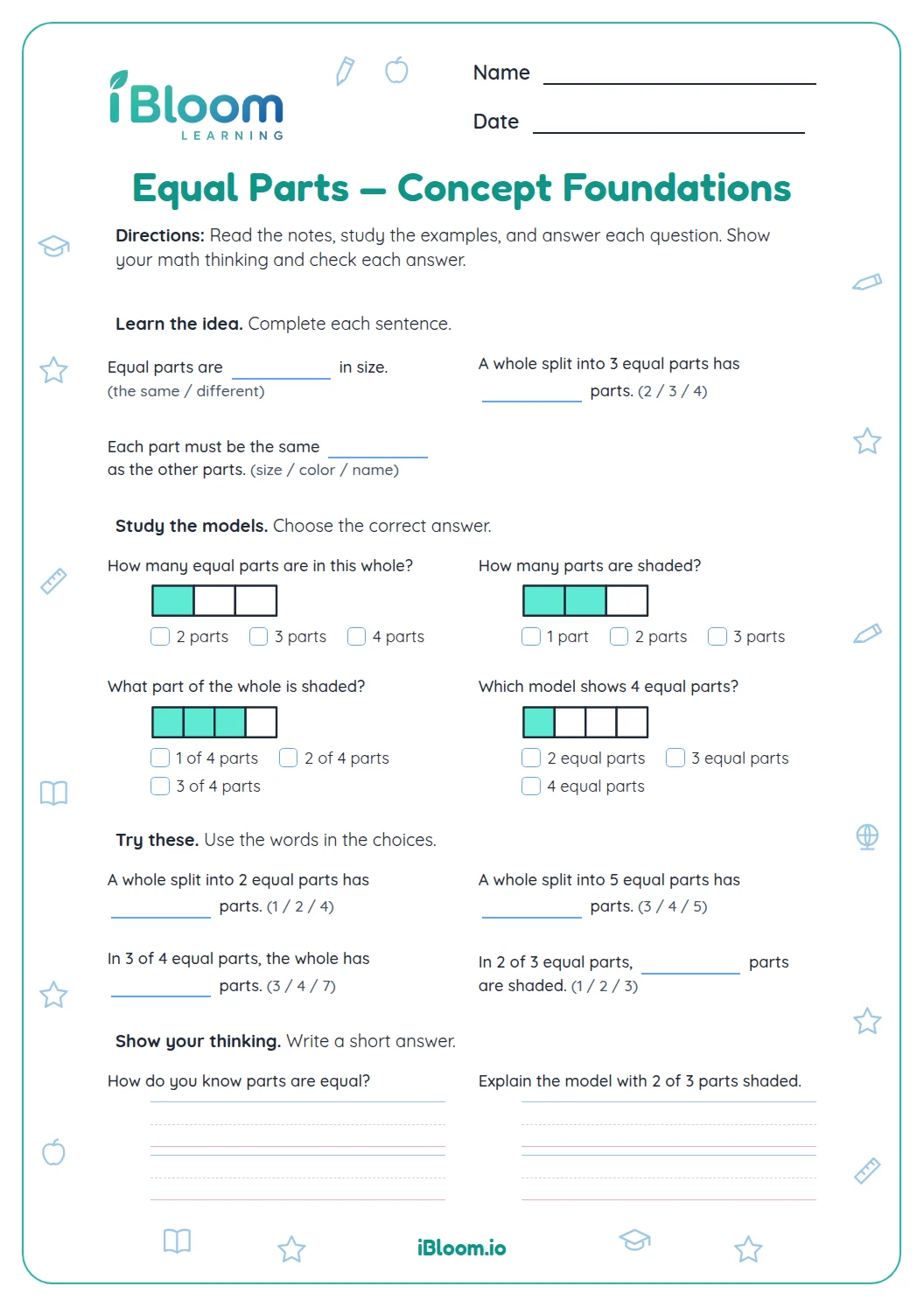
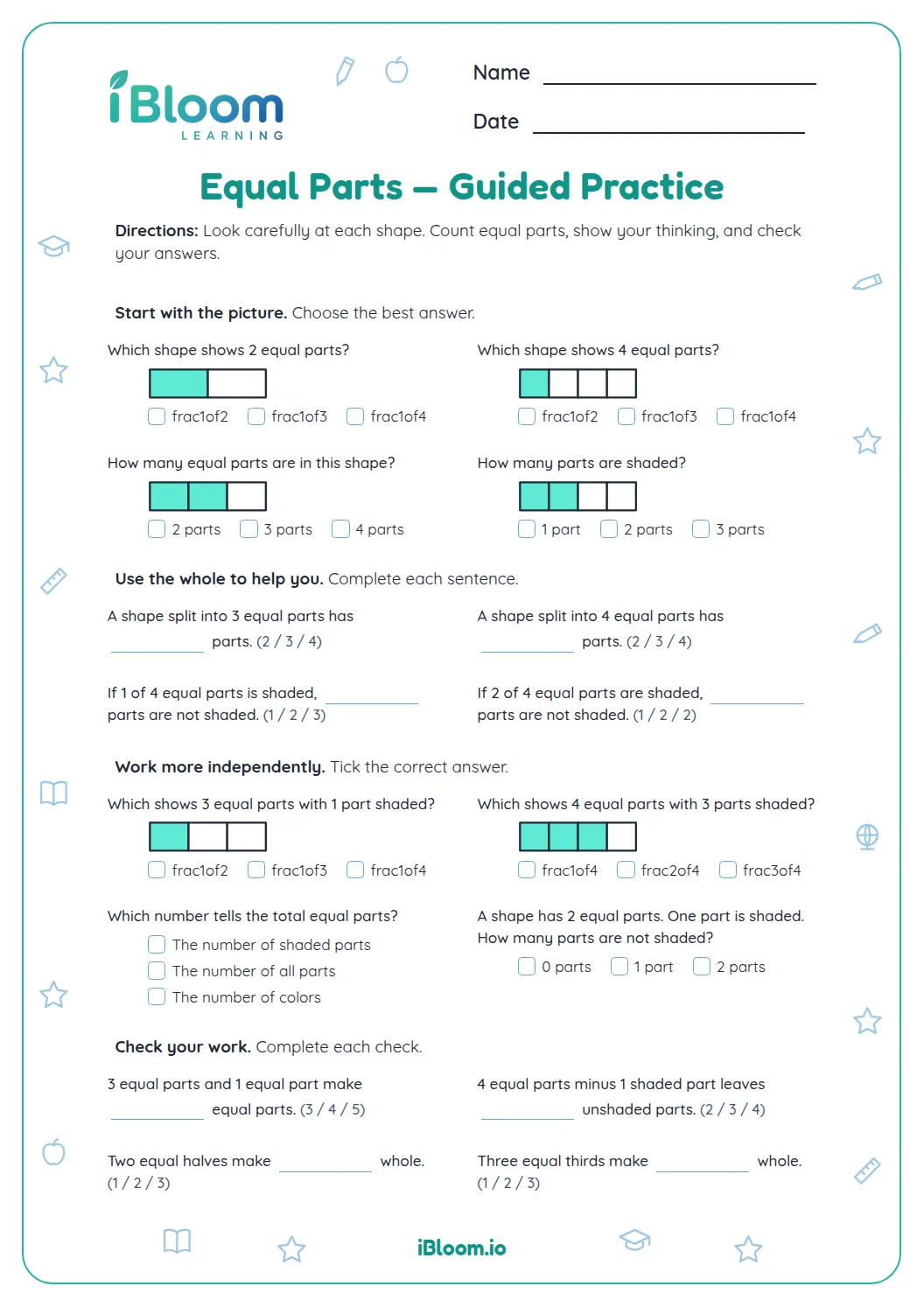
Each complete bar is one whole. Its equal sections show how that whole has been partitioned. Count every section, not only the shaded ones.
Which number counts the shaded parts?
The numerator is the top number. It tells how many equal sections are shaded. In question 2, two sections are shaded.
Which number counts all equal parts?
The denominator is the bottom number. Count every section in the bar, including the unshaded sections. Question 2 has five equal parts, so its fraction is 2/5.
- 12 shaded parts out of 5 equal parts
- 2Fraction: 2/5
How to use this worksheet
- 1Look at one complete bar.
- 2Count all equal sections for the denominator.
- 3Count shaded sections for the numerator.
- 4Choose the fraction with those numbers in that order.
- 5Check the bar and answer key.
Common mistakes and quick fixes
The mistake
Using the unshaded count as the numerator.
The fix
Count only filled sections for the top number.
The mistake
Putting the total parts on top.
The fix
The total equal parts belong in the denominator.
The mistake
Reversing numerator and denominator.
The fix
Say “shaded out of total” before writing the fraction.
Common Core alignment
Treat each object as an equal share and name a selected part of the whole group.
On this sheet: Children identify how many equal object shares belong to a selected part of each group.
Show the official wordingHide the official wording
Understand a fraction 1/b as the quantity formed by 1 part when a whole is partitioned into b equal parts; understand a fraction a/b as the quantity formed by a parts of size 1/b.
What to practice next
Make more practice
Further reading
Questions parents and teachers ask
What does the top number count?
The top number, called the numerator, counts the shaded equal parts. For example, if three sections are shaded, the numerator is 3. Count the shaded sections first, then count all sections for the bottom number. Encourage the child to point to each counted section on the bar so the two numbers stay connected to the model.
What does the bottom number count?
The bottom number, called the denominator, counts every equal part in the complete bar. Include both shaded and unshaded sections. The denominator names how many equal parts make up one whole. Encourage the child to point to each counted section on the bar so the two numbers stay connected to the model.
Does each bar show one whole?
Yes. Each complete bar represents one whole split into equal sections. The shaded sections show the fraction being named. Children should count the entire bar before choosing an answer. Encourage the child to point to each counted section on the bar so the two numbers stay connected to the model.
How can I help with question 2?
Ask the child to count the equal sections across the full bar, then count the shaded ones. Question 2 has five equal parts and two shaded parts, so the matching fraction is 2/5. Encourage the child to point to each counted section on the bar so the two numbers stay connected to the model.
Are the answer choices simplified?
The choices use the numerator and denominator shown by each bar. Children should select the fraction that matches the count of shaded parts over total equal parts, without changing that count. Encourage the child to point to each counted section on the bar so the two numbers stay connected to the model.