



About this worksheet
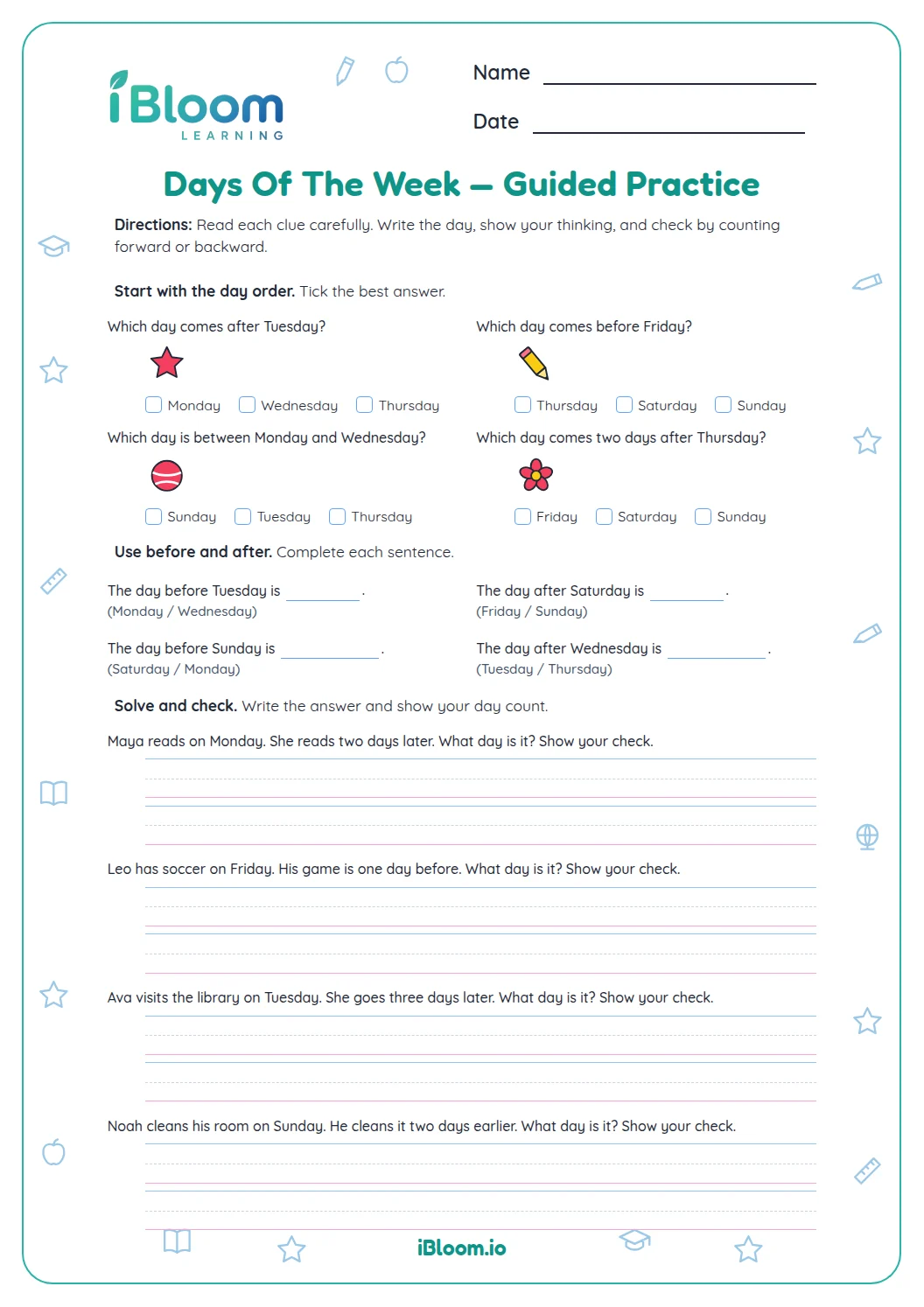
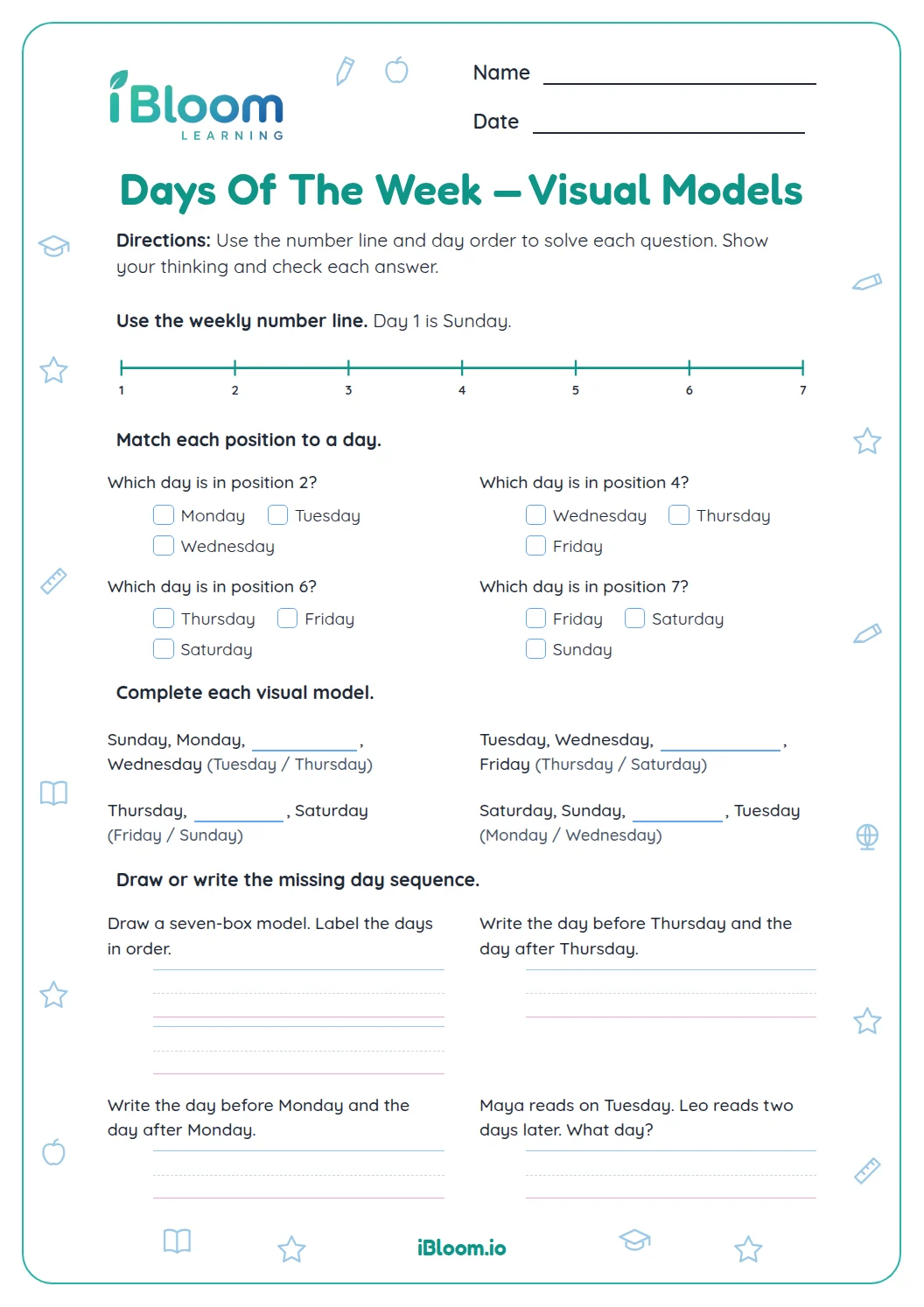
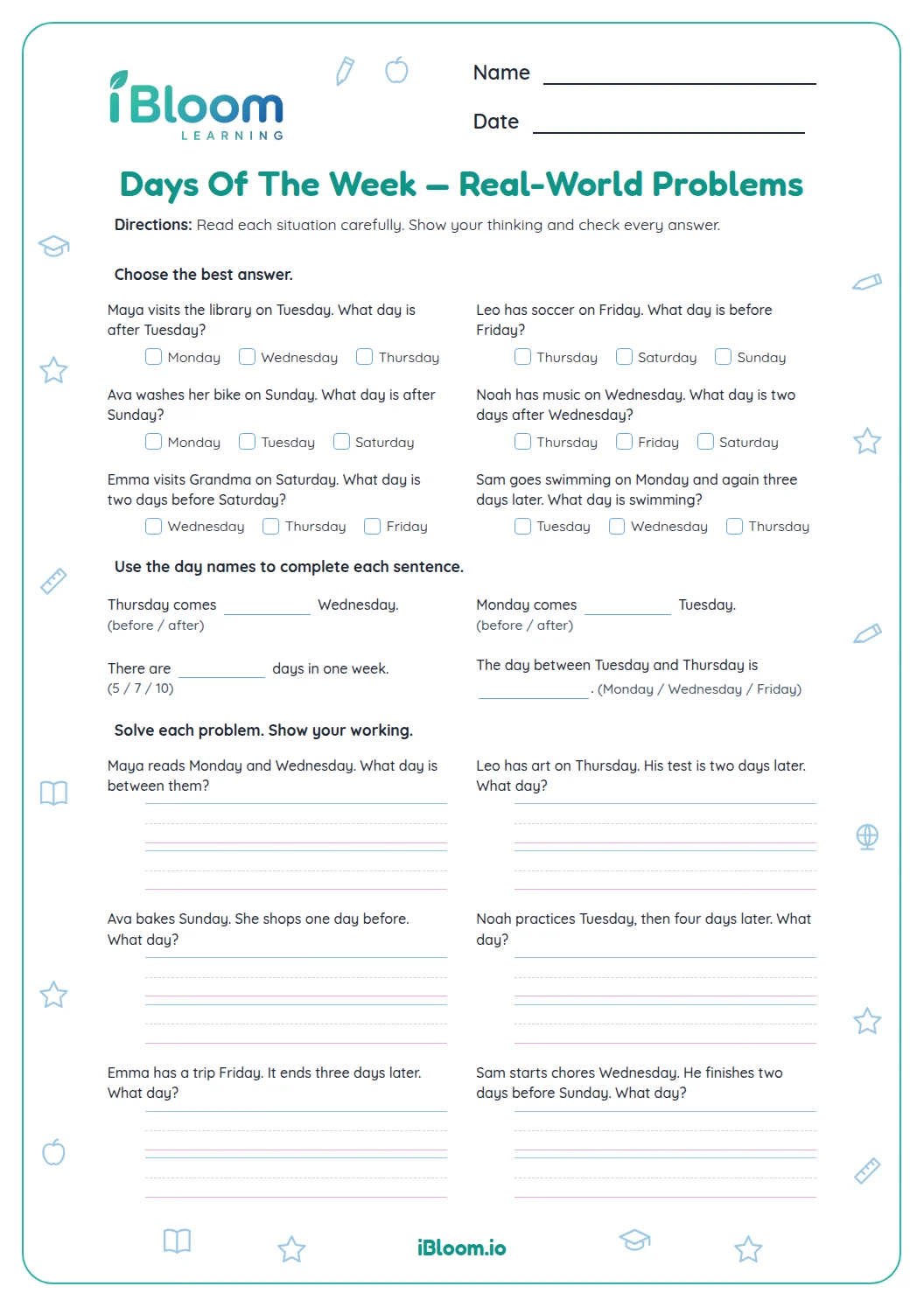
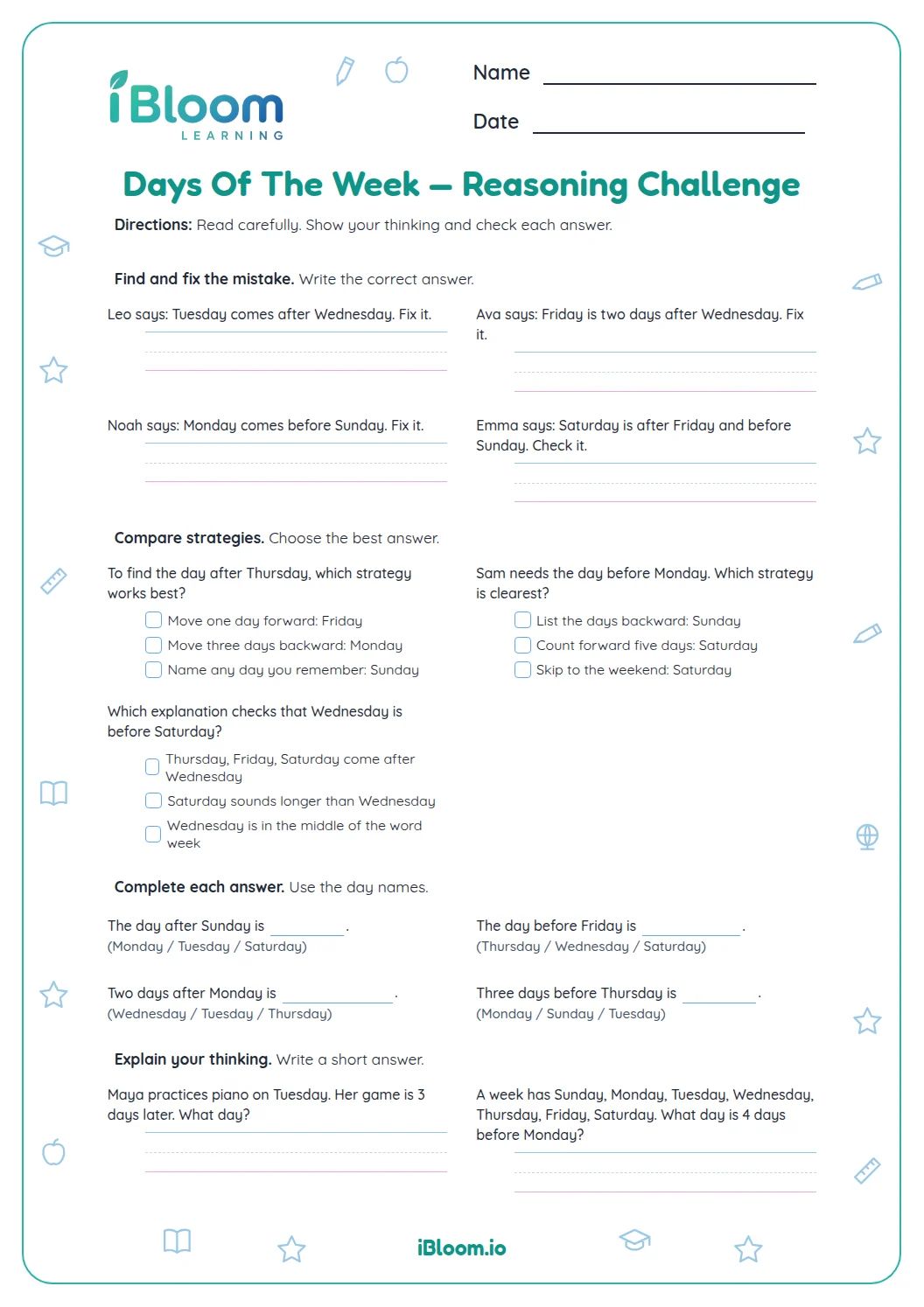
This printable Grade 2 worksheet gives children 16 chances to work with the seven days of the week. They choose, name, and sequence weekdays using before-and-after clues and short calendar situations. The answer key supports independent checking.
How do the days of the week fit in order?
The seven days repeat in the same sequence. A child can start with any named day and move forward to find what comes after it, or backward to find what comes before it.
Question 10 says the game is one day before Sunday. Moving back one day gives Saturday.
- 1One day before Sunday
- 2Move back one place in the week
- 3Saturday
What does this independent practice ask?
The 16 questions begin with day-order choices, then ask for a day before or after, apply a short calendar clue, and write short sequences. Across the page, children practice all seven weekday names.
How to use this worksheet
- 1Say the days in order once before beginning.
- 2Read whether the question asks for the day before or after.
- 3Move one place in the repeating week sequence.
- 4For a sequence, write each day in order and check the start and end days.
Common mistakes and quick fixes
The mistake
Moving forward when the clue says before.
The fix
Point to the named day, then step one place backward.
The mistake
Skipping Sunday when the week loops around.
The fix
After Saturday comes Sunday; before Monday comes Sunday.
The mistake
Writing weekdays out of calendar order.
The fix
Say the sequence aloud and check neighboring days.
What to practice next
Make more practice
Questions parents and teachers ask
What are the seven days in order?
The days are Sunday, Monday, Tuesday, Wednesday, Thursday, Friday, and Saturday. After Saturday, the sequence starts again with Sunday. Children can also begin at Monday when practicing the school week. Invite the learner to say the days aloud while moving one step at a time.
What day comes before Monday?
Sunday comes before Monday in the repeating week. The worksheet asks children to move one step backward in the sequence, including when the answer crosses from one week to the next. Invite the learner to say the days aloud while moving one step at a time.
Does the worksheet include all seven weekdays?
Yes. The questions use Sunday through Saturday across choice questions, before-and-after clues, and short sequences. Children see and name every day as they work. Invite the learner to say the days aloud while moving one step at a time.
How many questions are included?
There are 16 questions in four parts: weekday choices, naming a day before or after, calendar clues, and writing short day sequences. The items include all seven days and ask learners to move through the repeating week in both directions.
Is this about reading clocks?
The practice focuses on weekday names and their order. The short situations describe a day before or after another day, so children can use a weekly calendar sequence. Invite the learner to say the days aloud while moving one step at a time.
Is an answer key available?
Yes. The separate key lists the correct day or sequence for each item. A child can check the order of a longer sequence by reading it aloud from the starting day. Invite the learner to say the days aloud while moving one step at a time.