



About this worksheet
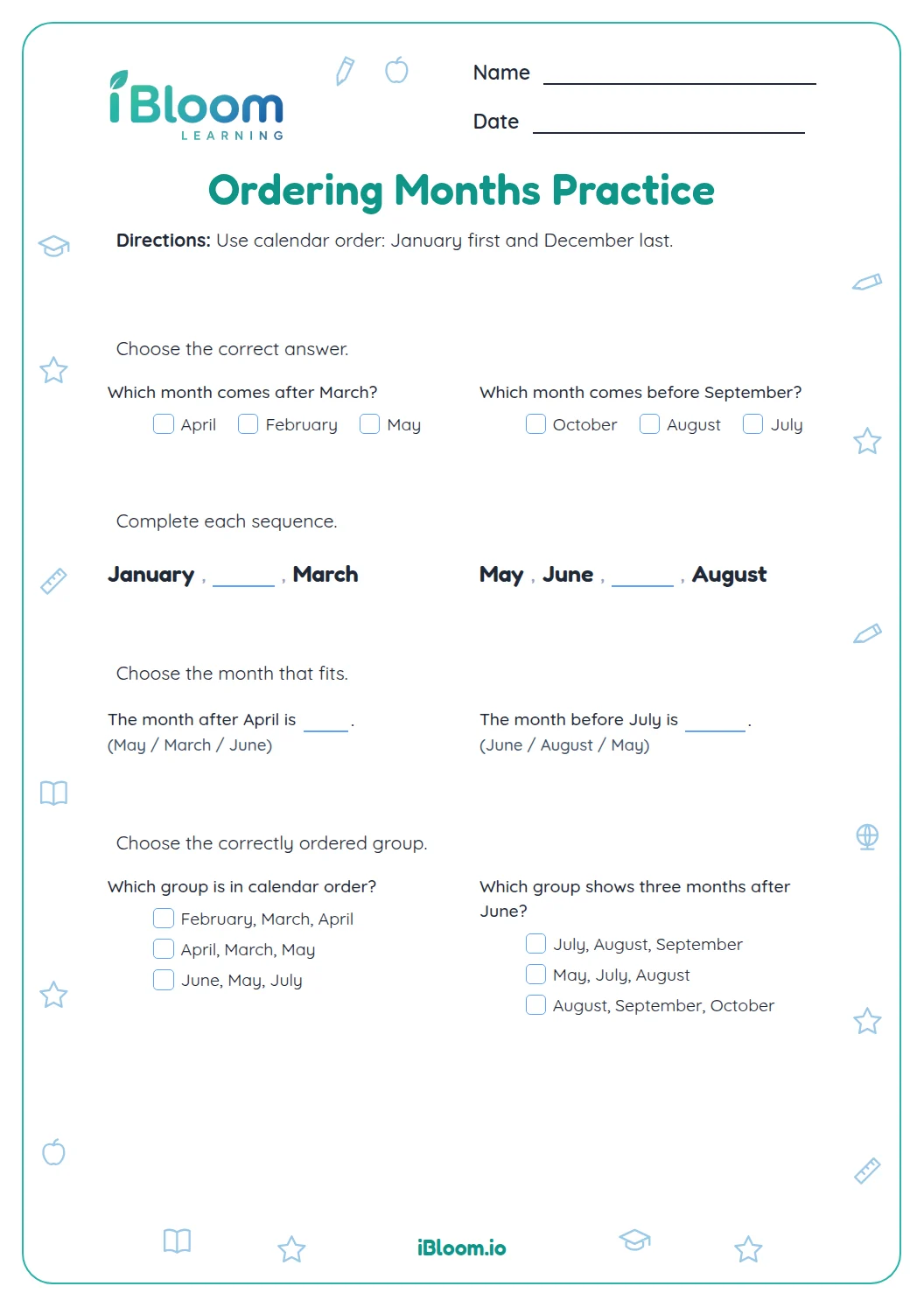
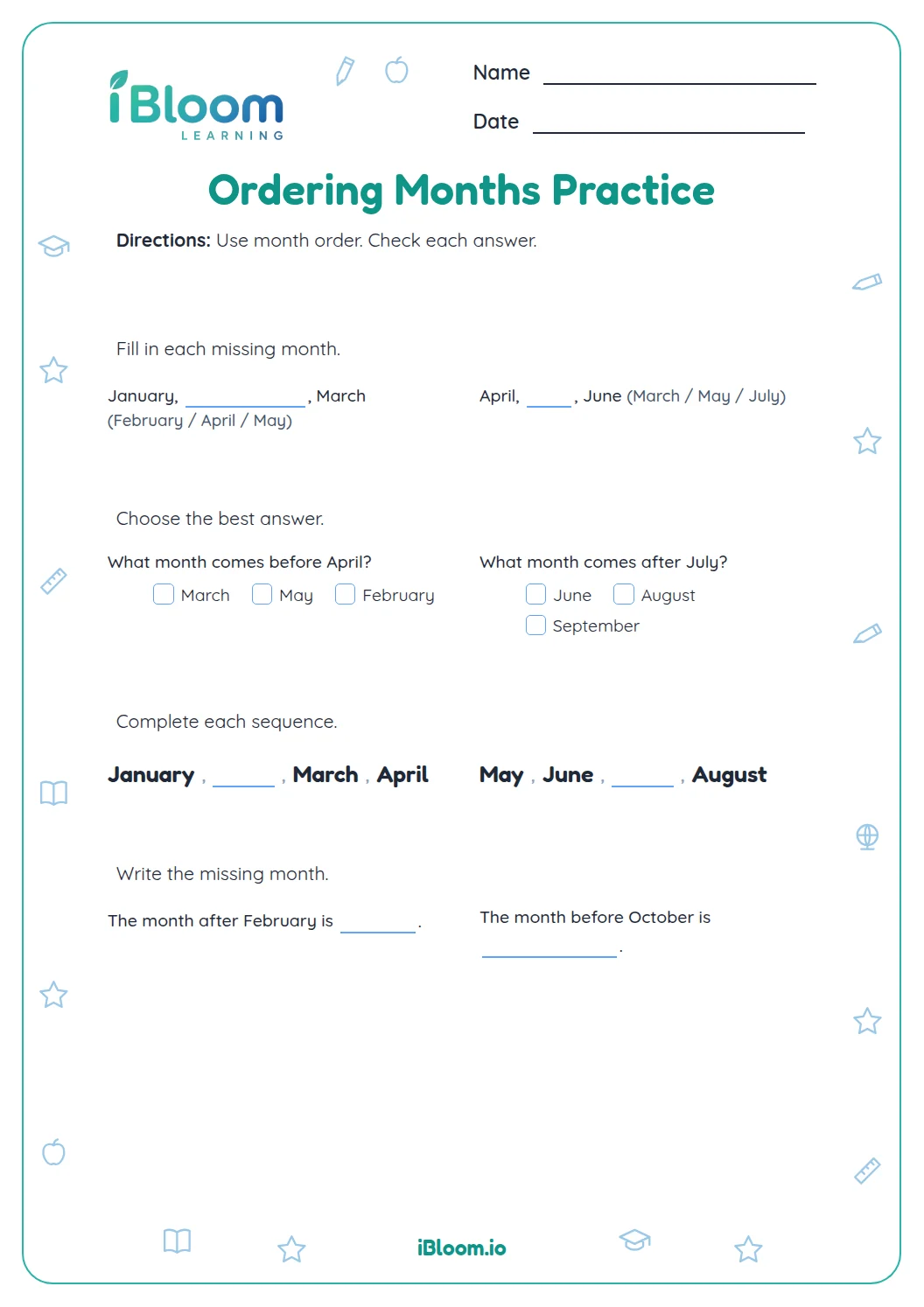
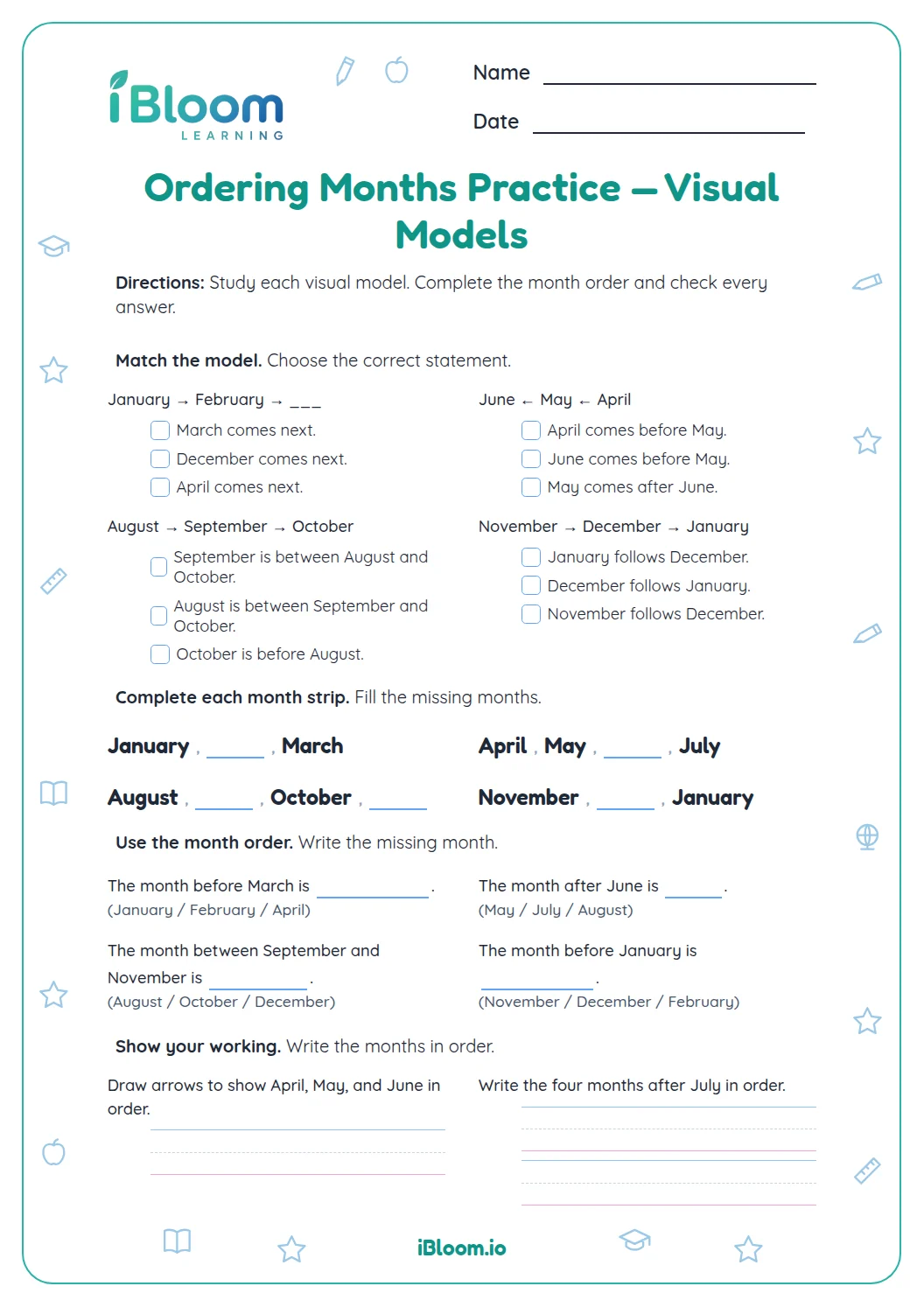
This Grade 2 worksheet gives children practice using the twelve-month calendar sequence. Part A asks which month comes before, after, or between named months. Part B fills short sequences and uses before and after. Part C checks whether a short list moves forward or backward through the year. The work reinforces calendar language used alongside time and date routines. The printable includes a separate answer key.
What does the worksheet ask children to do?
Children use the month sequence in three ways: select a month, complete a short sequence, and inspect a list. Each question names the months needed to solve it.
- Part A: choose a month before, after, or between others
- Part B: fill a missing month or choose before/after
- Part C: recognize a forward or backward sequence
How can a child find the missing month?
Start at September and say the next month: October. Then say one more: November. October belongs in the blank.
- 1September, ___, November → October
- 2Say the months in order to check the answer.
How can families practice month order?
Point to a calendar and read its month heading together. Ask which month was last and which comes next. For a backward-order question, move to the previous month rather than guessing from a season.
How to use this worksheet
- 1Read the month names aloud before starting.
- 2Complete Part A by saying the surrounding months in order.
- 3In Part B, say the sequence from the first named month through the last.
- 4In Part C, check each neighboring pair from left to right.
- 5Review the answer key and repeat any sequence that was tricky.
Month-order mix-ups to watch for
The mistake
Skipping a month while moving from one name to the next.
The fix
Say the full sequence aloud, pointing to each month on a calendar.
The mistake
Mixing up before and after.
The fix
Before means earlier in the year; after means later in the year.
The mistake
Reading an ordered list from right to left.
The fix
Follow the list from its first month to its last month.
What to practice next
Make more practice
Questions parents and teachers ask
How many months are on the worksheet?
There are 16 questions across three parts. Children choose a month, complete short sequences, and decide whether lists are in calendar order. The answer key is printed separately so an adult can check each response after the learner finishes.
Does the worksheet include every month?
The questions use month names from January through December. Learners see months as neighbors in the calendar sequence and use surrounding names to identify missing months. Saying the full sequence aloud can help a child check an answer, especially when two month names sound unfamiliar.
How should my child solve a before question?
Say the months in order until reaching the month named in the question. The month immediately before it is the answer. For example, June follows May, so May comes before June. Pointing to a calendar can support the sequence.
What does “between” mean here?
A month between two others is the one that comes after the first named month and before the second. The sequence should move forward one month at a time, without skipping. Have the child say all three month names to check.
Can I use this with a calendar?
Yes. A calendar can help children point to each month name and see that the sequence repeats every year. Encourage the child to say the sequence aloud, then try the same question without looking at the calendar. This builds recall.