

About this worksheet
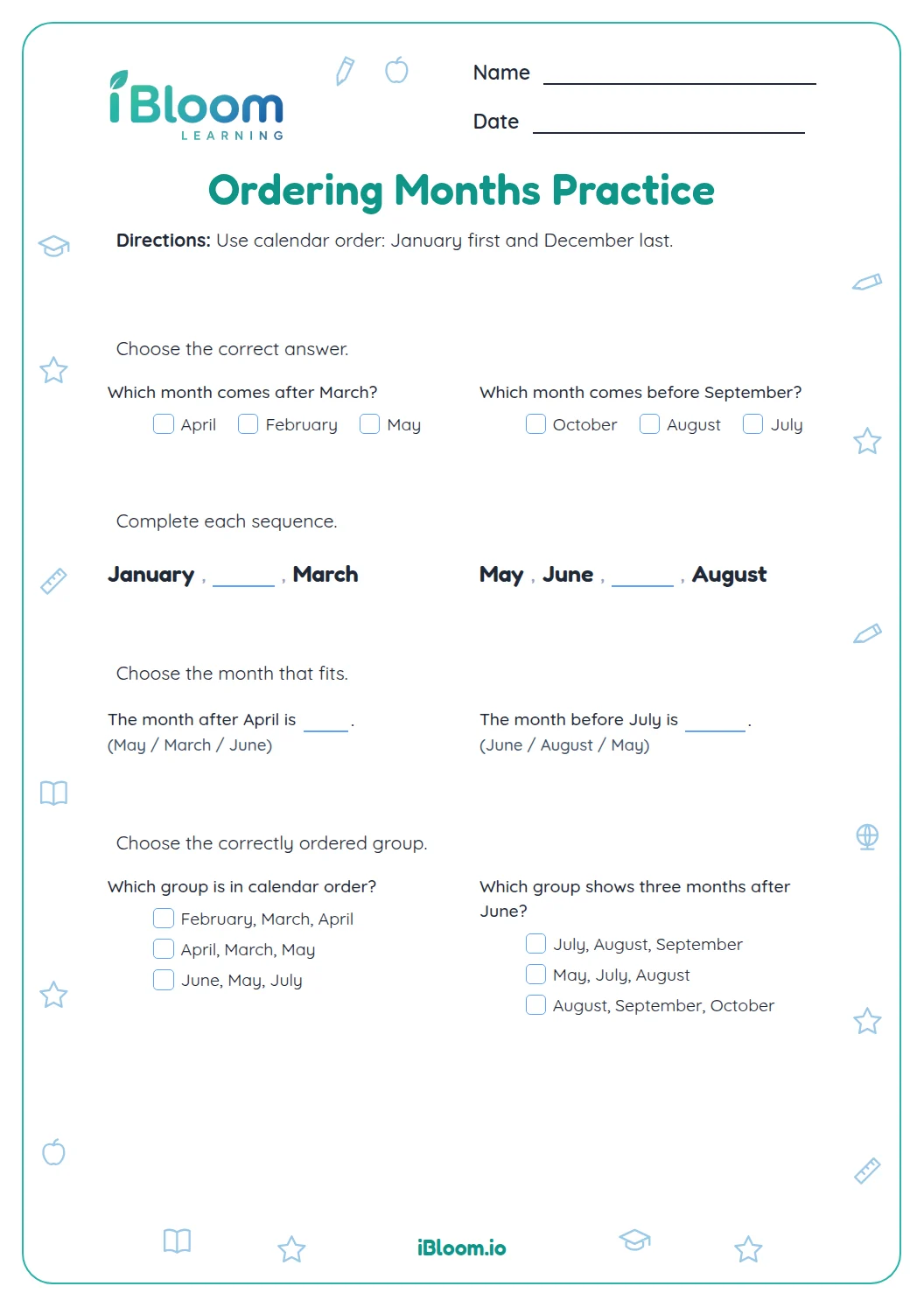
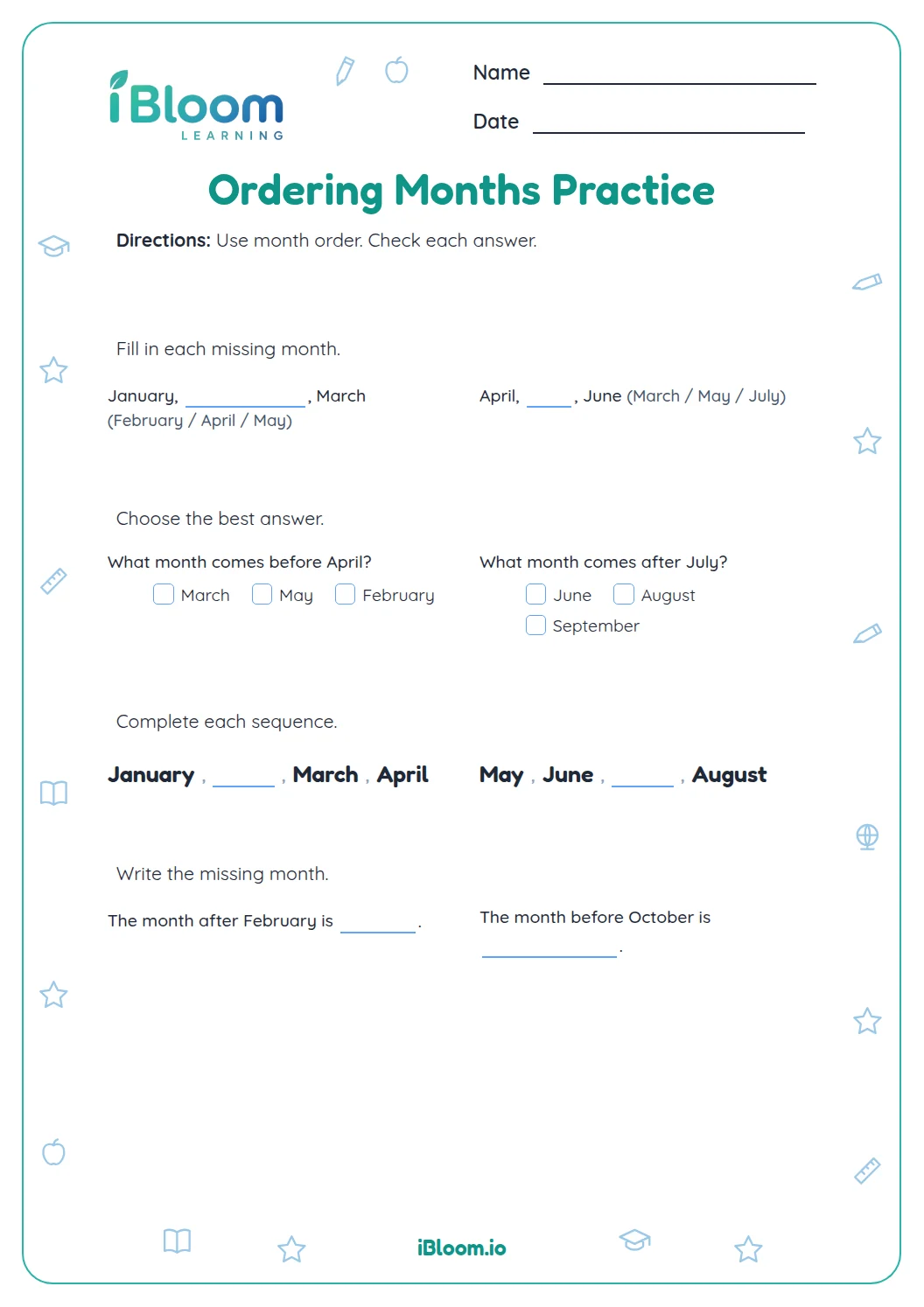
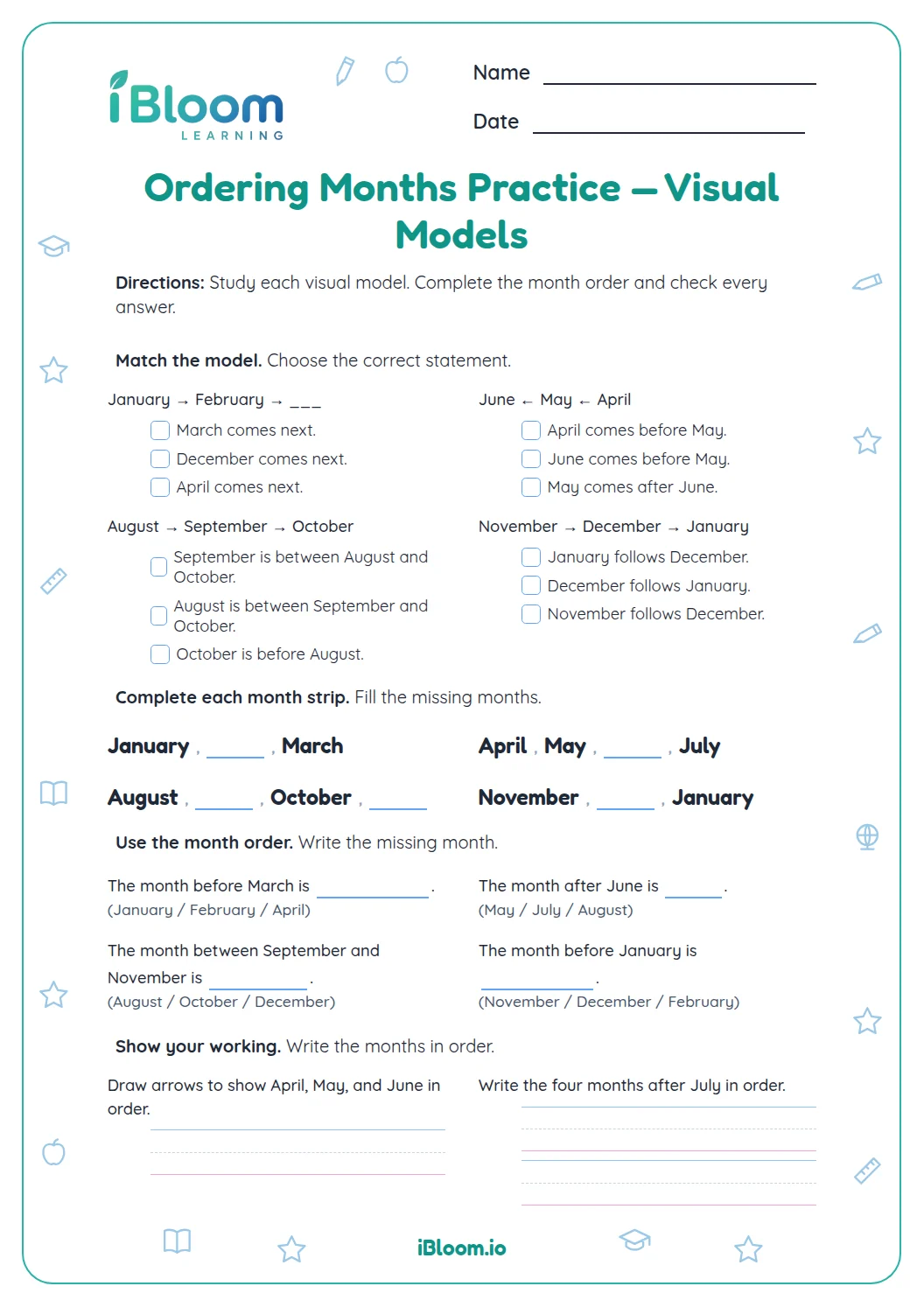
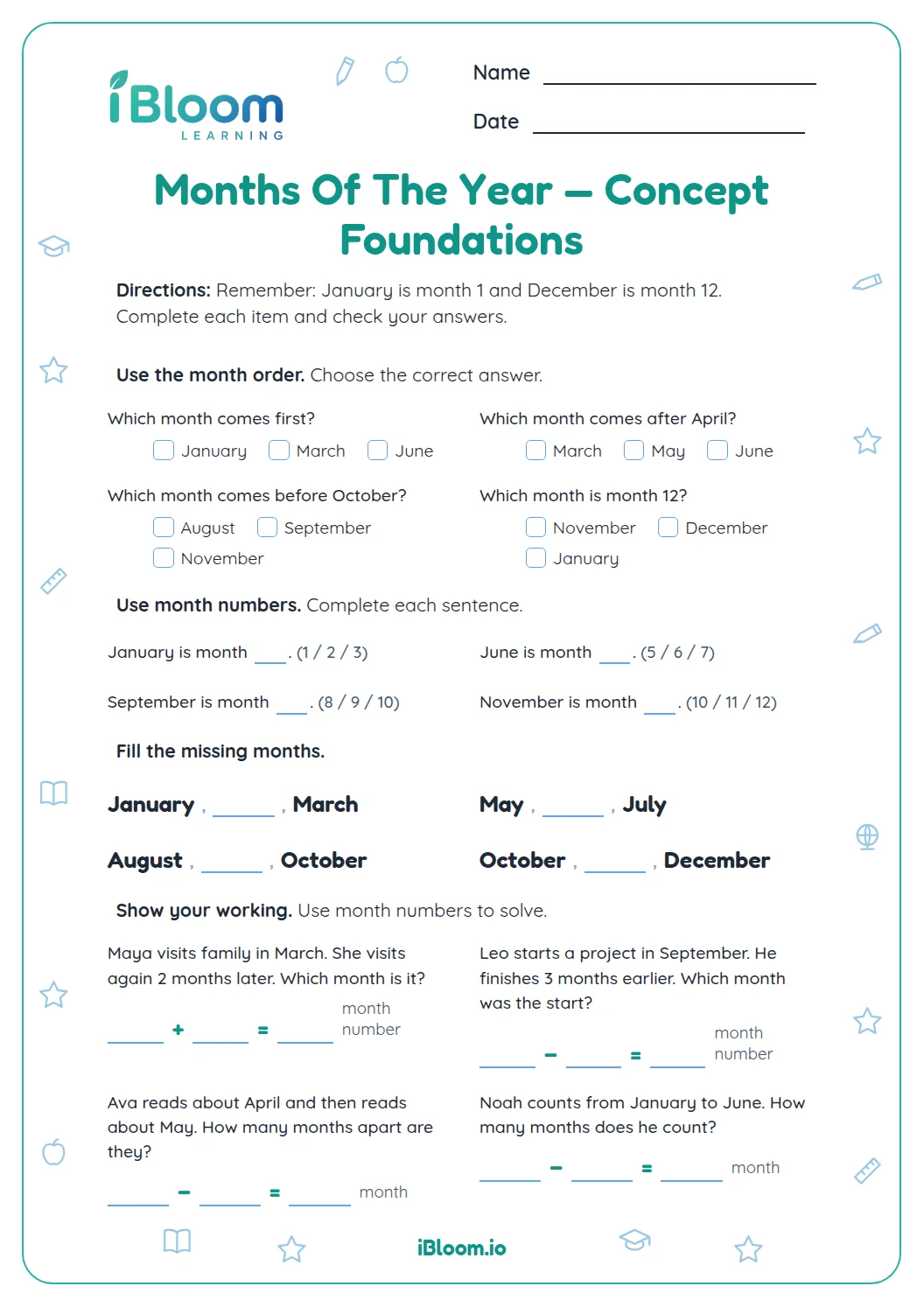
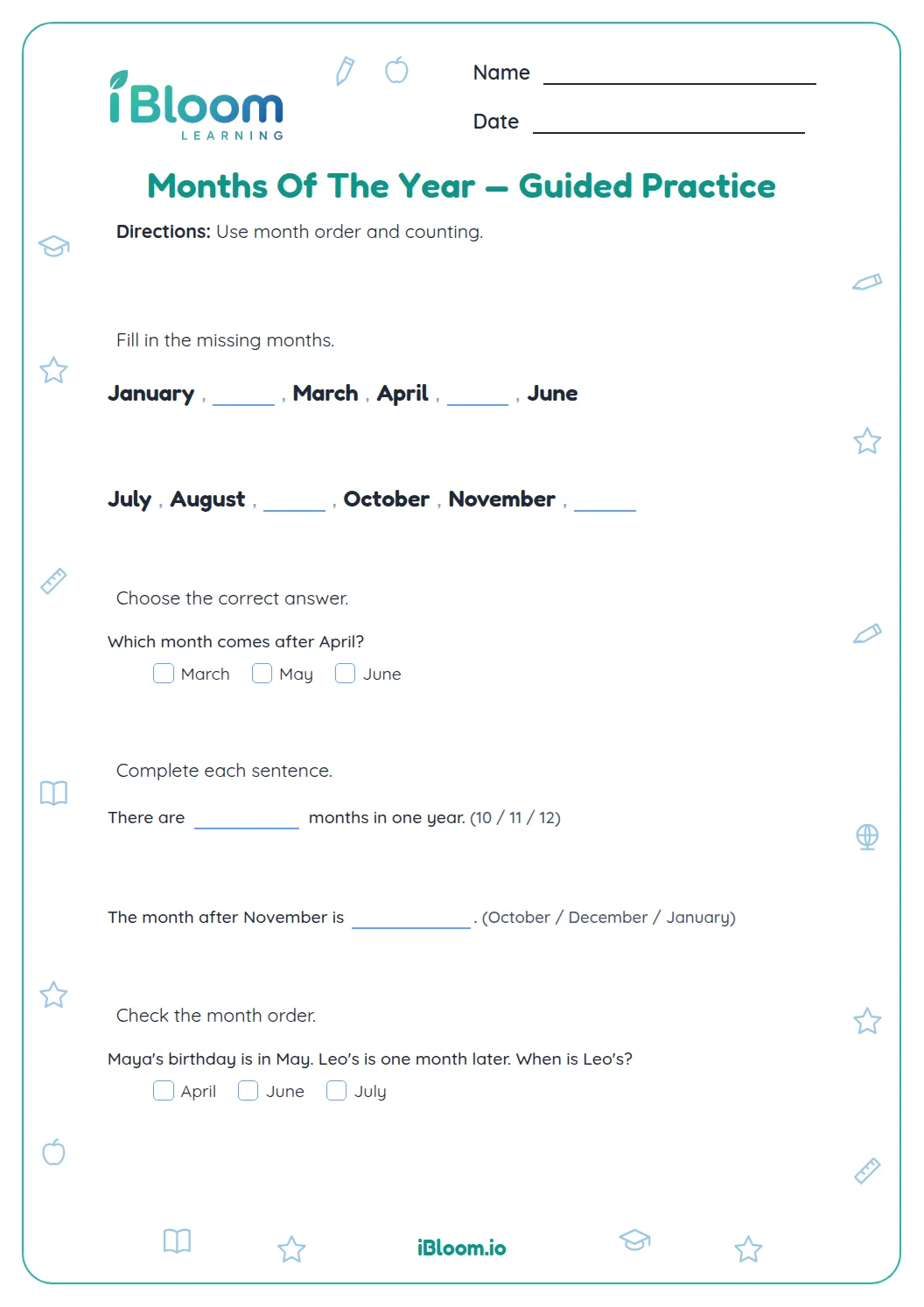
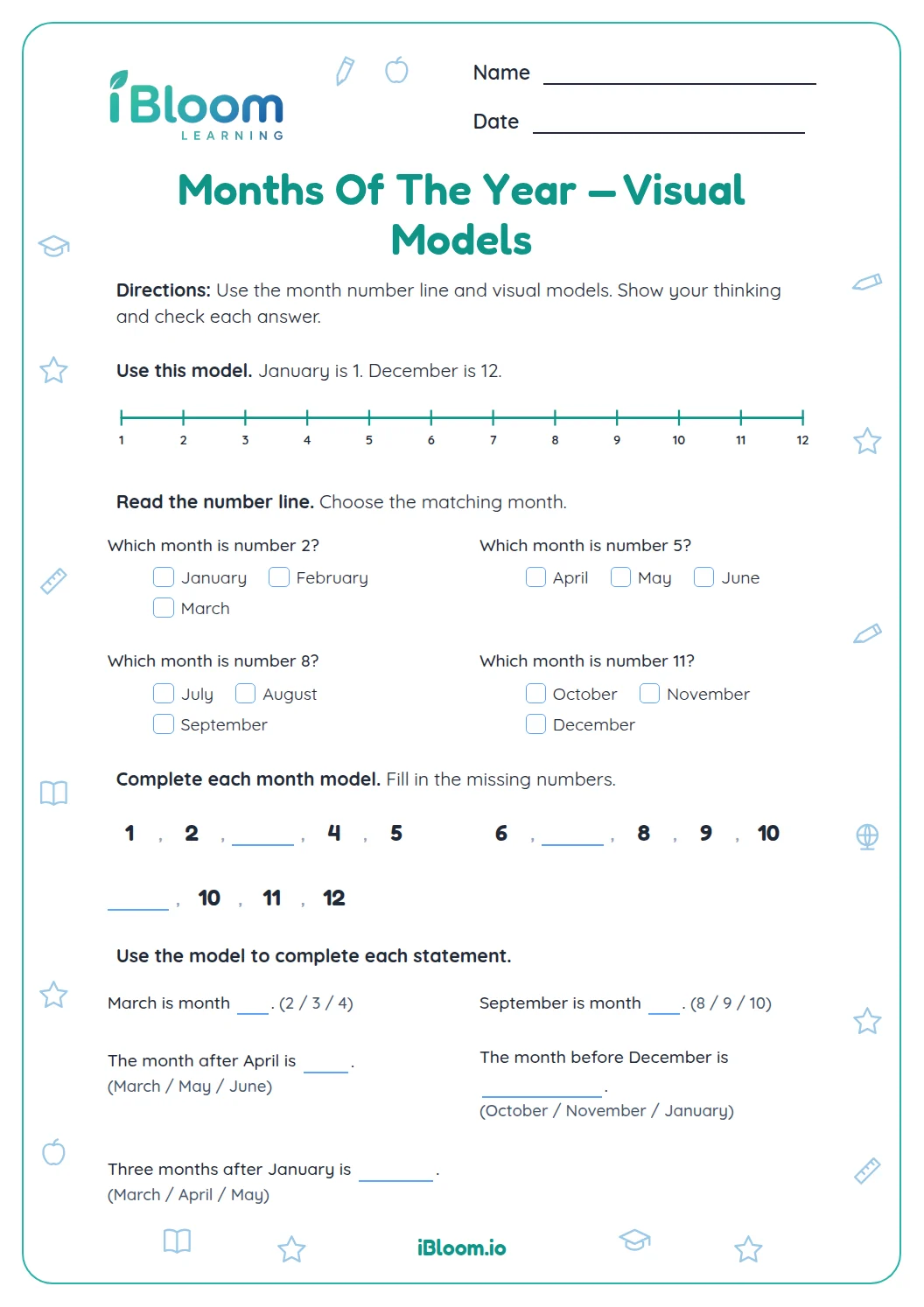
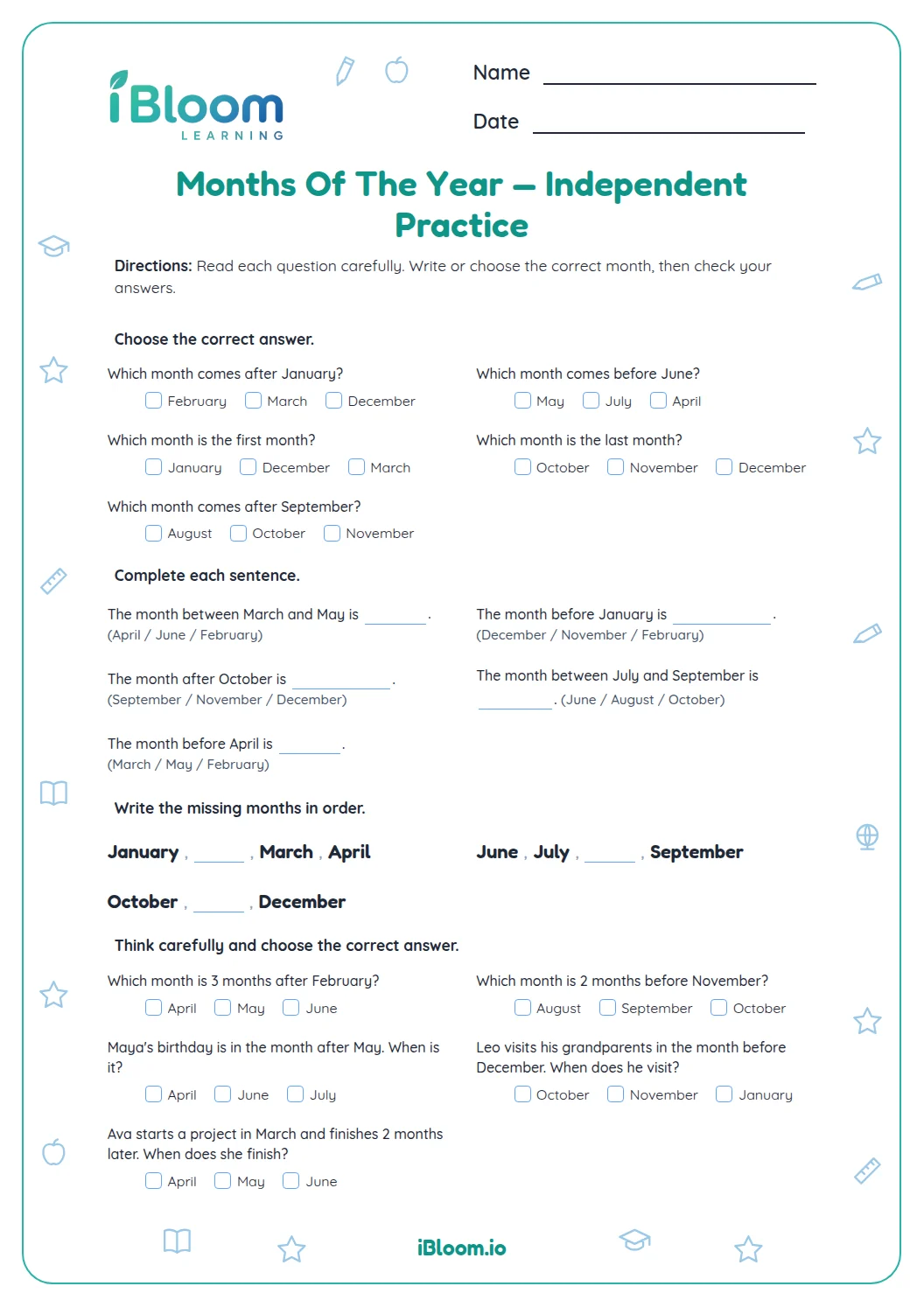
This Grade 2 printable has 18 questions about the order of the twelve months. Learners name the month before or after a given month, put short lists in calendar order, and use clues about birthdays, school, and trips to reason about where a month belongs. The final questions ask them to explain or correct a sequence. The three-page worksheet moves from direct month order to mixed clues, with a separate three-page answer key. It practices calendar sequencing and month vocabulary through the full year.
How can you find the month before or after another month?
Say the months in order from January through December. To find a month before April, move back one name to March; to find one after September, move forward to October.
Question 1 asks for the month right before April, so the answer is March. In question 2, one month after September is October.
How do you put a short list of months in order?
Use the calendar sequence rather than the order in which the names appear in the question. Start with the earliest month in the year and move forward.
Question 3 lists June, April, and May. In calendar order, they are April, May, June. Question 16 asks for December, February, and October; the order is October, December, February.
How do calendar clues help solve a problem?
Translate words such as next, earlier, later, and between into steps along the year. For a month several places away, count forward or backward one month at a time.
Question 7 asks for the month three months before December: November, October, then September. Question 18 shows September, November, October; November is the month out of order because October should come between September and November.
What does the answer key include?
The key lists a month or corrected sequence for each item. Questions that ask whether a statement is correct include a short explanation so an adult can discuss the calendar reasoning.
How to use this worksheet
- 1Recite January through December once before starting.
- 2For before and after clues, move one month at a time in the stated direction.
- 3For an ordered list, find the earliest month first and continue forward.
- 4Count carefully when a clue says two or three months away.
- 5Reread each sequence from left to right to spot a month that breaks the order.
- 6Check responses with the key after finishing all 18 questions.
Helpful checks
The mistake
Starting the year with a month other than January.
The fix
Keep the calendar sequence anchored at January and continue through December.
The mistake
Reading before as after, or the reverse.
The fix
Move backward for before and forward for after.
The mistake
Sorting month names alphabetically.
The fix
Order them by their place in the calendar year, not by their first letter.
What to practice next
Make more practice
Questions parents and teachers ask
How many questions are on the printable?
The worksheet has 18 questions in three parts. The first part practices direct order, the next uses month clues, and the last asks learners to check calendar sequences. It prints on three worksheet pages and includes a separate three-page answer key.
Does the worksheet include all twelve months?
Yes. Questions refer across January through December, including months at the beginning, middle, and end of the year. Learners use that full sequence to answer before-and-after clues and arrange short groups of months in calendar order. The entire year is represented.
What does “three months before December” mean?
Start at December and move backward three places: November is one month before, October is two, and September is three. The answer to question 7 is September. Saying the months aloud can help keep the count in order.
How should a learner solve “between” clues?
Find the two named months in the calendar sequence and identify the month directly between them. For example, December is between November and January when the sequence crosses the end of the year. The question asks for a month name, not a date.
Is this a clock-reading worksheet?
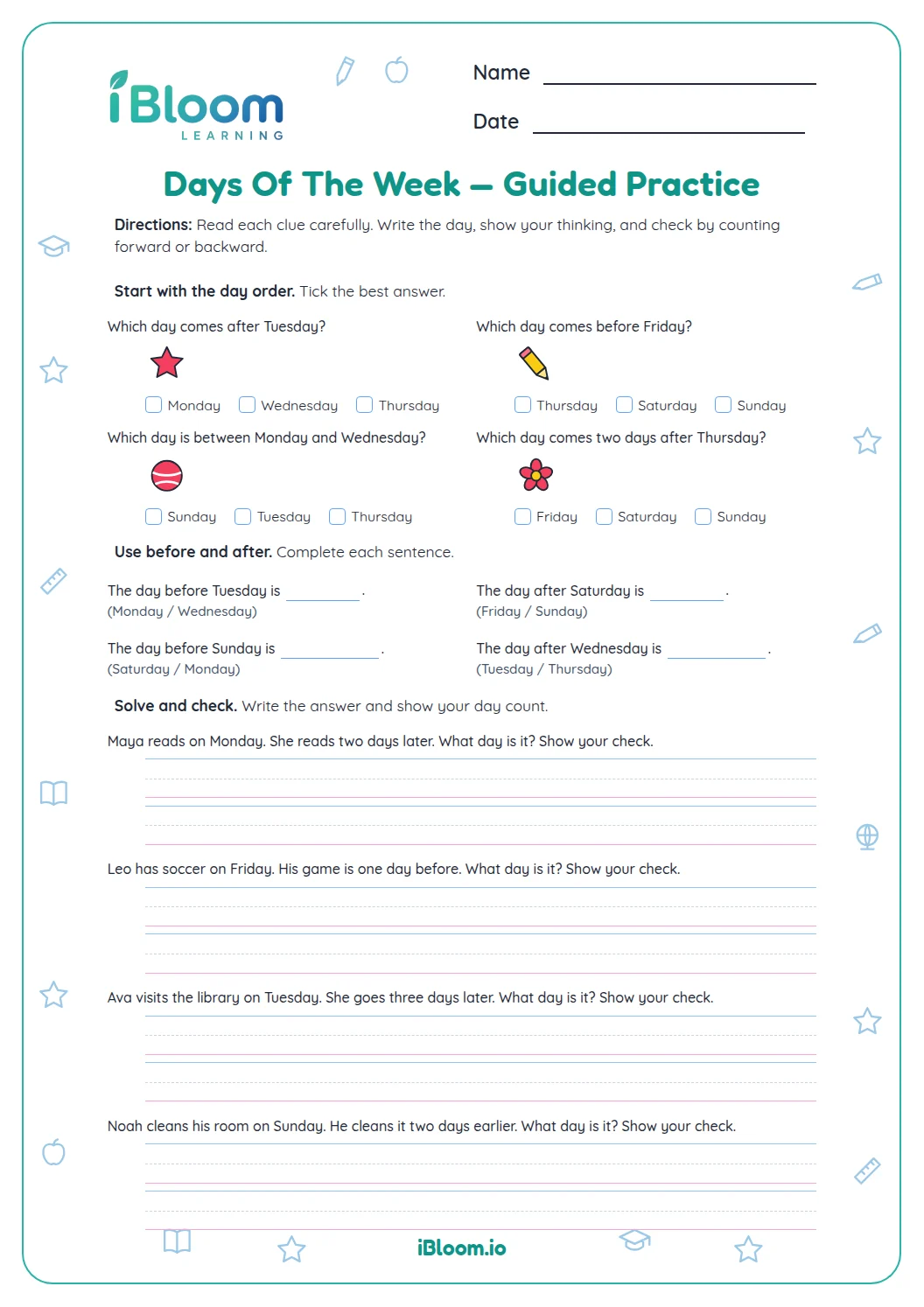
The questions focus on month names and their order, using calendar clues about birthdays, school, and trips. They do not ask learners to read clock faces or calculate elapsed time. The answer key provides the month or corrected sequence for each question.
How can I help without giving away the answer?
Invite the learner to say the months aloud from January onward, then pause at the month named in the clue. For multi-month clues, move one name at a time and count each move. Ask the learner to reread a completed sequence to check it.