

About this worksheet
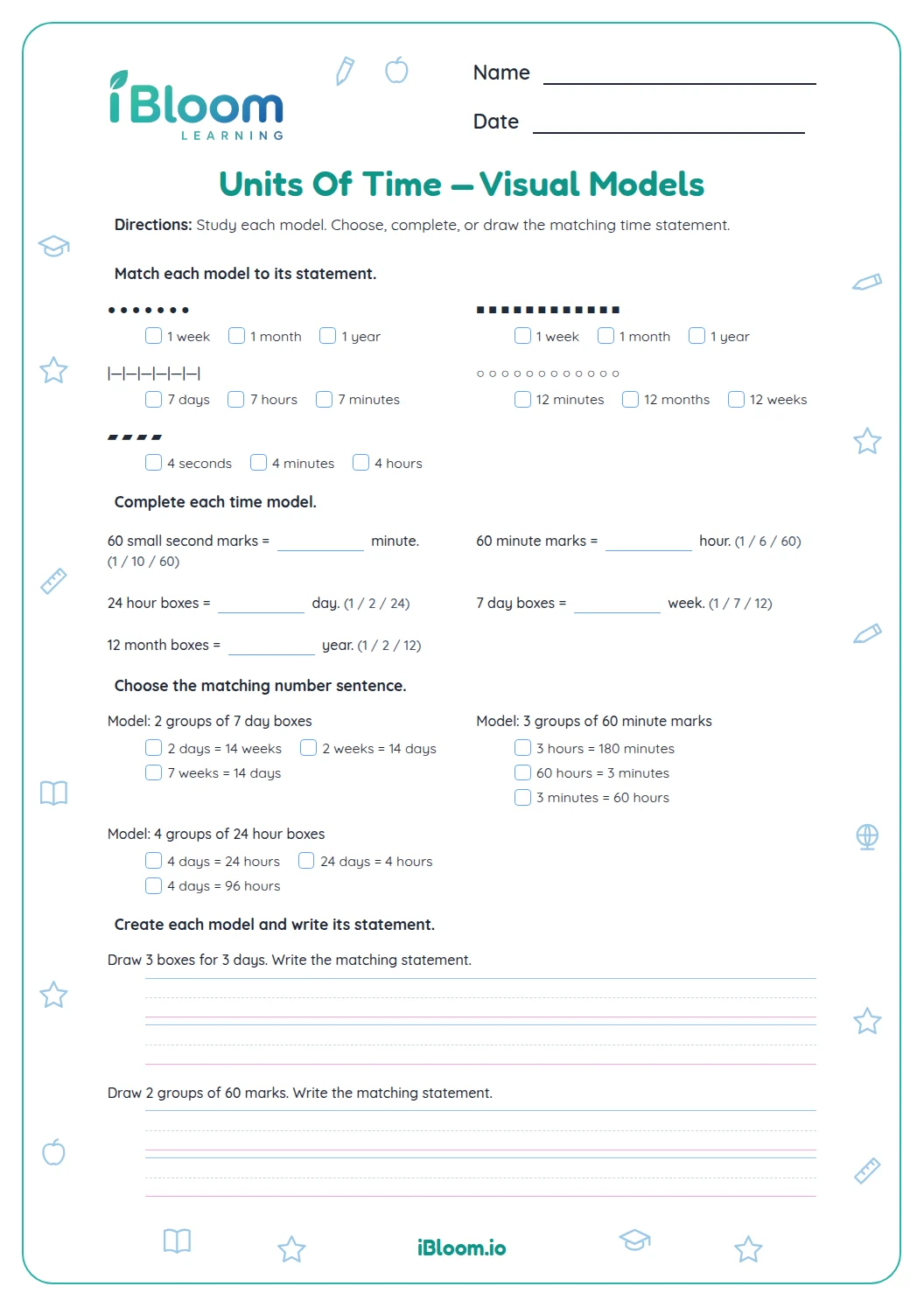
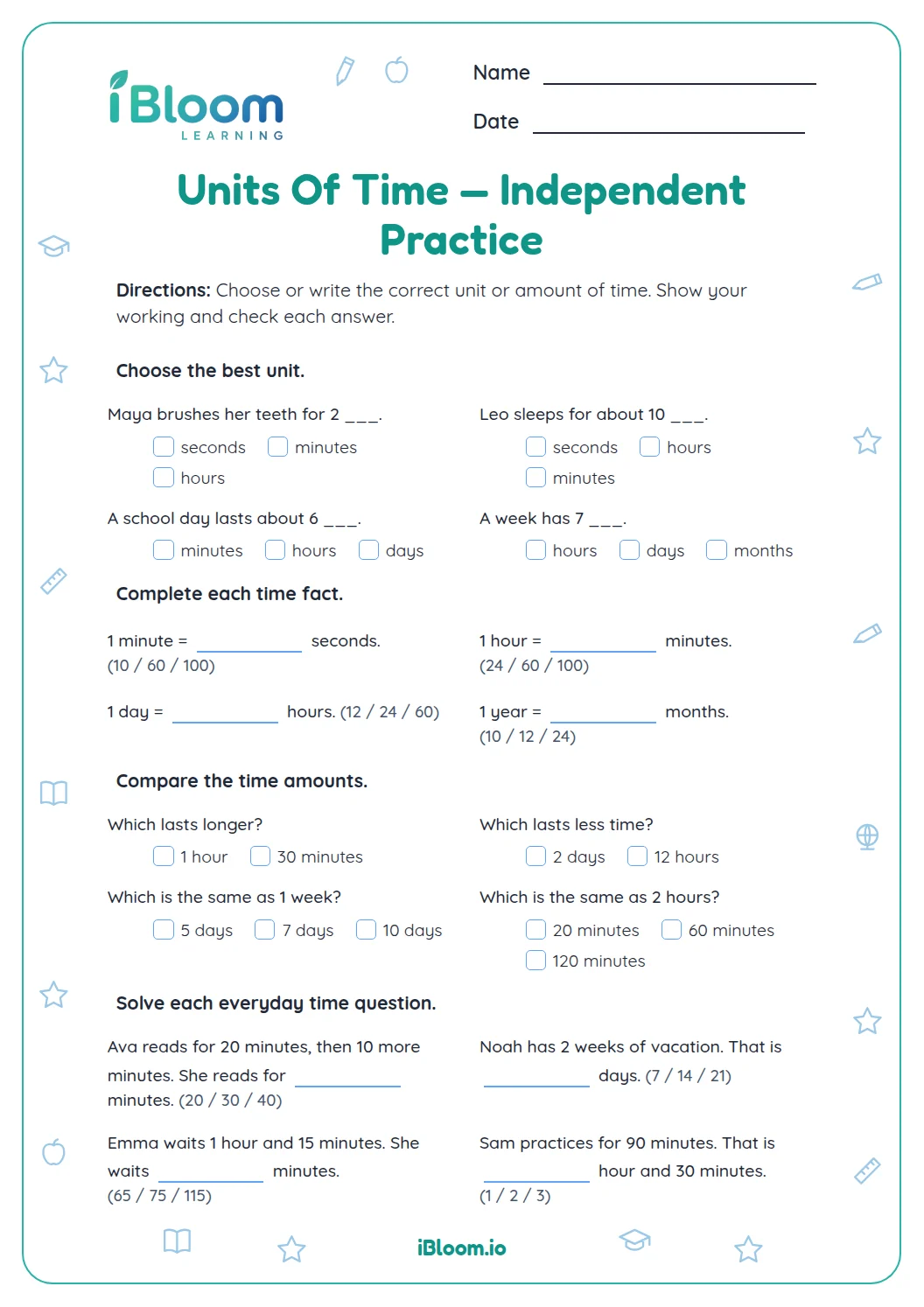
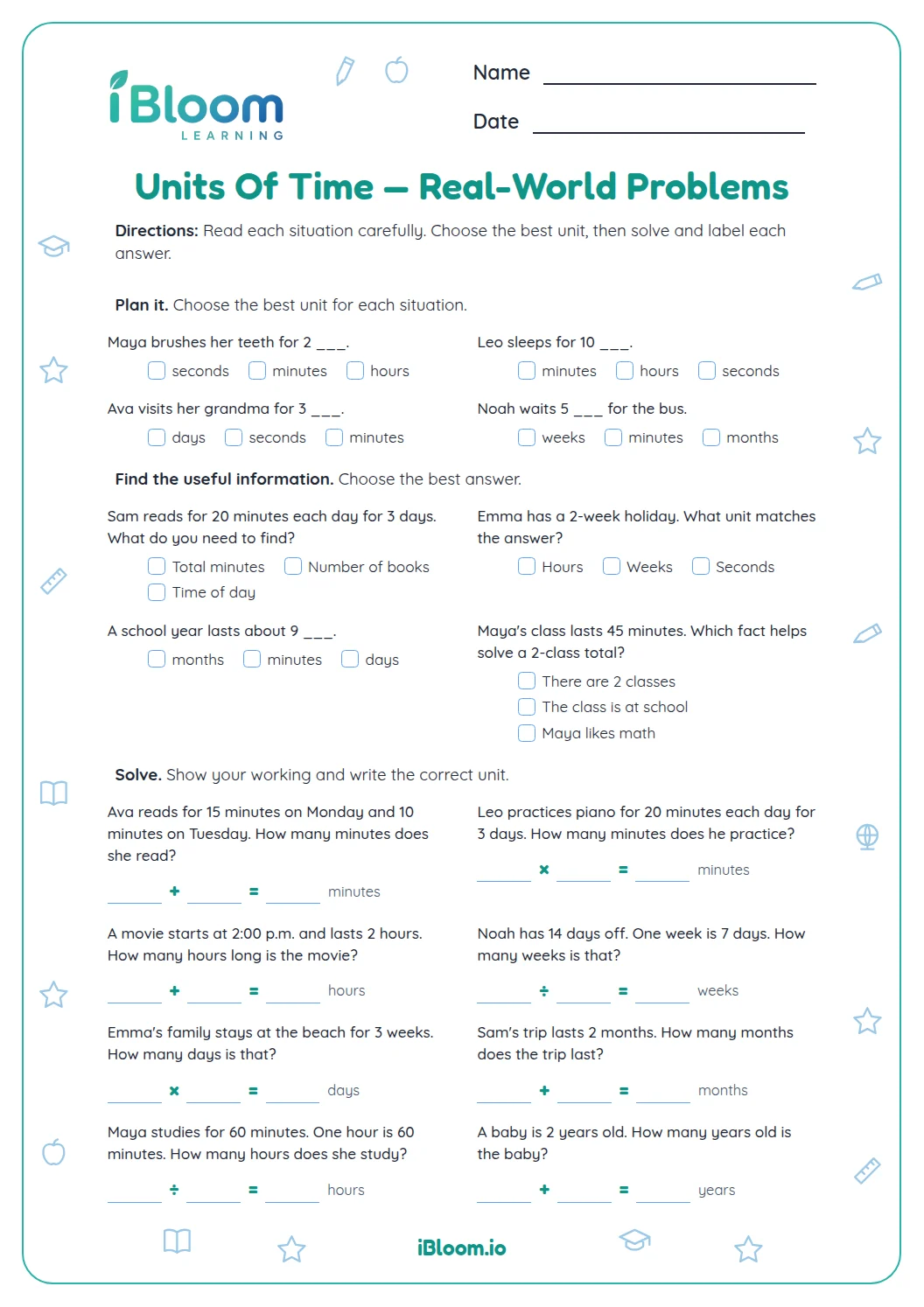
This Grade 2 printable practices familiar units of time and calendar facts. Learners choose units for everyday events, complete facts about seconds, minutes, hours, days, and weeks, compare durations, and answer calendar questions. It includes 15 questions across four parts and a separate answer key.
How do learners choose a time unit?
Think about how long the event lasts. A blink takes seconds, a school day takes hours, and a weekend lasts days. The first part asks learners to match each clue with a sensible unit.
Which time facts appear?
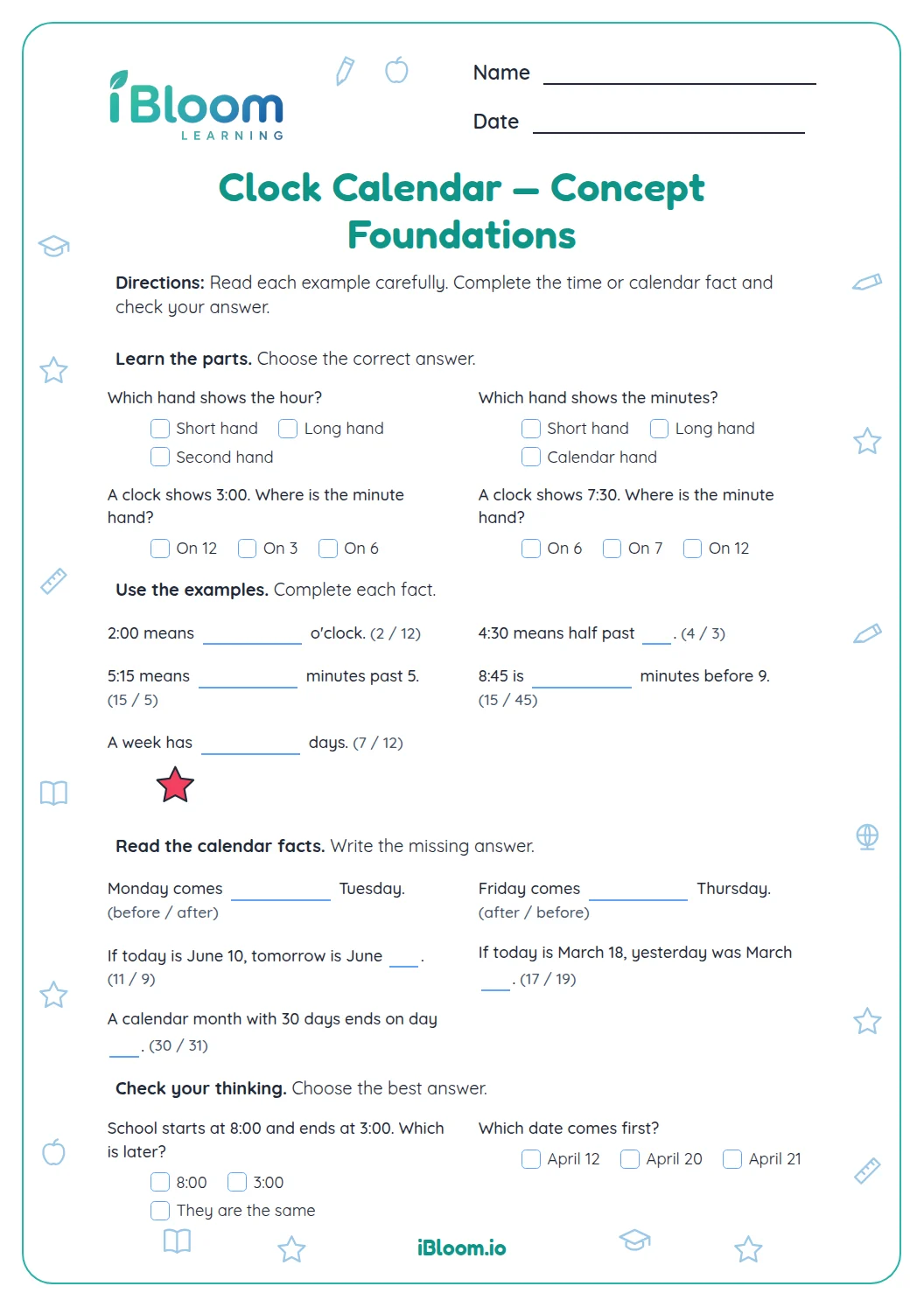
The fact questions connect seconds, minutes, hours, days, and weeks. For example, one minute has 60 seconds. Later, learners compare a minute with an hour and a day with a week.
How does the page use calendar facts?
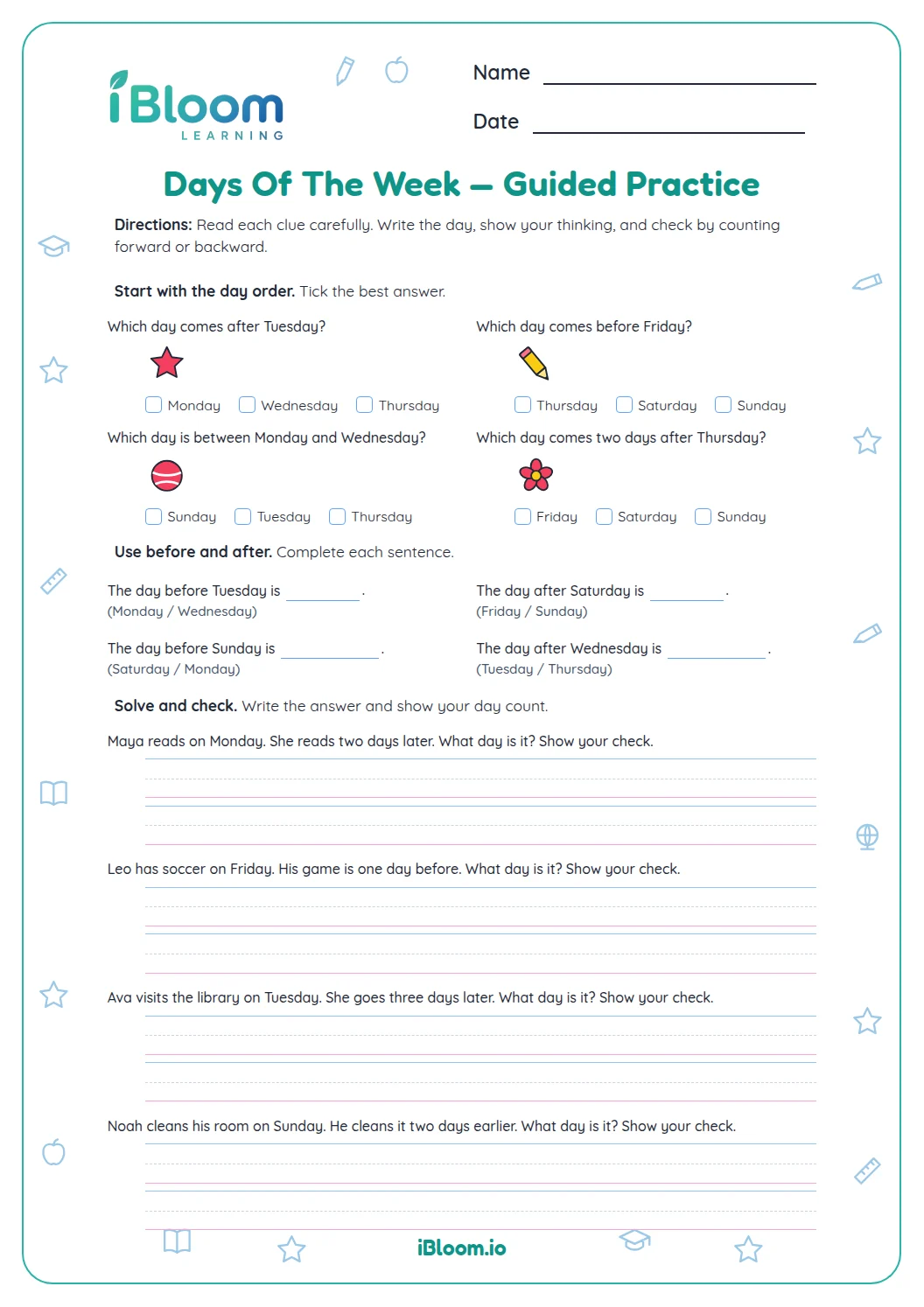
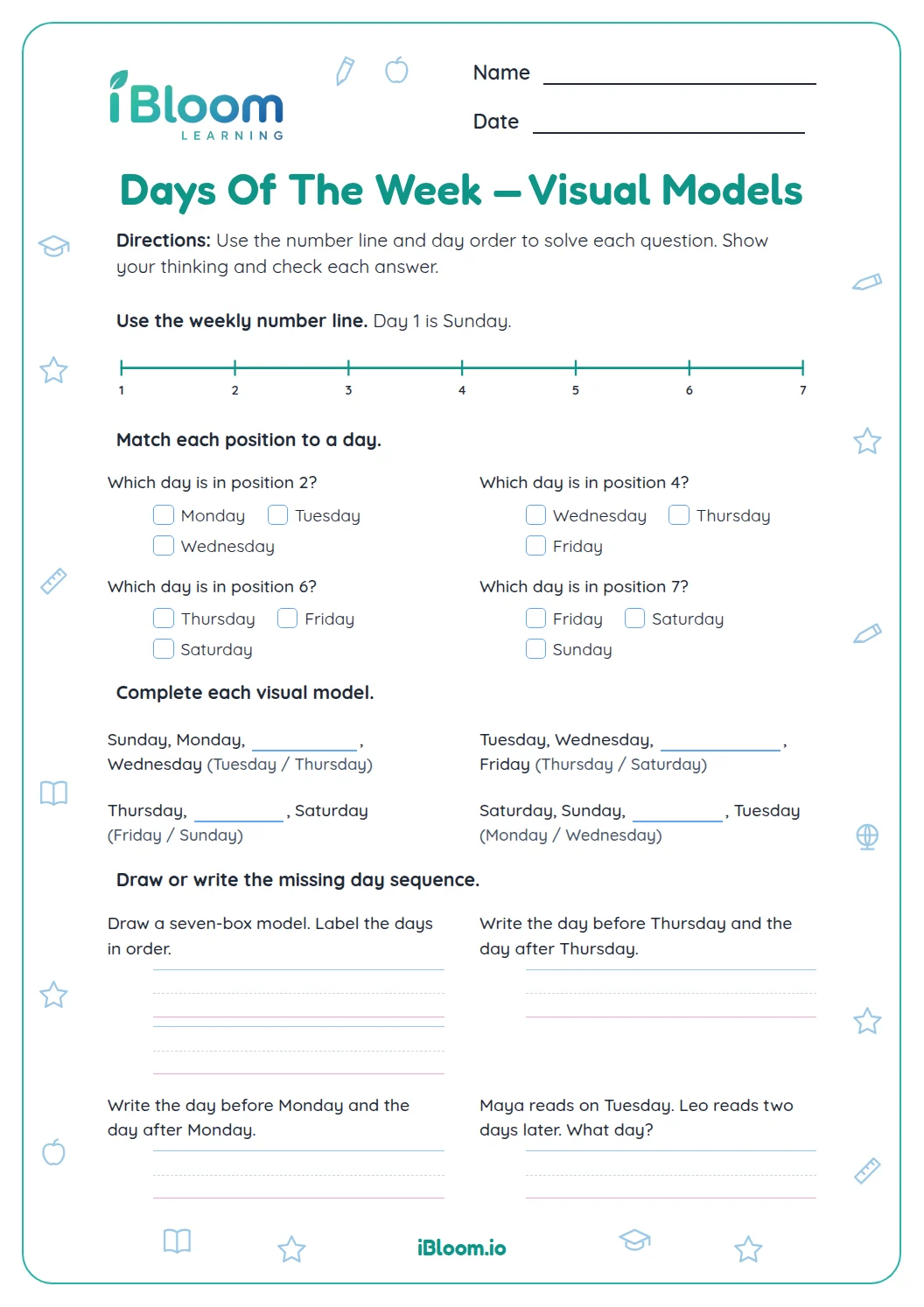
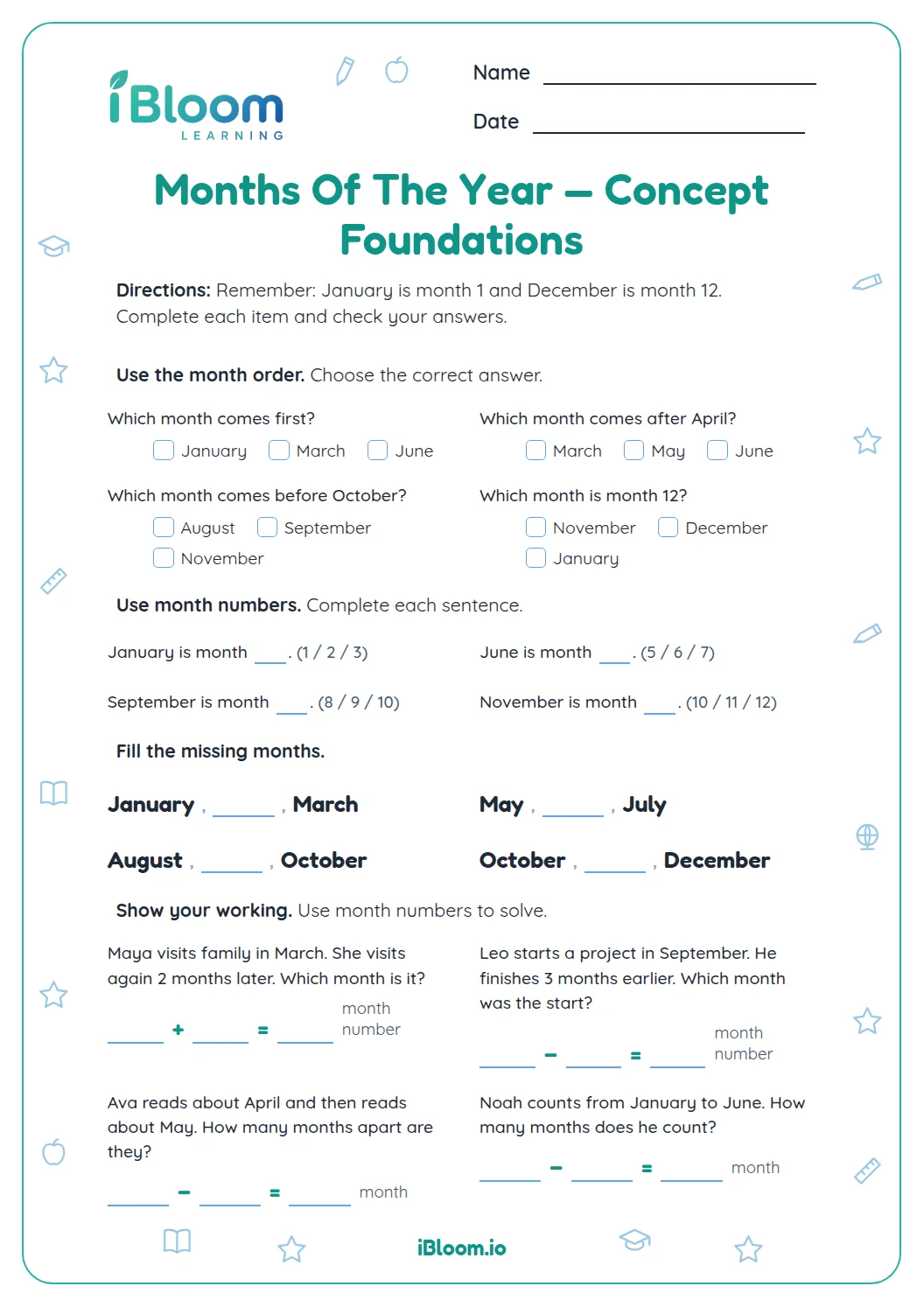
The last part asks for a day that follows Tuesday, the month before October, and the number of days in a common year. These items extend the time-unit practice to familiar calendar facts.
A useful way to work through the page
- 1Read the event or time fact carefully.
- 2Choose the unit that fits the length of time.
- 3Recall how seconds, minutes, hours, days, and weeks relate.
- 4Compare the two time lengths named in each question.
- 5Check the day, month, and year facts with the answer key.
Checks that help
The mistake
Choosing a unit that is too large for a short event.
The fix
Ask whether the event lasts seconds, minutes, hours, or days.
The mistake
Mixing up minutes and seconds.
The fix
Remember that one minute contains 60 seconds.
The mistake
Confusing a weekday sequence.
The fix
Say the days in order to find which one comes next.
What to practice next
Make more practice
Questions parents and teachers ask
What kinds of time units are practiced?
The worksheet uses seconds, minutes, hours, days, weeks, and months. Learners match units to familiar events, complete basic time facts, and compare durations such as a minute and an hour. This helps learners see how units change as an event becomes longer.
Does this worksheet include elapsed-time problems?
No. It focuses on choosing units, recalling familiar facts, comparing time lengths, and answering calendar questions. Learners do not calculate how much time passes between two clock readings. The focus is choosing and relating units, rather than finding elapsed duration between two times.
How many seconds are in a minute?
One minute contains 60 seconds. The worksheet asks learners to recall this fact along with minutes in an hour, days in a week, and hours in a day. These examples help learners check the size of the time amount.
What calendar questions are included?
Learners name the day after Tuesday, the month before October, and the number of days in a common year. The answer key lists Wednesday, September, and 365. A common year has 365 days, and the worksheet expects that full number.
How should I use the answer key?
Have the learner try the unit choices and time facts first, then check the key. If an answer differs, reread the event or time clue and discuss why the selected unit fits. Keep answers specific to the question; unit words can clarify the number.