

About this worksheet
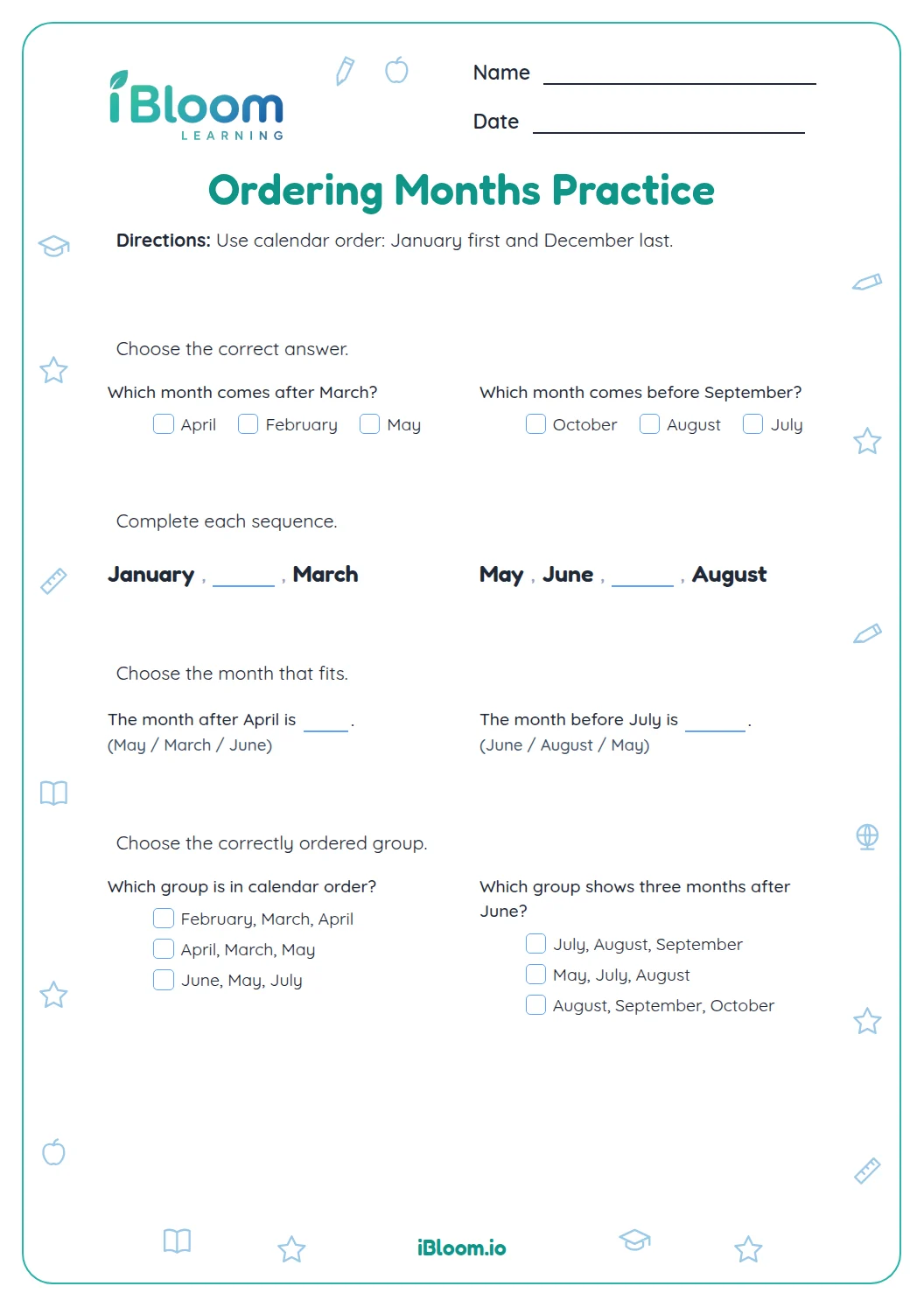
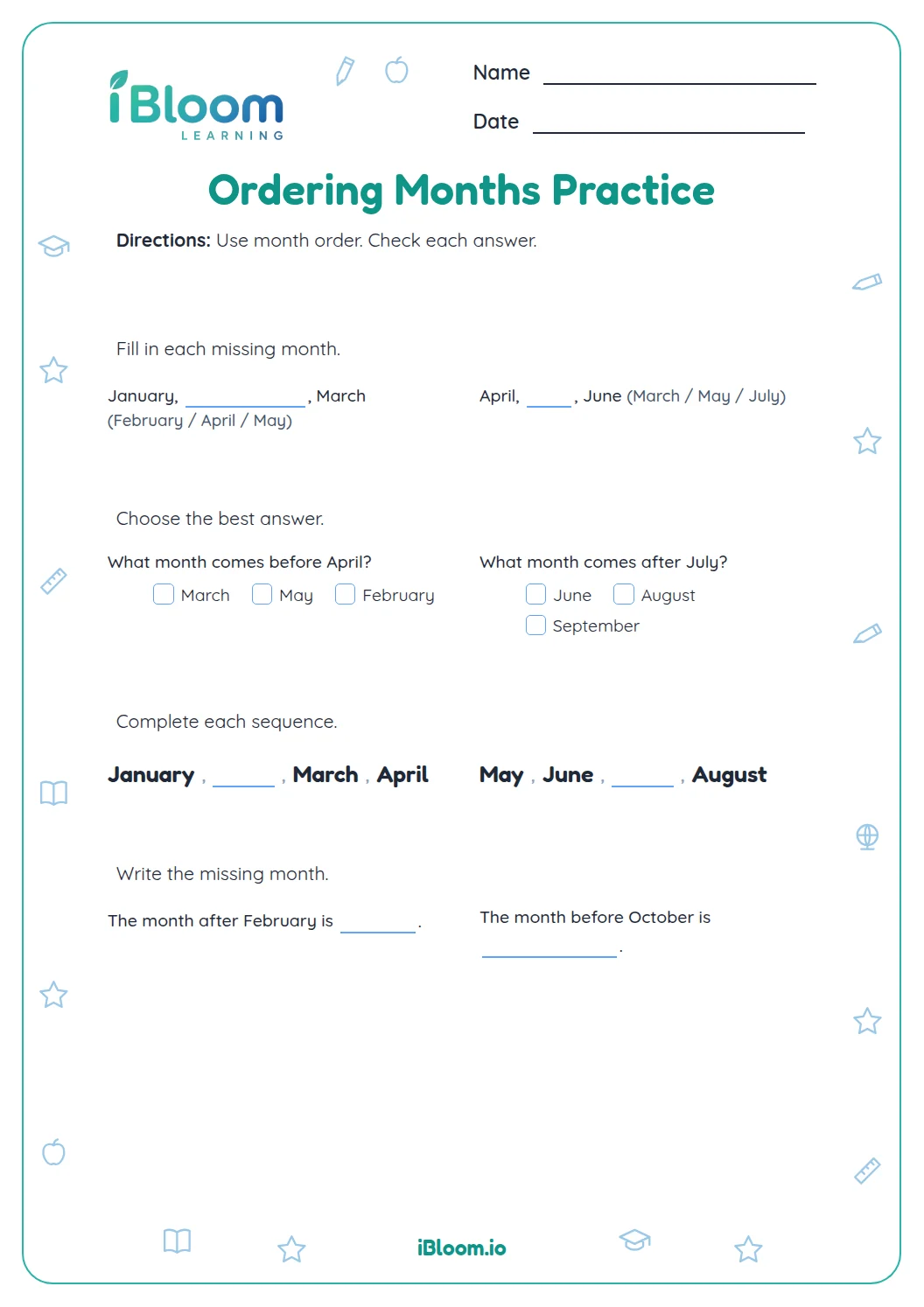
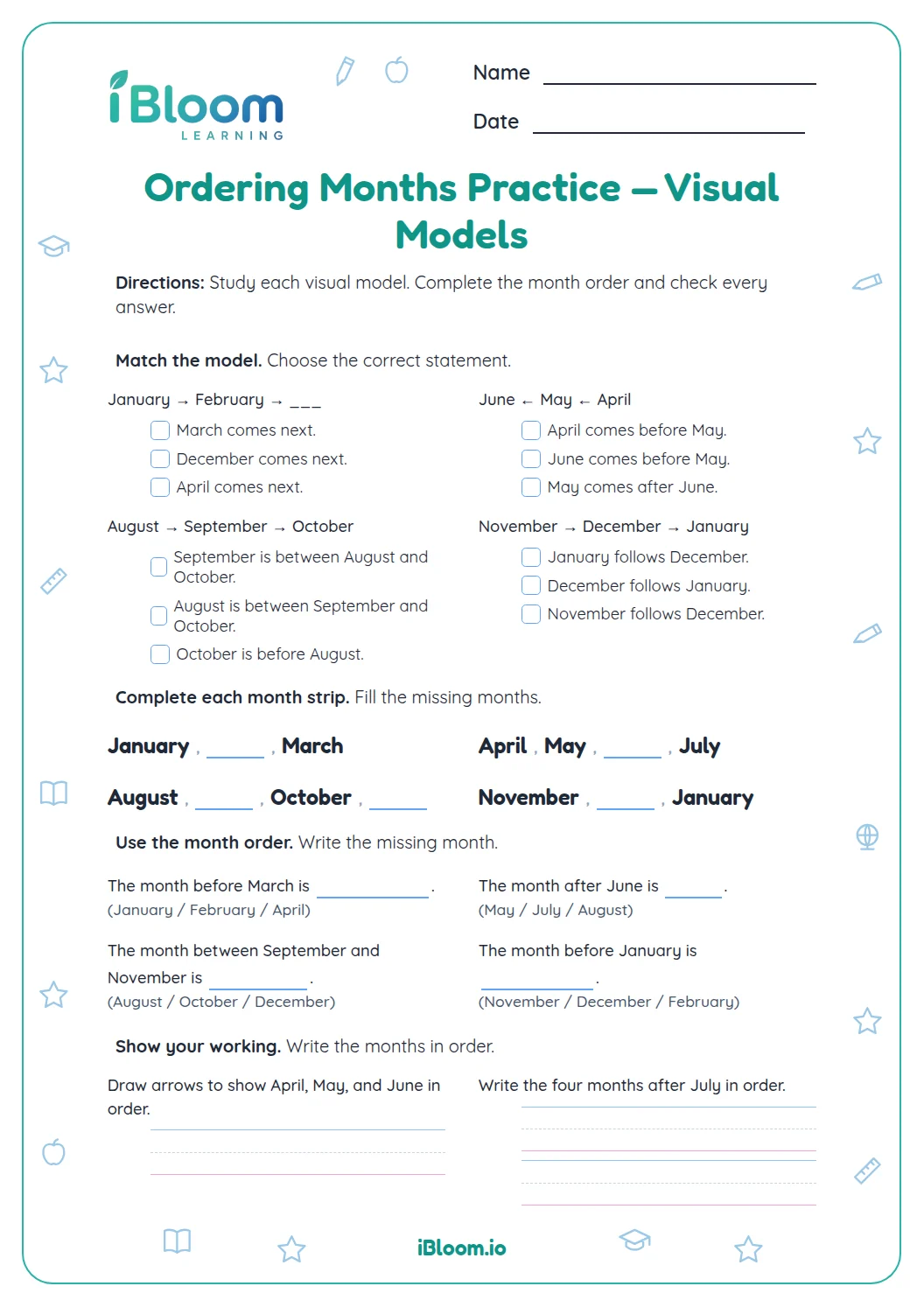
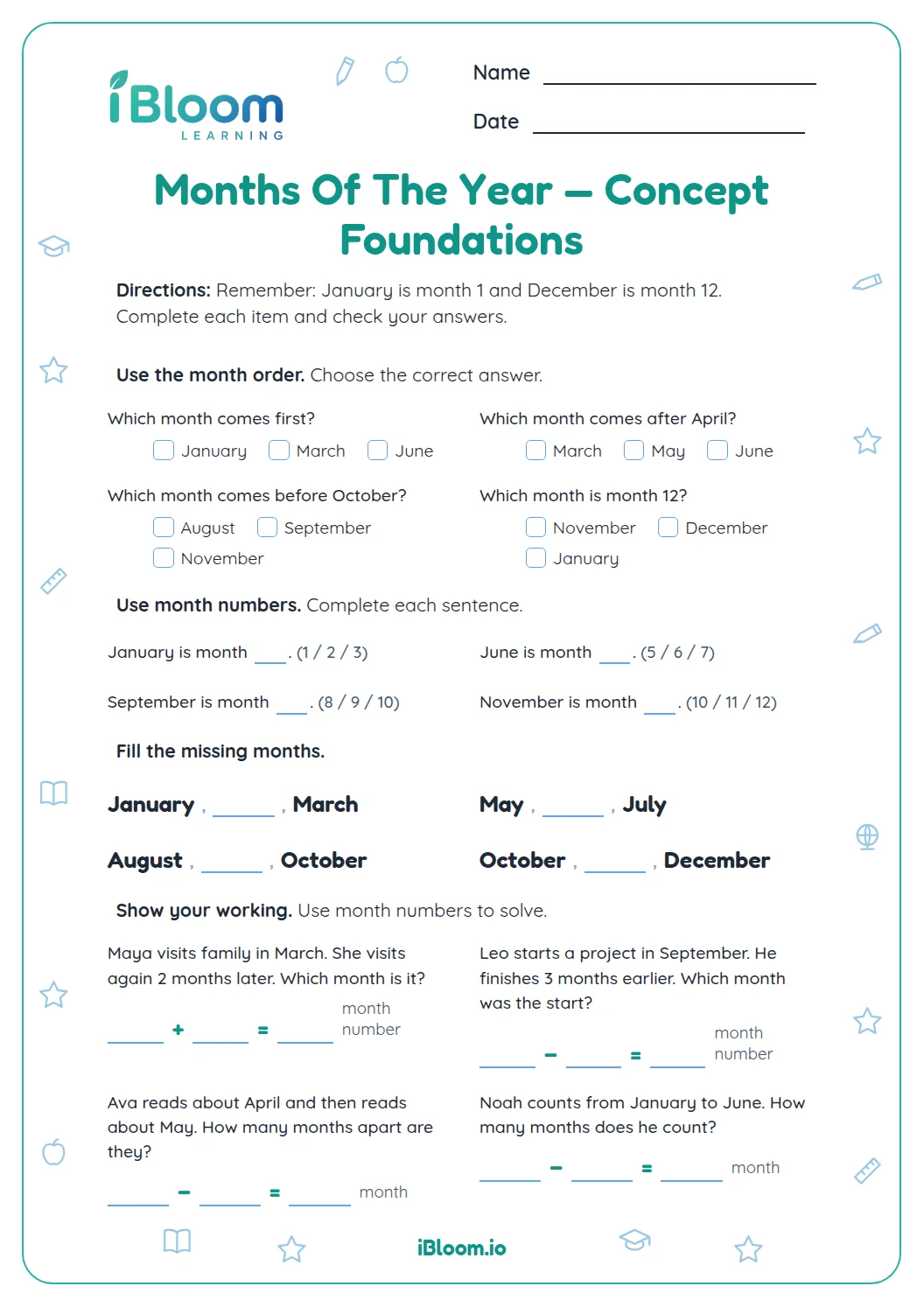
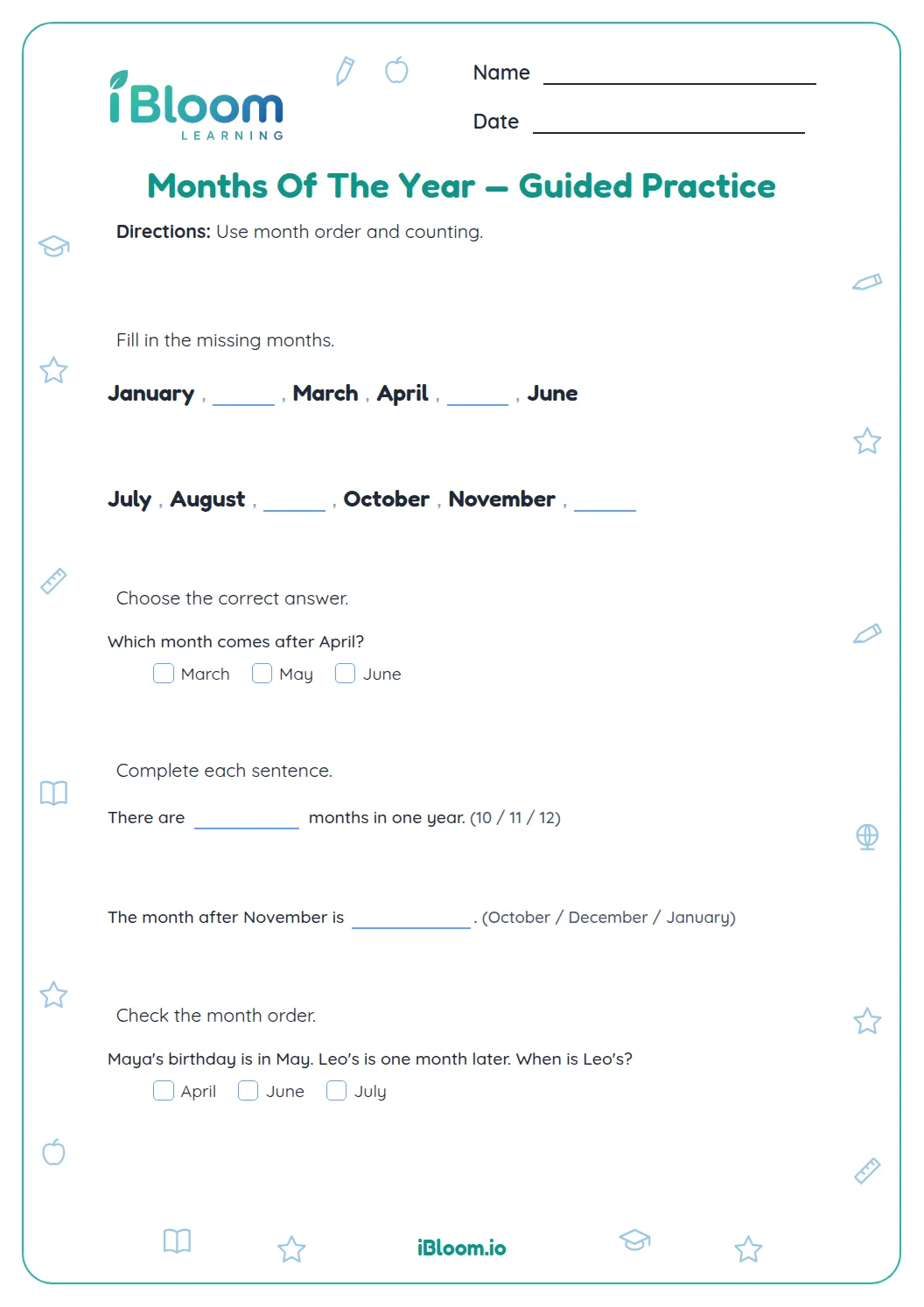
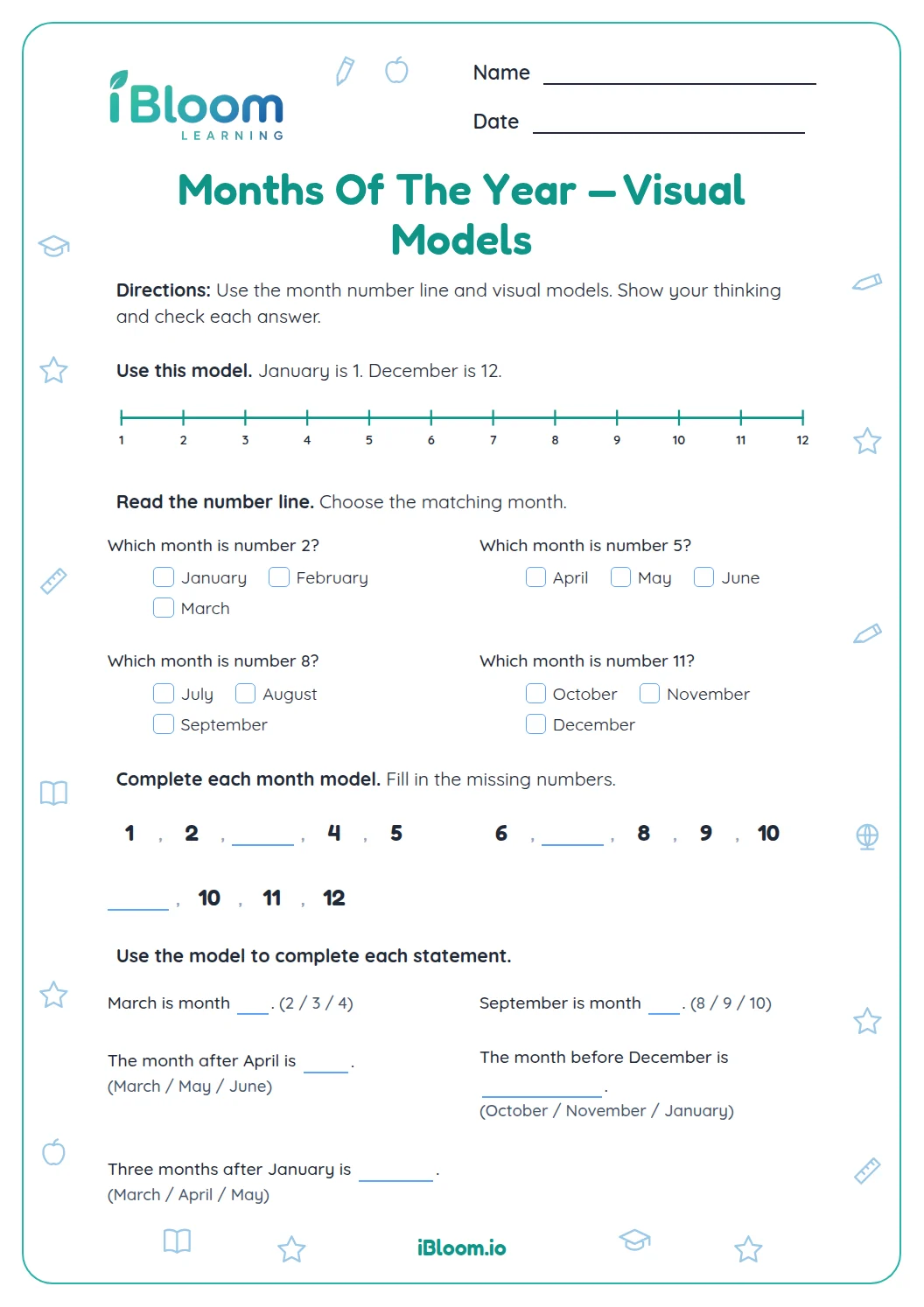
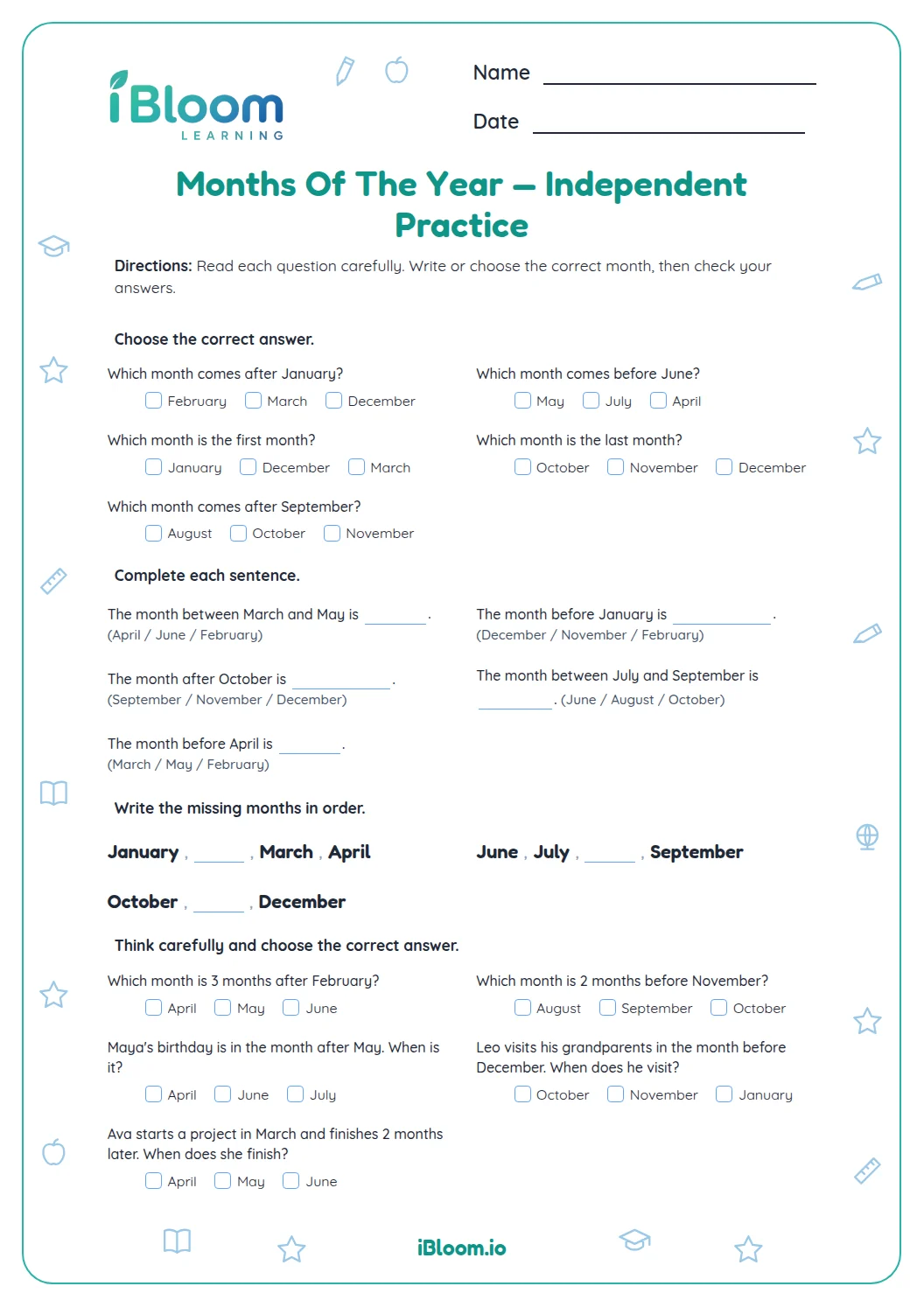
This Grade 2 printable practices the order of the 12 calendar months through short situations children can picture: planting, school events, trips, and seasonal plans. Learners name a month before or after another, arrange months in sequence, and identify a month or months between two events. The 16 items move from month neighbors to short calendar applications, with a separate answer key.
How do month neighbors help?
Part A practices months that come immediately before or after a named month, then asks learners to place month names in calendar order. For example, after March comes April, so April follows March in the sequence.
- Say the month names in order when needed.
- Check that the first and last month are in the right places.
How can a month fall between two events?
Part B uses event clues to find a month between two dates or to continue a short calendar sequence. For February and May, the months in between are March and April.
How can an adult support the practice?
Keep a calendar nearby and invite the learner to point to each named month while answering. After checking, have the learner explain which neighboring month helped solve one missed item.
How to use this worksheet
- 1Say January through December in order.
- 2Read the month named in the situation.
- 3Find its position in the year.
- 4Name the month before, after, or between as asked.
- 5For sorting, write every month once in order.
- 6Check the answer key and revisit any skipped month.
Common mistakes and quick fixes
The mistake
Moving from December to January when the question asks for the next month in the same year.
The fix
Check whether the situation names a new year; otherwise use the listed calendar order.
The mistake
Reversing the order of a group of months.
The fix
Start with the earliest month and say the sequence forward.
The mistake
Naming a month beside one endpoint instead of between both endpoints.
The fix
Say the month sequence from the first event to the second and name only the month names in the middle.
What to practice next
Make more practice
Questions parents and teachers ask
Does this worksheet teach month order or clock reading?
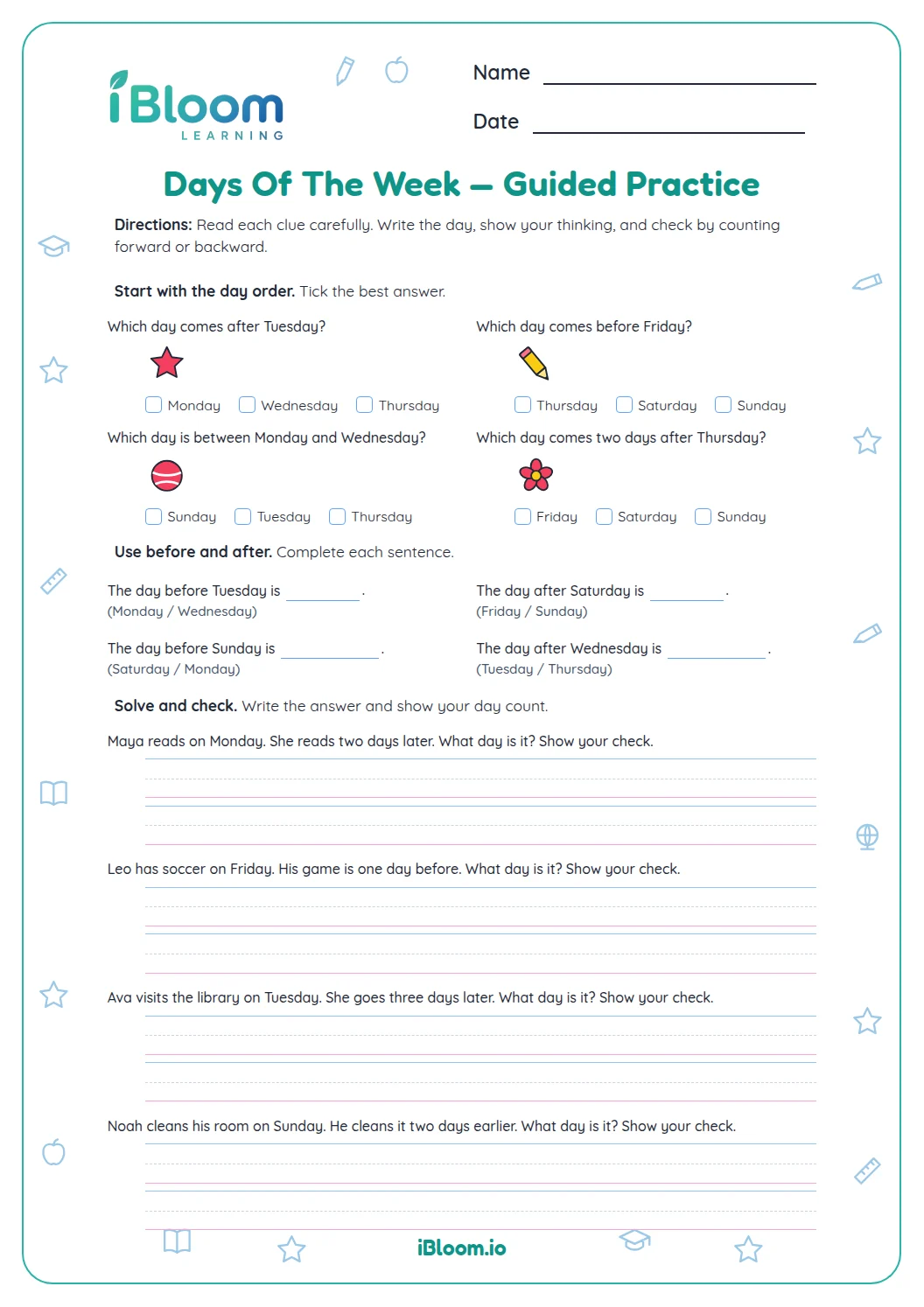
It practices month order and calendar situations. Children name months before or after another month, sort month names, and find the month or months between events; it does not ask them to read clock faces. Have the learner explain the clue before checking the answer key together. A nearby calendar or model can make the sequence easier to see.
How many questions are included?
There are 16 questions in two parts. The first part focuses on month neighbors and ordering, while the second part applies the sequence to calendar situations. Have the learner explain the clue before checking the answer key together. A nearby calendar or model can make the sequence easier to see.
Is an answer key included?
Yes. The separate key lists the month or ordered month sequence for every item. For the sorting questions, check that all requested months appear once and in calendar order. Have the learner explain the clue before checking the answer key together. A nearby calendar or model can make the sequence easier to see.
Can a child use a wall calendar?
Yes. A calendar can help a learner locate a named month and follow the sequence forward or backward. Encourage the child to answer in their own writing rather than copying unrelated dates. Have the learner explain the clue before checking the answer key together. A nearby calendar or model can make the sequence easier to see.
How should I review a missed answer?
Return to the named month and say the calendar sequence aloud until you reach the answer. For a question asking what falls between two events, stop before the second endpoint and name the month or months in the middle. Then ask the learner to point to the clue on a nearby calendar.