




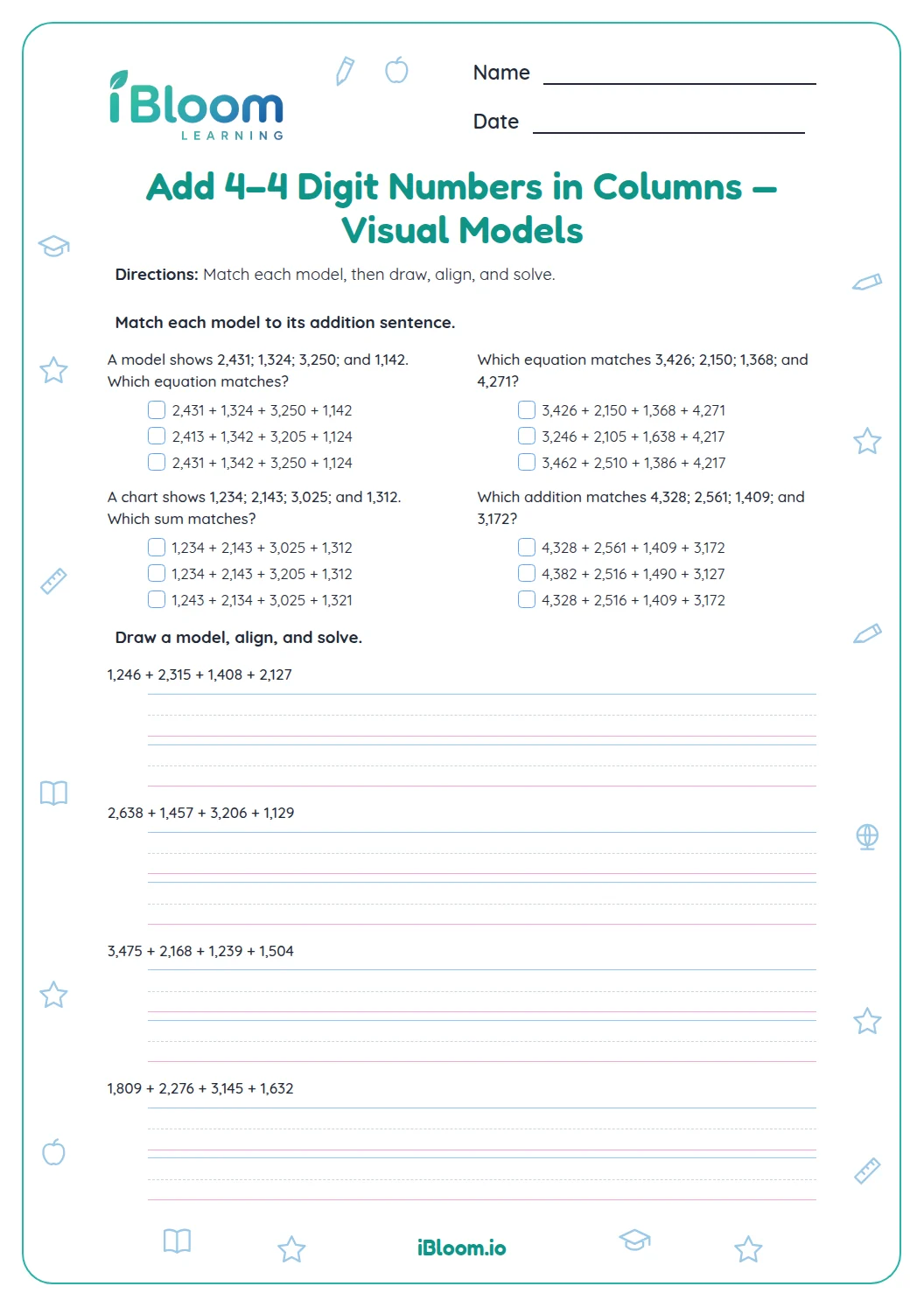

About this worksheet
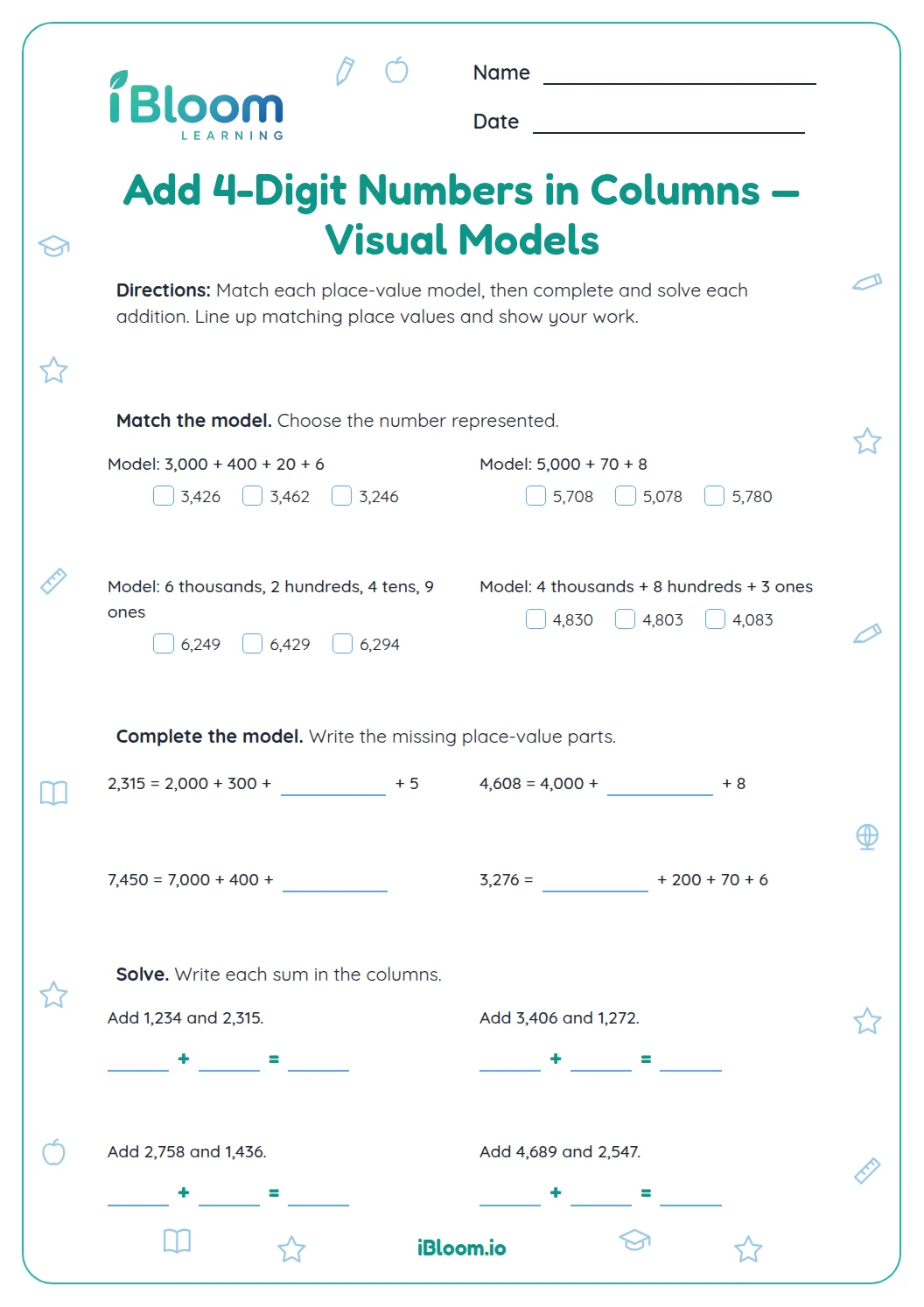
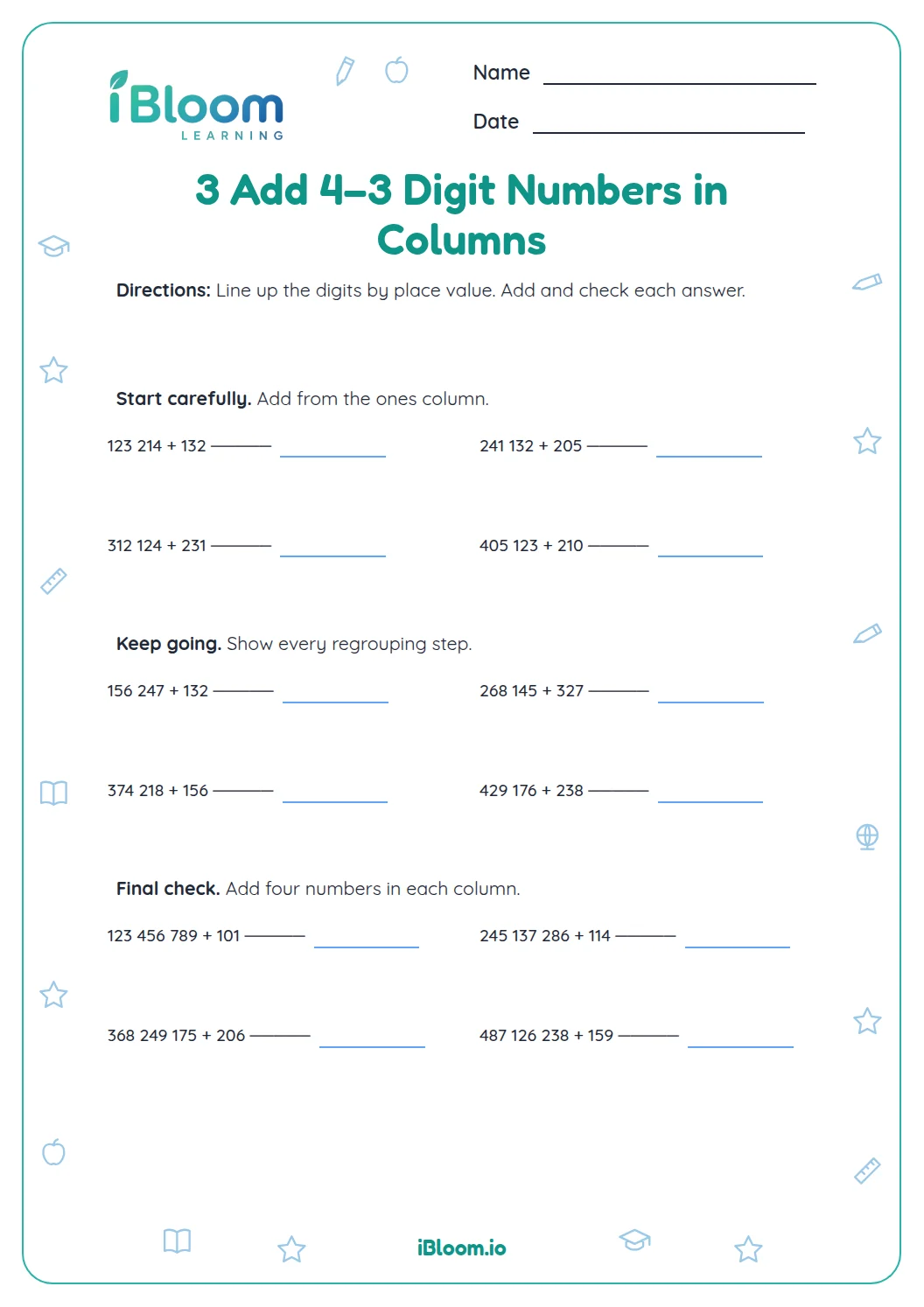
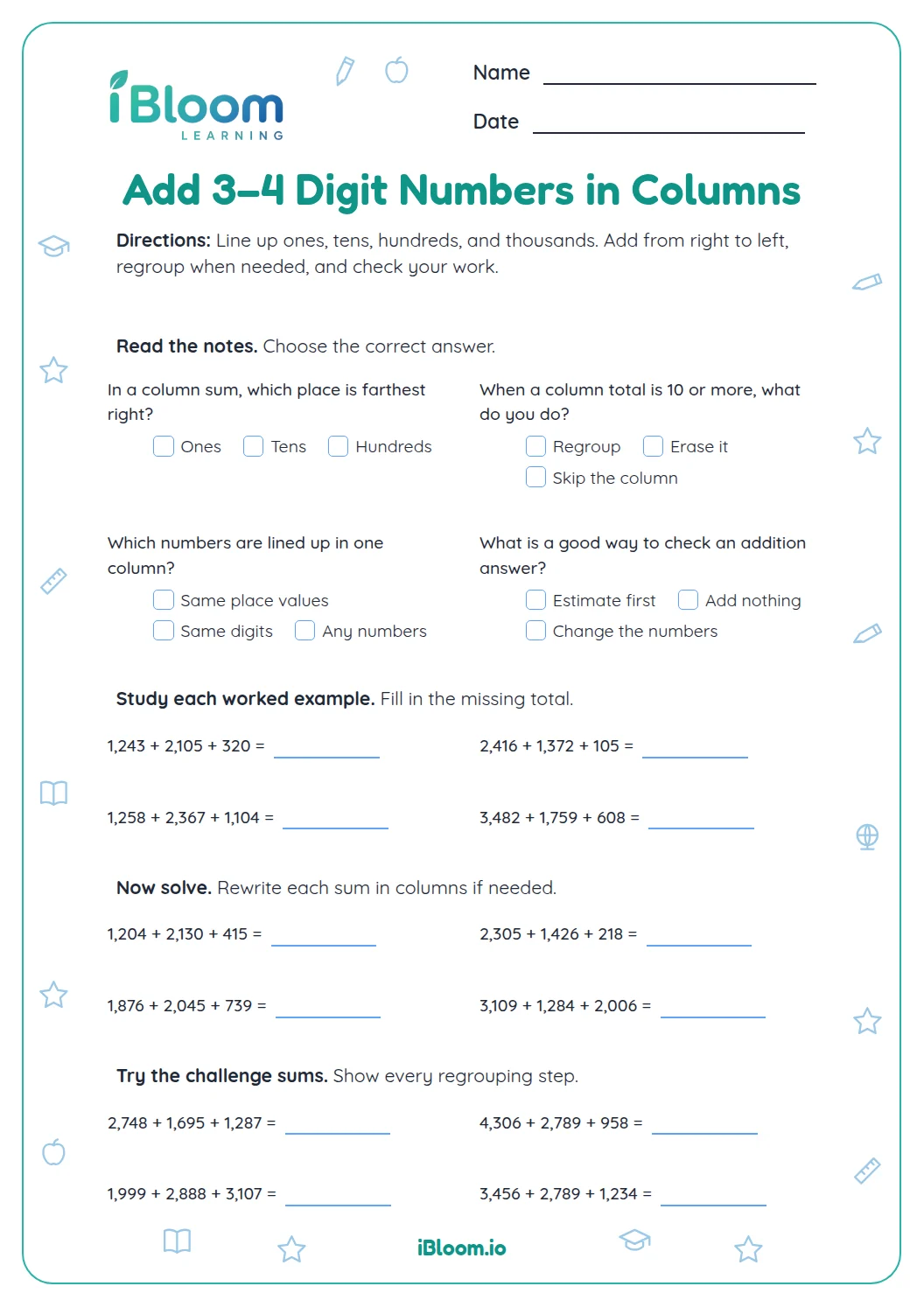
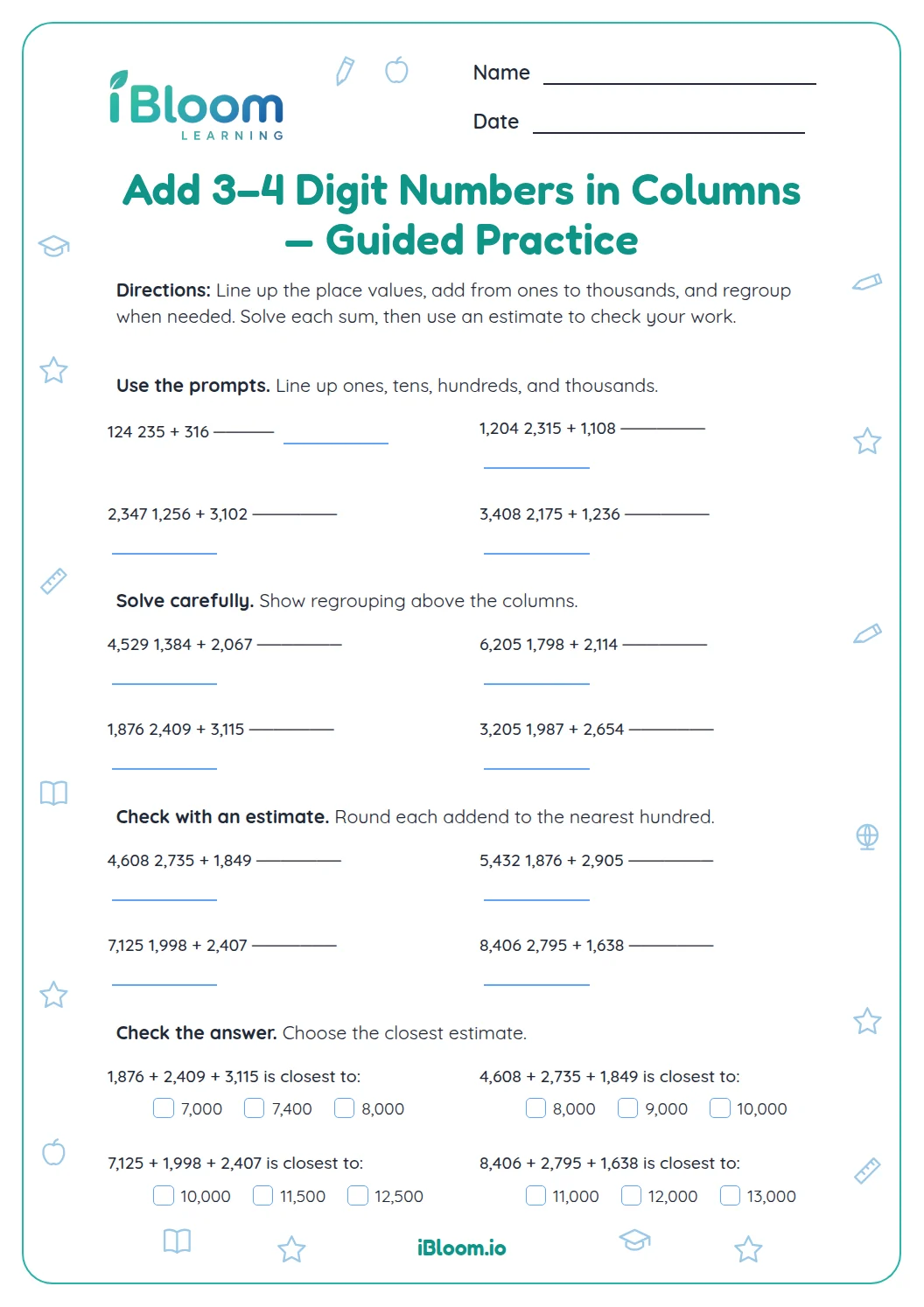
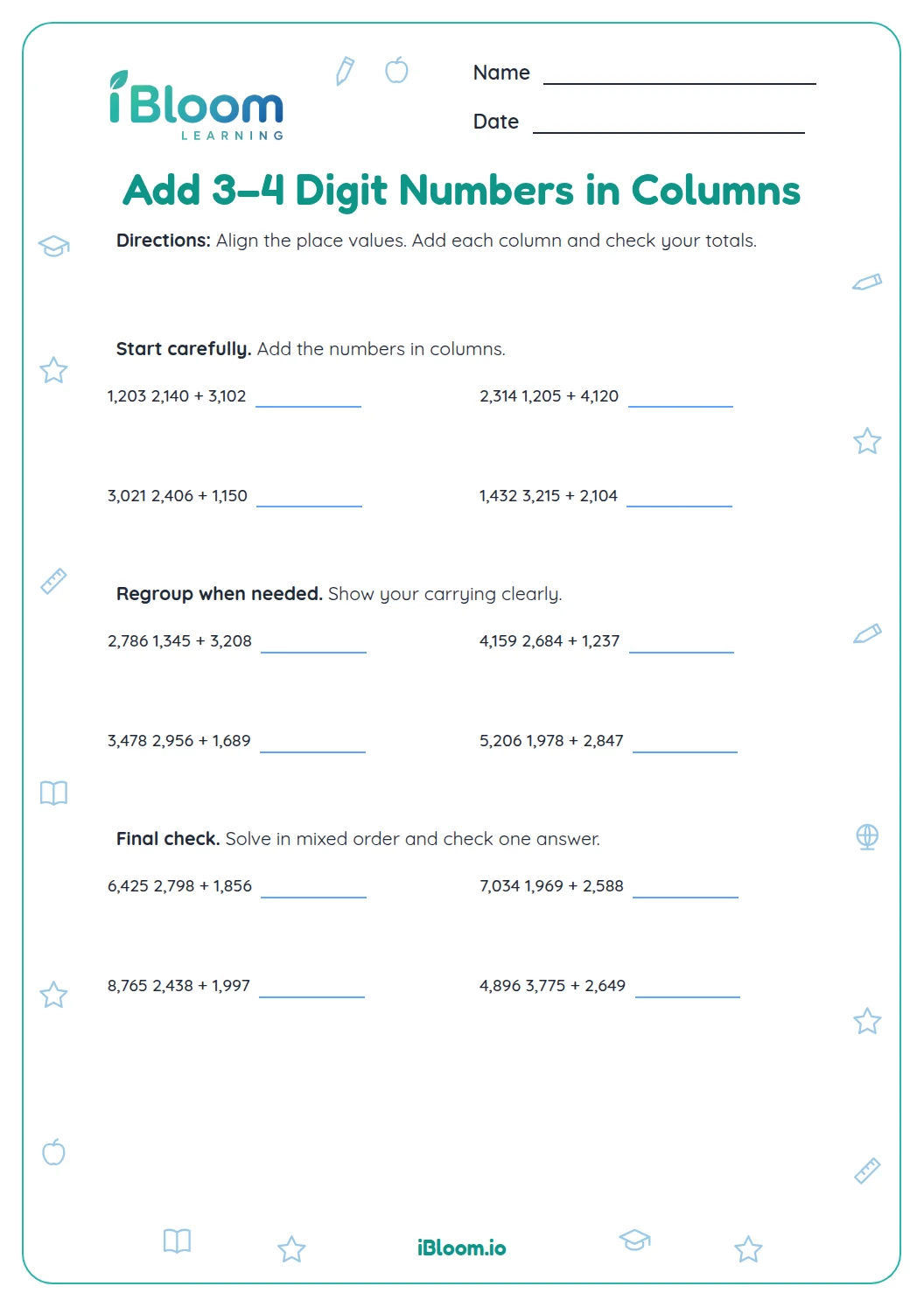
This printable gives learners independent practice adding four-digit numbers in columns. The first problems build fluency with aligned place values, followed by sums that require regrouping across ones, tens, or hundreds. Three short contexts ask for totals in cans, books, and visitors, and a final multiple-choice item checks a sum. A separate answer key lists each result.
Aligned to 4.NBT.B.4
Why must the digits line up?
Each column represents a place: ones under ones, tens under tens, hundreds under hundreds, and thousands under thousands. Add from the ones column and regroup when a place totals ten or more.
Question 12 asks for 2,475 cans plus 3,689 cans. The sum is 6,164 cans.
- 1 2,475
- 2+ 3,689
- 3 6,164 cans
- 4Regroup 14 ones as 1 ten and 4 ones.
When should you regroup?
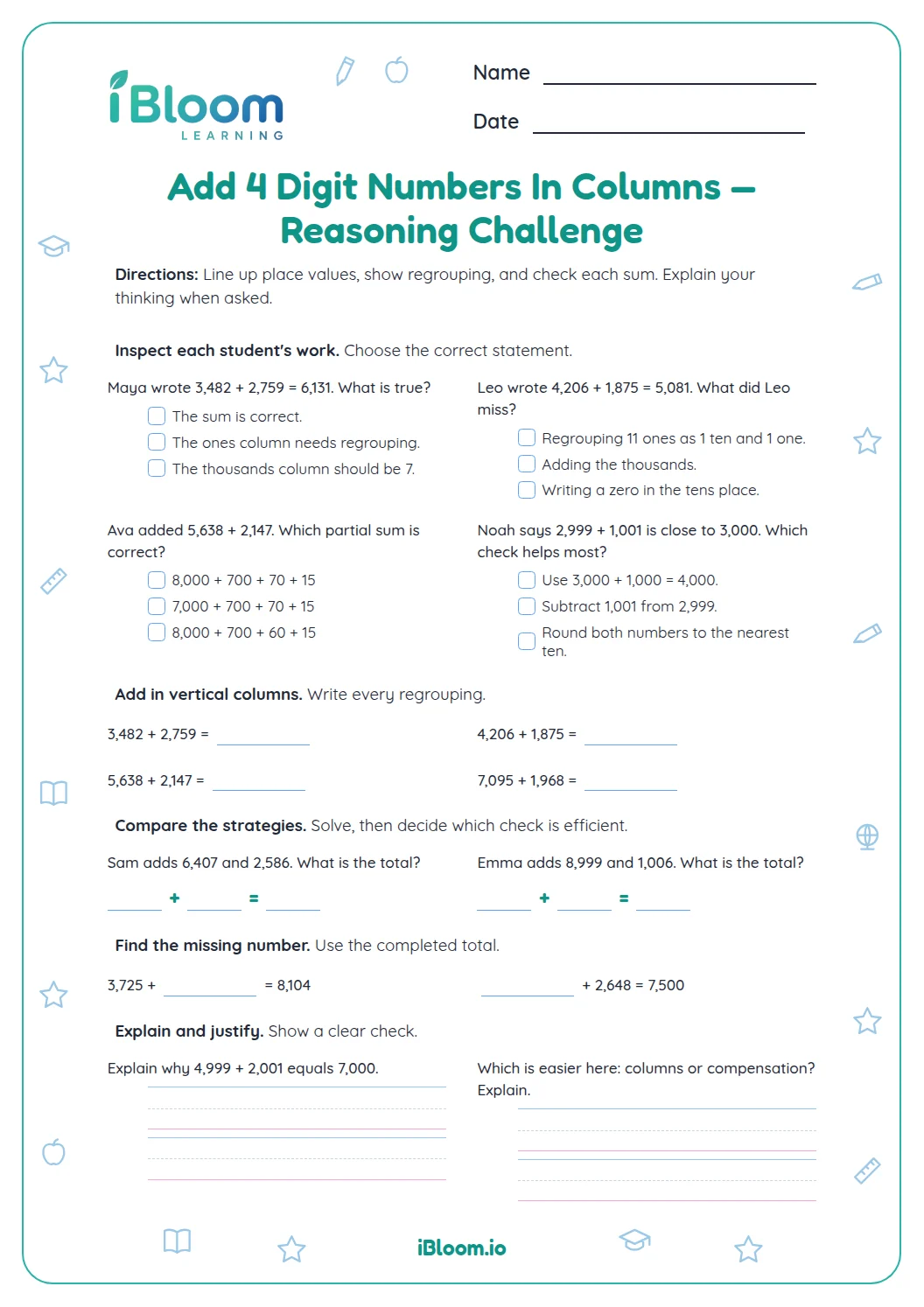
When a column totals ten or more, write the ones digit in that place and carry the tens digit to the next column. For example, 8 ones + 9 ones = 17 ones, or 1 ten and 7 ones. Include the carried ten in the tens-column sum.
How do the story problems use addition?
Each story gives two amounts and asks for their combined total. Underline the quantities, write an addition sentence, then include the unit in the answer: cans, books, or visitors.
How to use this worksheet
- 1Write the numbers one below the other with matching places aligned.
- 2Add the ones digits first.
- 3Regroup a column total of ten or more into the next place.
- 4Continue through the thousands column.
- 5Estimate or add in reverse to check the total.
Common mistakes and quick fixes
The mistake
Misaligning a number with a different number of digits.
The fix
Start at the right edge so ones digits share a column.
The mistake
Forgetting to add a carried ten.
The fix
Mark the carried digit above the next column and include it in that sum.
The mistake
Writing the digits of a two-digit column total in the same column.
The fix
Keep the ones digit in its place and carry the tens digit to the next column.
Common Core alignment
The page practices multi-digit addition with the standard algorithm.
Add multi-digit whole numbers with the standard algorithm.
On this sheet: Every column problem uses the standard algorithm to add four-digit numbers.
Show the official wordingHide the official wording
Fluently add and subtract multi-digit whole numbers using the standard algorithm.
What to practice next
Make more practice
Further reading
Questions parents and teachers ask
How do children add four-digit numbers in columns?
Line up the ones, tens, hundreds, and thousands, then add from right to left. Regroup when a column reaches ten or more. The first eleven questions provide column-addition practice, and the last item asks learners to recognize a correct sum.
What does regrouping mean?
Regrouping trades ten units in one place for one unit in the next place, such as ten ones for one ten. In question 12, adding 2,475 and 3,689 requires regrouping in several columns before reaching a total of 6,164 cans.
How can my child check an addition answer?
Estimate whether the total is reasonable, then re-add each column carefully. Another check is to subtract one addend from the total and see whether the other addend remains. For story problems, also check that the answer includes the right unit.
What units belong in the word-problem answers?
Question 12 asks for cans, question 13 for books, and question 14 for visitors. Including the unit tells what the total counts. The answer key includes each total with its unit so the written response is easy to check.
Does the worksheet include an answer key?
Yes. The separate key gives the completed sum for each column problem, the three story totals with units, and the correct choice for the final sum check. Use it after the learner has completed the calculations to review regrouping steps.