

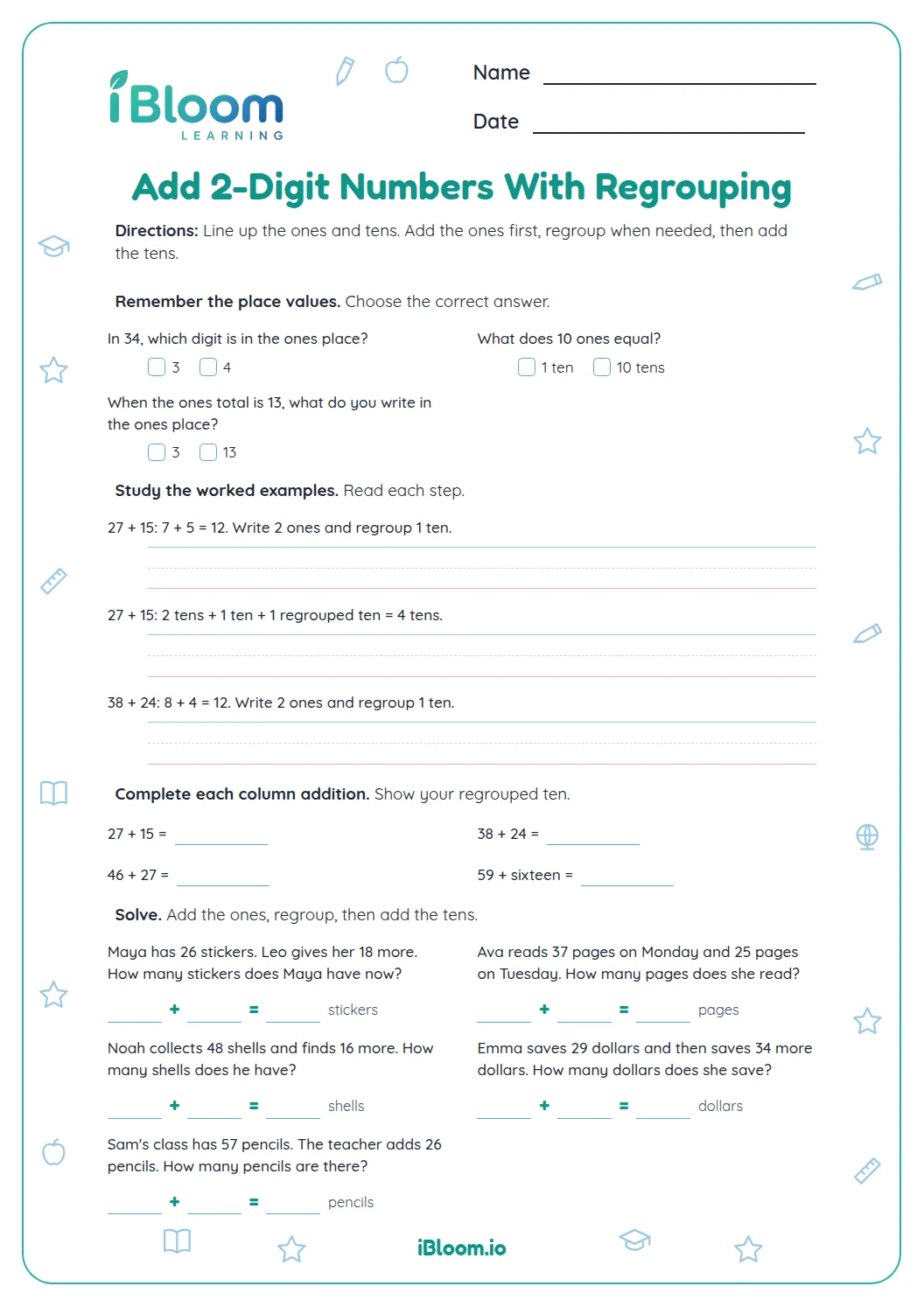
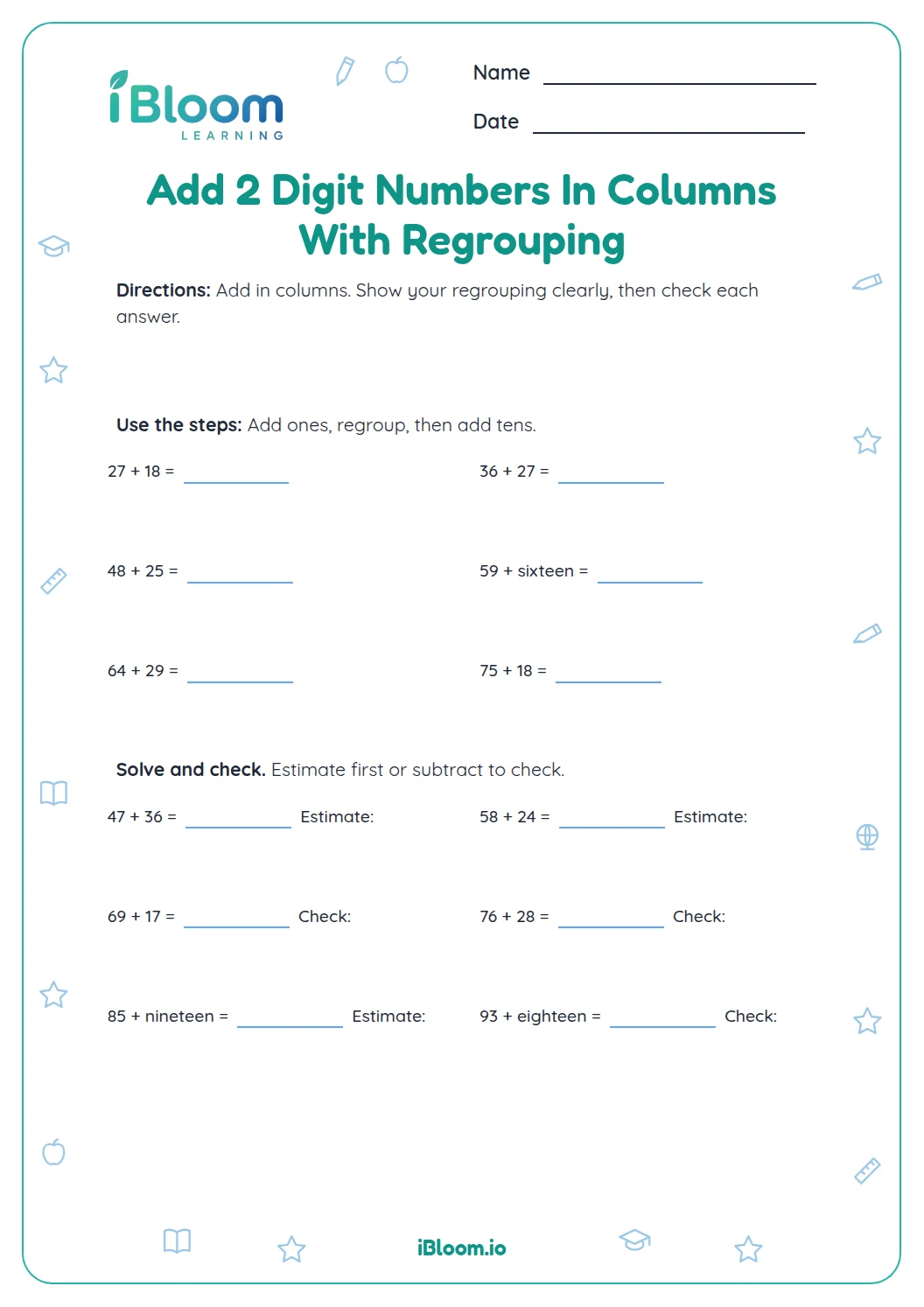

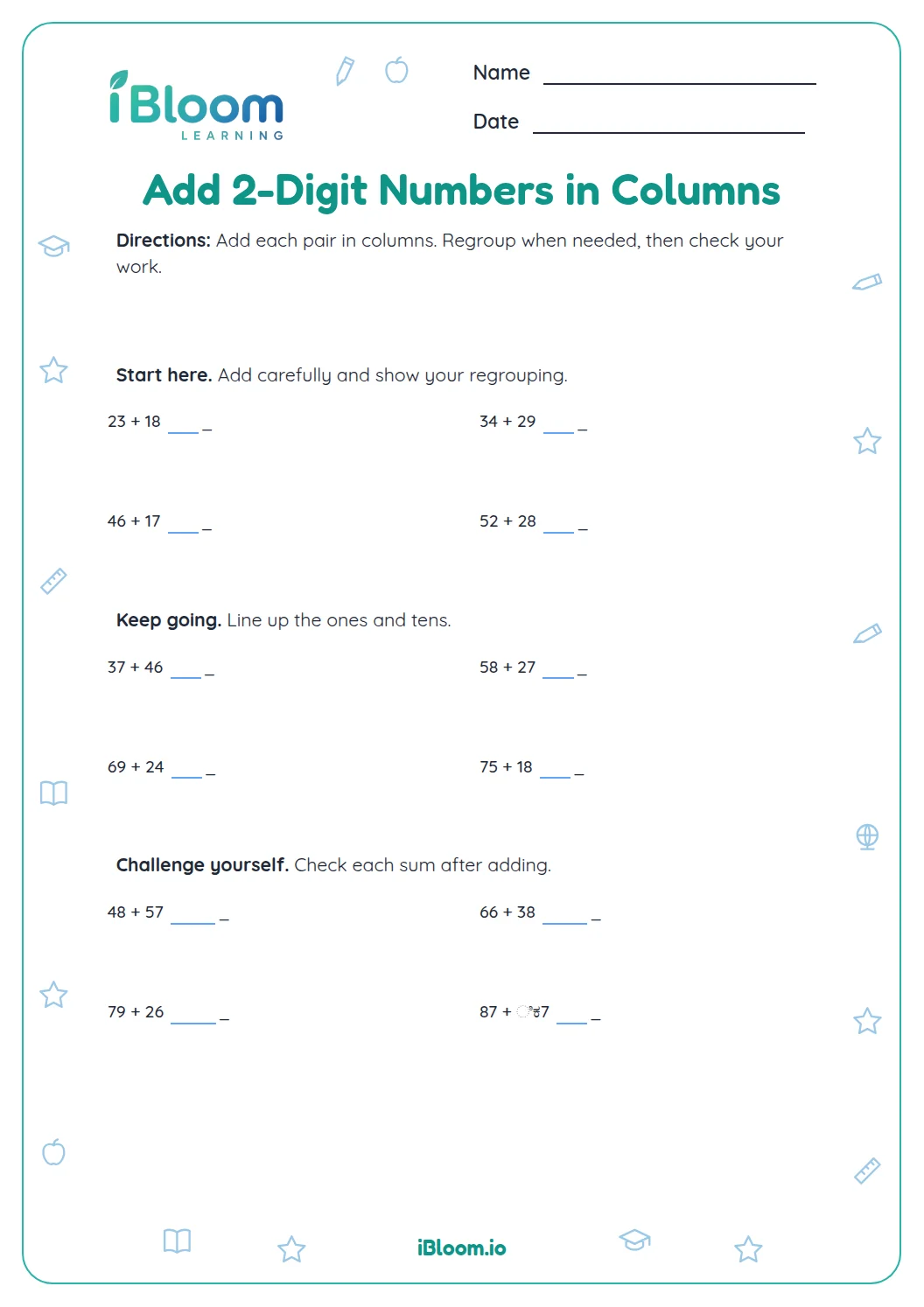
About this worksheet
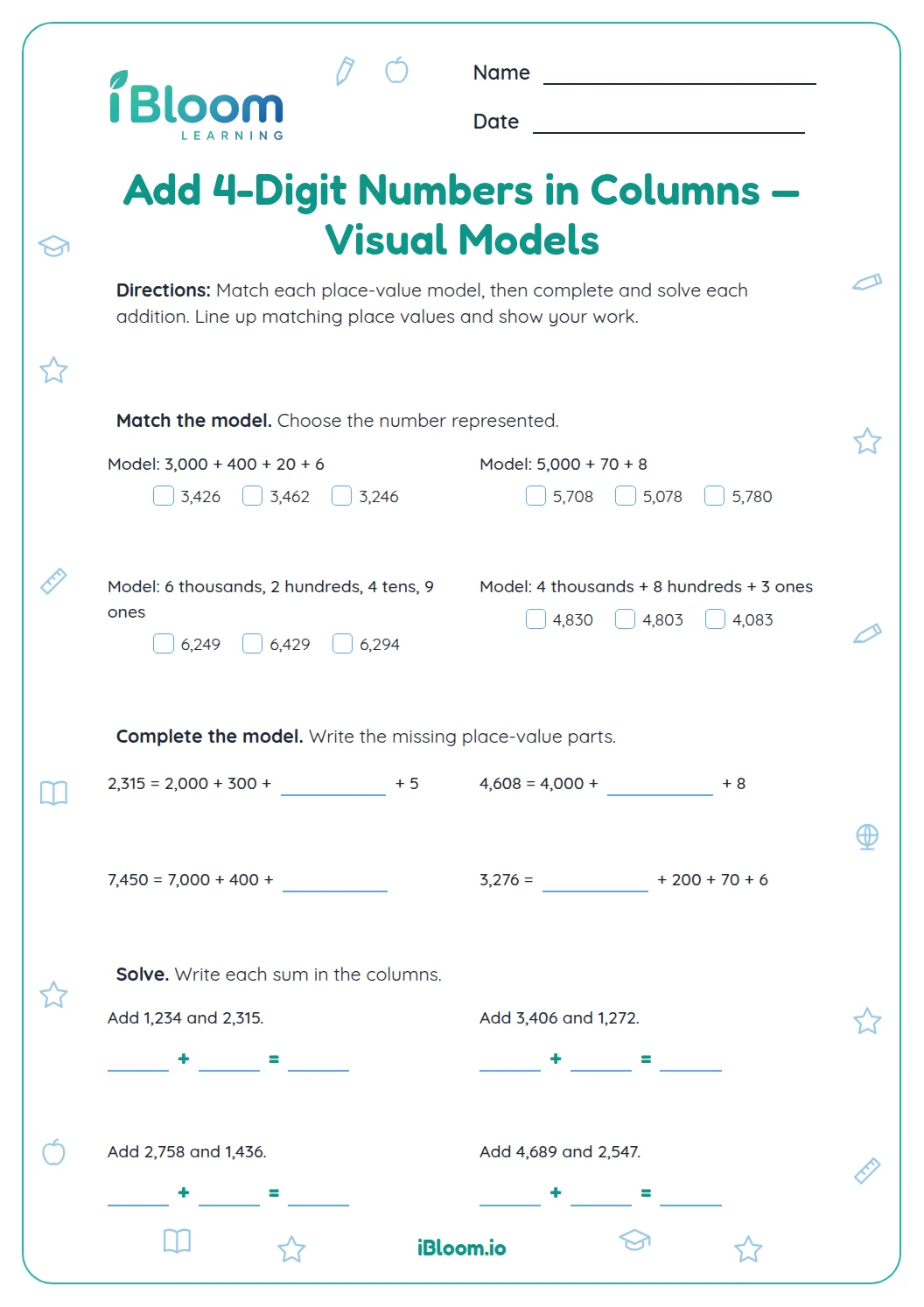
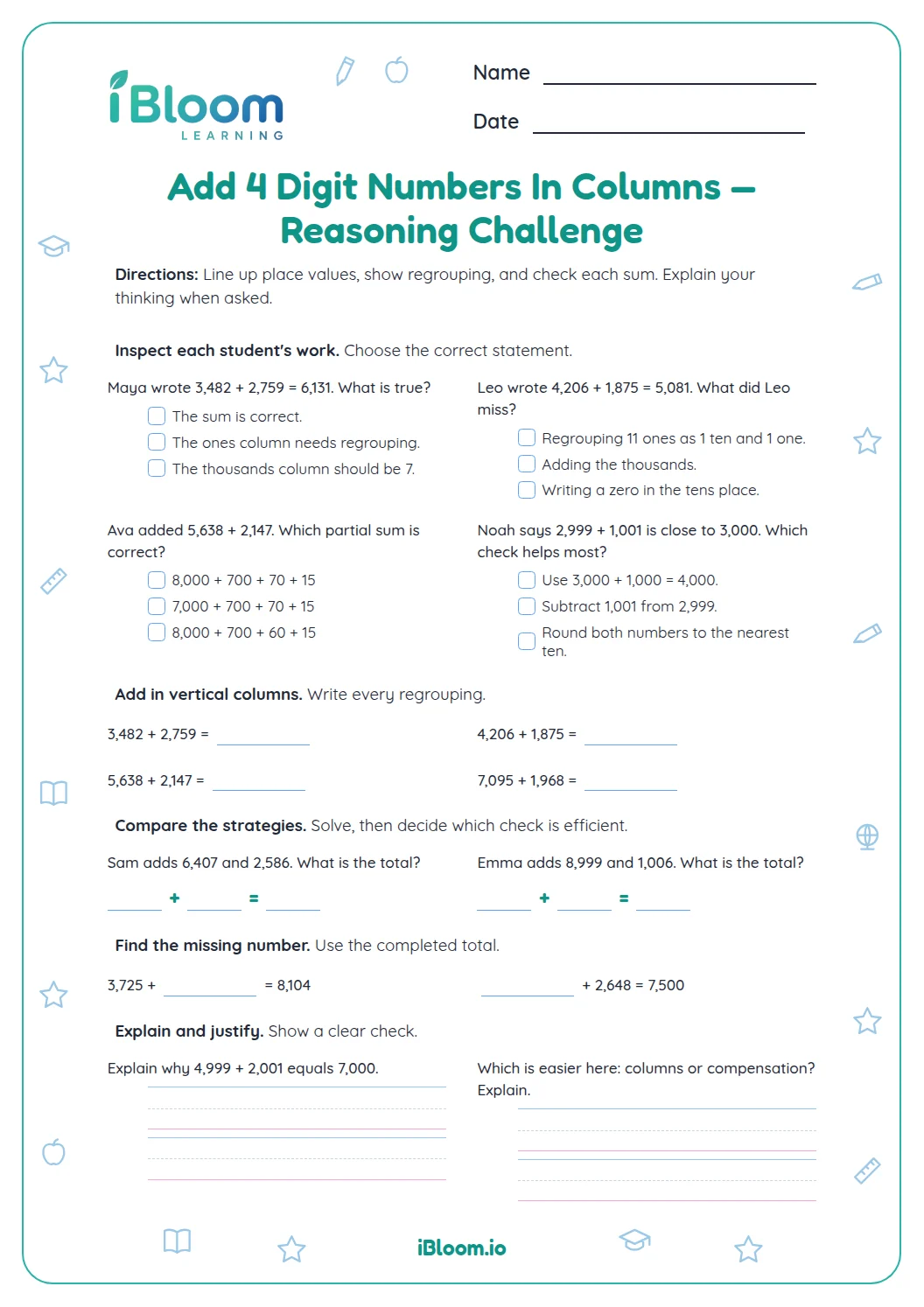
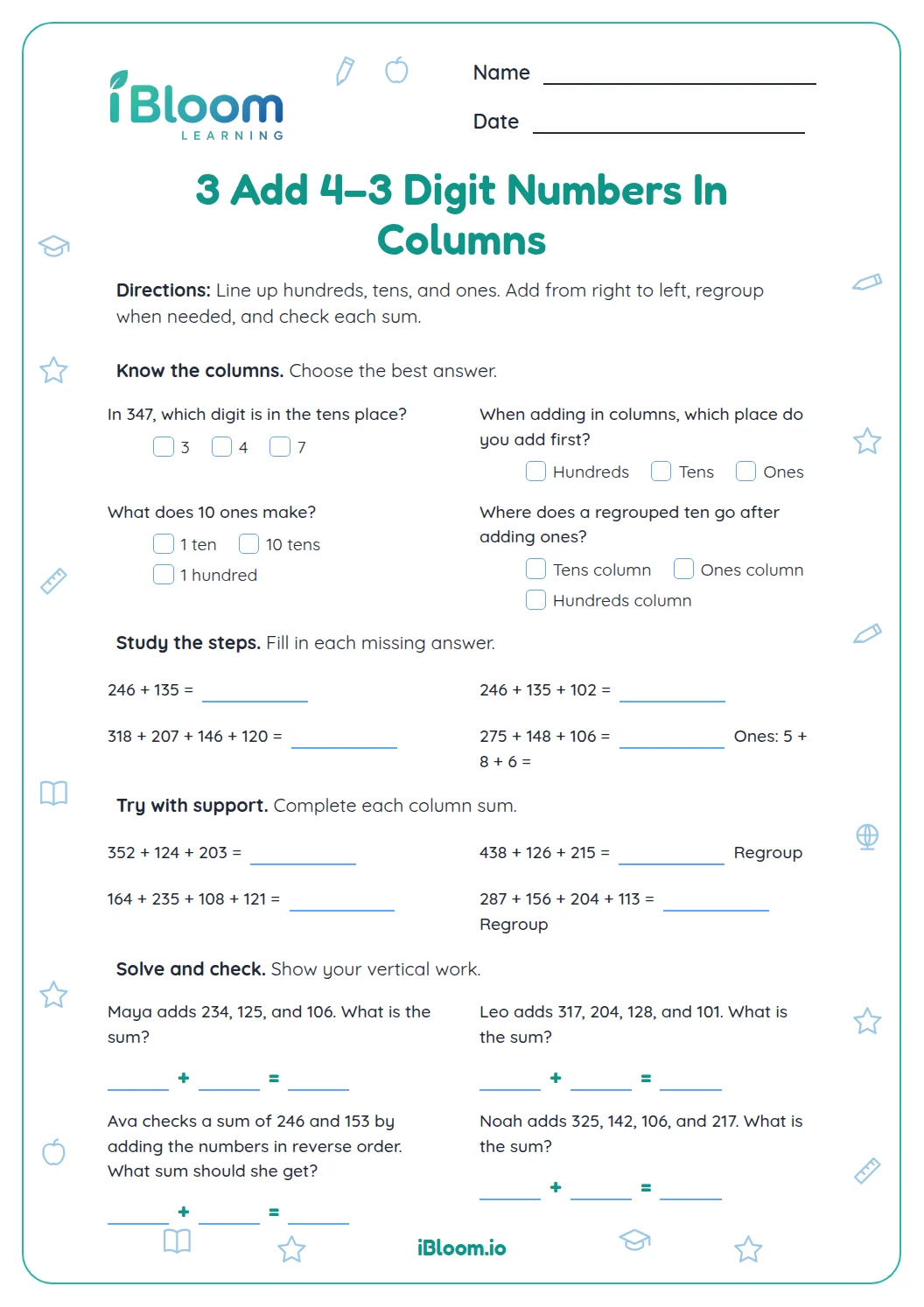
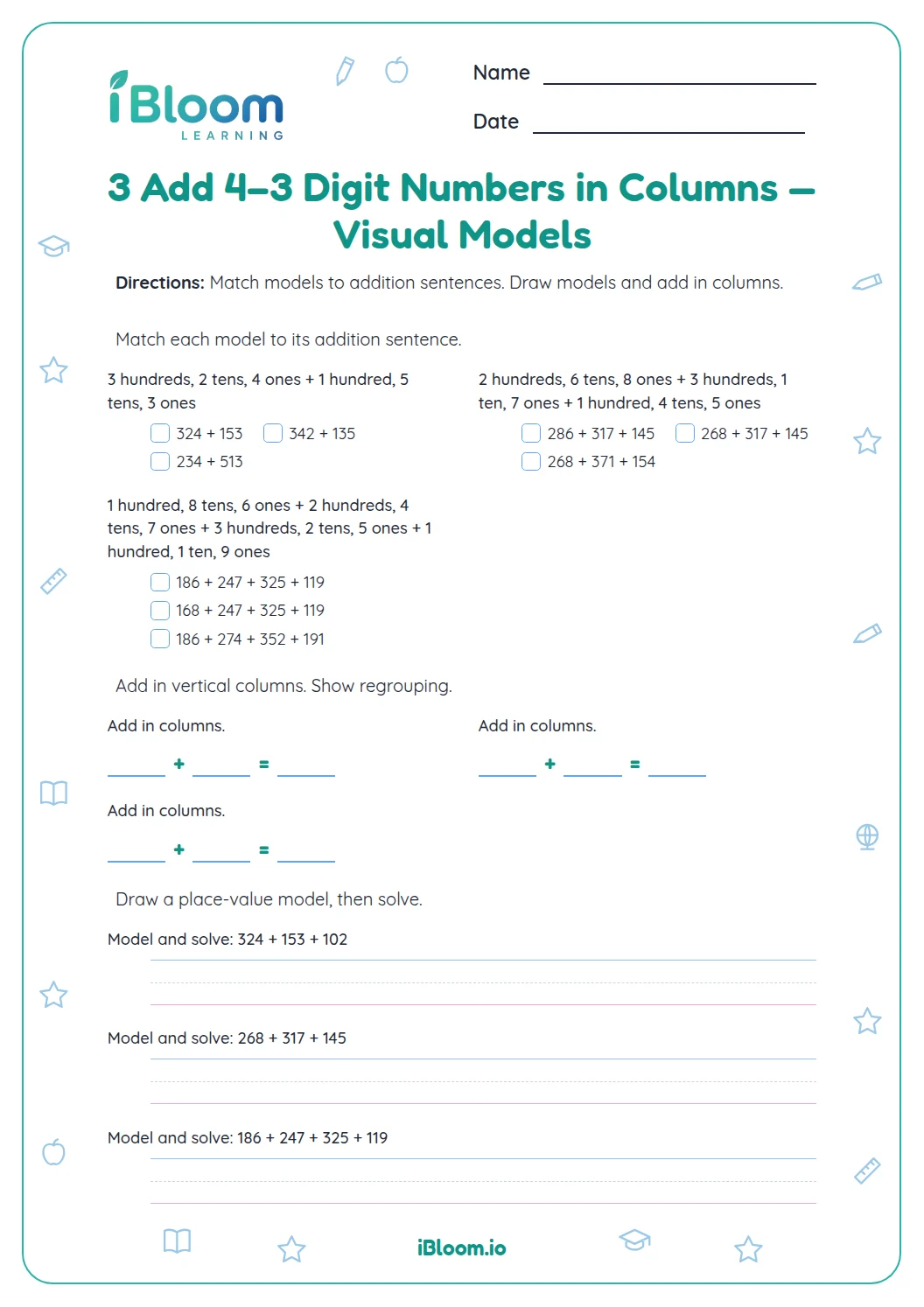
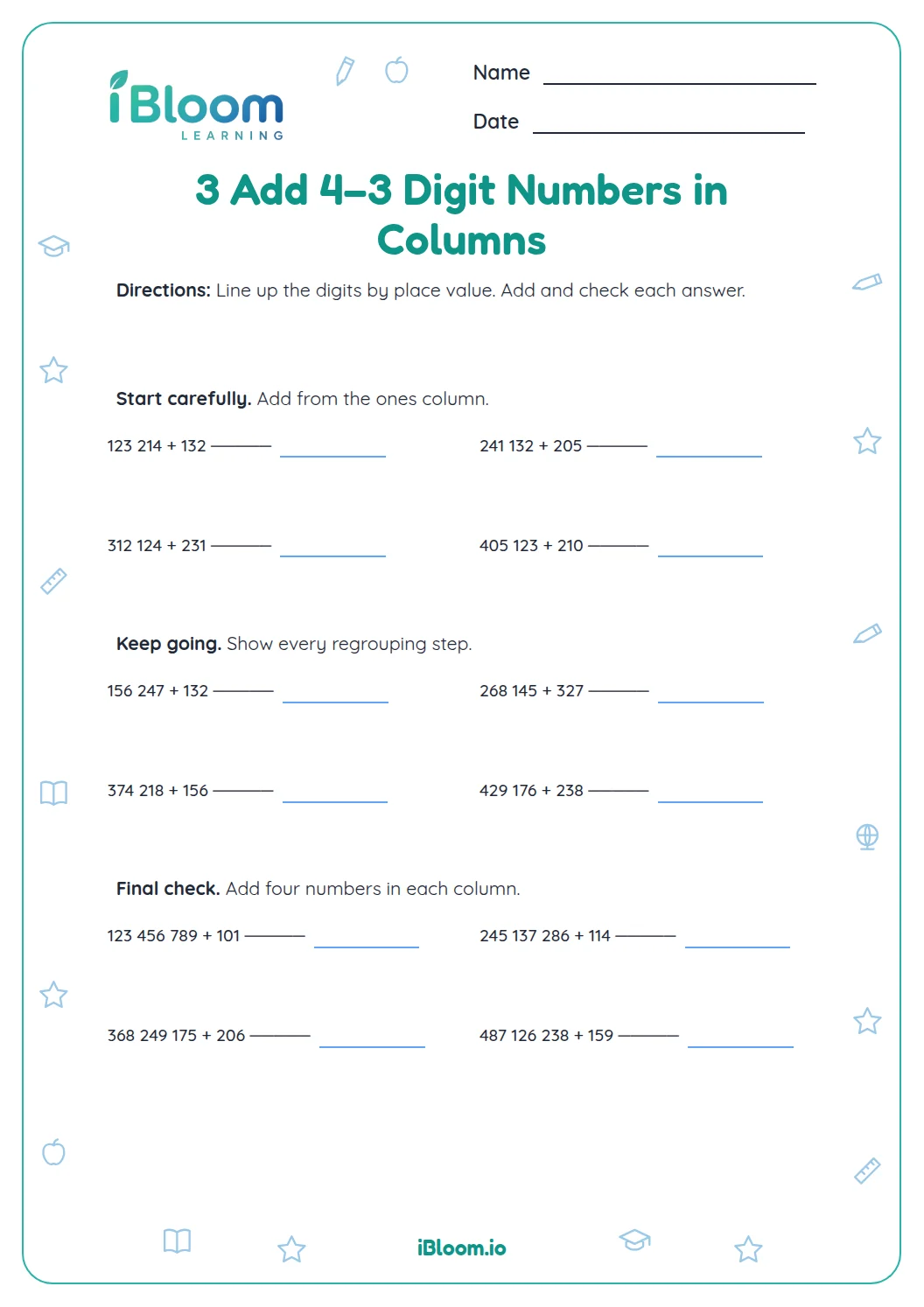
This Grade 3 printable practices adding four-digit whole numbers in columns. Children begin with pairs that do not require regrouping, then solve problems that require regrouping across places, and finish with real-world totals. The repeated four-digit format keeps attention on lining up ones, tens, hundreds, and thousands. The named four-digit algorithm aligns with CCSS 4.NBT.B.4. The worksheet includes 16 problems and a separate answer key.
Aligned to 4.NBT.B.4
Why line up the digits?
Each digit belongs to a place. When the columns line up, the ones add to ones and the hundreds add to hundreds.
When do you regroup?
Regroup when a column totals 10 or more. For example, in 2,786 + 1,459, the ones are 6 + 9 = 15: write 5 ones and carry 1 ten.
What practice is included?
The first part builds accurate alignment; the next part adds regrouping across places; the final four questions apply addition to quantities.
- Part A: six four-digit sums without regrouping
- Part B: six four-digit sums with regrouping
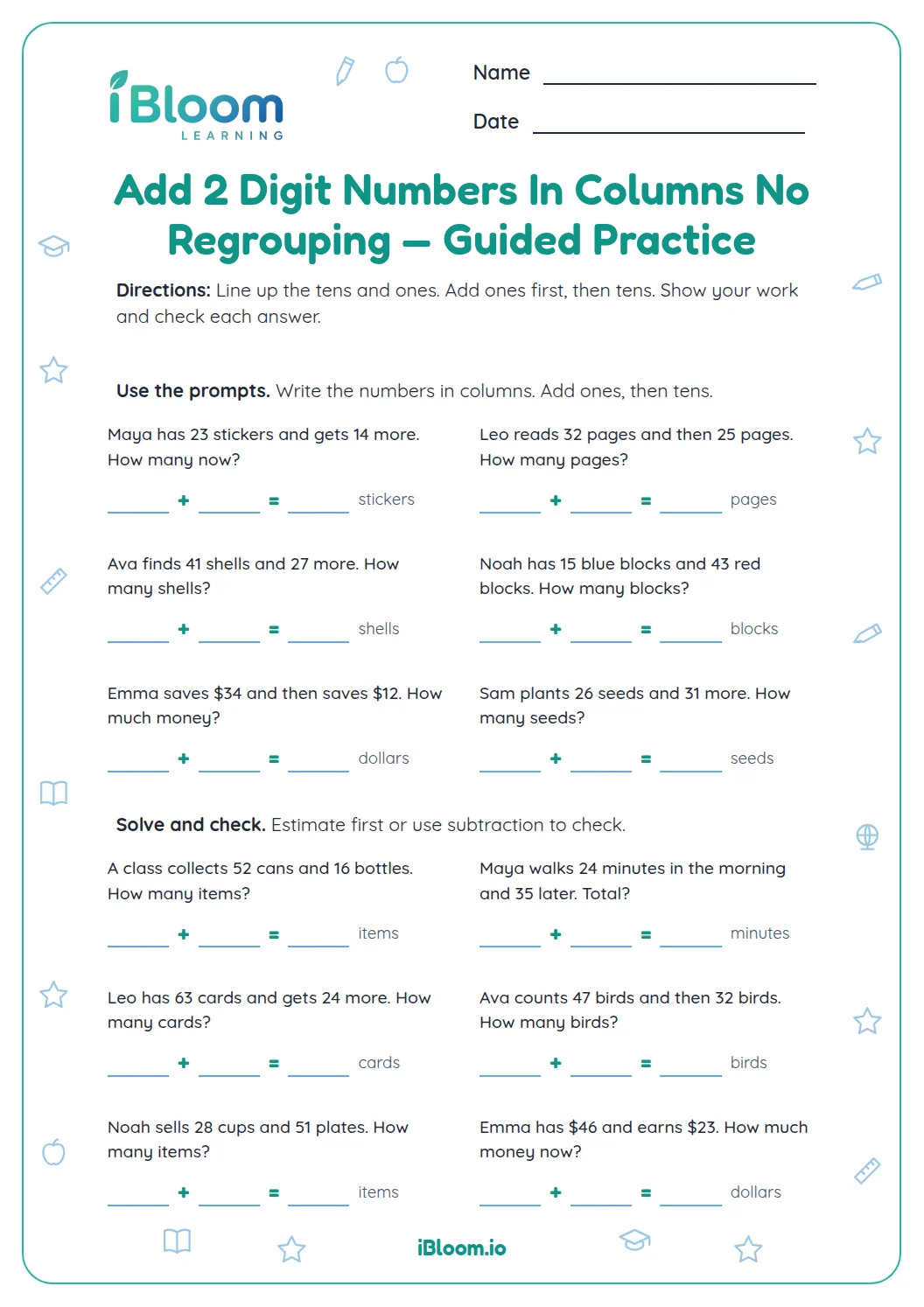
- Part C: four word problems with working space
How to practice
- 1Write each addend with ones under ones and thousands under thousands.
- 2Add the ones column first.
- 3Regroup each full group of ten to the next column.
- 4Continue through the thousands column.
- 5Estimate whether the total is reasonable, then check with the key.
Common addition slips
The mistake
Putting a carried ten in the ones column.
The fix
Write the carried 1 above the tens column.
The mistake
Adding digits across a row rather than by place.
The fix
Point to one column at a time and name its place.
The mistake
Forgetting to add a carried digit.
The fix
Recheck each column including the small carried number.
Common Core alignment
This page practices adding four-digit whole numbers with the standard algorithm.
Fluently add and subtract multi-digit whole numbers using the standard algorithm.
On this sheet: The page applies the standard algorithm to four-digit addends in columns, the exact skill named in the worksheet title.
Show the official wordingHide the official wording
Fluently add and subtract multi-digit whole numbers using the standard algorithm.
What to practice next
Make more practice
Questions parents and teachers ask
How does regrouping work in a four-digit addition problem?
When a column has ten or more, trade ten units in that place for one unit in the next place. For example, 15 ones become 5 ones and 1 ten. Continue the same way in the tens and hundreds columns, then check whether the total is near your estimate.
Why should the digits line up in columns?
Each vertical column represents one place value. Ones must be added to ones, tens to tens, hundreds to hundreds, and thousands to thousands. If digits shift into the wrong columns, the sum can be far off even when each small addition fact is correct.
What is included in the answer key?
The separate key gives the sum for every practice item, including the four story problems. For a word problem, children can compare both their equation and total with the key, then redo a missed regrouping step in the column where it occurred.
Can a child estimate before finding the exact sum?
Estimate each addend to a nearby thousand to get a quick sense of the total. For 2,786 + 1,459, an estimate near 4,000 helps show that an answer such as 425 or 40,000 cannot be correct. After calculating, compare the exact sum with your estimate.
How many questions and pages are included?
The worksheet has 16 questions across two practice pages, followed by a separate answer-key page. The first section has six four-digit sums without regrouping, the next has six that require regrouping, and the final section has four word problems with room for working.