






About this worksheet
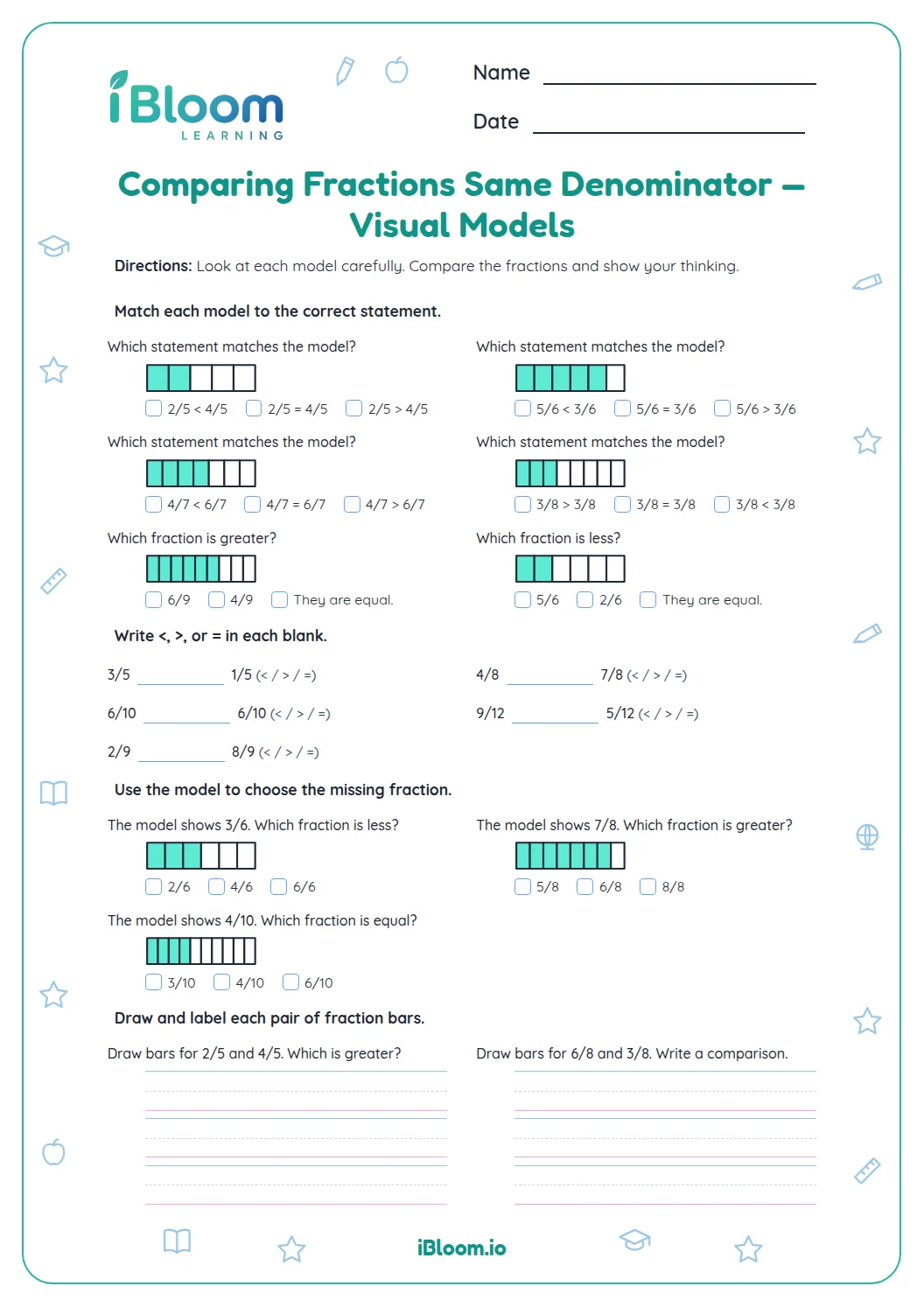
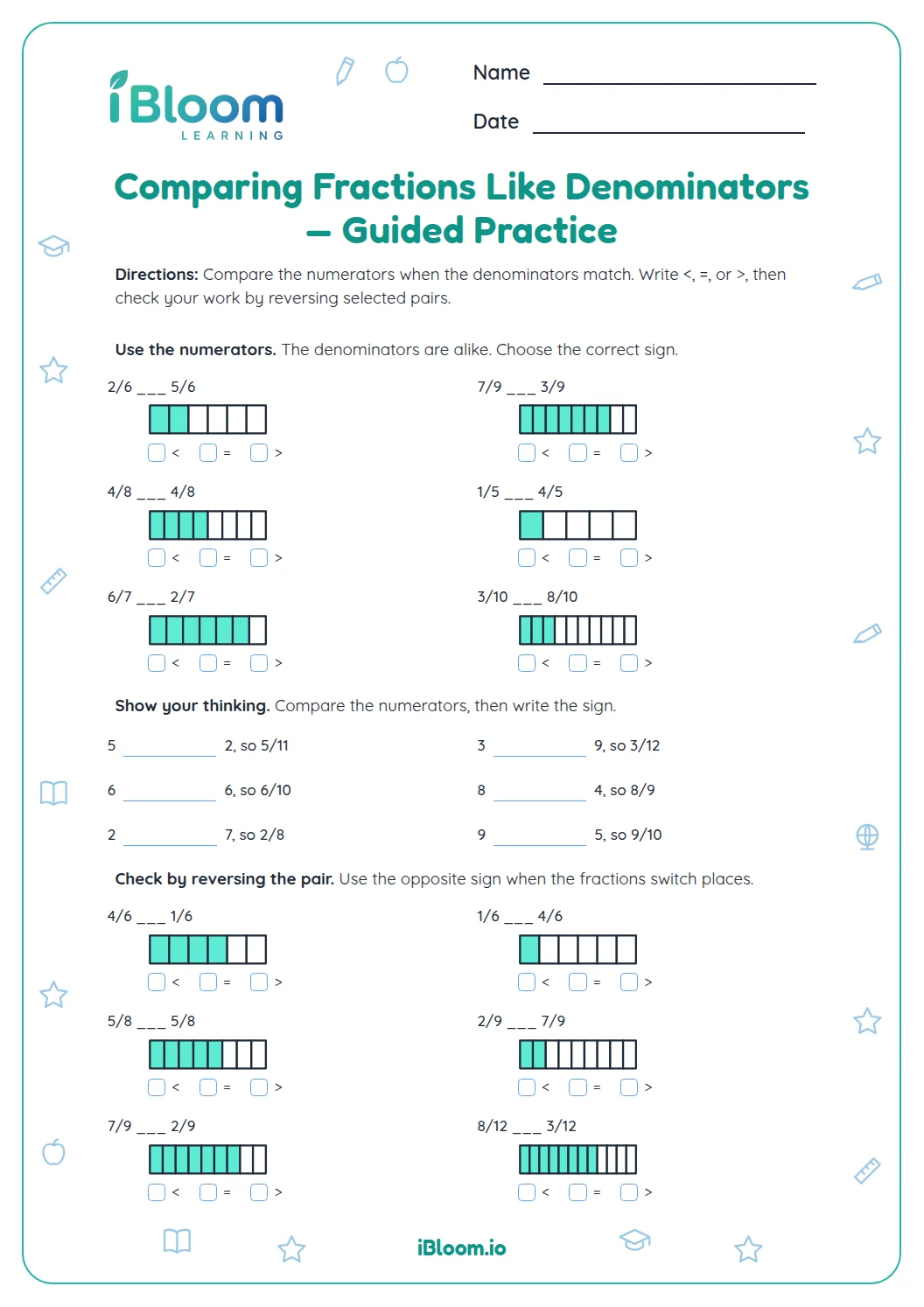
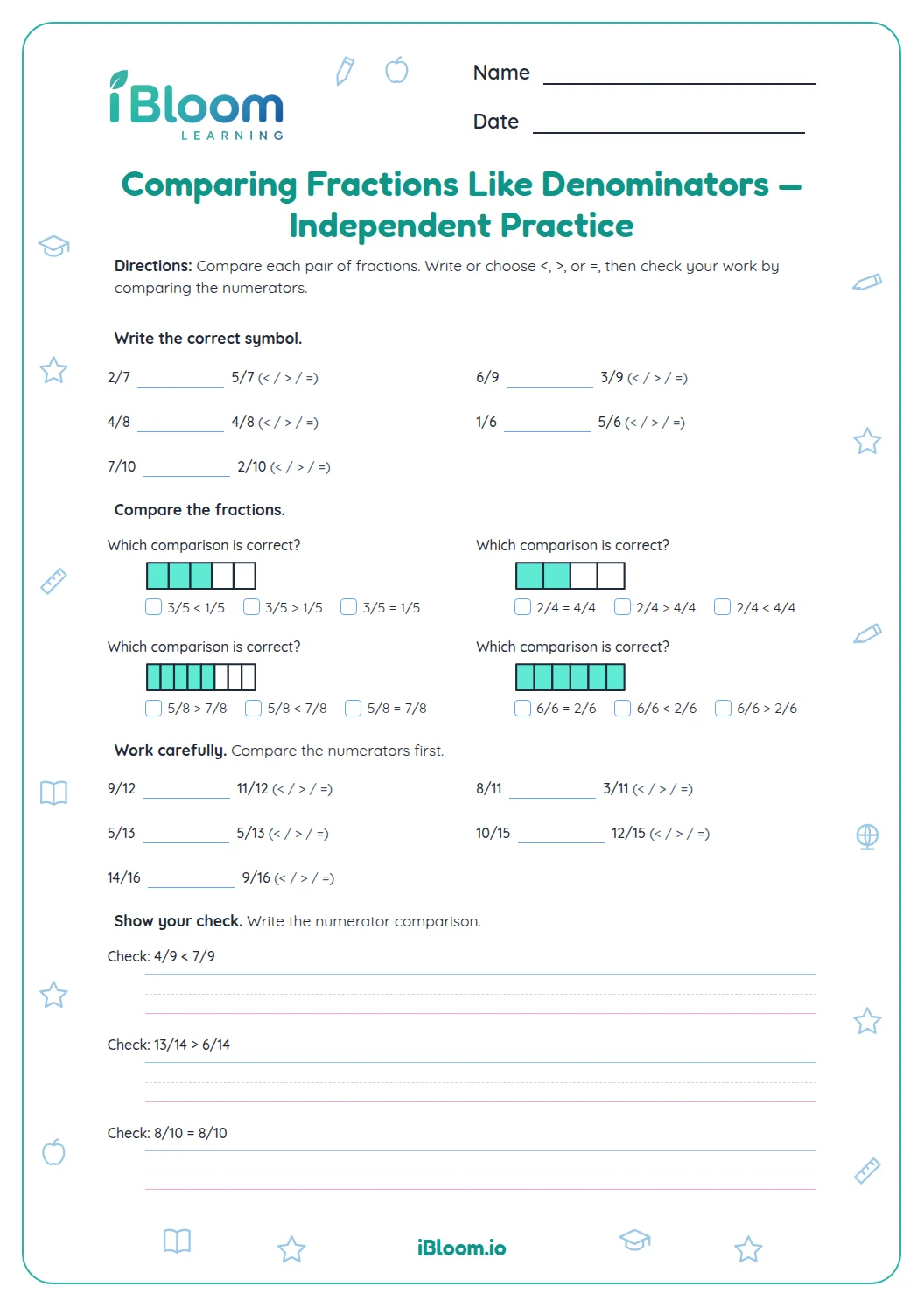
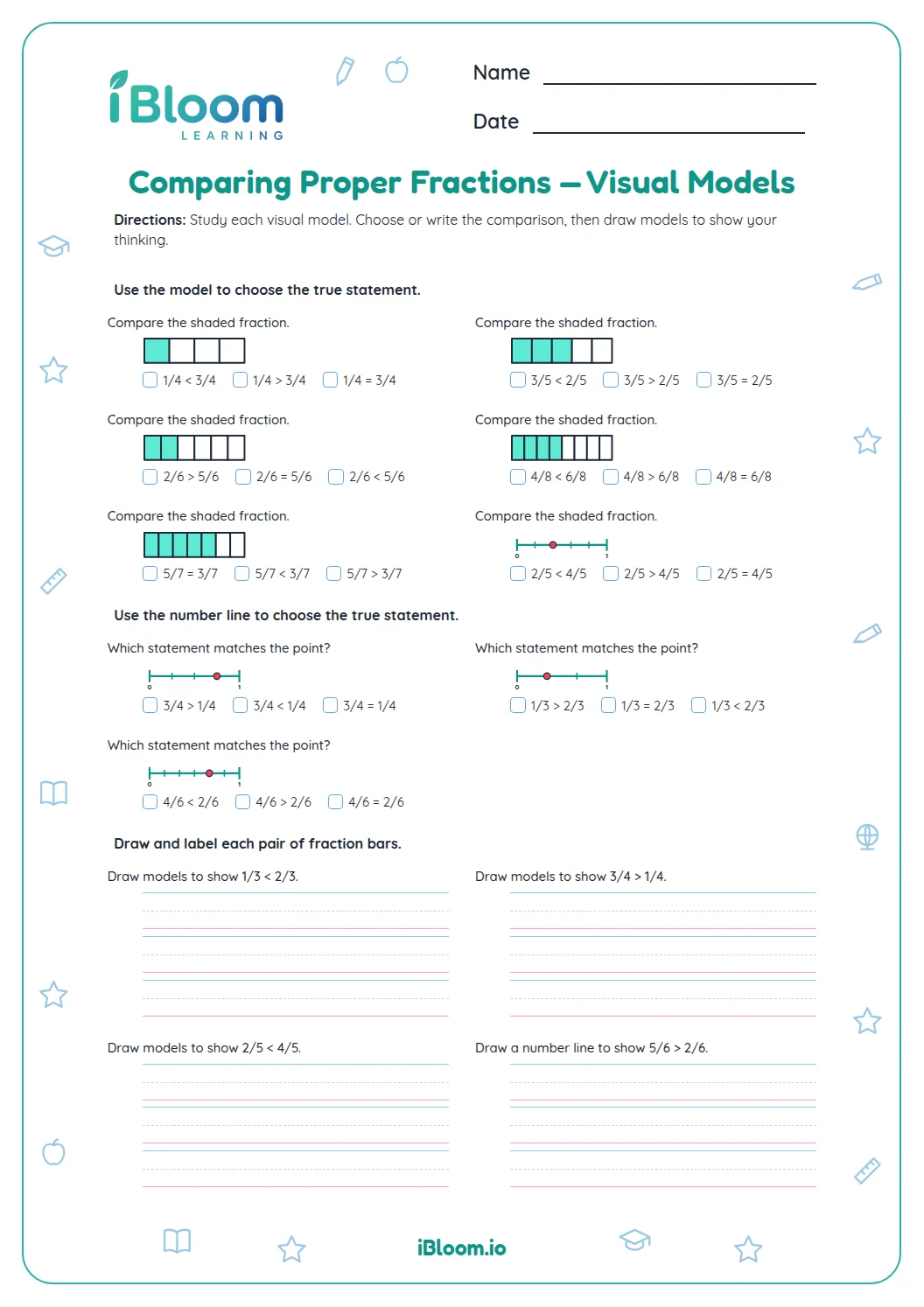
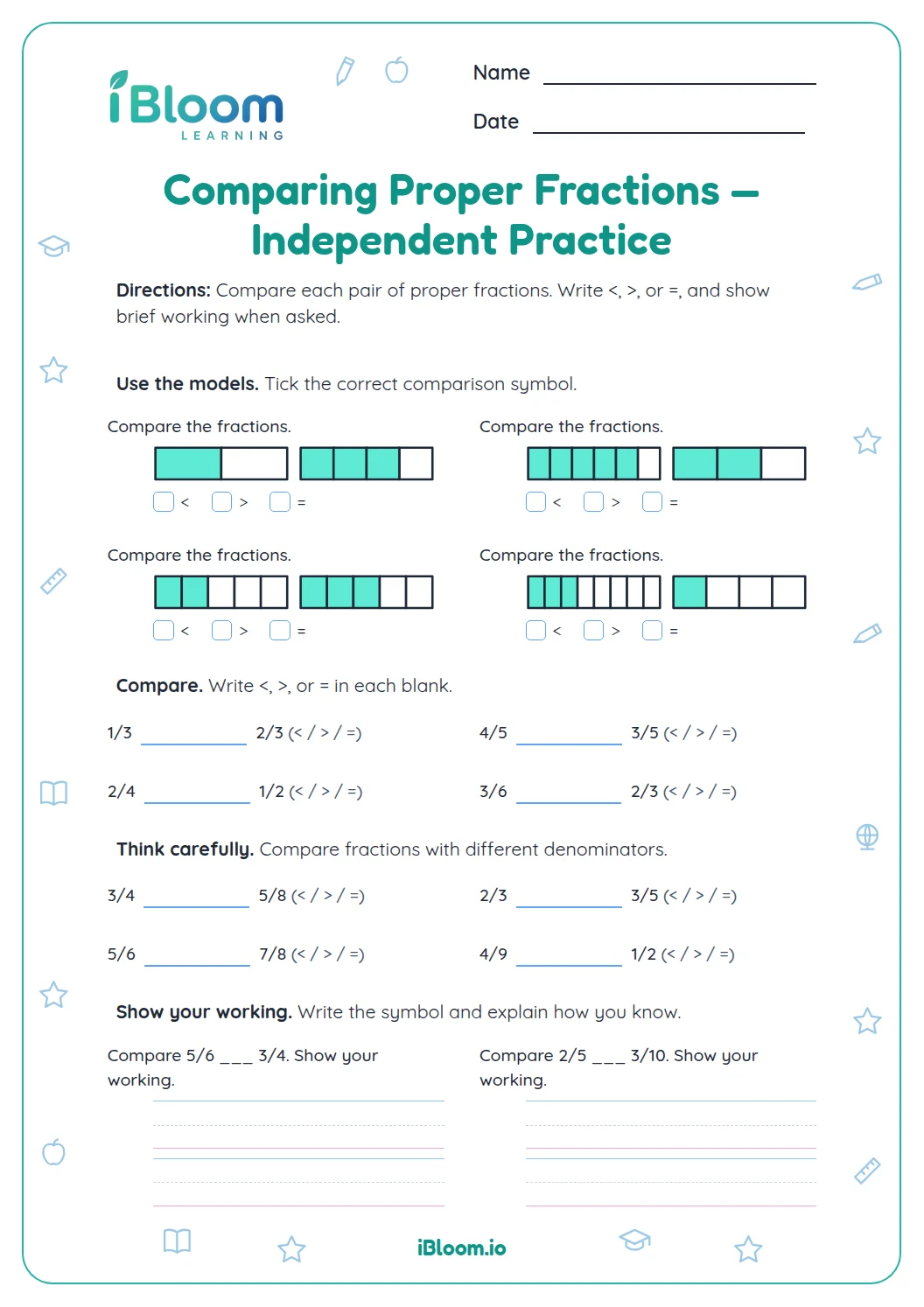
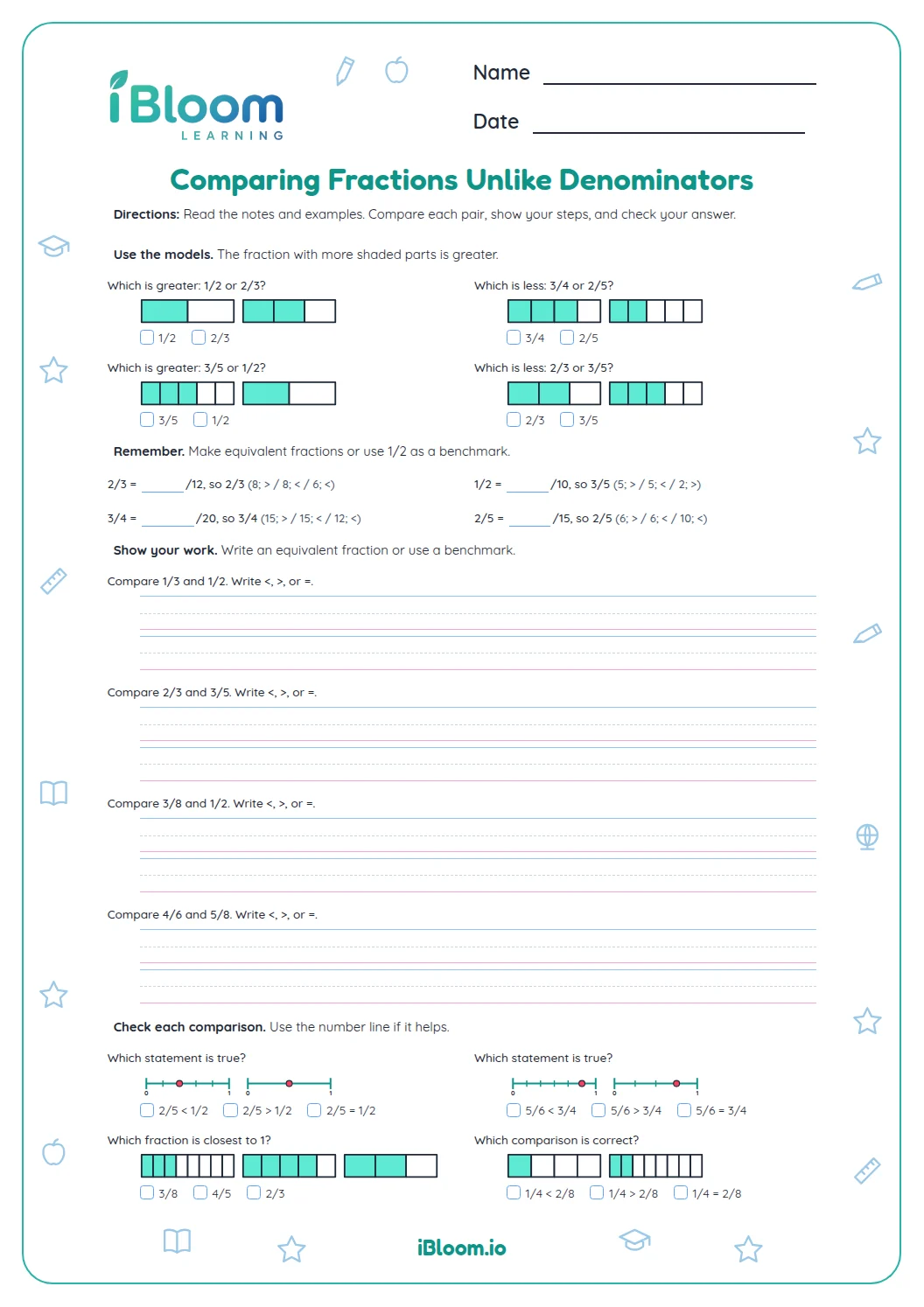
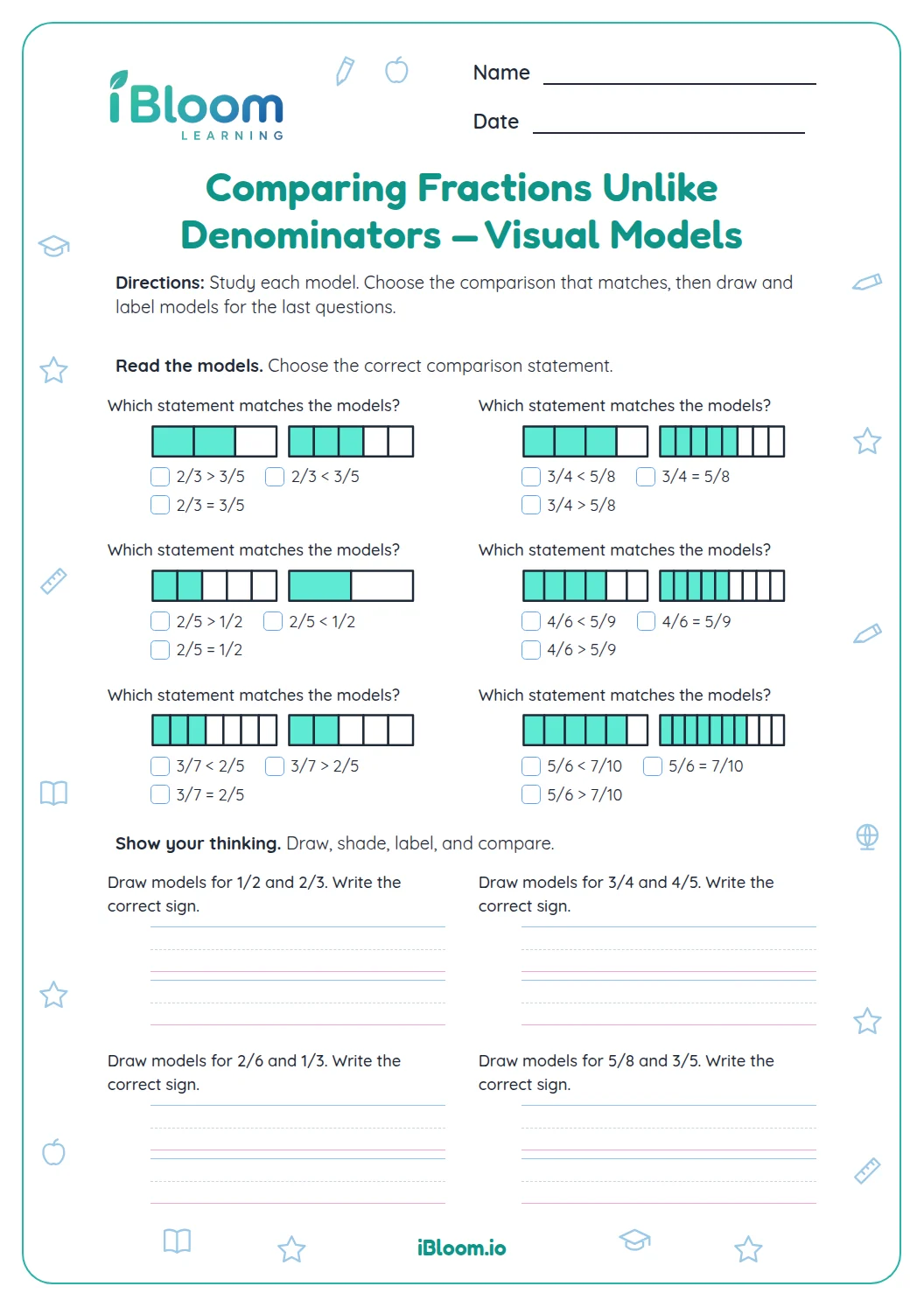
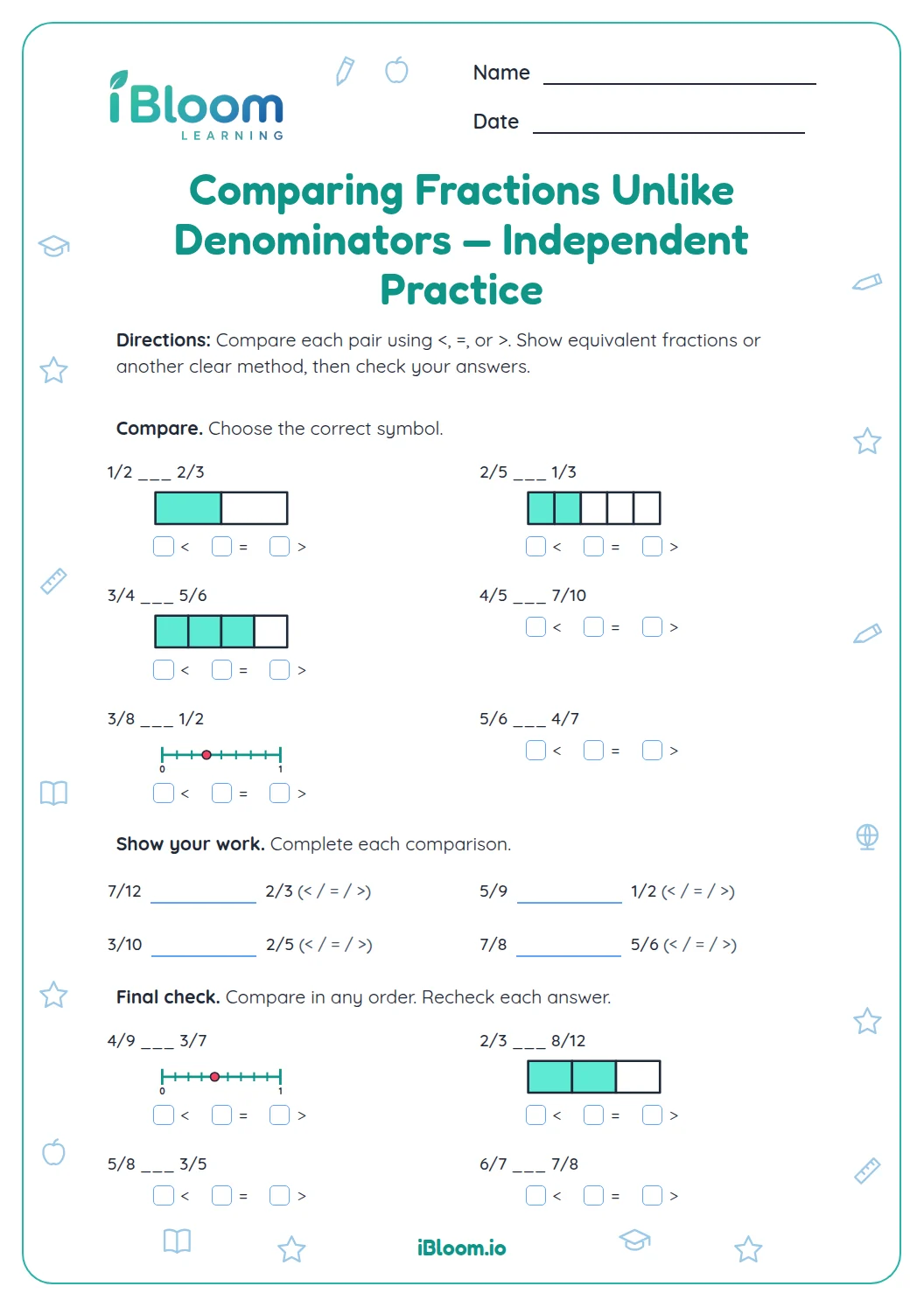
This Grade 3 math worksheet practices comparing fractions that have the same denominator. Students record <, > or =, reason about equal fractional parts, and apply the idea to short stories where the wholes are the same size. The sequence moves from direct comparisons to context problems and includes a separate answer key. It supports CCSS 3.NF.A.3.d: compare fractions by reasoning about size and recognize when the whole must be the same.
Aligned to 3.NF.A.3.d
What does the denominator tell you?
The denominator tells how many equal parts make one whole. When two fractions have the same denominator and refer to equal-sized wholes, their parts are the same size. The fraction with more parts is greater.
- Check that the denominators match
- Check that the wholes are the same size
- Compare the numerators and record <, > or =
How do you compare 3/8 and 5/8?
Each fraction names eighths, so the parts are the same size. Three eighths is fewer than five eighths.
- 13/8 ___ 5/8
- 2Compare 3 and 5.
- 33 is less than 5, so 3/8 < 5/8.
How does the same whole matter?
Fractions can be compared fairly when they refer to wholes of the same size. In the story problems, the pizzas, ribbons and plots are stated to be equal in size. Use the denominator to identify equal-sized pieces, then compare how many pieces each fraction names.
Use the denominator to identify equal-sized pieces, then use the numerator to compare how many pieces are named.
How to use this worksheet
- 1Check whether the denominators match.
- 2For the reasoning choices, test the claim by comparing the numerators.
- 3Write <, > or = between each fraction pair.
- 4Use the explanation choices to name what makes the comparison fair.
- 5In each story, confirm the wholes are the same size before comparing.
Common mistakes and quick fixes
The mistake
Thinking that a larger denominator always means a larger fraction.
The fix
Here the denominators match; compare the number of parts named.
The mistake
Comparing fractions made from different-sized wholes.
The fix
Use the same-whole condition before comparing.
The mistake
Reversing the comparison symbol.
The fix
Read the symbol as “is less than” or “is greater than” from left to right.
Common Core alignment
This page practices the listed grade-level skill through short, checkable examples.
Compare same-denominator fractions by comparing their numerators.
On this sheet: All pairs have like denominators and refer to same-sized wholes; students compare and apply the reasoning in contexts.
Show the official wordingHide the official wording
Compare two fractions with the same numerator or the same denominator by reasoning about their size. Recognize that comparisons are valid only when the two fractions refer to the same whole. Record the results of comparisons with the symbols >, =, or <, and justify the conclusions, e.g., by using a visual fraction model.
What to practice next
Make more practice
Further reading
Questions parents and teachers ask
How do you compare fractions with the same denominator?
First check that the fractions refer to wholes of the same size. When the denominators match, each fractional part has the same size, so compare the numerators. The fraction naming more parts is greater; equal numerators mean the fractions are equal.
What do the comparison symbols mean?
The symbol < means less than, > means greater than, and = means equal to. Read from left to right: 3/8 < 5/8 says three eighths is less than five eighths. The worksheet asks students to choose a symbol and use it in story problems.
How many questions are on this worksheet?
There are 16 questions: eleven short symbol comparisons and five story comparisons. Every pair uses the same denominator, and the stories name equal-sized wholes. The worksheet and separate key each print on two pages; the key lists each symbol or comparison answer.
Why must the wholes be the same size?
If one whole is larger, its fractional pieces can be larger too. Comparing only the numerators would not give a fair result. The story problems name equal-sized pizzas, ribbons, plots or pies so that students can focus on how many equal parts each fraction names.