




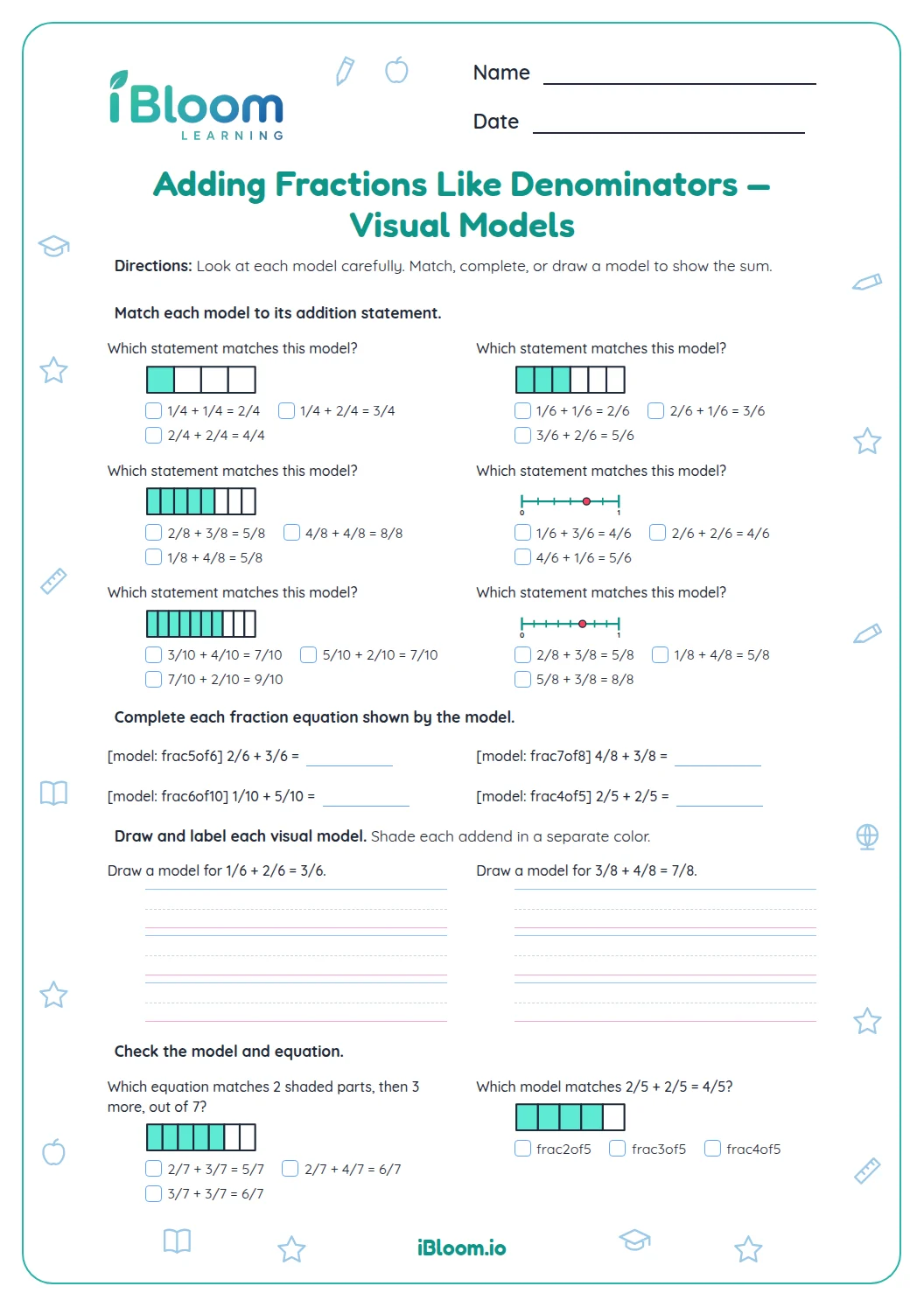
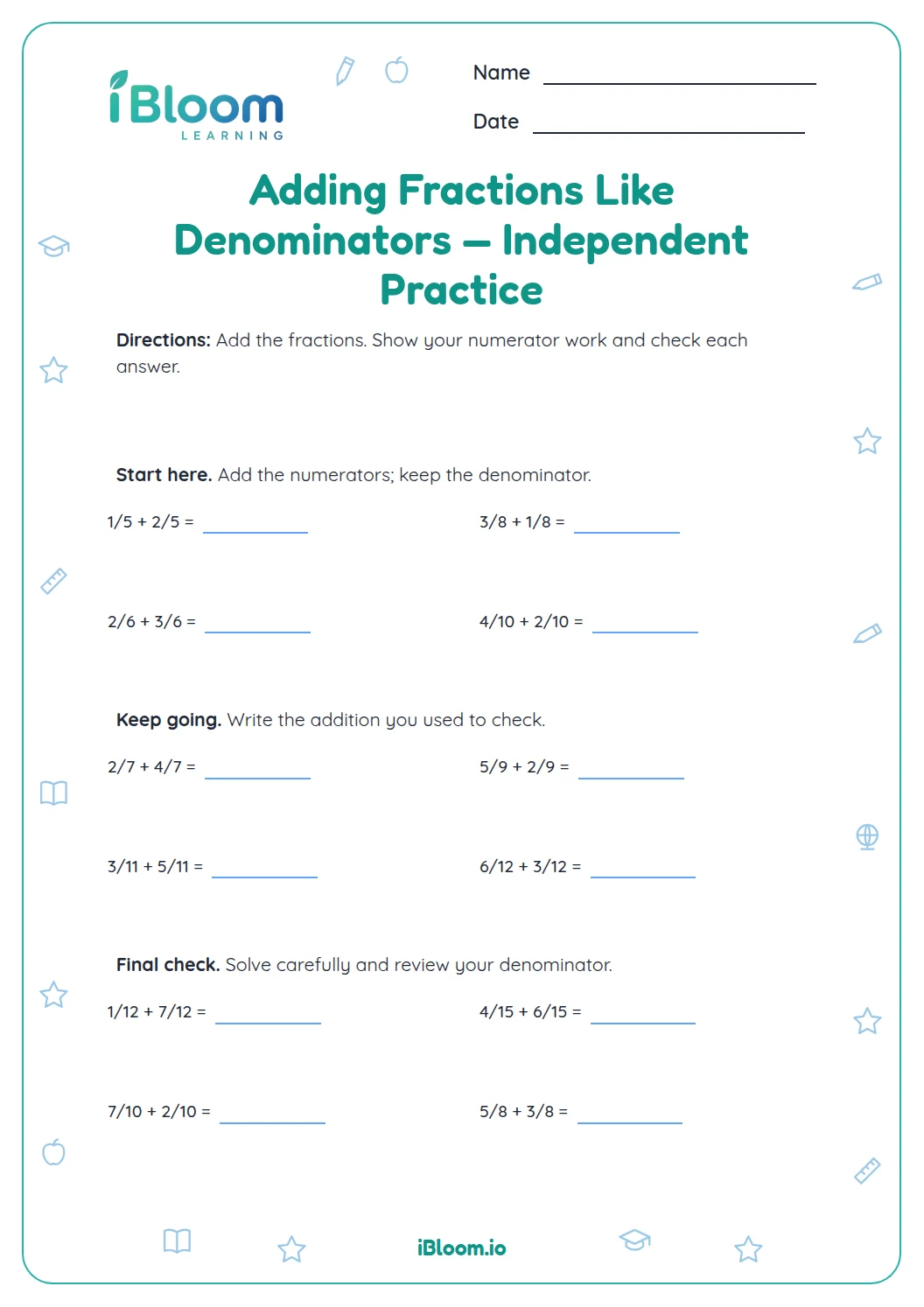
About this worksheet
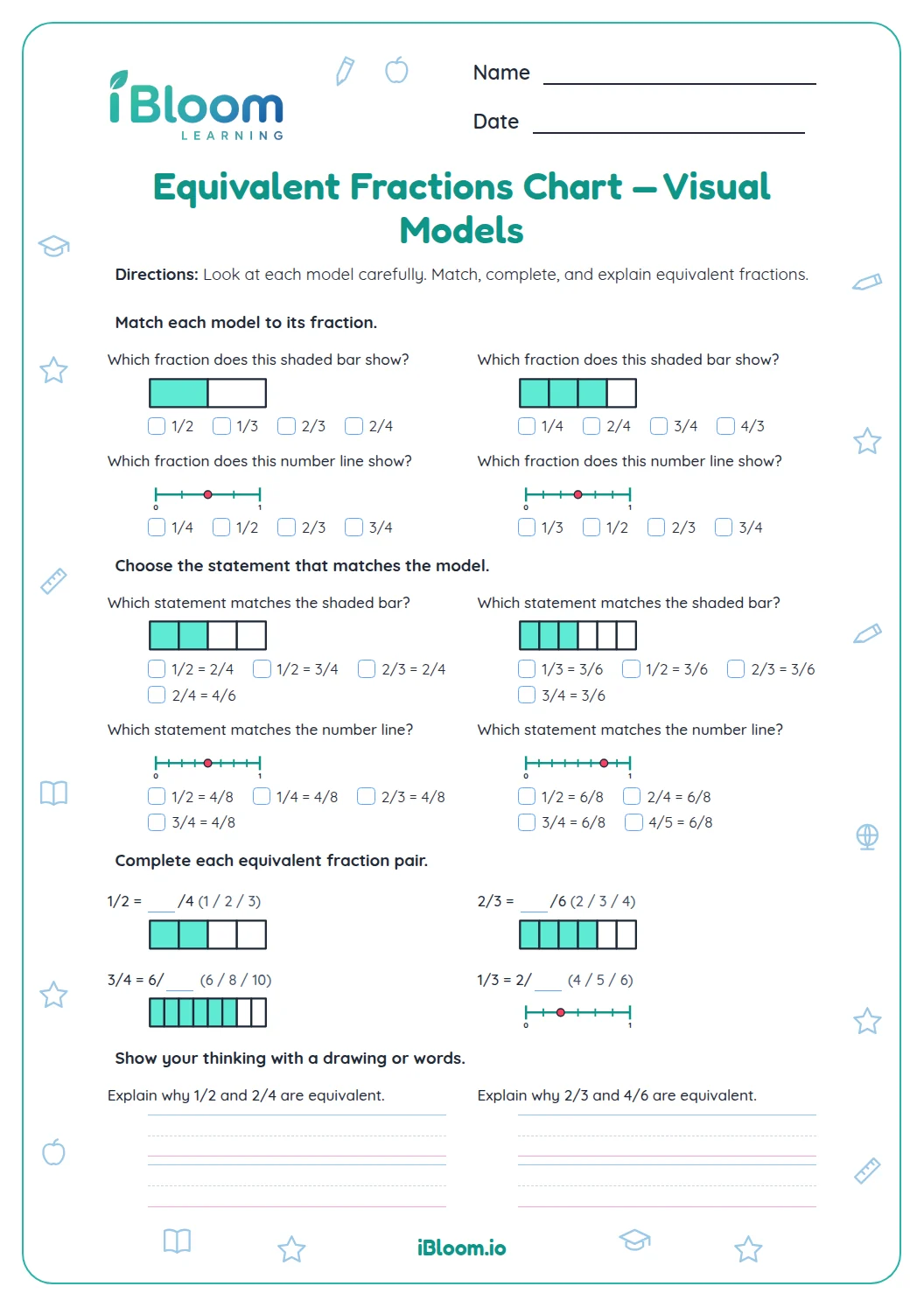
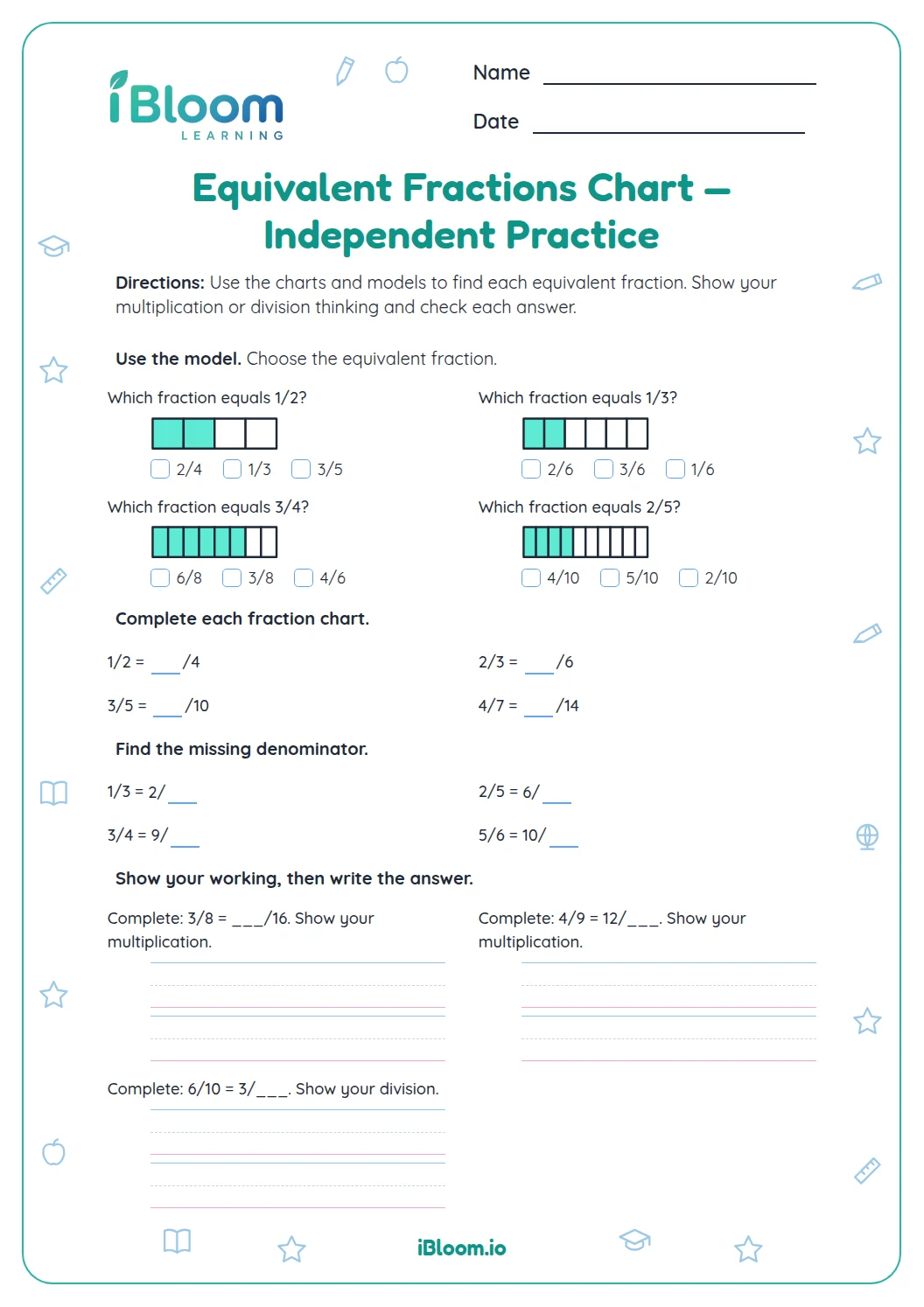
Use the chart to see how splitting each piece into equal smaller pieces creates an equivalent fraction. The stories use familiar lengths and amounts; every item stays within denominators 2, 3, 4, 6, or 8.
Aligned to 3.NF.A.3.b
How to practice equivalent fractions
Use the chart to see how splitting each piece into equal smaller pieces creates an equivalent fraction. The stories use familiar lengths and amounts; every item stays within denominators 2, 3, 4, 6, or 8.
How to use this worksheet
- 1Read the directions and try each problem.
- 2Use the answer key to check the work and revisit any missed item.
A helpful check
The mistake
Rushing past what the question asks.
The fix
Read the whole prompt, solve it, and check that the answer matches the requested form.
Curriculum alignment
The worksheet practices the skill named in its title.
Recognize and generate simple equivalent fractions and explain why they are equivalent.
On this sheet: The chart, fraction equations, and explanation ask students to generate and explain equivalent fractions.
Show the official wordingHide the official wording
Recognize and generate simple equivalent fractions, e.g., 1/2 = 2/4, 4/6 = 2/3. Explain why the fractions are equivalent, e.g., by using a visual fraction model.
What to practice next
Make more practice
Further reading
Questions parents and teachers ask
What skill does this worksheet practice?
Students practice the skill named in the worksheet title through short questions and a separate answer key. Read each prompt carefully, show the requested response, and use the key to check understanding after finishing the page. This makes practice easier to review together.
How can I use the answer key?
The answer key is printed separately from the questions. Have the student complete the worksheet first, then compare each response with the key. Revisit missed questions and talk through the reasoning before trying a similar problem again. This makes practice easier to review together.
Can this worksheet be used at home or in class?
Yes. The printable can be used for independent practice, a small-group lesson, or a short review at home. A teacher or caregiver can choose a few questions to discuss, then let the student complete the remaining items. This makes practice easier to review together.
What should students do if an answer is incorrect?
Ask the student to reread the prompt and check each step against the model or rule for the skill. The answer key helps identify the result, while explaining the reasoning helps find where the work changed. This makes practice easier to review together.