



About this worksheet
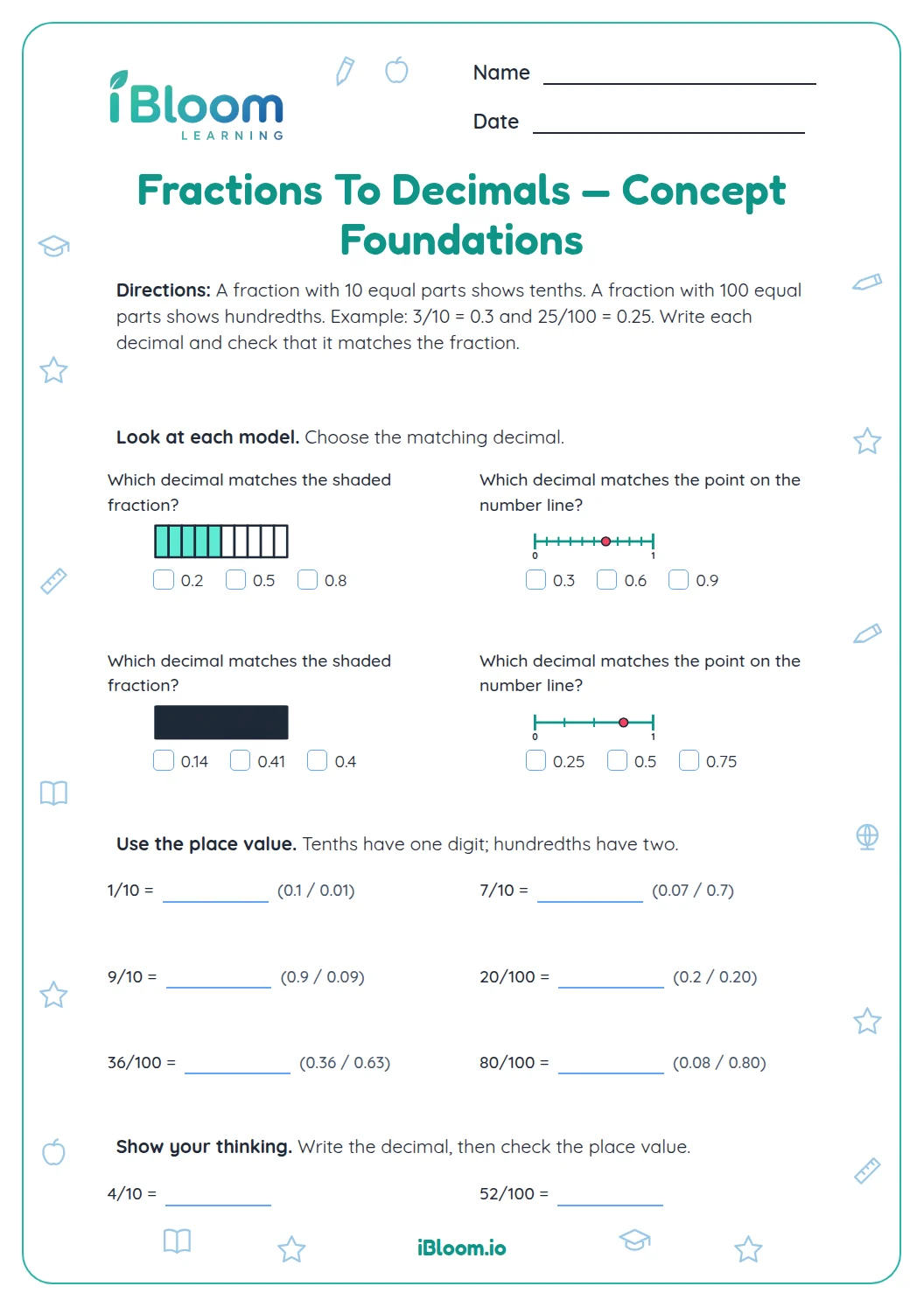
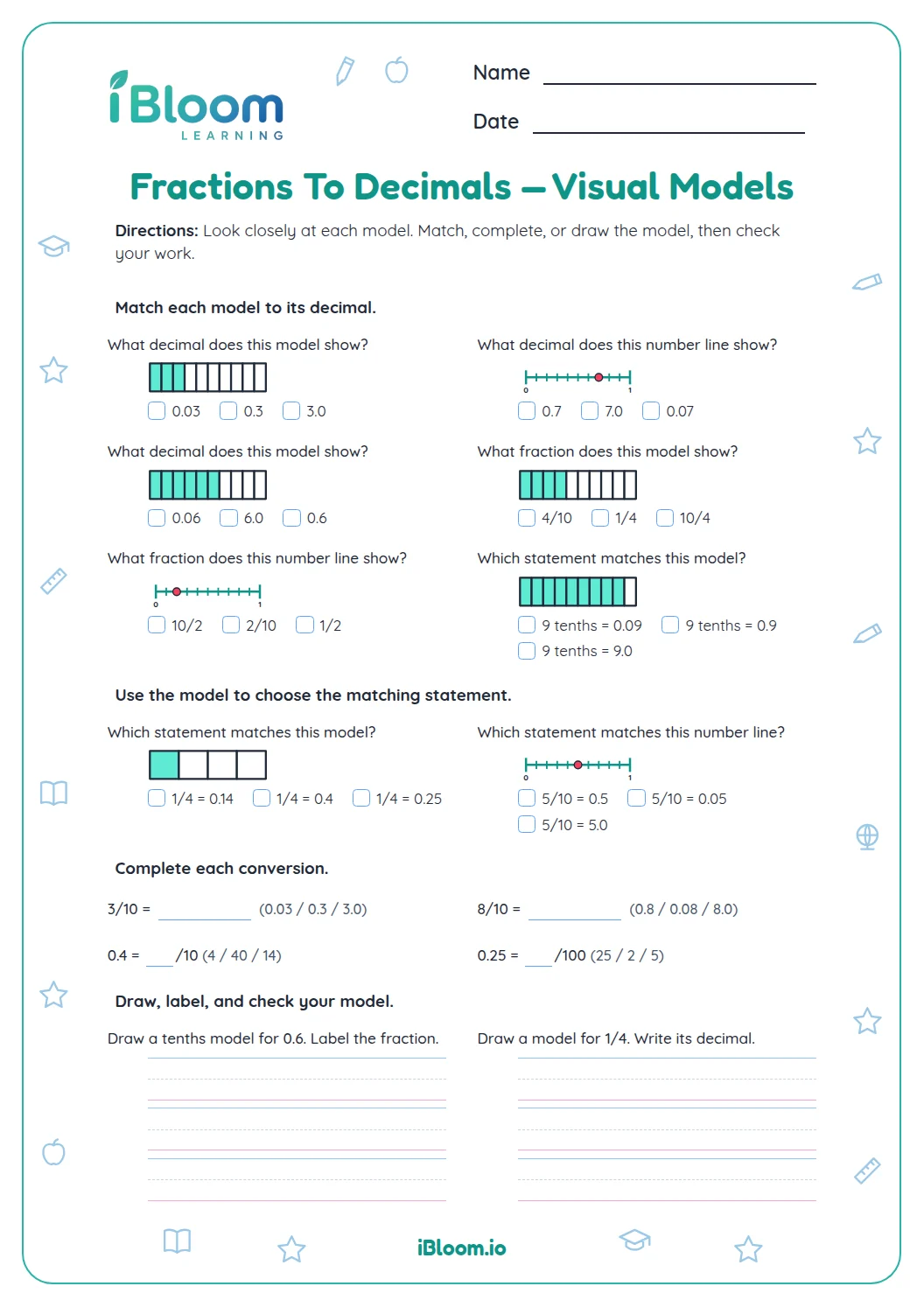
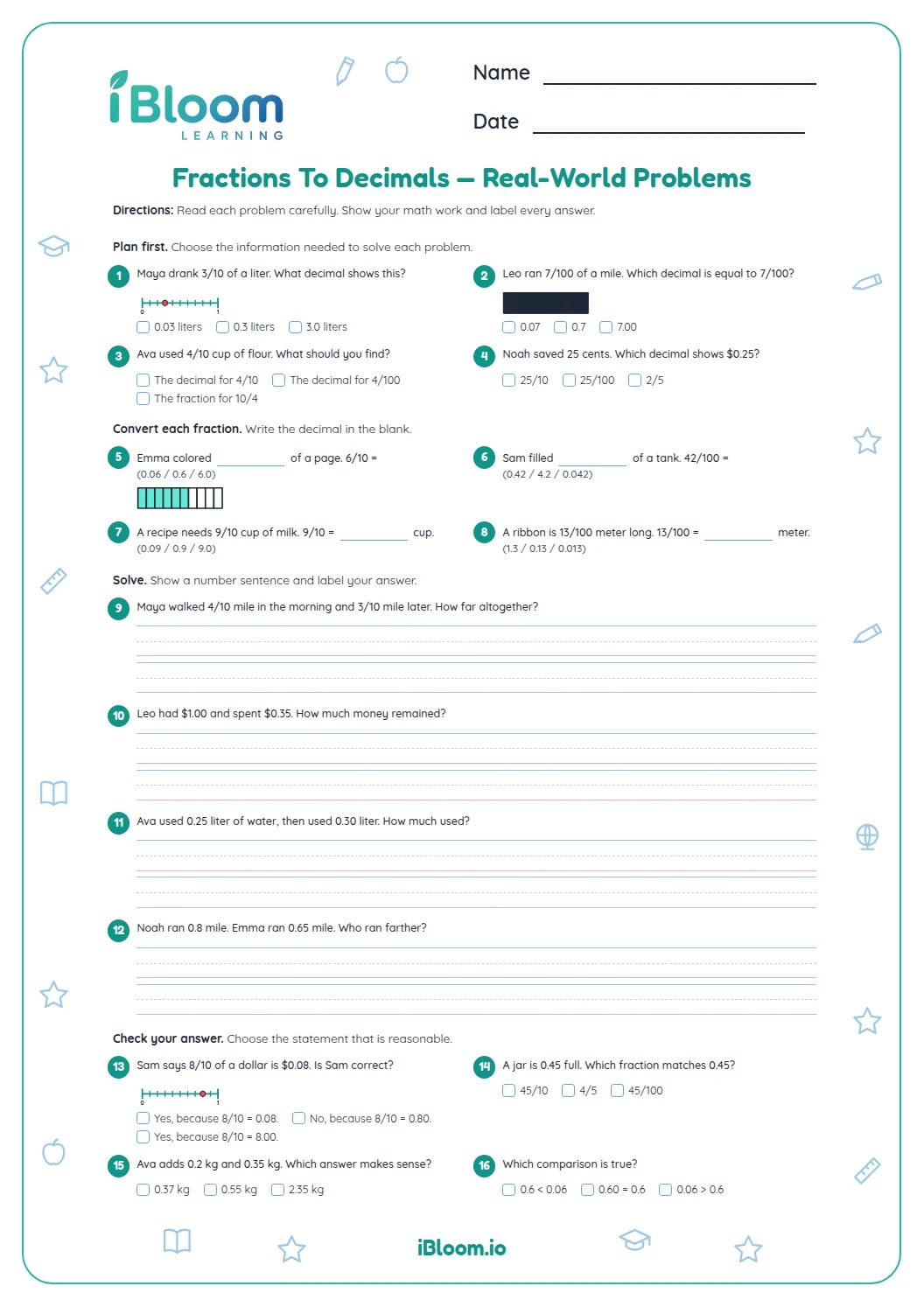
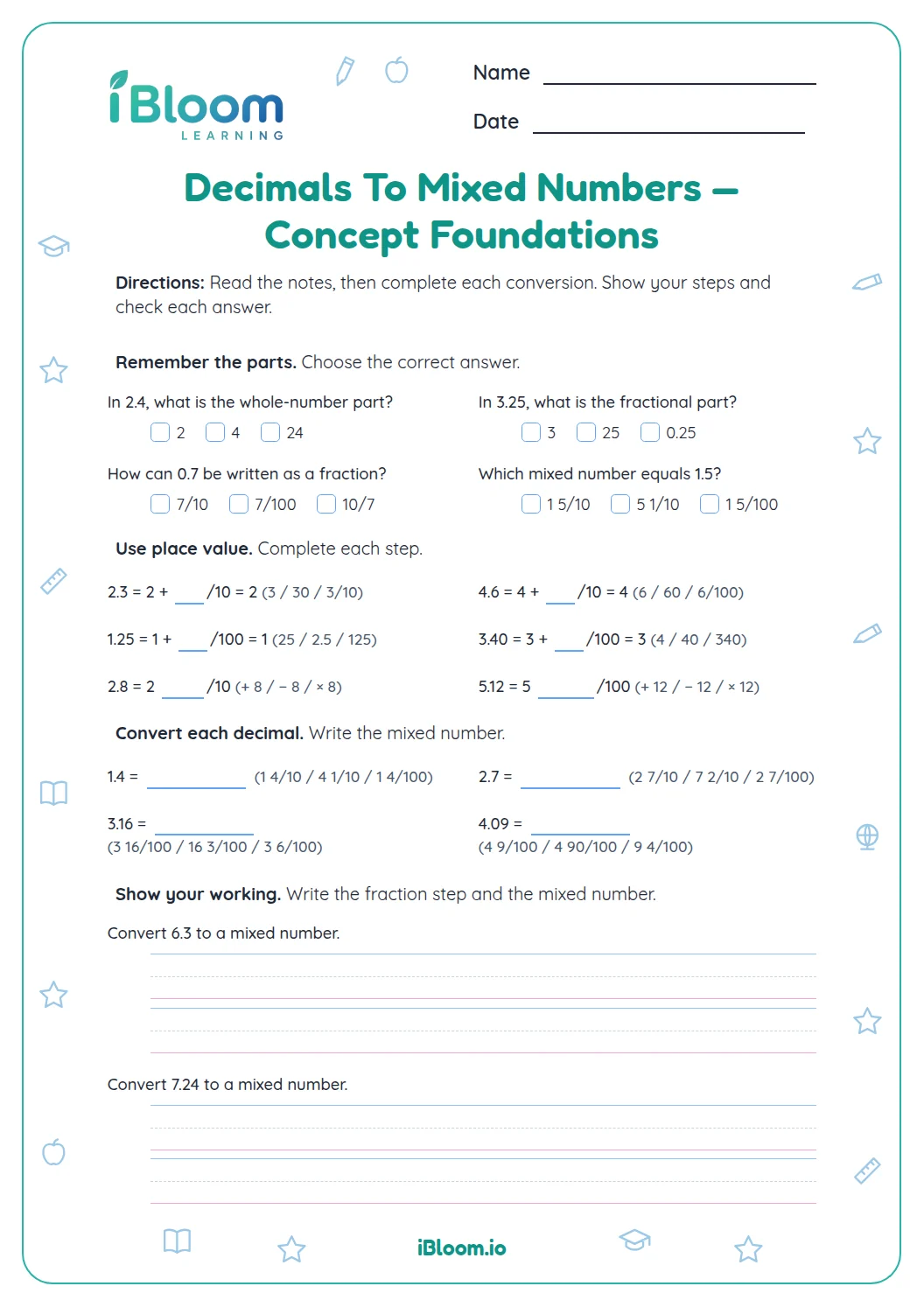
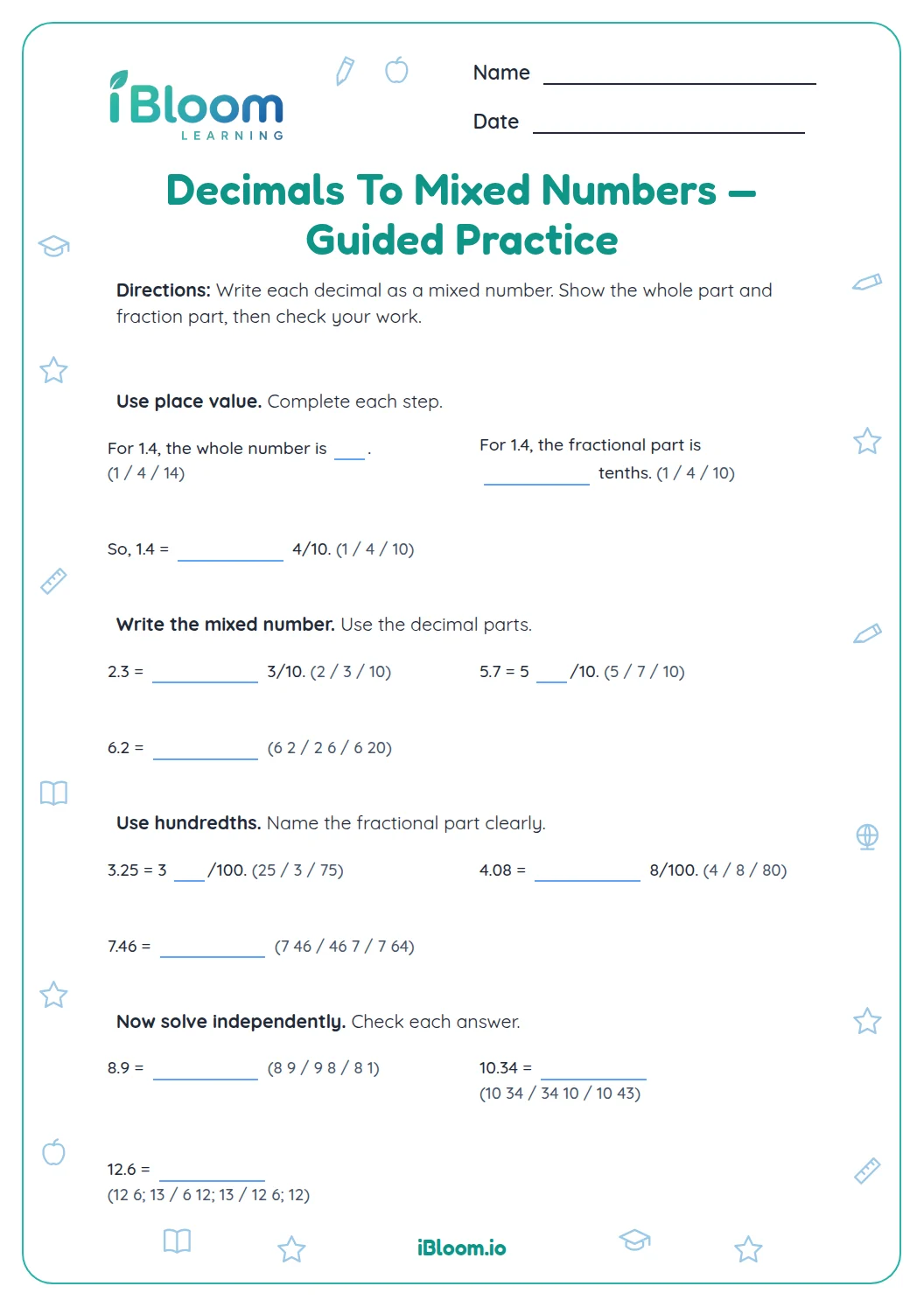
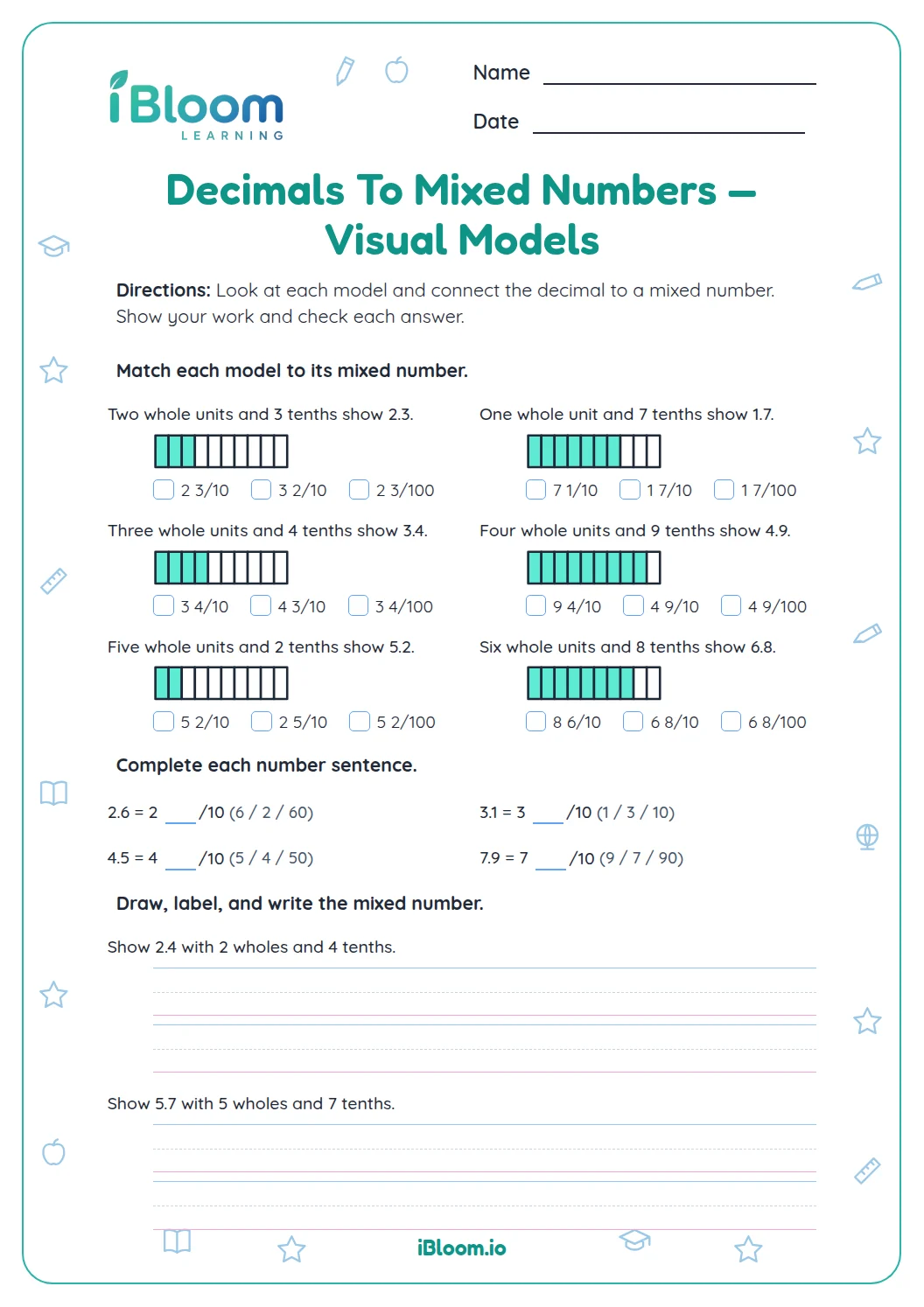
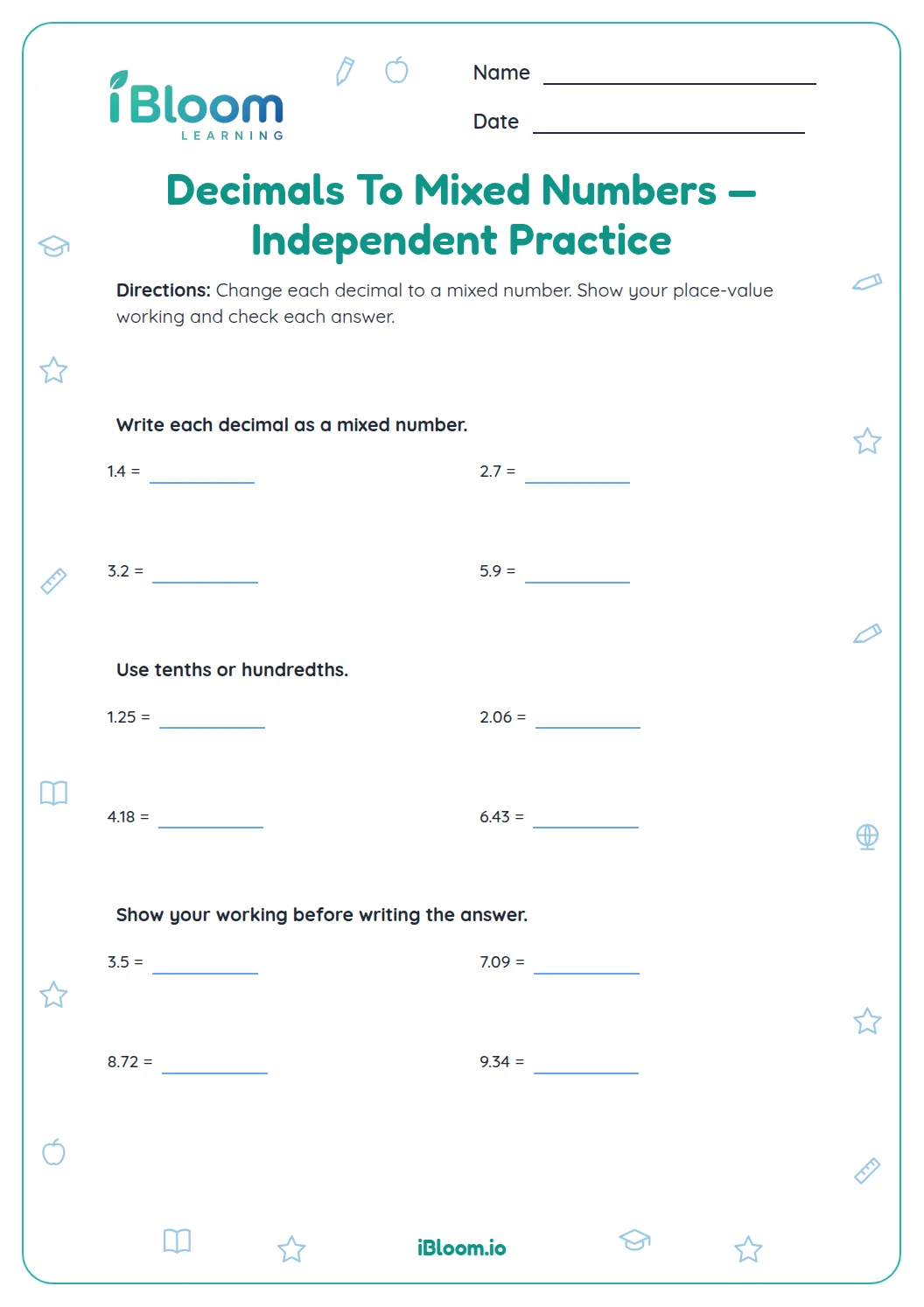
This Grade 3 printable focuses on the title skill using tenths and hundredths: read shaded models, connect fractions to decimals, compare values, and explain a place-value error. The visual questions make the fraction amount concrete before students write the decimal form.
Aligned to 4.NF.C.6
How do tenths connect to decimals?
A denominator of 10 names tenths, so 7/10 is 0.7. A denominator of 100 names hundredths, so 42/100 is 0.42. The shaded model shows how many equal parts make the amount.
- 142 shaded squares out of 100 = 42/100
- 242/100 = 0.42
How can you compare decimal values?
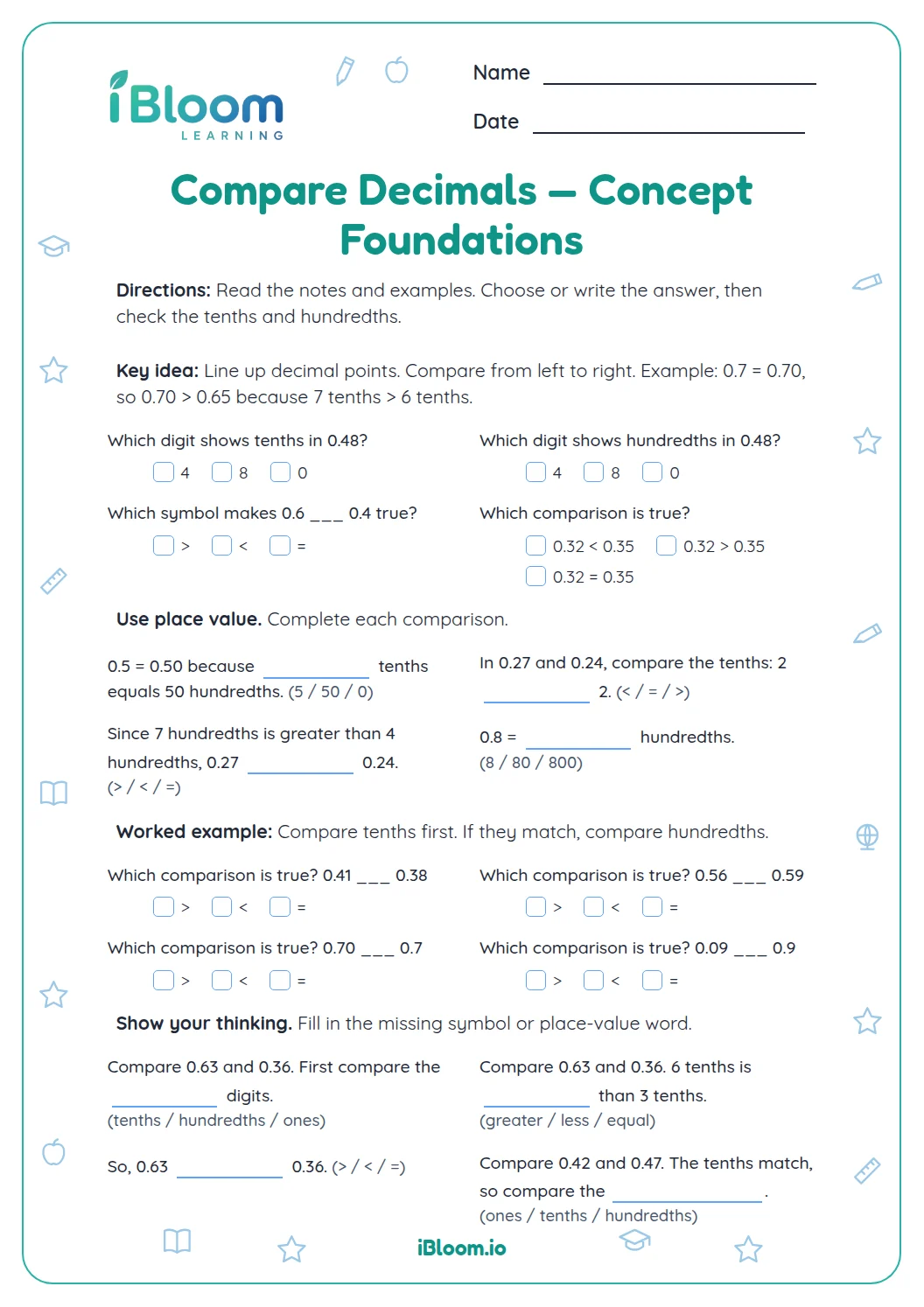
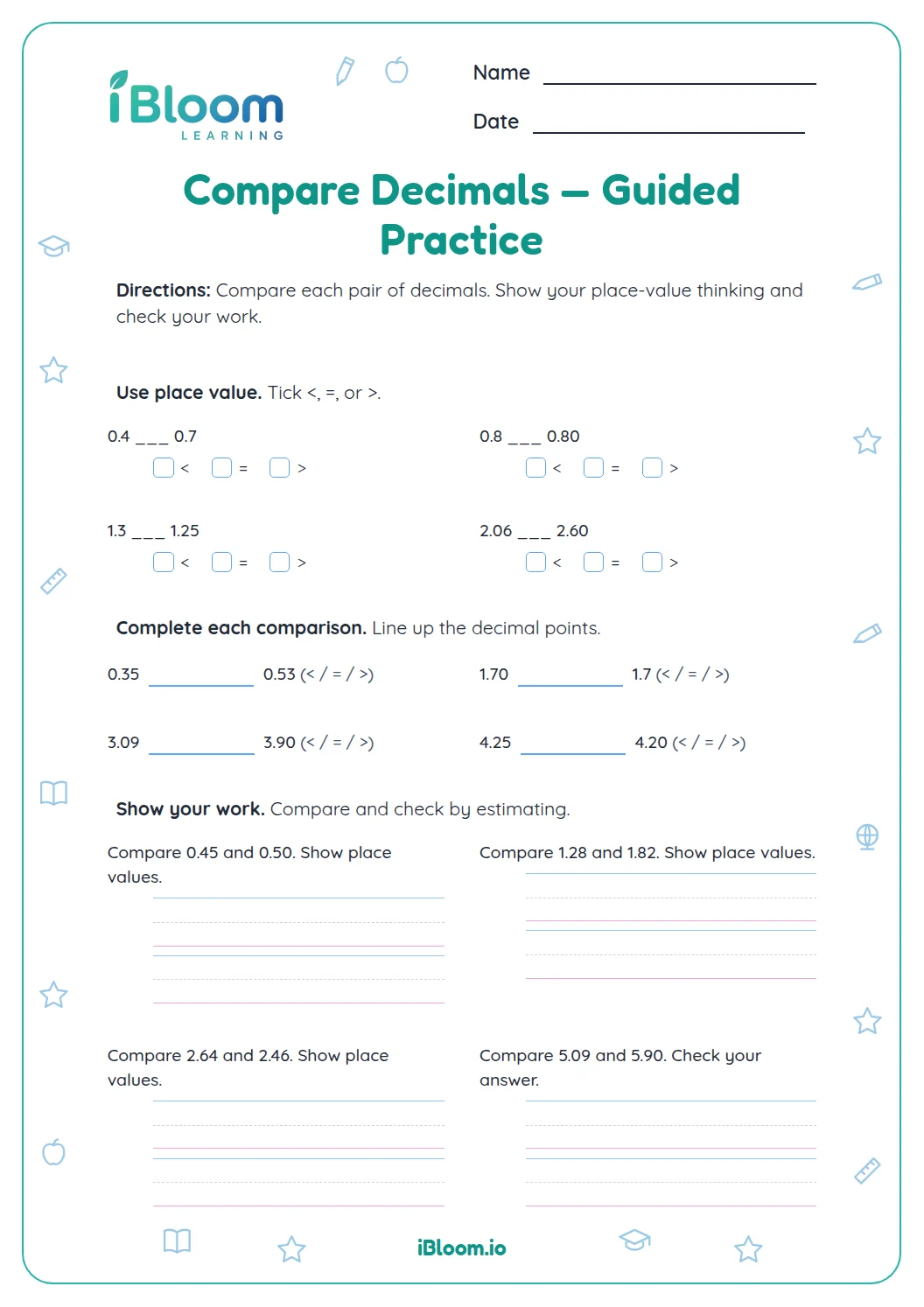
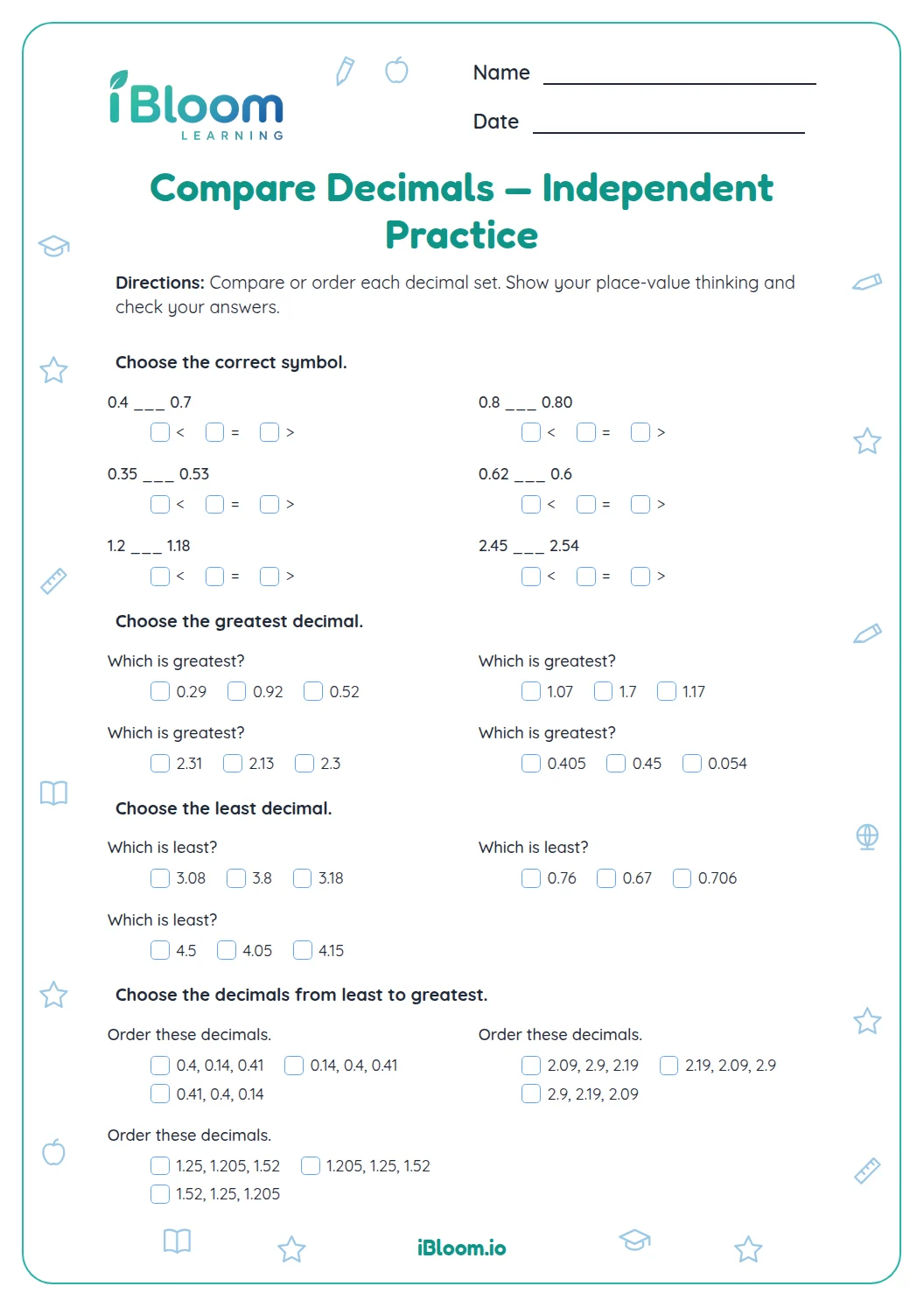
Line up the decimal points and compare matching place values. A zero at the end can help: 0.4 and 0.40 name the same amount.
What does this worksheet practice?
The 14 items move from conversions in both directions to comparing, ordering, and explaining tenths and hundredths.
Use the worksheet
- 1Read the fraction aloud using tenths or hundredths.
- 2Write each digit in the matching decimal place.
- 3For the reverse direction, name the place of the final digit before writing the denominator.
- 4Compare decimals by lining up place values; add a trailing zero only as a helper.
- 5Ask the learner to name the hundredths place in question 13.
Common slips to watch for
The mistake
Writing 0.3 as 3/100 because the decimal has a zero in front.
The fix
The 3 is one place after the decimal point, so it names tenths: 3/10.
The mistake
Reading 0.08 as eight tenths.
The fix
The 8 is in the hundredths place, so 0.08 is 8/100.
Common Core alignment
This worksheet connects tenths and hundredths fractions to decimal notation.
Use decimal notation for fractions with denominators 10 or 100.
On this sheet: Students write decimal notation for fractions with denominators 10 and 100.
Show the official wordingHide the official wording
Use decimal notation for fractions with denominators 10 or 100.
What to practice next
Make more practice
Further reading
Questions parents and teachers ask
Why does 6/10 equal 0.6?
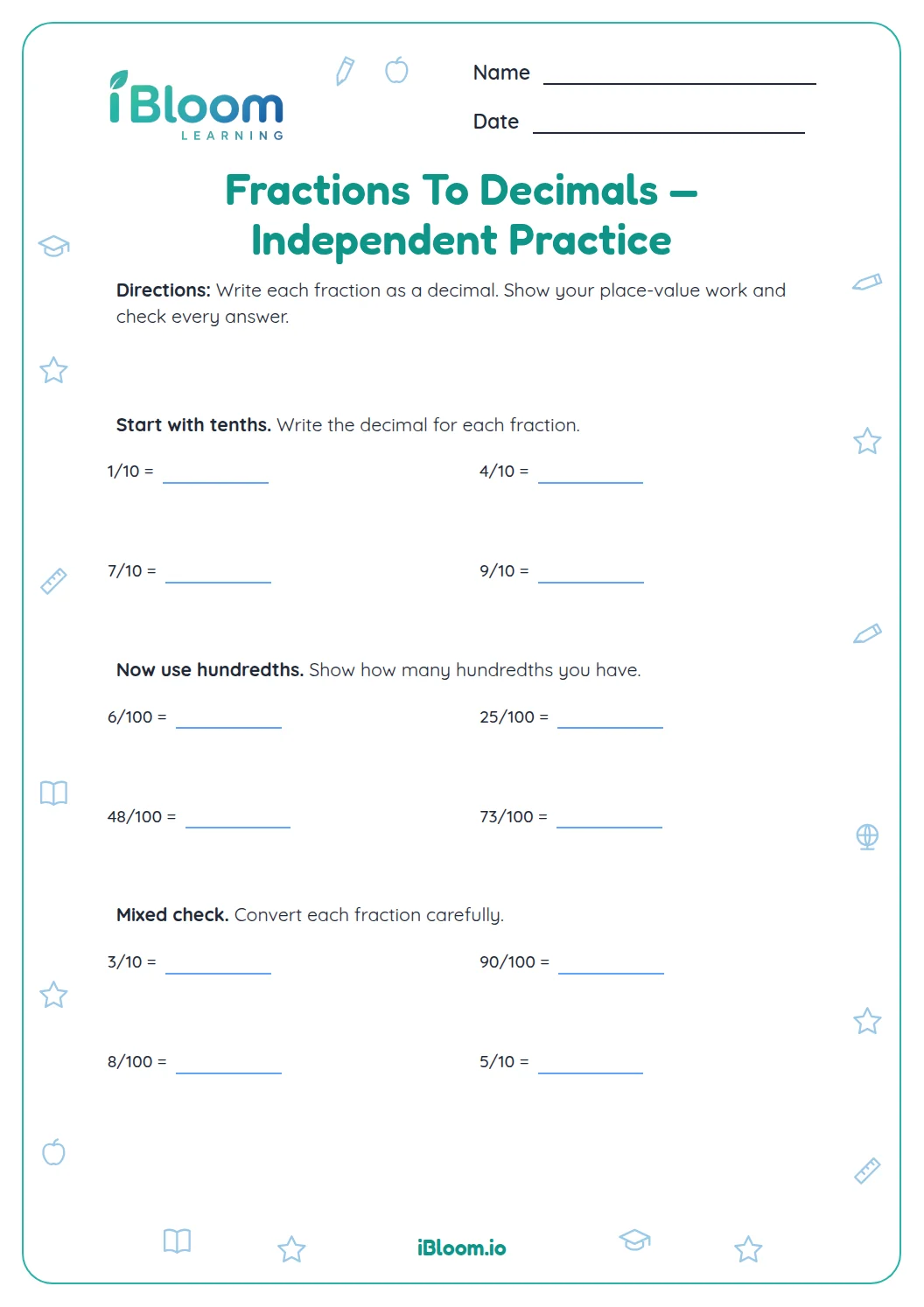
A denominator of 10 names tenths. The numerator tells how many tenths there are, so 6/10 is six tenths, written as 0.6. For hundredths, use two places after the decimal point: 25/100 is 0.25. The place value tells you where each digit belongs.
Is 0.08 the same as 0.8?
No. 0.08 is eight hundredths, while 0.8 is eight tenths. One way to compare them is to write both in hundredths: 0.08 is 8/100 and 0.8 is 80/100. The zero after the decimal point in 0.08 holds the tenths place.
Why can I write 0.6 as 0.60?
A zero at the end of a decimal does not change its value. The number 0.6 means six tenths, and 0.60 means sixty hundredths; both name the same amount. Writing 0.60 can make it easier to compare with another number written in hundredths, such as 0.56.
Does this worksheet introduce decimals early?
Yes. This printable connects fraction notation to decimals through tenths and hundredths. Students convert both ways, compare and order decimal values, then explain a place-value error. It practices the standard for writing tenths and hundredths fractions as decimals.
How does the shaded bar help with tenths?
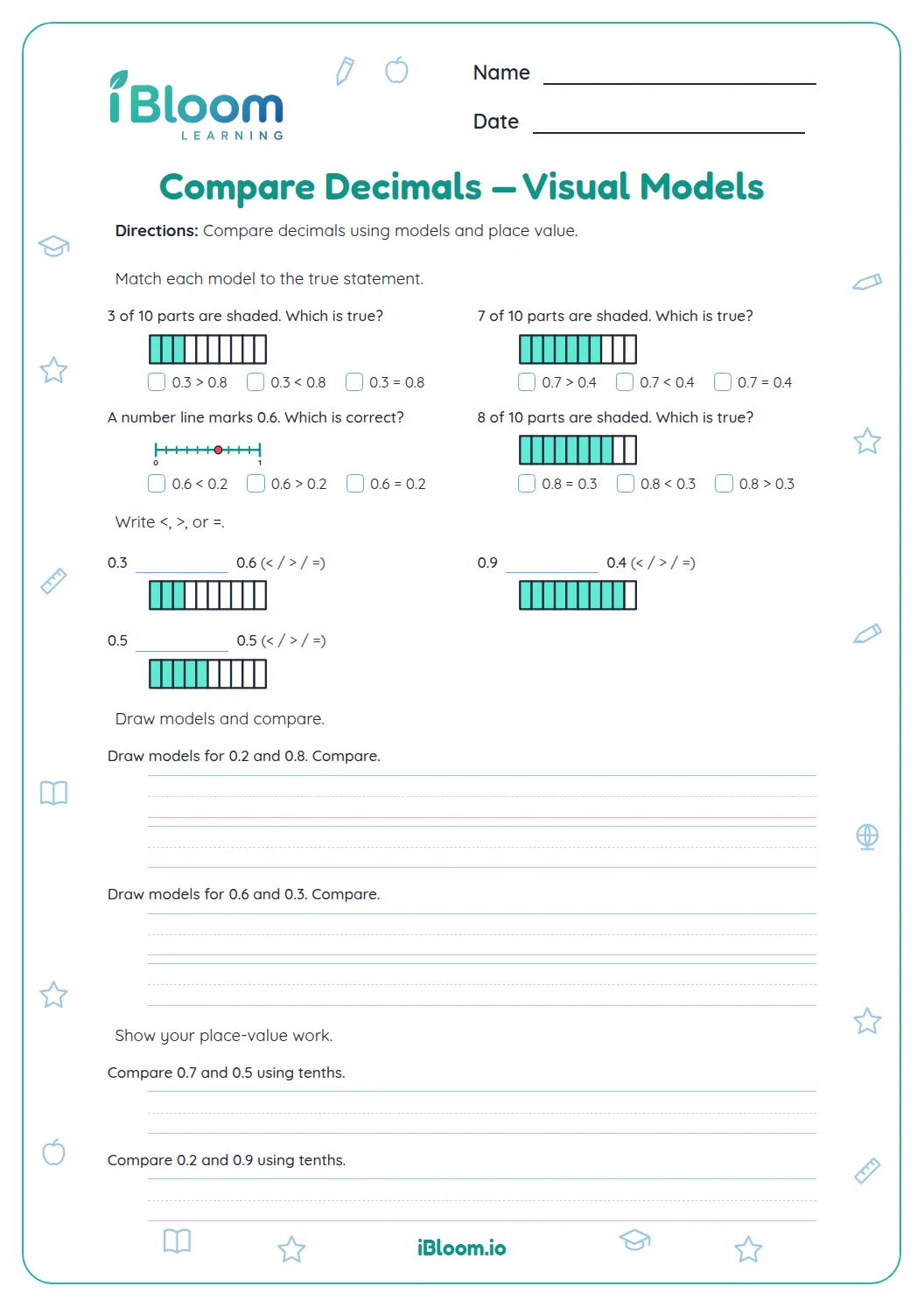
The bar is split into ten equal parts, so each part is one tenth. Three shaded parts represent 3/10, which is written as 0.3. Connecting the shaded amount to the decimal helps students see that the digit 3 is in the tenths place.