




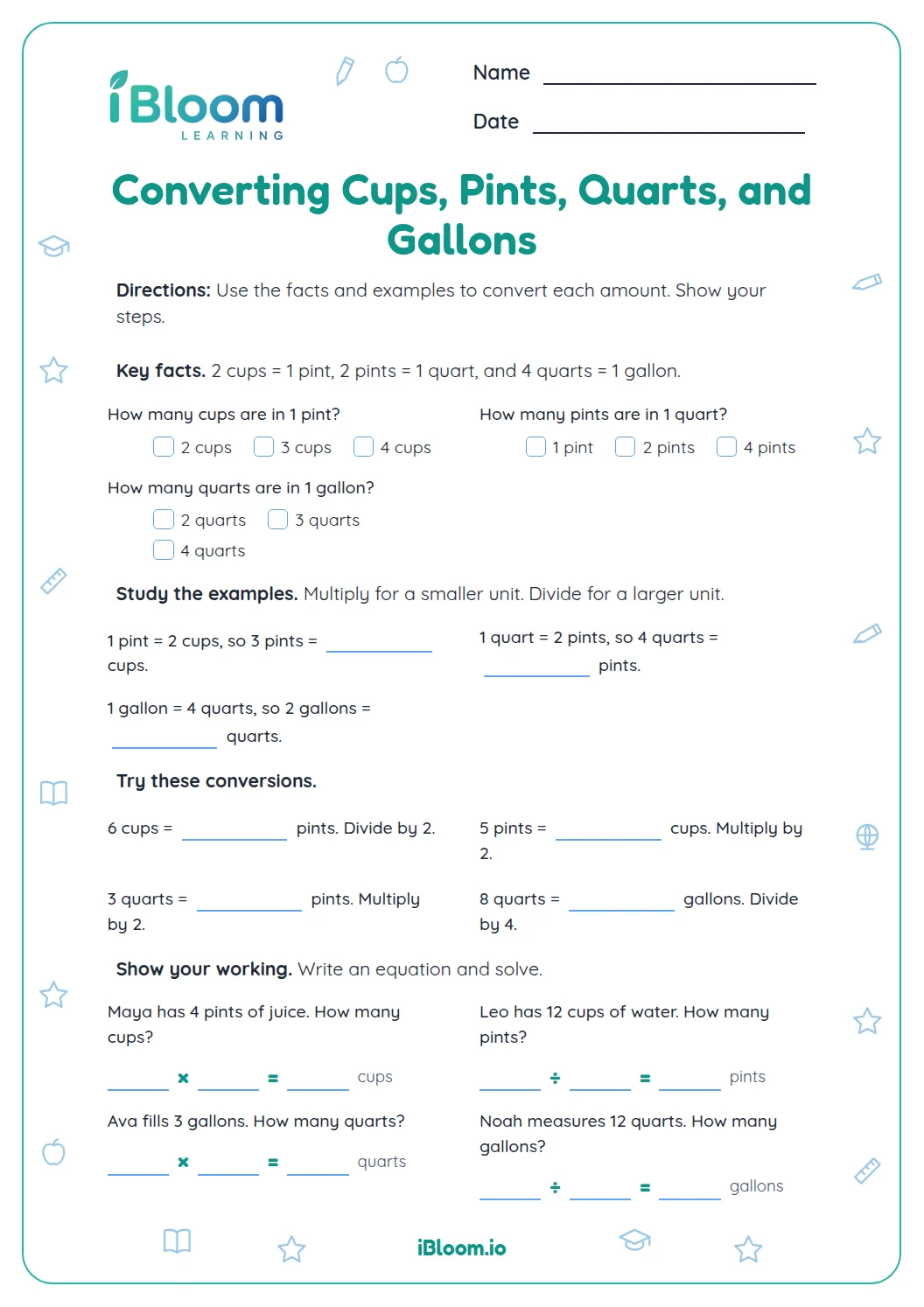
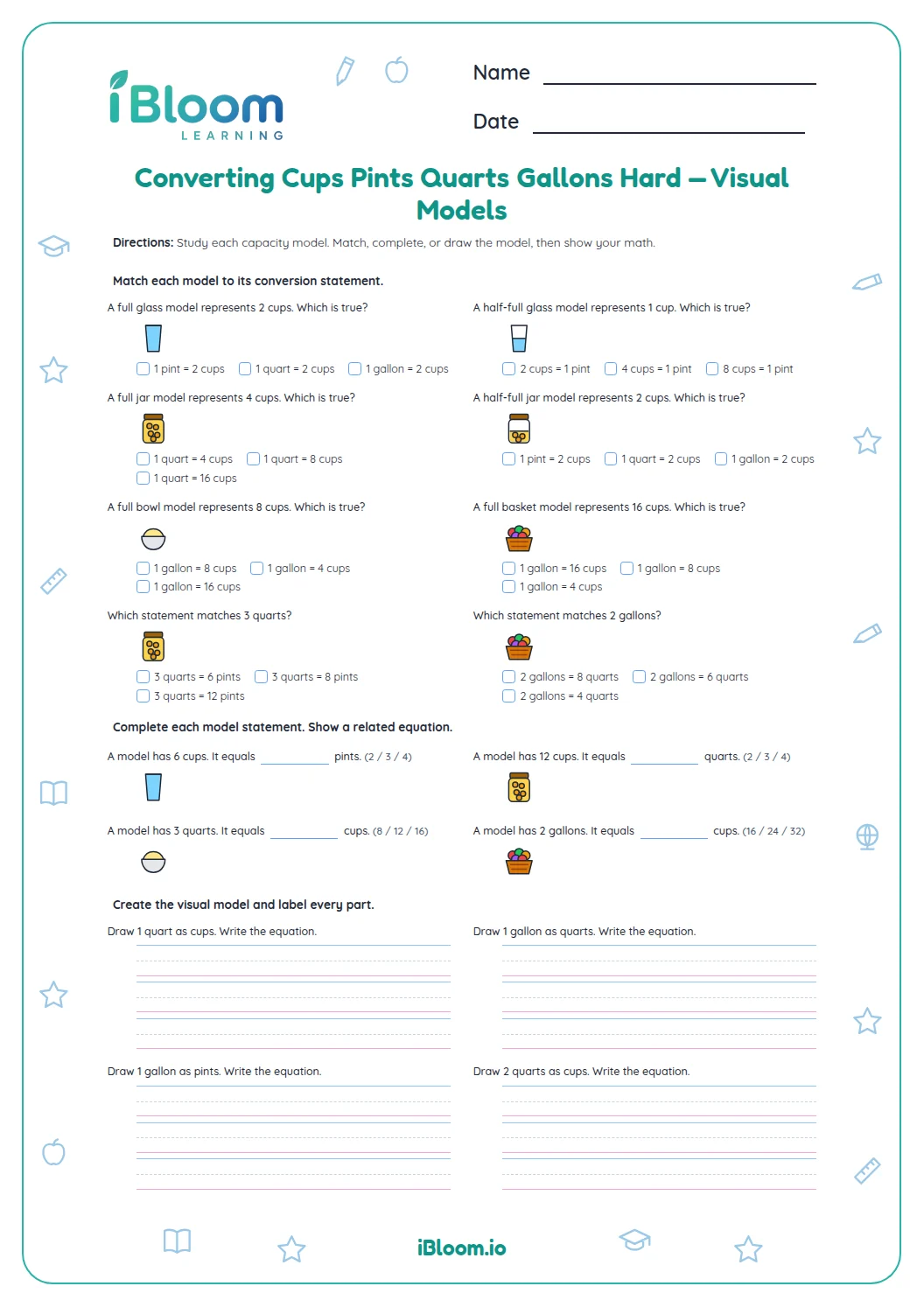
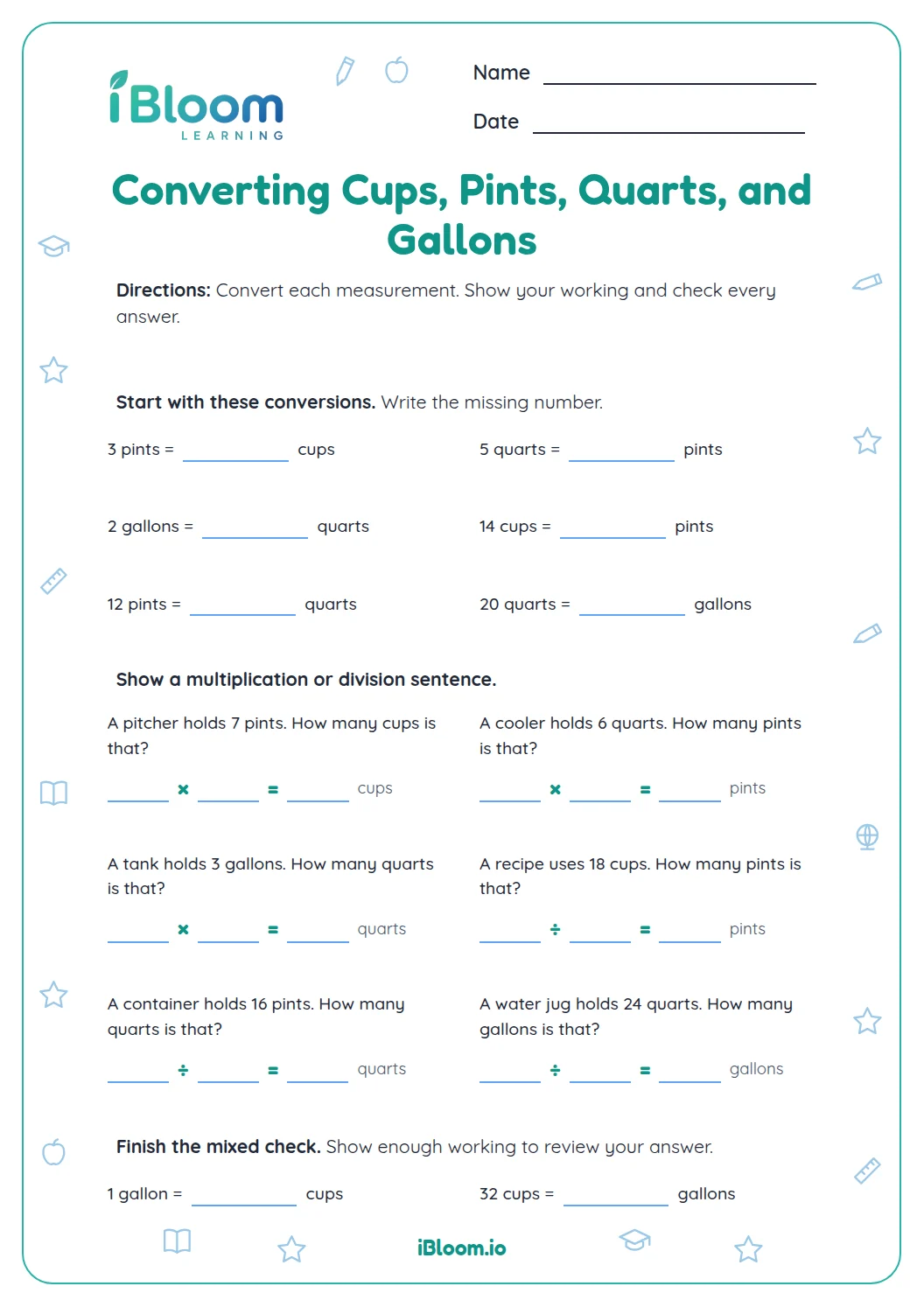
About this worksheet
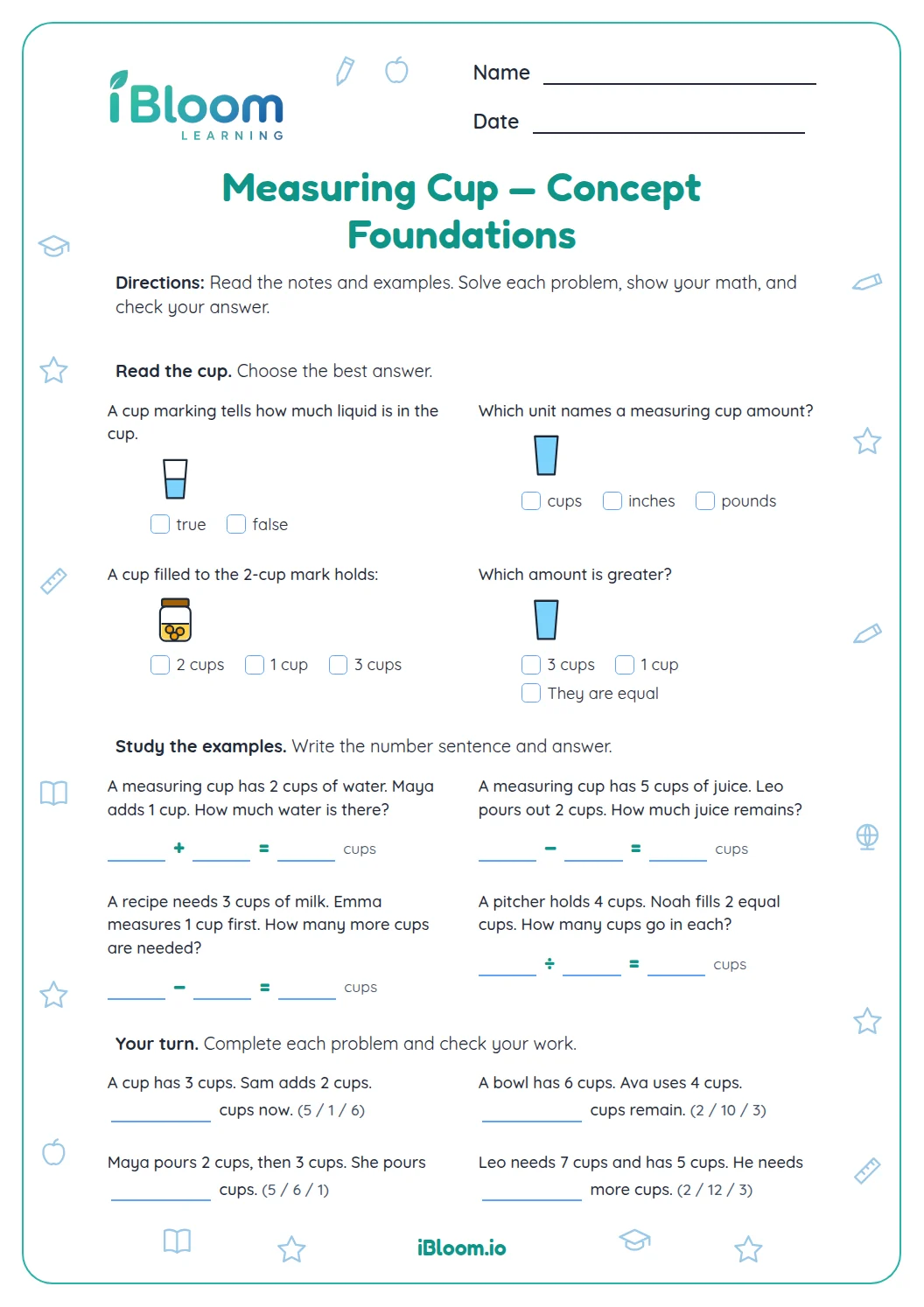
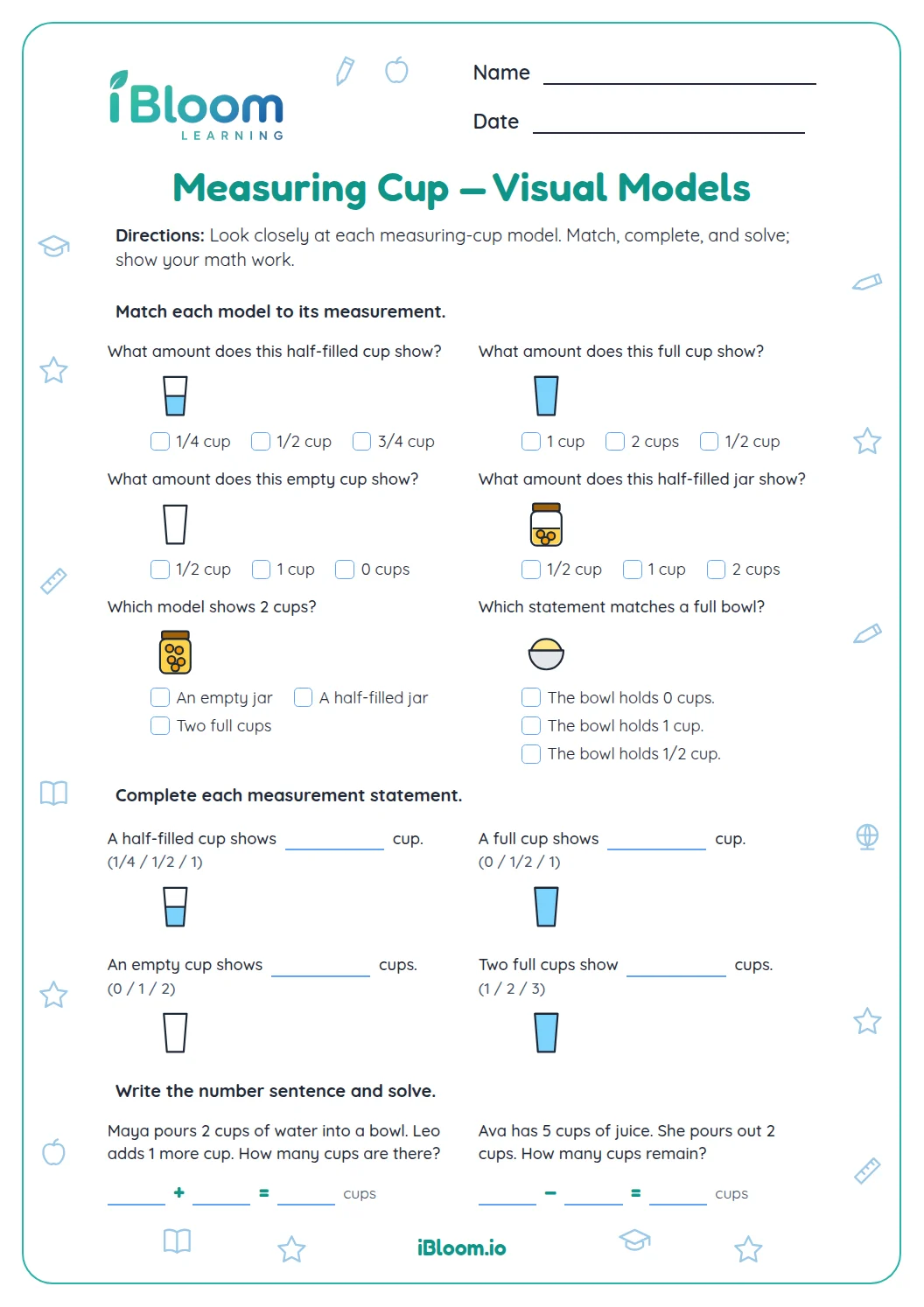
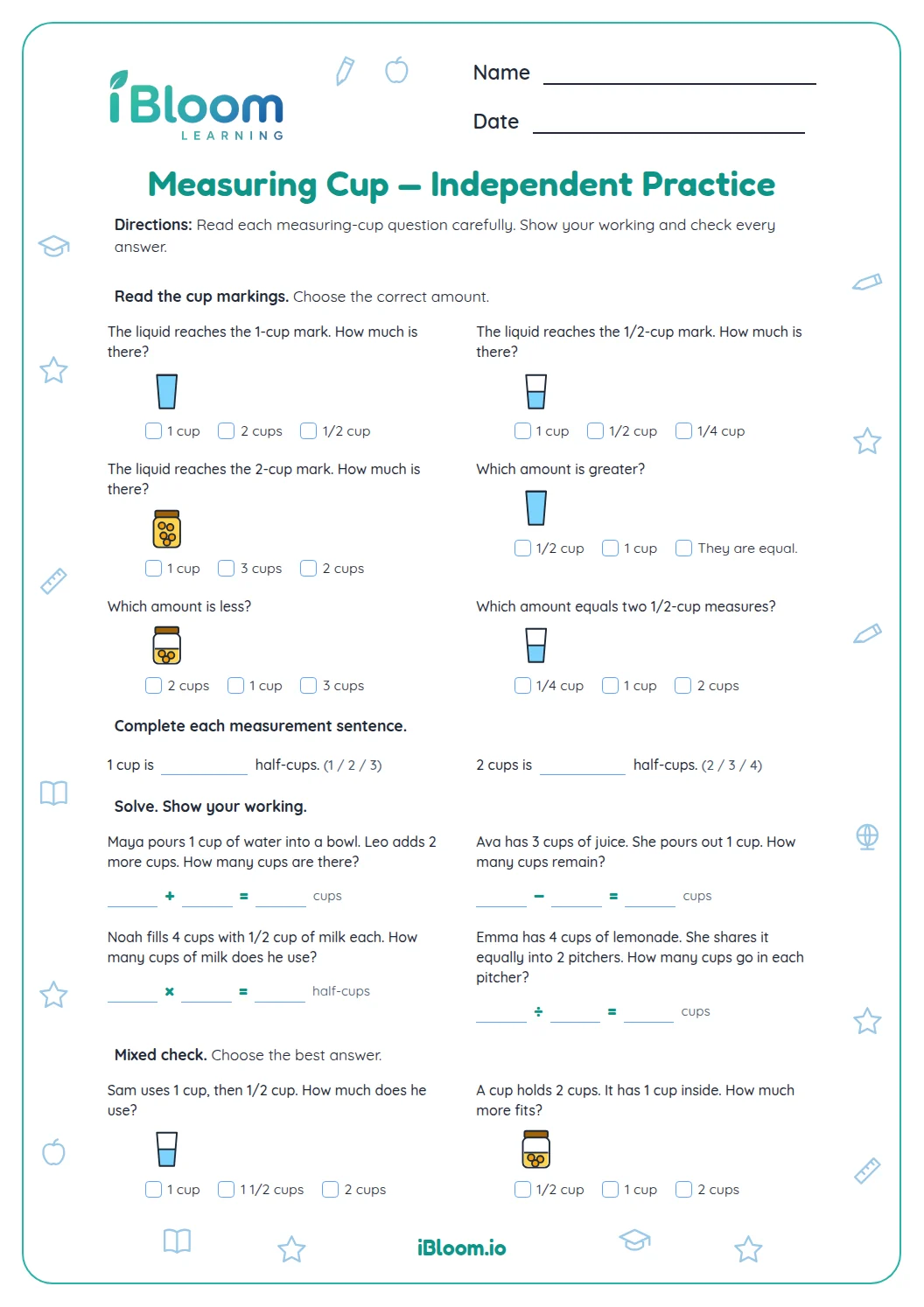
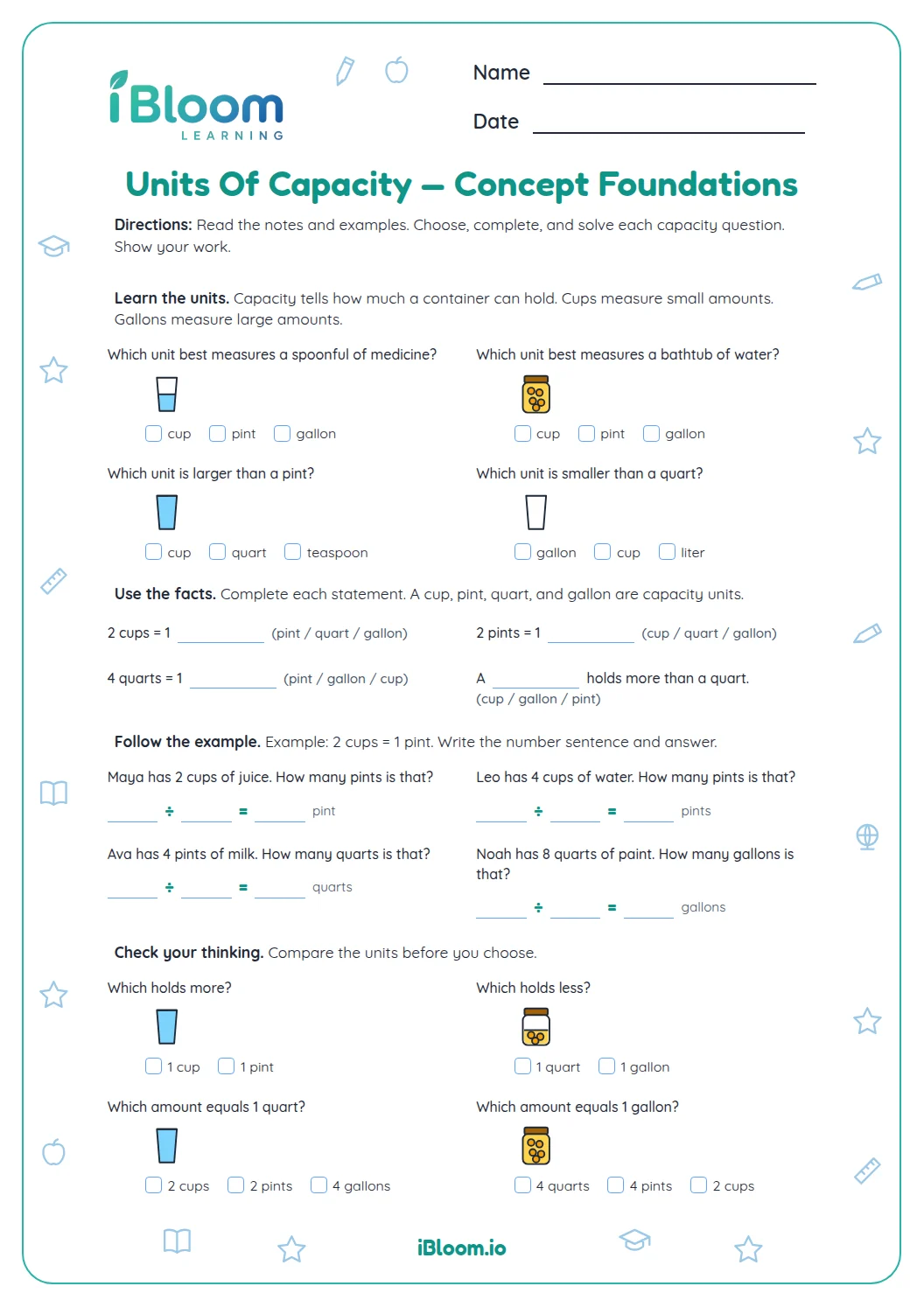
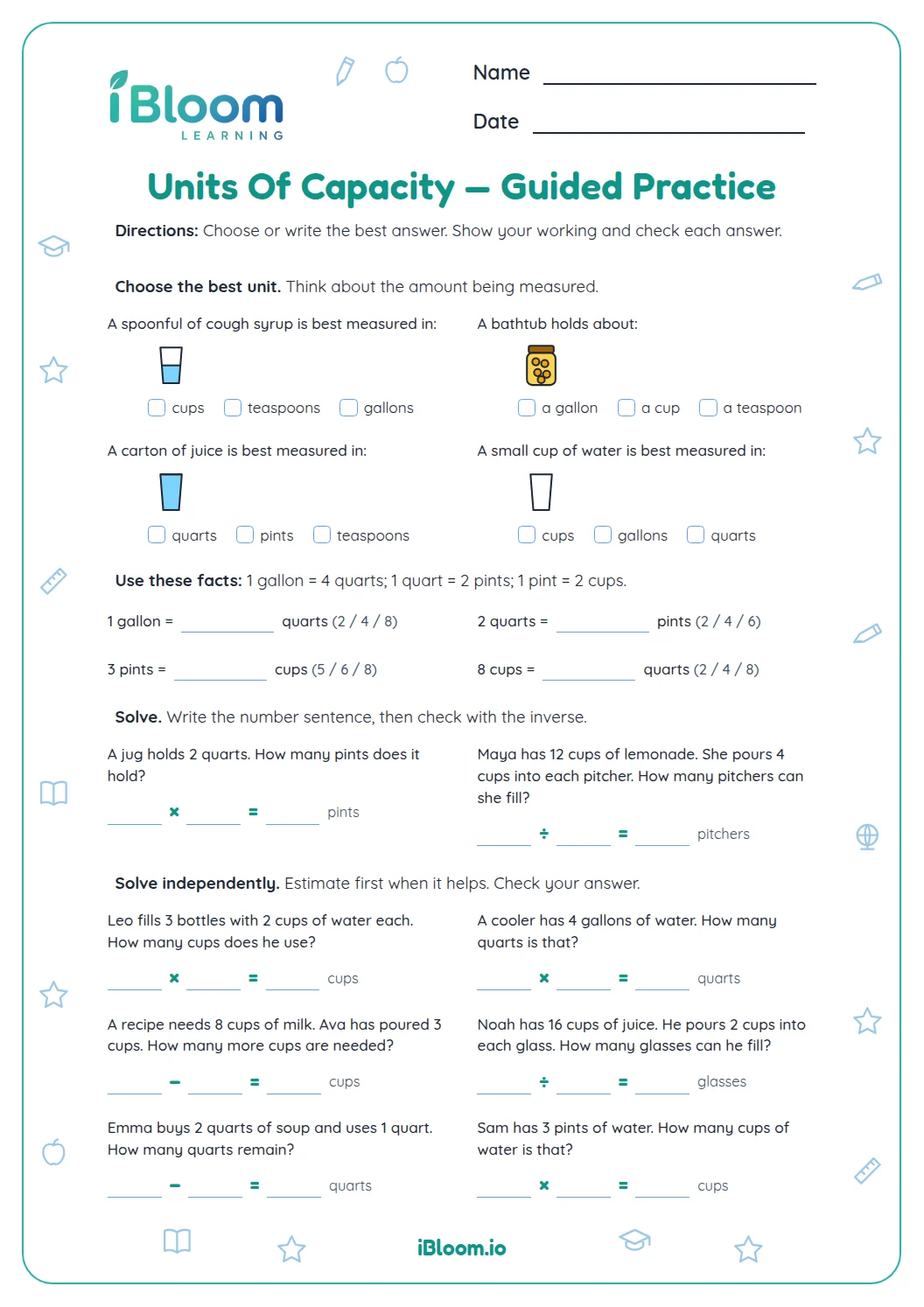
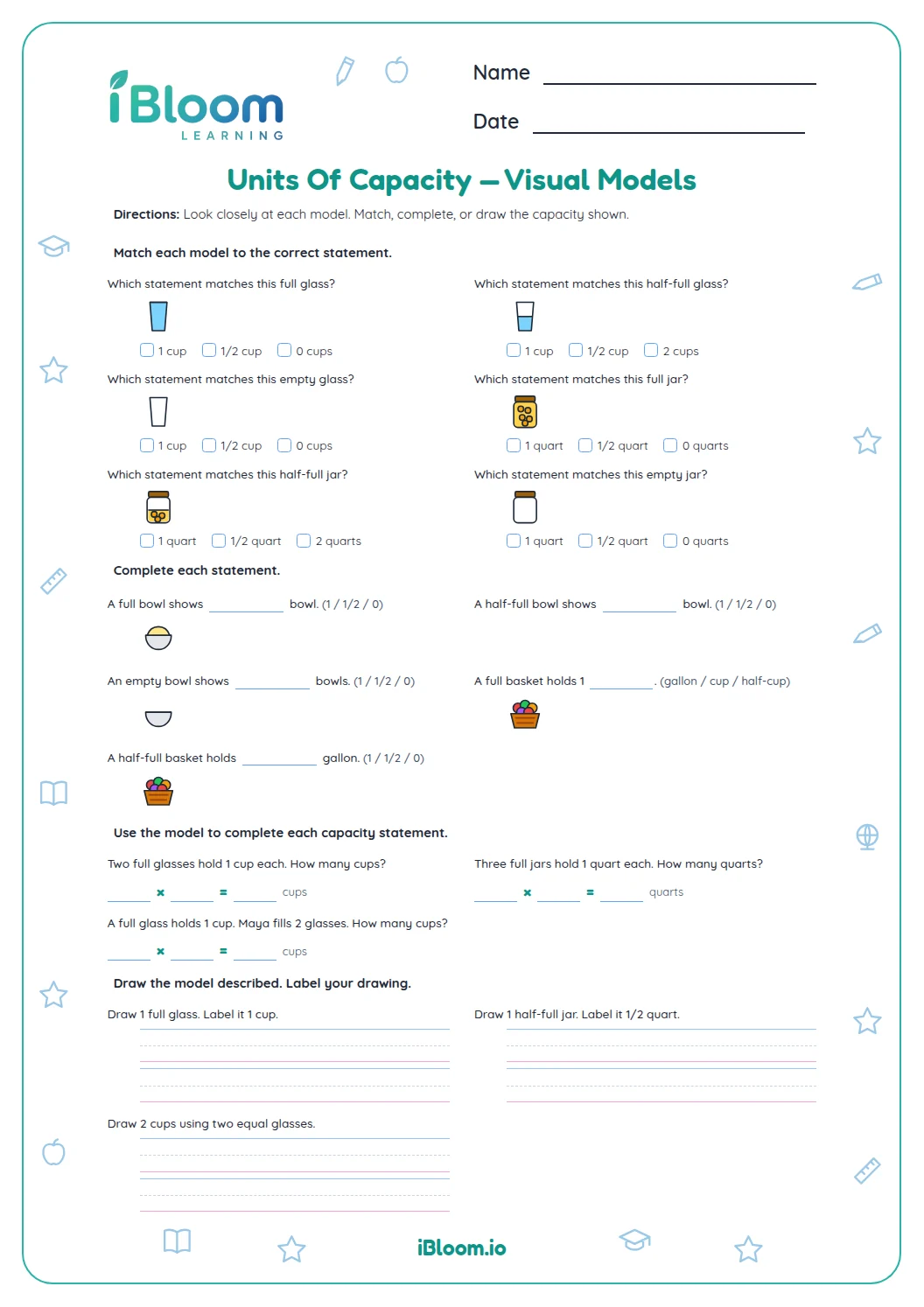
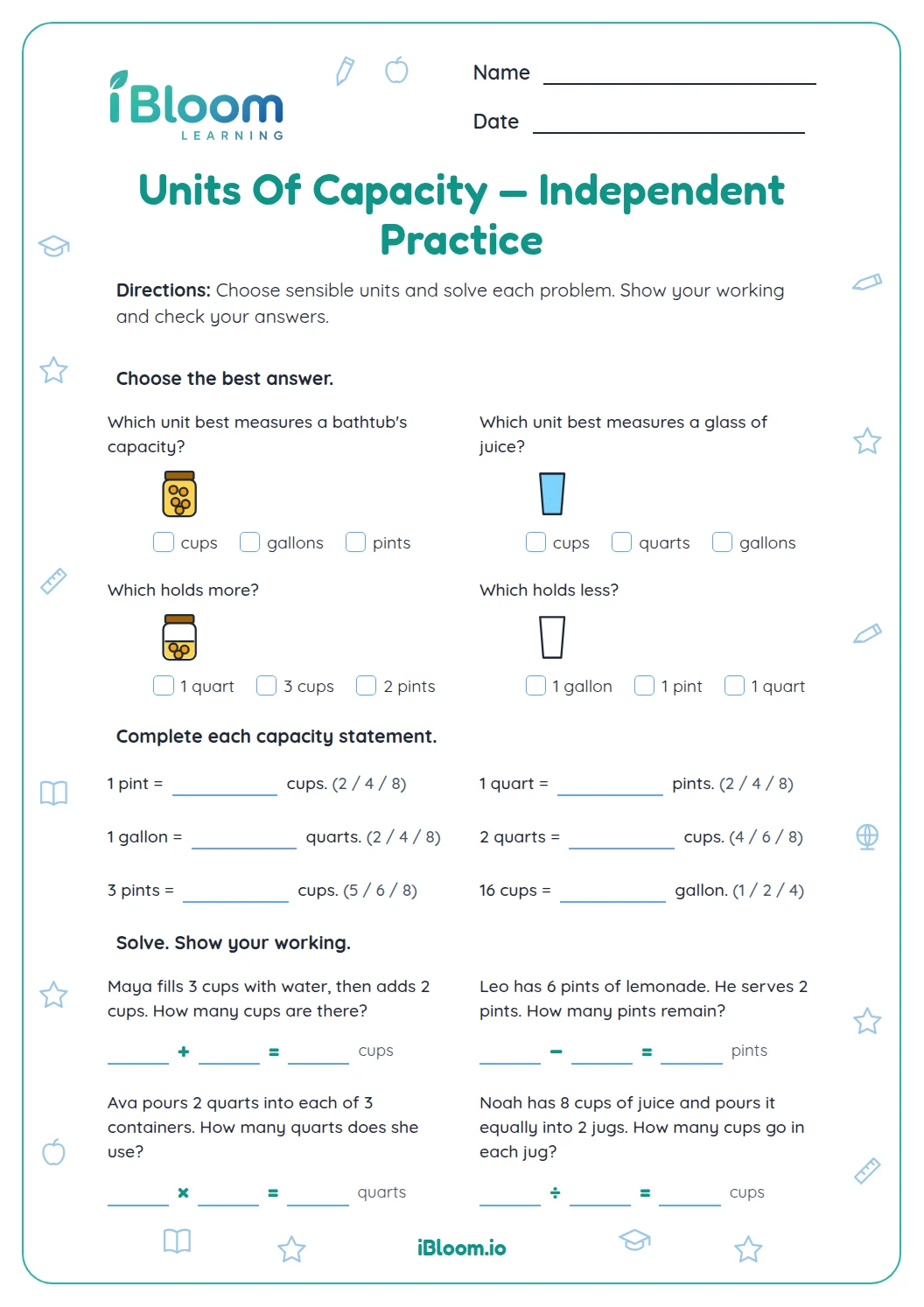
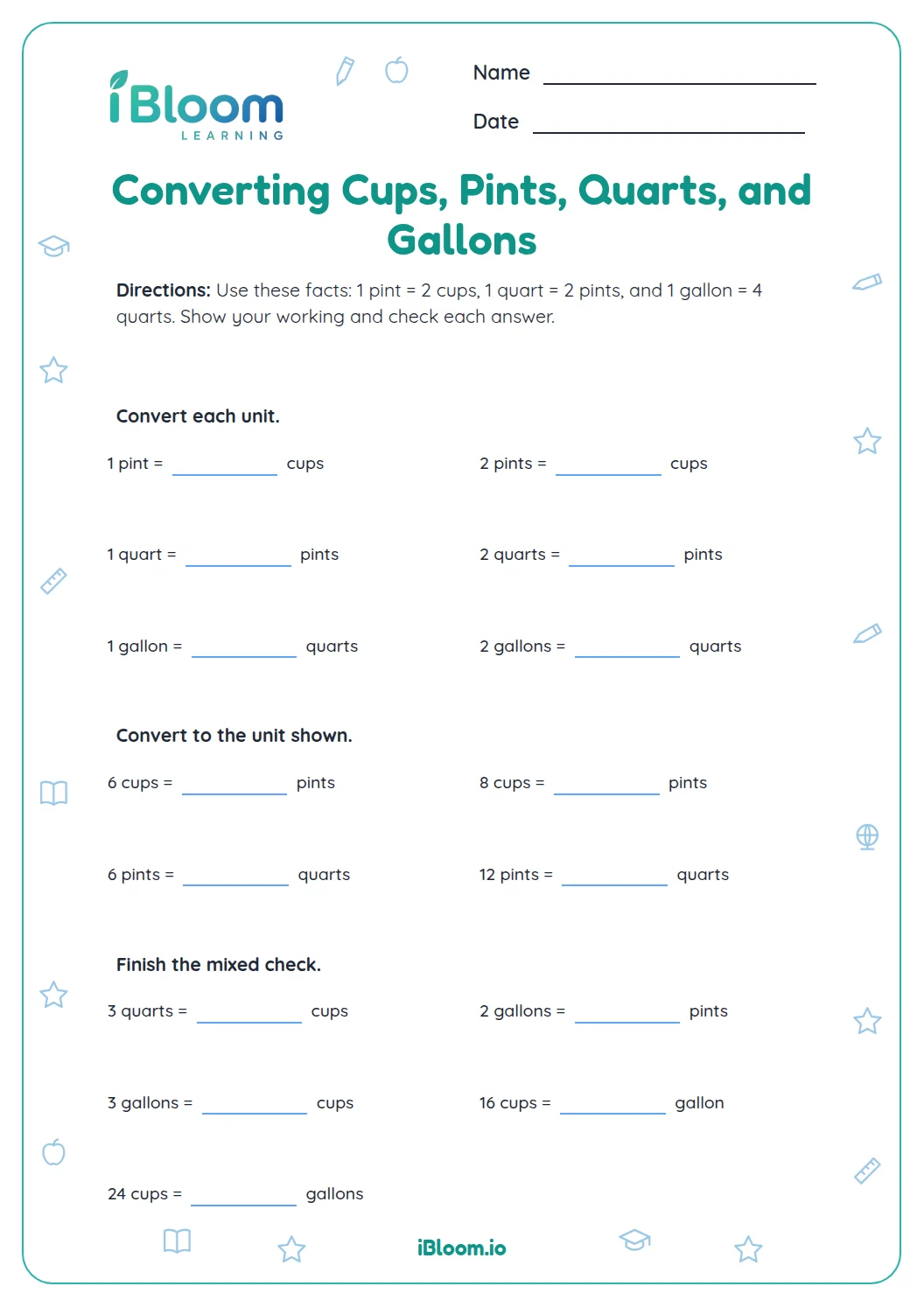
This Grade 3 printable gives learners practice solving real-world measuring-cup problems. The 16 questions use cup amounts in recipes, pitchers, bowls, and equal batches, with addition, subtraction, and unknown quantities. Children write an equation and label each answer in cups. The four-page worksheet has a separate answer key.
How do measuring-cup stories use addition and subtraction?
This Grade 3 printable gives learners practice solving real-world measuring-cup problems. The 16 questions use cup amounts in recipes, pitchers, bowls, and equal batches, with addition, subtraction, and unknown quantities. Children write an equation and label each answer in cups. A separate answer key is included.
- 1Starting amount: 10 cups
- 2Amount left: 6 cups
- 310 − 6 = 4 cups poured out
What will learners practice?
Sixteen short problems use cups in recipe, pitcher, and container situations. The worksheet and answer key each have four pages.
How can I use the answer key?
Check each answer after the learner completes the page. For written responses, use the sample as a guide; other clear answers that meet the prompt are valid.
How to use this worksheet
- 1Underline the amount of liquid given.
- 2Identify whether the story combines amounts or removes some.
- 3For a missing amount, use the known total and part.
- 4Write a matching equation.
- 5Check the calculation and include “cups” in the answer.
Common mistakes and quick fixes
The mistake
Adding amounts when the story says liquid is poured out.
The fix
Track whether the amount increases or decreases.
The mistake
Reporting the starting amount instead of the missing part.
The fix
Use the total and known part to calculate the unknown.
The mistake
Leaving off the unit in the final answer.
The fix
Write the number followed by cups.
What to practice next
Make more practice
Questions parents and teachers ask
What does this measuring cup worksheet practice?
It has 16 word problems about liquid volume measured in cups. Learners add, subtract, and find unknown amounts in recipe, pitcher, bowl, and batch situations. The answer key lists results with units so families can check both calculations and labels.
Does the worksheet ask children to convert cups to pints or quarts?
The questions use amounts already given in cups. Learners focus on deciding whether the story calls for addition, subtraction, or a missing amount, then keep cups in the answer. The separate key lets an adult check the arithmetic after the work is complete.
How do students find an amount that was poured out?
Compare the starting amount with what remains. If a jug starts with 10 cups and 6 cups remain, subtract 6 from 10 to find that 4 cups were poured out. The difference represents the change in the jug.
What does “two equal batches” mean in a cup problem?
It means the recipe amount is used twice. If one batch uses 6 cups, two equal batches use 6 + 6, or 12 cups. Learners can add the same amount twice or use multiplication to find the total.
Why should children write the unit in each answer?
The number alone does not say what was measured. Writing “cups” connects the calculation to the liquid volume in the story and helps distinguish an amount of liquid from an unrelated count. Check that the unit matches the question.
How long does the worksheet take?
Plan about 25 minutes for 16 short problems across four worksheet pages. Encourage learners to underline the amounts and write a matching equation before solving. They can work through one page at a time and check answers with the separate key.