




About this worksheet
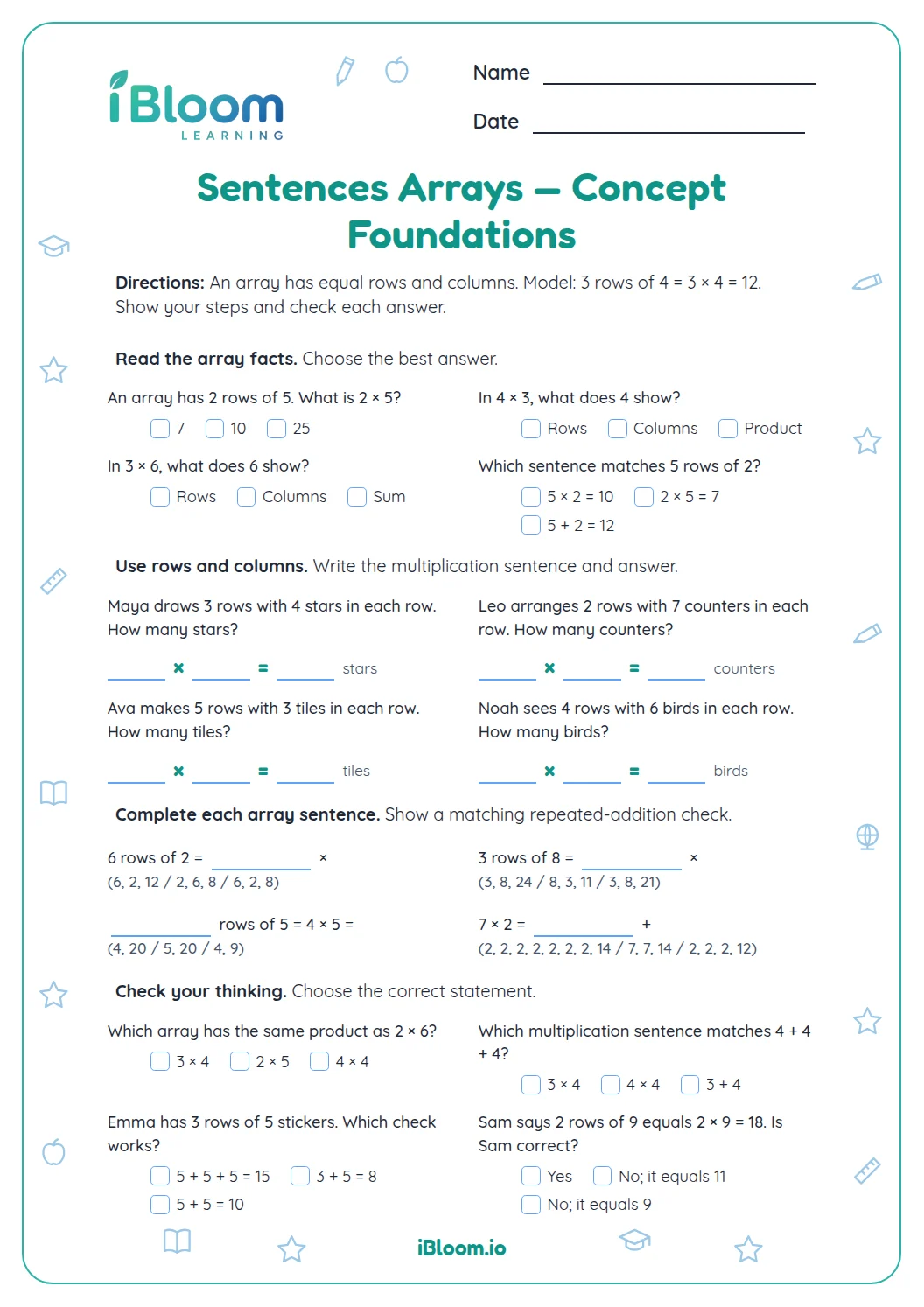
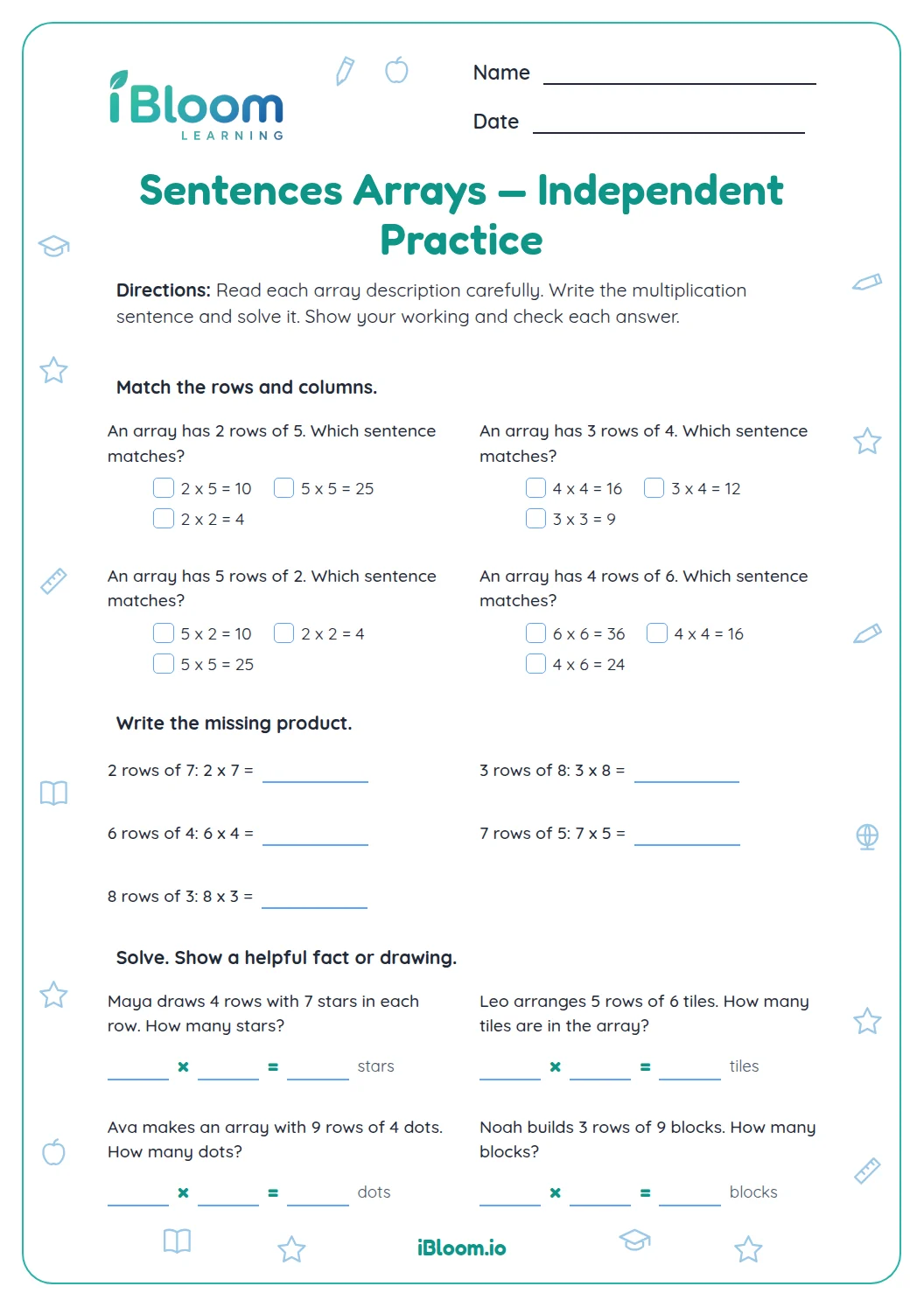
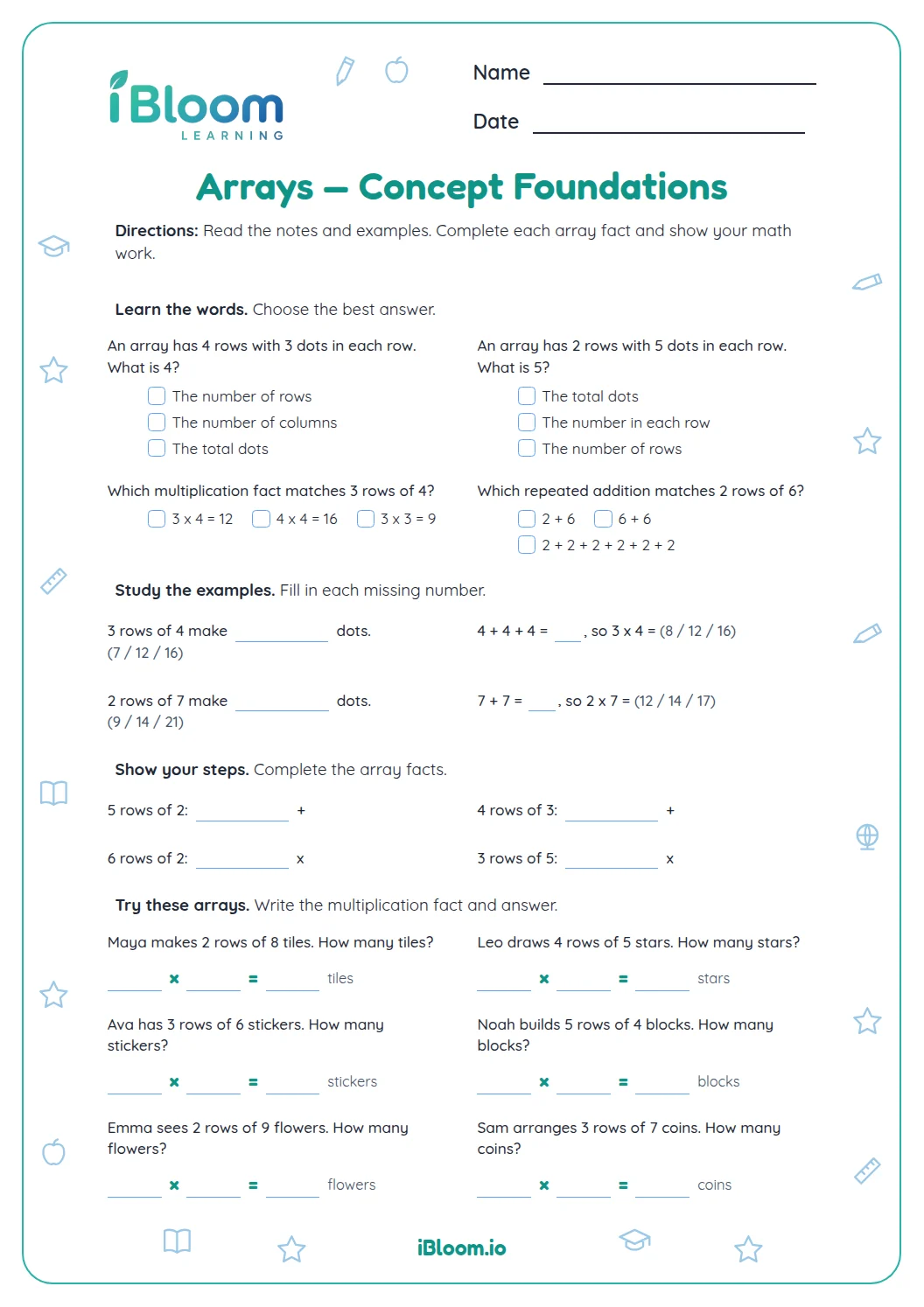
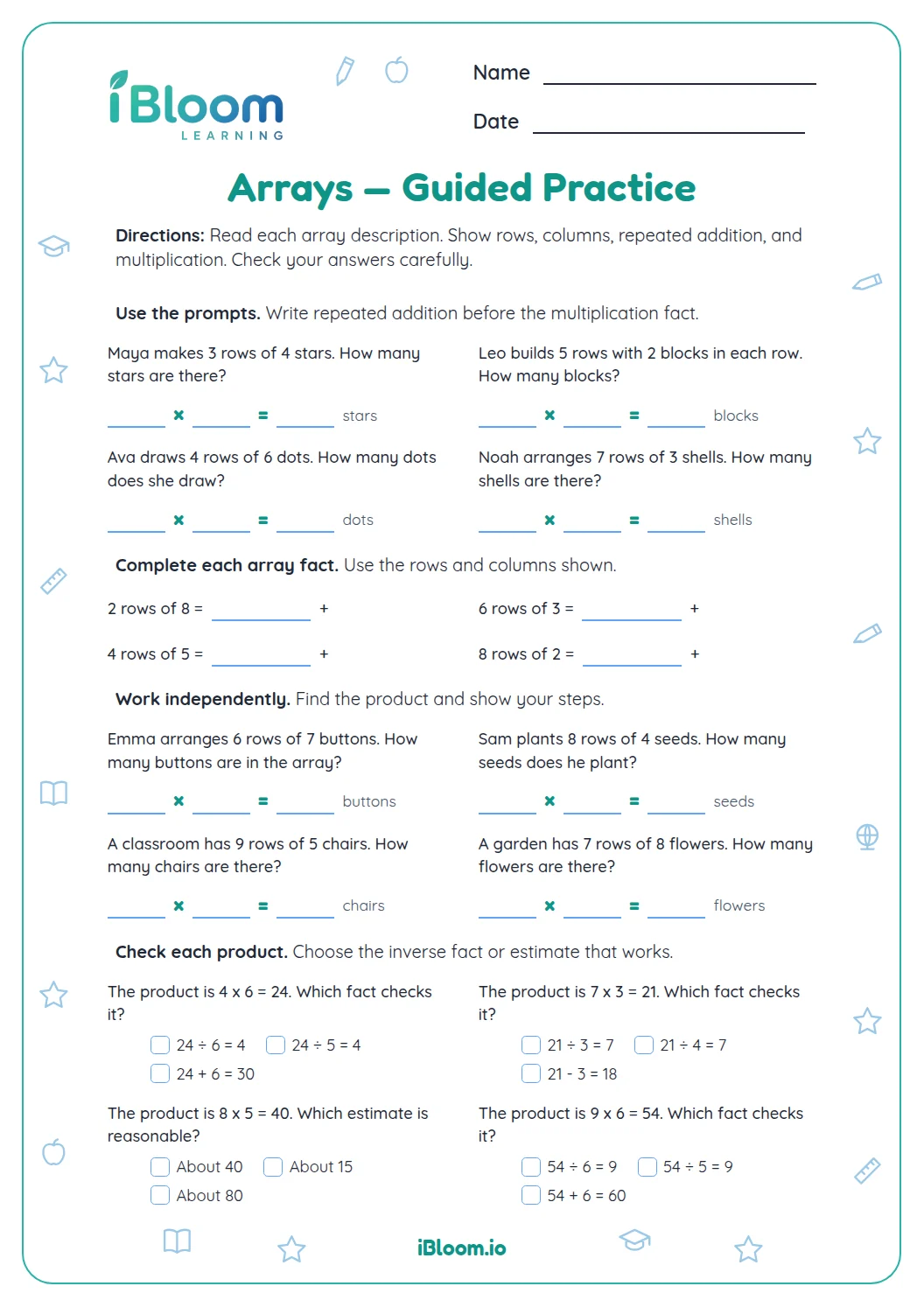
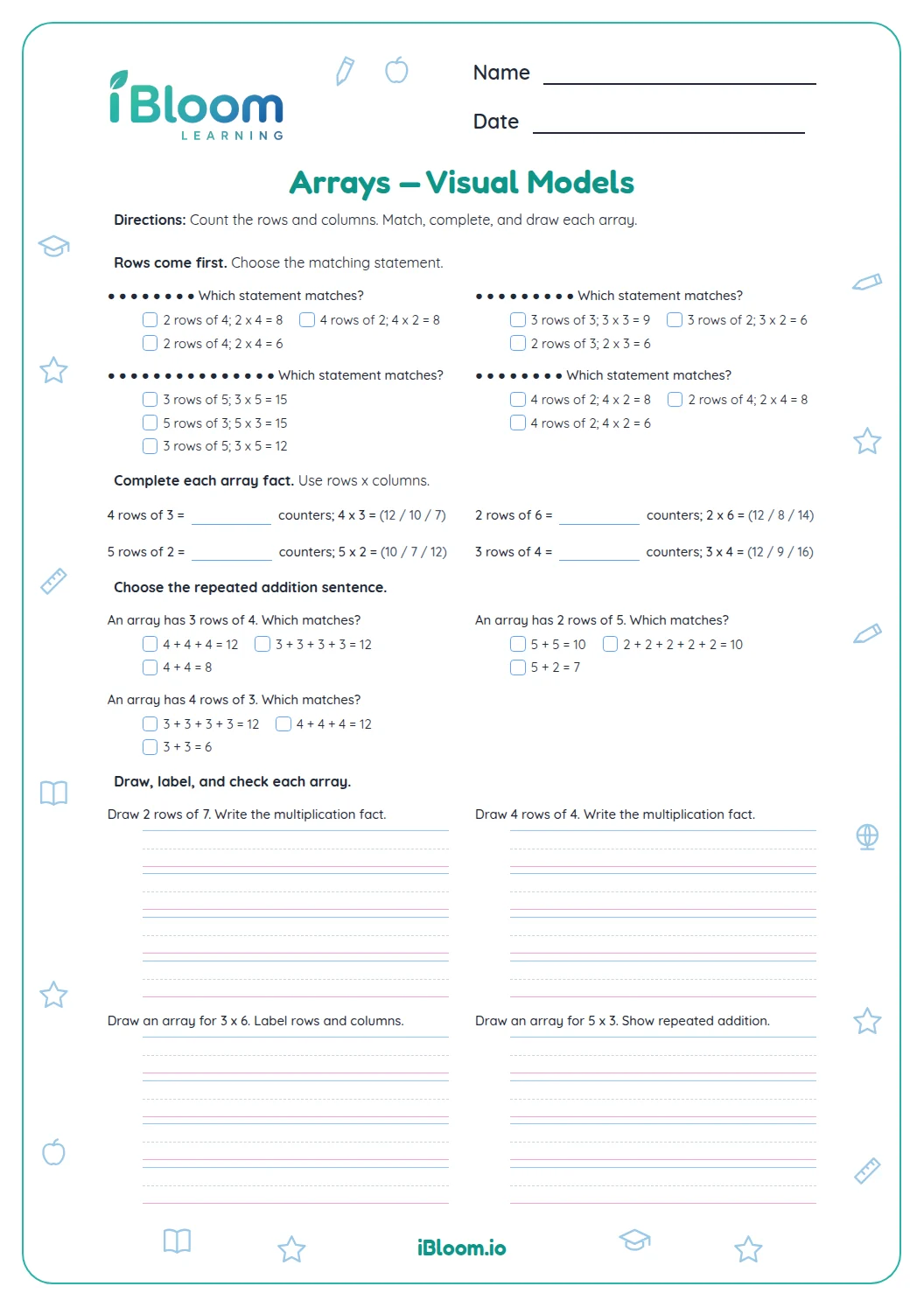
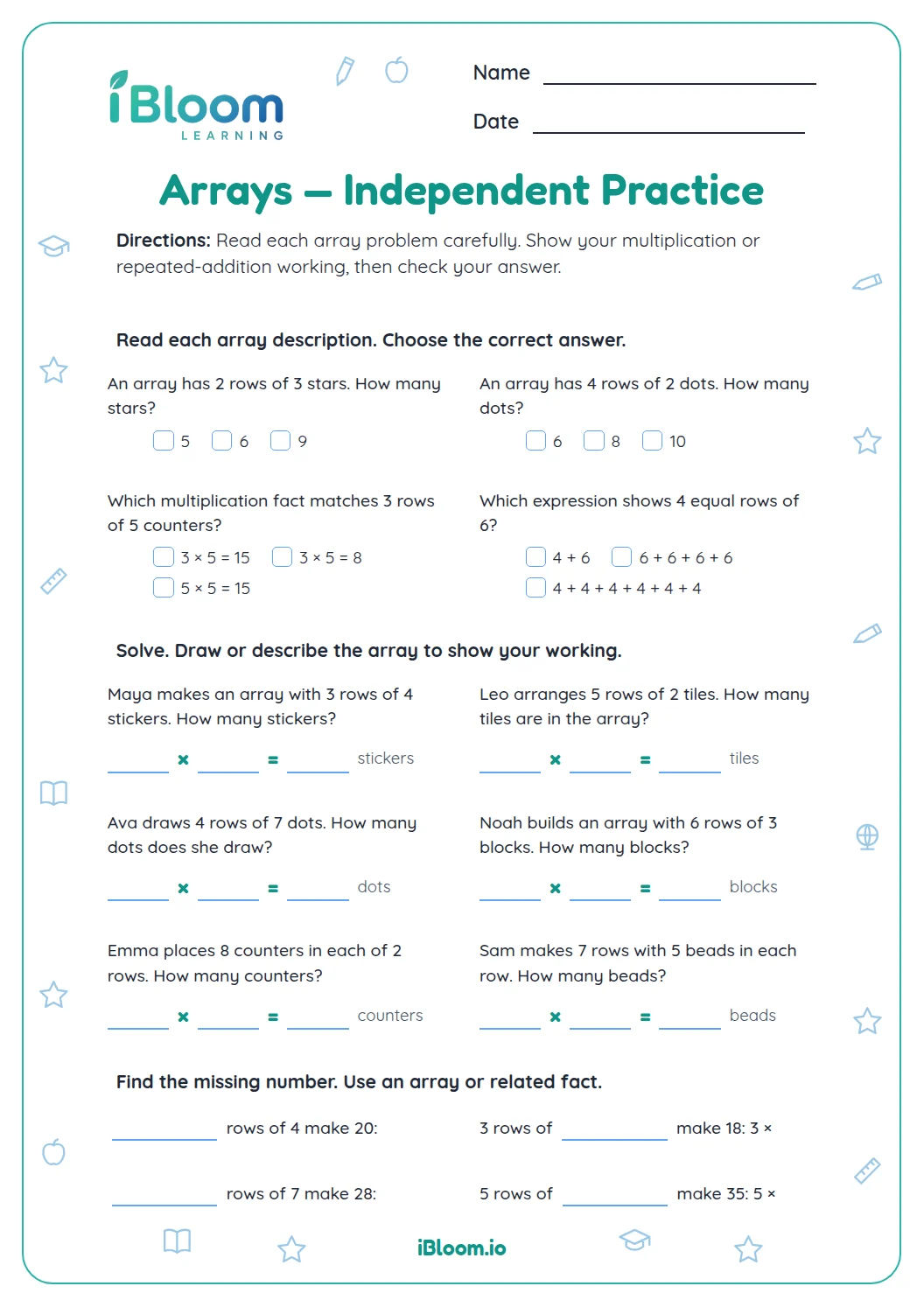
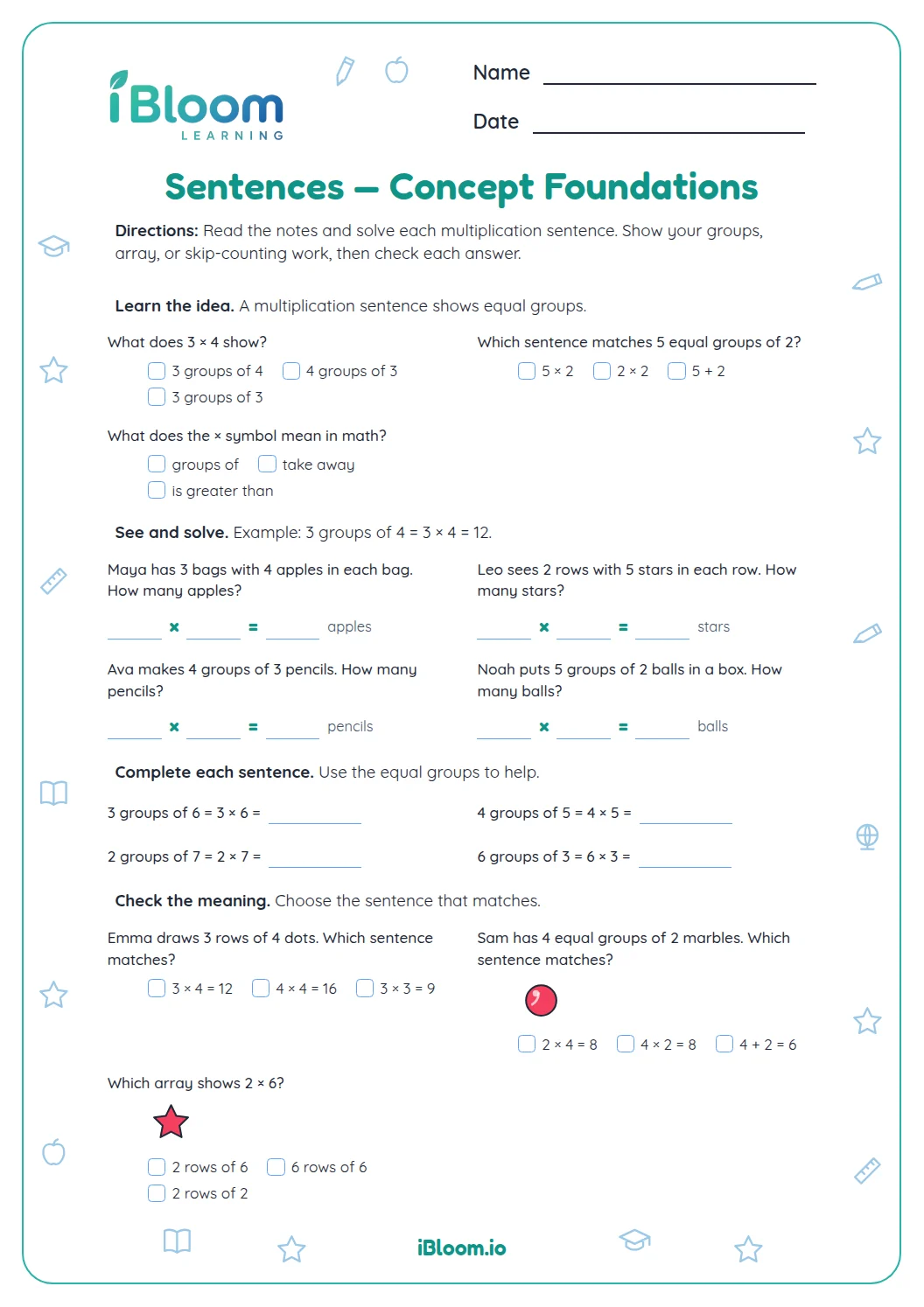
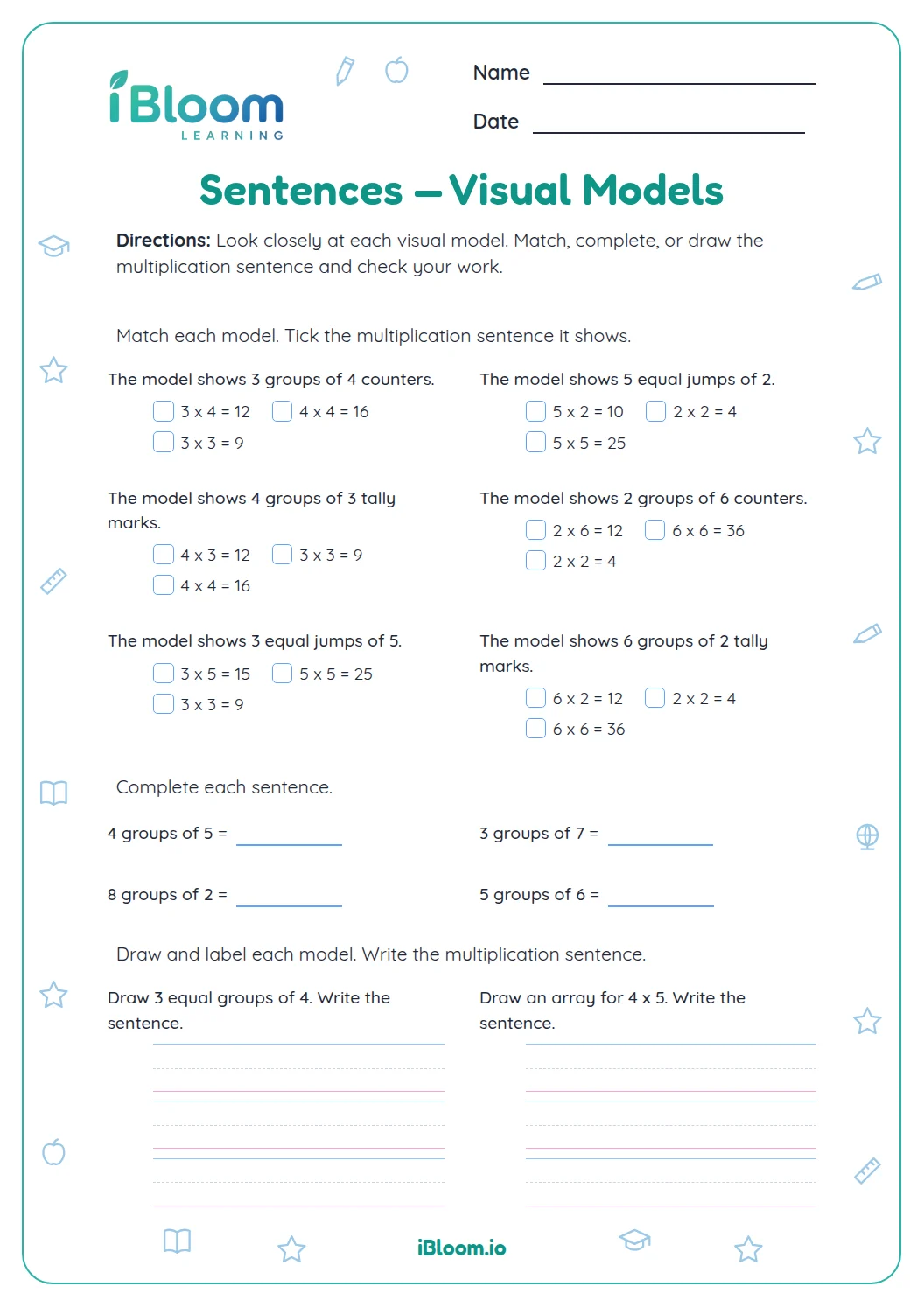
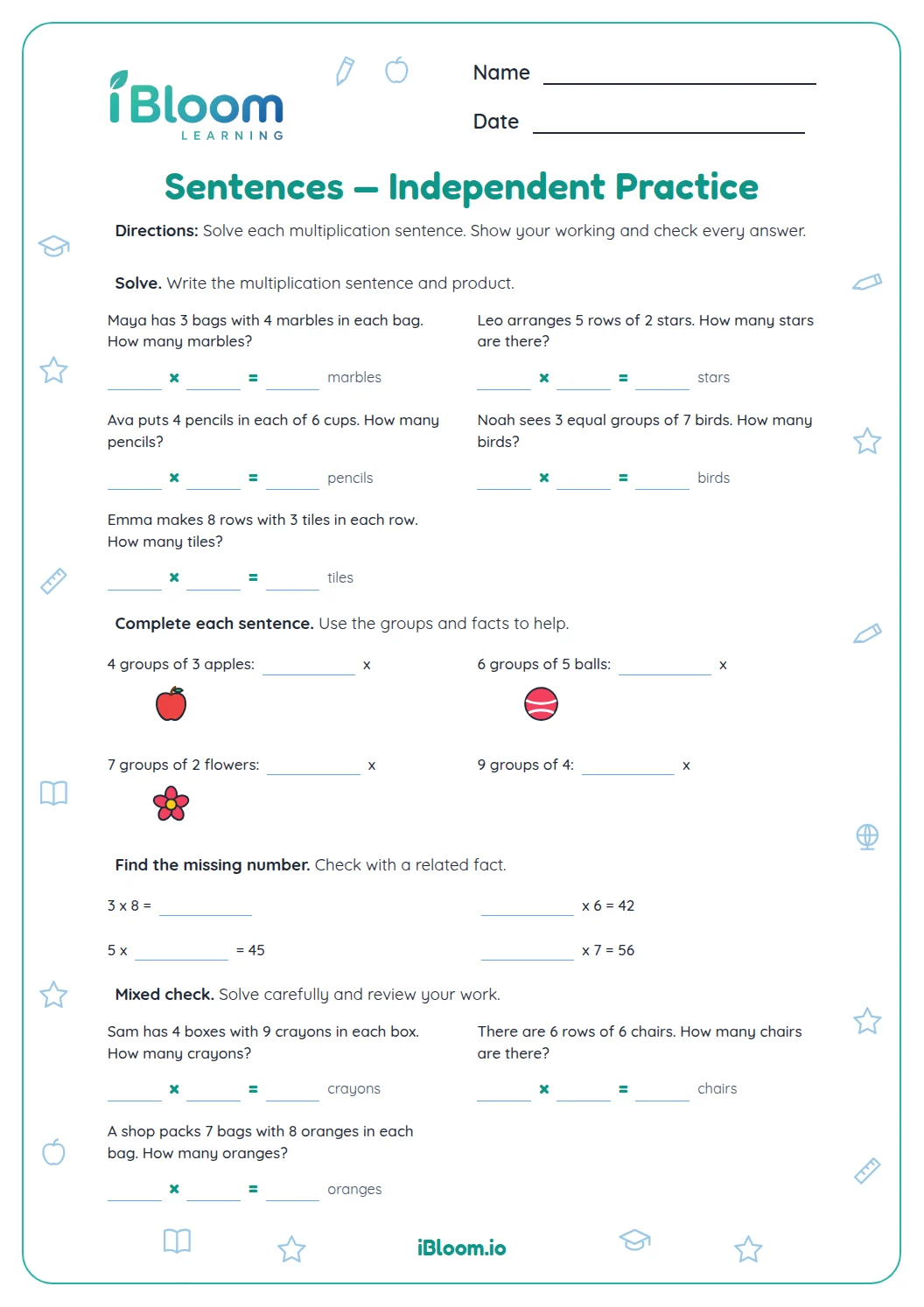
This Grade 3 worksheet uses real-world equal groups to practice multiplication sentences. Students read each situation, identify the number of groups and the amount in each group, then write an equation and total. The seed-cup array gives the first problem a visual model.
Aligned to 3.OA.A.1
How do arrays connect to multiplication?
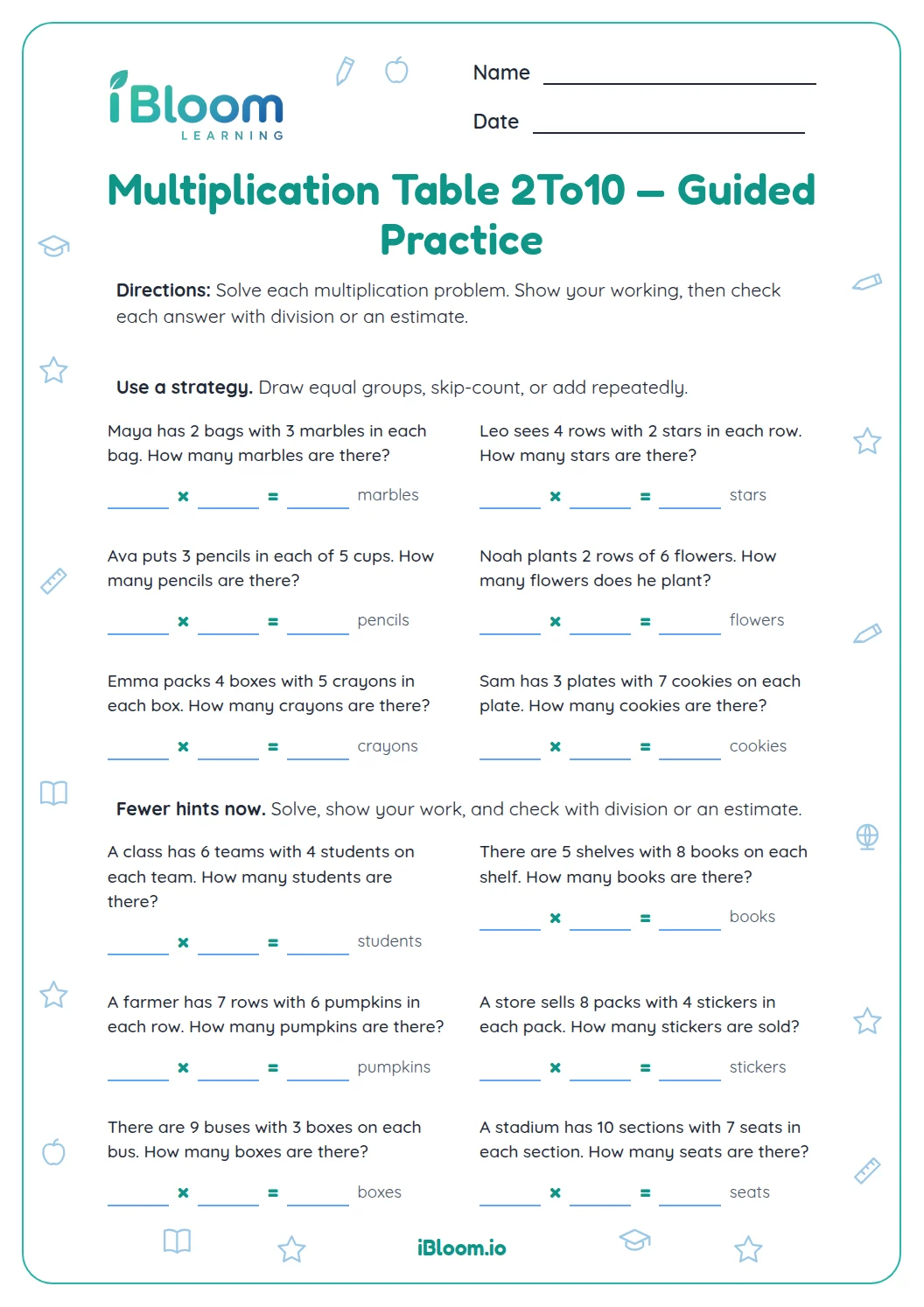
This Grade 3 multiplication worksheet turns equal groups into multiplication sentences.
Use the worked item below as a model, then continue through the parts in order.
- 13 rows of 4 seed cups
- 23 equal groups of 4
- 33 × 4 = 12 seed cups
What kinds of stories are included?
Students find products in equal-group stories, write a multiplication sentence, and check a product against an array context. The factors tell how many groups and how many are in each group.
How can students check a product?
Underline the number of groups in the story. Find how many are in each group.
How to use this worksheet
- 1Underline the number of groups in the story.
- 2Find how many are in each group.
- 3Write groups × items per group.
- 4Use skip counting or an array to find the product.
- 5Add the item name to the answer.
Common mistakes and quick fixes
The mistake
Adding the group count and group size.
The fix
Equal groups call for multiplication: groups × amount in each.
The mistake
Switching rows and items without explaining.
The fix
Name what each factor counts before writing the equation.
The mistake
Giving only the product in a story problem.
The fix
Include the requested unit, such as seats or beads.
Common Core alignment
This worksheet gives students focused practice with the skills named in these standards.
Represent equal groups with multiplication equations and arrays.
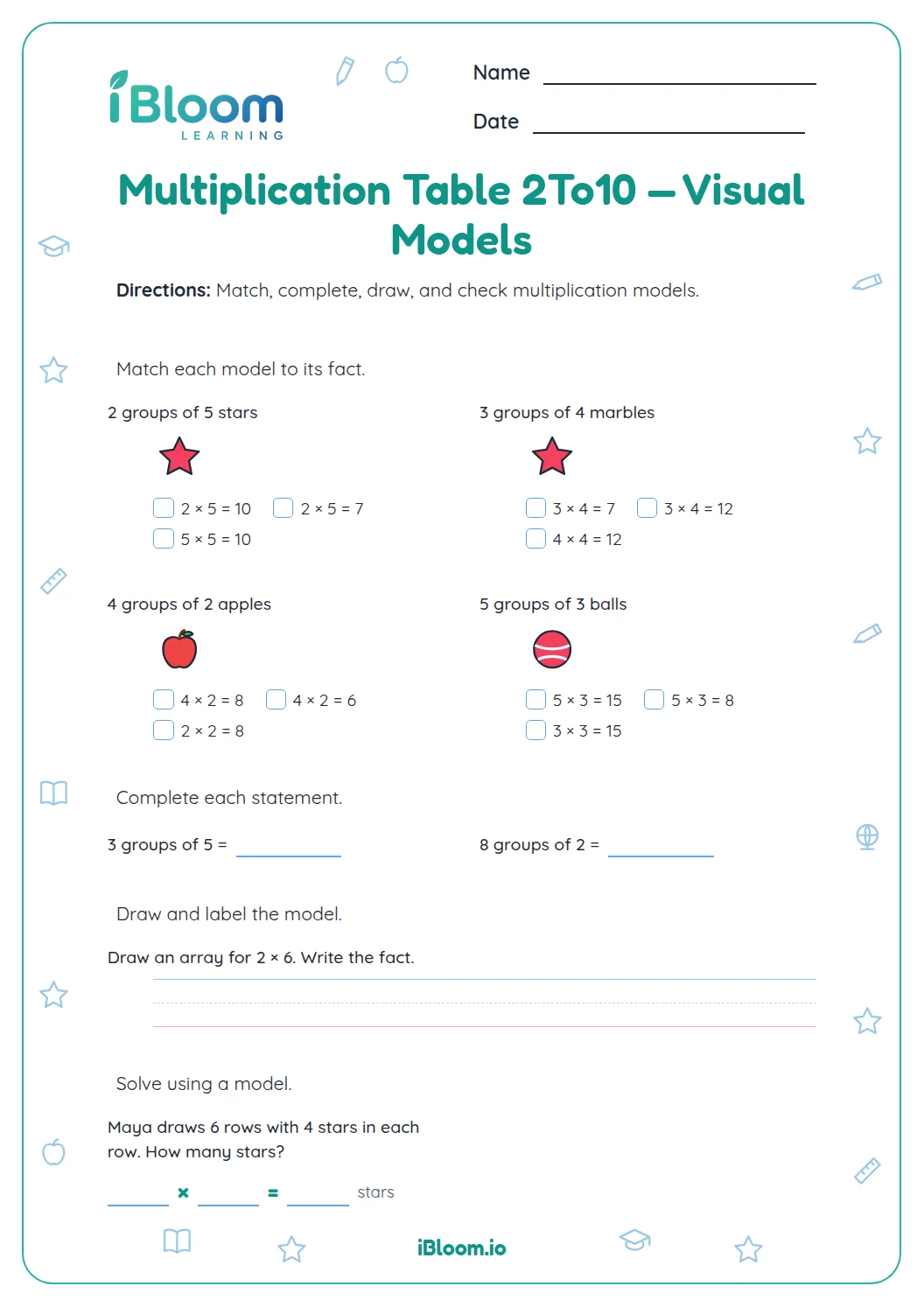
On this sheet: Array contexts are represented by equal-group multiplication sentences.
Show the official wordingHide the official wording
Interpret products of whole numbers, e.g., interpret 5 × 7 as the total number of objects in 5 groups of 7 objects each. For example, describe a context in which a total number of objects can be expressed as 5 × 7.
What to practice next
Make more practice
Further reading
Questions parents and teachers ask
What skill does this worksheet practice?
This page gives focused Grade 3 practice with multiplication in equal-group stories. Students work through 14 questions, and each prompt has a matching response in the separate answer key. The activity moves from recognizing equal groups to writing or choosing a multiplication sentence and finding its product.
How many questions are included?
There are 14 questions. The set uses varied prompts to practice multiplication in equal-group stories, with a separate answer key for checking each response. Learners can complete the items in order, then revisit a question if its groups, factors, or product do not match.
Is an answer key provided?
Yes. A separate answer key gives an equation and total for each story. Students can try writing their own sentences first, then compare the factors and product with the key. If the answer differs, recount the groups or use repeated addition to check it.
How should students check their work?
Students can underline the number of groups and the amount in each group, then write groups × amount = total. For the pictured seed-cup array, count three rows with four cups in each row. Check the total by skip-counting or comparing with the separate answer key.