
About this worksheet
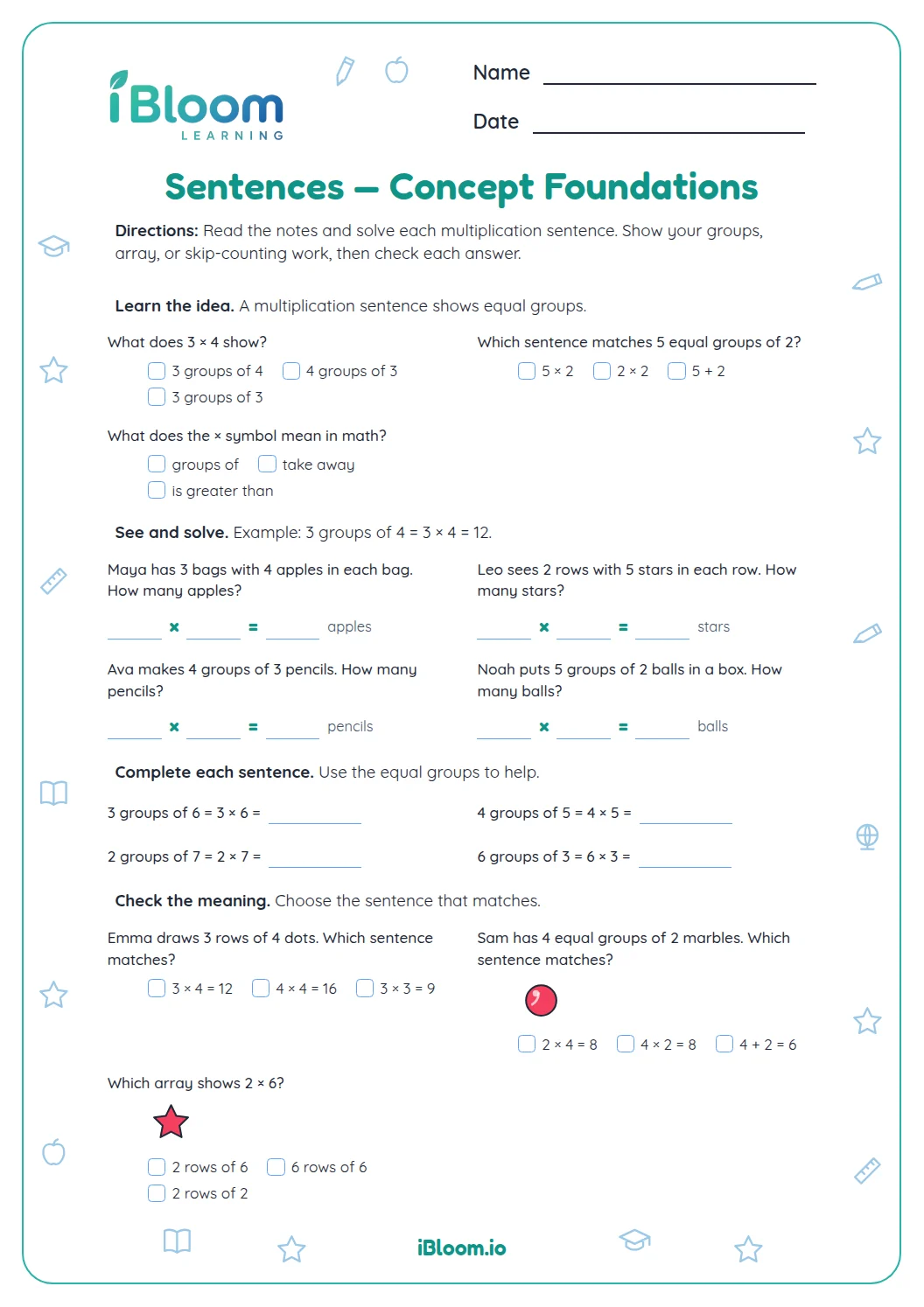
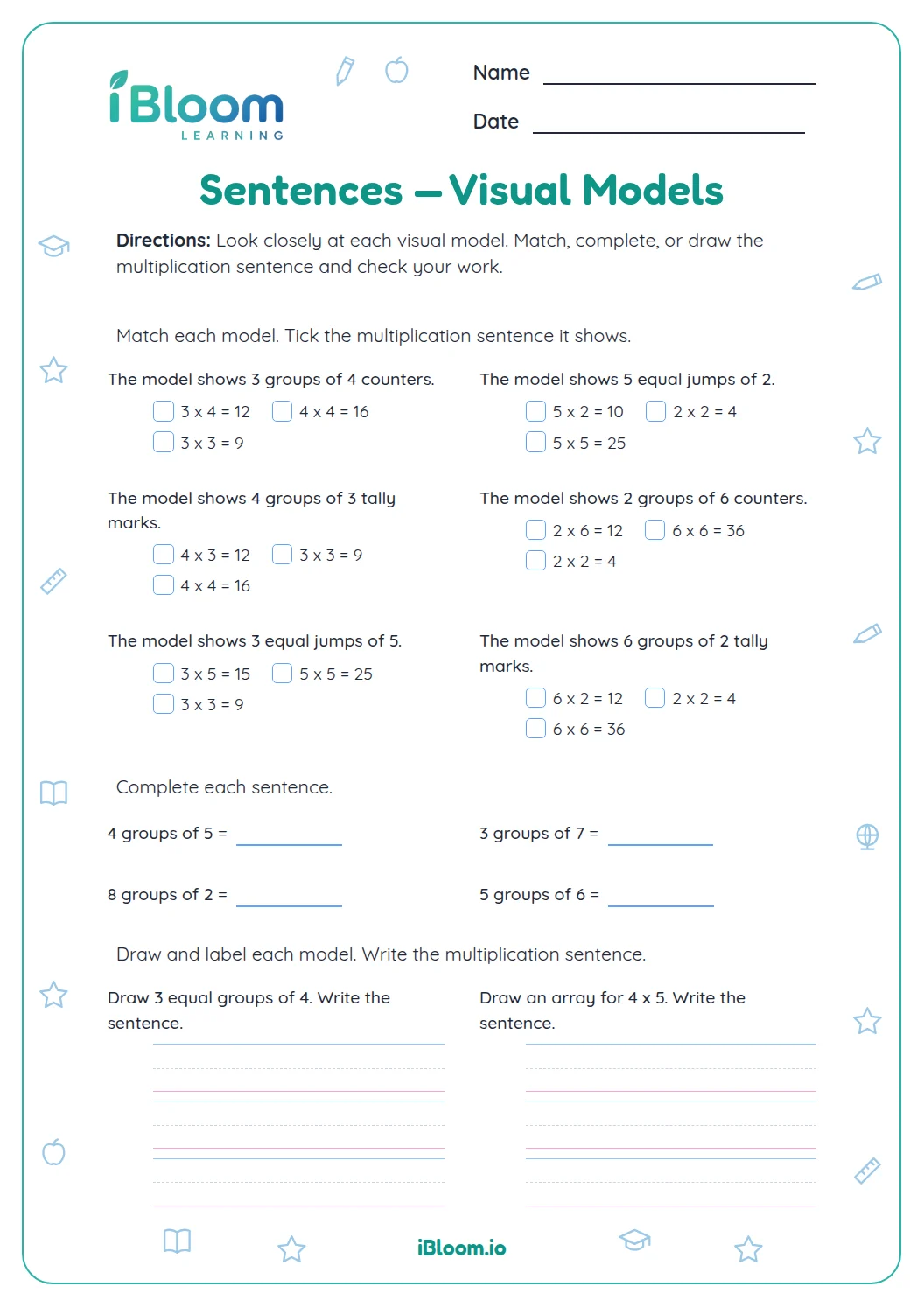
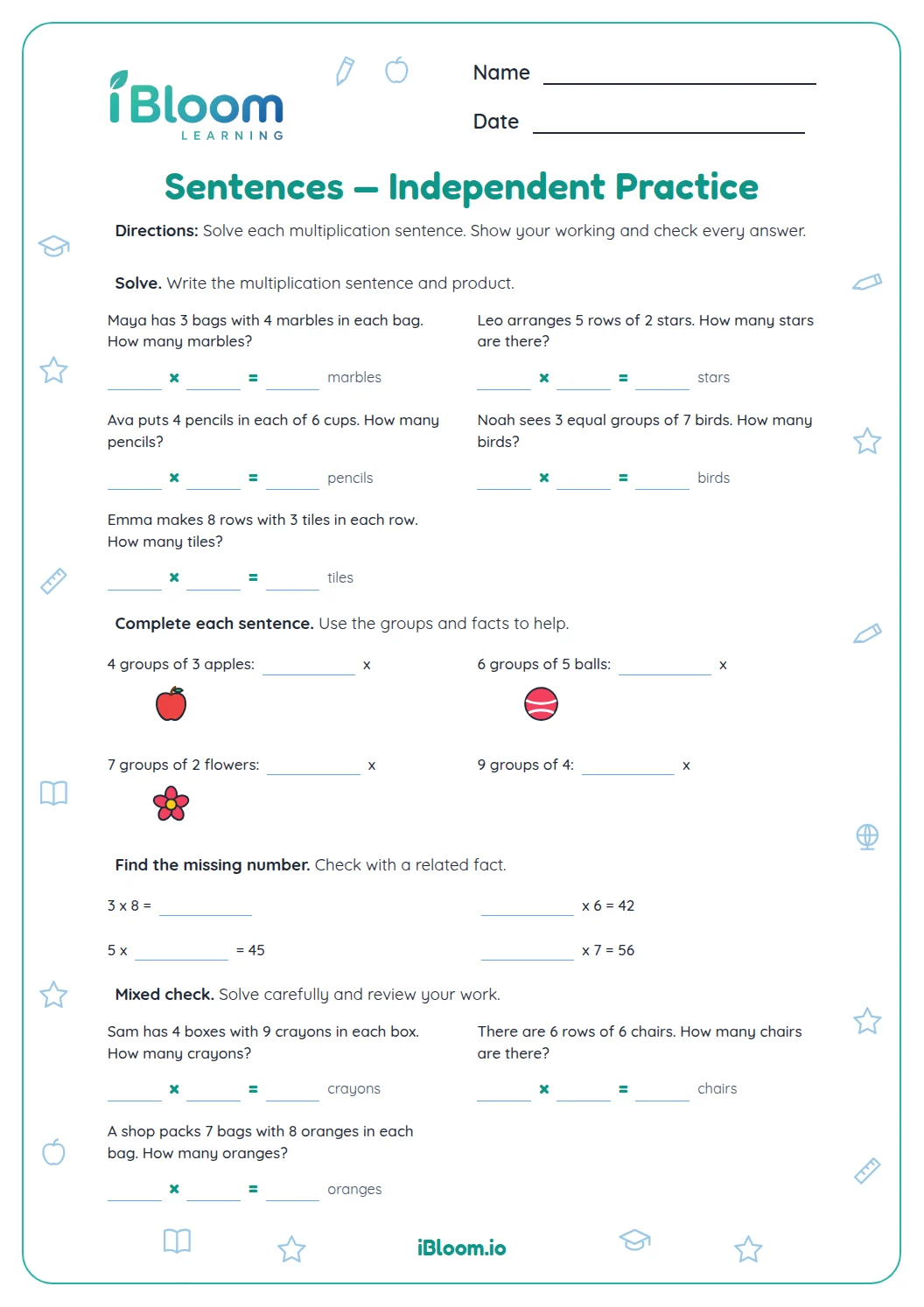
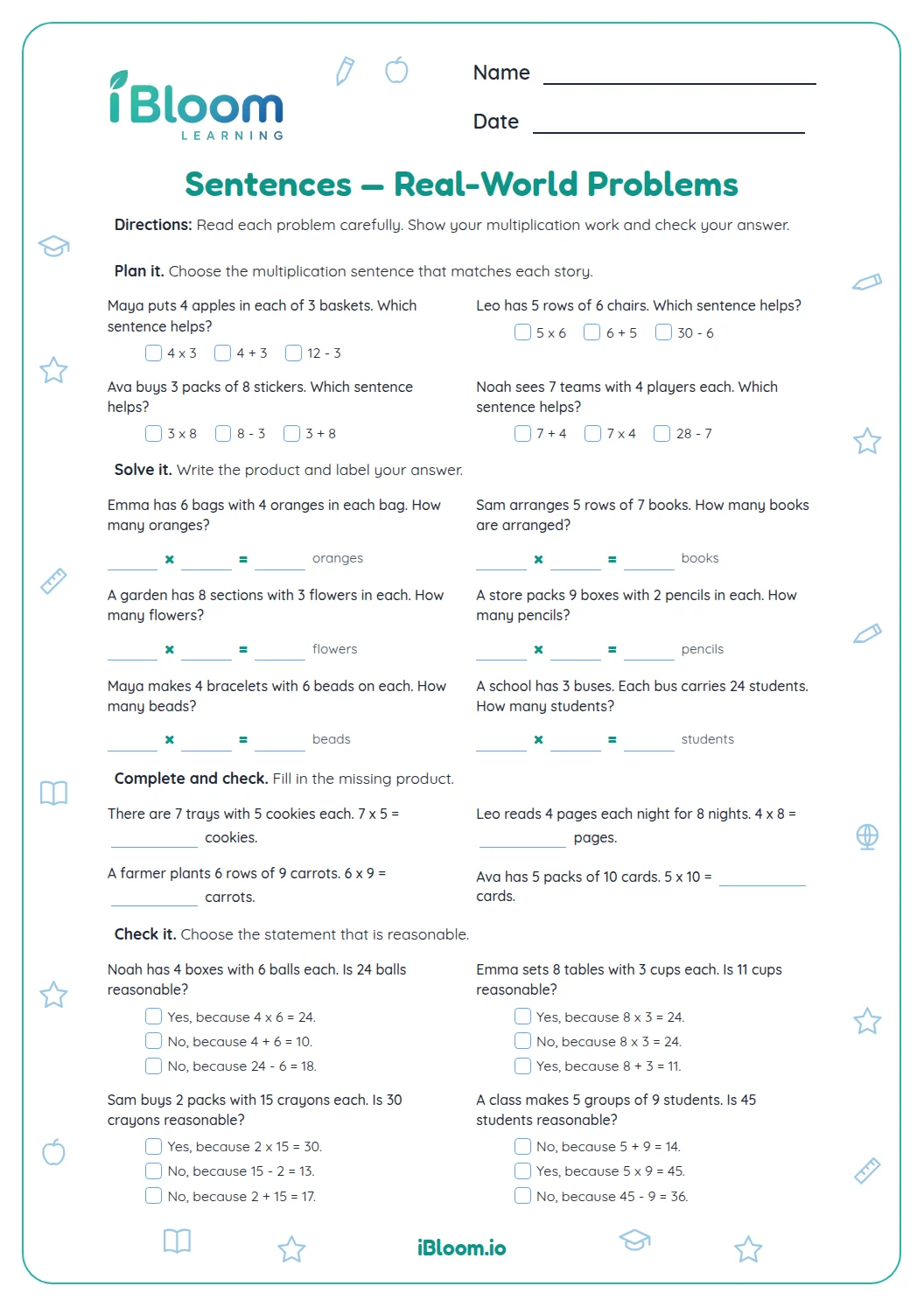
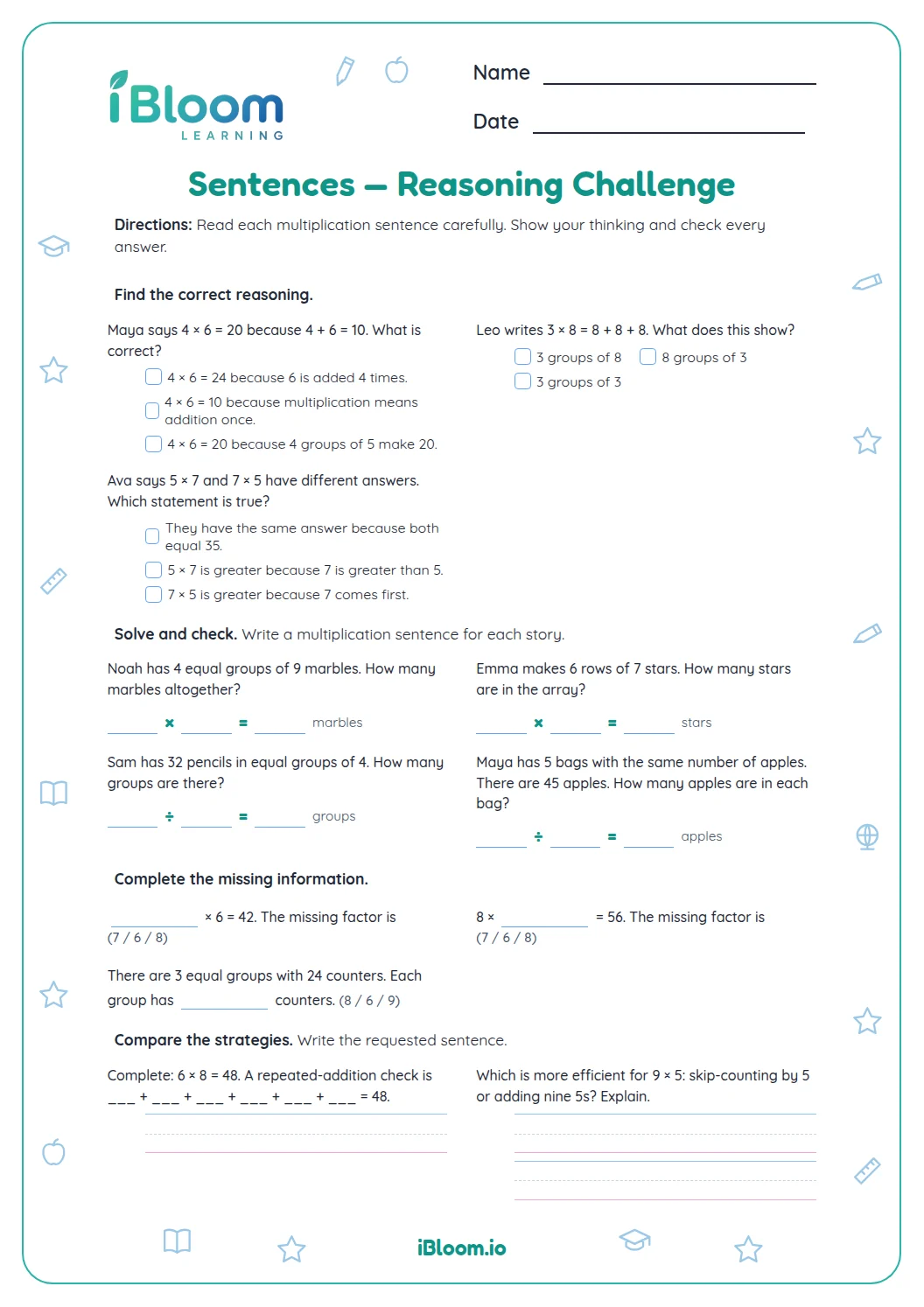
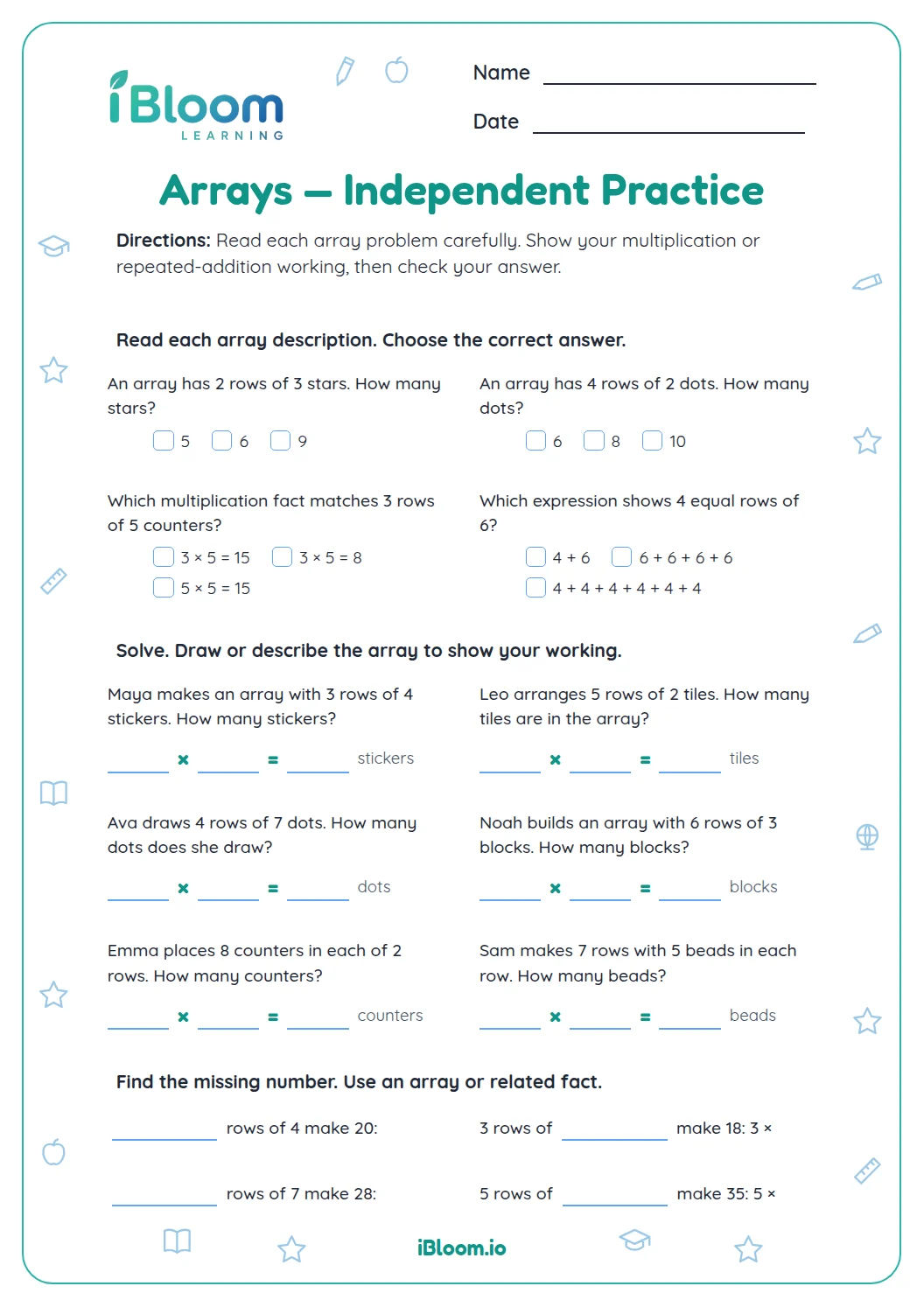
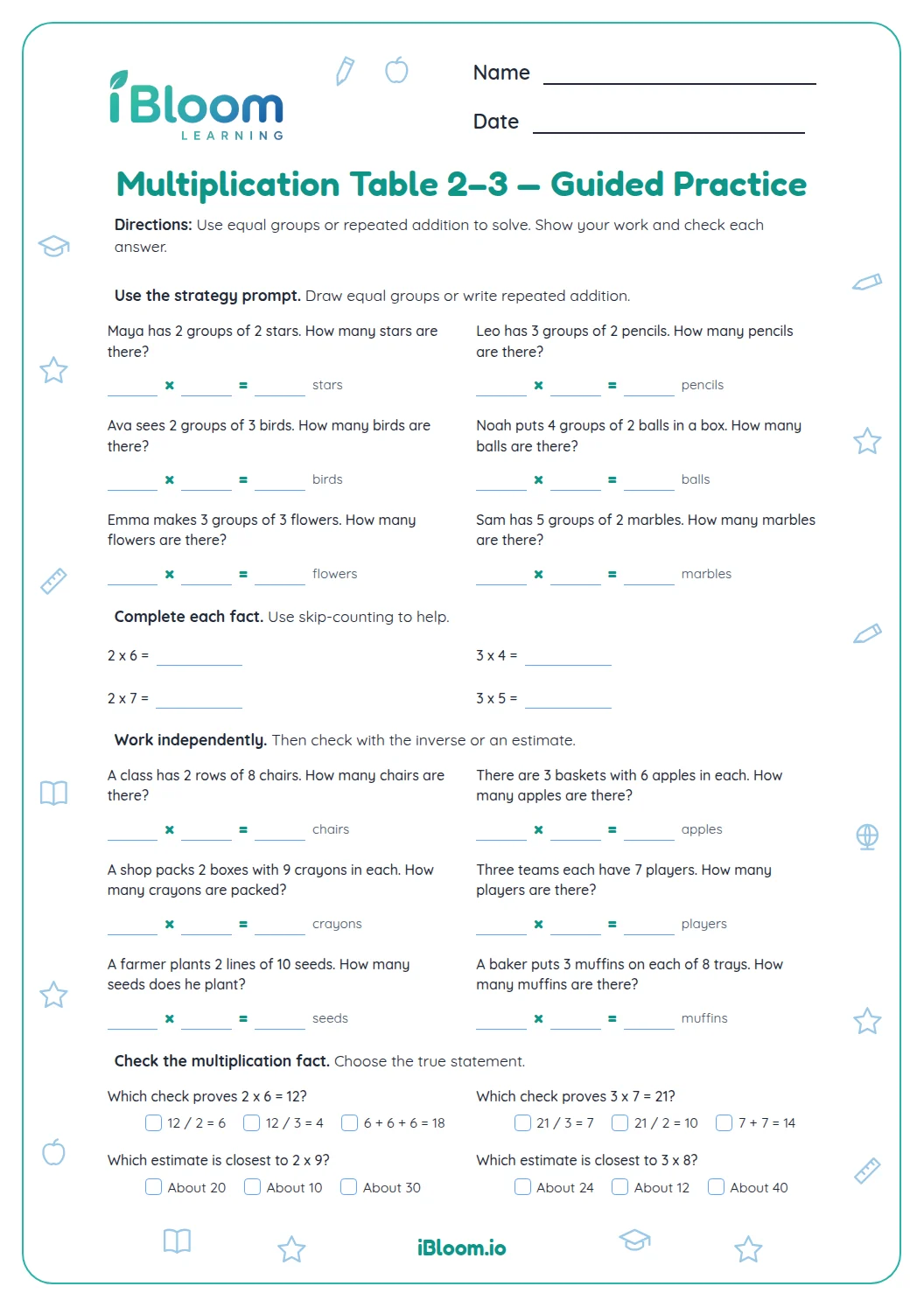
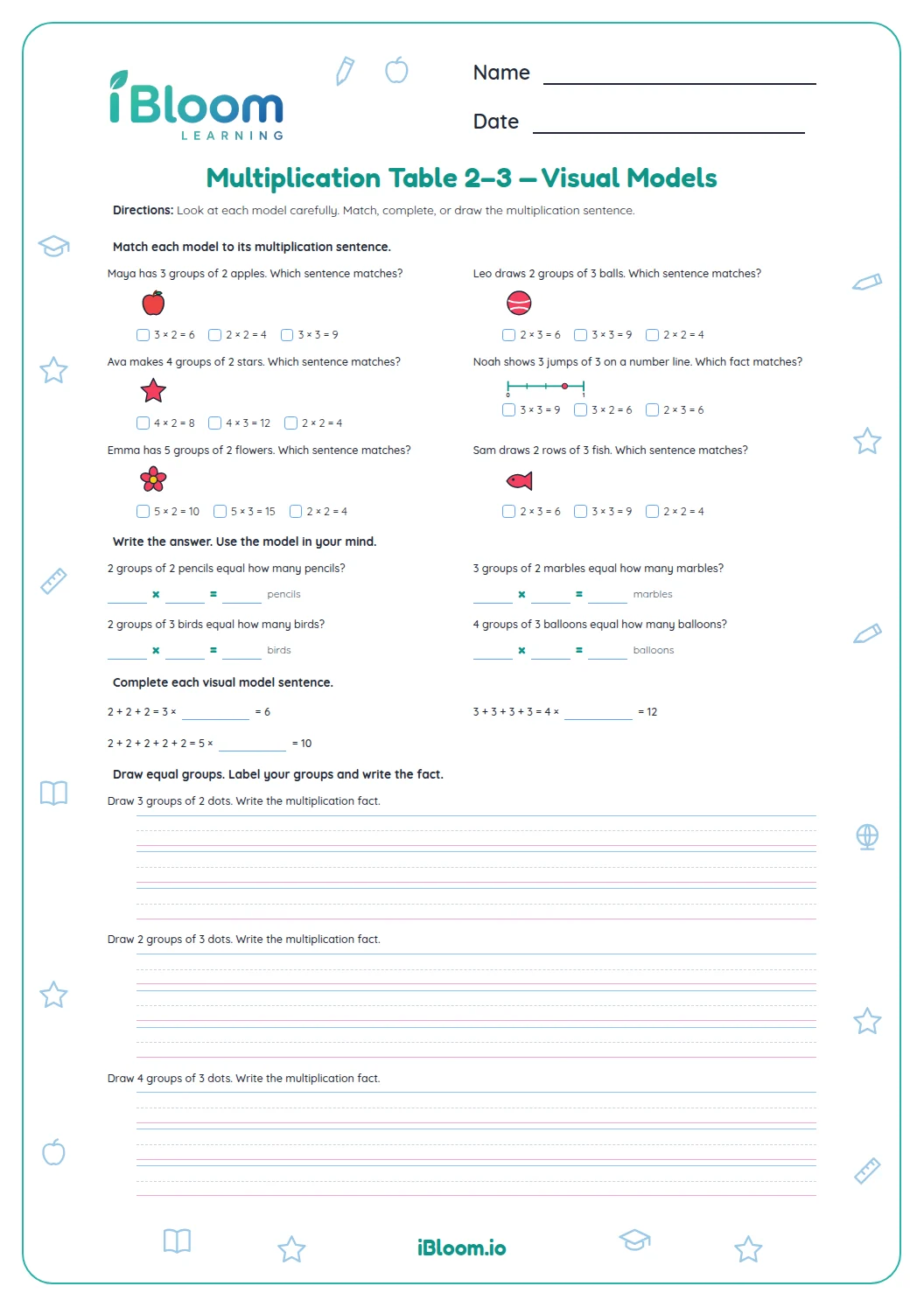
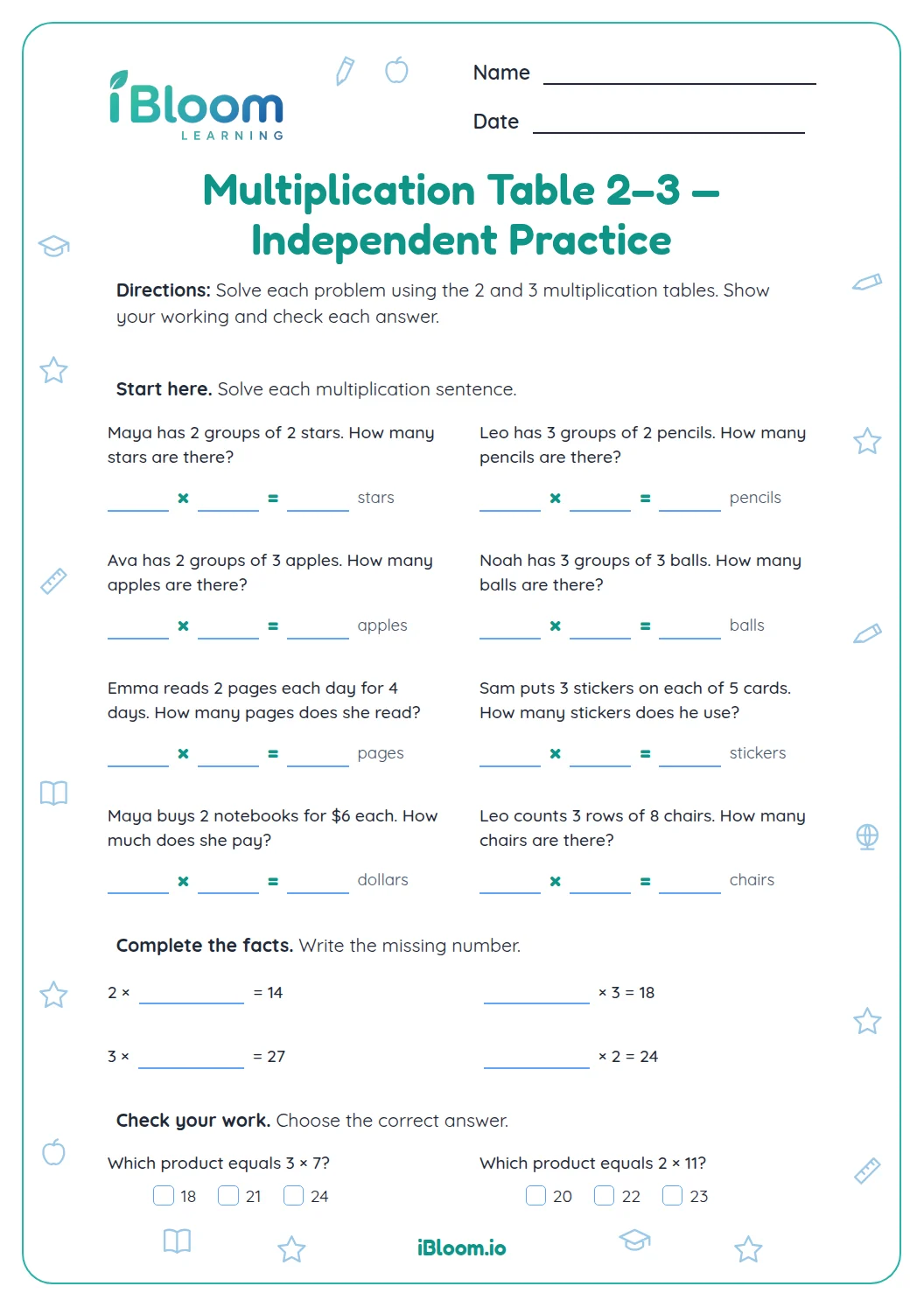
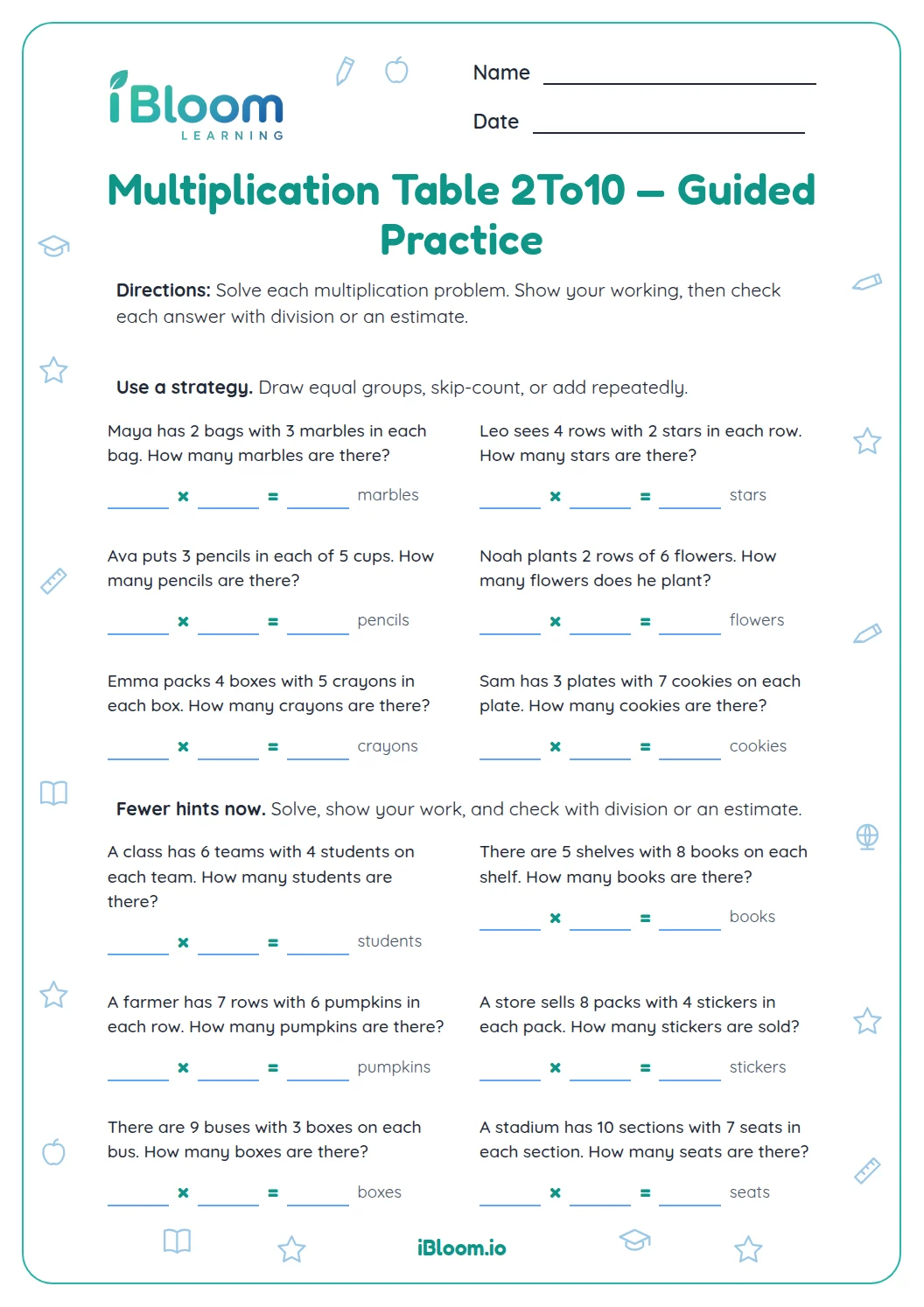
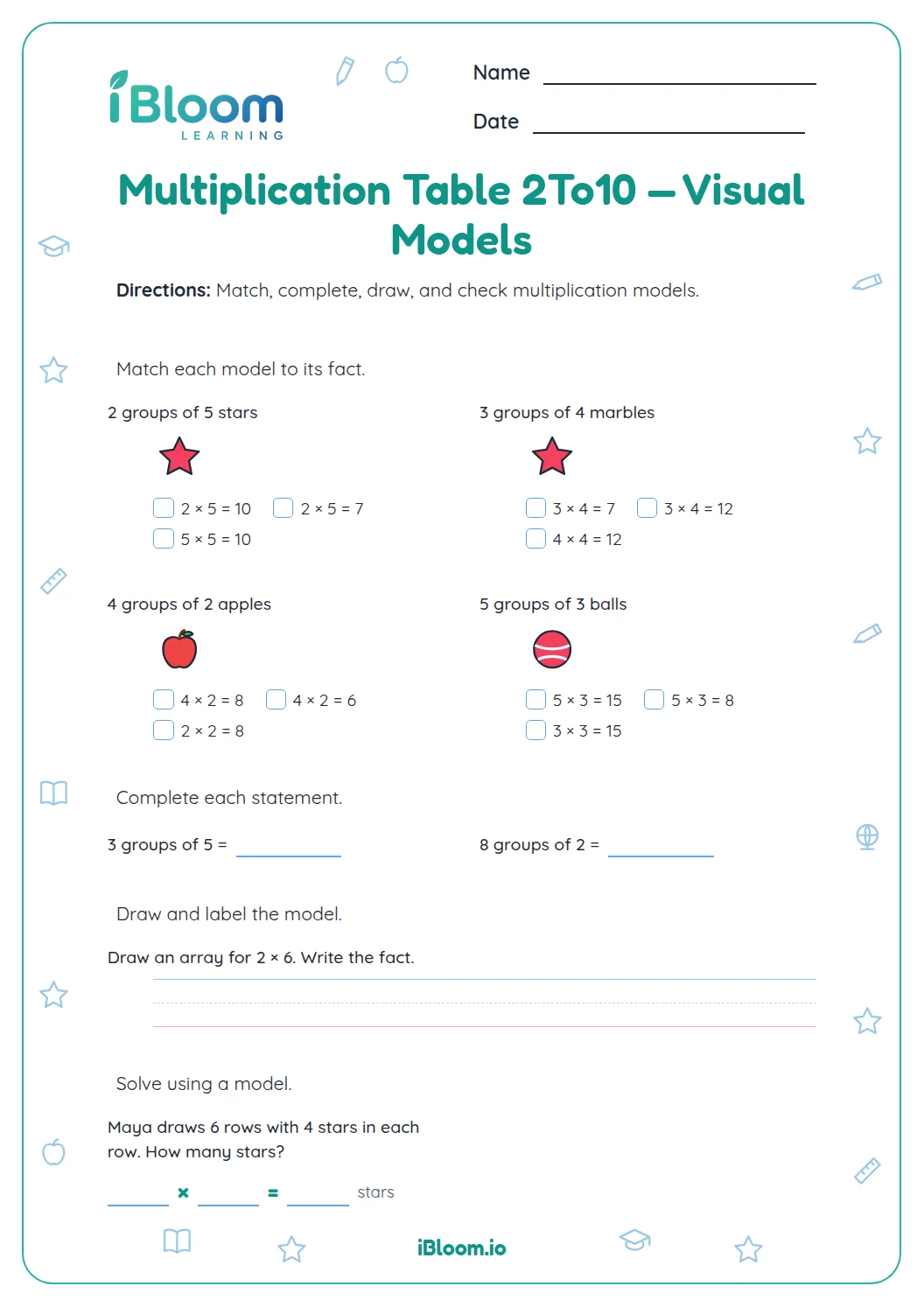
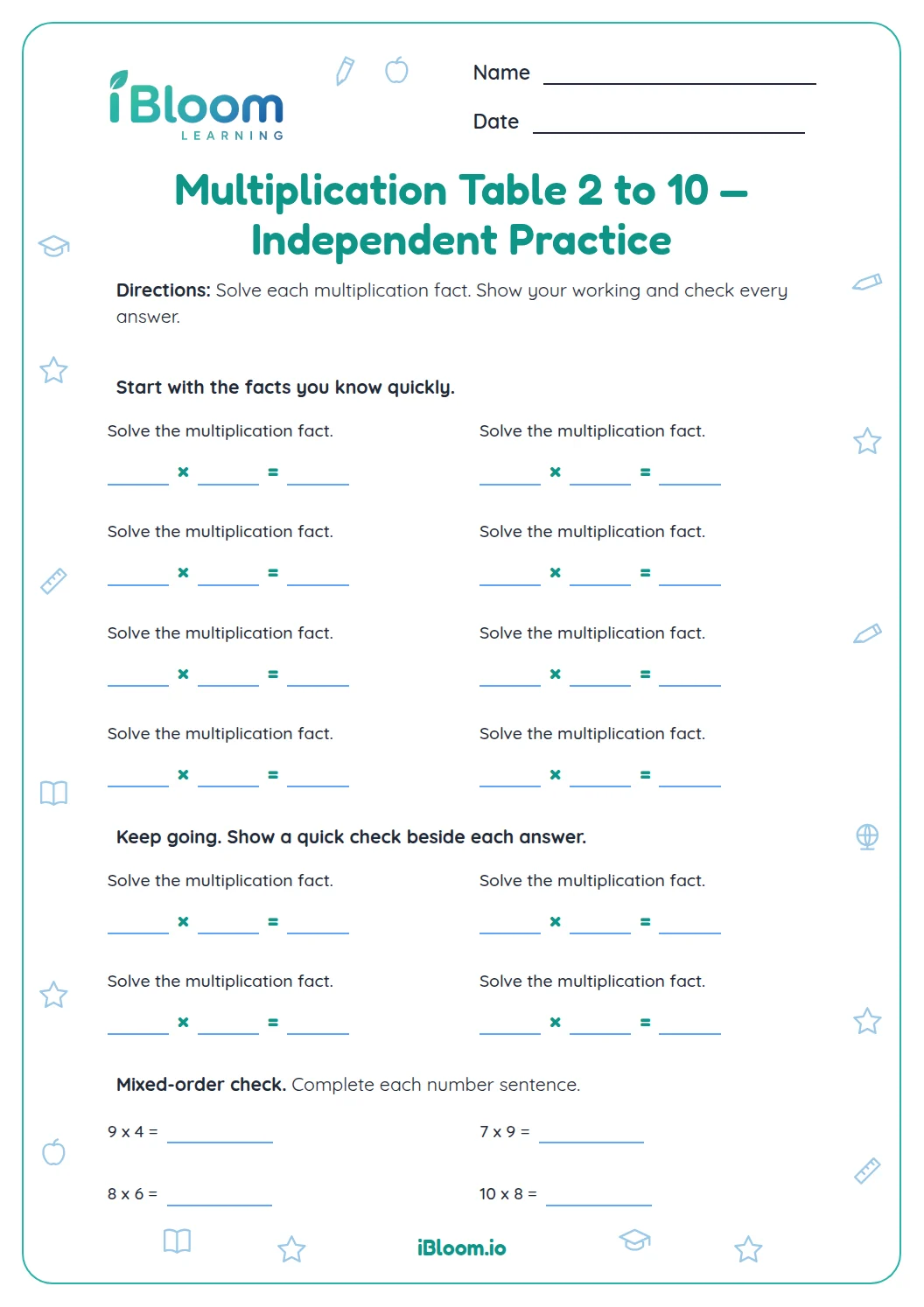
This Grade 3 printable helps learners represent equal groups with multiplication sentences. The first four questions describe groups, rows, baskets, and dots; the next four ask for a missing factor; four more use short group situations, followed by a division check and an estimate. The worksheet has 14 questions across three parts and uses two pages, with a separate two-page answer key. It practices Common Core 3.OA.A.1 by interpreting a product as the total in equal groups.
Aligned to 3.OA.A.1
How can learners work through multiplication sentences for equal groups?
This Grade 3 printable helps learners represent equal groups with multiplication sentences. The first four questions describe groups, rows, baskets, and dots; the next four ask for a missing factor; four more use short group situations, followed by a division check and an estimate. The worksheet has 14 questions across three parts and uses two pages, with a separate two-page answer key. It practices Common Core 3.OA.A.1 by interpreting a product as the total in equal groups.
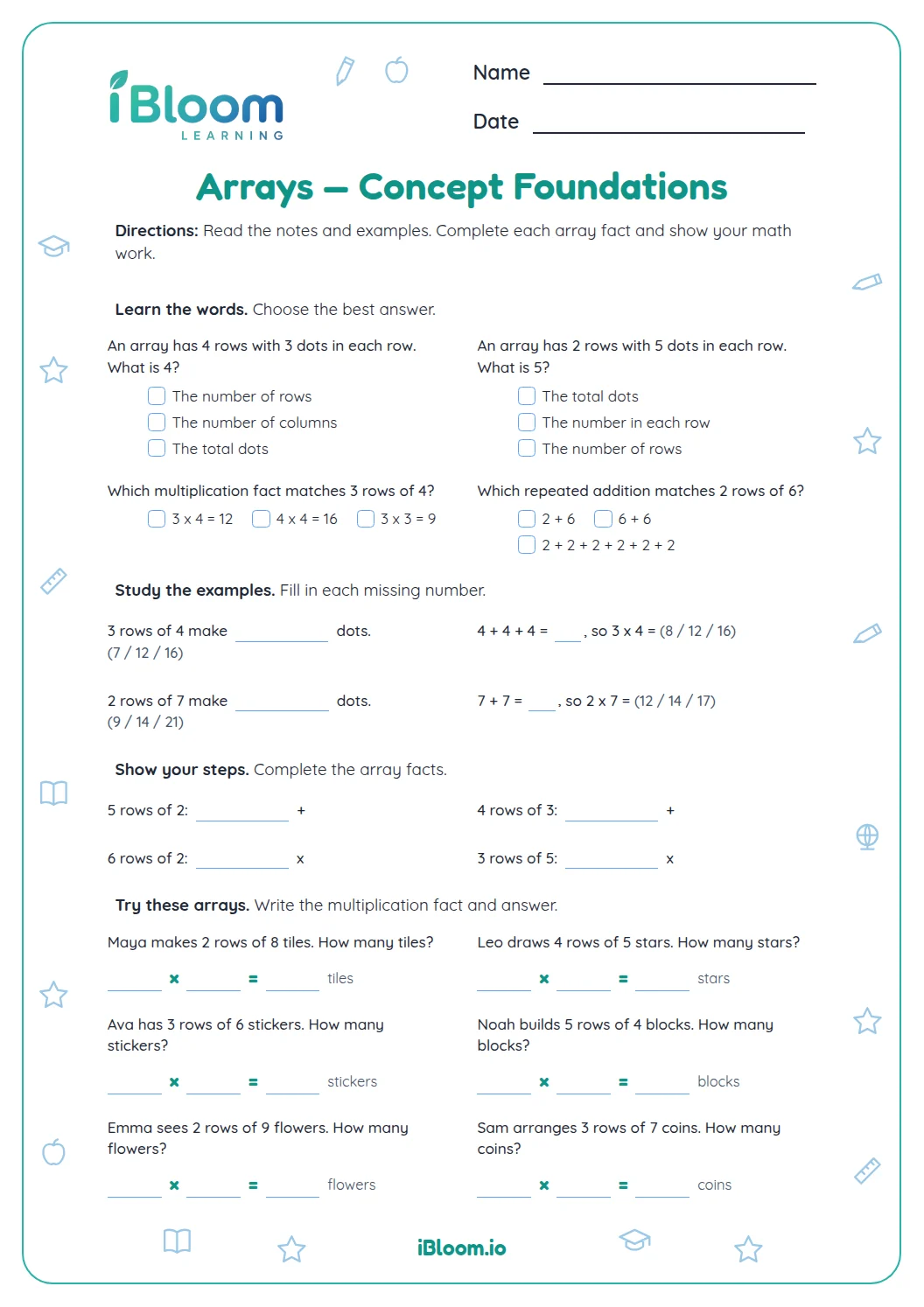
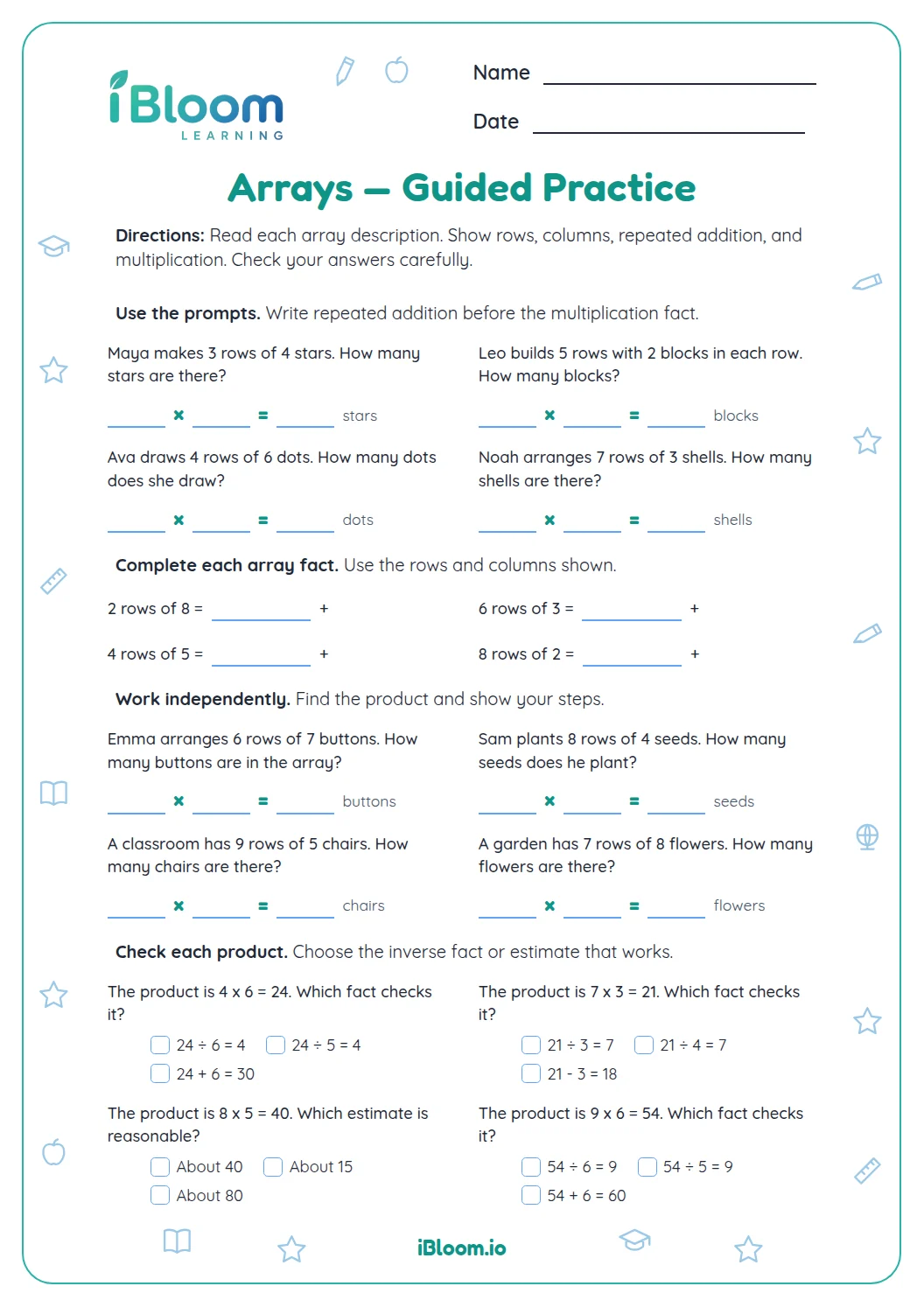
For example, 3 groups of 4 stars: write a multiplication sentence and solve. The result is 3 × 4 = 12 stars.
- 13 groups of 4 stars: write a multiplication sentence and solve.
- 23 × 4 = 12 stars
What is included in this multiplication sentences for equal groups sheet?
The worksheet has 14 questions arranged in short parts. The separate answer key provides an answer for each item.
- Write a sentence
- Find the missing factor
- Solve a story
How can an adult support practice?
It covers equal-group multiplication sentences, missing factors, short group stories, a related division fact, and an estimate. The first item uses 3 groups of 4 stars, so the sentence is 3 × 4 = 12 stars. Use the total and the known factor to find the number that completes the sentence. For ___ × 4 = 20, think of 20 objects split into groups of 4; there are 5 groups.
How to use this worksheet
- 1Read each situation and identify how many groups there are.
- 2Name how many objects are in each group.
- 3Write groups × objects per group = total.
- 4For a missing factor, use a known fact or divide the total by the known factor.
- 5Check the final two questions by using a related fact or a nearby estimate.
Common mistakes and quick fixes
The mistake
Reversing groups and objects per group.
The fix
Say “groups of ___” before writing the factors.
The mistake
Adding the group size instead of multiplying.
The fix
Use repeated addition or draw equal groups to confirm the product.
The mistake
Writing the product as a factor in a missing-factor equation.
The fix
Find the number that makes the equation’s total true.
Common Core alignment
This worksheet practices 3.OA.A.1 through interpret multiplication as equal groups and write a matching multiplication sentence.
Read multiplication as equal groups and find the total.
On this sheet: Questions ask learners to interpret multiplication as equal groups and write a matching multiplication sentence.
Show the official wordingHide the official wording
Interpret products of whole numbers, e.g., interpret 5 × 7 as the total number of objects in 5 groups of 7 objects each. For example, describe a context in which a total number of objects can be expressed as 5 × 7.
What to practice next
Make more practice
Questions parents and teachers ask
What does this multiplication worksheet cover?
It covers equal-group multiplication sentences, missing factors, short group stories, a related division fact, and an estimate. The first item uses 3 groups of 4 stars, so the sentence is 3 × 4 = 12 stars. The story problems ask learners to name both the groups and the group size.
How do learners decide which factor comes first?
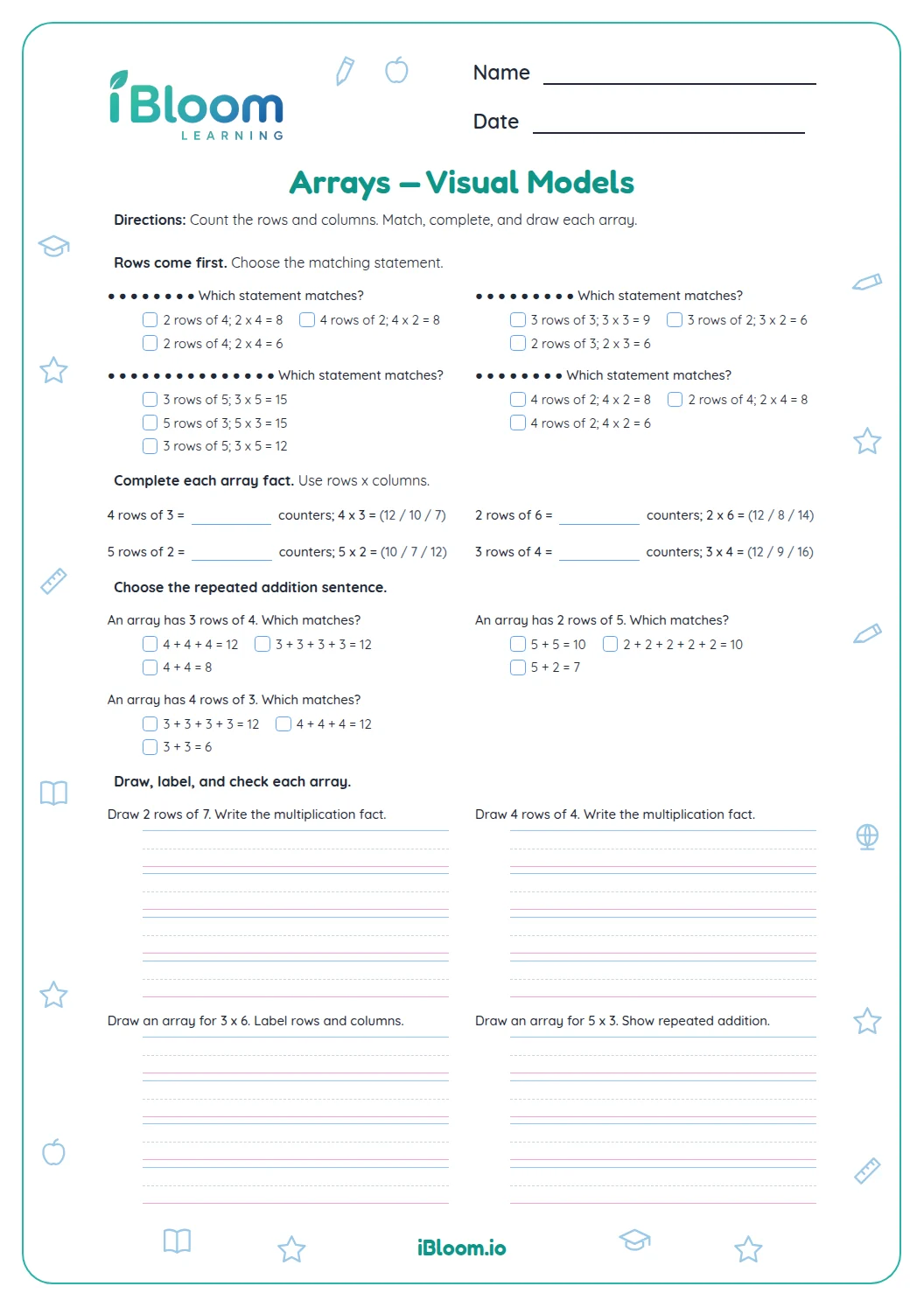
The first factor names the number of groups, and the second names the objects in each group. In 5 rows of 6 pencils, there are 5 groups with 6 in each, so 5 × 6 = 30. This item models groups × objects in each group = total.
How can a learner find a missing factor?
Use the total and the known factor to find the number that completes the sentence. For ___ × 4 = 20, think of 20 objects split into groups of 4; there are 5 groups. Known multiplication facts can help with the missing-factor equations.
What is the answer key for?
The separate answer key lists the expected sentence or value for each of the 14 questions. For the story problems, check both the product and the unit named, such as books, students, seeds, or stickers. The two final questions connect multiplication with division and estimation.
How long should this practice take?
About 25 minutes is a reasonable starting point. A learner can complete the equal-group and missing-factor parts first, then finish the story problems and two checks in a second sitting if needed. The three parts move from equal groups to missing factors and stories.