

About this worksheet
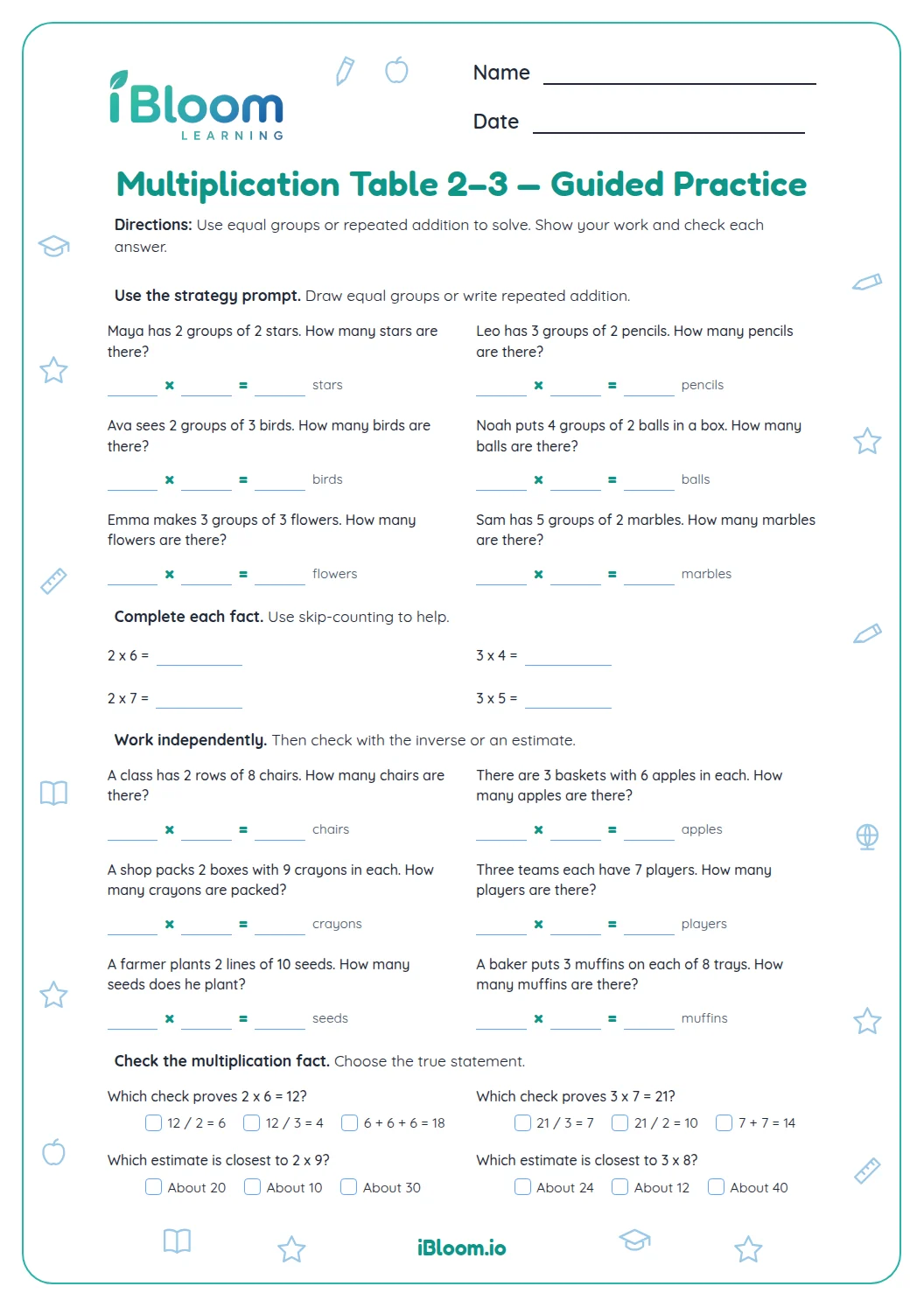
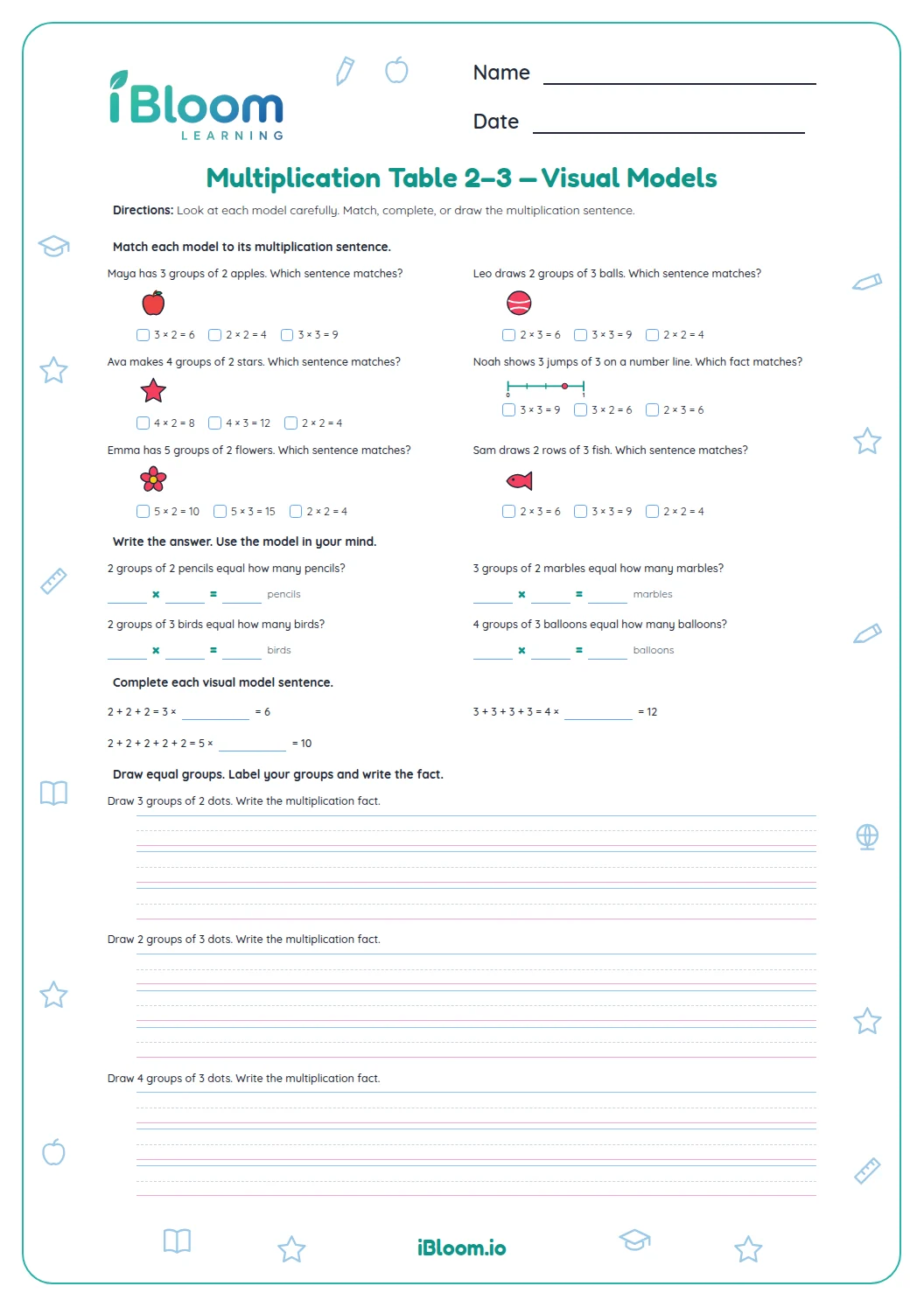
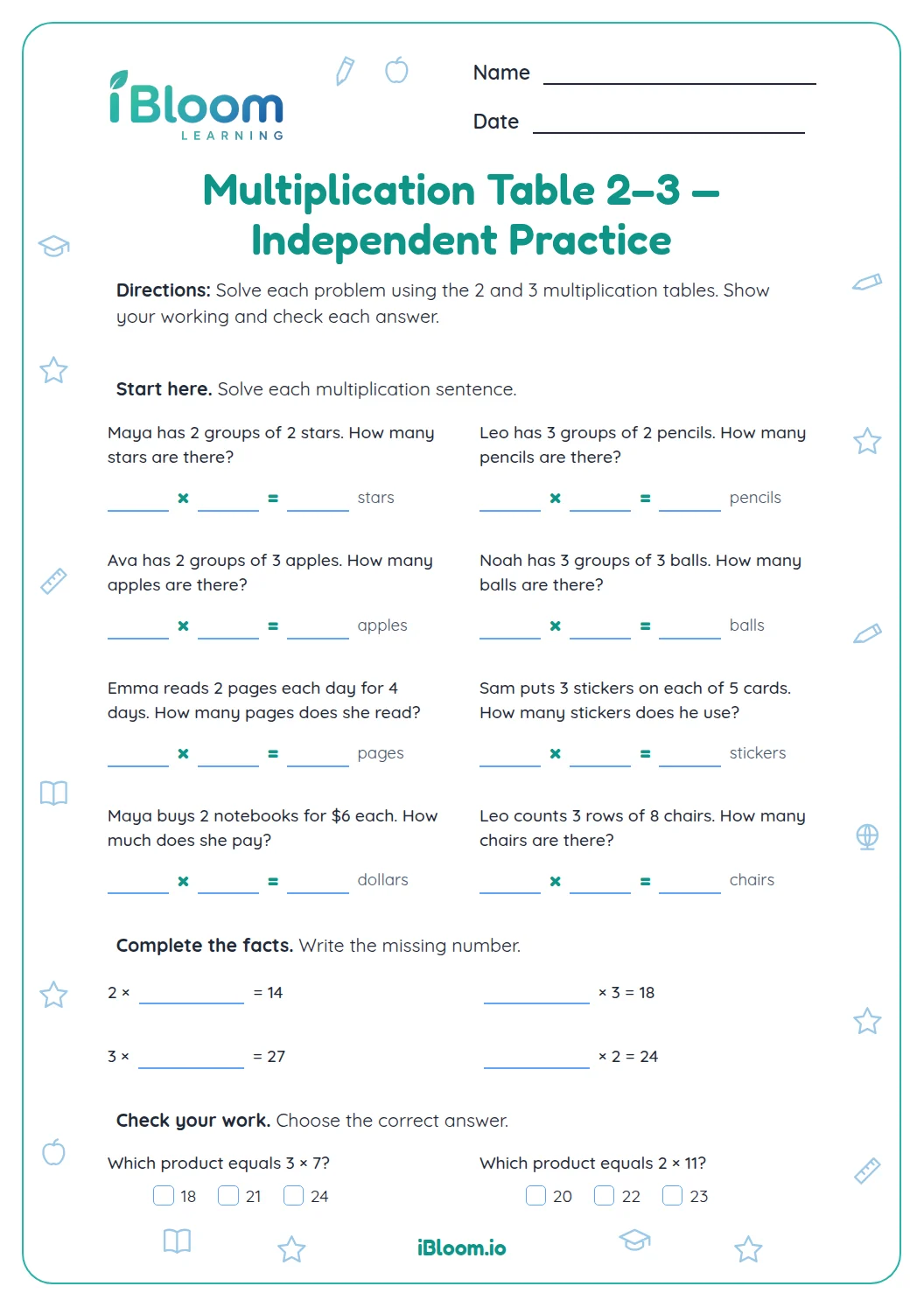
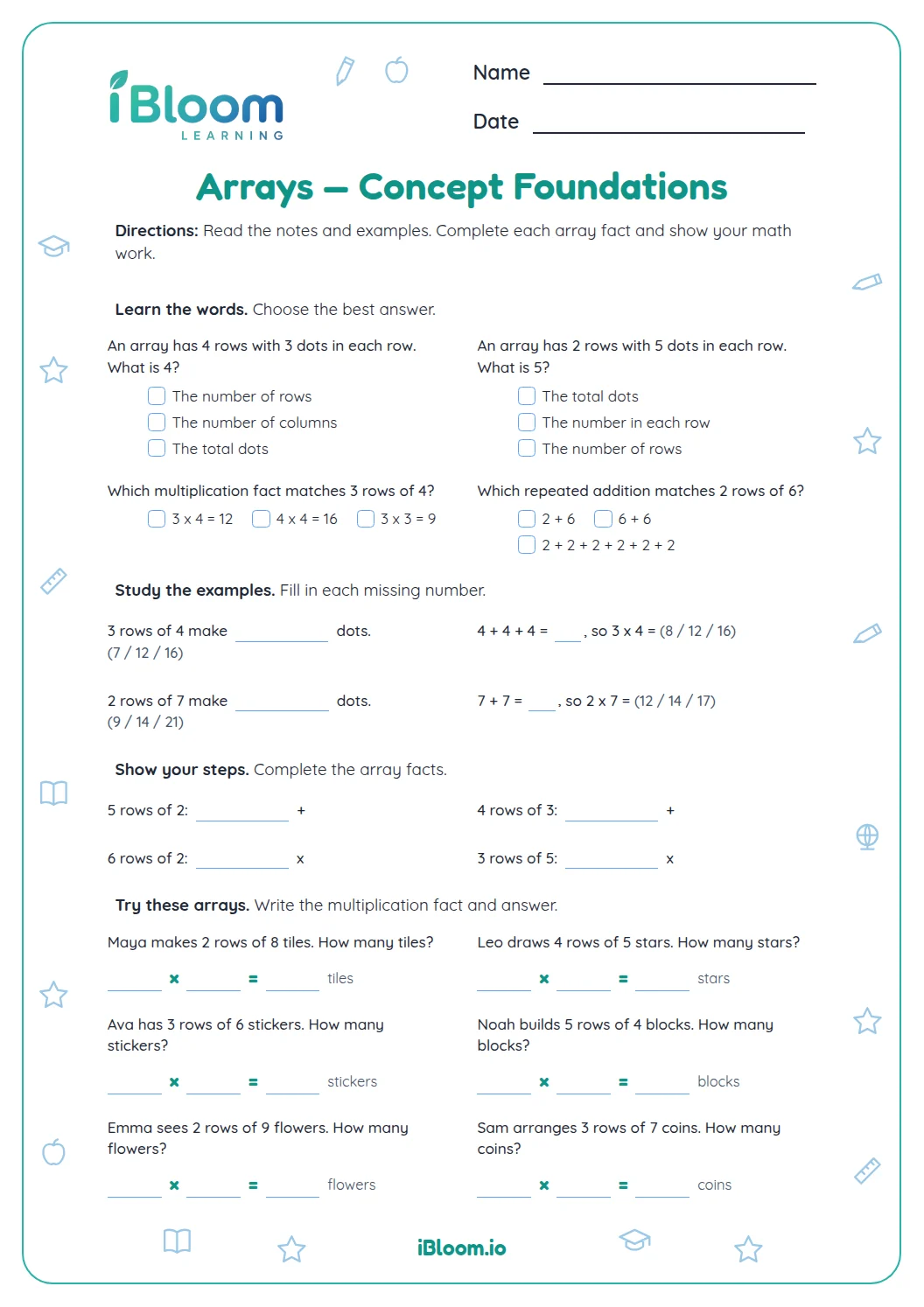
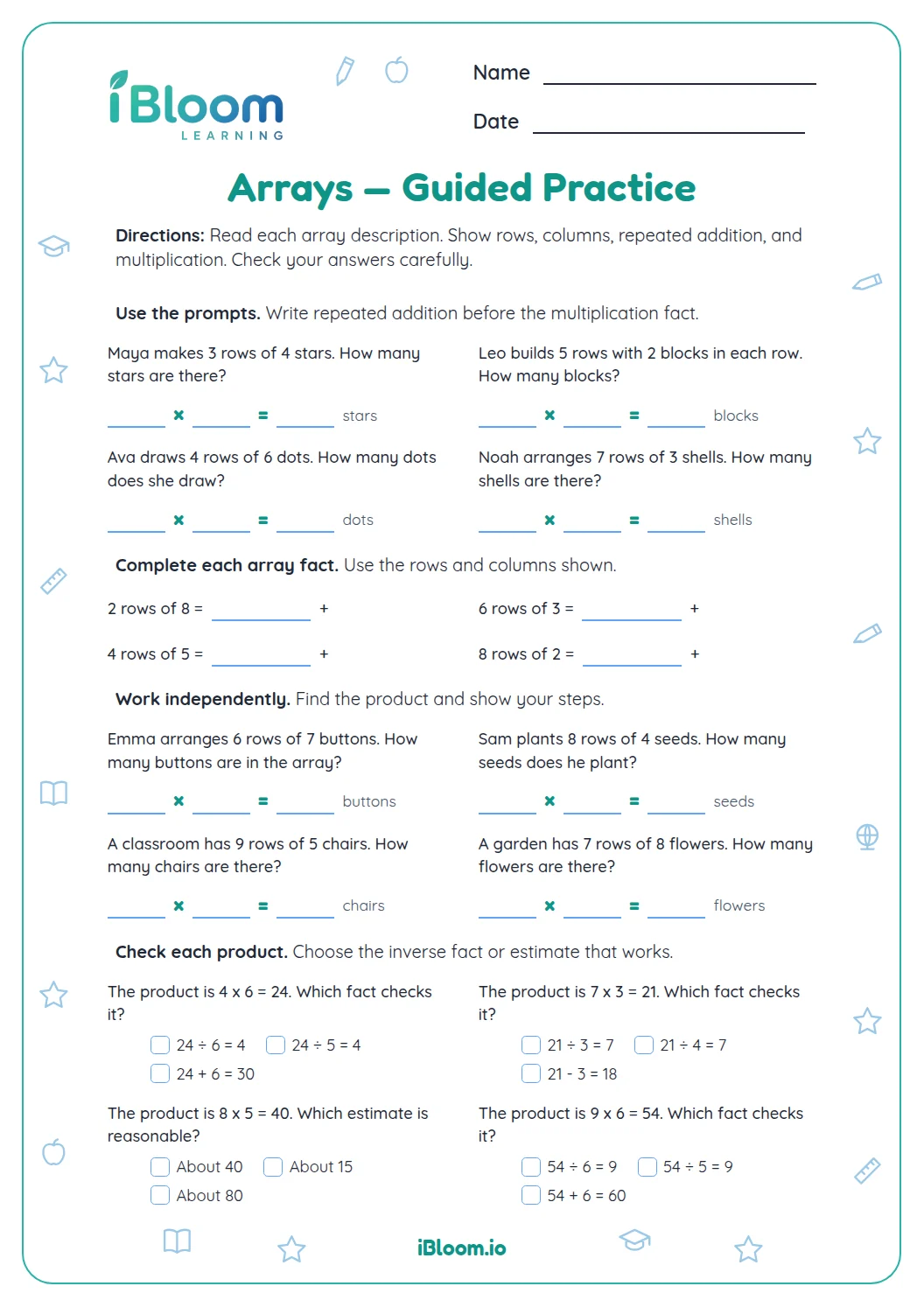
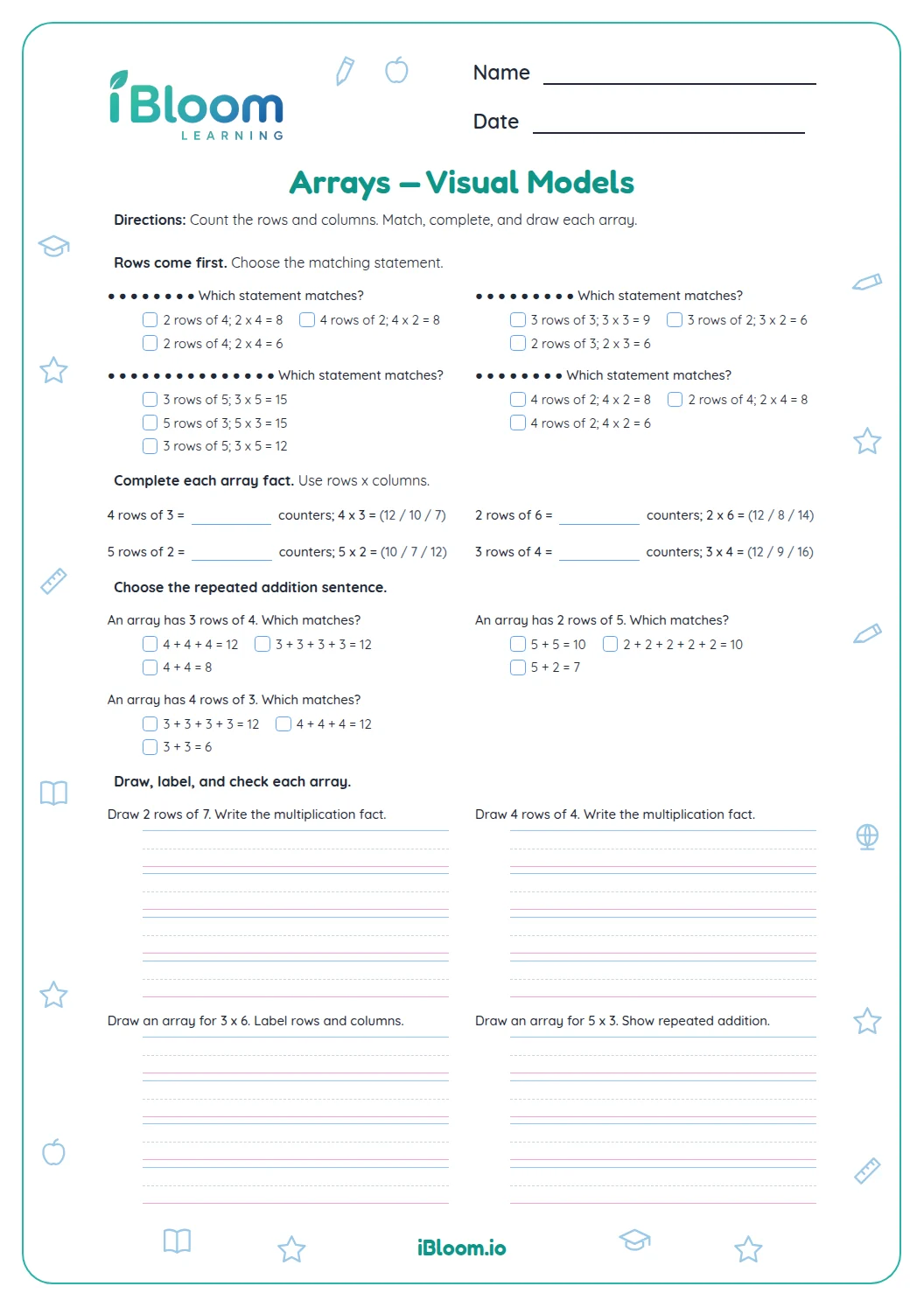
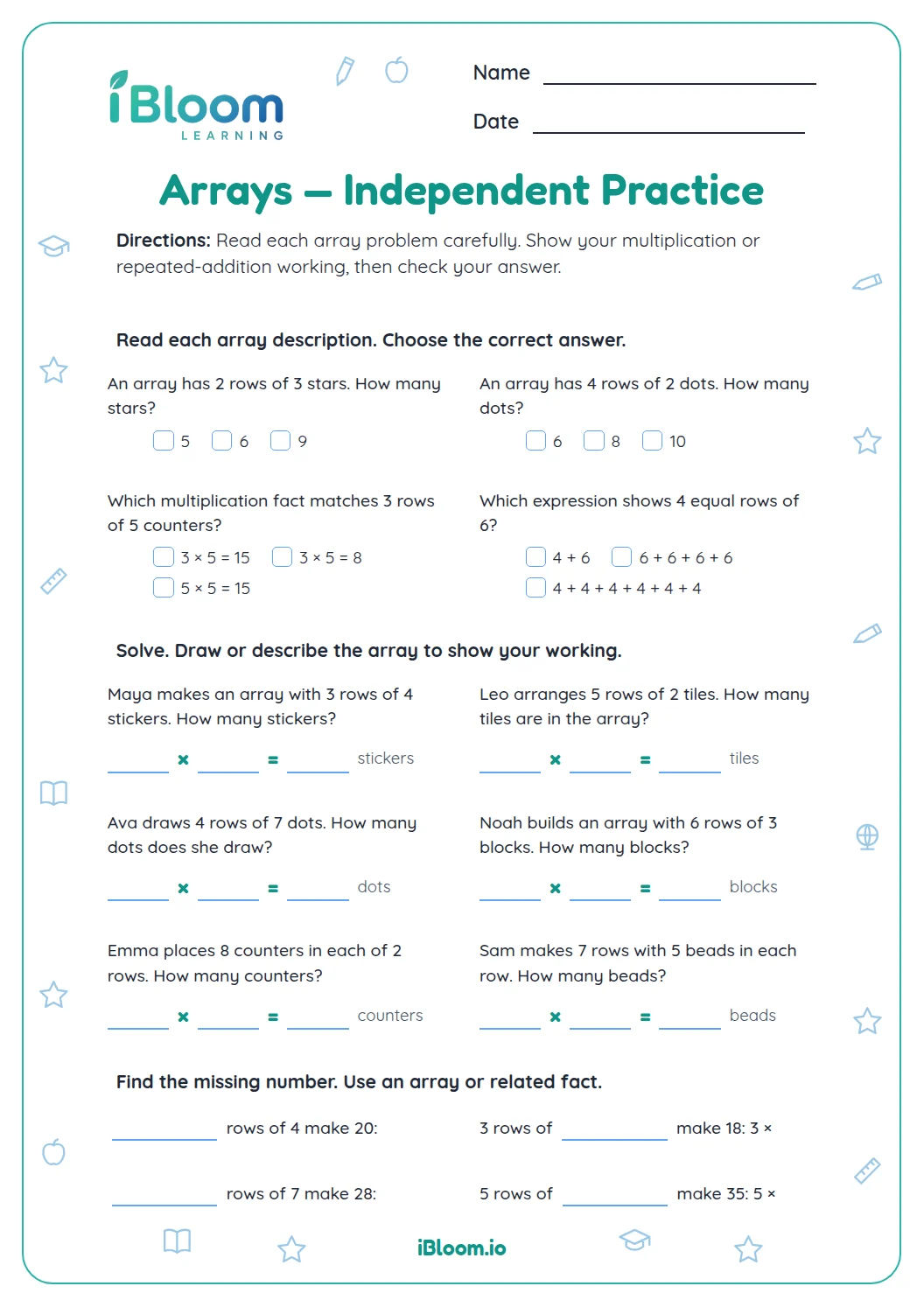
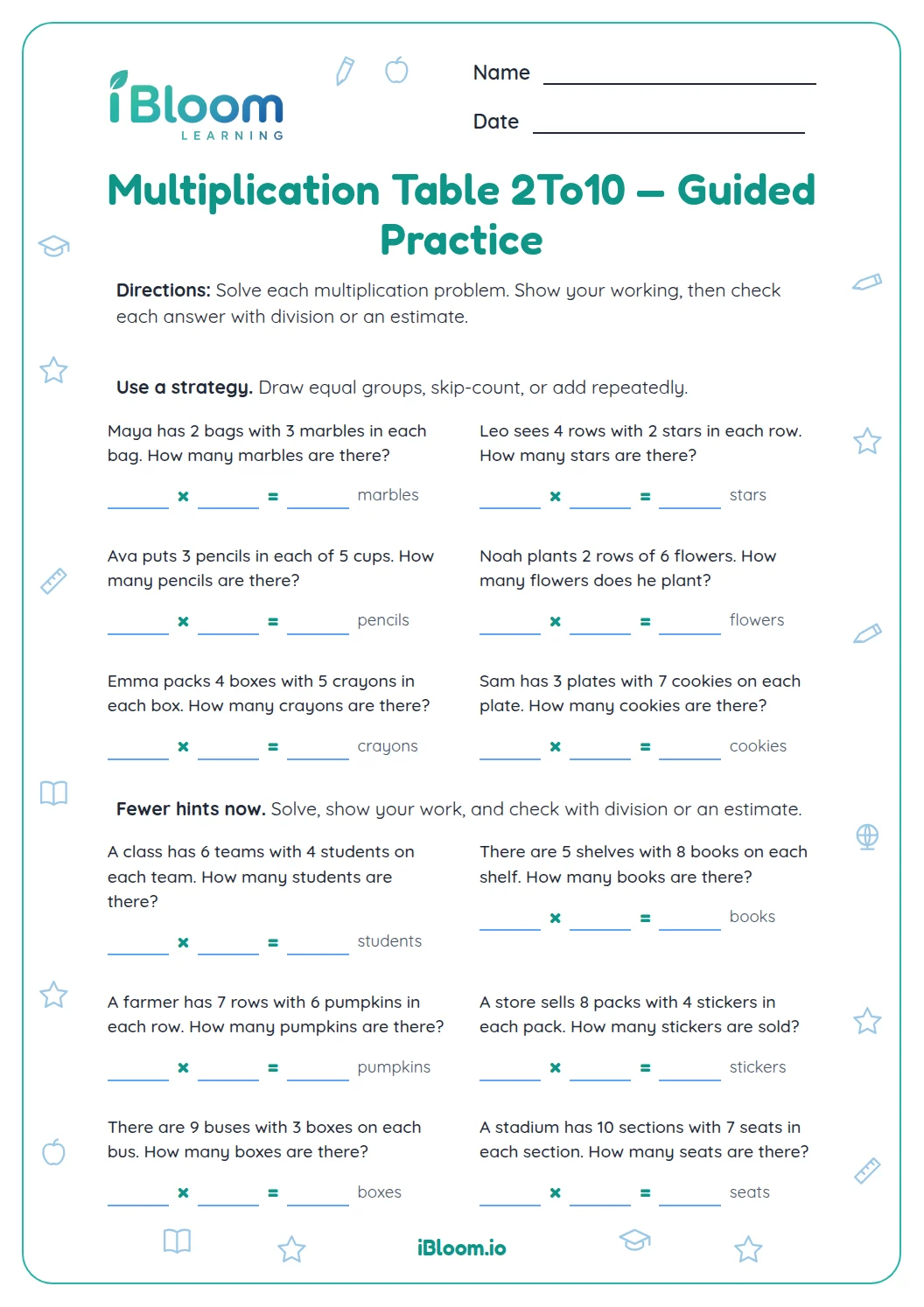
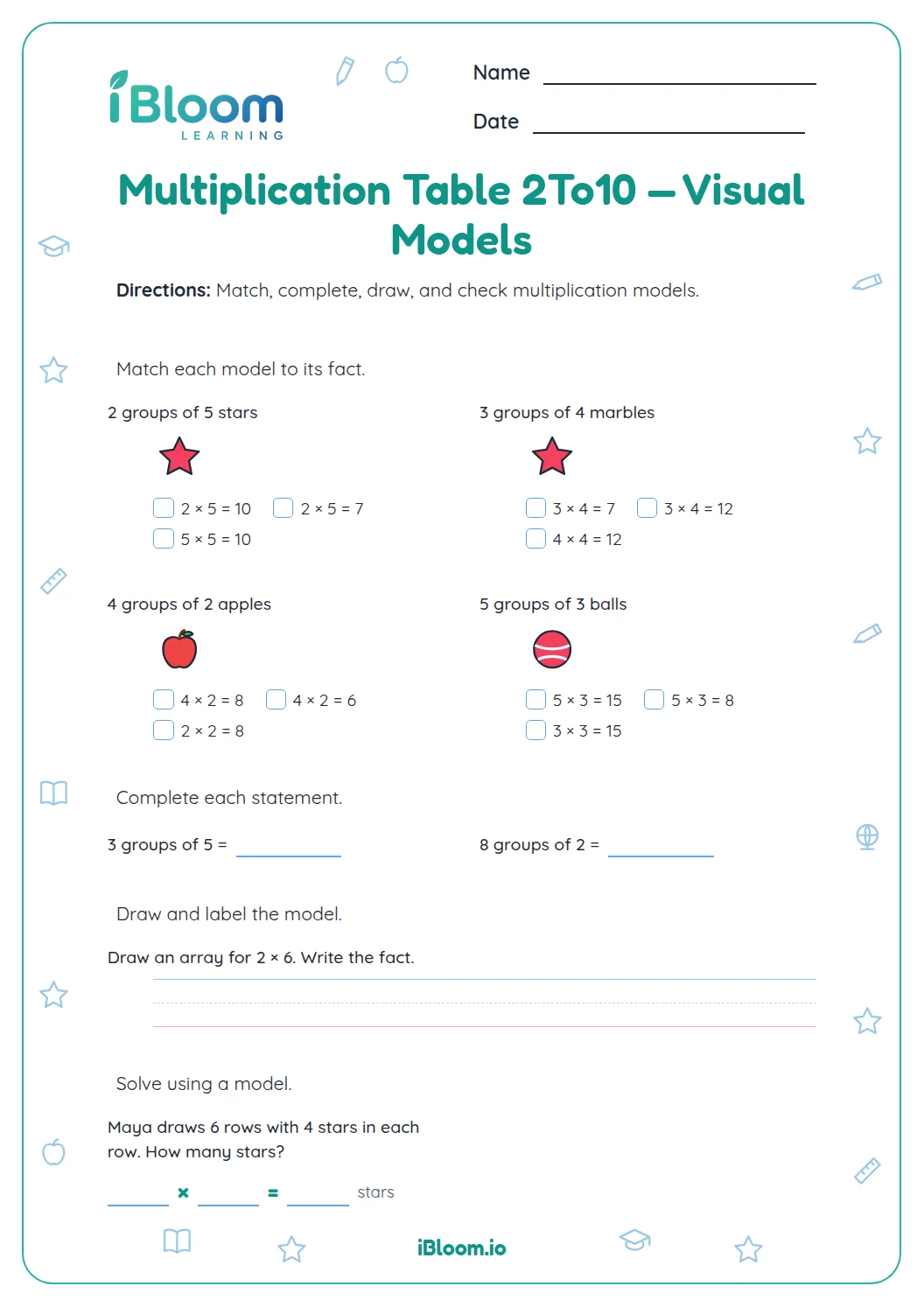
This Grade 3 worksheet builds the 2 and 3 multiplication tables through equal-row arrays, repeated addition, and multiplication equations. Students first count dots in arrays, then connect equal addends to a total before solving table facts. A separate answer key is included.
Aligned to 3.OA.A.1
How do equal rows show multiplication?
Two rows of three contain 3 + 3 objects. That total is 6, so the array can also be described as 2 groups of 3, or 2 × 3.
- 12 rows of 3 dots
- 23 + 3 = 6, so 2 × 3 = 6
How does the sheet connect the ideas?
Part A uses arrays with groups of 2 or 3. Part B writes repeated addition with equal addends. Part C finishes with multiplication facts from both tables.
How can a student check a product?
Use the group size and number of groups. For 3 × 4, write 3 + 3 + 3 + 3 or count four groups of three; both give 12.
How to use this worksheet
- 1Count how many rows the array has.
- 2Count the dots in one row.
- 3Add that row total once for each row.
- 4Write the matching multiplication fact.
- 5Compare the total with the answer key.
Common slips and quick fixes
The mistake
Reversing the number of rows and dots in each row.
The fix
Name the groups first, then count objects in each group.
The mistake
Adding the group size only once.
The fix
Repeat the addend once for every group.
The mistake
Skipping a count when adding several equal groups.
The fix
Use skip counting by 2 or by 3, or add carefully.
Curriculum alignment
This worksheet practices the named skill through short, concrete examples.
Use tables 2 and 3 practice to build the named skill.
On this sheet: The worksheet questions directly practice tables 2 and 3.
Show the official wordingHide the official wording
Interpret products of whole numbers, e.g., interpret 5 × 7 as the total number of objects in 5 groups of 7 objects each.
What to practice next
Make more practice
Further reading
Questions parents and teachers ask
What multiplication tables does this worksheet practice?
The questions use the 2 and 3 tables. Arrays show groups of two or three, and the later items connect equal addends and multiplication facts to totals. The array and addition steps make the size of each group visible. The learner can count by equal groups to check the total.
Why are arrays included?
An array makes equal groups visible in rows. For example, two rows of three dots can be counted as 3 + 3 and written as 2 × 3 = 6, which links the drawing with repeated addition and multiplication. The learner can count by equal groups to check the total.
Does the worksheet include repeated addition?
Yes. Five items show sums made from equal addends, such as 3 + 3 + 3 + 3. Students find the total and use the earlier array examples to connect that sum with a multiplication fact. The learner can count by equal groups to check the total.
How many questions are on the sheet?
There are 15 items: eight array questions, five repeated-addition sums, and two direct multiplication facts. A separate answer key lists the expected totals. The array and addition steps make the size of each group visible. The learner can count by equal groups to check the total.
How can a student use the answer key?
Try the array count, repeated-addition sum, or product first. If a total differs from the key, recount the equal groups or write the repeated addition to see where the count changed. The learner can count by equal groups to check the total.