


About this worksheet
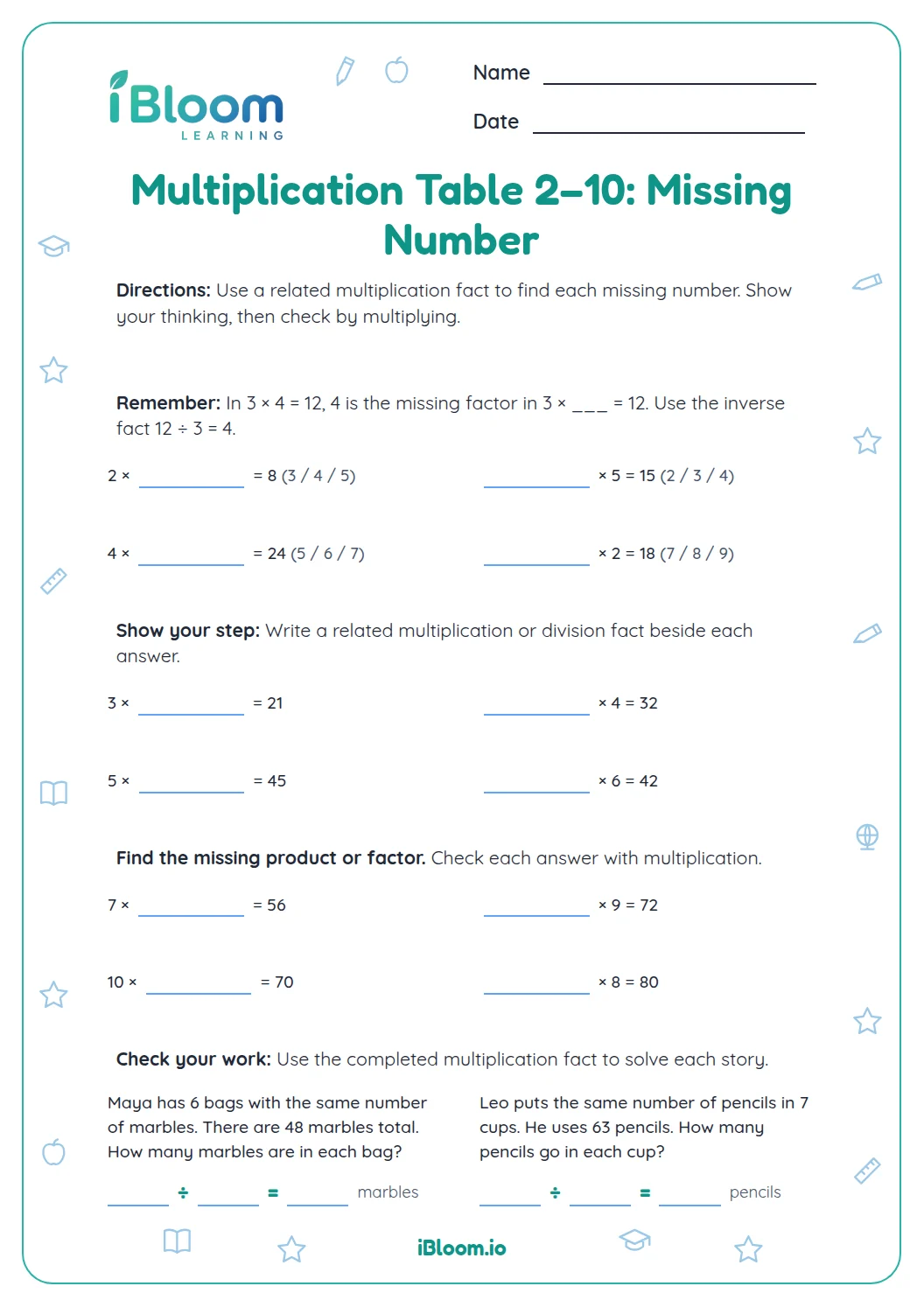
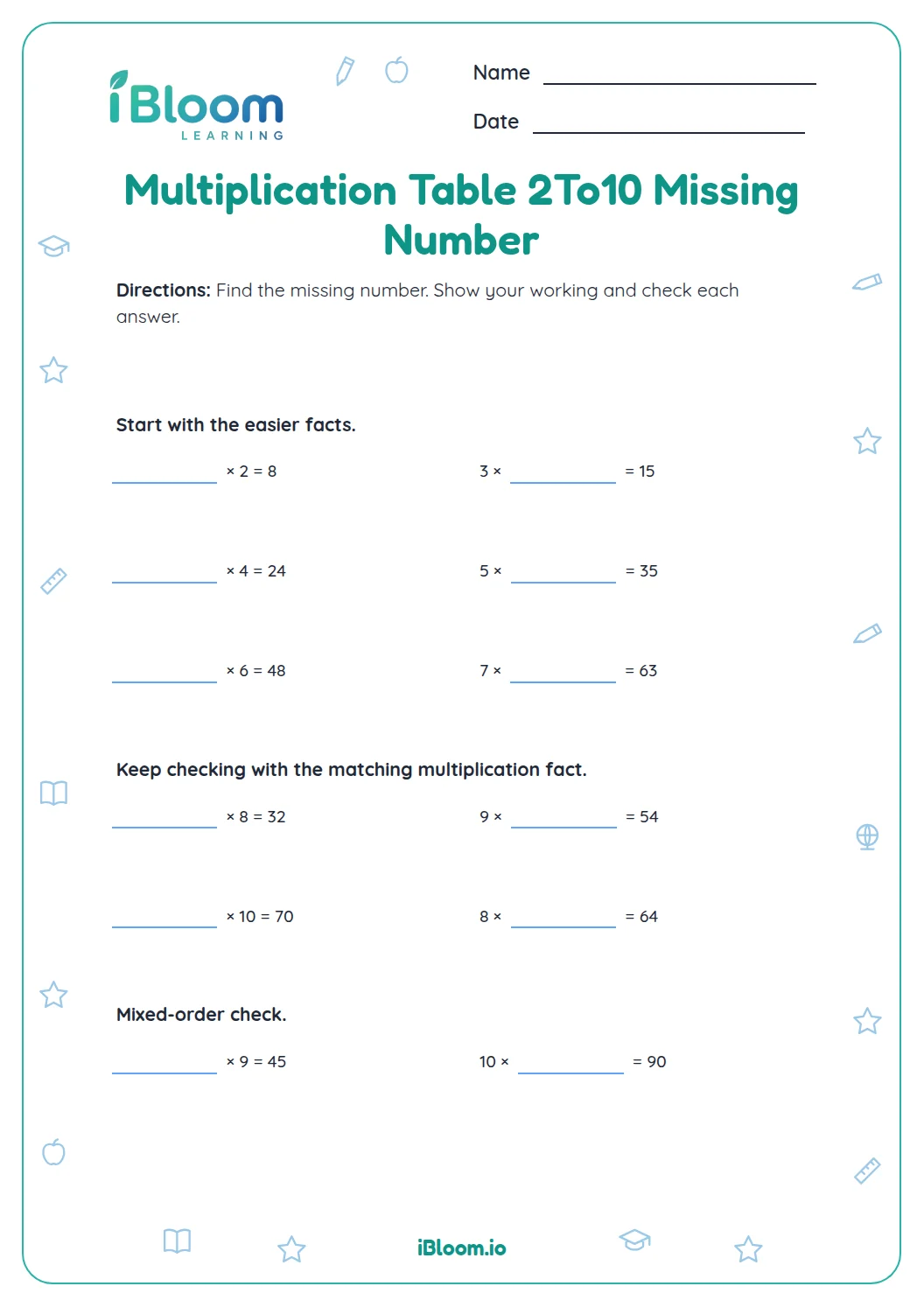
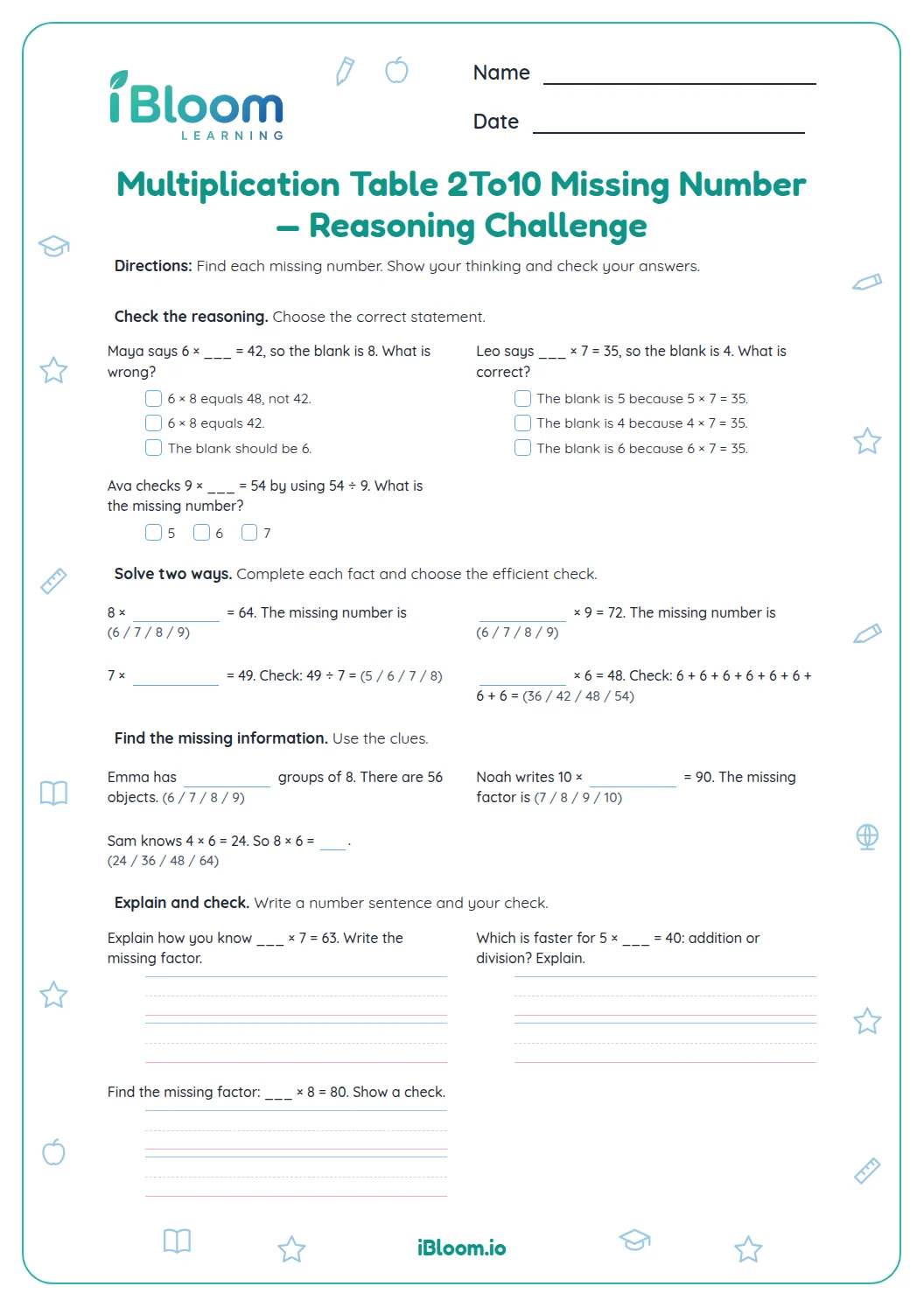
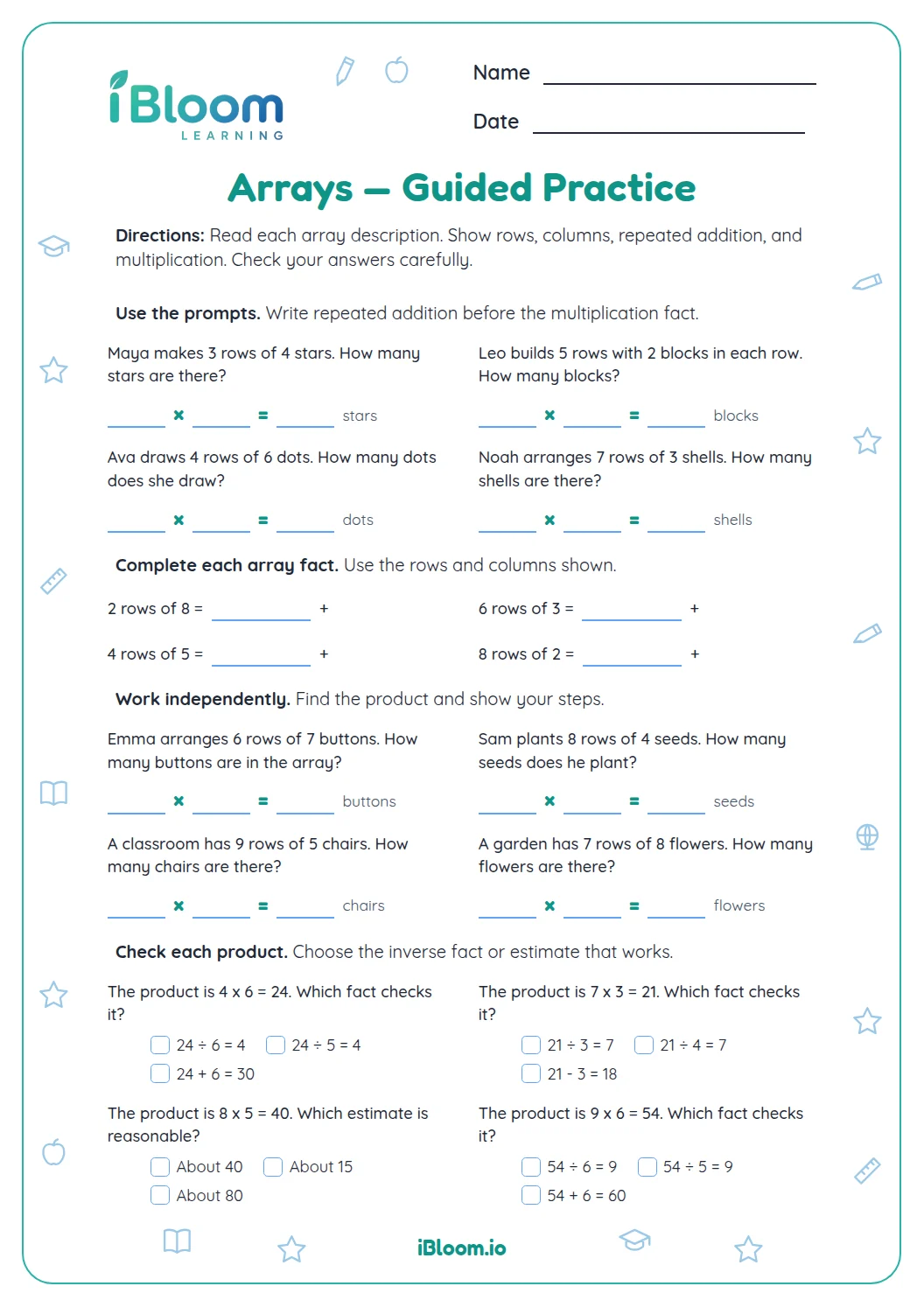
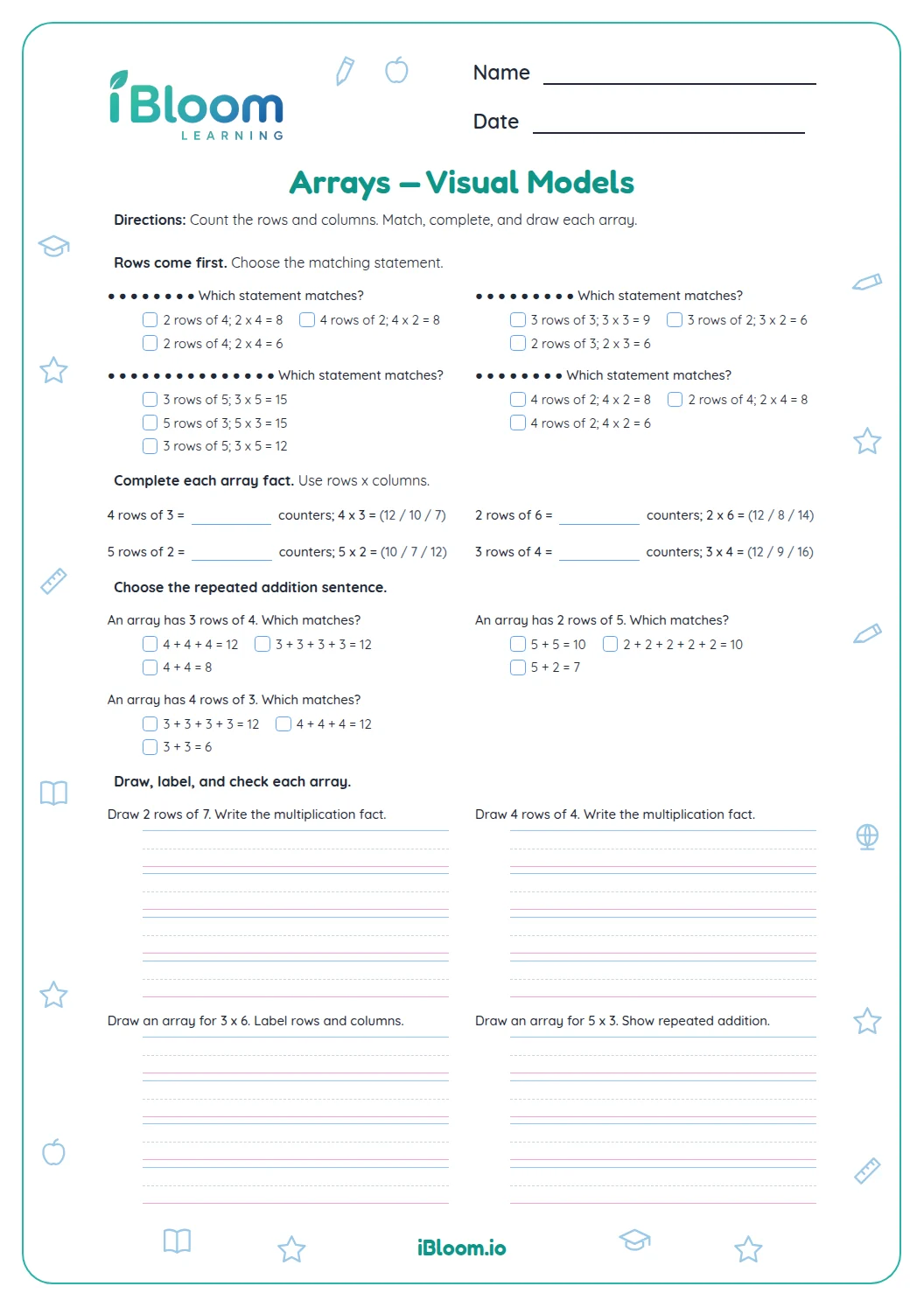
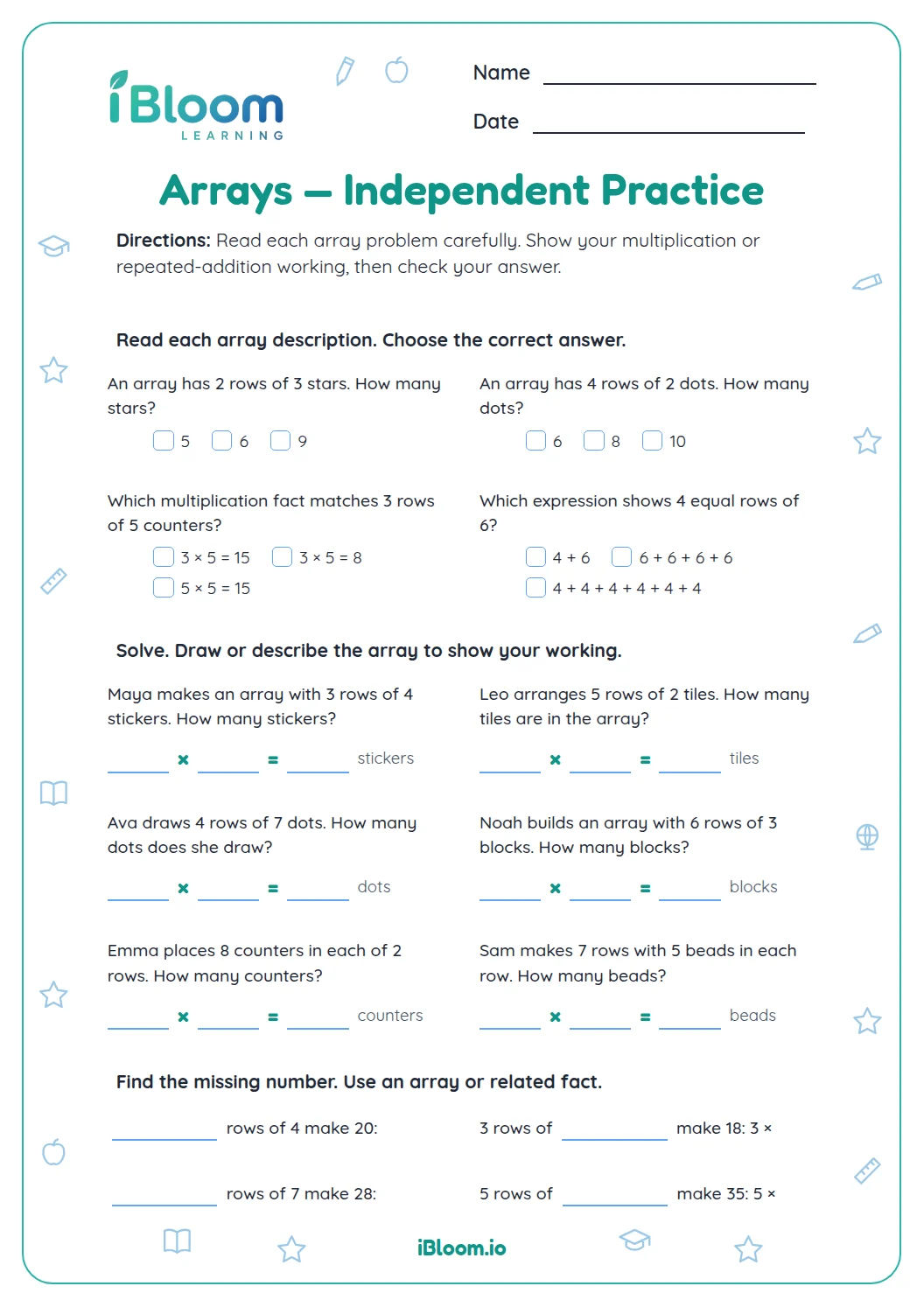
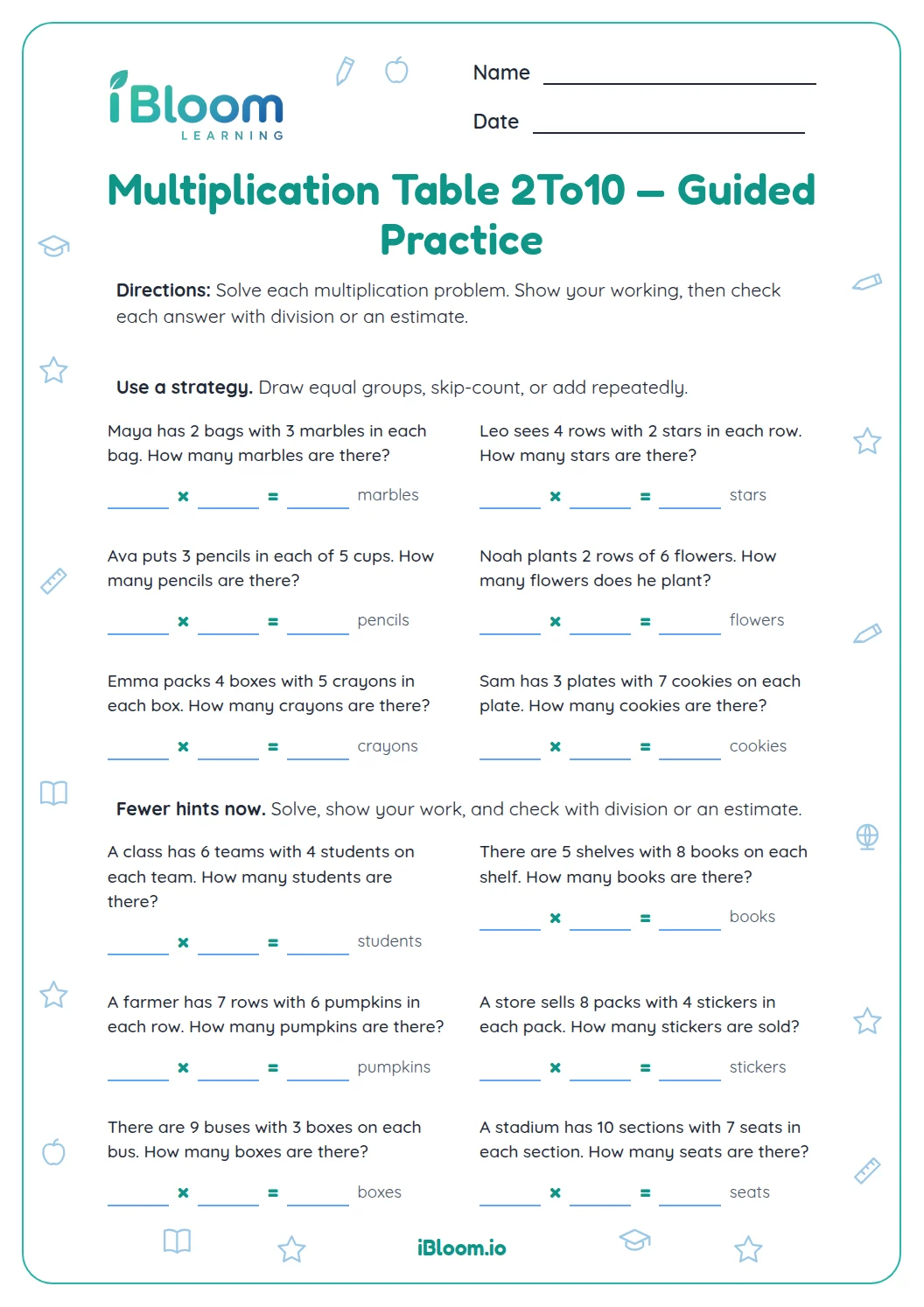
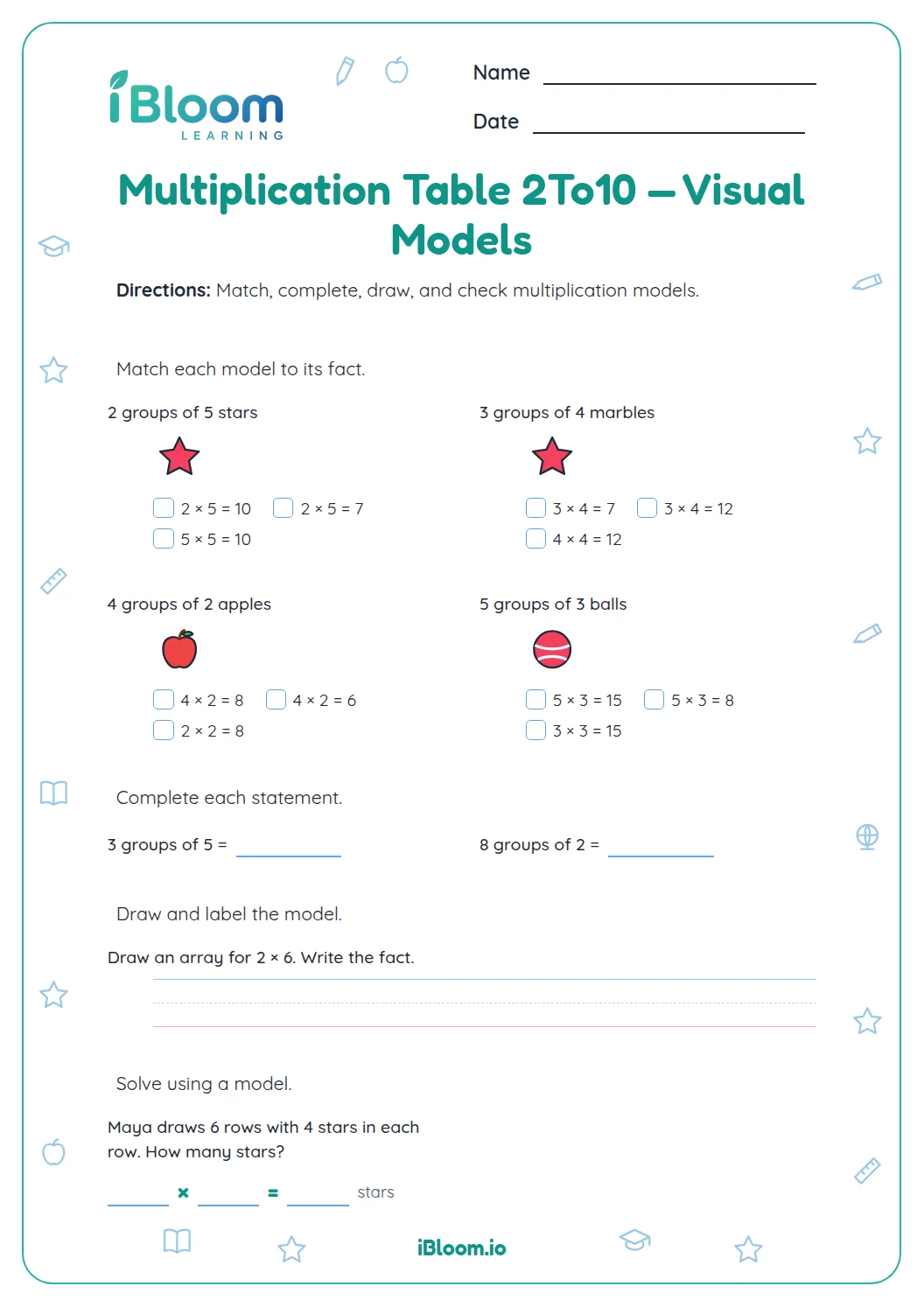
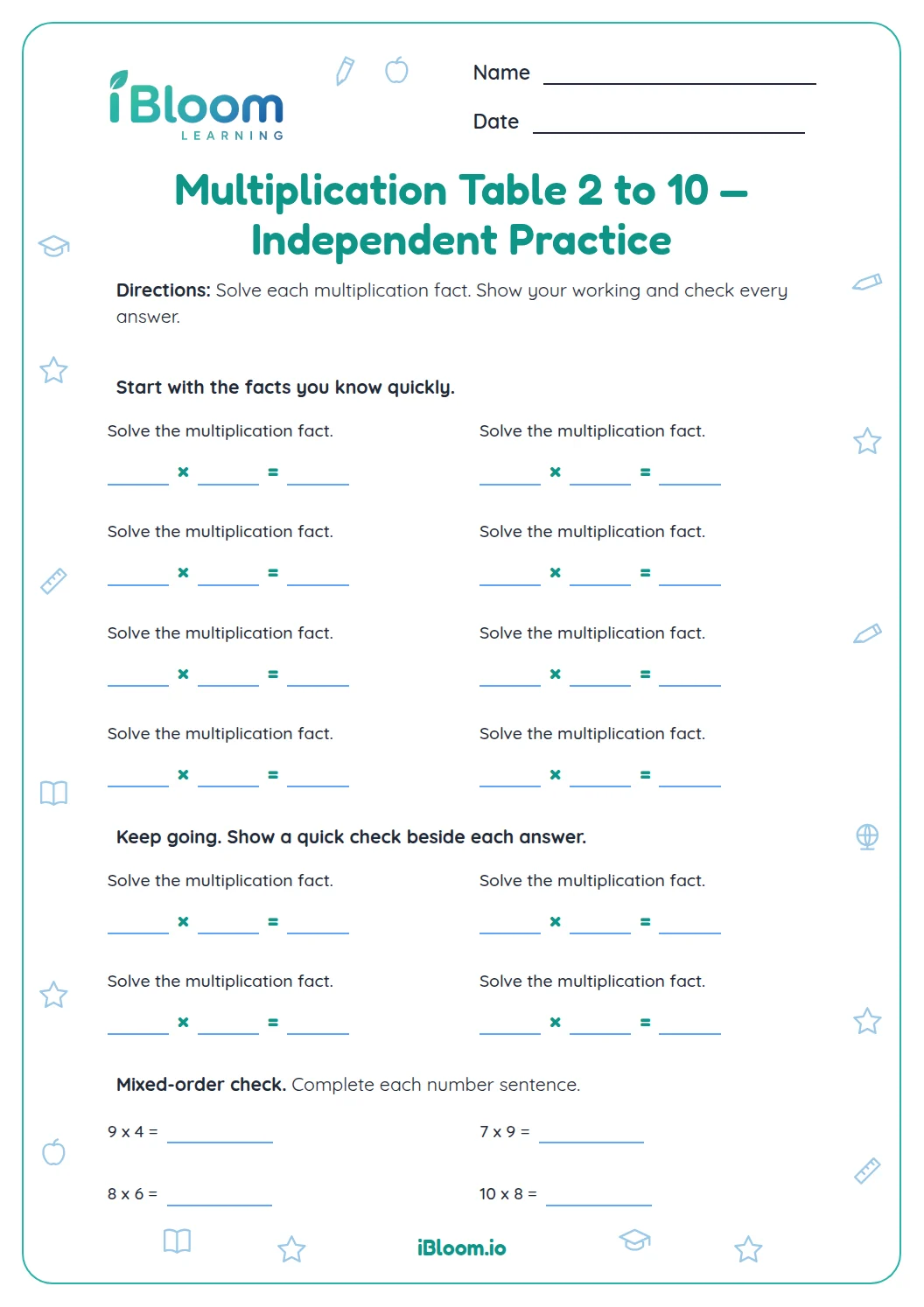
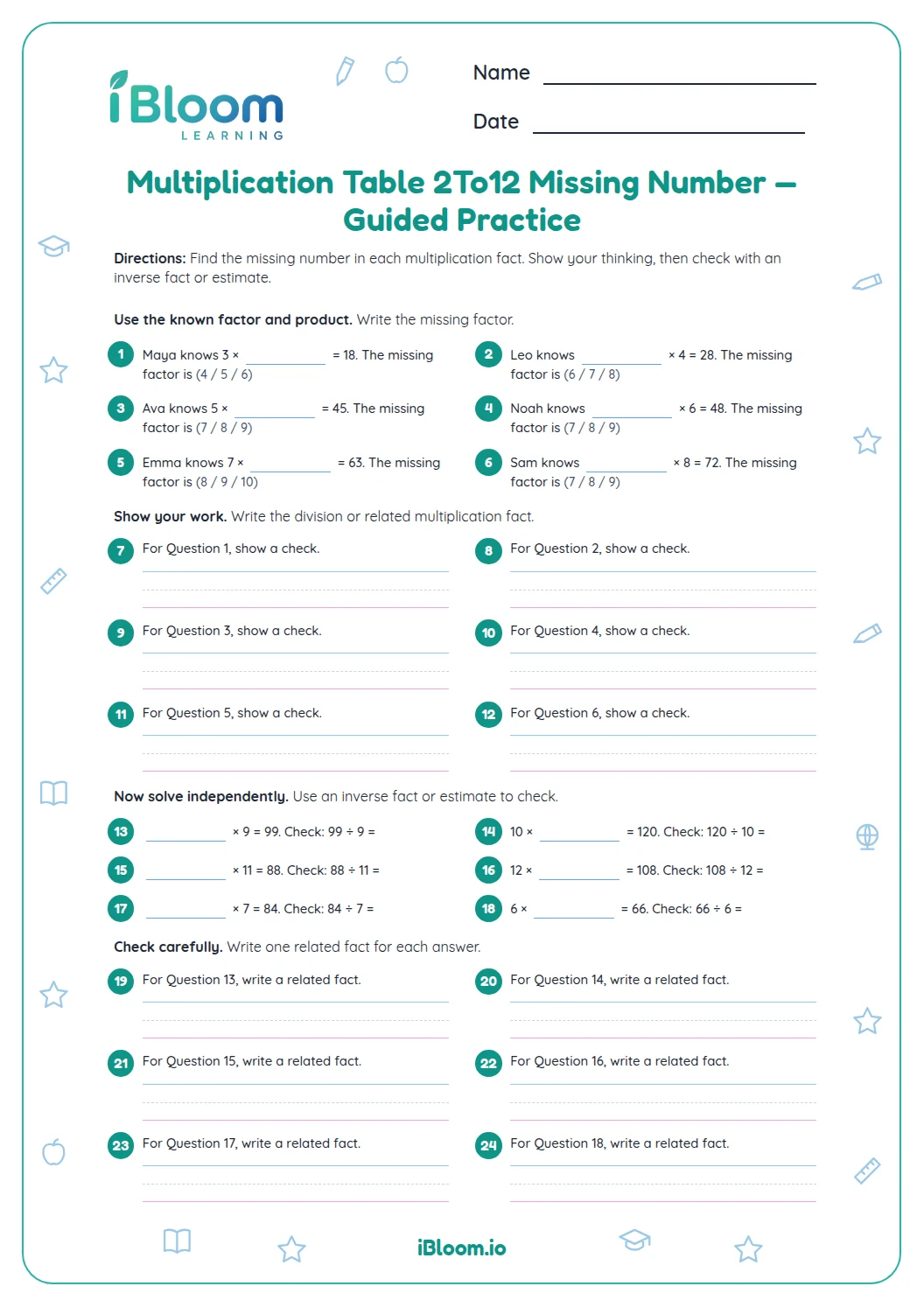
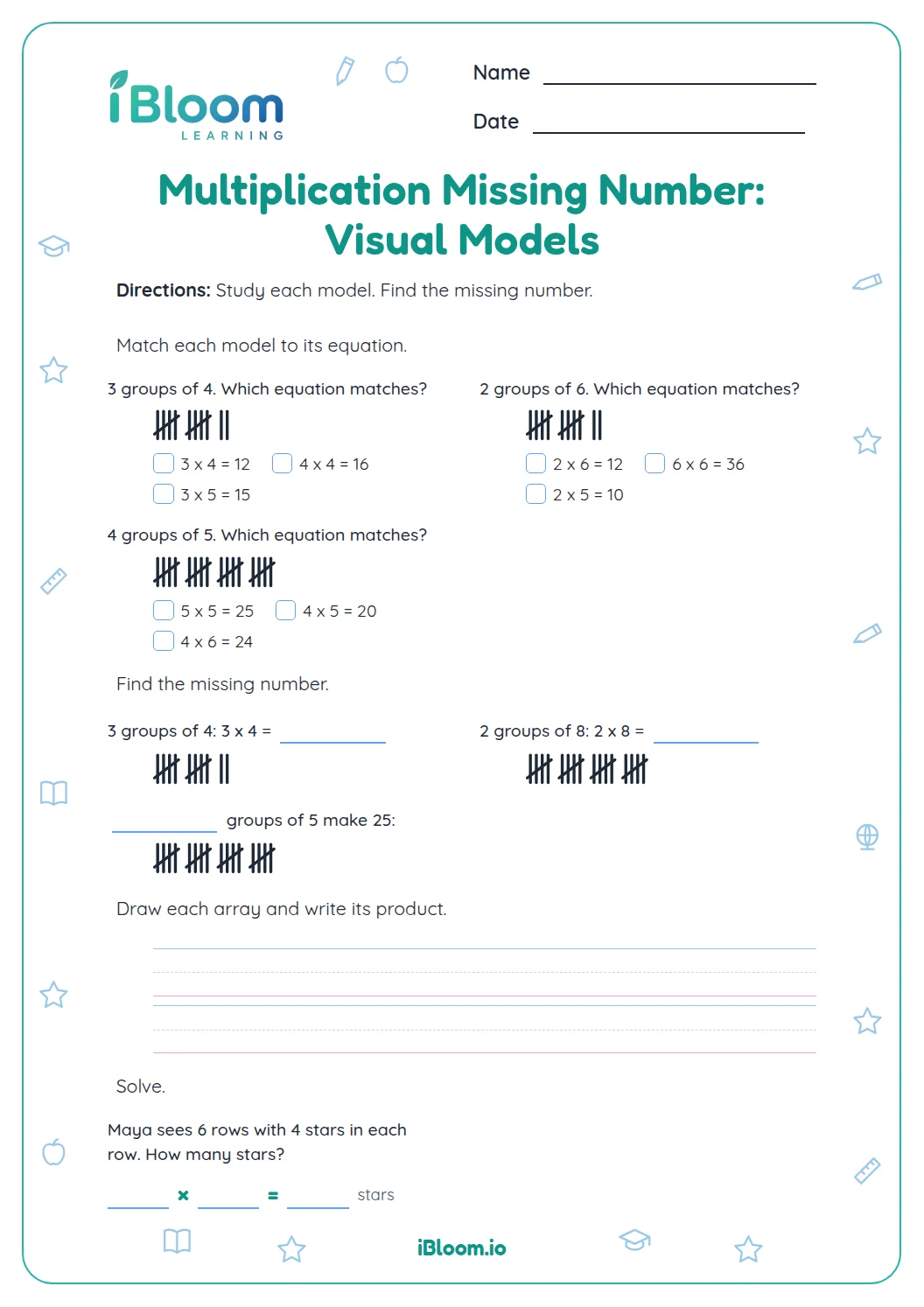
This Grade 3 worksheet practices missing multiplication factors from 2 through 10. Learners read six arrays and complete a factor equation, then solve nine equations with the missing factor in either position. The 15 questions connect equal groups, multiplication facts, and related division facts. This printable practices CCSS 3.OA.C.7.
Aligned to 3.OA.C.7
How is the practice organized?
Part A has six array questions. Parts B and C have five and four missing-factor equations.
- 1The array shows 2 rows with 6 objects in each row.
- 2Complete ___ × 6 = 12.
- 3The missing factor is 2.
How can an array show a missing factor?
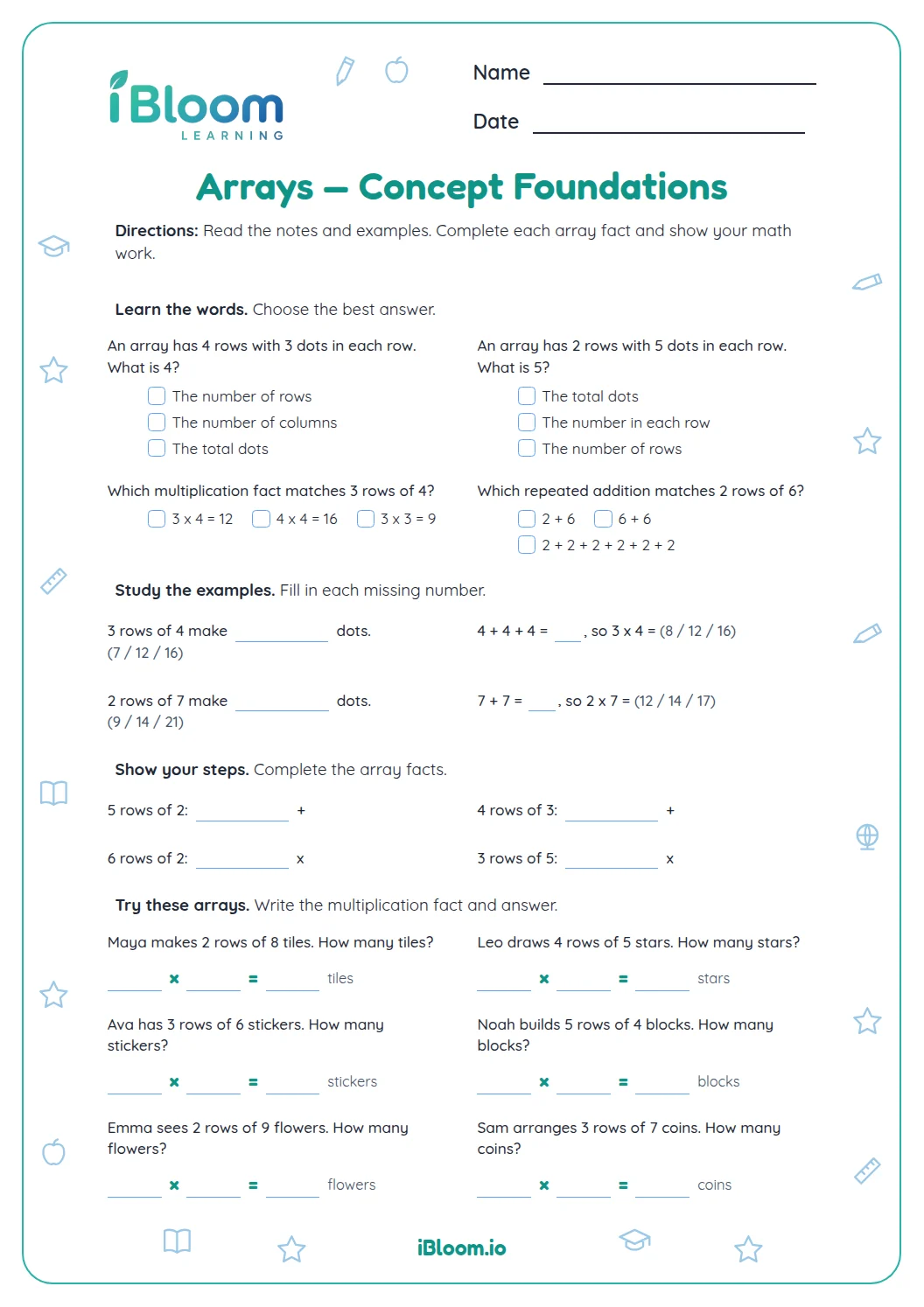
Count the rows and columns separately. The number of rows tells one factor and the number in each row tells the other. Their product is the total number of objects.
- 1The array shows 2 rows with 6 objects in each row.
- 2Complete ___ × 6 = 12.
- 3The missing factor is 2.
How can a division fact help?
If 7 × ___ = 42, ask how many groups of 7 make 42. The related division fact, 42 ÷ 7 = 6, gives the missing factor.
How to use this worksheet
- 1Read the array’s rows and columns.
- 2Write the two factors in the order shown by the equation.
- 3Use a known multiplication fact or related division fact.
- 4Check that the product matches the array or equation.
- 5Review the answer key and correct any missed factor.
Common mistakes and quick fixes
The mistake
Switching the row and column factors in a stated equation.
The fix
Match the missing spot in the equation, then use the array to verify it.
The mistake
Guessing a factor without checking the product.
The fix
Multiply the factors or use the related division fact to check.
The mistake
Counting every array object one at a time.
The fix
Count equal rows or columns and use repeated groups to find the total.
Common Core alignment
This worksheet gives students direct practice with missing multiplication factors.
Fluently multiply and divide within 100 using strategies and relationships.
On this sheet: The numbered activities directly practice this skill.
Show the official wordingHide the official wording
Fluently multiply and divide within 100, using strategies such as the relationship between multiplication and division (e.g., knowing that 8 × 5 = 40, one knows 40 ÷ 5 = 8) or properties of operations.
What to practice next
Make more practice
Further reading
Questions parents and teachers ask
How do the arrays help with missing factors?
Each of the first six questions shows an array and an equation with one missing factor. Count the equal rows or columns in the model, then use that number to complete the equation. The array makes the factor relationship visible.
Which multiplication facts does this worksheet cover?
The equations draw on multiplication tables from 2 through 10, including facts such as 7 × 3, 9 × 4, and 8 × 7. Learners find a missing factor rather than calculate only a stated product. Encourage learners to name the rows and columns they used.
How many questions are included?
There are 15 questions in three parts. Part A contains six array-based items, followed by five equations with a missing second factor and four with a missing first factor. The worksheet and answer key each have two pages.
What is a missing factor?
A factor is one of the numbers being multiplied. In 4 × ___ = 24, the missing factor is 6 because four groups of six make 24. Learners can use a known fact, repeated addition, or the related division fact.
Are the arrays drawn on the worksheet?
Yes. The first six items include printed arrays so learners can connect equal rows and columns to multiplication. The later equations ask learners to recall or work out the fact without an array, then check with the key.
How long does the practice take?
Plan for about 15 minutes. Learners who count the arrays carefully or use them to rebuild multiplication facts may take longer, while familiar facts can be completed more quickly. Encourage learners to name the rows and columns they used.