

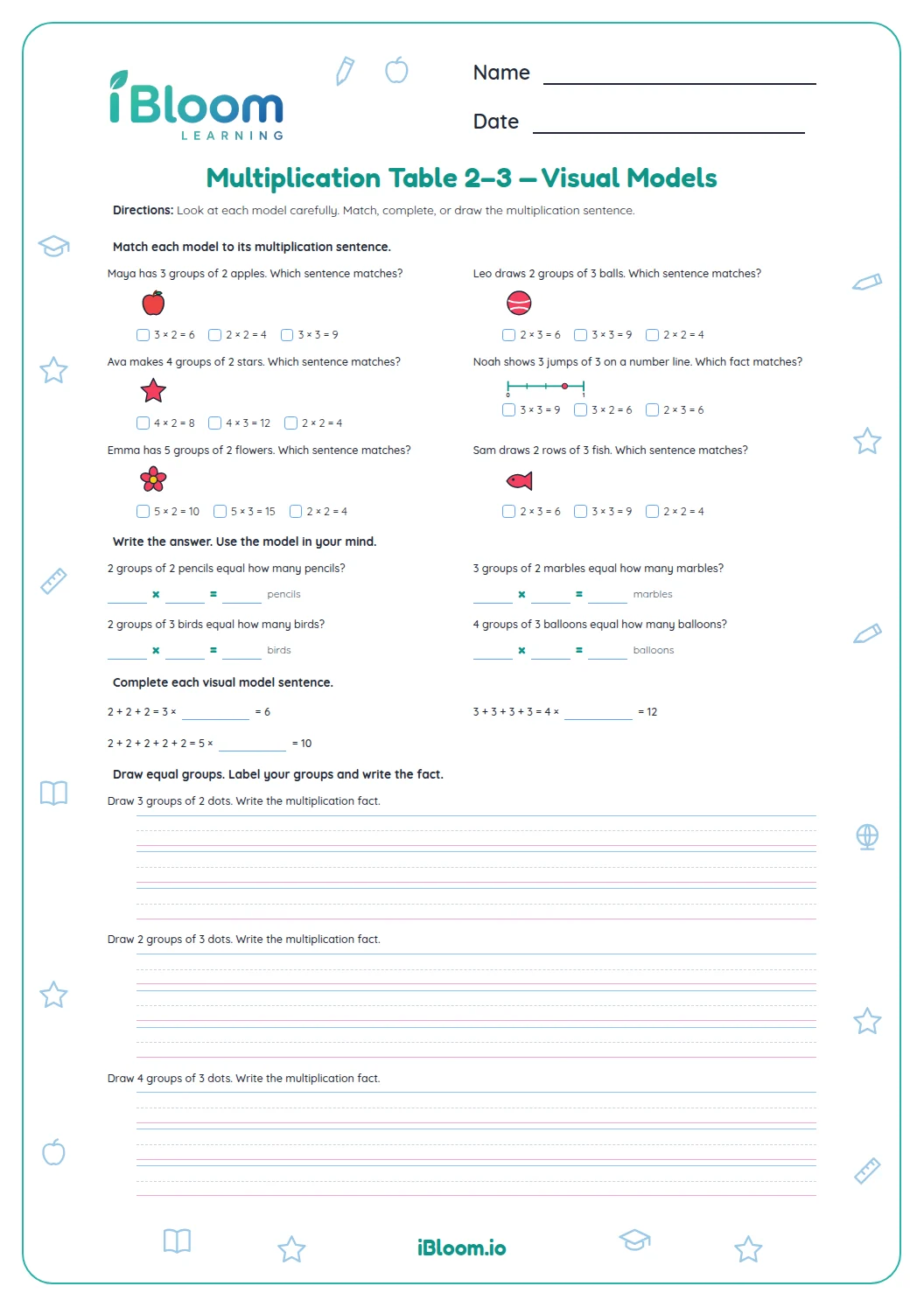
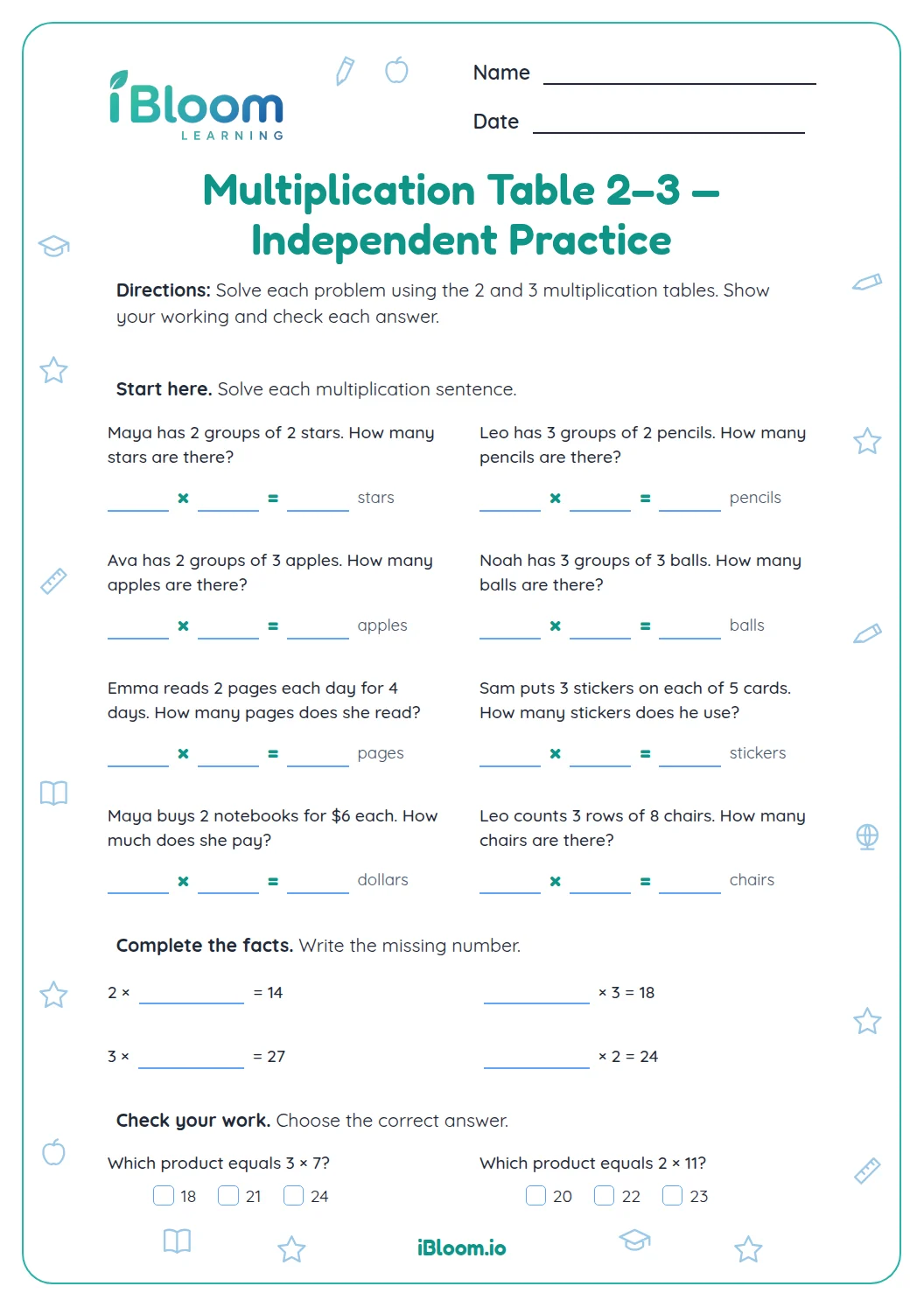
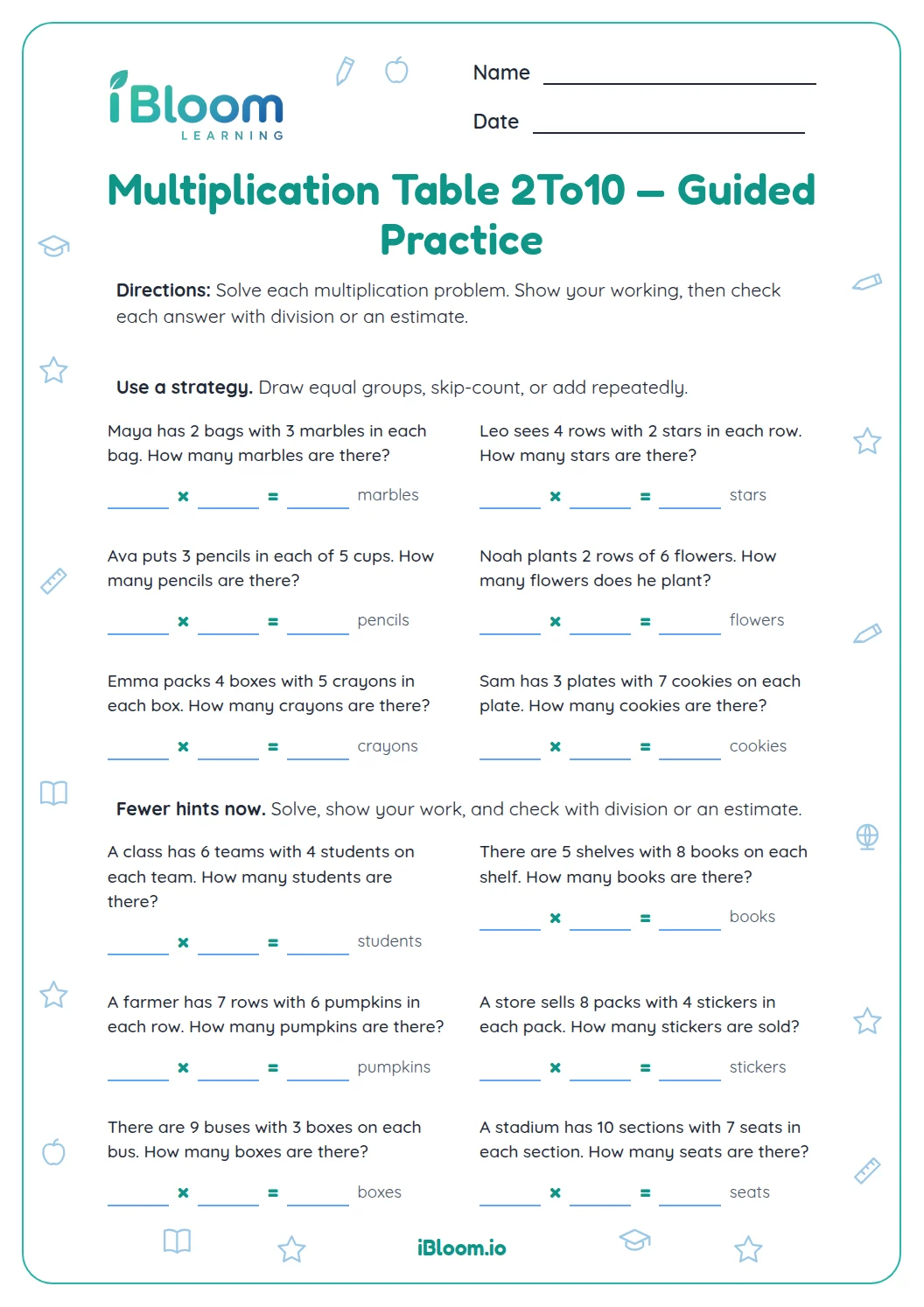
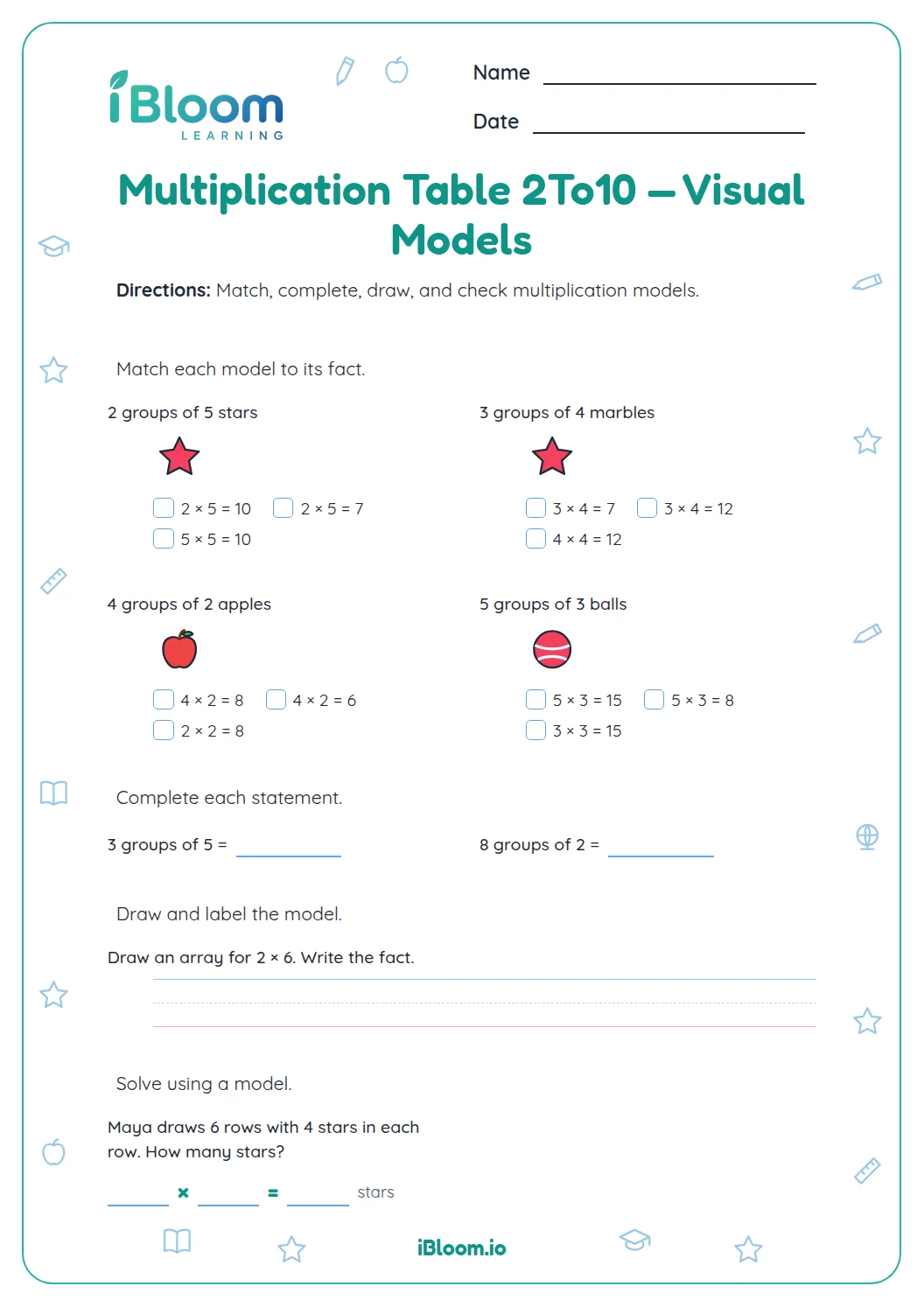

About this worksheet
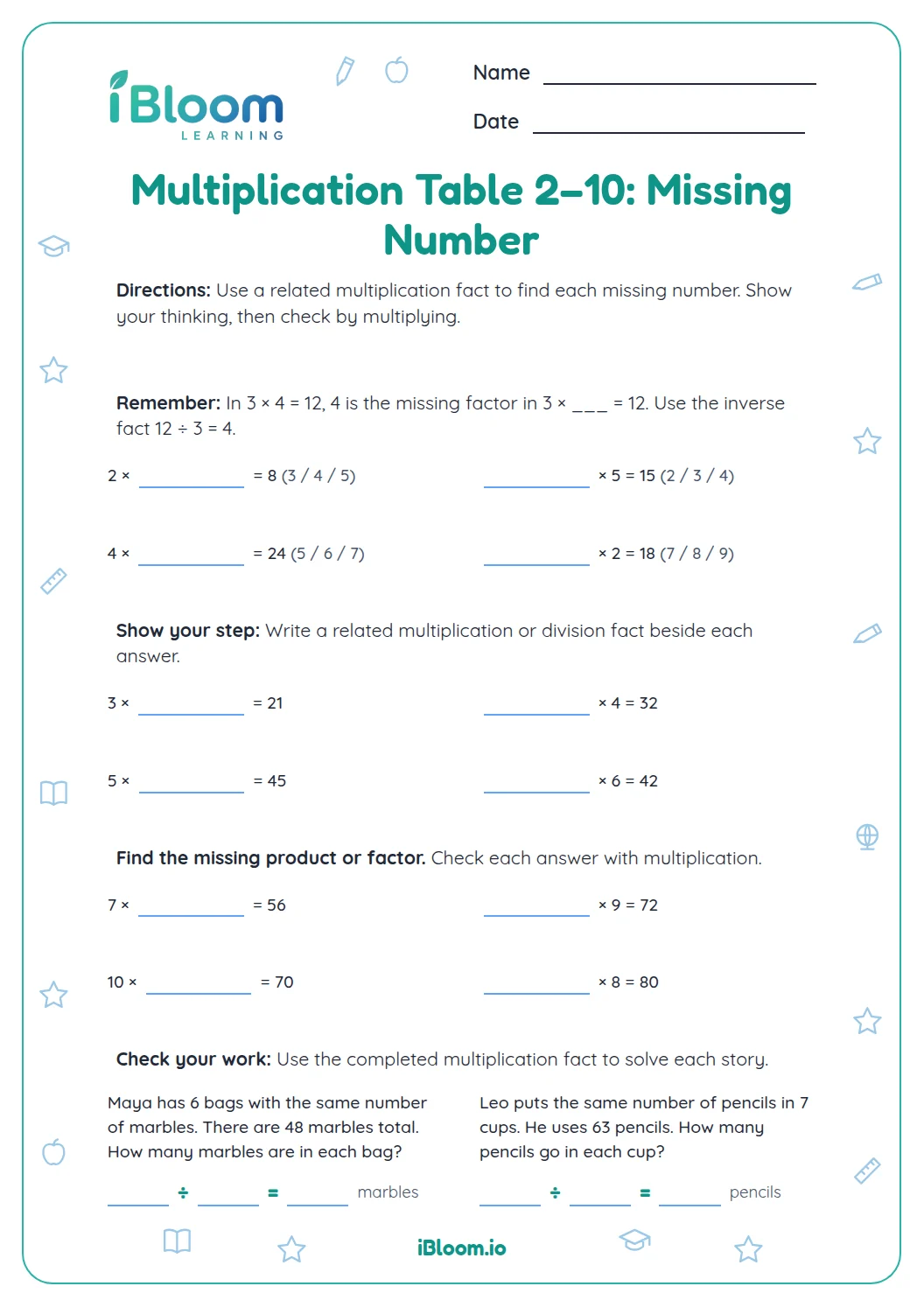
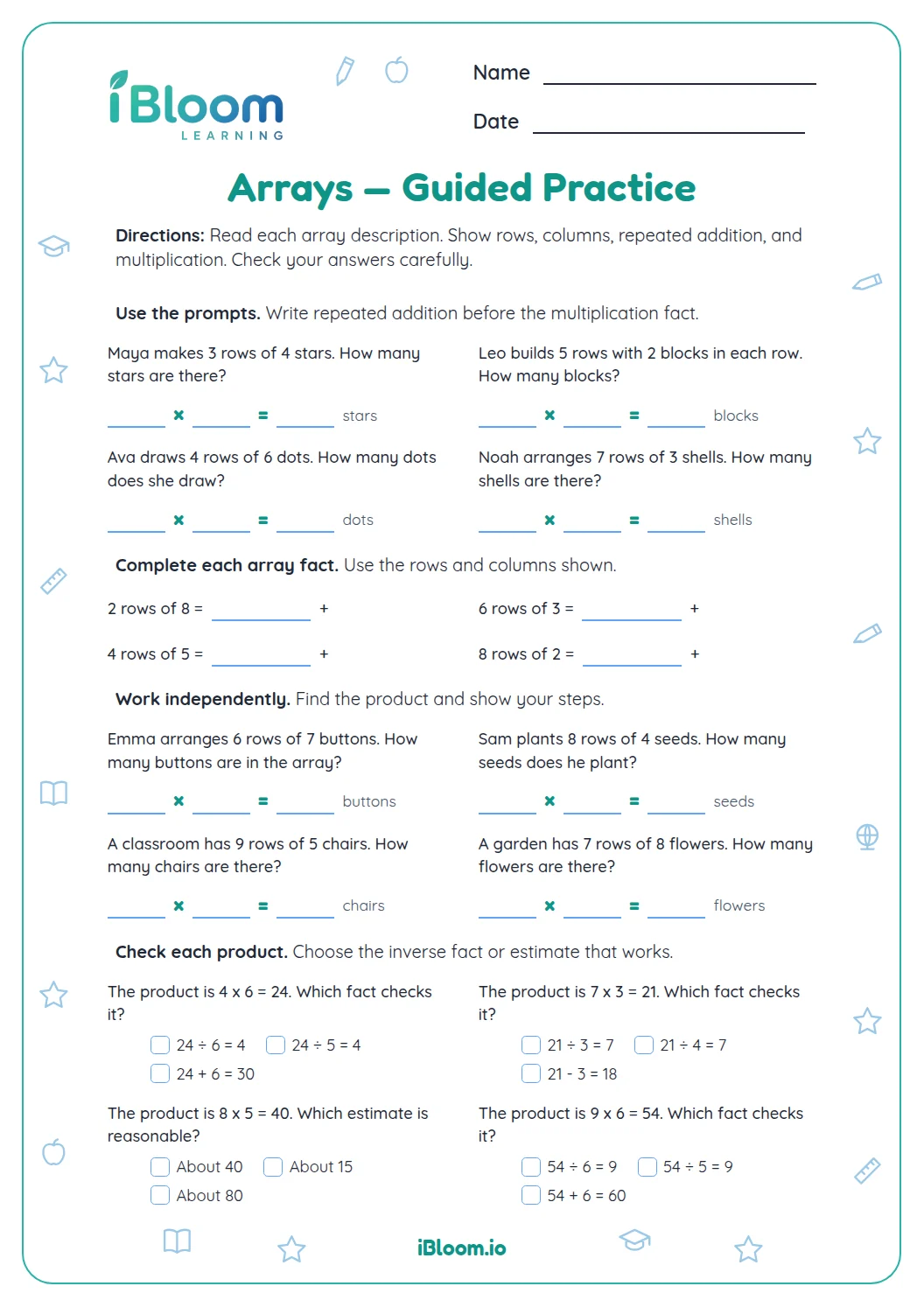
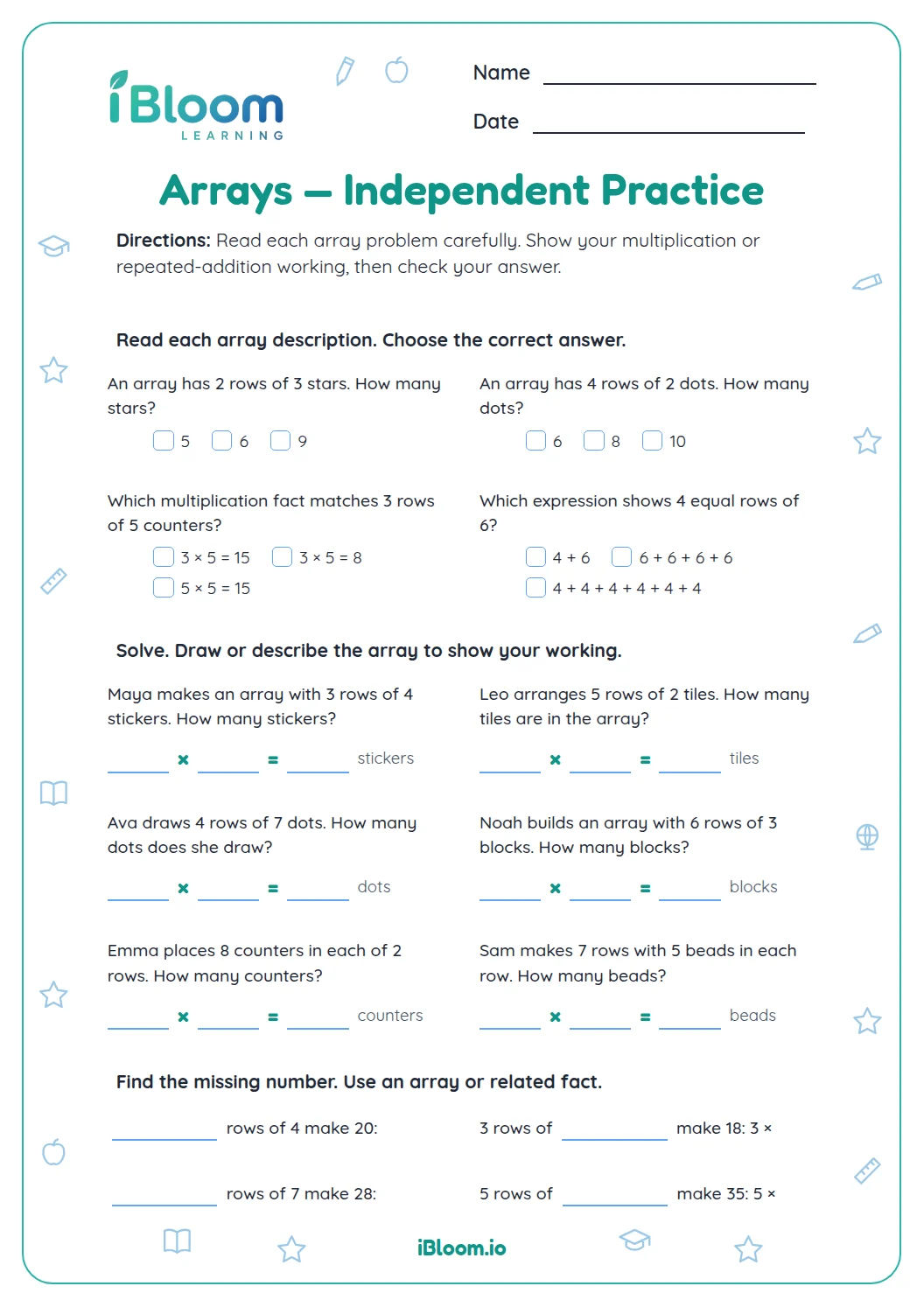
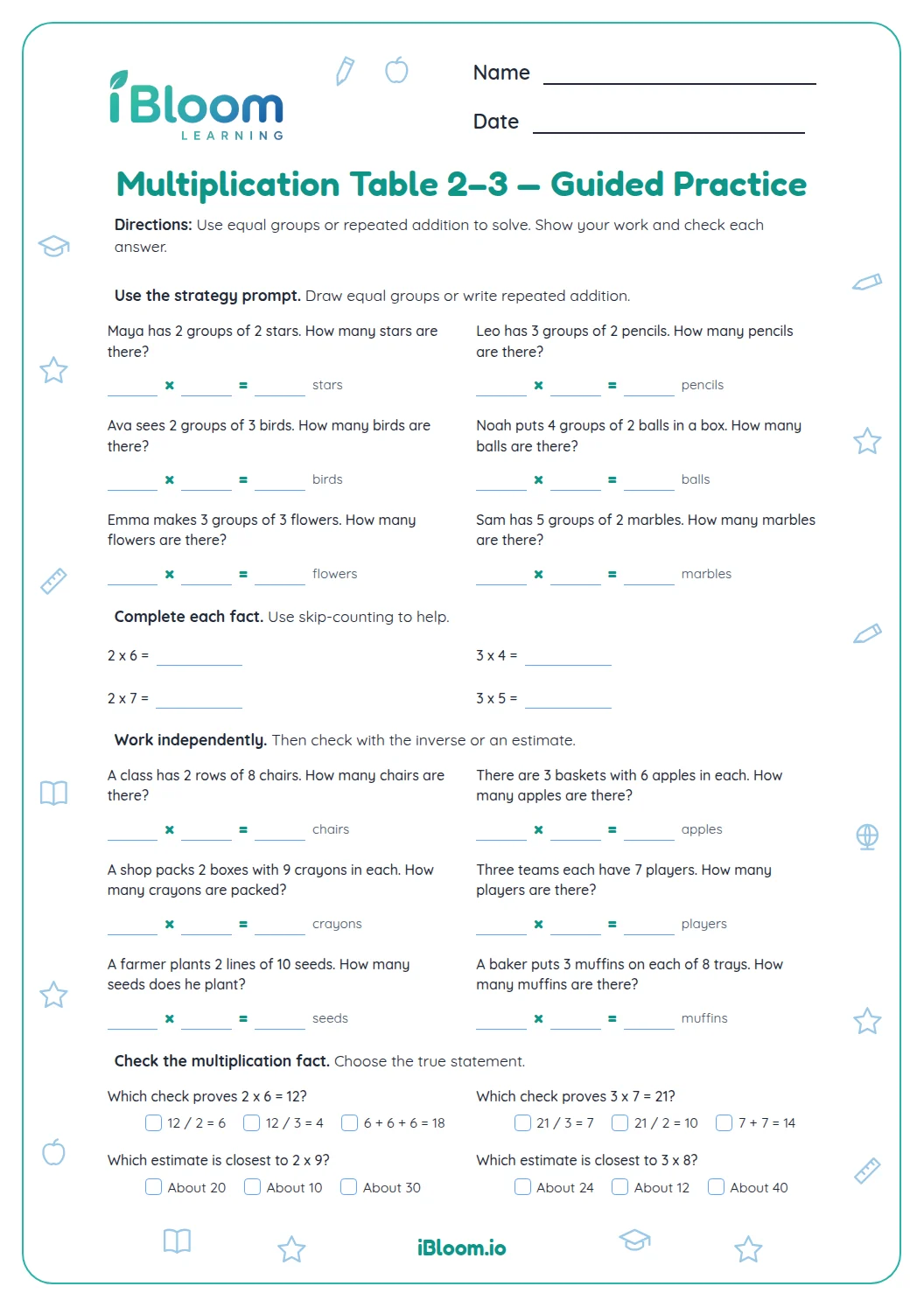
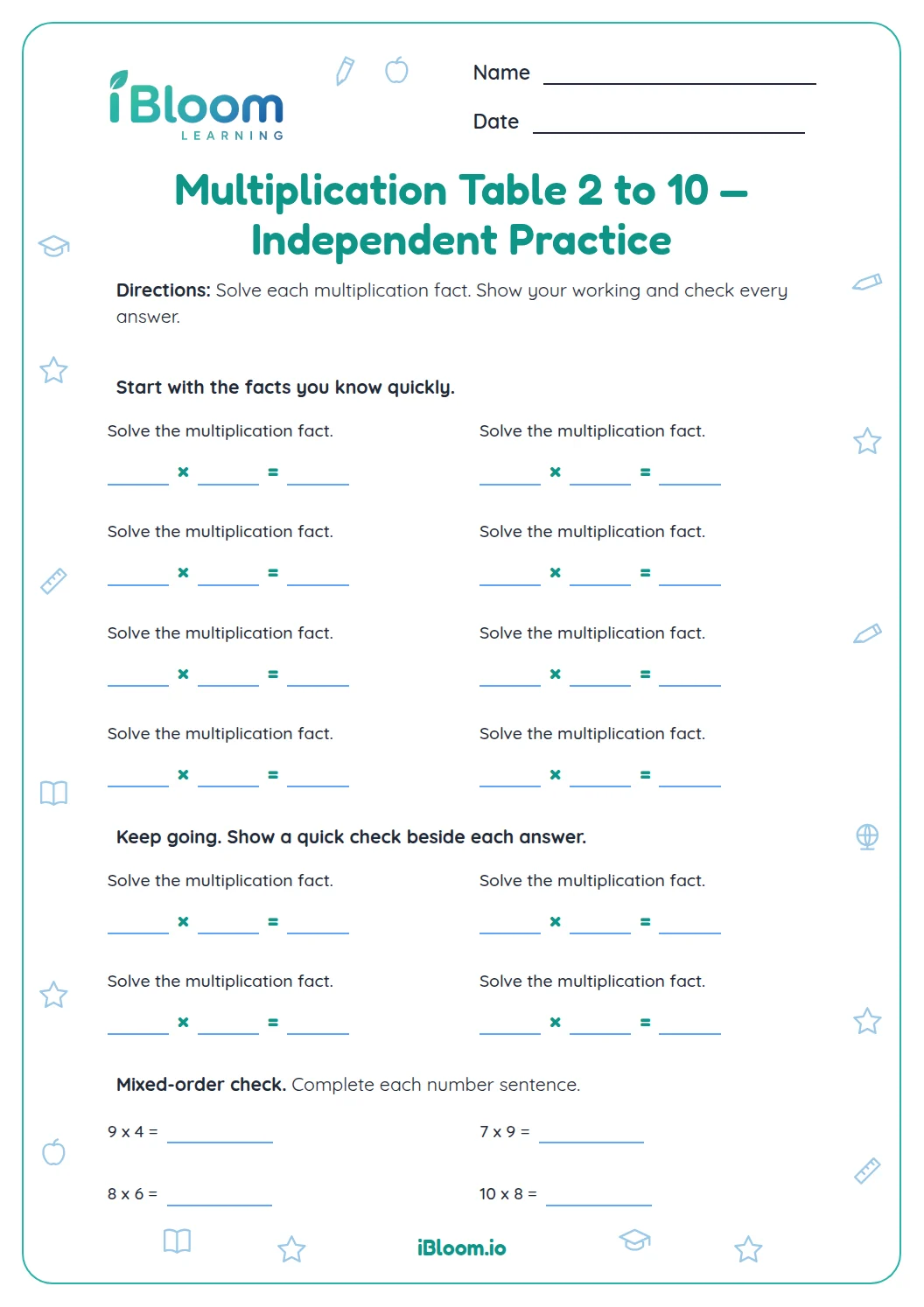
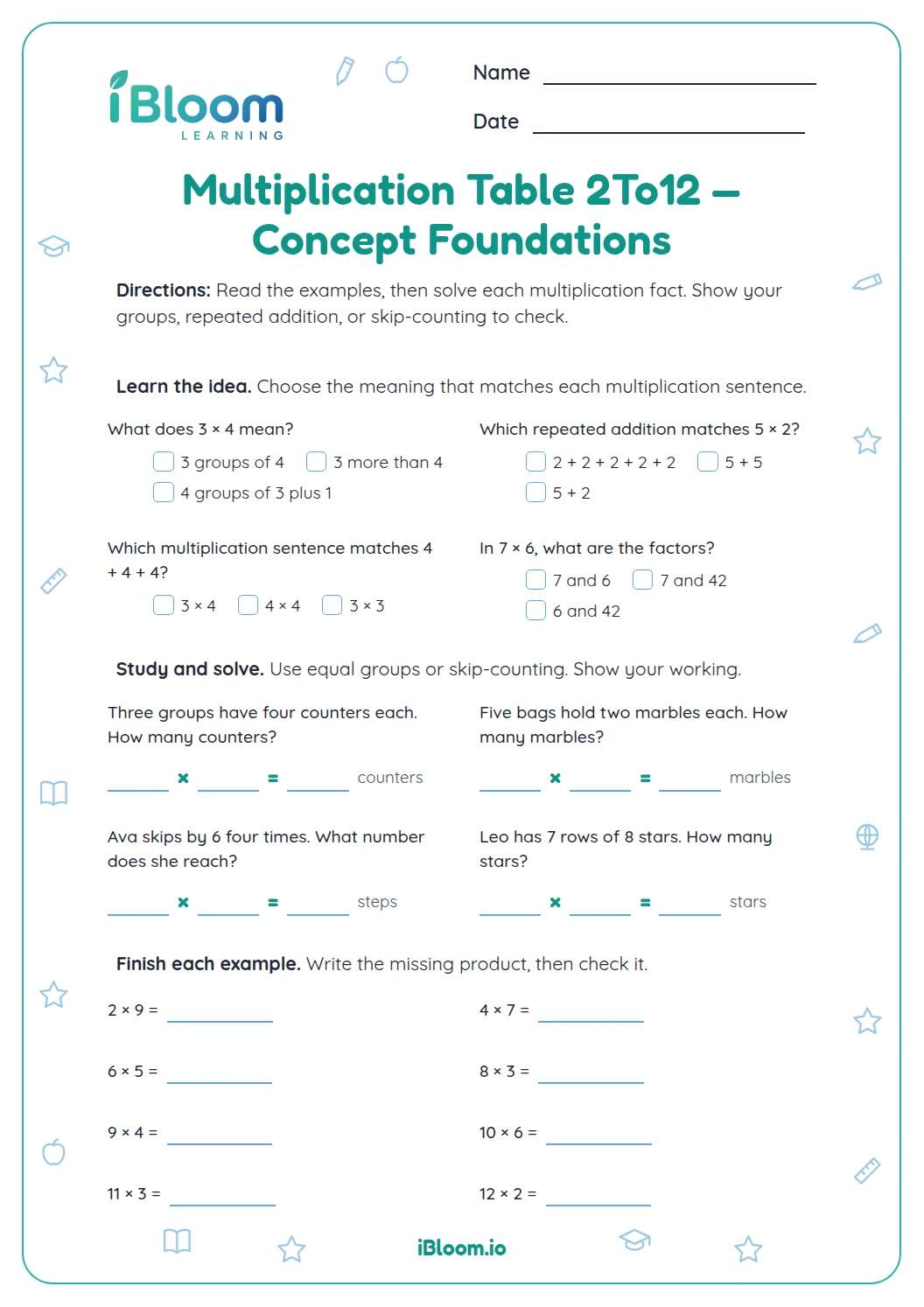
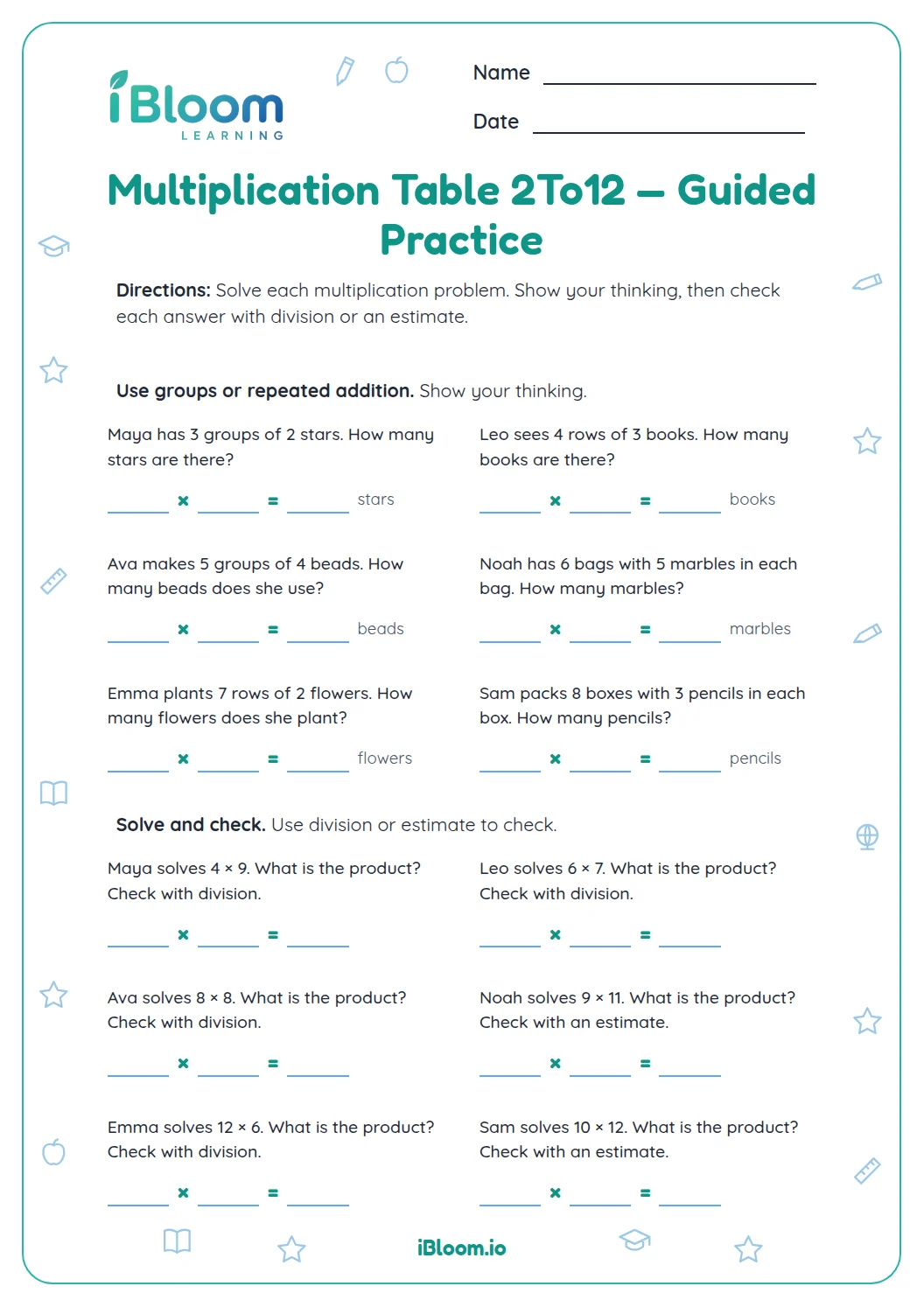
This Grade 3 worksheet has 15 compact questions using multiplication facts from 2 through 10 and equal-group situations. Learners find missing factors or products, then apply multiplication and division to groups, rows, and sharing stories. The separate answer key gives each result.
Aligned to 3.OA.A.3
How do arrays connect to multiplication?
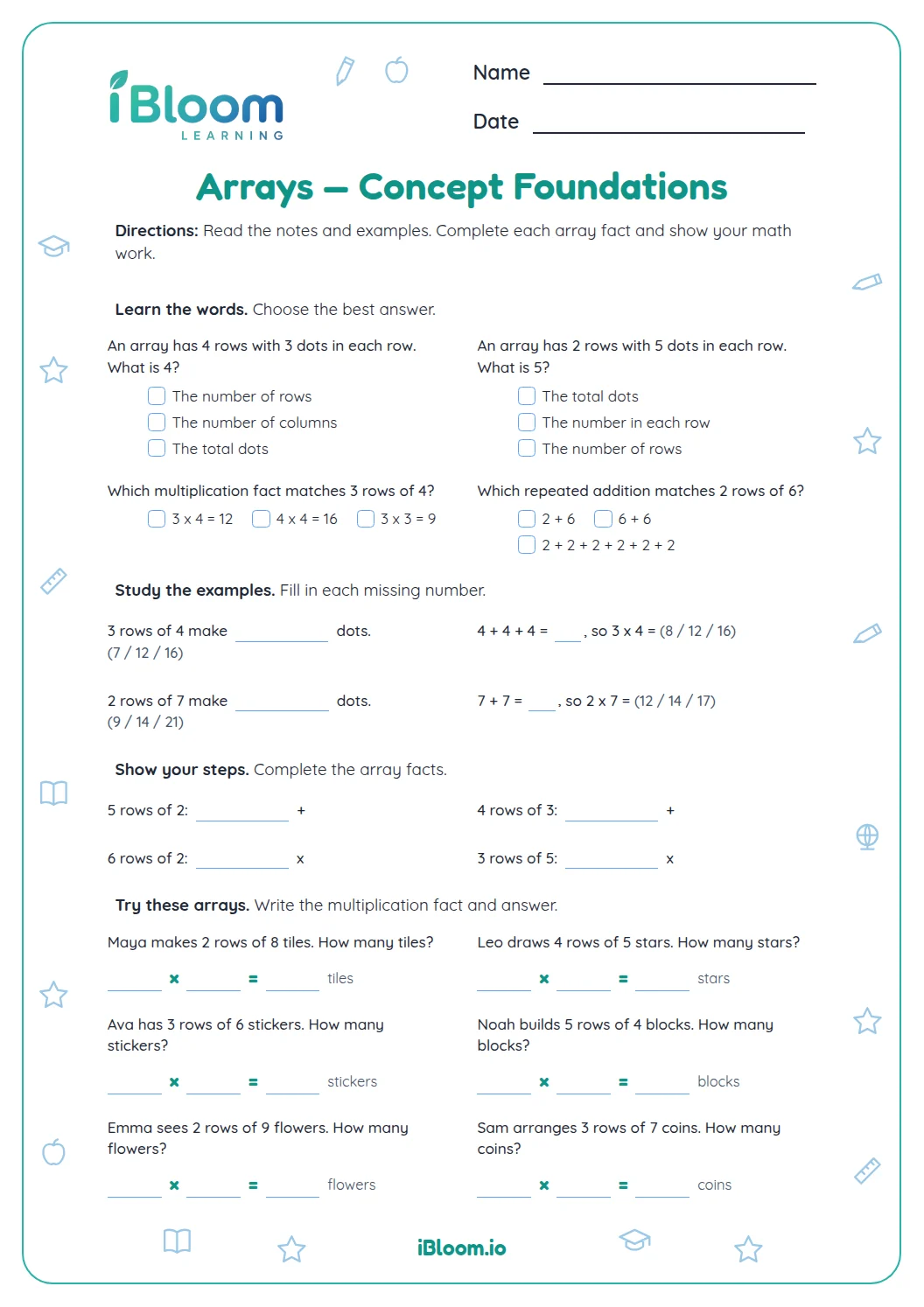
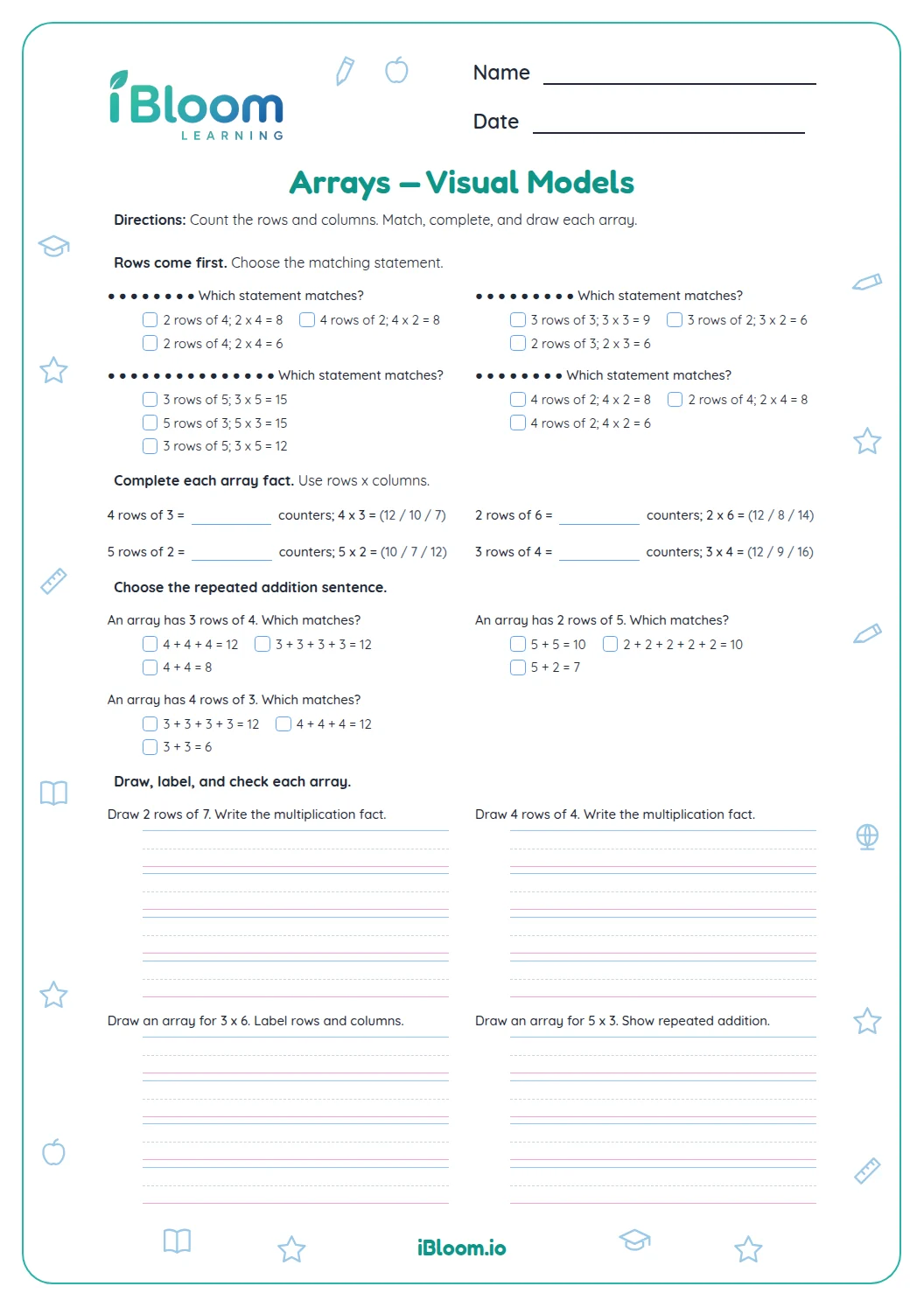
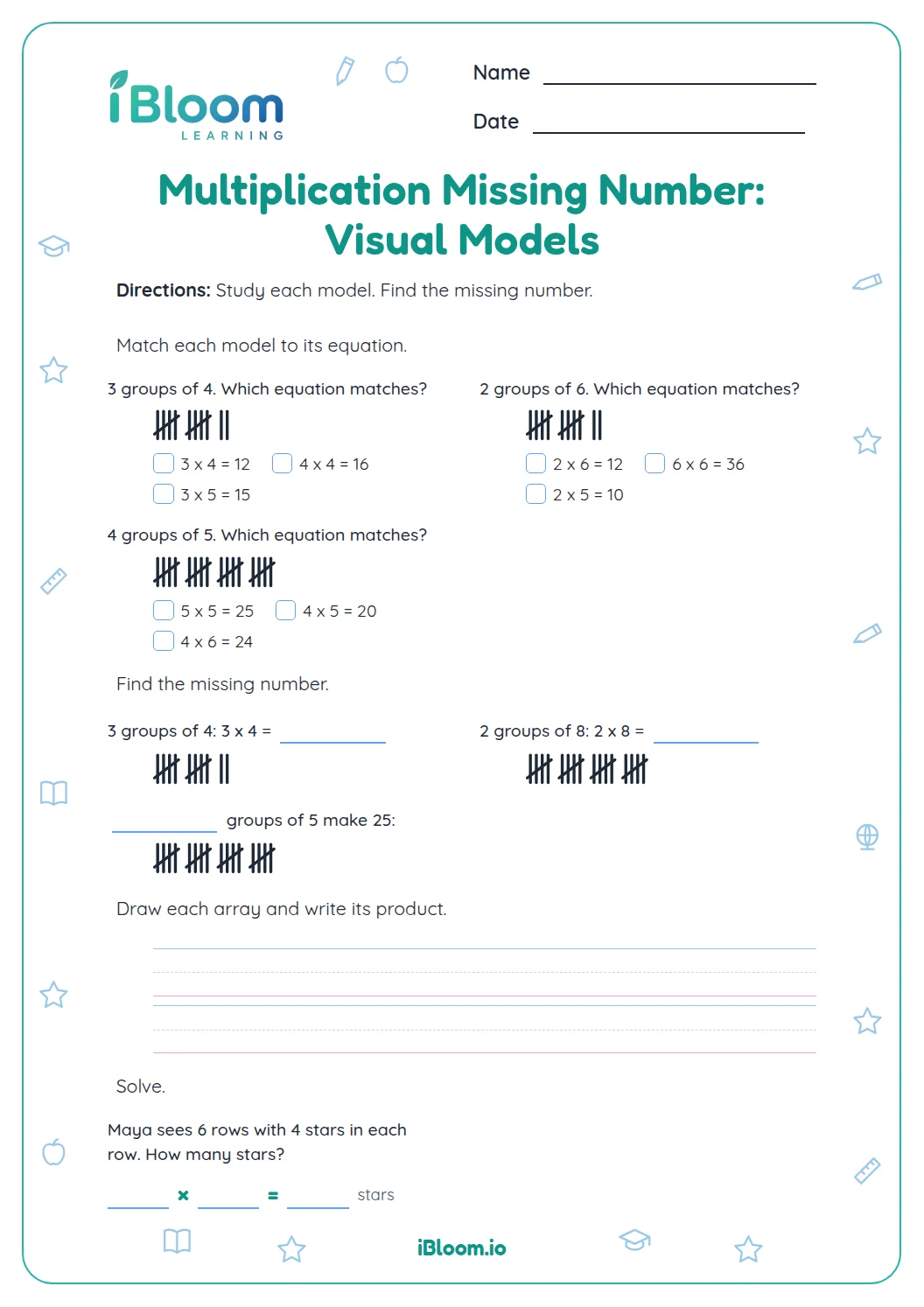
The opening array shows 4 rows of 6 oranges. Count the rows and items in each row, then connect them to 4 × 6 = 24. The remaining fact questions ask for a missing factor or product.
How do missing-factor questions build fluency?
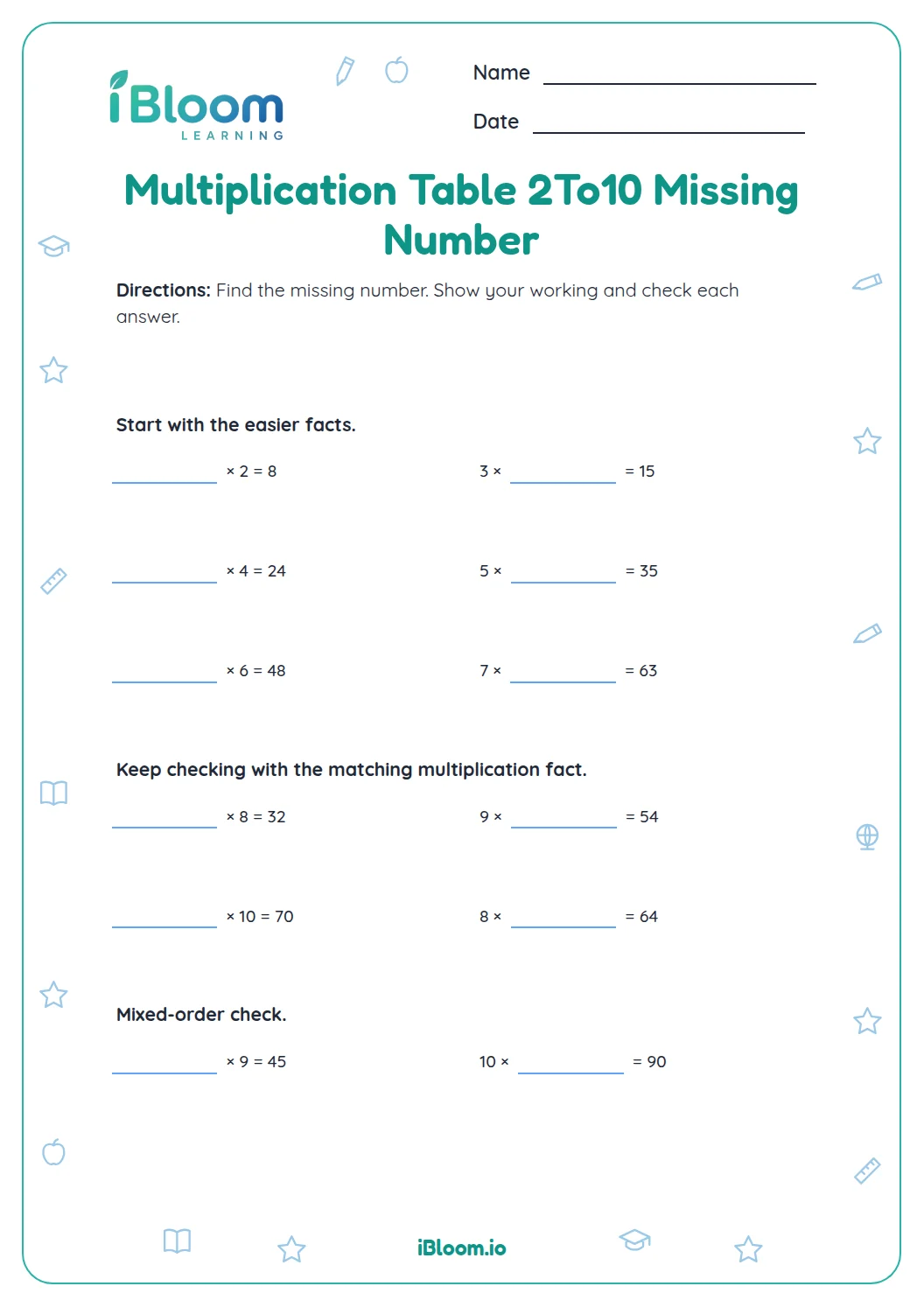
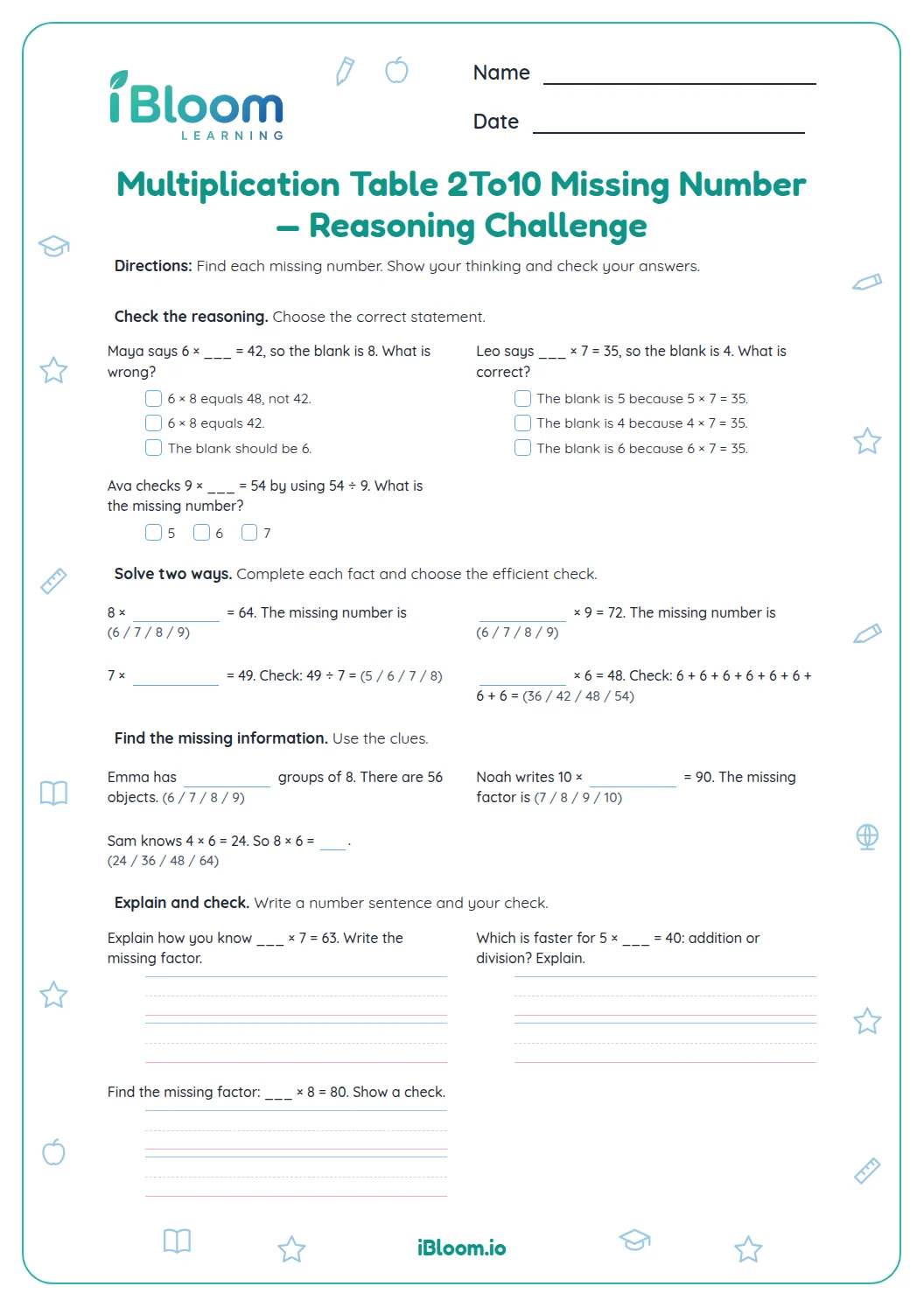
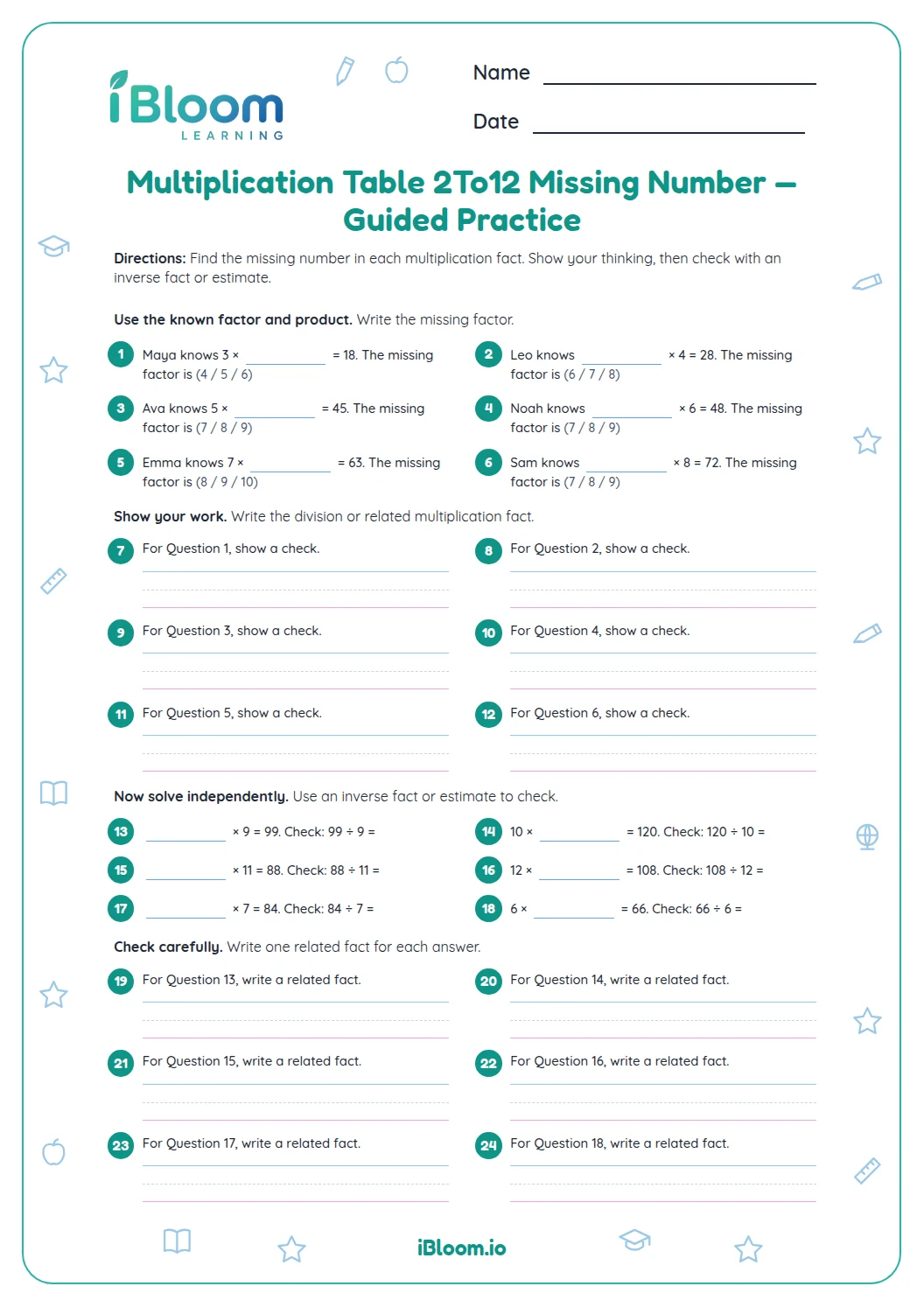
Use a known multiplication fact to find the unknown factor or product. The facts use factors from 2 through 10.
How do the story problems use multiplication and division?
The final questions describe equal groups, rows, and sharing. Decide whether the unknown is the total or the size of each group, then choose multiplication or division.
How can I use the worksheet?
- 1Read the prompt and identify the numbers and unknown.
- 2Use the pictured model when one is provided.
- 3Solve each item one step at a time.
- 4Check the result in the original equation, sequence, or story.
- 5Use the answer key after completing the practice.
Mistakes to watch for
The mistake
Skipping a step when solving.
The fix
Write one operation at a time and check the result in the original problem.
The mistake
Misreading the model or the units.
The fix
Name what each part represents before calculating.
The mistake
Stopping at a number without answering the story.
The fix
Reread the question and include its requested unit or label.
Common Core alignment
This worksheet practices the following Common Core standard.
Apply Grade 3 multiplication strategies to solve the questions on this sheet.
On this sheet: The questions practice Grade 3 multiplication through models, calculations, and situations.
Show the official wordingHide the official wording
Use multiplication and division within 100 to solve word problems in situations involving equal groups, arrays, and measurement quantities, e.g., by using drawings and equations with a symbol for the unknown number to represent the problem.
What to practice next
Make more practice
Further reading
Questions parents and teachers ask
How many questions are included?
The worksheet has 15 questions, moving from focused practice to applications. Learners can work through the items in order and use the separate answer key after finishing. The questions include number models or a drawing when those visuals support the skill.
Can I print the answer key separately?
Yes. The answer key is placed after the worksheet pages. Print the student pages for practice and keep the key nearby for checking. Reviewing a missed item can help a learner see which step needs another try and then return to the same skill with confidence.
How should a learner use the models?
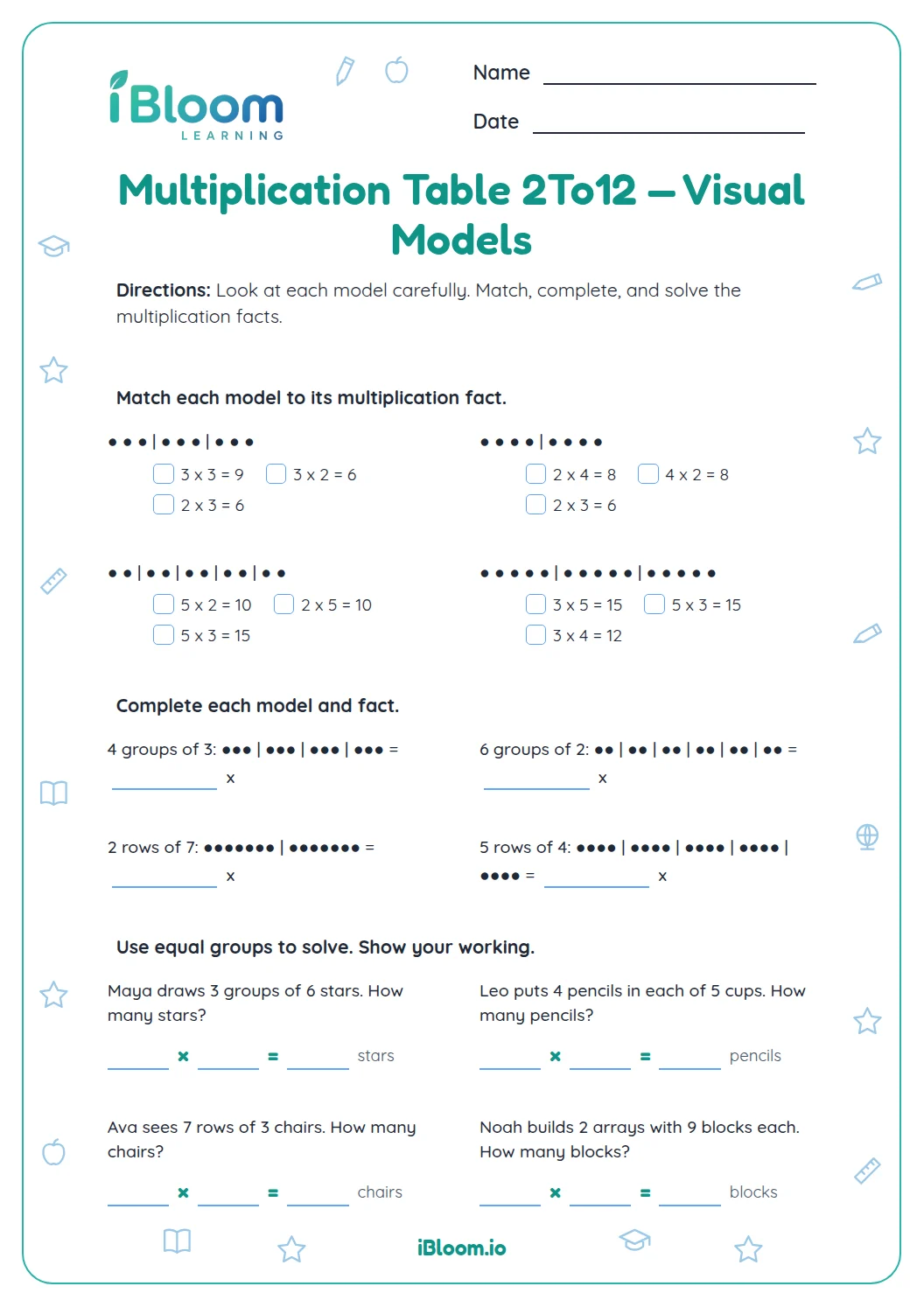
Read the prompt first, then connect the model to the quantities or operation in the question. Use the parts, groups, or marks as evidence for the calculation. After solving, check that the answer matches both the model and the wording.
How long will the worksheet take?
Plan for about twenty minutes to work through all two parts and check the answers. The time can vary with how much discussion or written working a learner uses. The parts can also be completed in separate sessions.
What is a good way to check an answer?
Return to the original prompt and substitute or interpret the answer there. For a story problem, include the requested unit and ask whether the result makes sense. The answer key provides a concise check after the learner has tried each item.