


About this worksheet
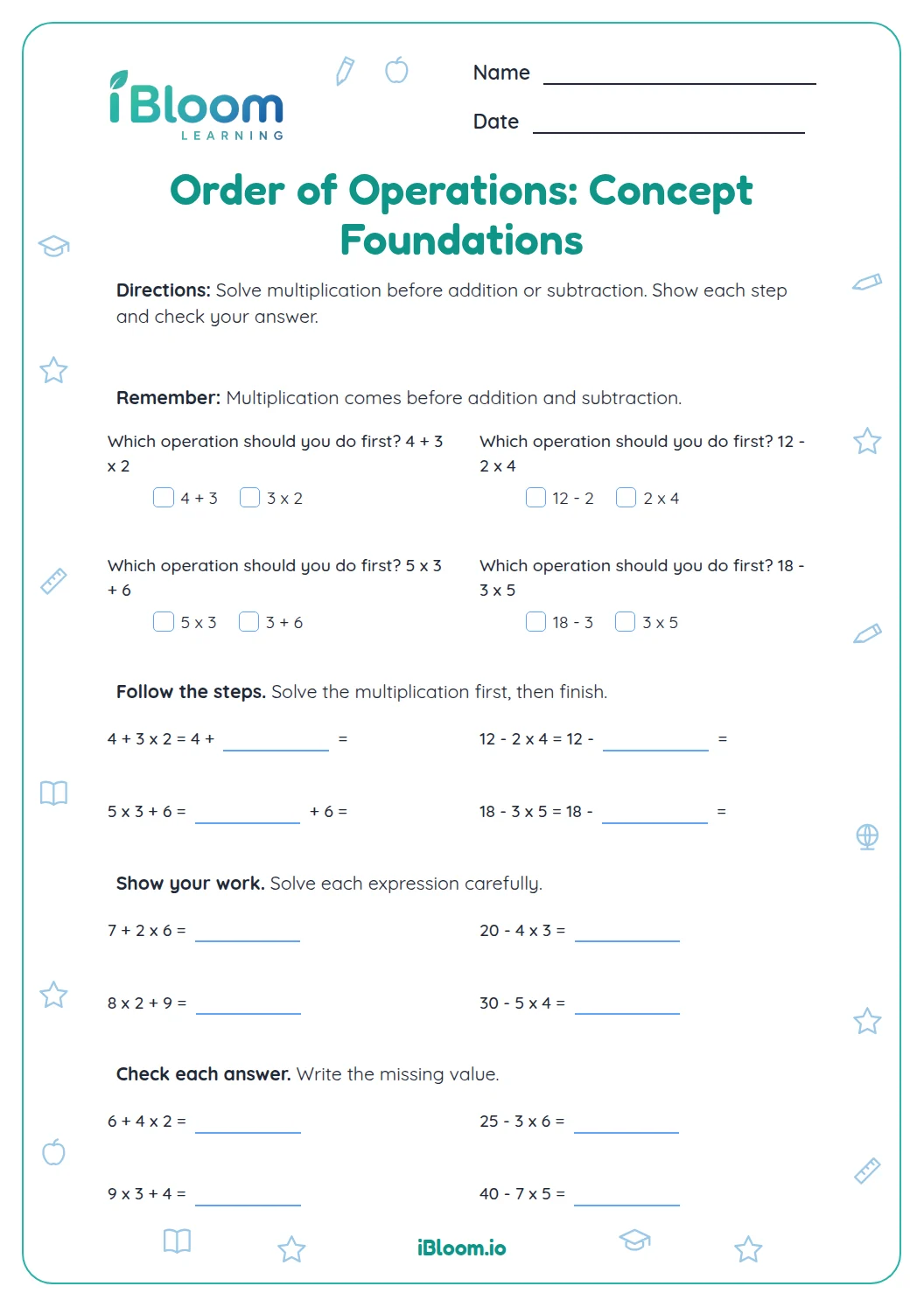
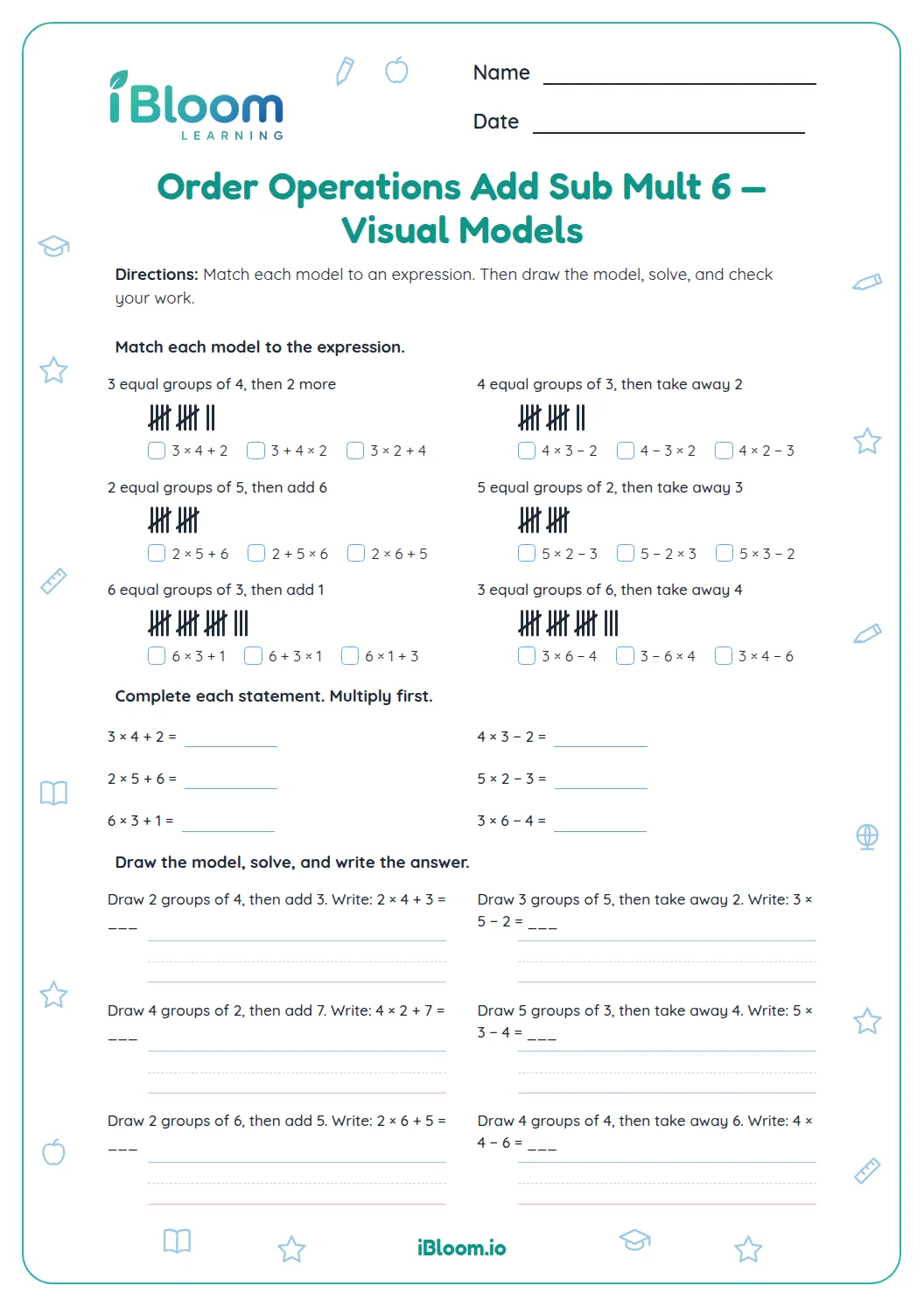
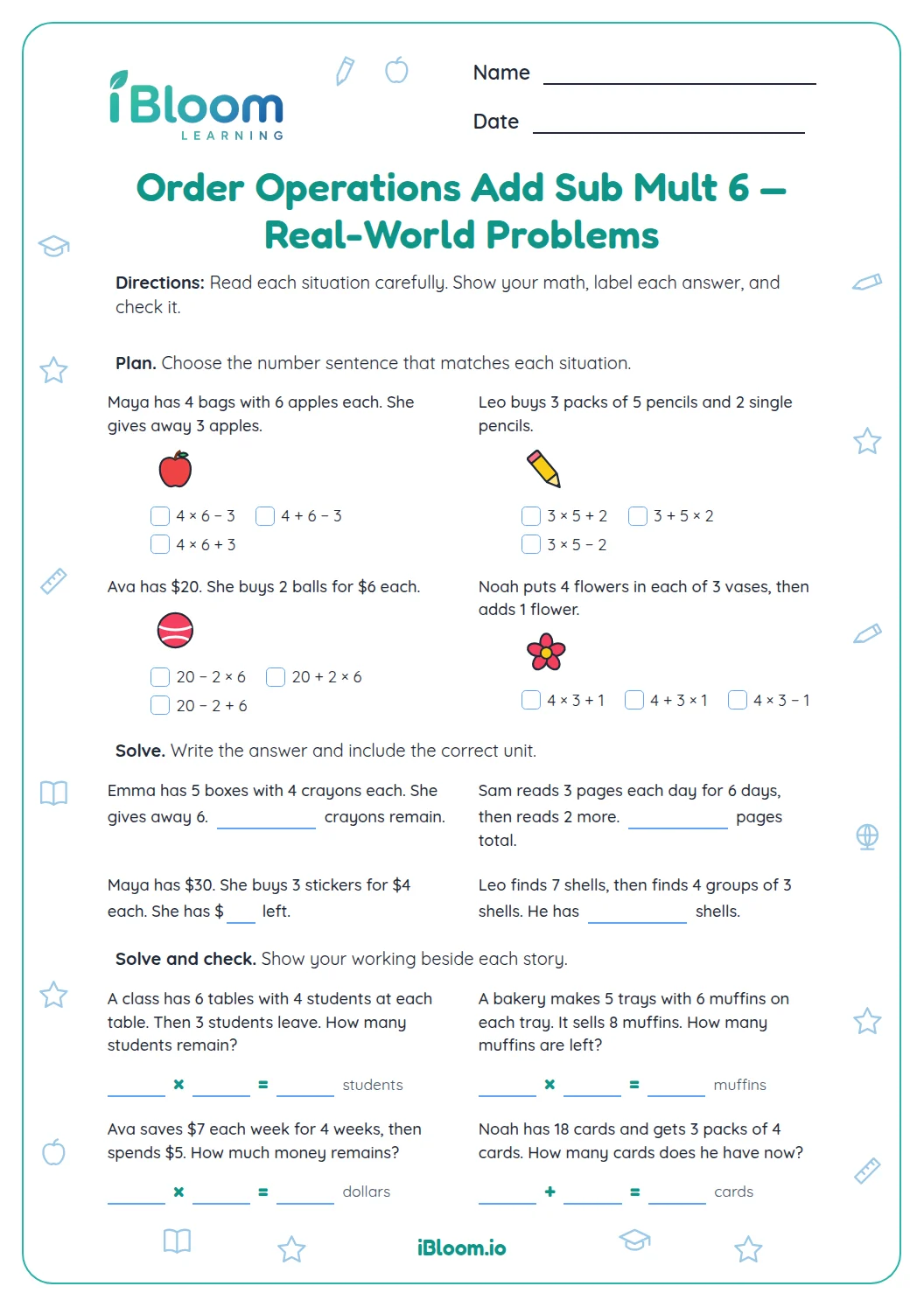
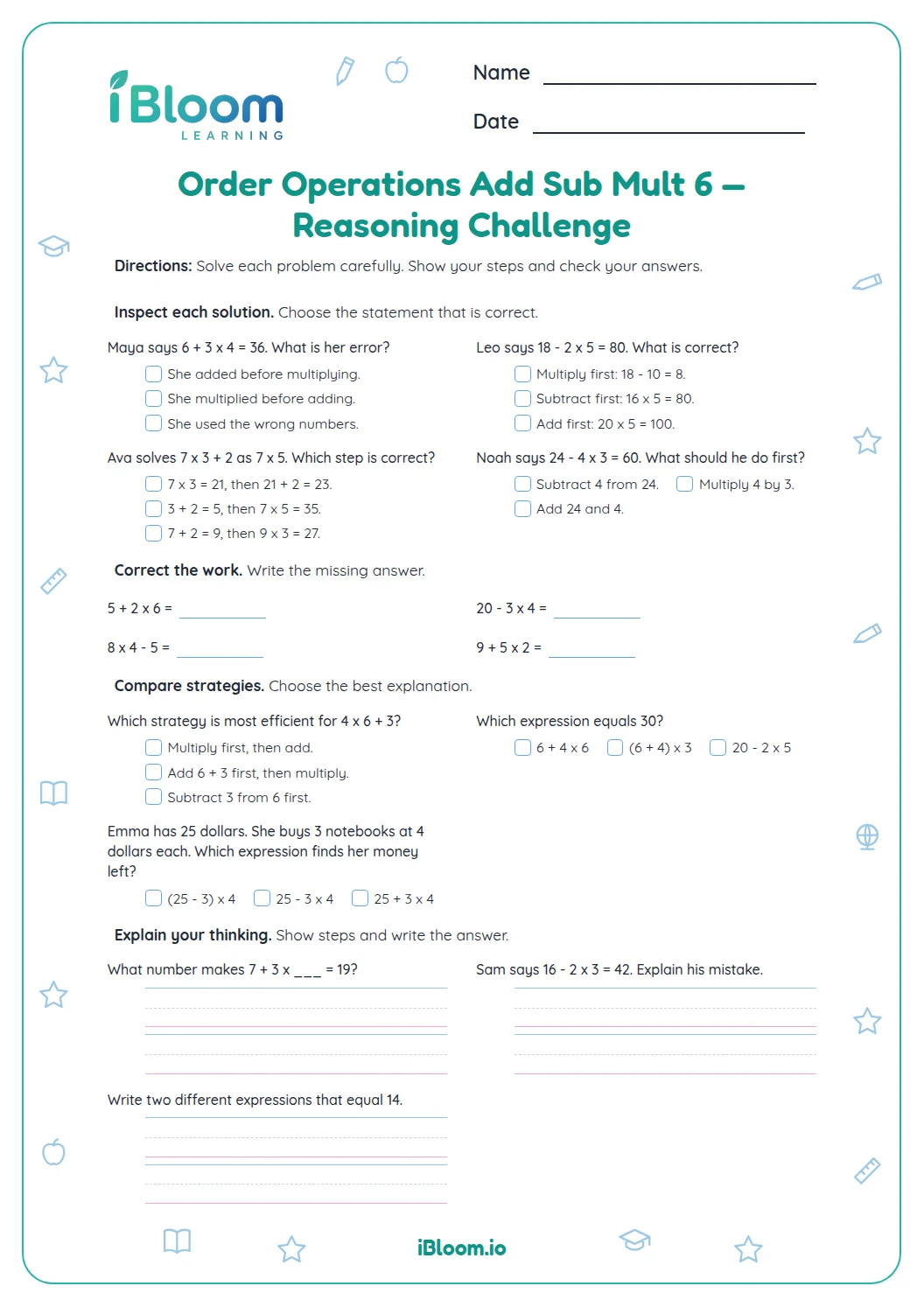
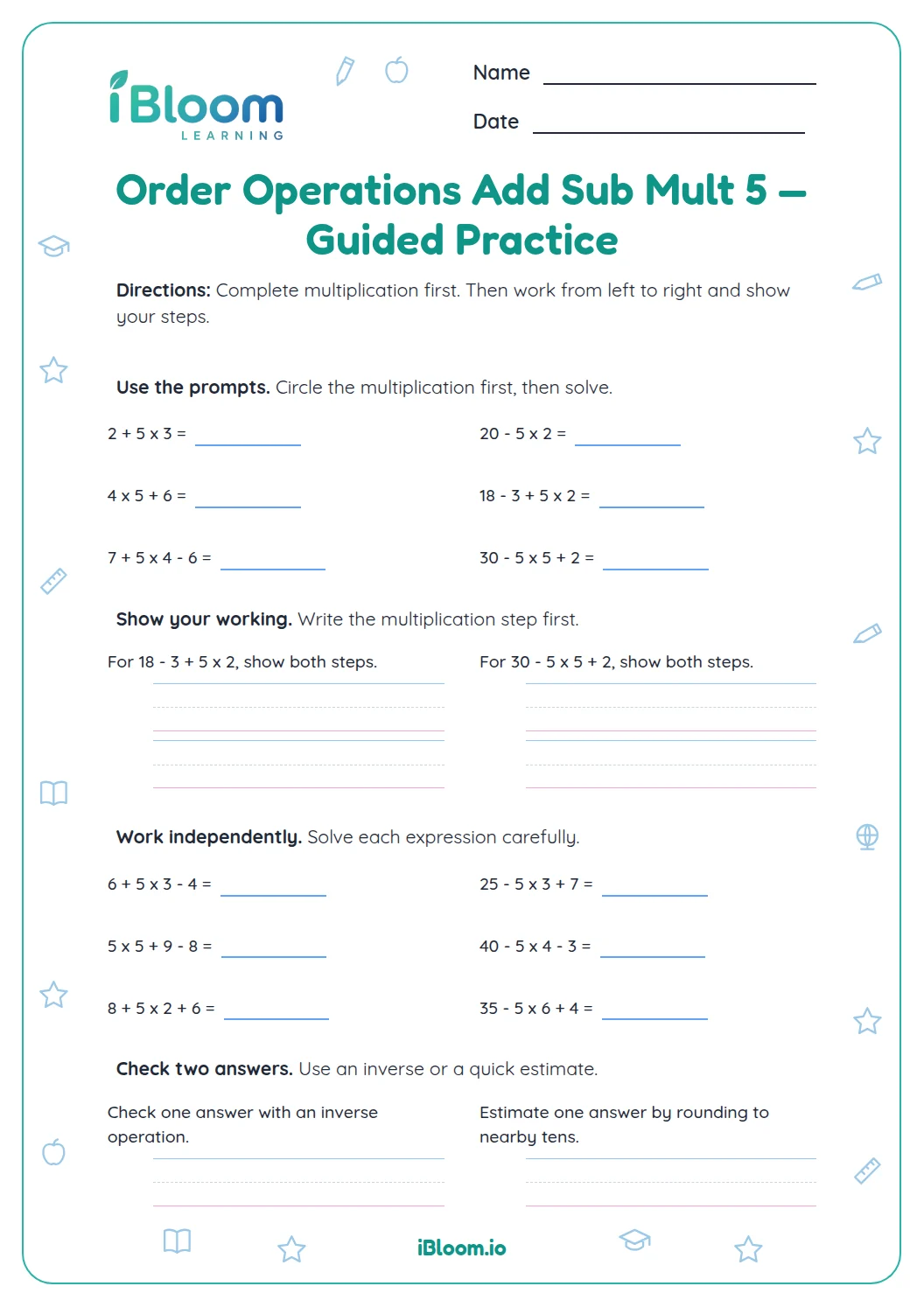
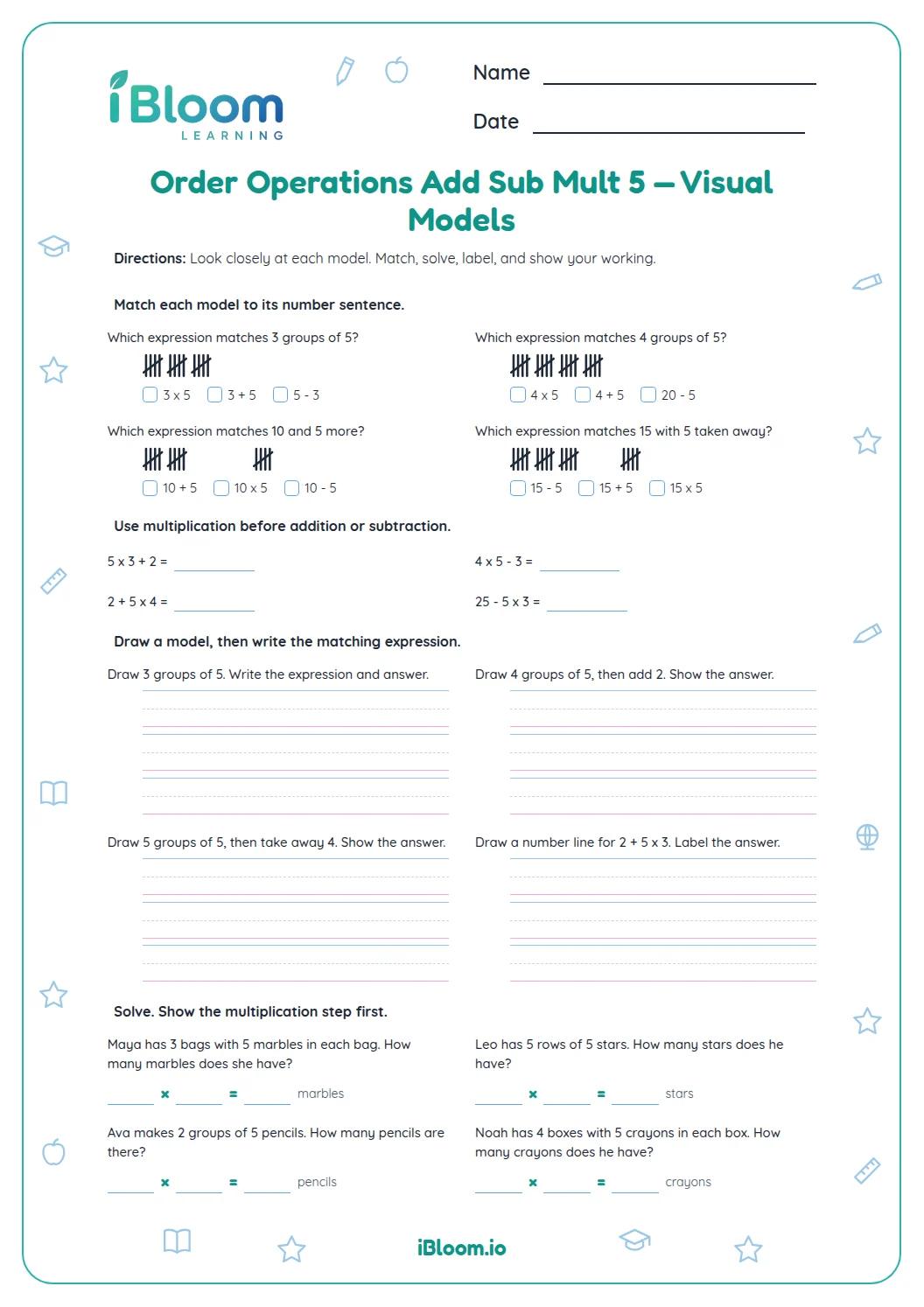
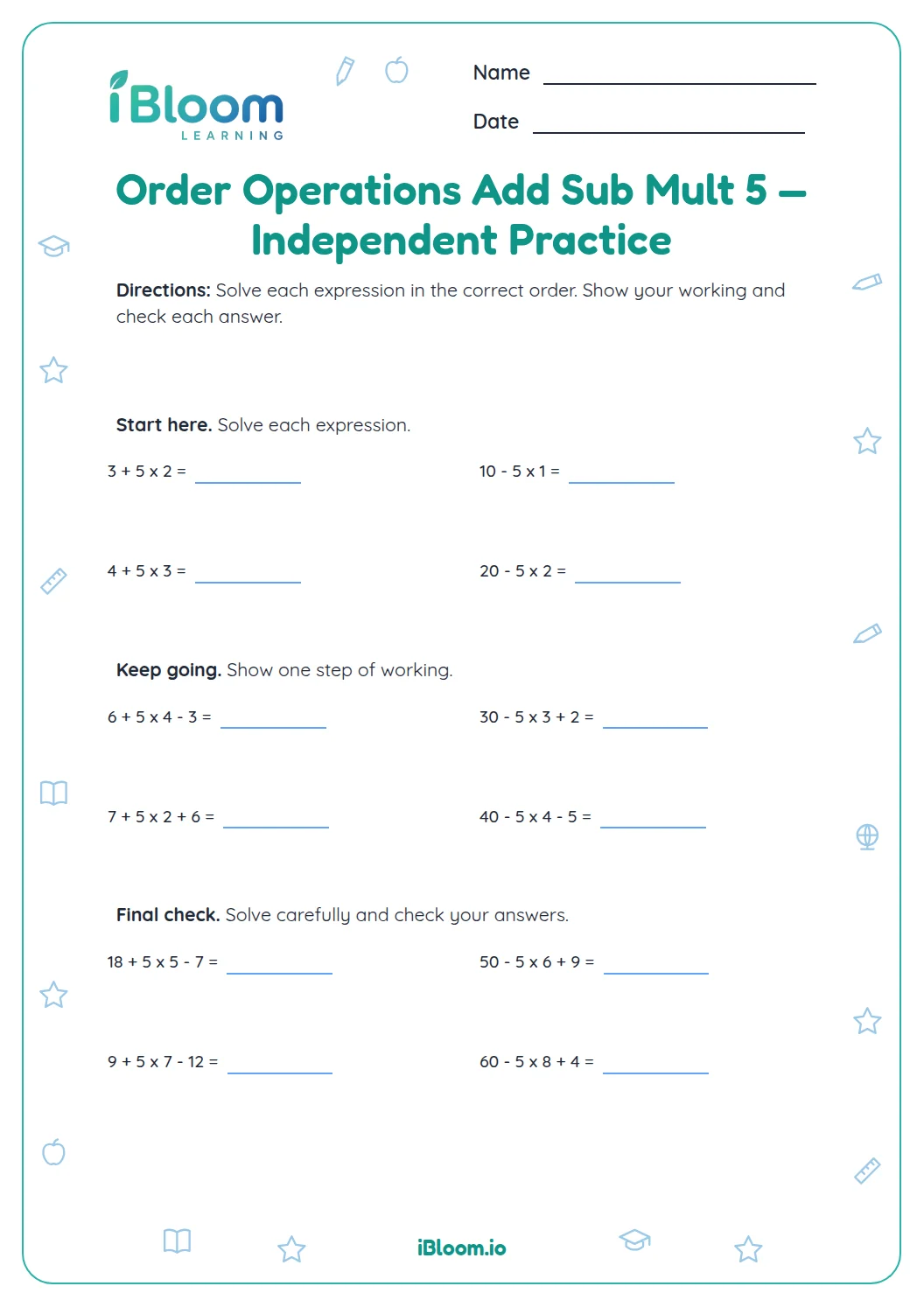
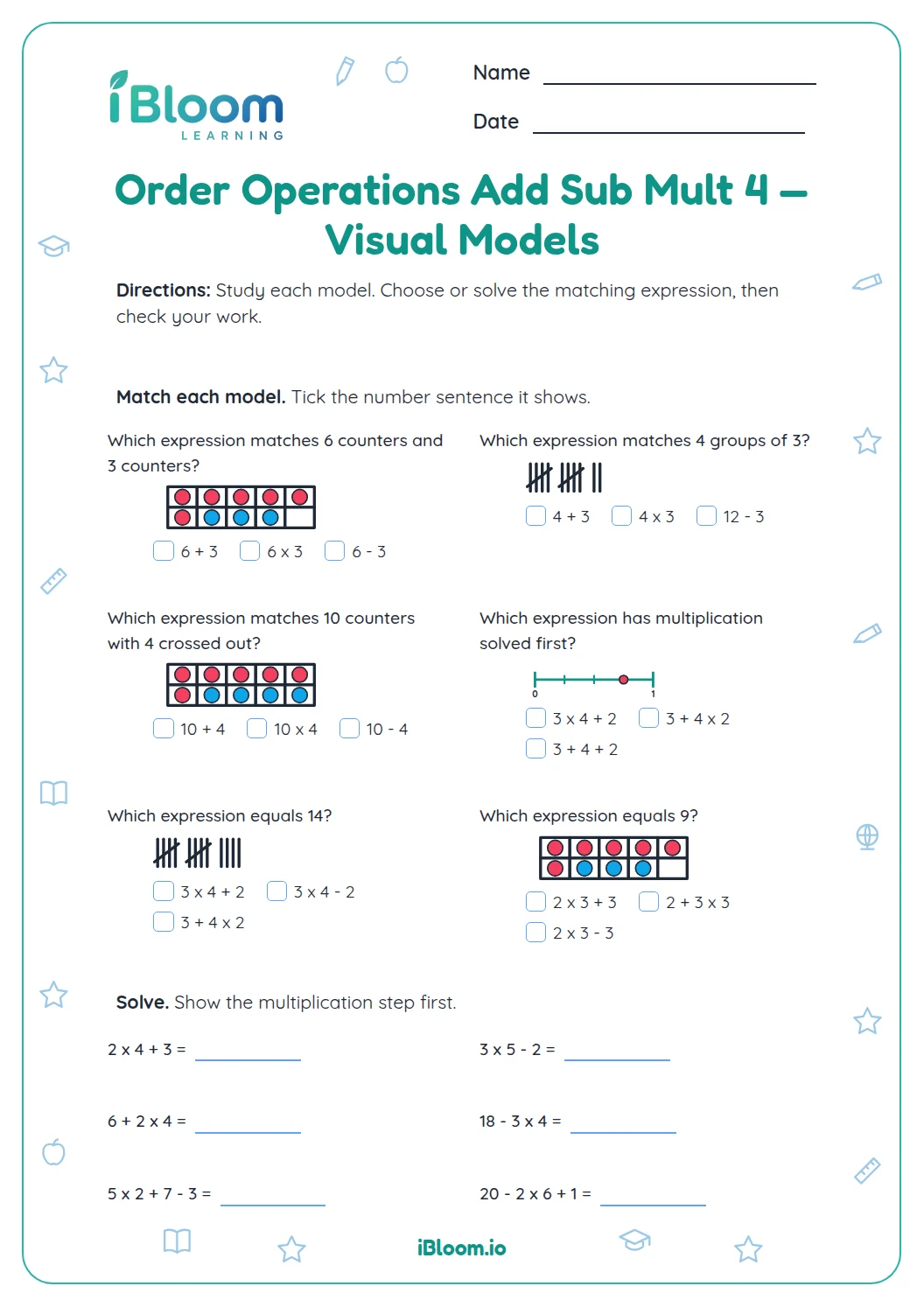
This Grade 3 independent-practice sheet focuses on reading and evaluating expressions with addition, subtraction, and multiplication. Children solve the multiplication part first, then complete the addition or subtraction, with products and final values kept manageable. Sixteen expressions build fluency without lengthy computation. The sheet practices the order-of-operations skill described in Common Core 5.OA.A.1 using simple expressions and a multiplication-first rule; a separate key shows each value.
Which operation comes first?
When multiplication appears with addition or subtraction in one expression, do the multiplication first. Then use the product to finish the expression. This rule helps everyone get the same value from the same expression.
How do you evaluate an expression?
Look for the multiplication, calculate that product, and then return to the remaining operation. Keep the original numbers and signs in view as you work.
- 14 + 3 × 5
- 23 × 5 = 15
- 34 + 15 = 19
How can you catch a skipped step?
Write the product as a separate step before adding or subtracting. If you add or subtract first, the expression may have a different value. The answer key shows the value for each item.
How to use this worksheet
- 1Copy the expression accurately.
- 2Find the multiplication and calculate its product.
- 3Replace the multiplication part with that product.
- 4Complete the remaining addition or subtraction.
- 5Compare your value with the key and redo any missed product.
Common mistakes and quick fixes
The mistake
Adding from left to right without checking for multiplication.
The fix
Mark the multiplication sign and find that product first.
The mistake
Subtracting the product from the wrong number.
The fix
Rewrite the expression with the product in the same place before finishing.
The mistake
Dropping a sign while copying.
The fix
Read the original expression again before computing the last step.
What to practice next
Make more practice
Questions parents and teachers ask
What does “multiply first” mean?
It means calculate the multiplication before doing the addition or subtraction in the same expression. In 4 + 3 × 5, first find 3 × 5, then add 4. The answer is 19. Writing the product first makes the intended order easy to see.
Does this sheet use parentheses?
No. The expressions use addition, subtraction, and multiplication without parentheses. The practice focuses on deciding to multiply before carrying out the remaining operation. These short whole-number expressions keep attention on the operation order. These short whole-number expressions keep attention on the operation order.
How many expressions are included?
There are 16 expressions in the worksheet. Each asks for one value, and the separate key lists all 16 answers. The key lists one value for each expression so children can check their steps. The key lists one value for each expression so children can check their steps.
Can I use a multiplication chart?
A multiplication chart can support a child who is still building fact fluency. The main goal here is to notice the order: determine the product first, then add or subtract. Ask the learner to explain why multiplication is done before the last step.
Why do two people need the same order rule?
A shared rule means an expression has one agreed value. If someone works strictly from left to right, they may add or subtract before multiplying and get a different result. Writing the product first makes the intended order easy to see.
What should a child write to show the steps?
Write the multiplication fact and its product first, then show the remaining addition or subtraction. For question 1, the steps are 3 × 5 = 15 and 4 + 15 = 19. These short whole-number expressions keep attention on the operation order.