



About this worksheet
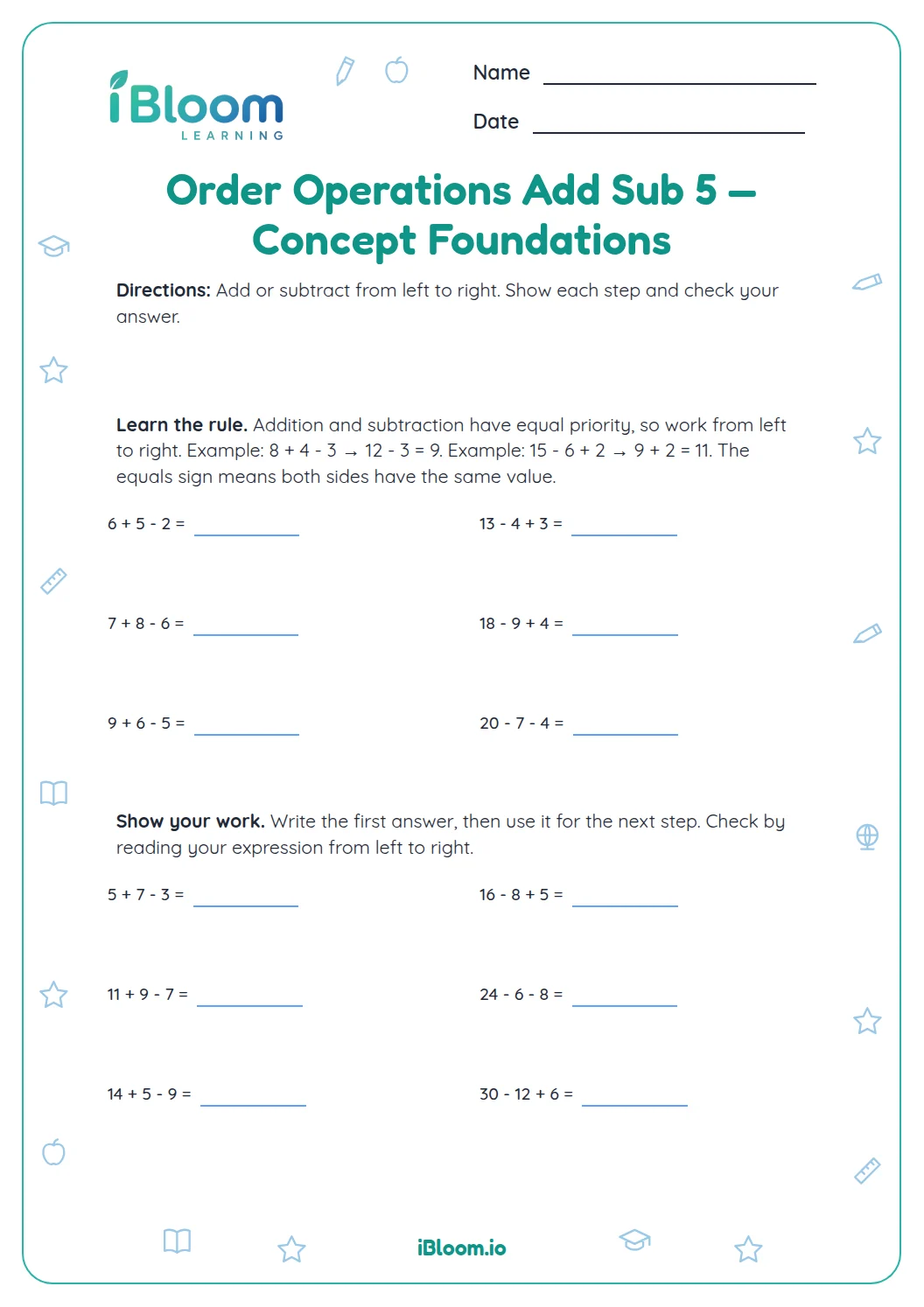
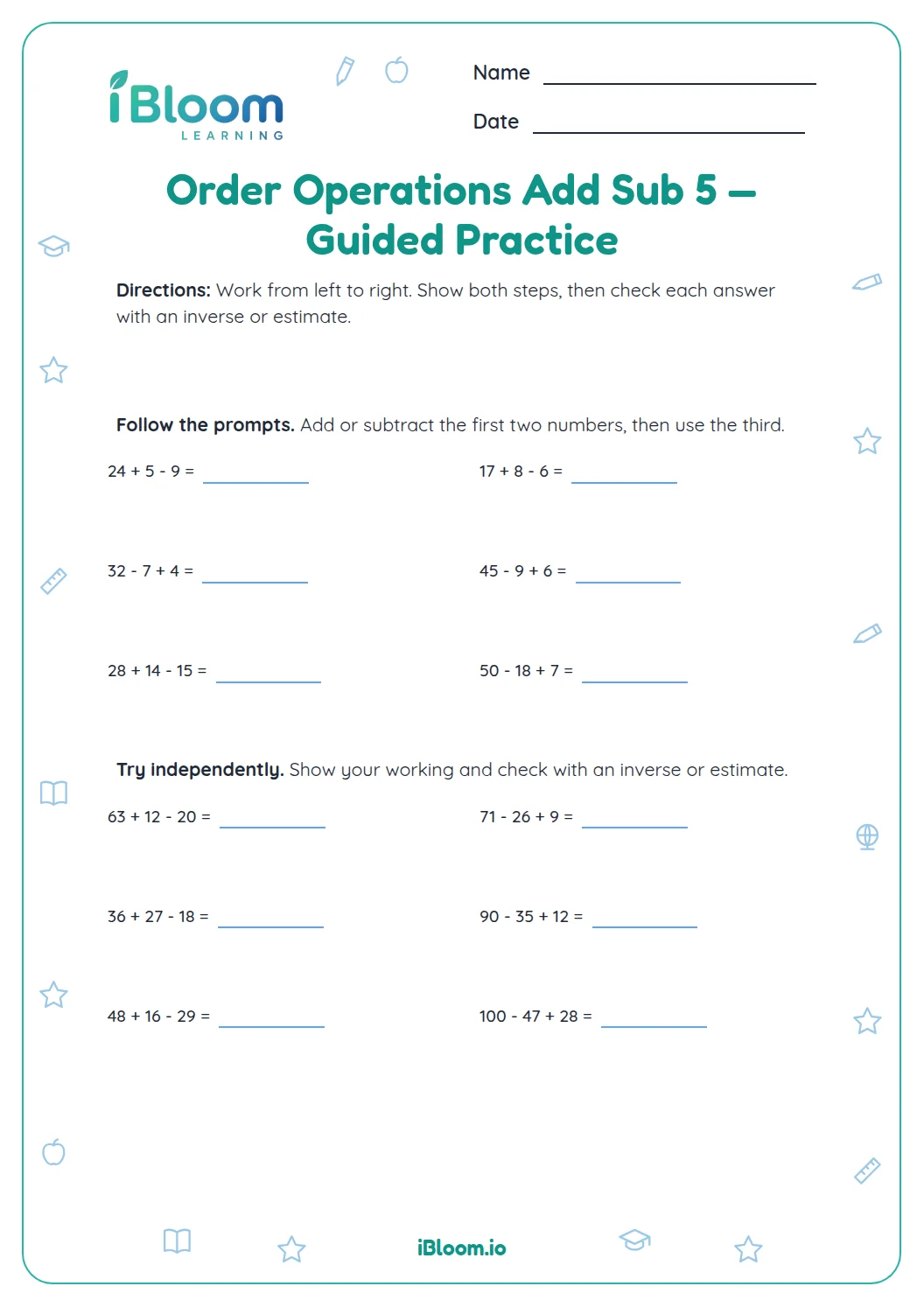
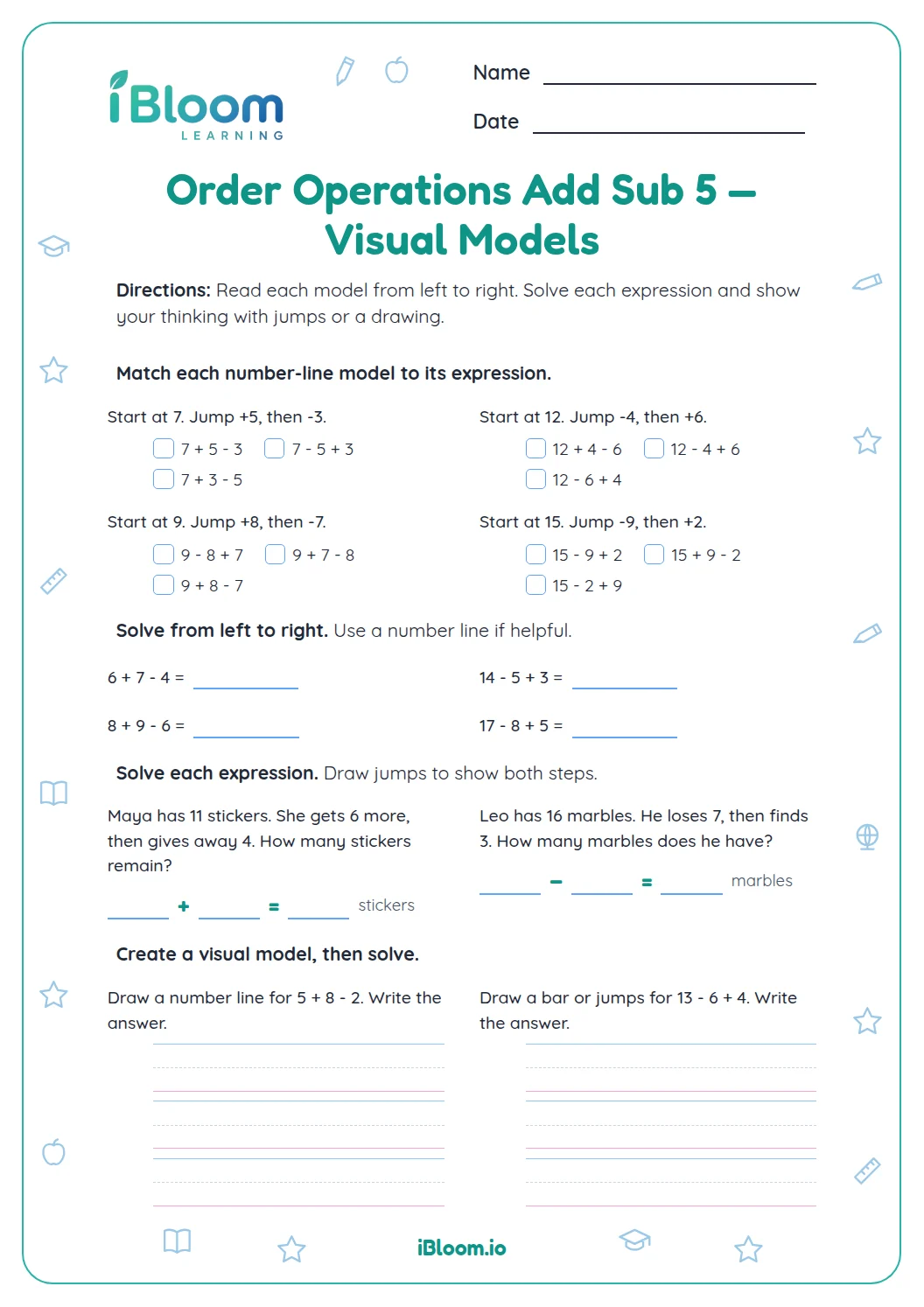
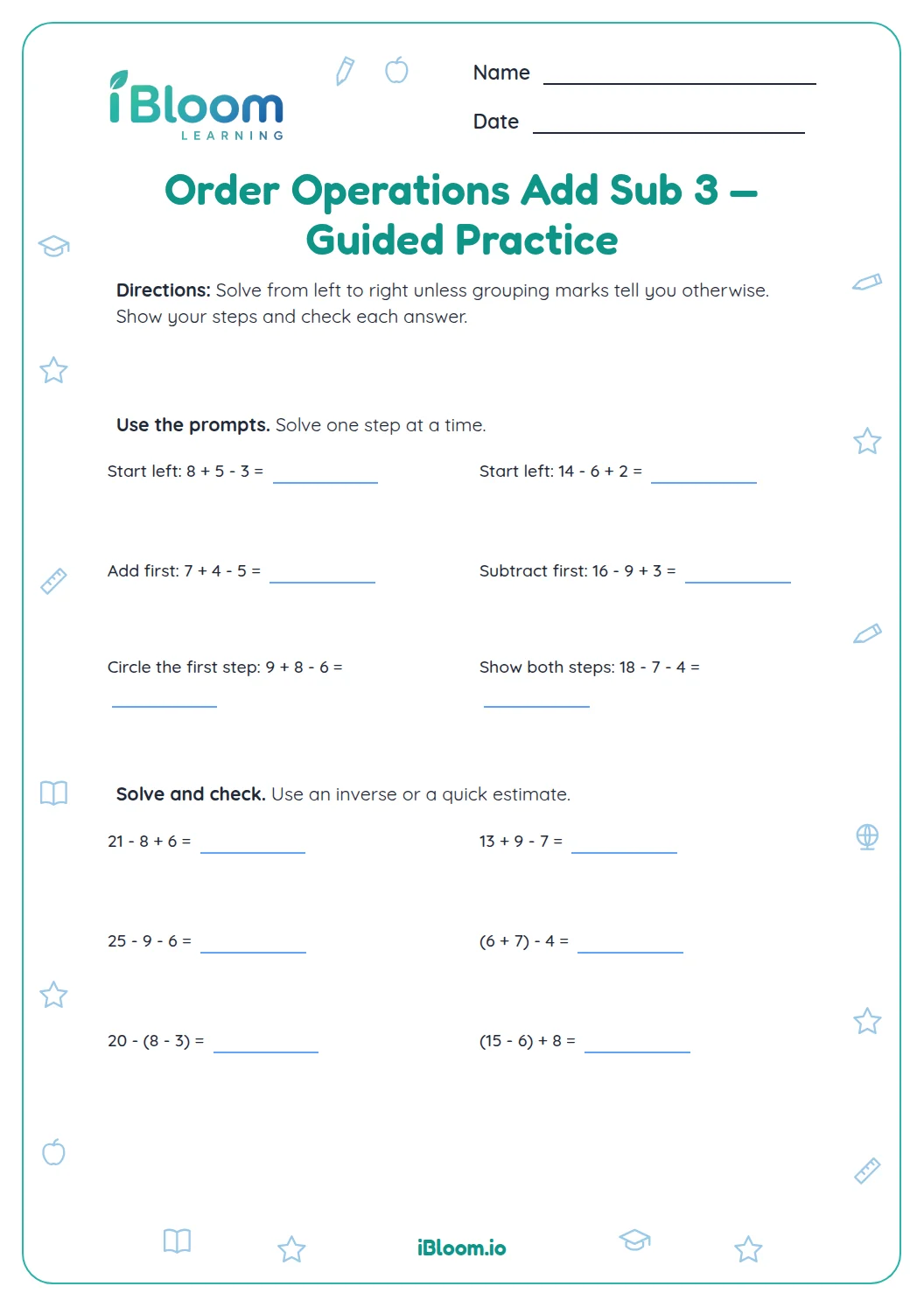
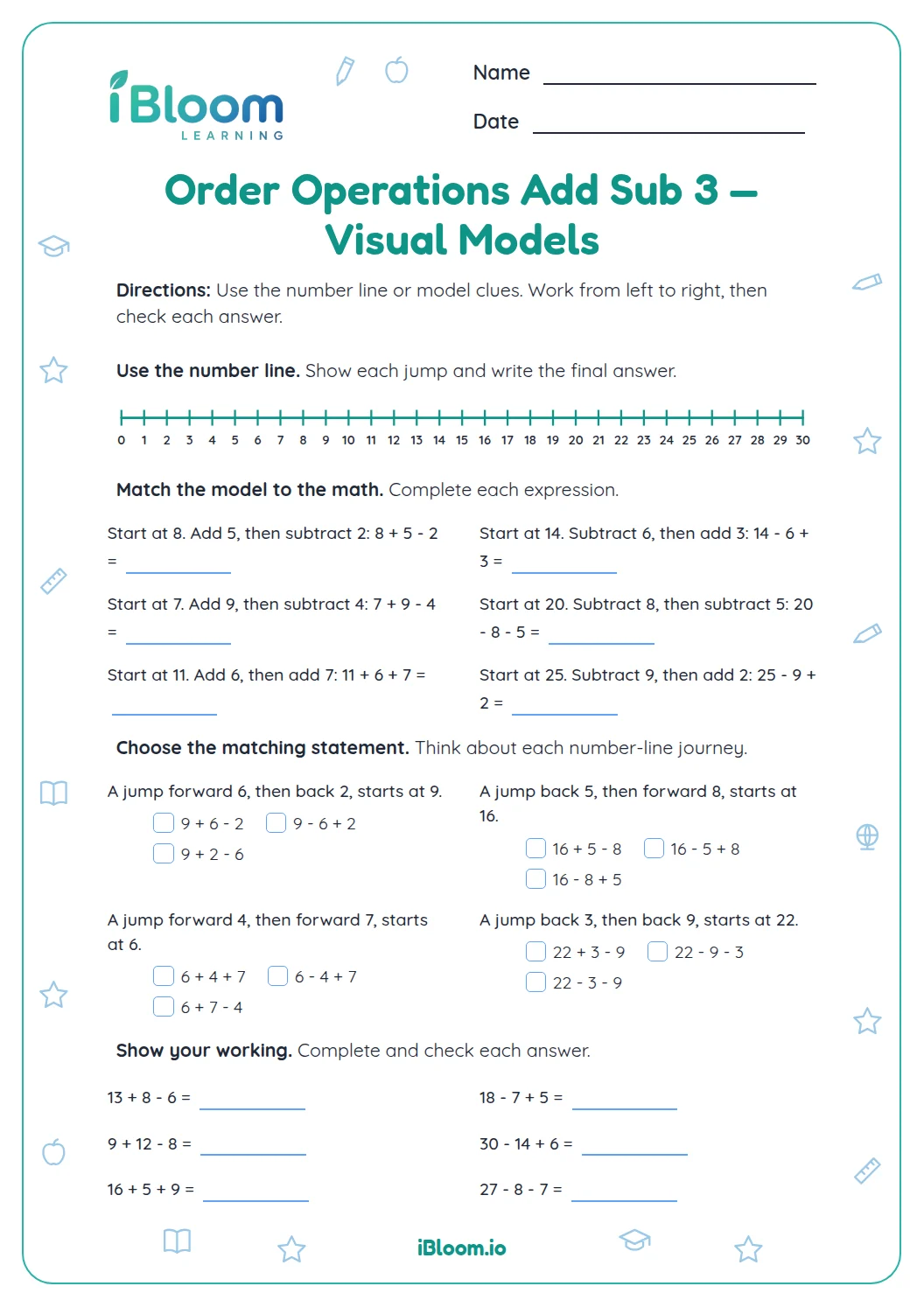
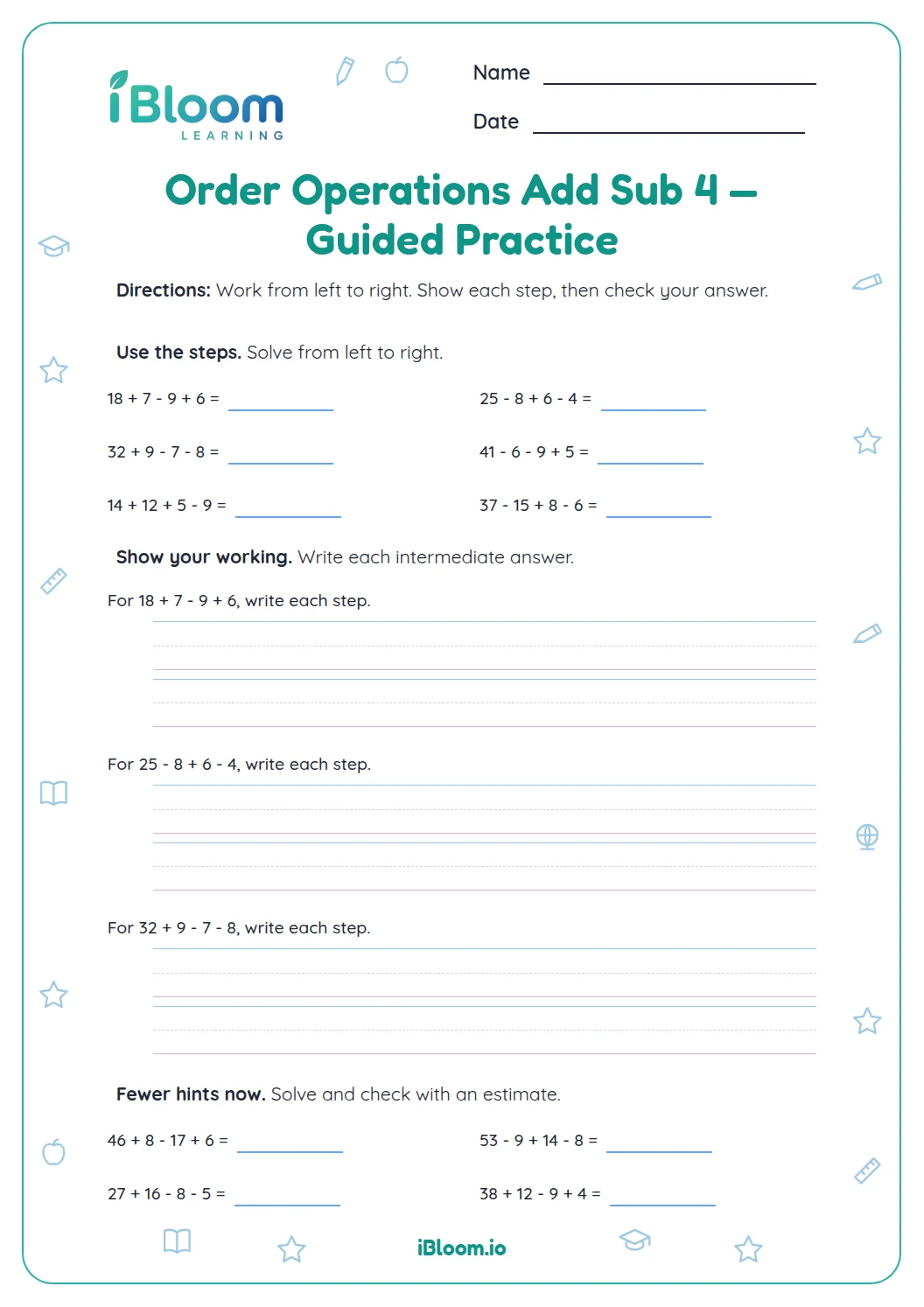
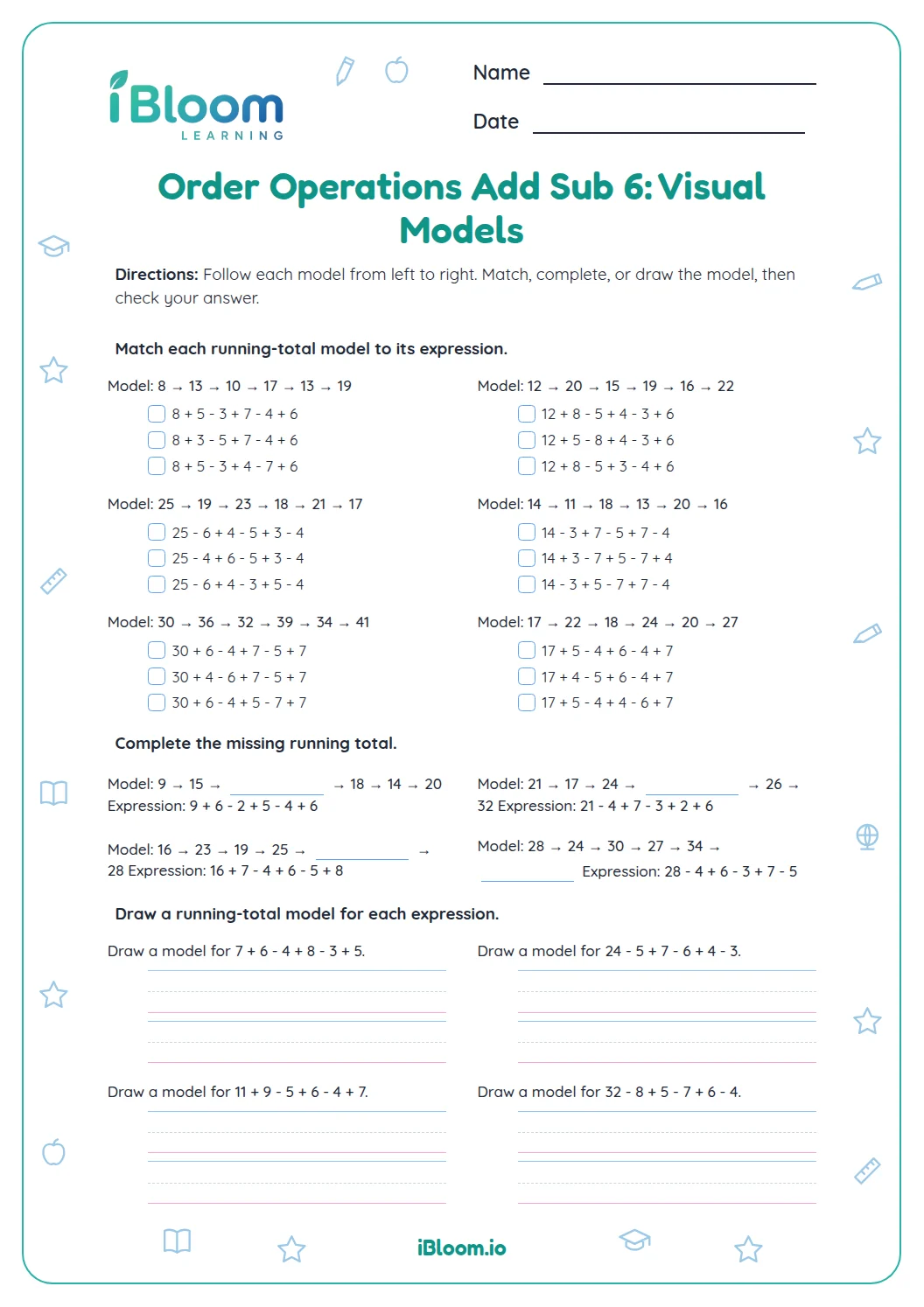
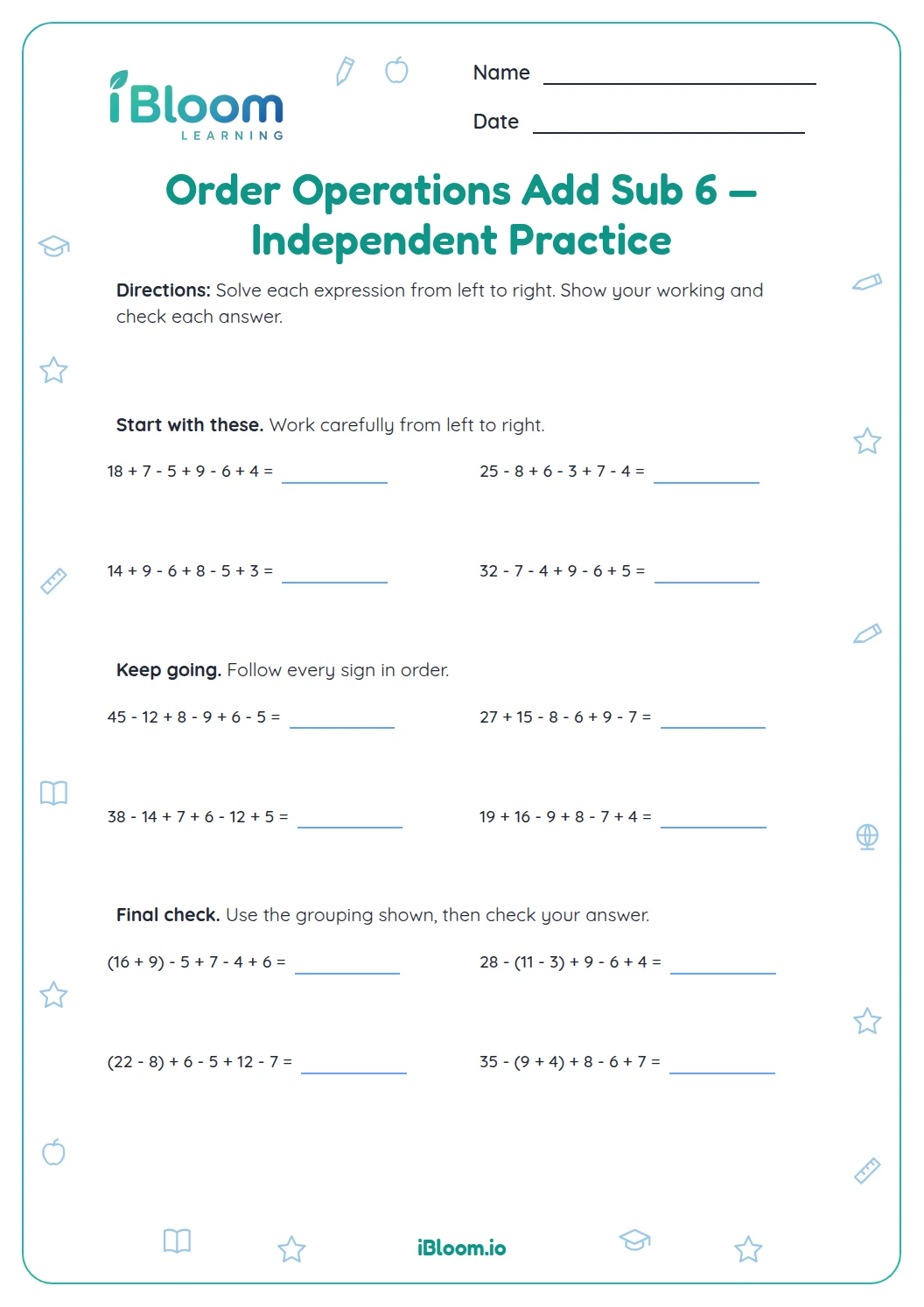
This Grade 3 worksheet practices evaluating expressions with addition and subtraction from left to right. The 16 problems move from shorter expressions to longer chains of operations, matching the method shown on the original practice sheet. Students keep track of each intermediate result instead of combining later numbers first. The answer key gives a result for every expression.
How do the first problems work?
Each expression uses addition and subtraction. Start with the first two numbers, complete that operation, and carry the result to the next operation.
How do you evaluate a longer expression?
For 18 + 7 − 6 + 4, work from left to right: 18 + 7 = 25, 25 − 6 = 19, and 19 + 4 = 23.
How can students check each result?
Record intermediate results so the sequence stays clear. Substitute the final answer into the expression by repeating the operations in order.
A left-to-right routine
- 1Begin with the first two numbers and their operation.
- 2Find that sum or difference.
- 3Use the result with the next number and operation.
- 4Continue until the expression ends.
- 5Check the steps in the same order.
Common calculation slips
The mistake
Combining the last two numbers before the first operation.
The fix
Begin at the left and carry each result forward.
The mistake
Dropping an intermediate result.
The fix
Write each sum or difference before continuing.
The mistake
Changing subtraction into addition.
The fix
Keep the operation sign shown at each step.
What to practice next
Questions parents and teachers ask
What does “from left to right” mean?
Start with the first two numbers and complete their operation. Then use that result with the next number and continue in order until the expression is finished. For example, in 18 + 7 − 6 + 4, calculate 18 + 7 first. Writing each intermediate result makes the operation sequence visible and easier to check against the original expression.
How many problems are on the page?
There are 16 addition and subtraction expressions. The first group has shorter expressions, the middle group adds another step, and the final group gives students longer expressions to evaluate carefully. Writing each intermediate result makes the operation sequence visible and easier to check against the original expression.
Should students write intermediate answers?
Yes. Writing each result helps keep the order clear and makes it easier to find an arithmetic slip. The worksheet directions ask students to show their steps throughout the practice. Writing each intermediate result makes the operation sequence visible and easier to check against the original expression.
What operations are used?
Every expression uses addition and subtraction. Students practice keeping the operations in their written order as they move from one step to the next. Writing each intermediate result makes the operation sequence visible and easier to check against the original expression.
How can a student check an answer?
Repeat the expression from the left, recording each intermediate result. If the same sequence leads to the keyed answer, the final result is consistent with the expression. Writing each intermediate result makes the operation sequence visible and easier to check against the original expression.
What skill does this practice build?
Students practice keeping track of several addition and subtraction steps and evaluating each expression from left to right. This sheet offers a sequence of increasingly longer calculations for that purpose. Writing each intermediate result makes the operation sequence visible and easier to check against the original expression.