



About this worksheet
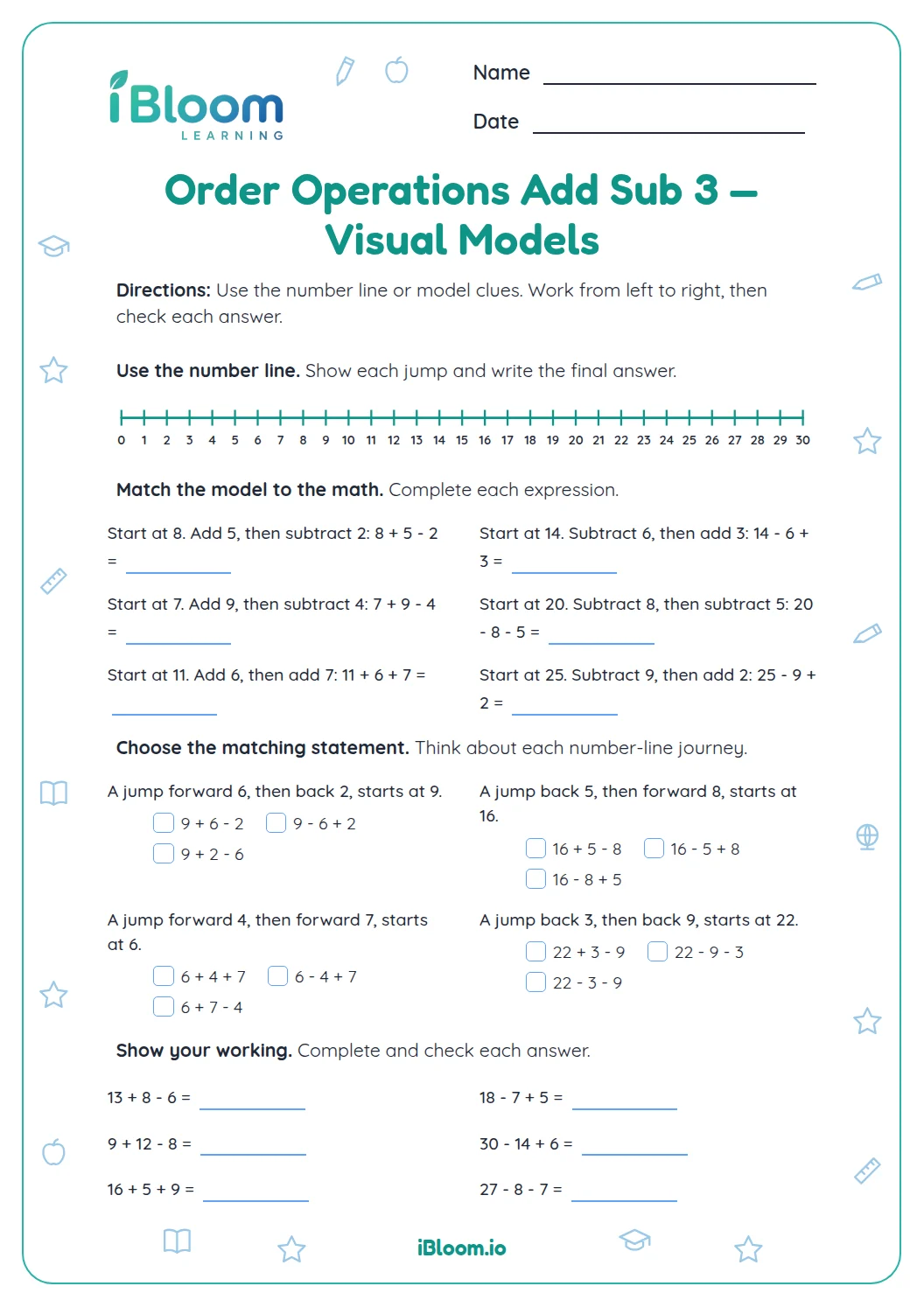
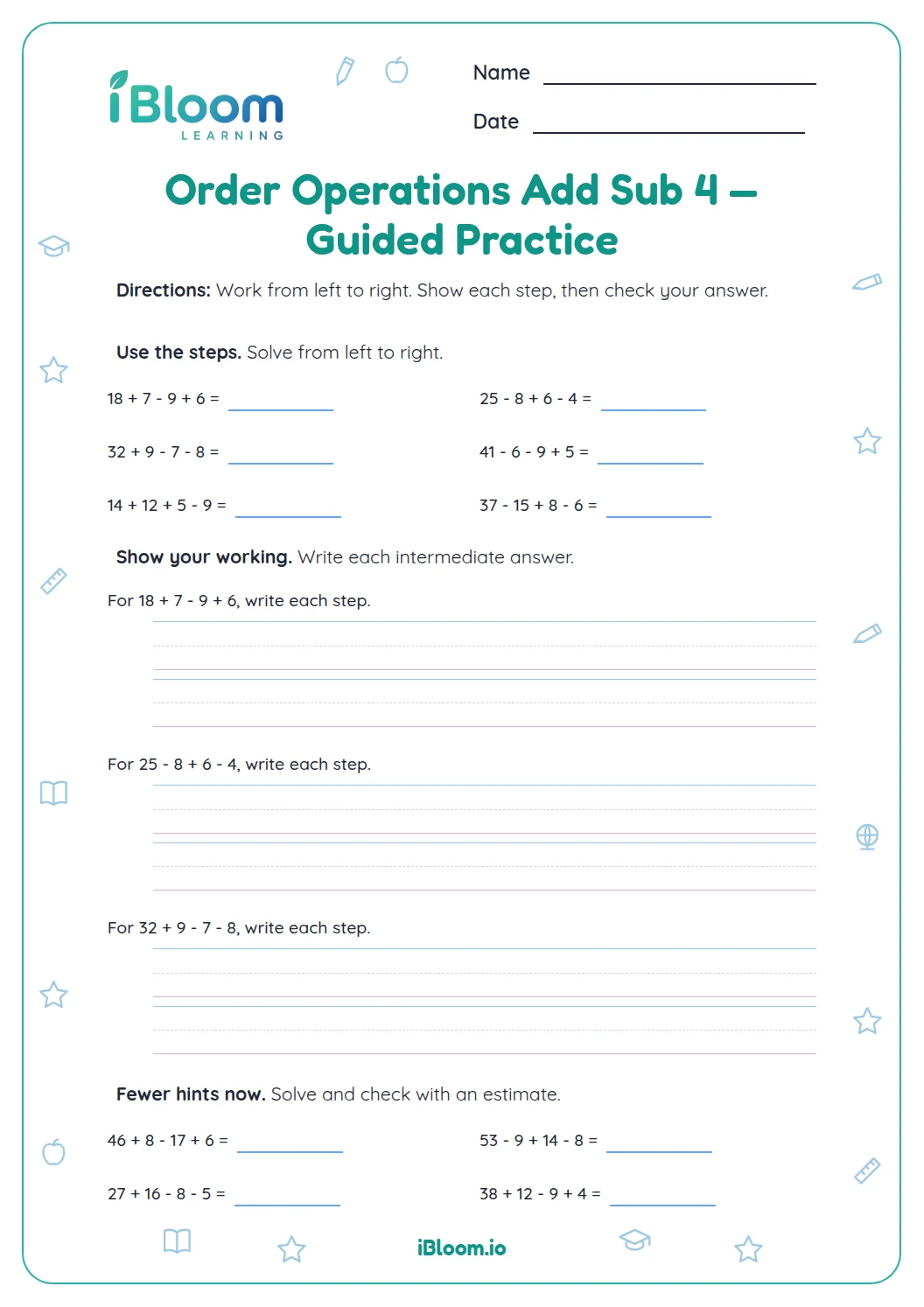
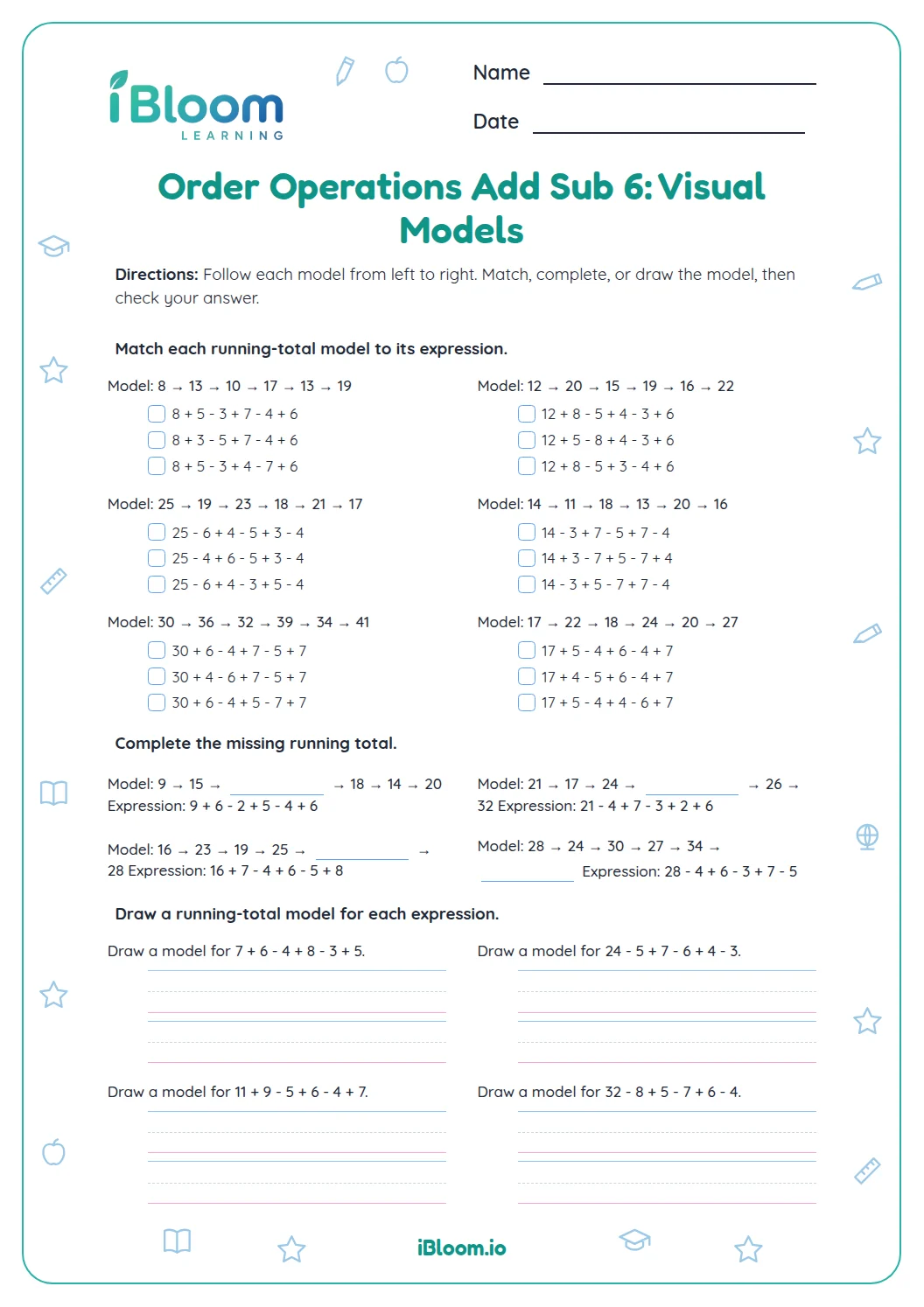
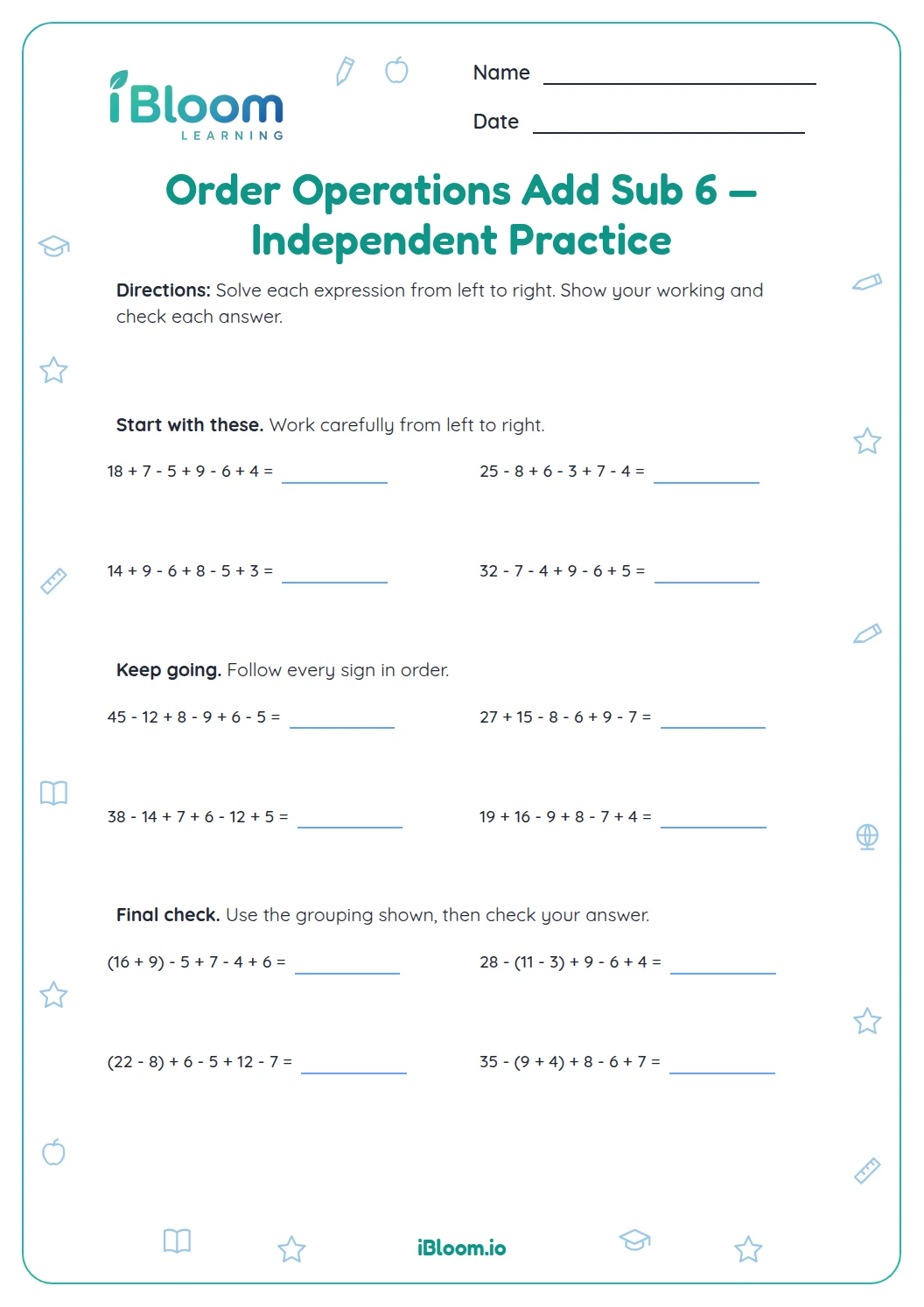
This printable Grade 3 worksheet uses 16 real-world problems to practice following a sequence of addition and subtraction changes. Students write and solve equations for stories about tickets, beads, books, cans, apples, and points, then select matching expressions and check results for reasonableness. A separate answer key is included. The practice connects to CCSS 3.OA.D.8 and the standard’s direction to use the conventional order of operations when no parentheses are shown.
Aligned to 3.OA.D.8
How do you keep track of several changes?
Start with the first amount, then follow each change in the order it happens. Addition increases the amount; subtraction decreases it. Record the operations in the same order as the story.
Question 1 adds the morning ticket sales and the later sales: 24 + 18 + 15 + 12 = 69 tickets.
- 124 red + 18 blue = 42 tickets
- 242 − 15 used = 27
- 327 tickets remain
What does “in order” mean for addition and subtraction?
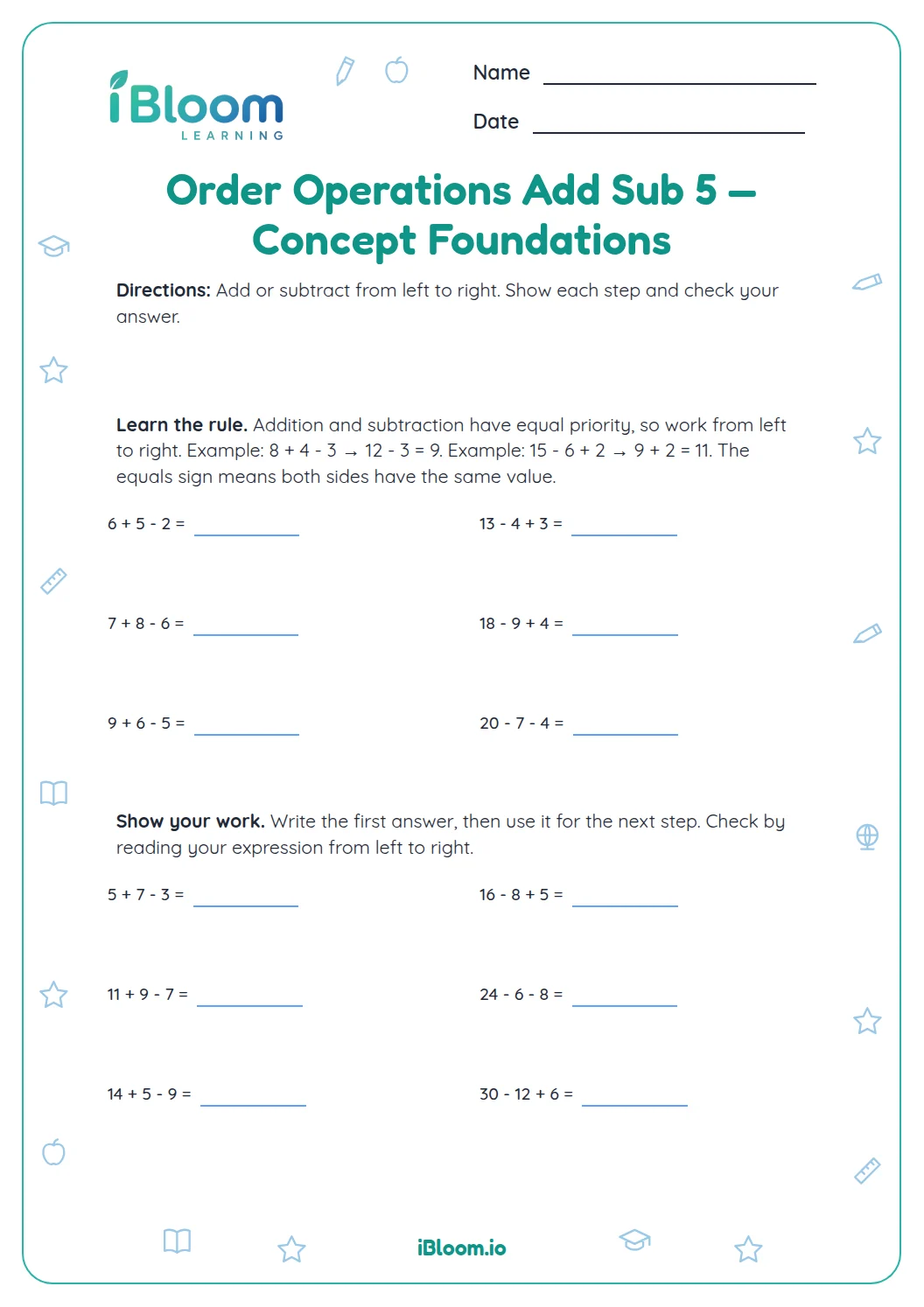
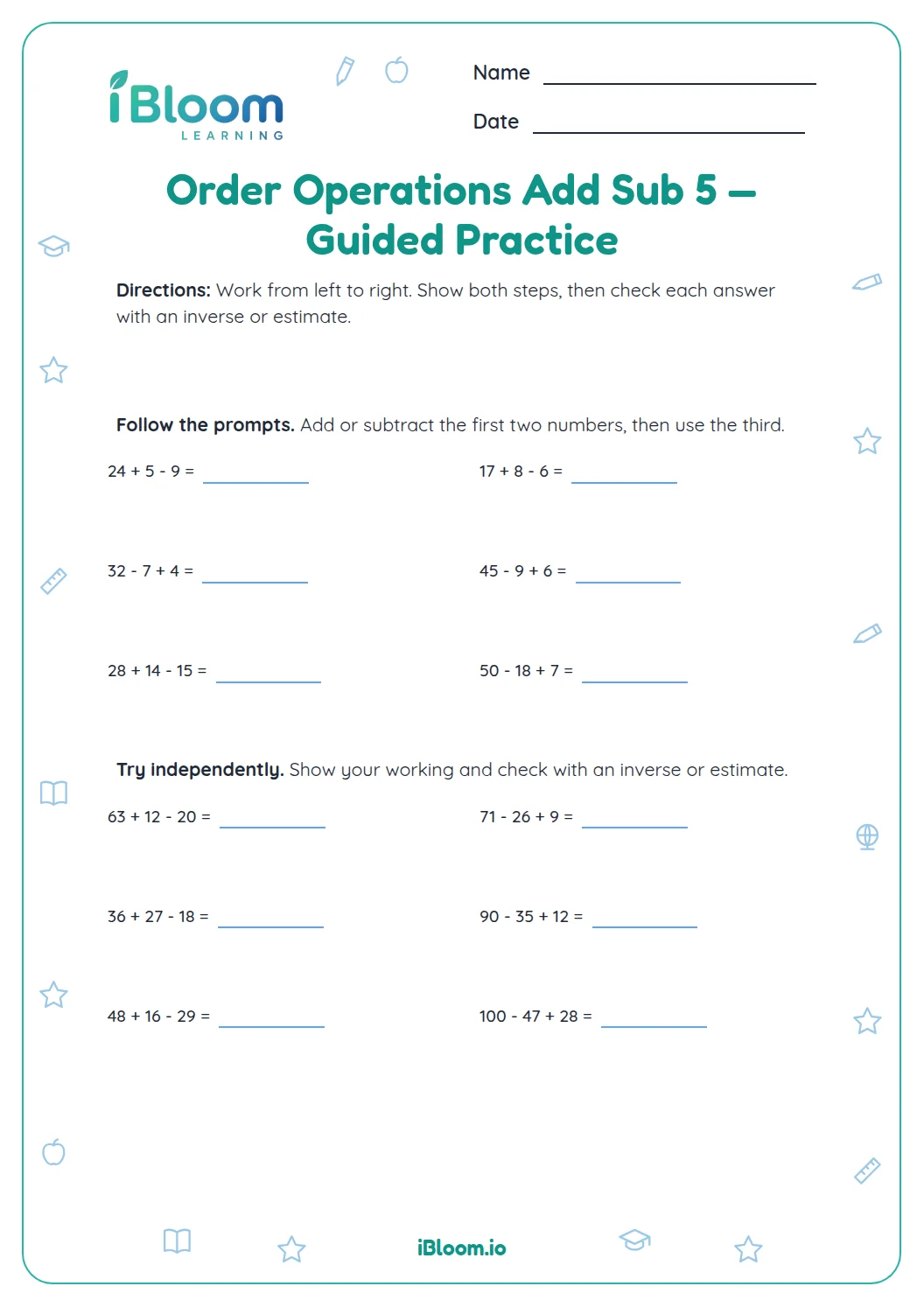
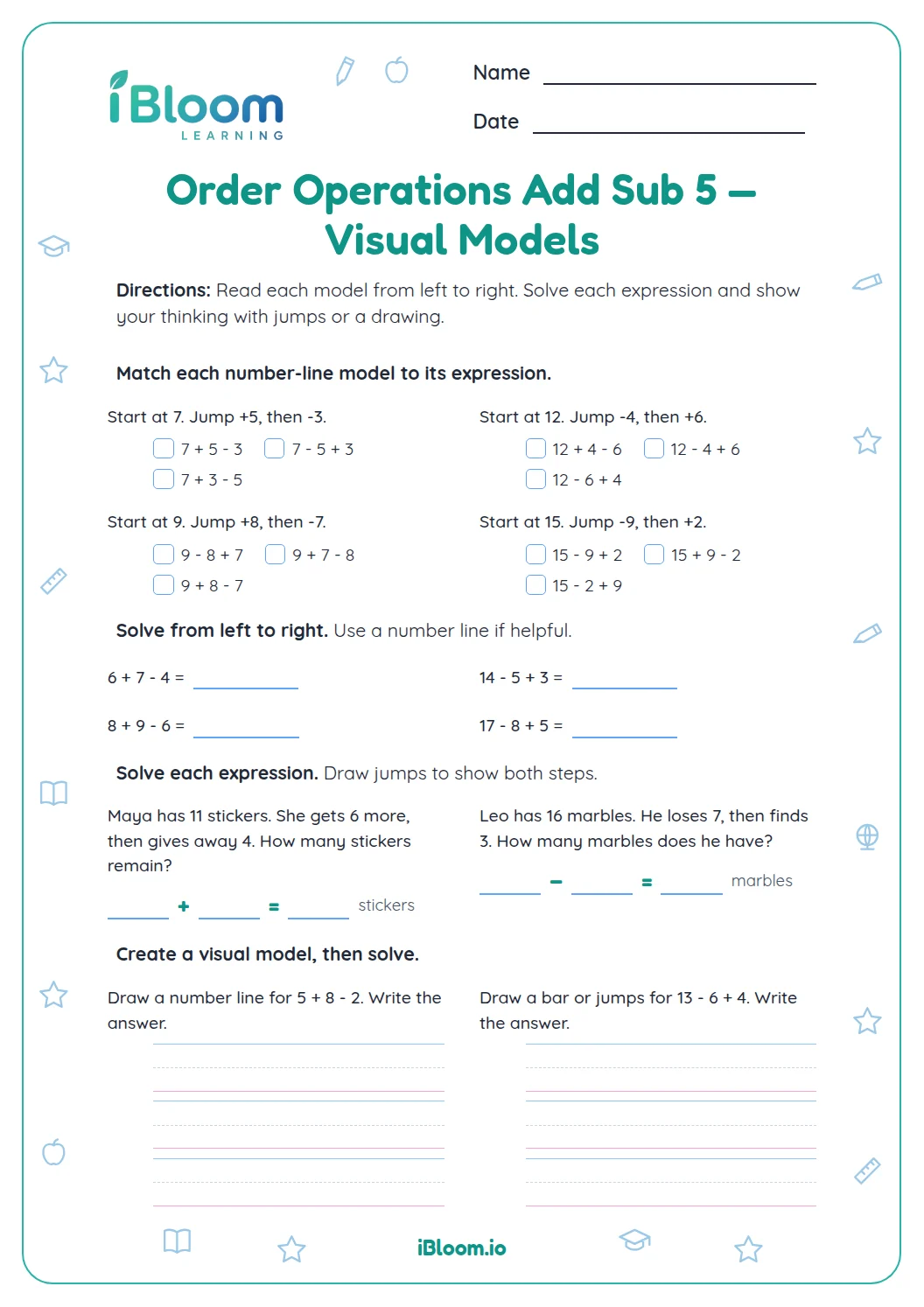
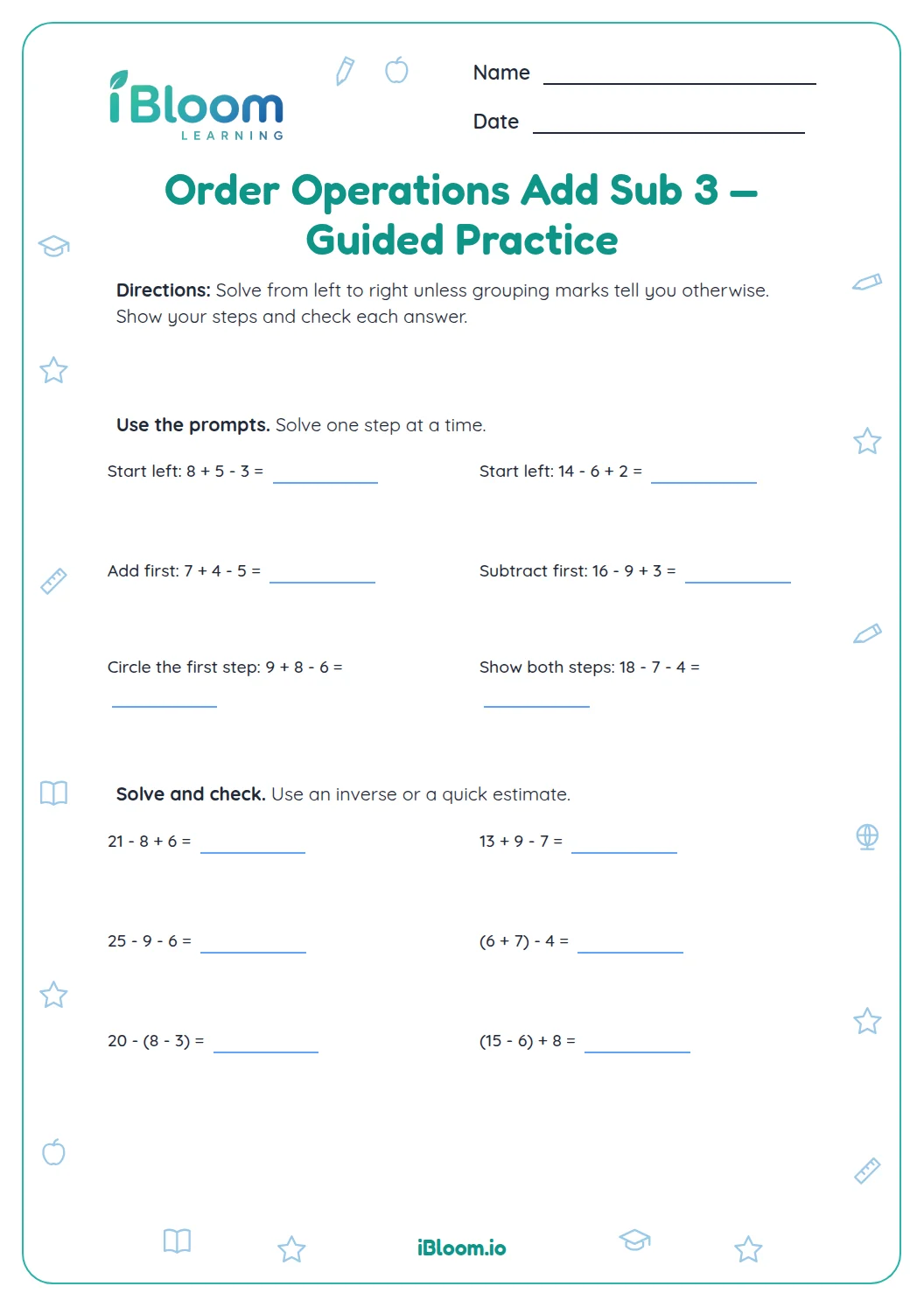
Addition and subtraction have equal precedence, so without parentheses work from left to right. Follow the story’s changes one at a time and keep the running total.
How can you check the final amount?
Estimate before calculating, then ask whether the final amount fits the story. For a story with items used and added back, subtract the items used and add the items received.
How to use this worksheet
- 1Mark each amount that increases or decreases the starting total.
- 2Write plus for an amount added and minus for an amount removed.
- 3Keep the operations in the order described.
- 4Calculate one step at a time and track the running total.
- 5Estimate the result and compare it with the answer key.
Common mistakes and quick fixes
The mistake
Changing the story order when writing the expression.
The fix
Copy each event from first to last before calculating.
The mistake
Adding an amount that was used or removed.
The fix
Ask whether the story amount goes into the total or leaves it.
The mistake
Doing every addition before subtraction.
The fix
For addition and subtraction at the same level, work from left to right unless parentheses say otherwise.
Common Core alignment
Follow addition and subtraction changes in order in real-world problems.
On this sheet: Follow addition and subtraction changes in order in real-world problems
Show the official wordingHide the official wording
Solve two-step word problems using the four operations. Represent these problems using equations with a letter standing for the unknown quantity. Assess the reasonableness of answers using mental computation and estimation strategies including rounding.
What to practice next
Make more practice
Further reading
Questions parents and teachers ask
What does “in order” mean for addition and subtraction?
When an expression uses only addition and subtraction, work from left to right. Keep each operation attached to its sign, and update the starting amount one change at a time. The worksheet uses this approach in both stories and number expressions.
How many questions are on the worksheet?
There are 16 questions across two worksheet pages, followed by two answer-key pages. Six questions are two-step stories, five are five-term addition and subtraction expressions, and five ask students to match or check an expression or result. Use the separate key to review the reasoning and result.
How can a student translate a story into an expression?
Start with the starting amount, then write a plus sign for each amount added and a minus sign for each amount removed or spent. For example, starting with 64, adding 18, subtracting 25, and adding 13 becomes 64 + 18 − 25 + 13.
Do students need parentheses for these expressions?
The expressions use addition and subtraction, which have equal precedence, so the intended routine is to calculate from left to right. Students can write each intermediate total to keep the sequence clear and avoid combining later changes out of order.
What is a useful way to check an answer?
Read the story again and compare the final amount with the changes. If the amount increases after something is used or removed, revisit the signs. For a number expression, recalculate from left to right and check each intermediate total. Use the separate key to review the reasoning and result.