





About this worksheet
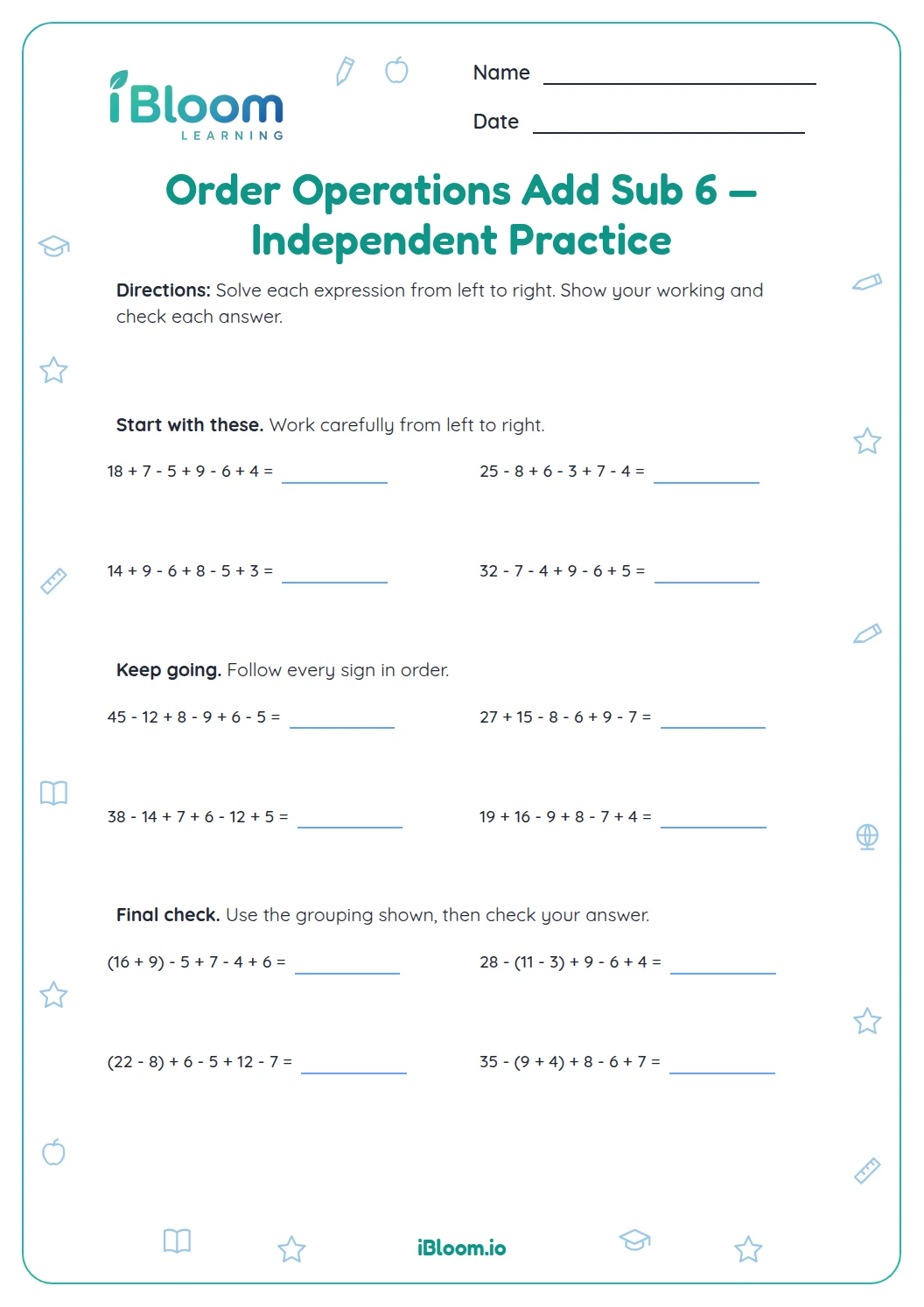
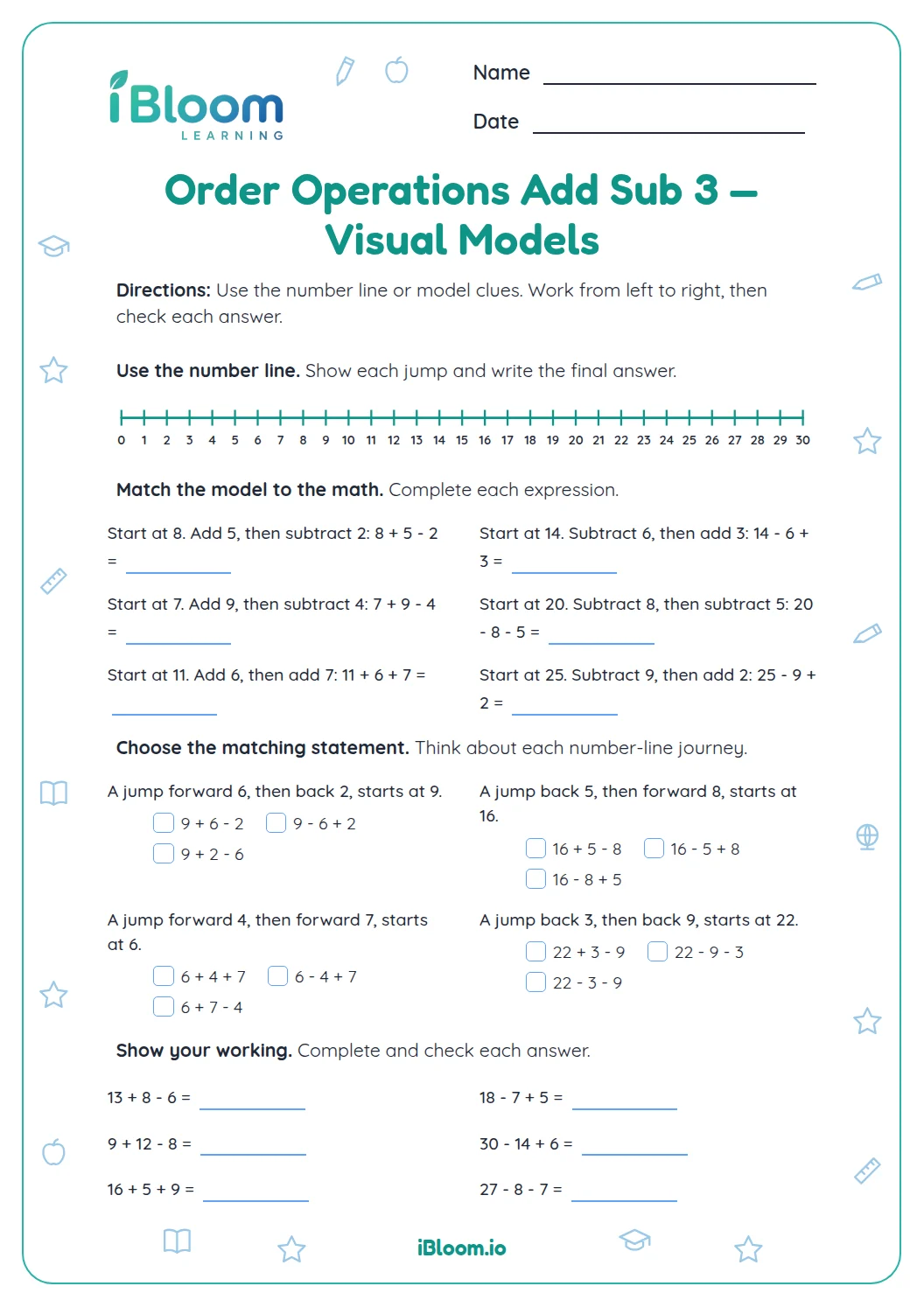
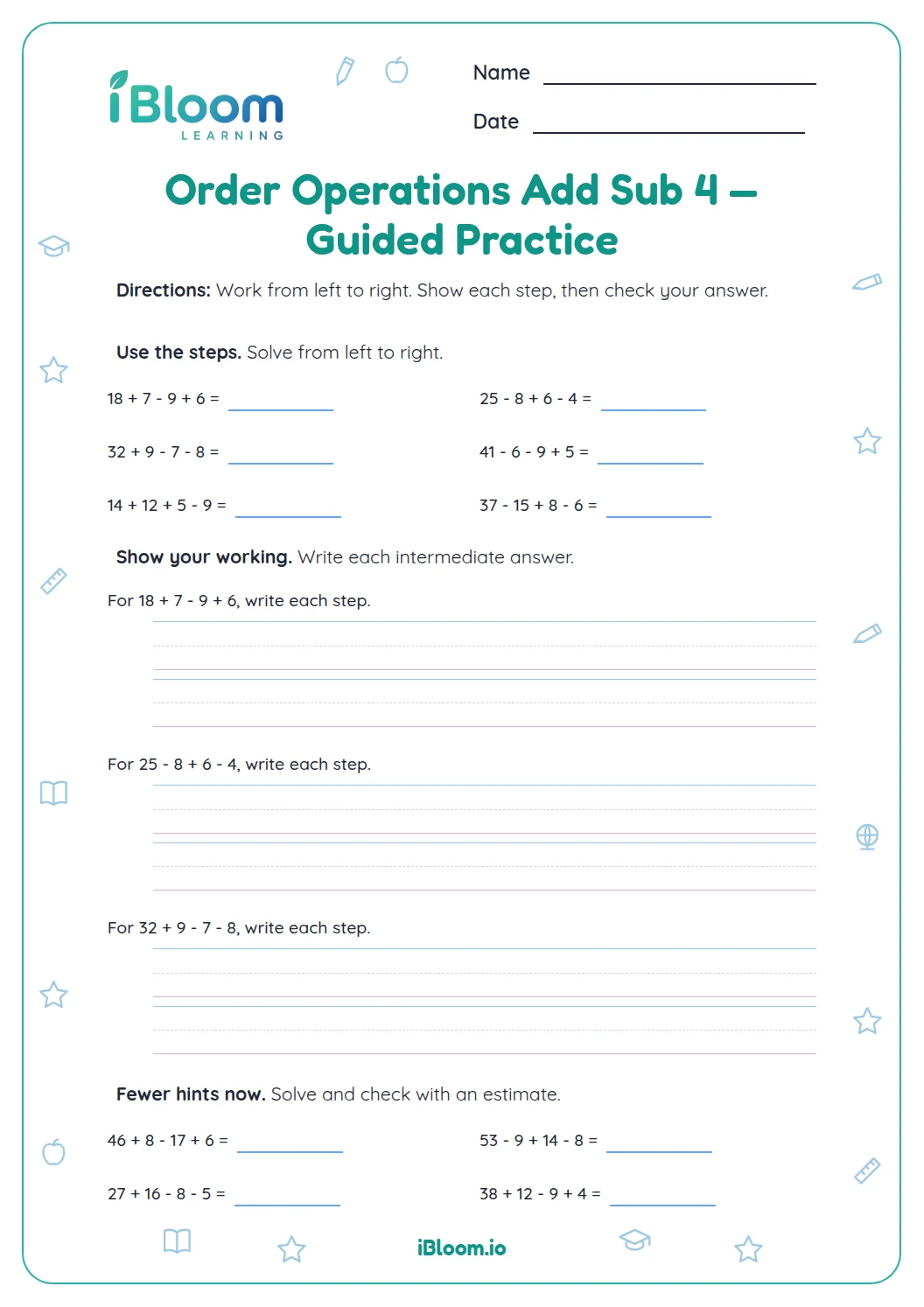
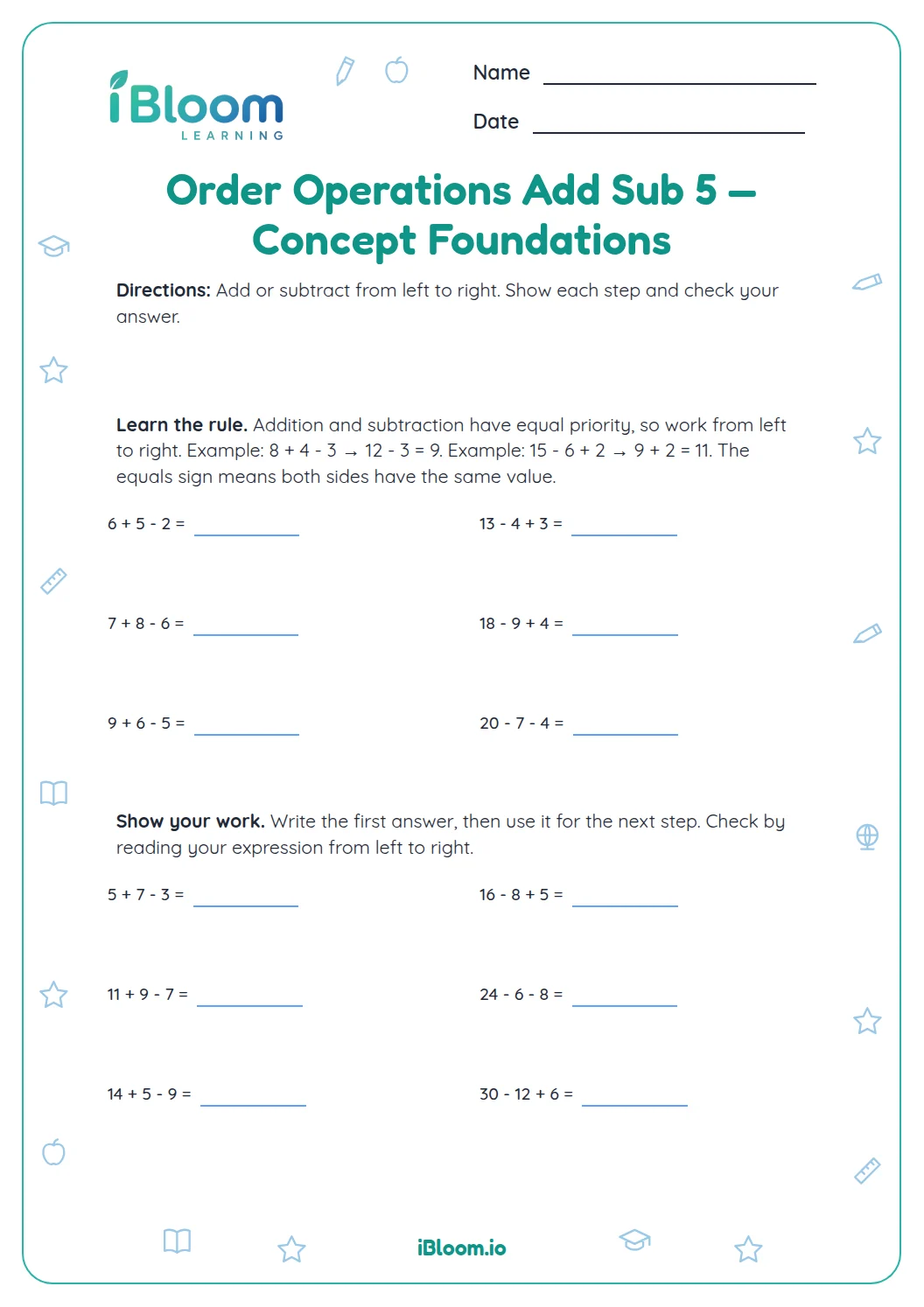
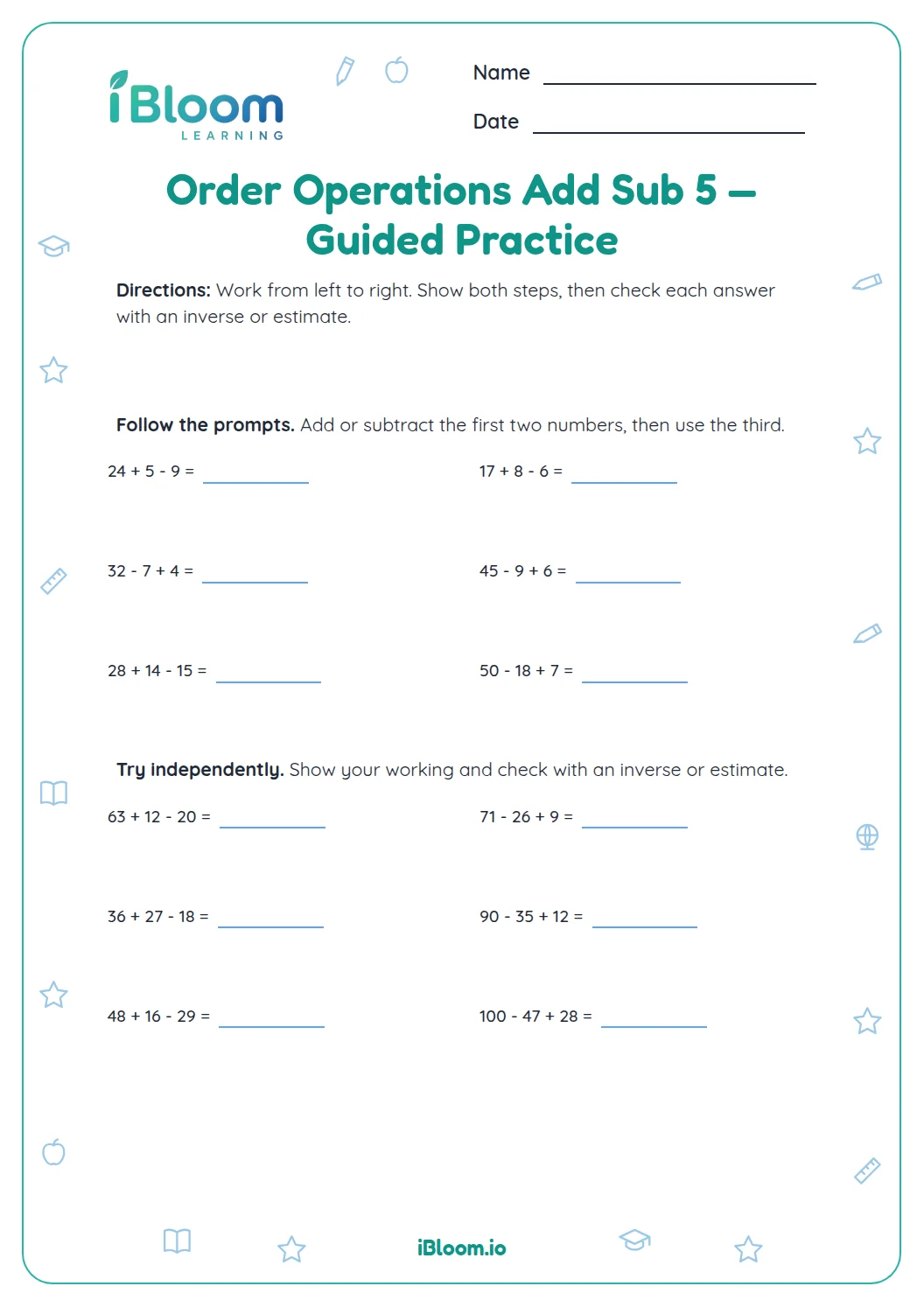
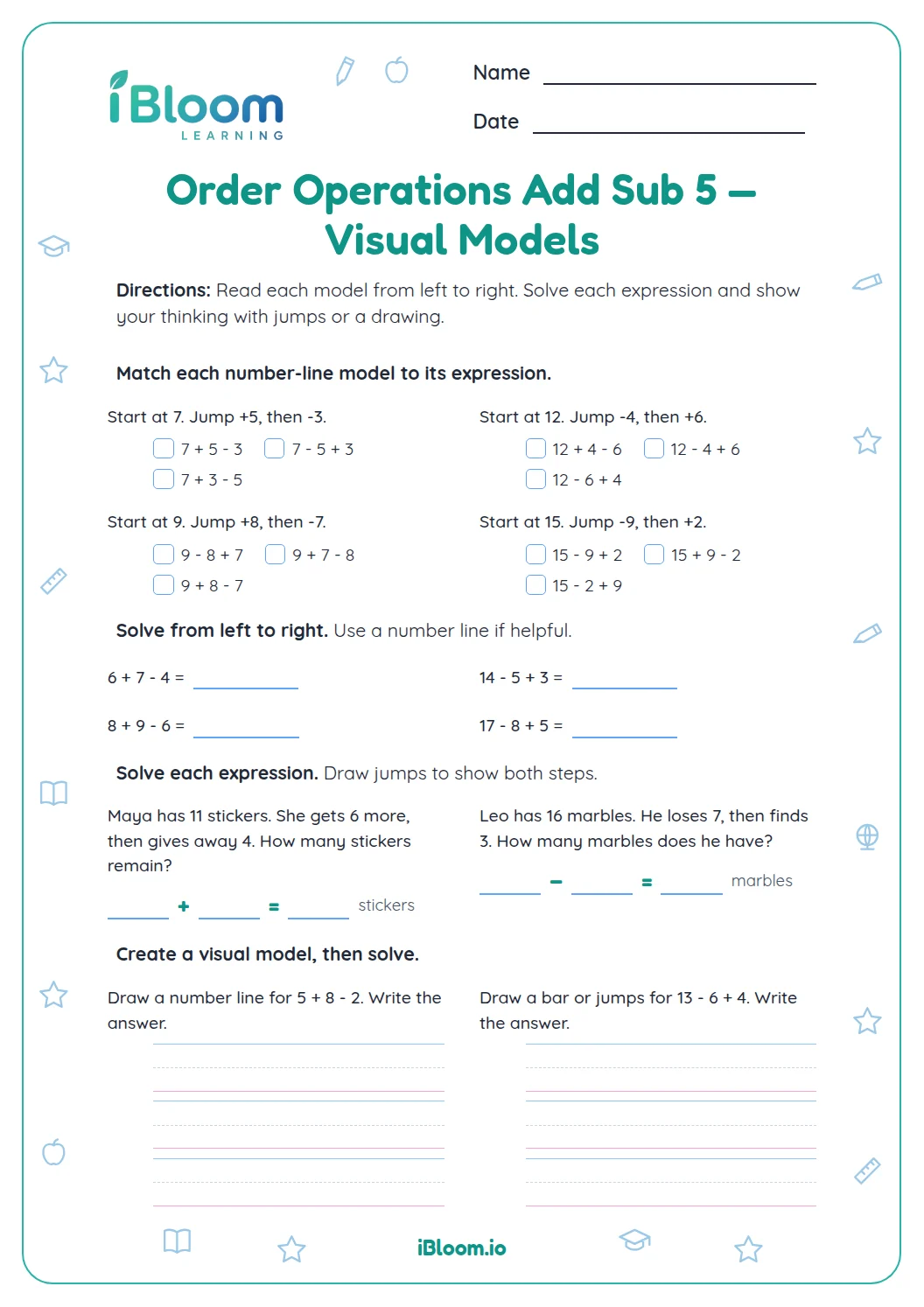
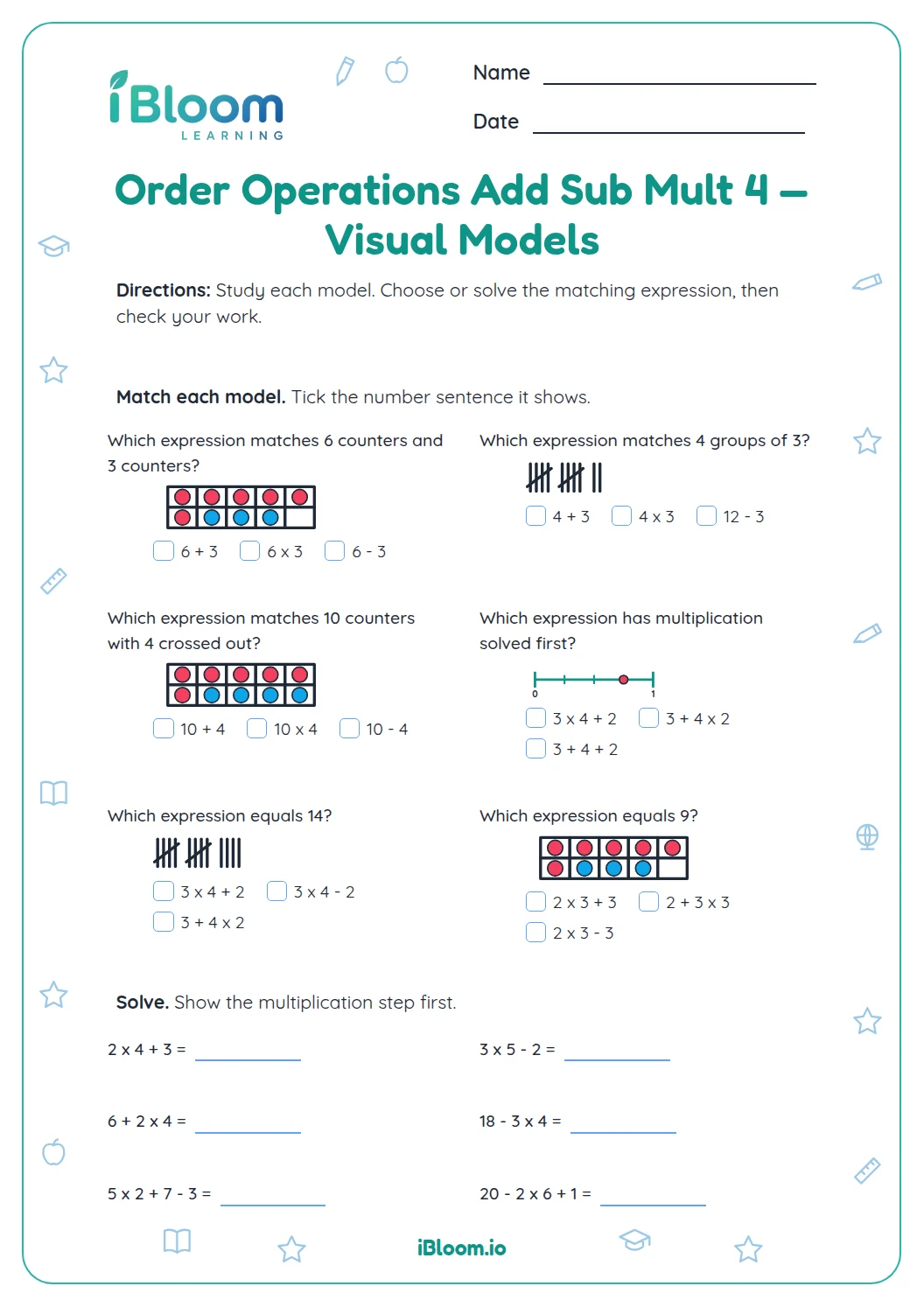
This Grade 3 printable worksheet practices evaluating addition and subtraction expressions from left to right, with parentheses handled first. Students solve 12 expressions and write running totals for two six-number expressions. Working space and a separate answer key support checking each step. The arithmetic connects with Common Core 3.NBT.A.2.
Aligned to 3.NBT.A.2
What practice is on this worksheet?
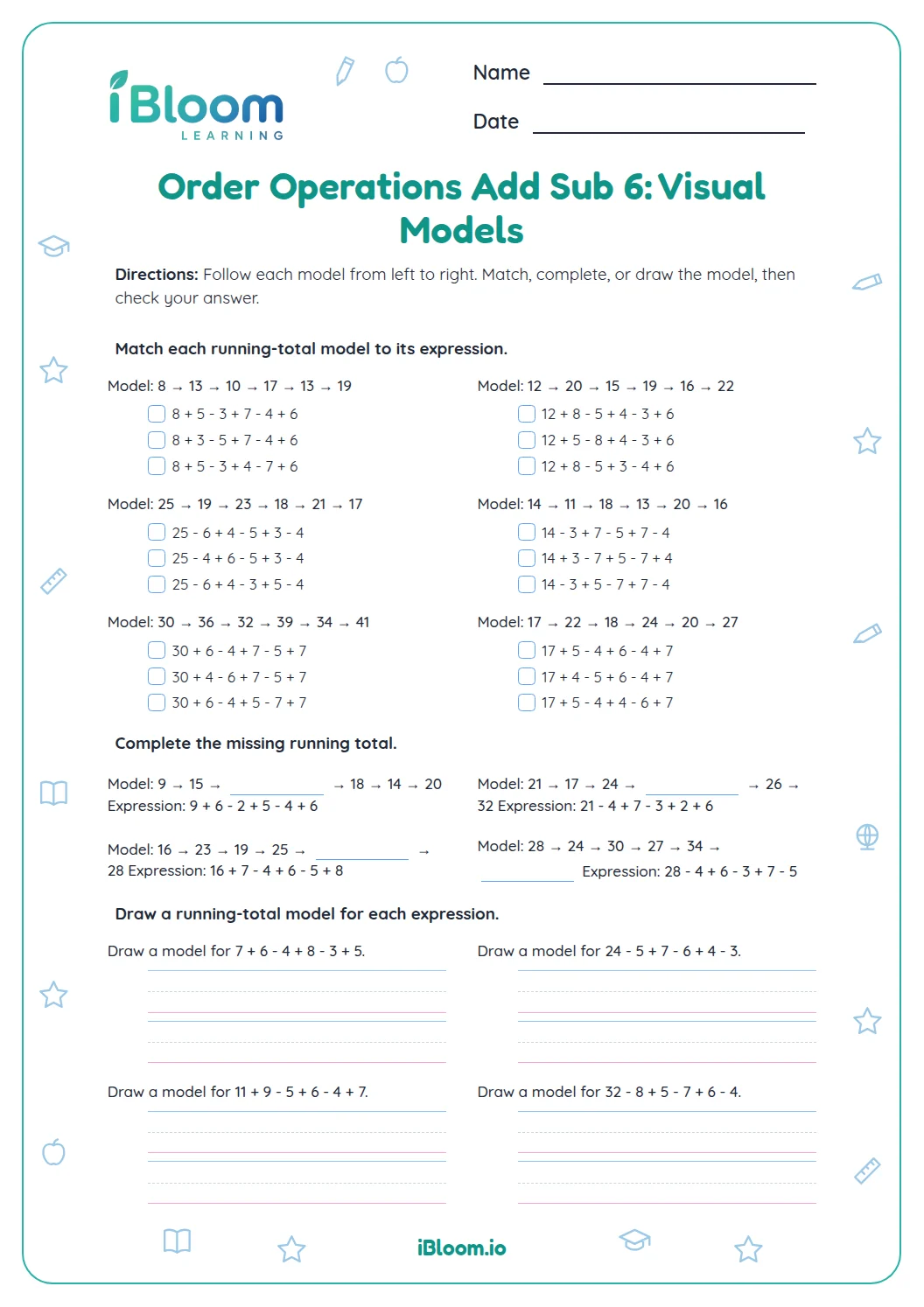
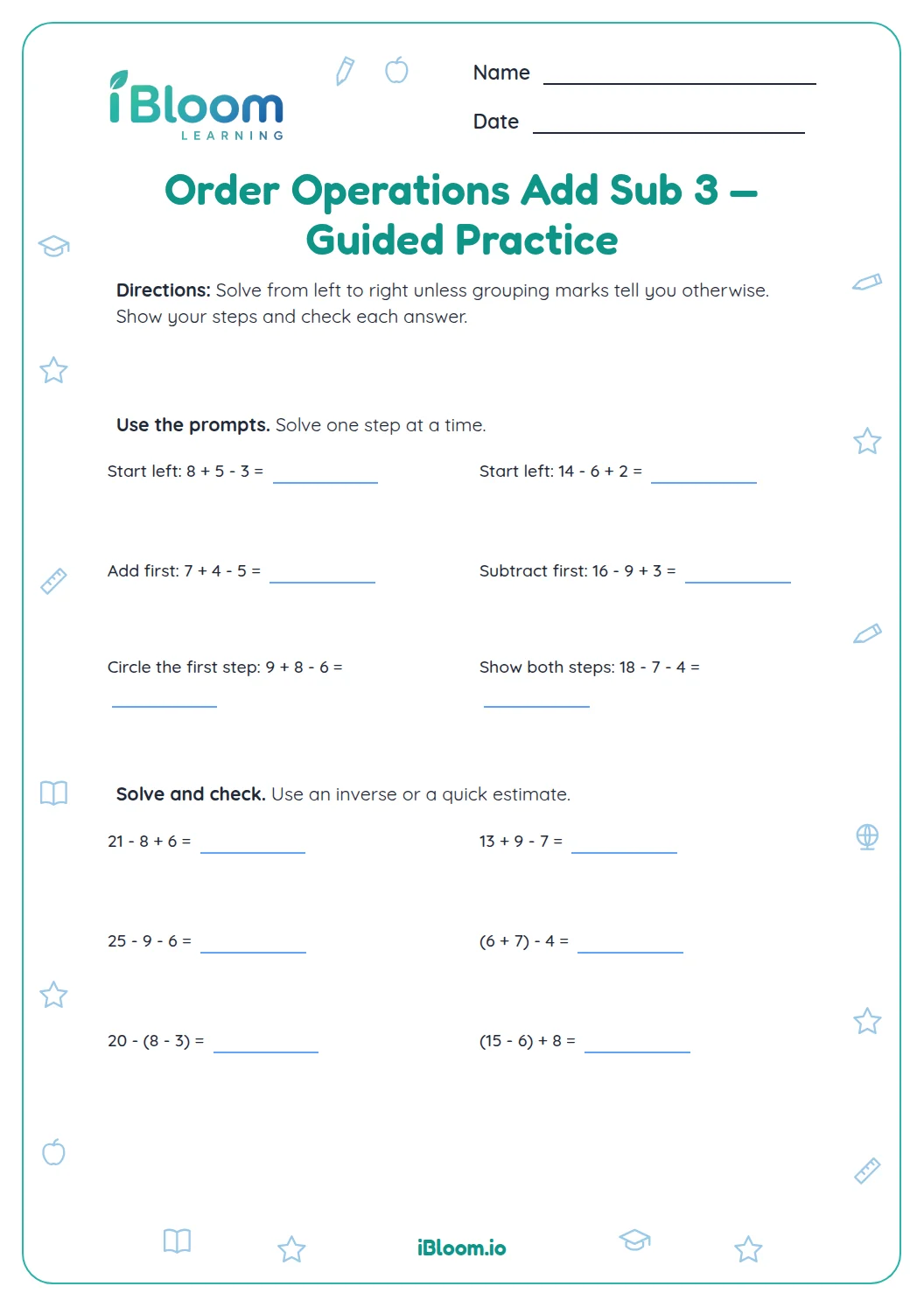
The worksheet has 14 items in three parts. The first part develops the left-to-right routine; the second introduces parentheses; the last asks students to show running totals for four expressions. Each equation has a working area.
The answer key gives final answers for the equation items and sample step sequences for the written work.
When should a student work left to right?
Addition and subtraction have equal precedence in the expressions on this page. Start at the left and apply one operation at a time in the order printed. If parentheses appear, find that group first.
- 18 + 6 − 4 + 7 − 3
- 28 + 6 = 14; 14 − 4 = 10; 10 + 7 = 17; 17 − 3 = 14.
What do parentheses change?
Parentheses show which addition or subtraction to complete first. In (18 + 7) − 5, the grouped value is 25. Then continue from left to right: 25 − 5. Keeping the grouped step visible makes the remaining work easier to follow.
How to use this worksheet
- 1Scan for parentheses before calculating.
- 2Evaluate the grouped numbers first when they appear.
- 3Otherwise begin with the leftmost two numbers.
- 4Write each new total before using the next operation.
- 5Check the final value with the answer key.
Common mistakes and quick fixes
The mistake
Jumping to addition before finishing a parenthesized group.
The fix
Circle the parentheses and find that value first.
The mistake
Treating addition as always before subtraction.
The fix
Use the printed left-to-right order after parentheses.
The mistake
Changing a sign while copying an expression.
The fix
Copy each + or − carefully before recording a running total.
Common Core alignment
The practice connects the page activities to these Common Core skills.
Add and subtract within 100 accurately and efficiently.
On this sheet: The expressions practice addition and subtraction within 100.
Show the official wordingHide the official wording
Fluently add and subtract within 100 using strategies and algorithms based on place value, properties of operations, and/or the relationship between addition and subtraction.
What to practice next
Make more practice
Further reading
Questions parents and teachers ask
What does order of operations mean on this page?
For these addition and subtraction expressions, work from left to right. When parentheses appear, evaluate the numbers inside them first, then continue from left to right. For example, (9 + 7) − 5 begins with 9 + 7 before the subtraction steps.
How many problems are included?
There are 14 expressions in three parts. Twelve ask students to evaluate a six-term addition and subtraction expression, and four ask them to record running totals. Parentheses appear in some items so students practice evaluating a group before continuing.
Should students work from left to right?
The worksheet has 14 items in three parts. Twelve ask for an expression’s value, and two ask students to record running totals for six-number expressions. The answer key shows the values and sample sequences so students can check both the order and the arithmetic.
What does the answer key show?
The answer key gives the final value for each of the first 12 expressions and sample running totals for the last four. Equivalent work may have different handwriting or spacing, but the operations must stay in order and the final value must match.
How can an adult help without doing the problem?
Ask the student to point to the first operation to evaluate. If there are parentheses, start there; otherwise begin at the left. After each step, have the student write the new total and check that the next operation is the one printed next.