





About this worksheet
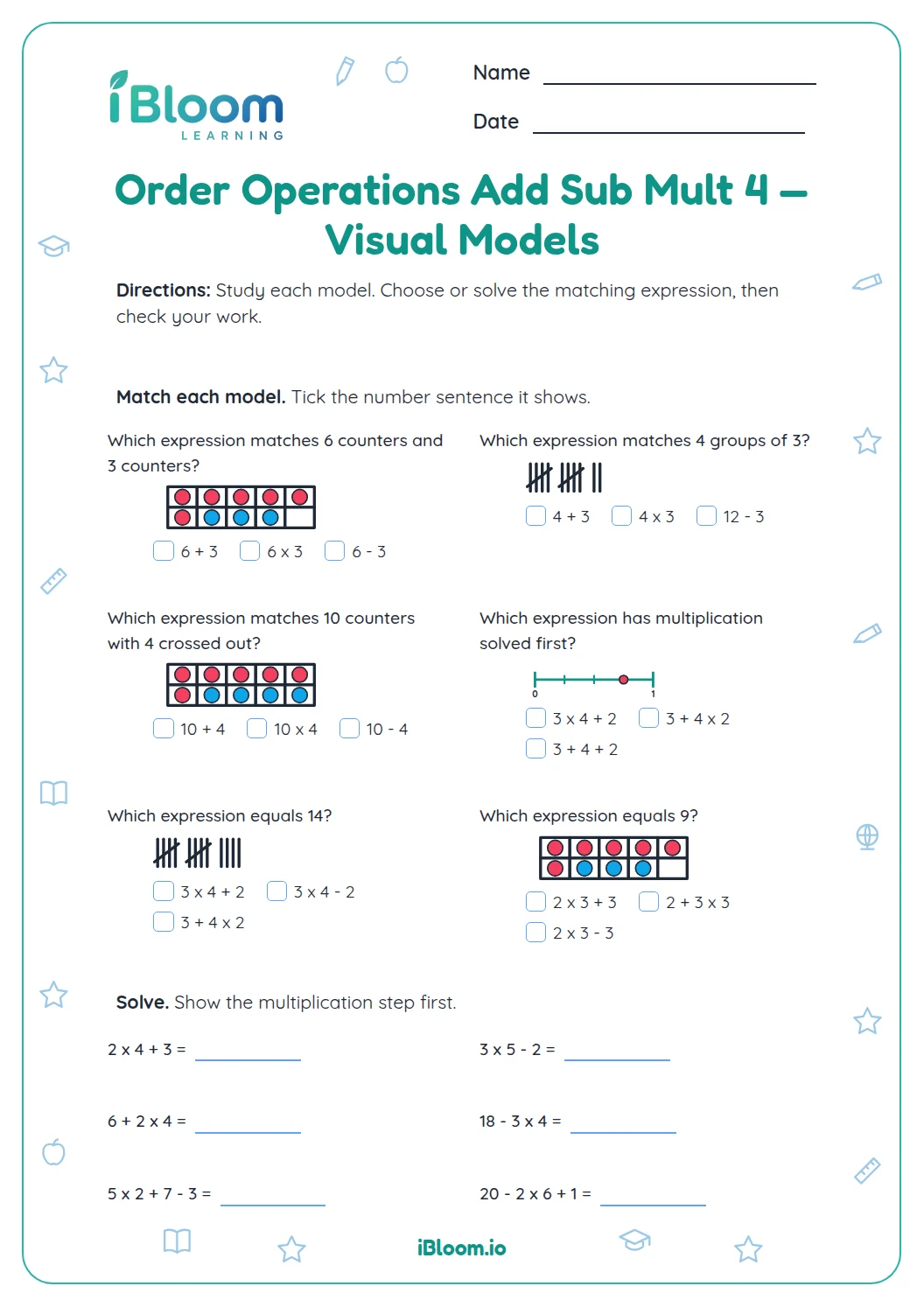
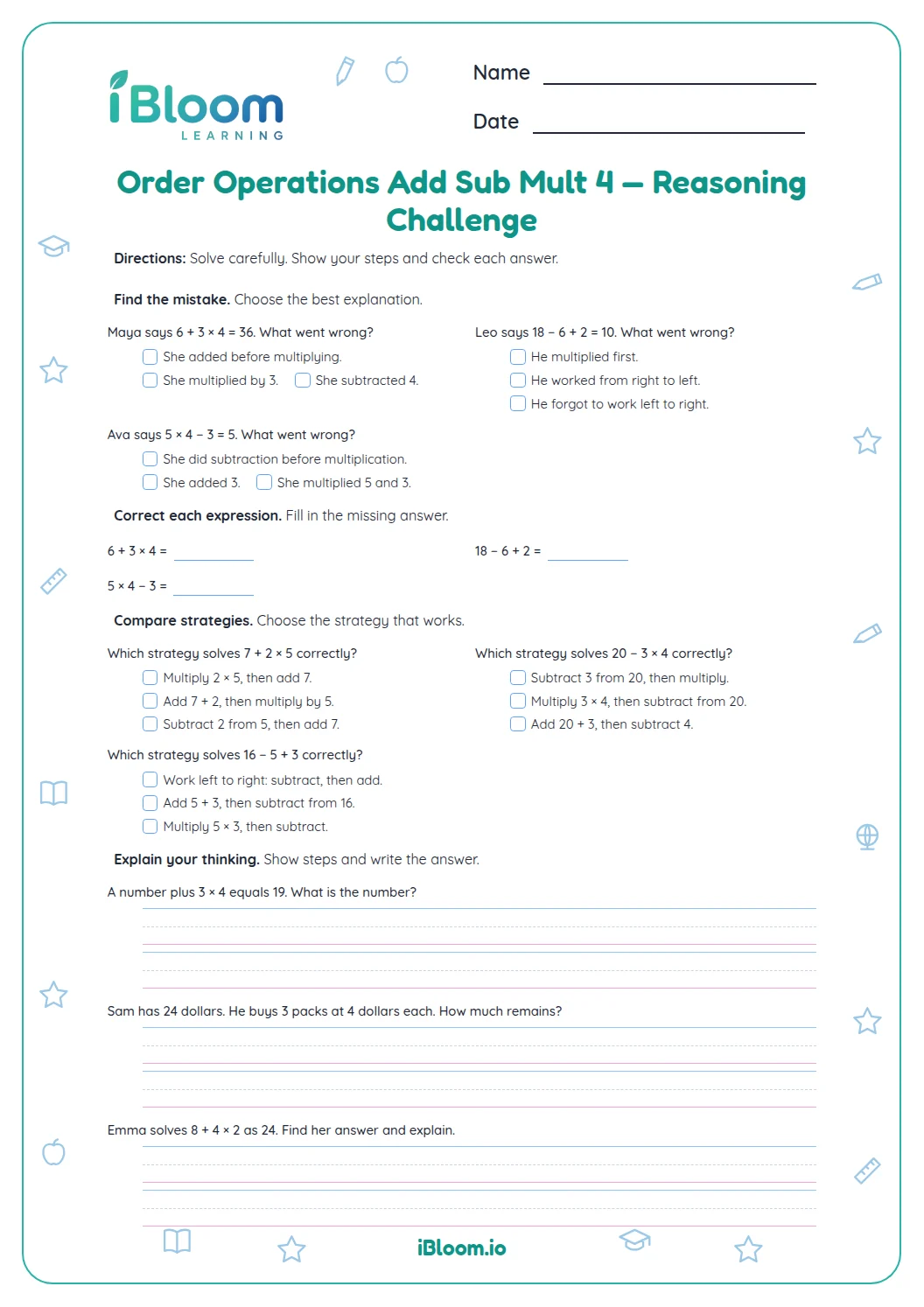
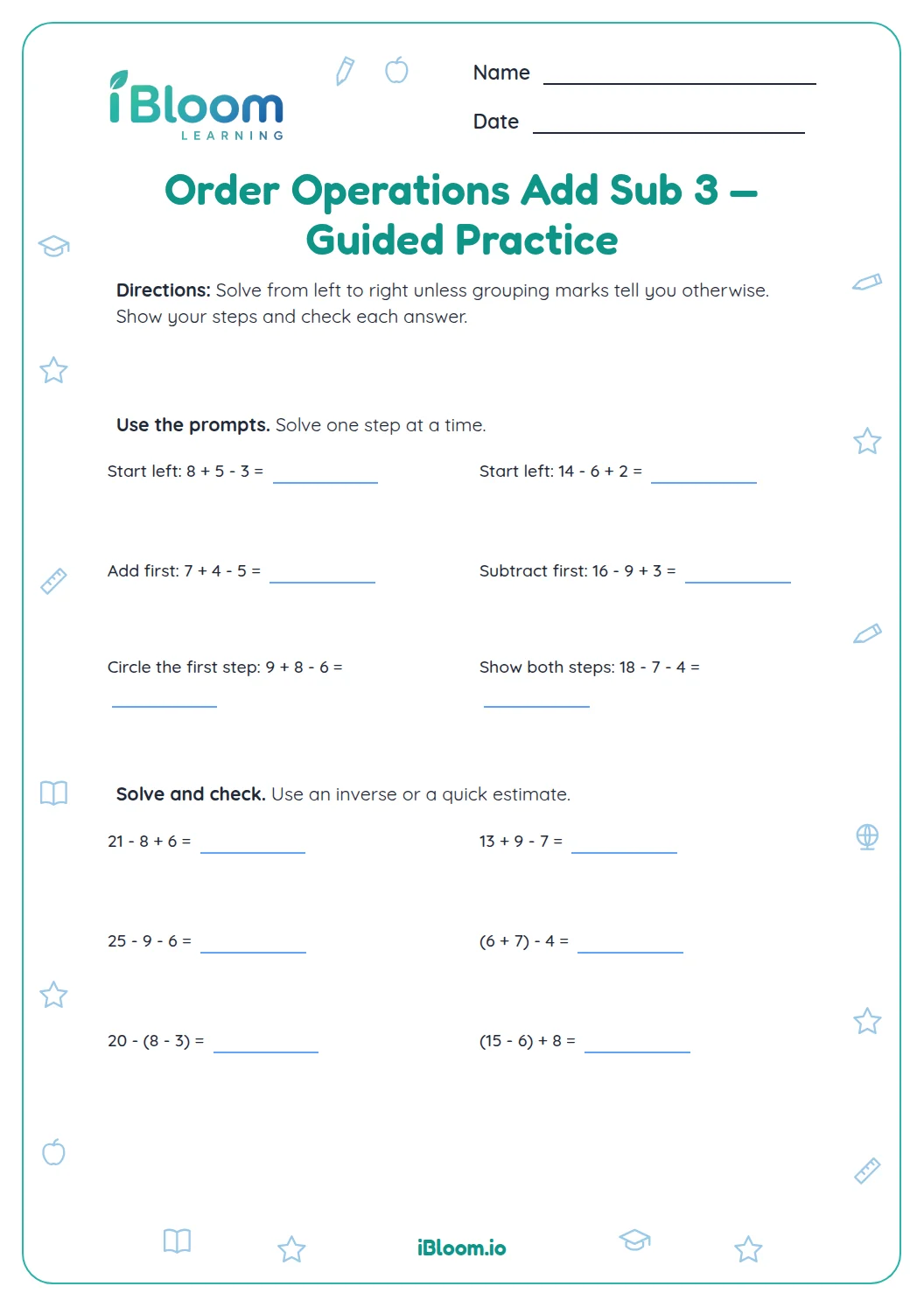
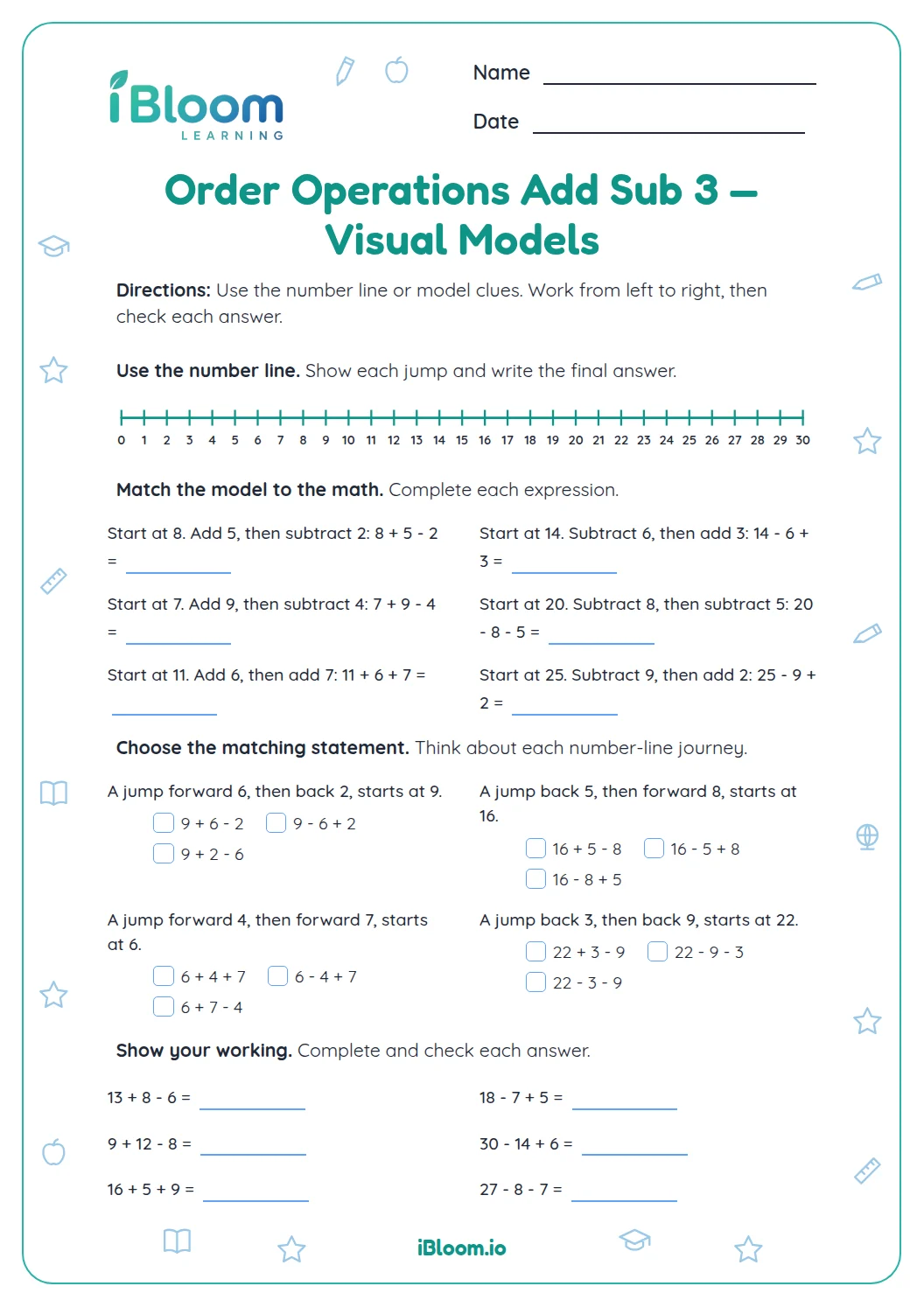
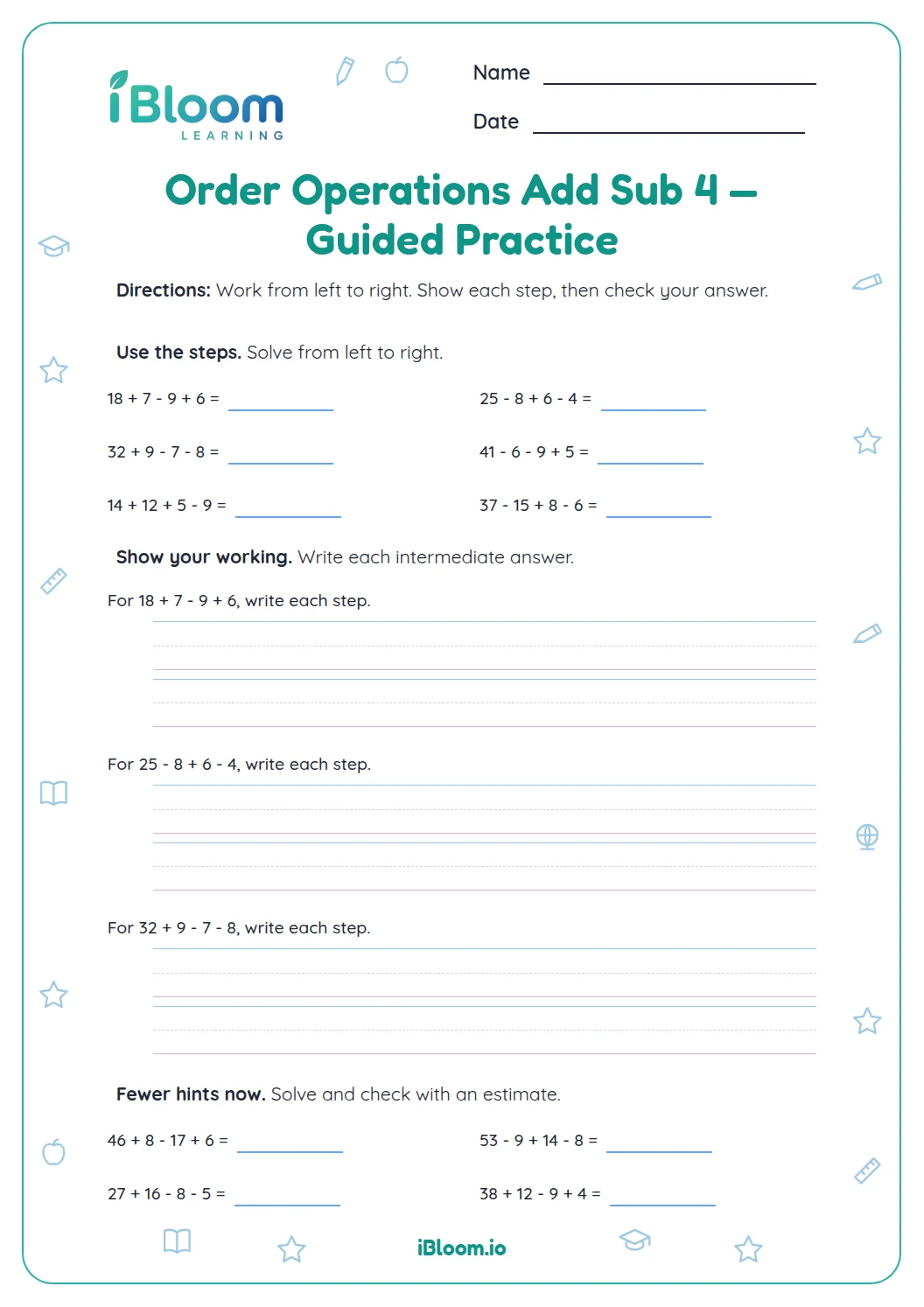
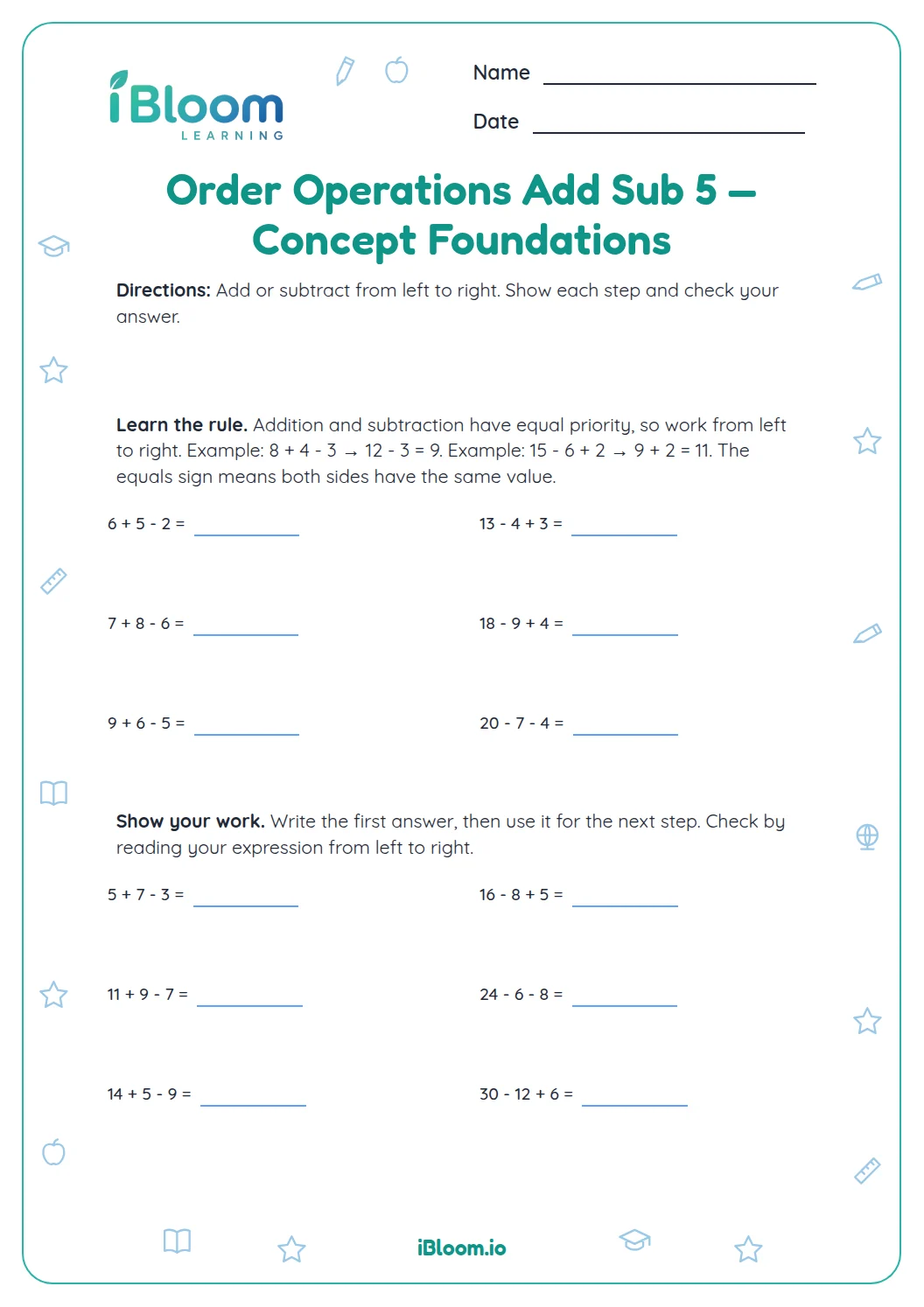
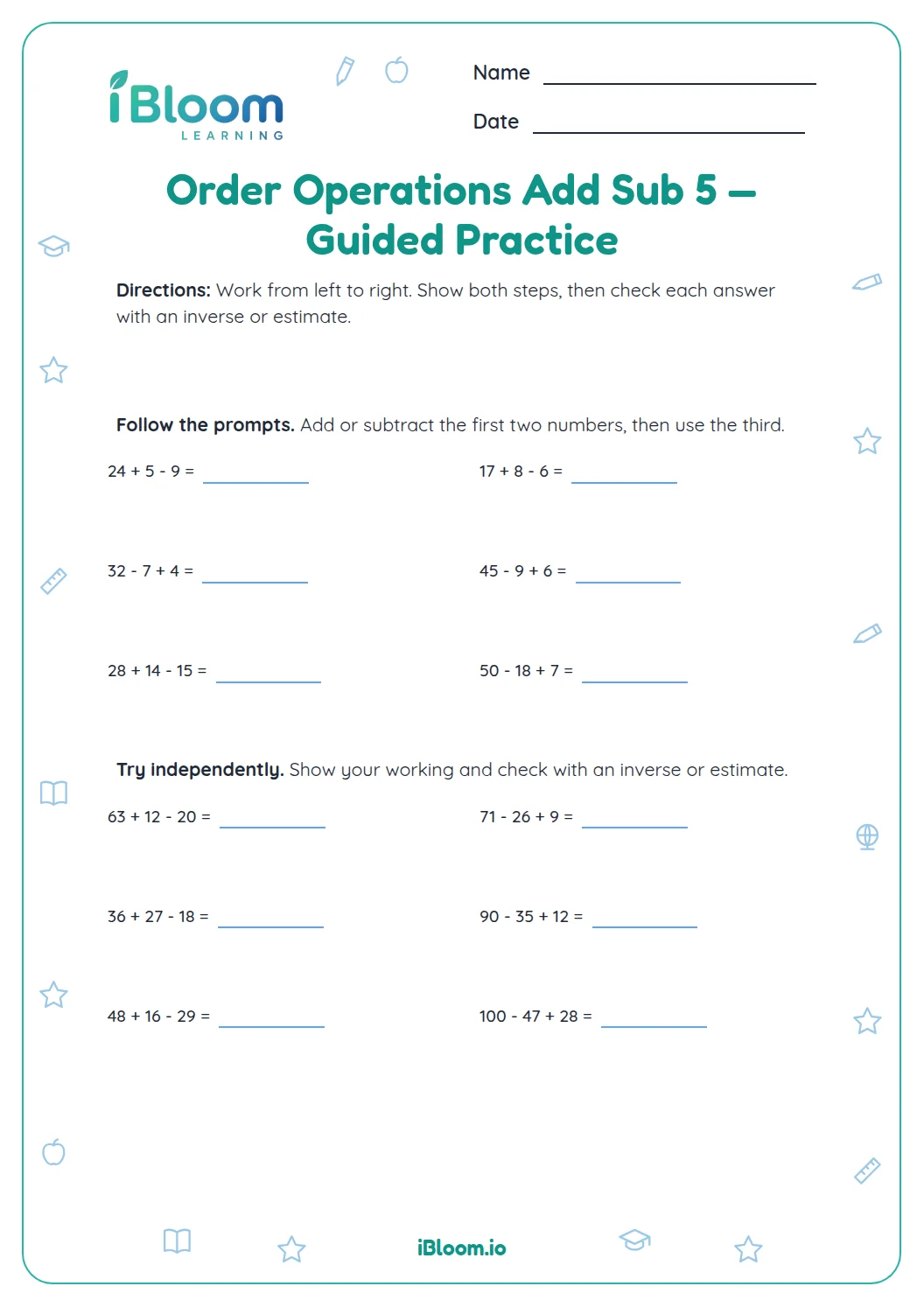
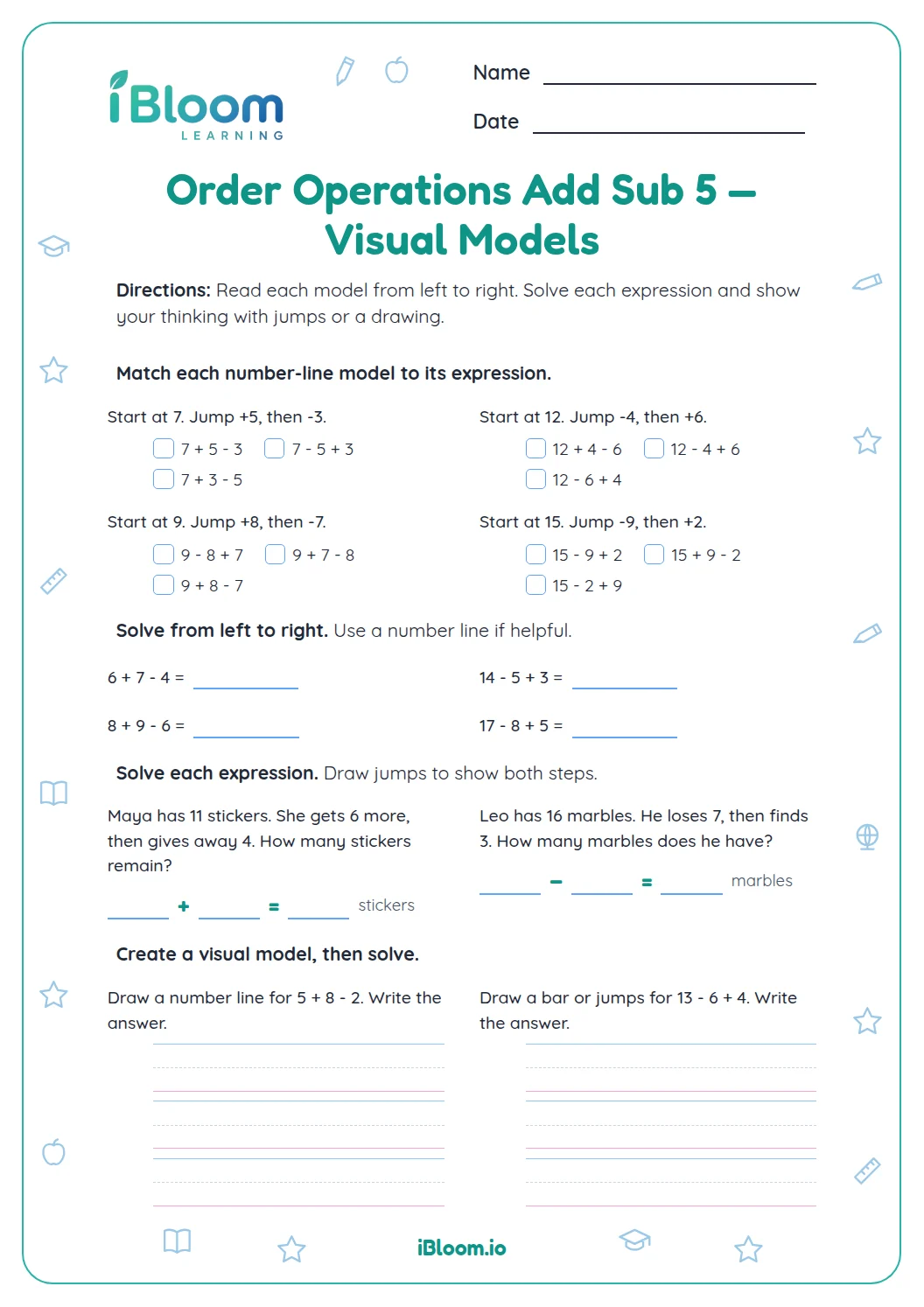
This Grade 3 worksheet follows a guided multiplication-first format. Students solve 10 expressions using multiplication before addition or subtraction, then write equations for four short story problems. The first questions are direct practice; the story problems provide room to show steps. The answer key follows the two worksheet pages.
Aligned to 3.OA.D.8
What kinds of problems are on the worksheet?
The expressions practice multiplying before adding or subtracting. The first set gives a direct value to find, and the second set continues with new expressions. Four short story problems ask students to write an equation and solve.
- Part A: find values in five expressions
- Part B: find values in five more expressions
- Part C: write equations for four word problems
What should students calculate first?
For each expression, do the multiplication first. Then complete the addition or subtraction. Rewriting the expression after that first step can help keep the remaining calculation clear.
- 13 + 2 × 4
- 2Multiply first: 2 × 4 = 8. Then add: 3 + 8 = 11.
How can students check a multiplication-first expression?
Multiply before adding or subtracting. In 15 − 3 × 2, find 3 × 2 first, then subtract the product from 15. For a story problem, identify the groups and the change, write an equation, and solve it.
How to use this worksheet
- 1Find the multiplication in the expression.
- 2Multiply before adding or subtracting.
- 3Write the next calculation clearly.
- 4For a story, identify the groups and the change.
- 5Write an equation, solve it, and check the answer in the story.
Common mix-ups
The mistake
Adding before multiplying just because addition appears first.
The fix
Find the multiplication and calculate it before adding or subtracting.
The mistake
Forgetting to use the product in the next step.
The fix
Rewrite the expression with the product, then finish the addition or subtraction.
The mistake
Combining the numbers in a story in the wrong order.
The fix
Write an equation that follows the groups and the change described.
Curriculum alignment
This worksheet practices the skill named in the standard below. State and district pacing can vary.
Solve two-step word problems using the four operations.
On this sheet: Part C practices solving two-step word problems using multiplication, division, addition, and subtraction.
Show the official wordingHide the official wording
Solve two-step word problems using the four operations. Represent these problems using equations with a letter standing for the unknown quantity. Assess the reasonableness of answers using mental computation and estimation strategies including rounding.
What to practice next
Make more practice
Further reading
Questions parents and teachers ask
How many problems are included?
There are 14 questions: 10 expressions and four short story problems. The questions are grouped for practice across two worksheet pages. A separate answer key follows and lists the result for every item. You can check one group at a time before moving on.
What does “order of operations” mean on this page?
Students multiply before adding or subtracting in the expressions on this page. For example, in 3 + 2 × 4, they calculate 2 × 4 first, then add 3. The story problems ask them to represent two steps with an equation.
Do students need to show work?
The first two parts ask for the value of each expression. In Part C, the questions provide working space for a written equation and solution. Students can use the intermediate steps to check that their equation matches the story.
Are the story problems within Grade 3 math?
The four story problems use multiplication, division, addition, and subtraction with whole numbers. Students interpret two steps in a situation, write an equation, and solve for the quantity asked for in the question. The values stay within familiar Grade 3 multiplication facts.
How can I help if an answer is wrong?
Ask the student to mark the operation that must happen first, then rewrite the expression after completing that step. For a word problem, underline the groups and the change. Compare the resulting equation with the story before checking the key.