


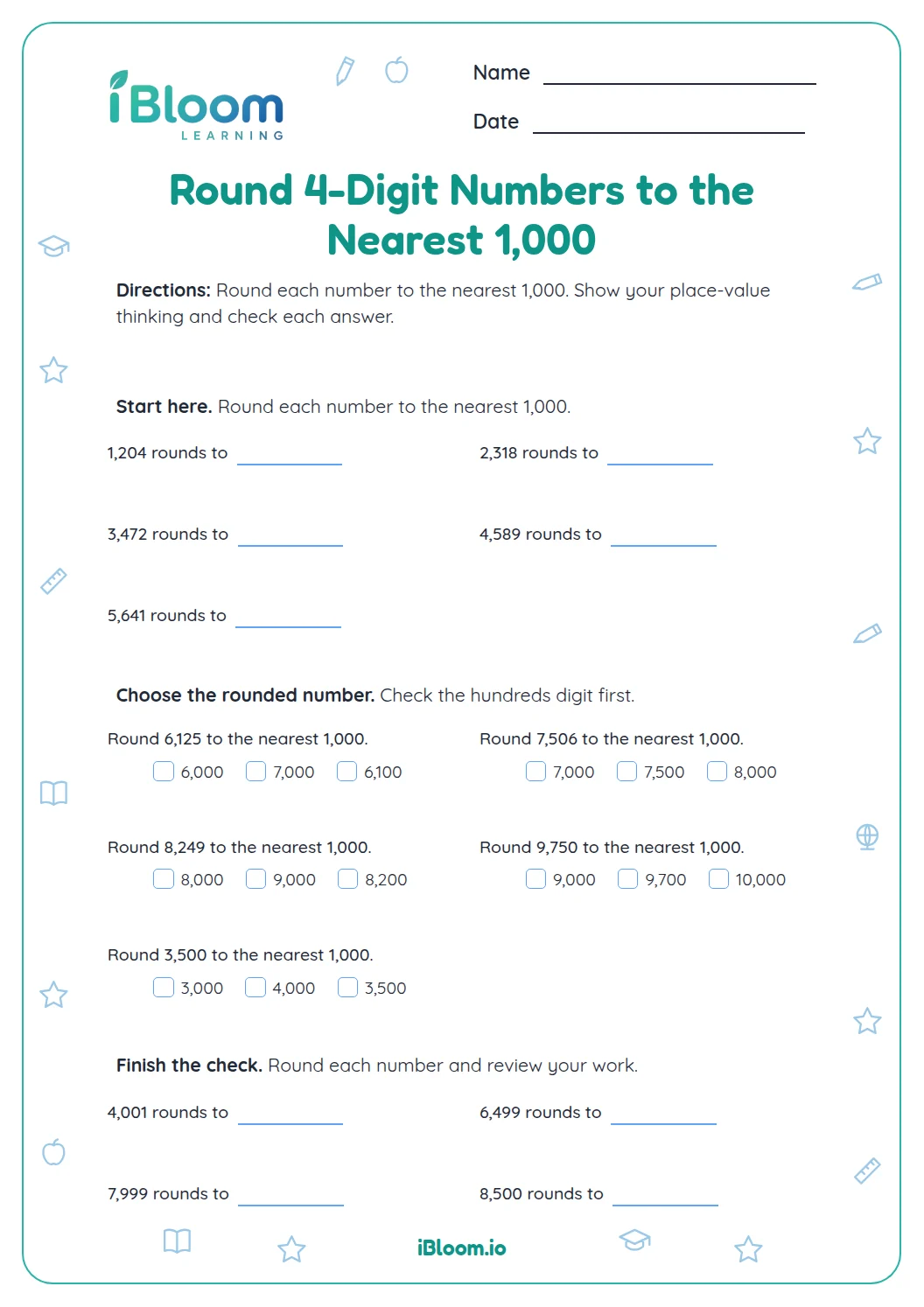
About this worksheet
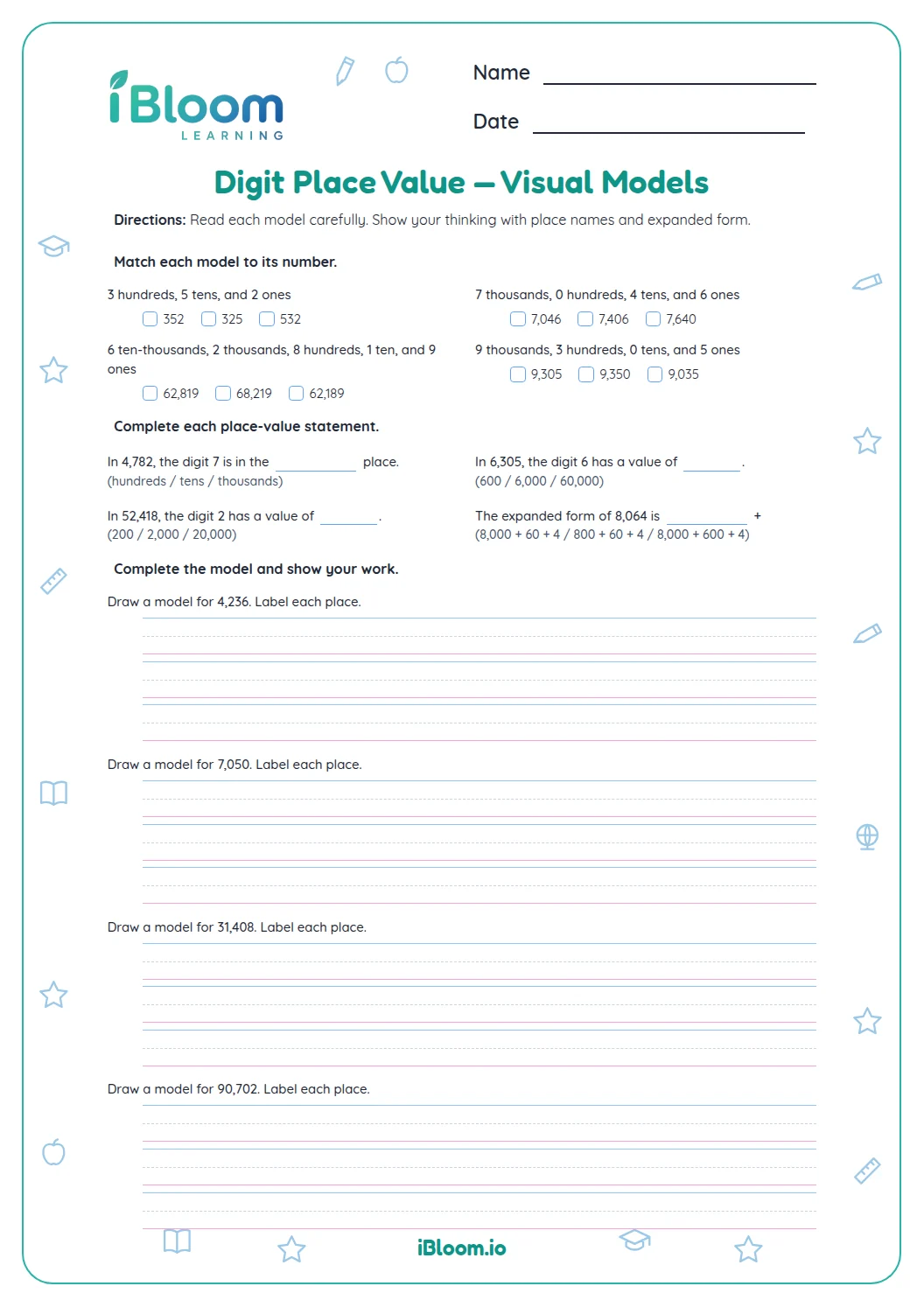
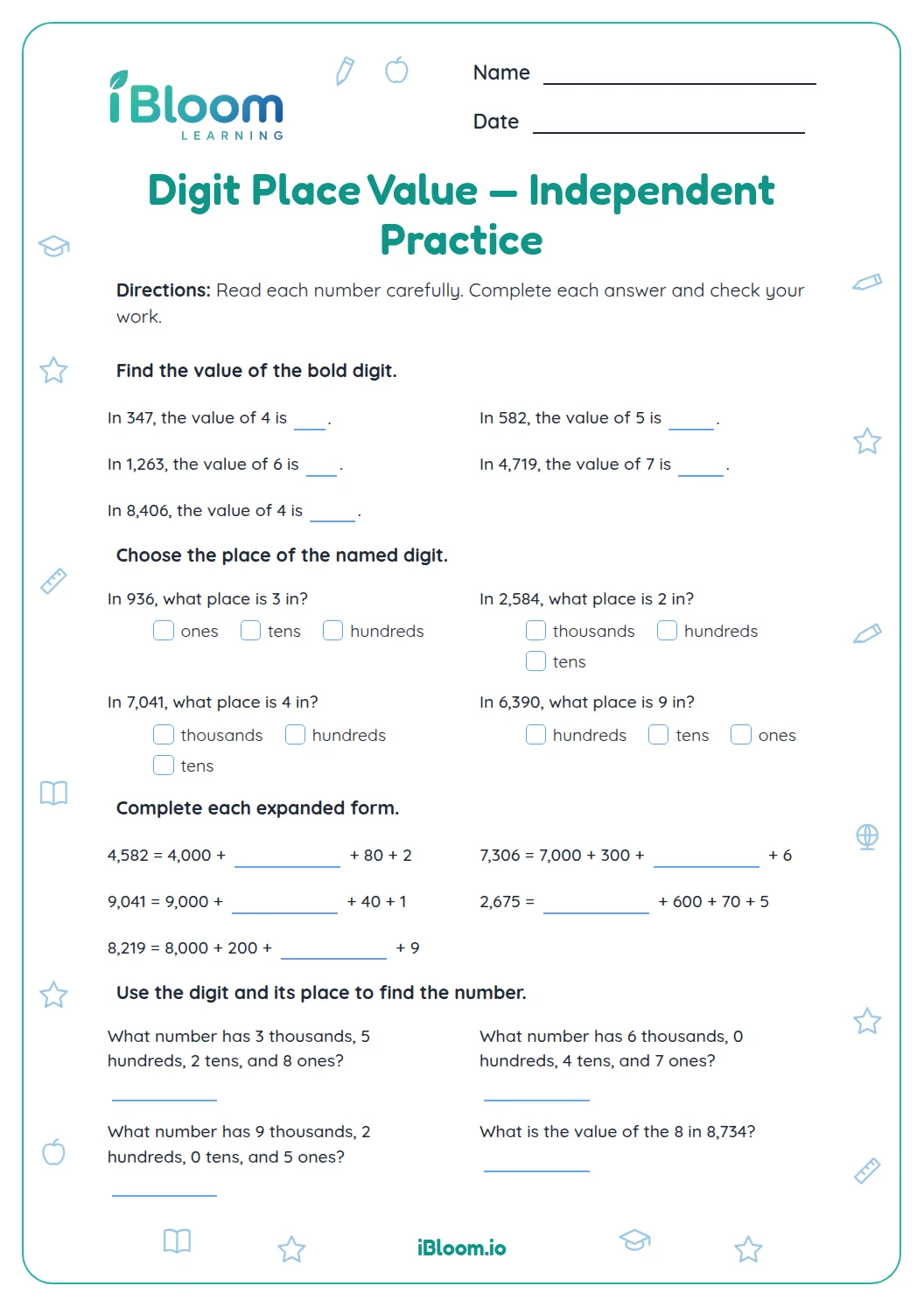
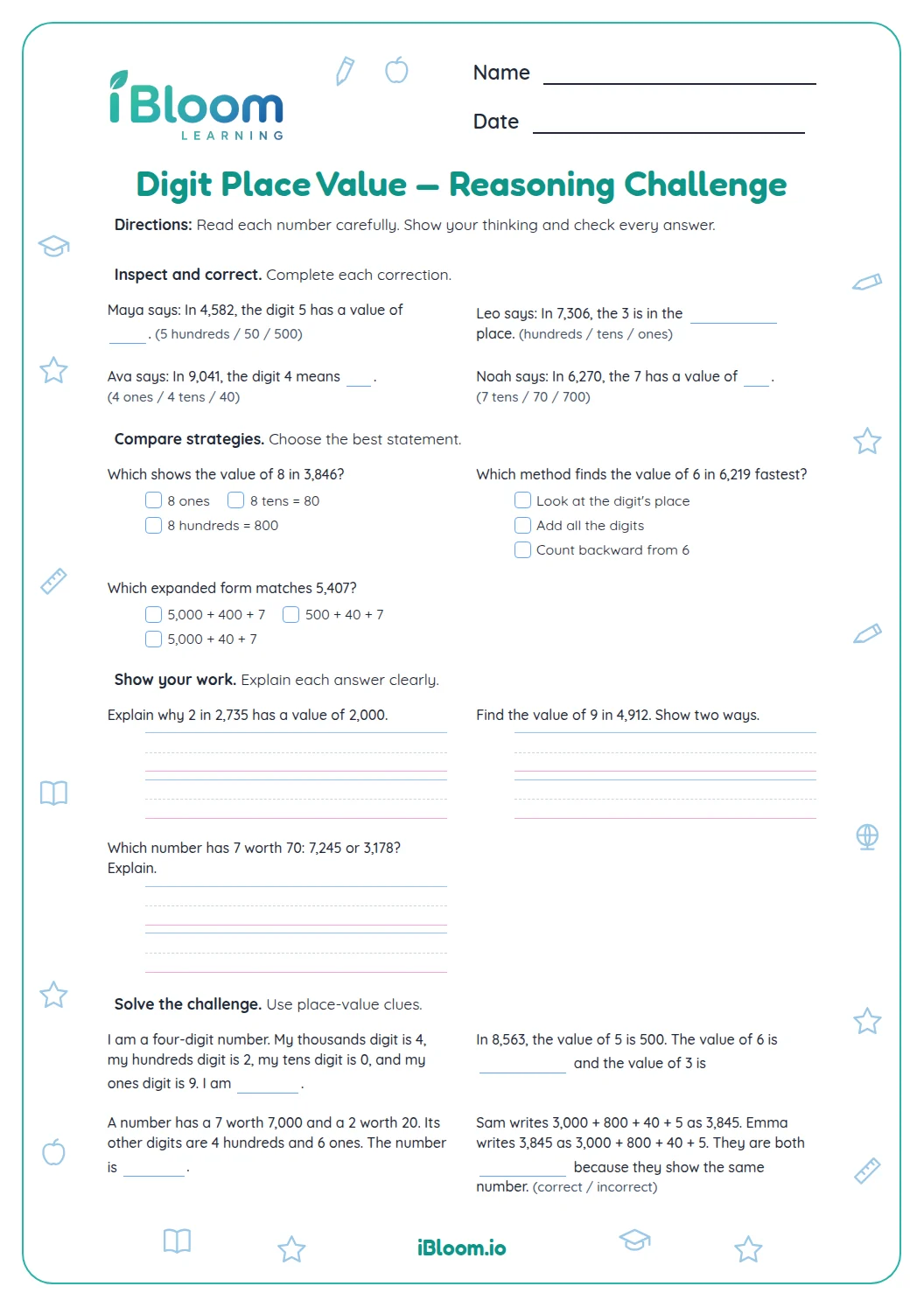
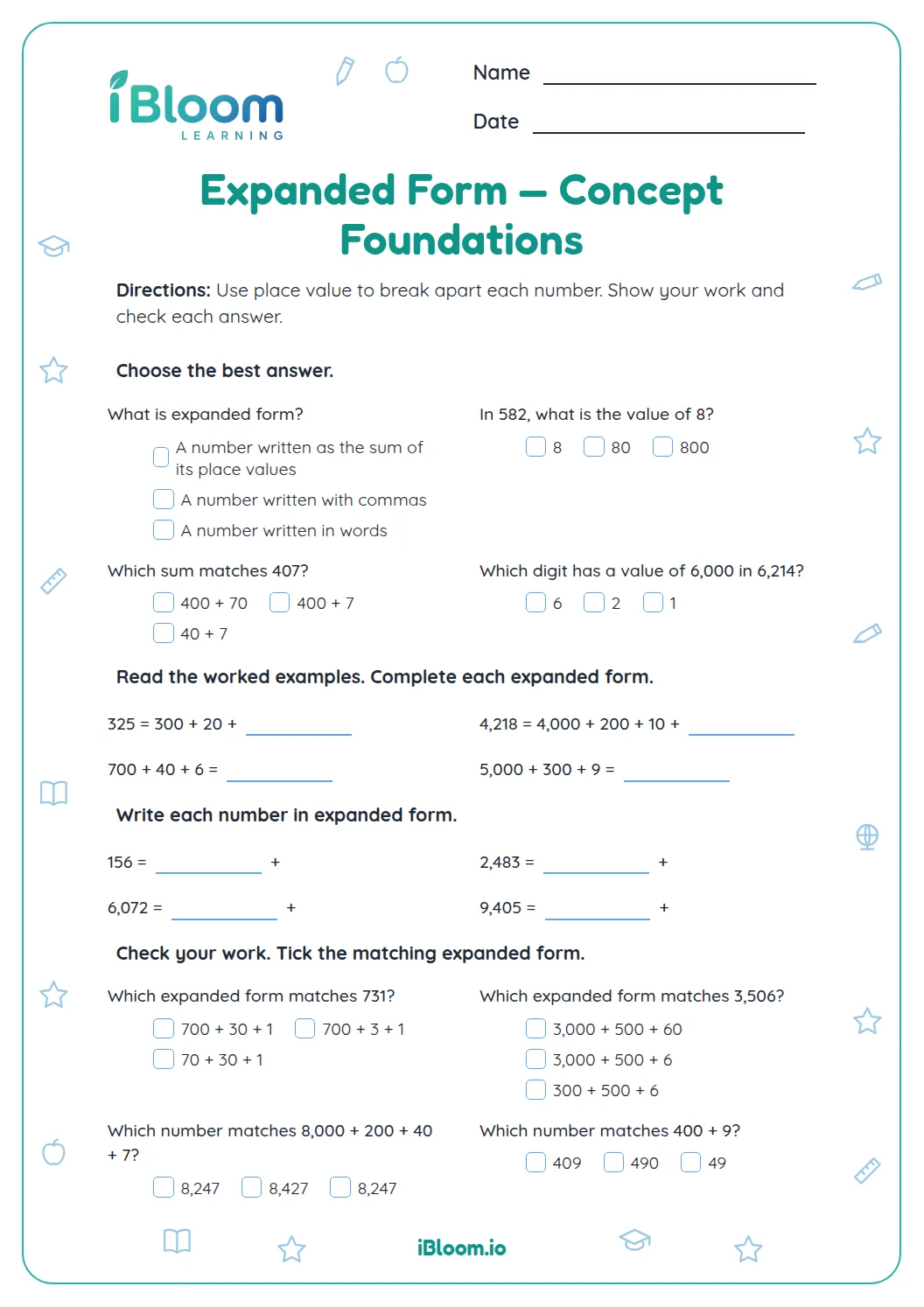
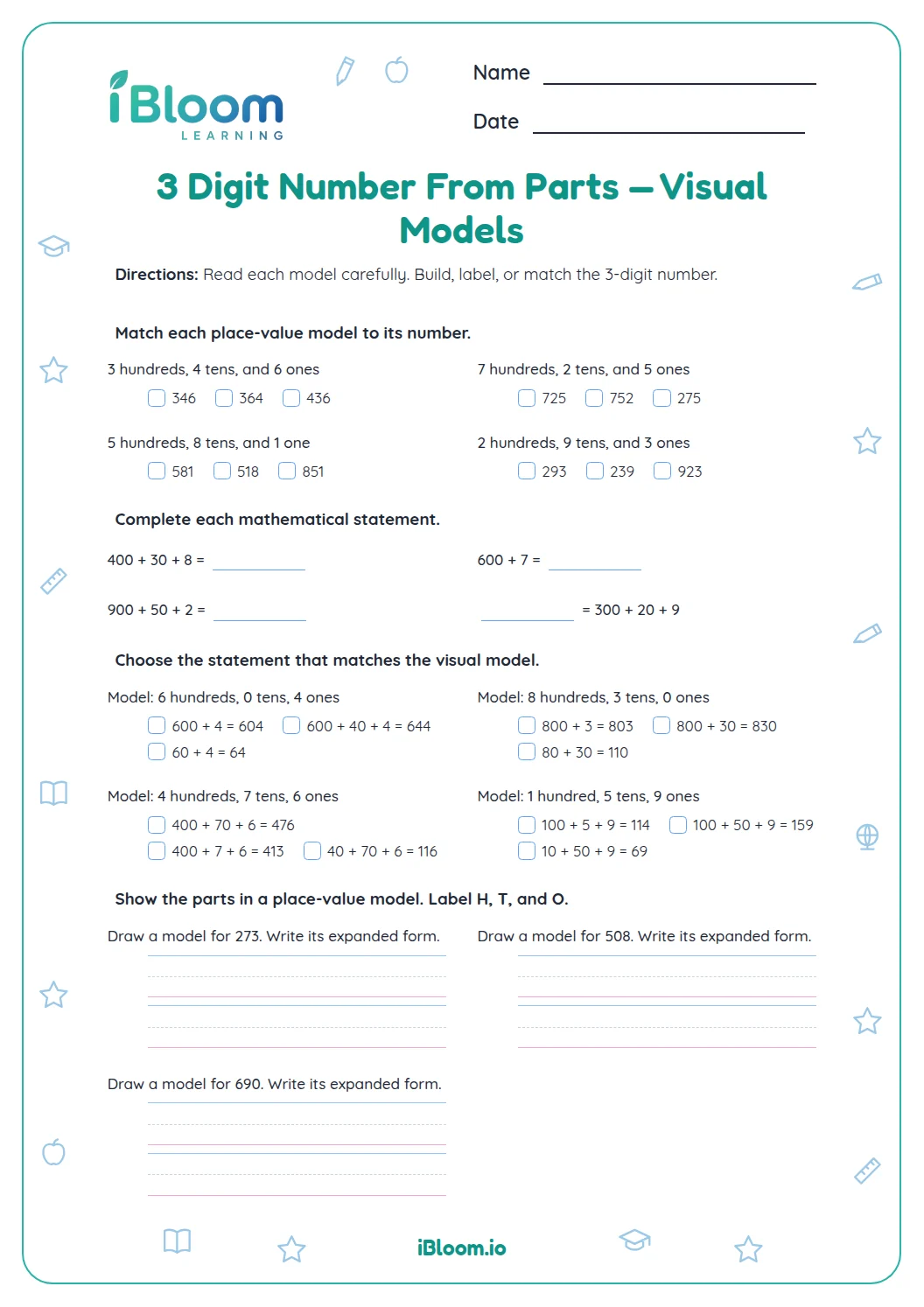
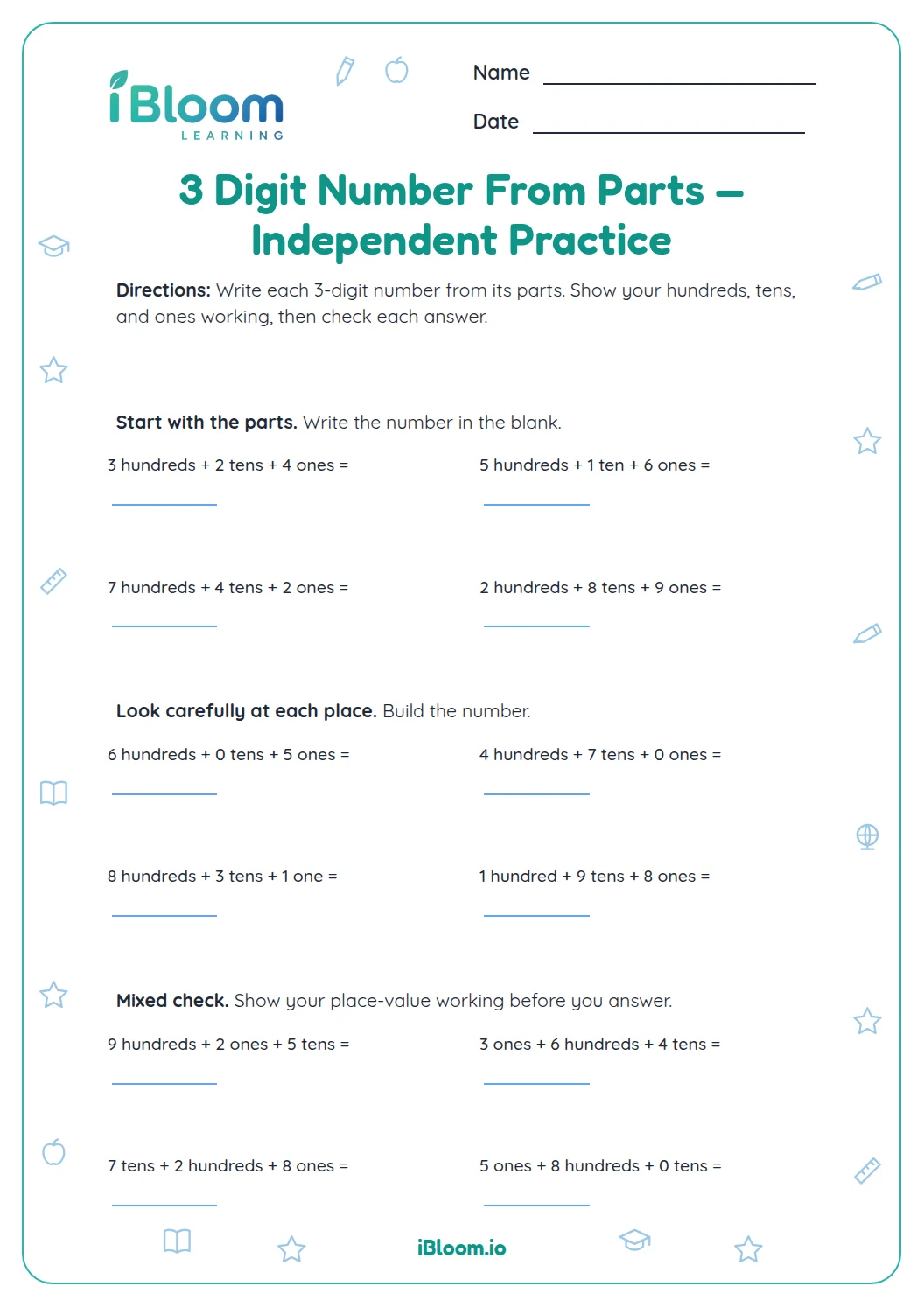
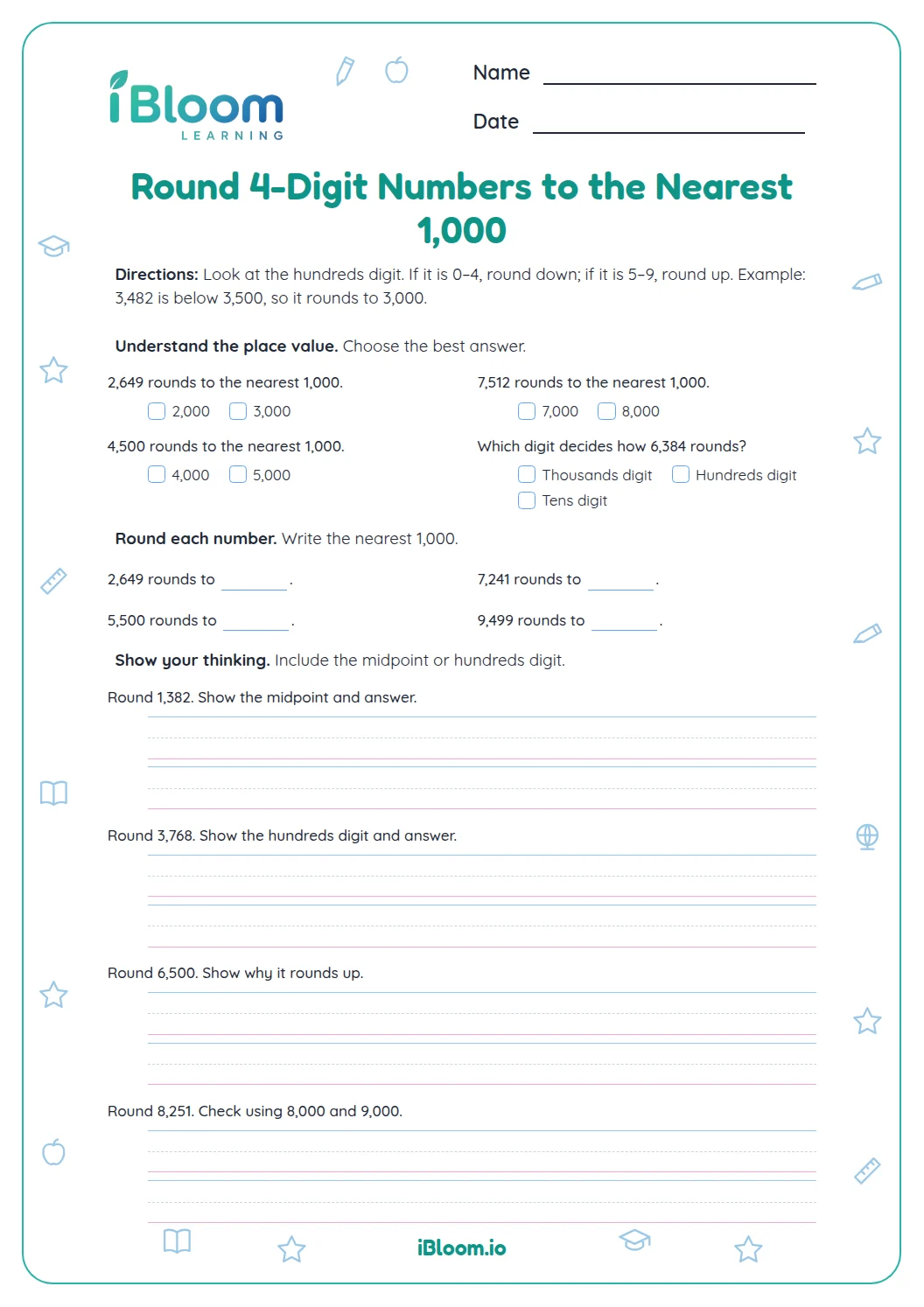
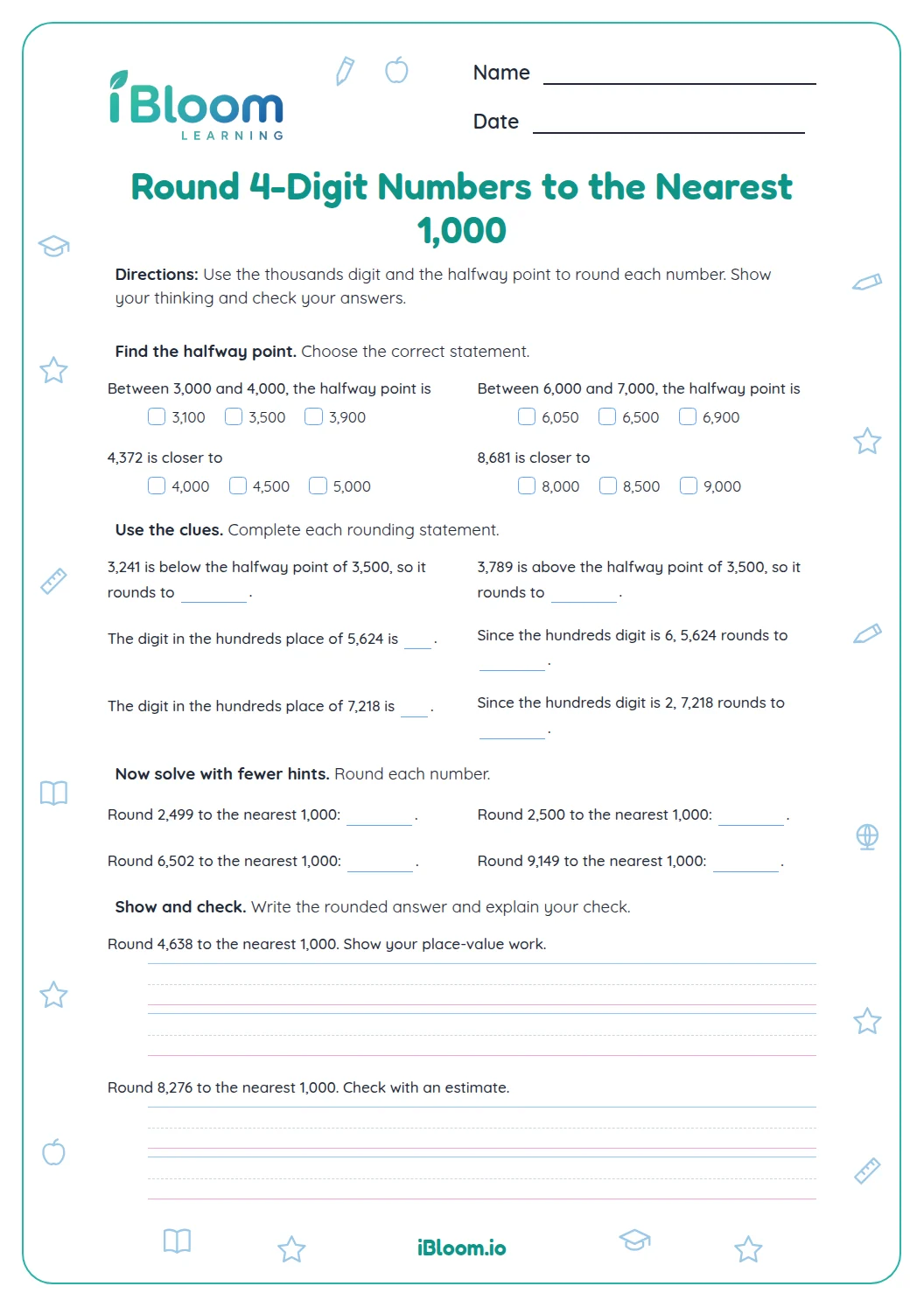
This free Grade 3 place-value worksheet gives students 15 guided questions using four-digit whole numbers. They identify thousands, hundreds, tens, and ones; name a digit’s value; write expanded form; and check whether sums match a number. A separate answer key shows the correct place names, values, and forms. The practice builds on understanding that a digit’s position determines how much it represents.
How does position change a digit’s value?
A digit’s place tells how many ones, tens, hundreds, or thousands it represents. In 4,582, the 5 is in the hundreds place, so it represents 500.
Read the digits from left to right and name each place. A zero can hold a place even though its value contributes no amount to the sum.
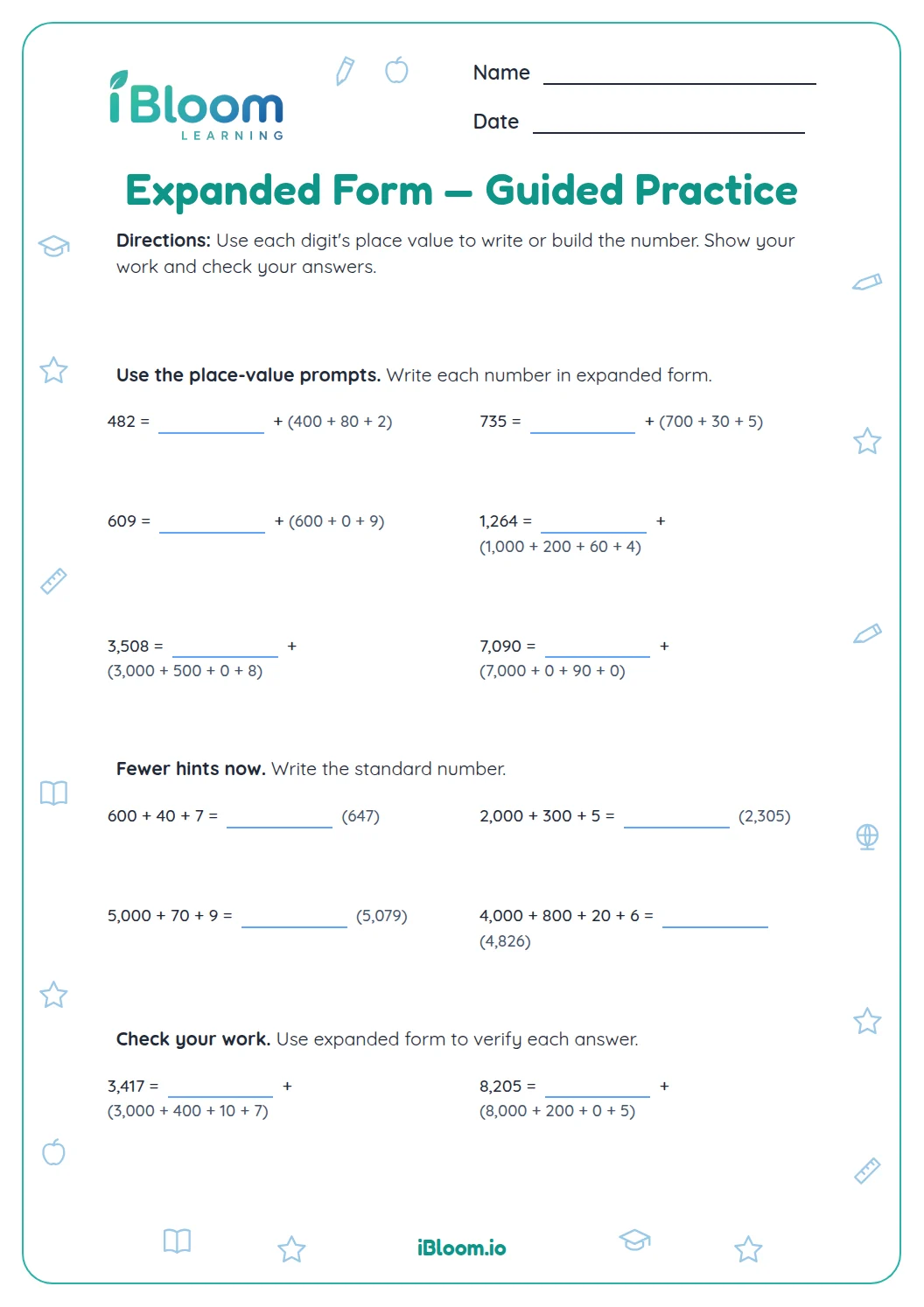
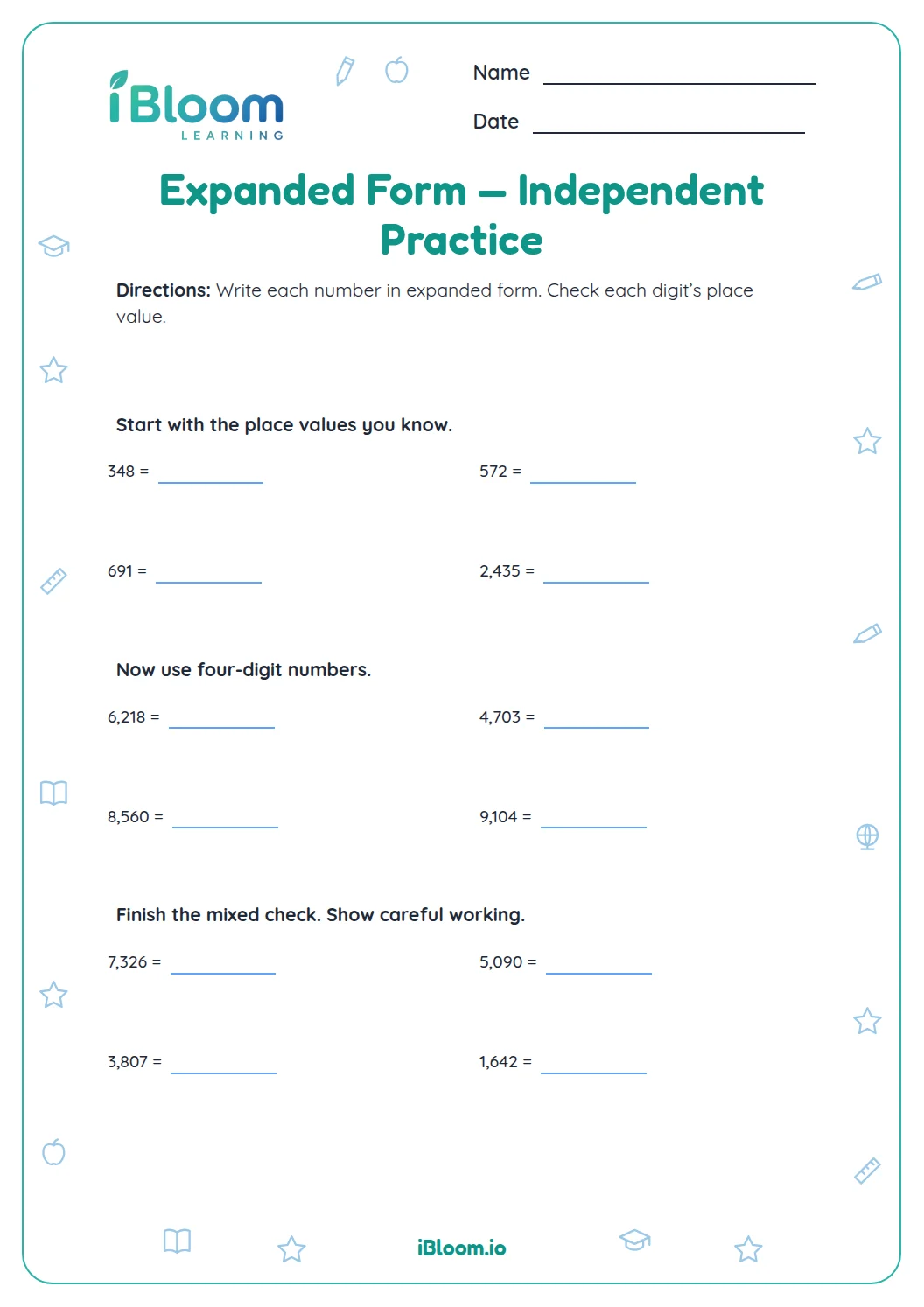
How do you write expanded form?
Write each nonzero place value as an addend. For example, 4,263 = 4,000 + 200 + 60 + 3. A zero-valued place may be left out, as in 5,060 = 5,000 + 60.
What does this worksheet practice?
Questions progress from naming a place or value to writing and checking expanded forms. All examples use four-digit numbers.
- Part A: identify place names and values
- Part B: complete and write expanded forms
- Part C: check place-value sums and digit claims
How to work through the page
- 1Read the number from left to right.
- 2Locate the named digit and identify its place.
- 3Use the place to write the digit’s value.
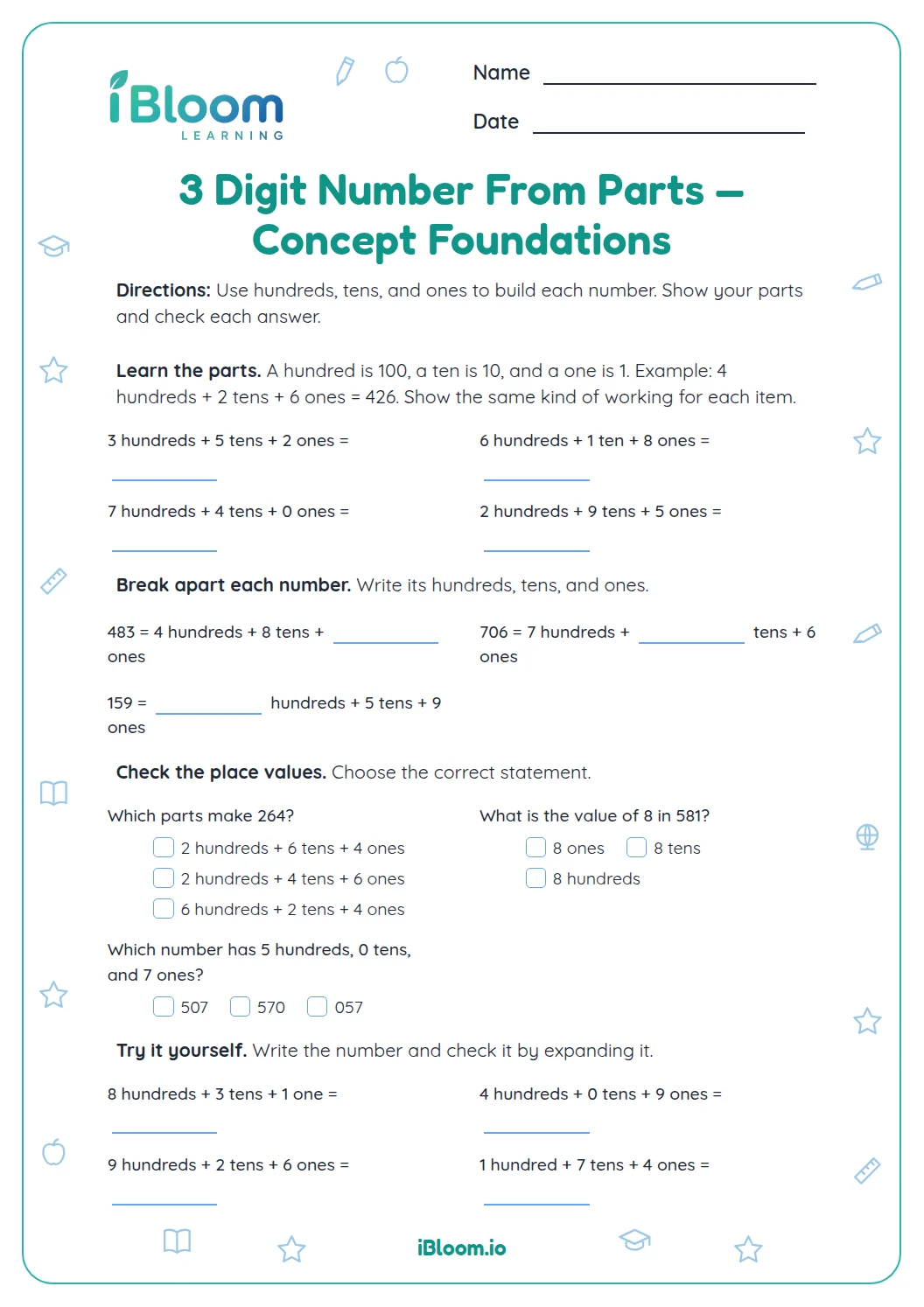
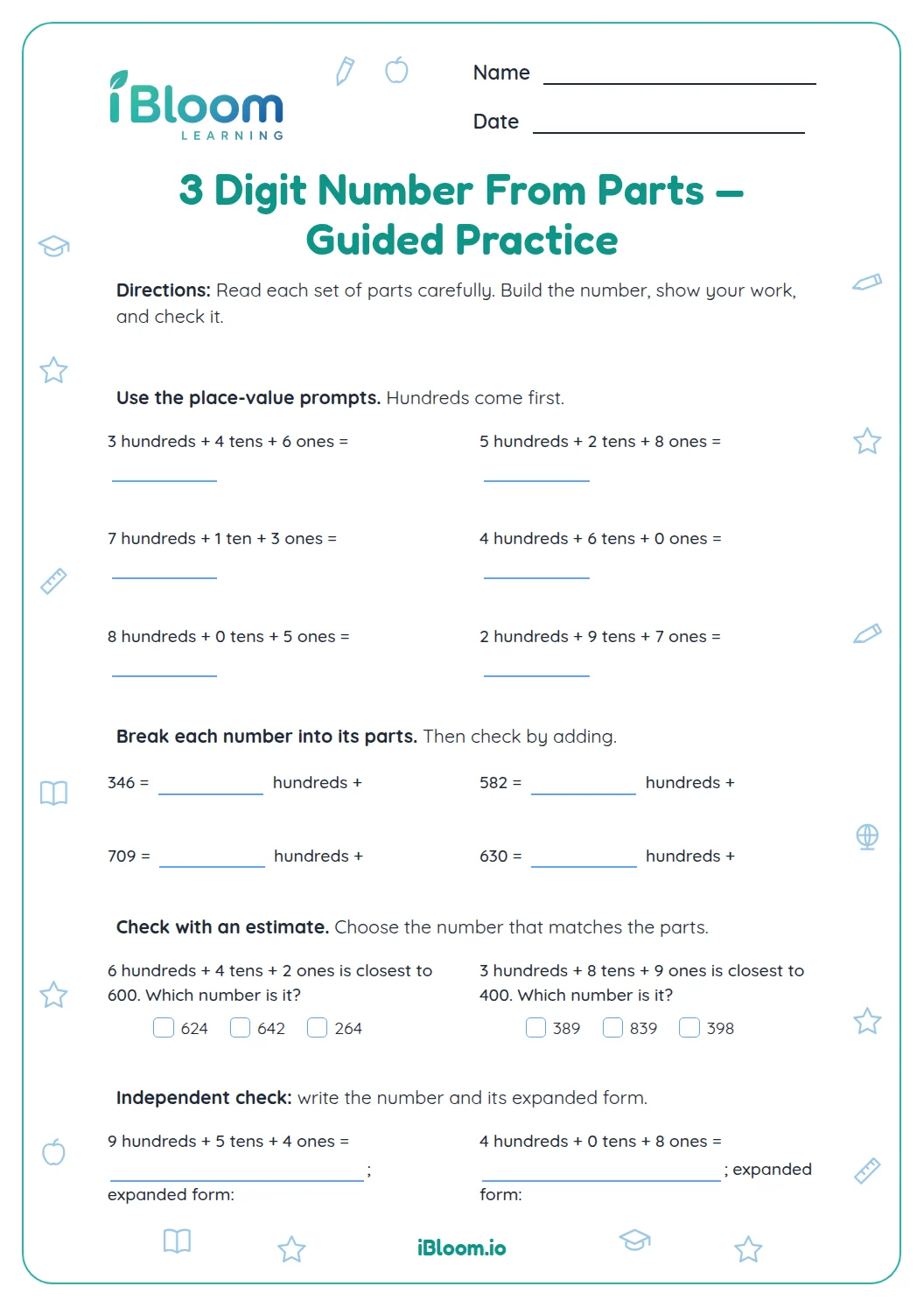
- 4Break a number into thousands, hundreds, tens, and ones.
- 5Add expanded-form parts to check the total.
Common place-value mistakes
The mistake
Naming the digit instead of its value.
The fix
Use the position: a 4 in the hundreds place is worth 400.
The mistake
Skipping a zero place and shifting the other digits.
The fix
Keep each digit in its place; a zero contributes no addend.
The mistake
Adding expanded-form parts incorrectly.
The fix
Add thousands, hundreds, tens, and ones and compare with the original number.
What to practice next
Questions parents and teachers ask
How many questions are included?
The worksheet has 15 questions in three parts. Students identify places and values, write expanded forms, and check place-value sums or claims. Every example uses a four-digit number, including numbers with a zero in one place. A separate key lists each answer.
Which number places appear?
The questions use thousands, hundreds, tens, and ones. For example, in 7,306 the 7 is worth 7,000, and the 3 is worth 300. A zero can mark an empty place while the other digits keep their positions in the number.
What is the difference between a digit and its value?
A digit is the symbol itself, while its value depends on where it appears. The digit 4 is worth 4 in the ones place, 40 in the tens place, 400 in the hundreds place, and 4,000 in the thousands place.
How can a student check expanded form?
Add the parts and compare the sum with the original number. For example, 4,000 + 200 + 60 + 3 totals 4,263. If a place contains zero, the expanded form can omit that zero-valued addend while keeping the other digits in their correct places.
What does the answer key provide?
The answer key lists each place name, digit value, expanded form, and check. For expanded form, equivalent sums that preserve the correct place values are acceptable. Students can add the parts to confirm that the total matches the number shown in the question.