
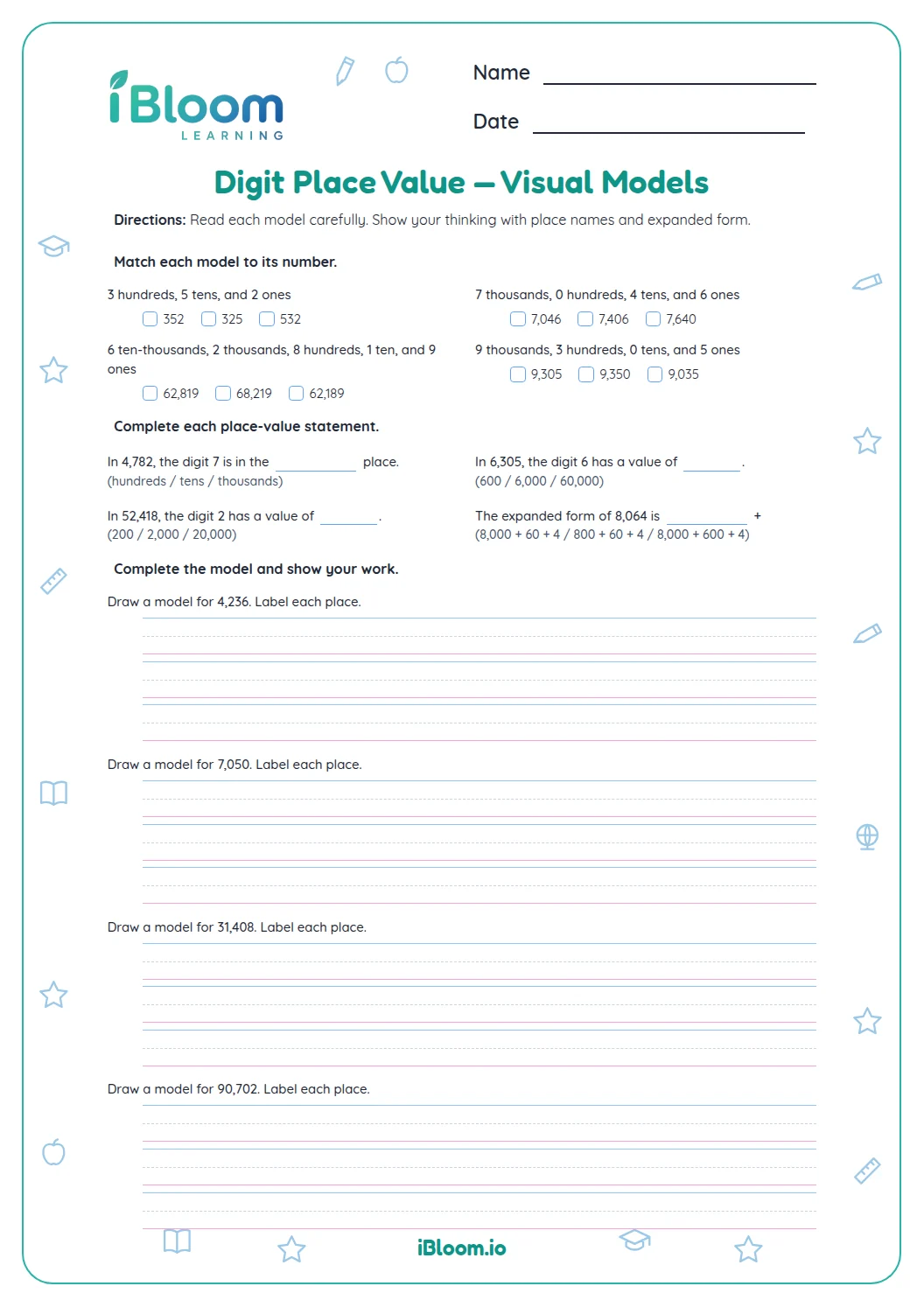
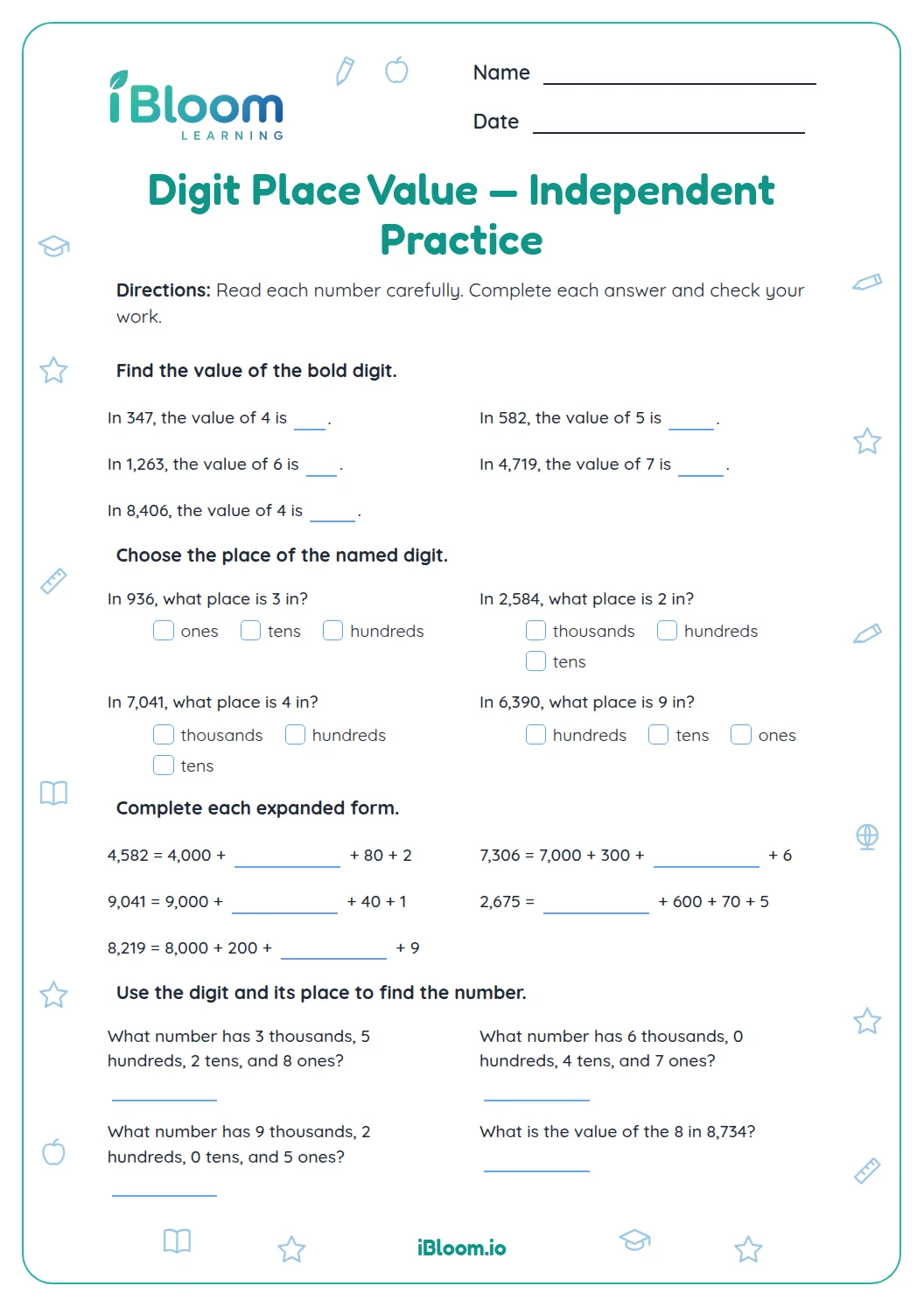
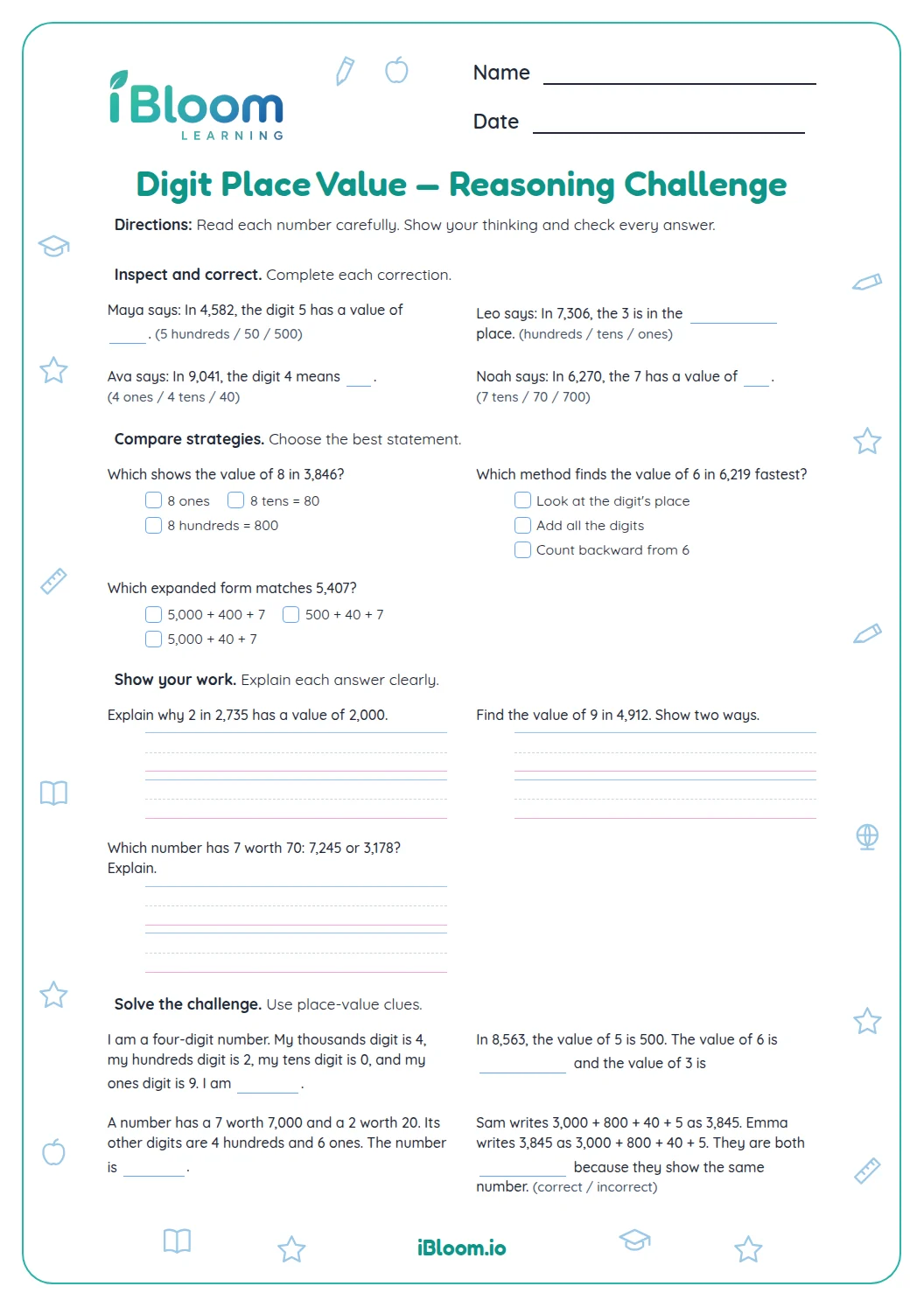
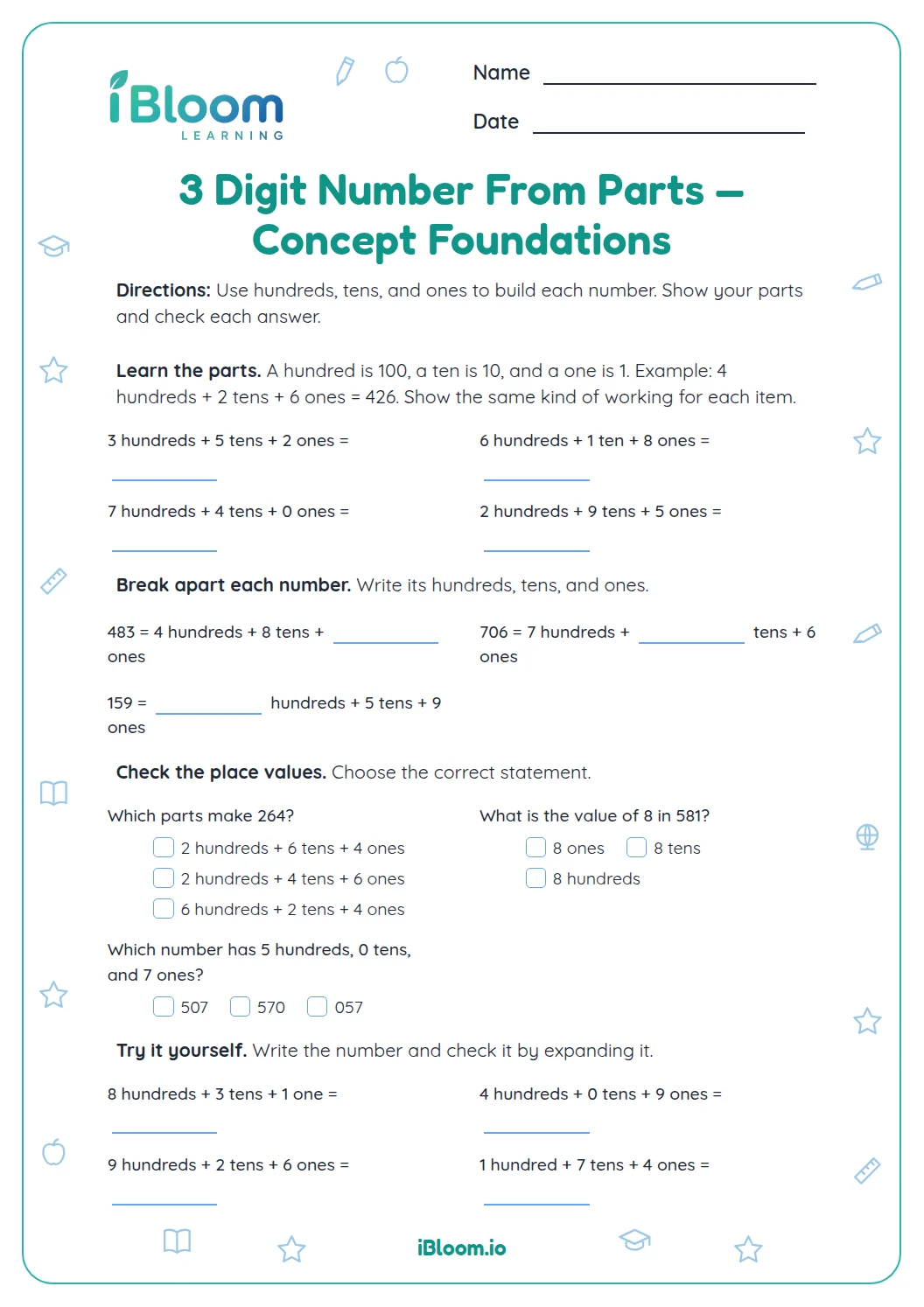



About this worksheet
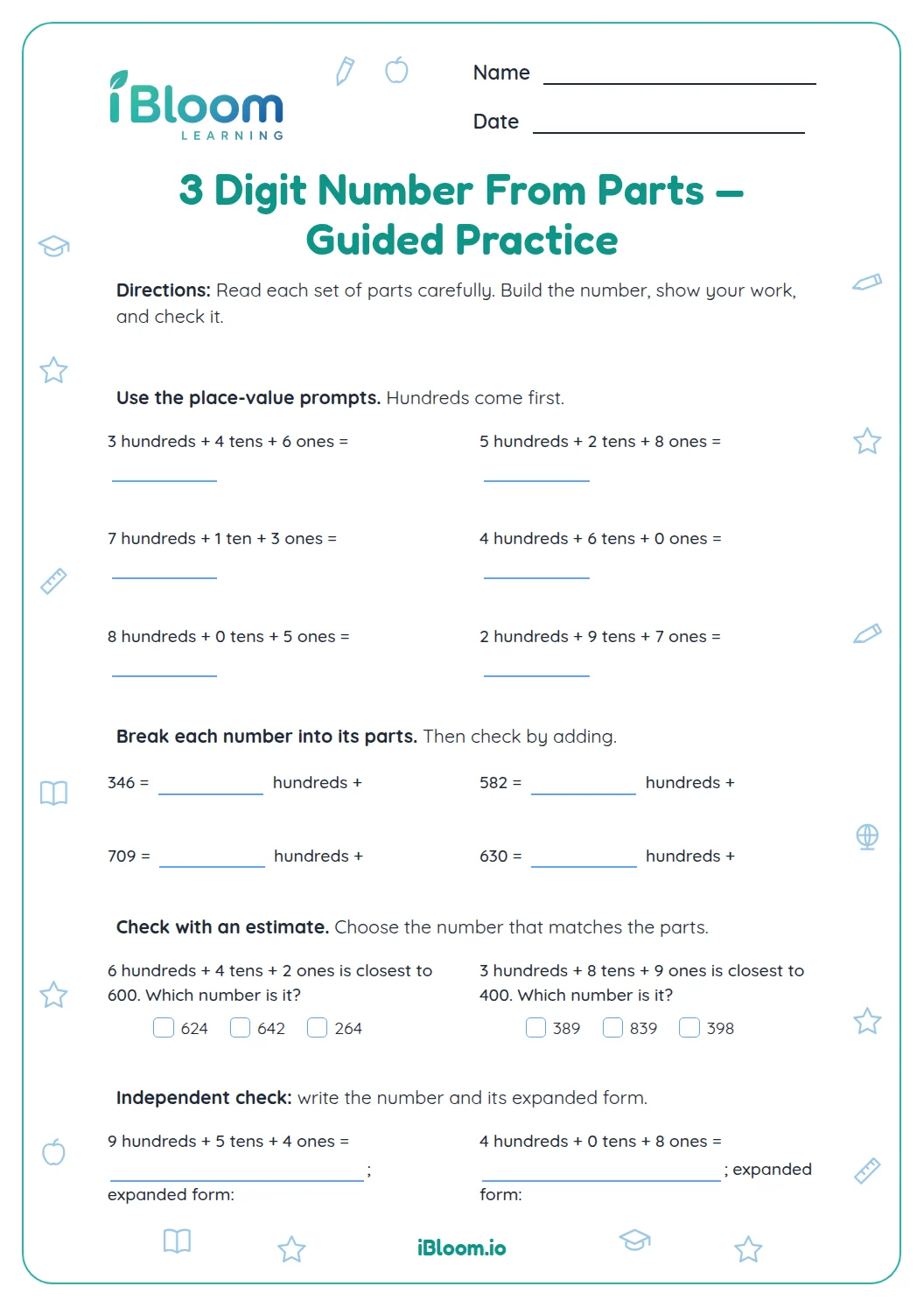
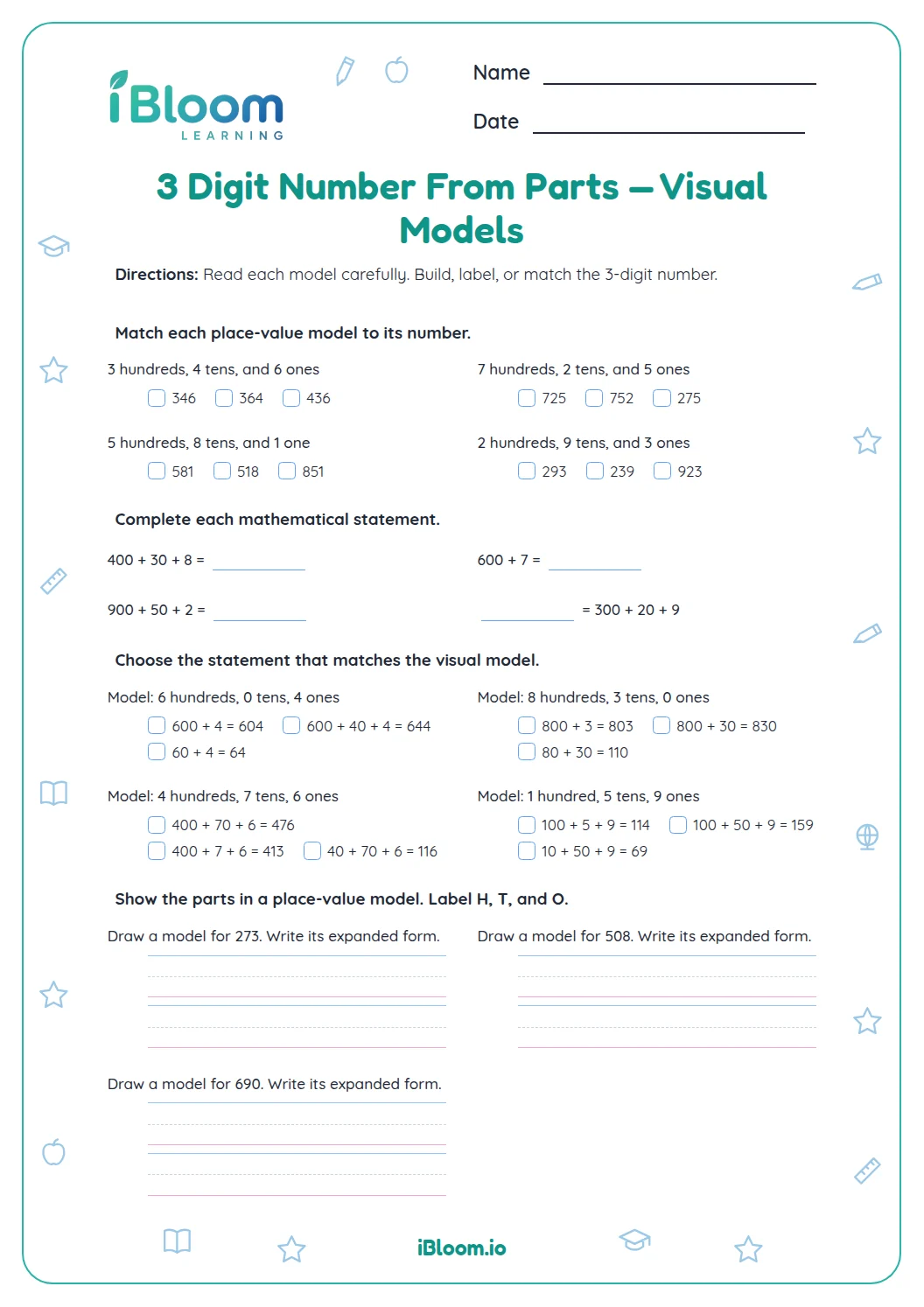
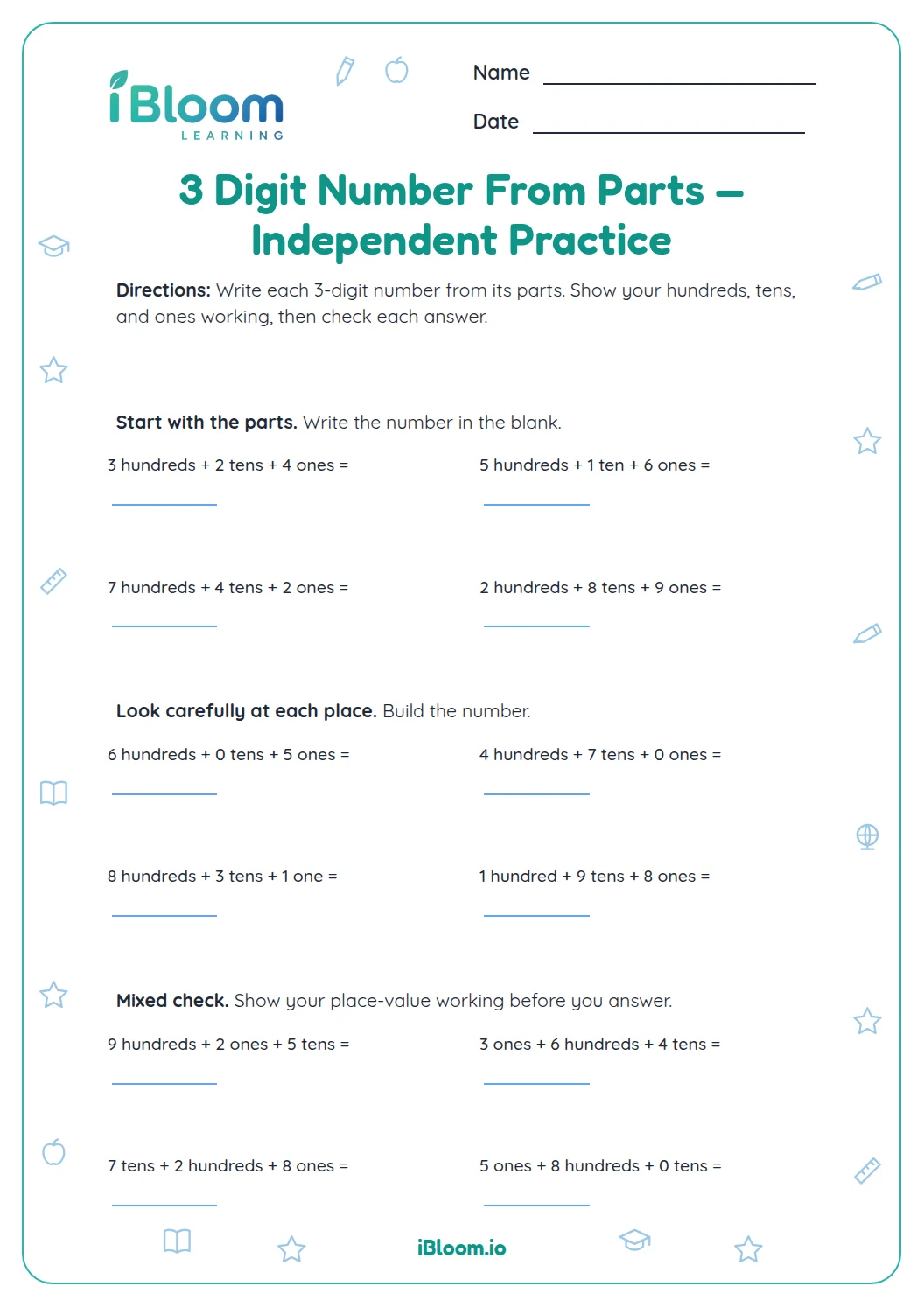
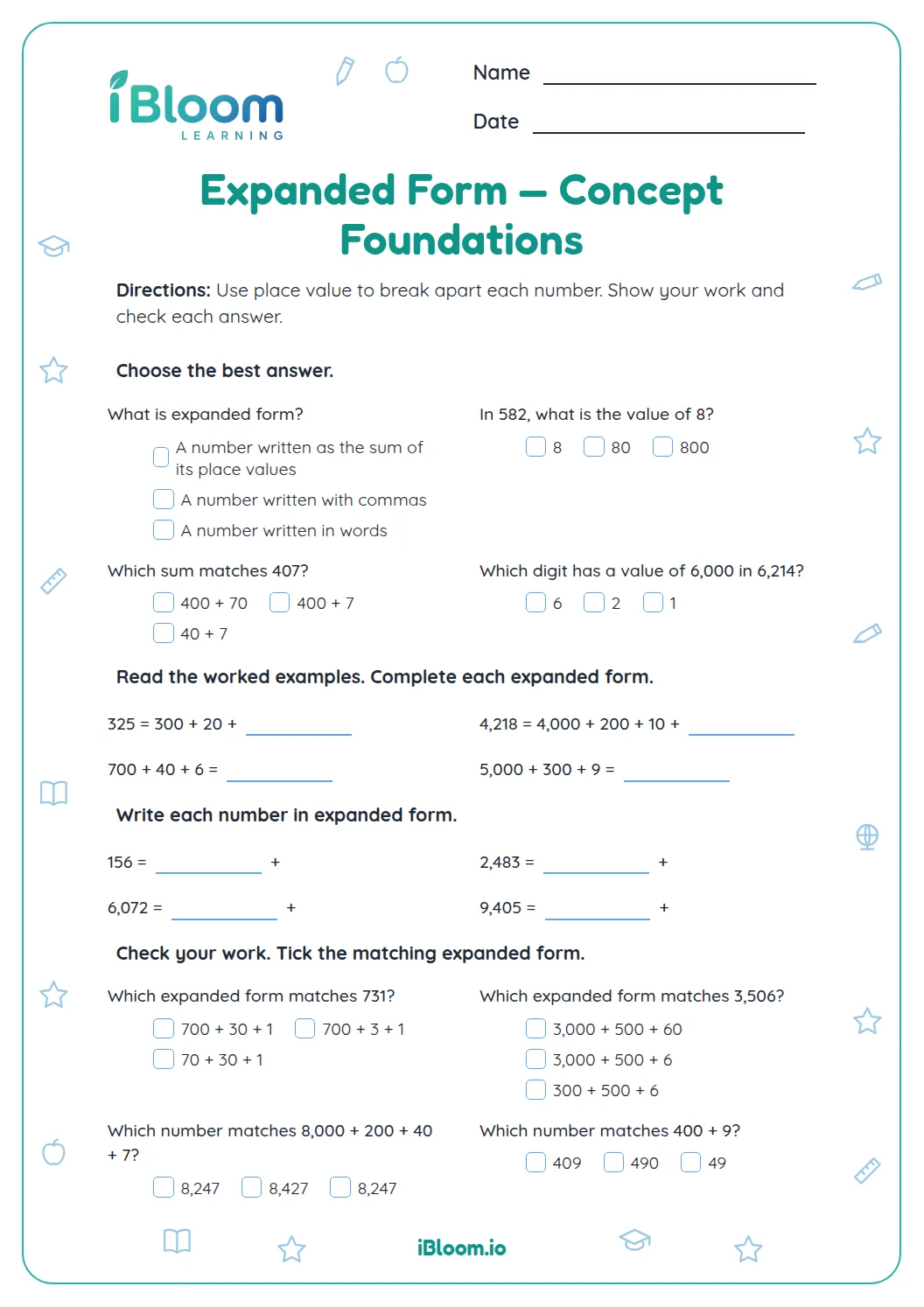
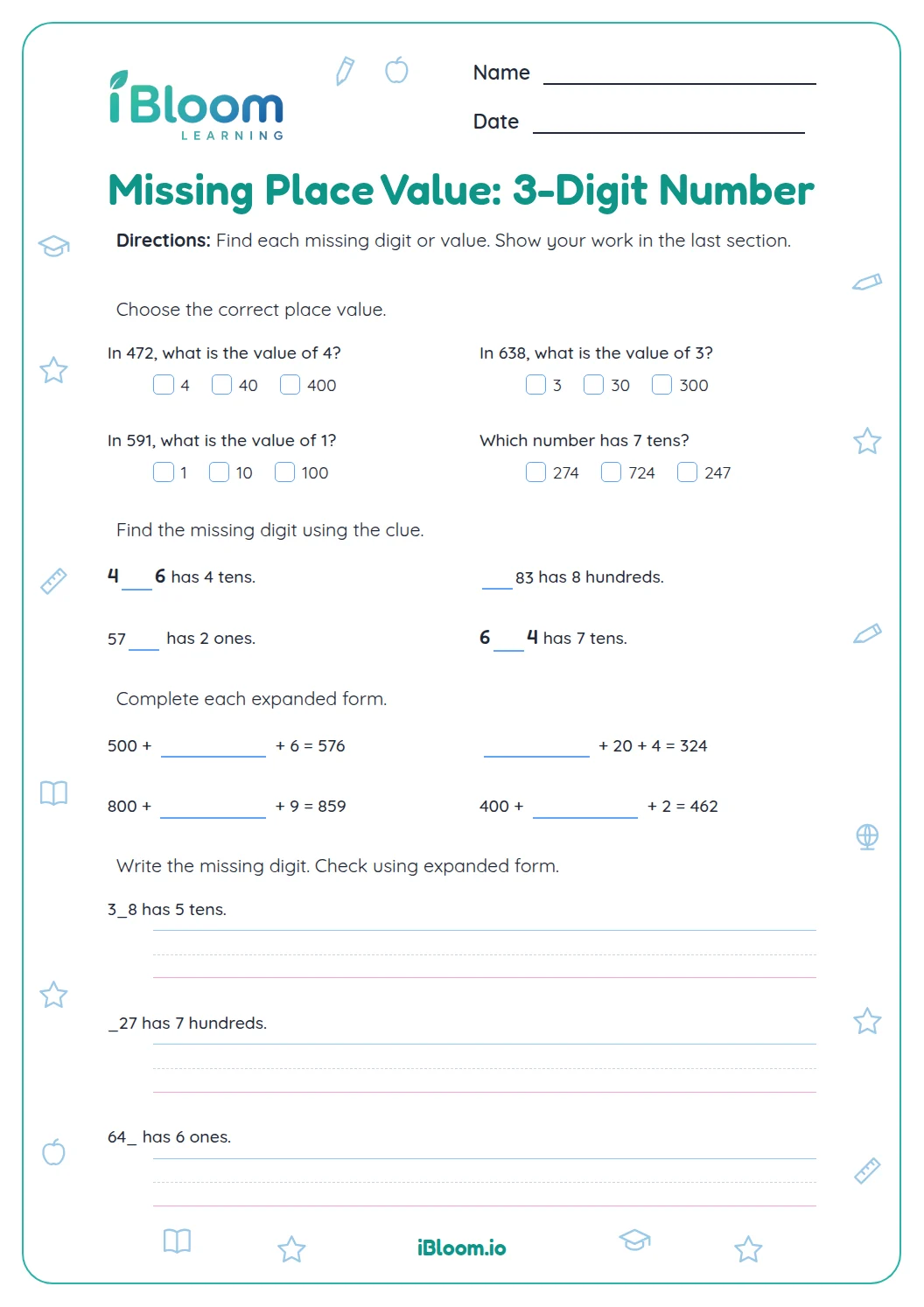
This free Grade 3 worksheet puts three-digit place value into everyday counts: books, cans, eggs, seats and classroom supplies. Part A names a digit’s place, and Part B finds its value. Part C builds supply totals; Part D finds package counts. The 14 questions practice Common Core 2.NBT.A.1, understanding the amounts represented by each digit in a three-digit number. Several questions include zero to show how it holds a position when there are none of that unit. A separate answer key is included.
Aligned to 2.NBT.A.1
How do real-world counts help explain digit value?
A count gives each digit an amount to describe. In 384 pencils, the 3 represents 300 pencils, the 8 represents 80 pencils, and the 4 represents 4 pencils. Naming the item keeps the question connected to quantity rather than just a position on paper.
Use the Part A choices to name positions first. Then ask for amounts in Part B: the answer changes from a place name such as tens to a number such as 40.
- 1A class saves 247 caps.
- 2247 = 200 + 40 + 7
- 3The 4 is in the tens place.
- 44 tens represent 40 caps.
Why does zero matter in these numbers?
Zero holds a place when there are none of that unit. In 805 rolls, there are 8 hundreds, 0 tens and 5 ones. In 690 seats, the zero is in the ones place. Comparing these two numbers makes it clear that zero can appear in different positions.
How does place value help with packages?
Part C names packages containing 100 or 10 items and then adds loose items. Students multiply each package count by its size and combine the amounts. Six boxes of 100 beads, three bags of 10 and four loose beads make 600 + 30 + 4 = 634 beads.
The card problem has no tens packs: 400 + 0 + 9 = 409 cards. Part D reverses the thinking. In 826 pens, 8 hundreds fill eight boxes of 100. To reach 470 sheets from 400, students need 70 more sheets, or seven packs of 10.
How to use this worksheet
- 1Read the first book count and identify ones, tens and hundreds from right to left.
- 2Finish Part A using place names rather than digit values.
- 3For Part B, say the named digit as groups: four tens, seven tens or four hundreds.
- 4Write the amount those groups represent in the blank.
- 5For Part C, build the bead and card totals. In Part D, use hundreds and tens to find package counts.
- 6Check the key and revisit zero in 805 and 409 if either place was lost.
Mistakes to check and how to help
The mistake
Answering 4 when asked what the 4 in 247 represents.
The fix
Say four tens, then convert four groups of ten to 40.
The mistake
Calling the 7 in 735 the tens digit.
The fix
Start at the right: ones, tens, hundreds. The 7 is three positions from the right.
The mistake
Writing 49 for four hundreds and nine ones.
The fix
Write 400 + 0 + 9, then keep a zero in the tens position to make 409.
Common Core alignment
Read the hundreds, tens and ones represented by digits and use them to build totals.
On this sheet: All four parts connect digits in three-digit numbers with groups of hundreds, tens and ones.
Show the official wordingHide the official wording
Understand that the three digits of a three-digit number represent amounts of hundreds, tens, and ones; e.g., 706 equals 7 hundreds, 0 tens, and 6 ones. Understand the following as special cases:
What to practice next
Make more practice
Further reading
Questions parents and teachers ask
Are these addition problems or place value problems?
The main skill is place value. The first ten questions ask for a digit’s place or value in an everyday count. Part C combines hundreds, tens and ones into supply totals. Part D finds full boxes of pens and the paper packs needed to reach a total.
What should students write when asked for a place?
They should choose a place name: ones, tens or hundreds. Part A supplies those three choices for each question. In the library’s 462 books, the 6 is in the tens place. Part B changes the task and asks for the numerical value represented by a named digit.
How do I explain the zero in 805?
The zero means there are zero tens in the place value form of 805. The 8 still represents 800 and the 5 still represents 5. Writing 85 would move the 8 into the tens place and change the amount, so the zero keeps the positions clear.
Can students use objects to solve the package problems?
Yes, bundles or labeled counters can represent the packages. Use one kind for hundreds, another for tens and loose counters for ones. For the bead problem, set out six hundreds, three tens and four ones, then connect those groups to 600 + 30 + 4 and the total 634.
What does the answer key include?
The separate key identifies four correct place choices, fills six digit-value blanks, gives two totals with units and fills two package-count blanks. When reviewing, ask students to explain an answer, such as seven tens means seventy tickets. That checks the connection between a digit, its place and its value.