



About this worksheet
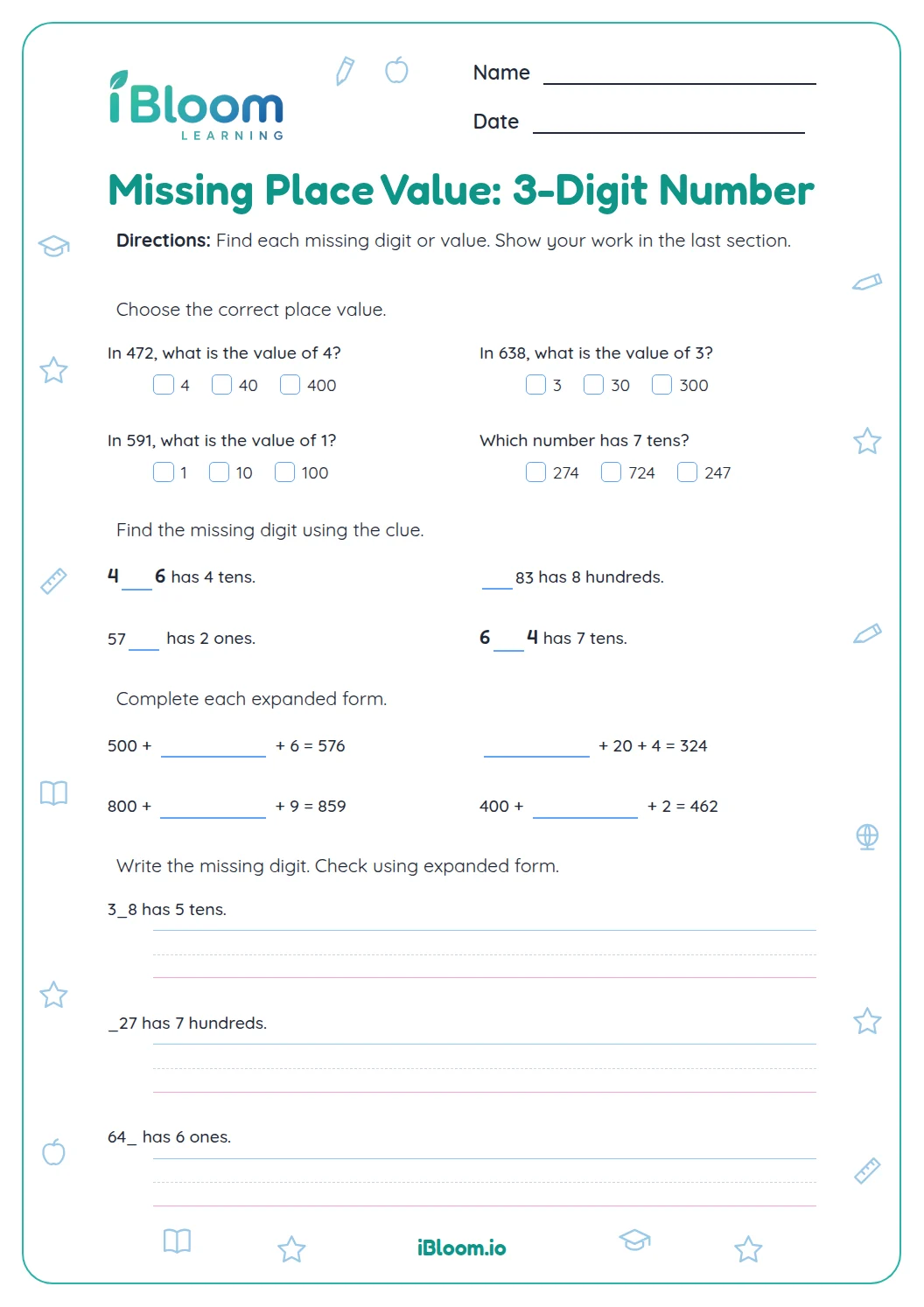
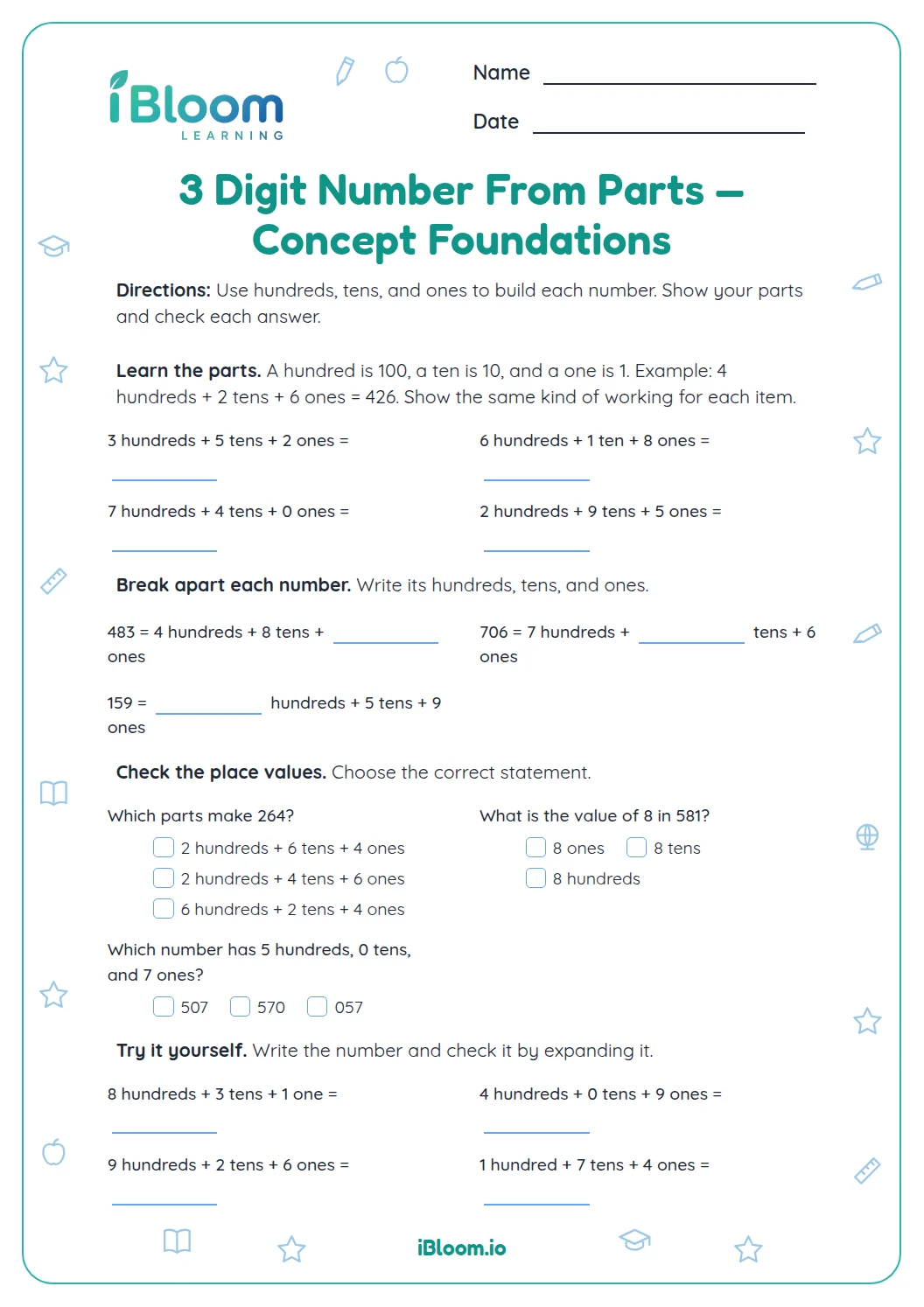
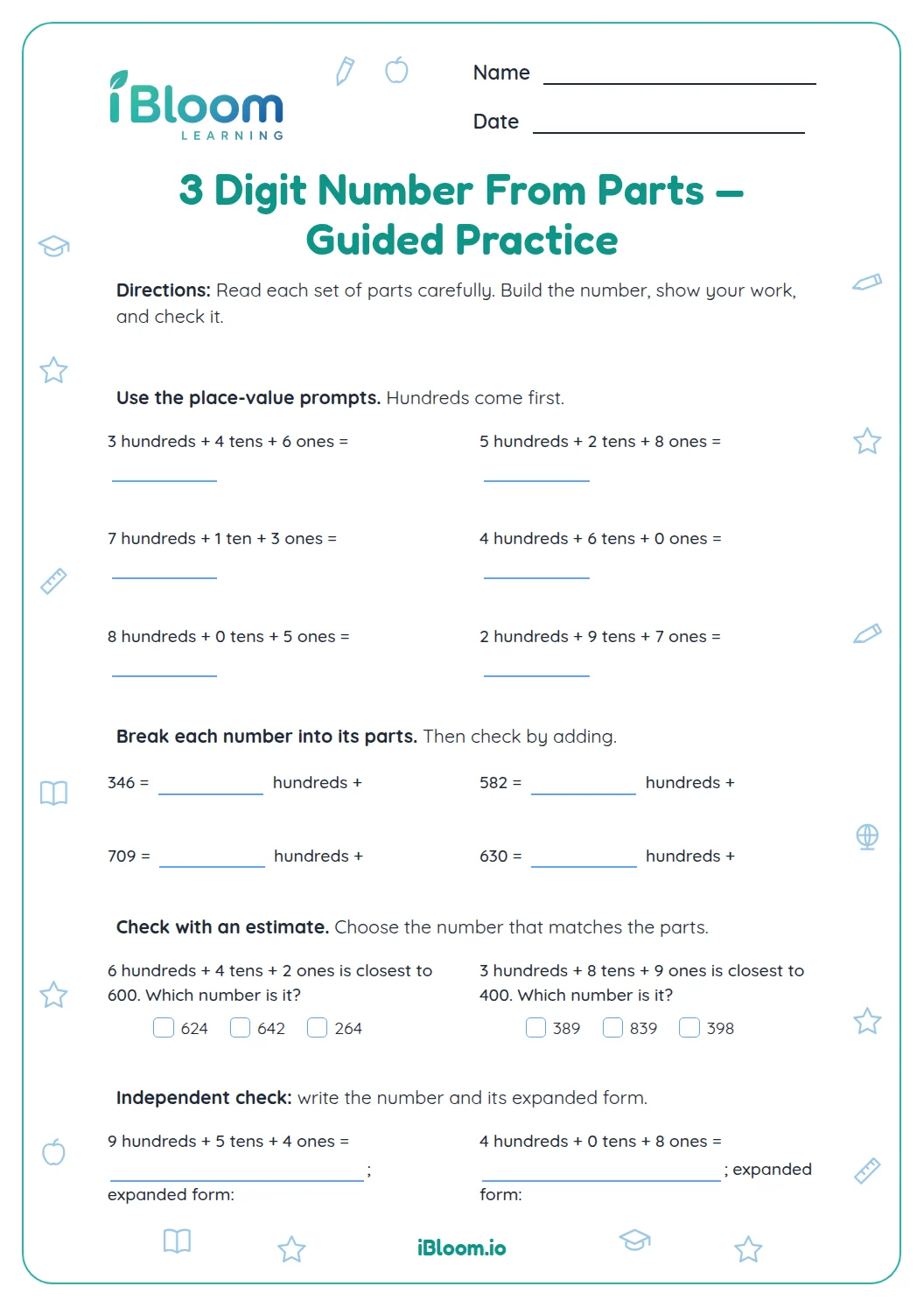
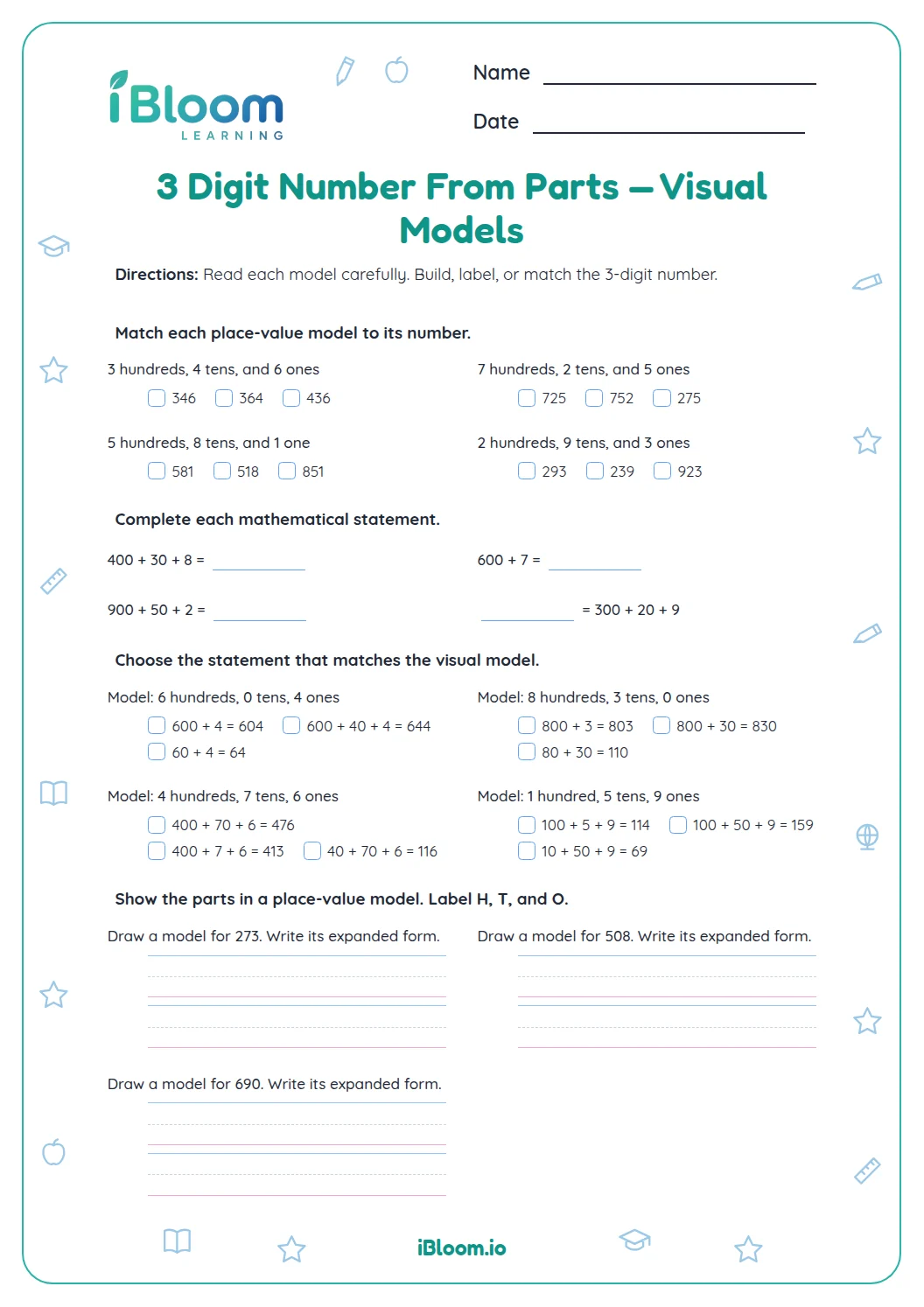
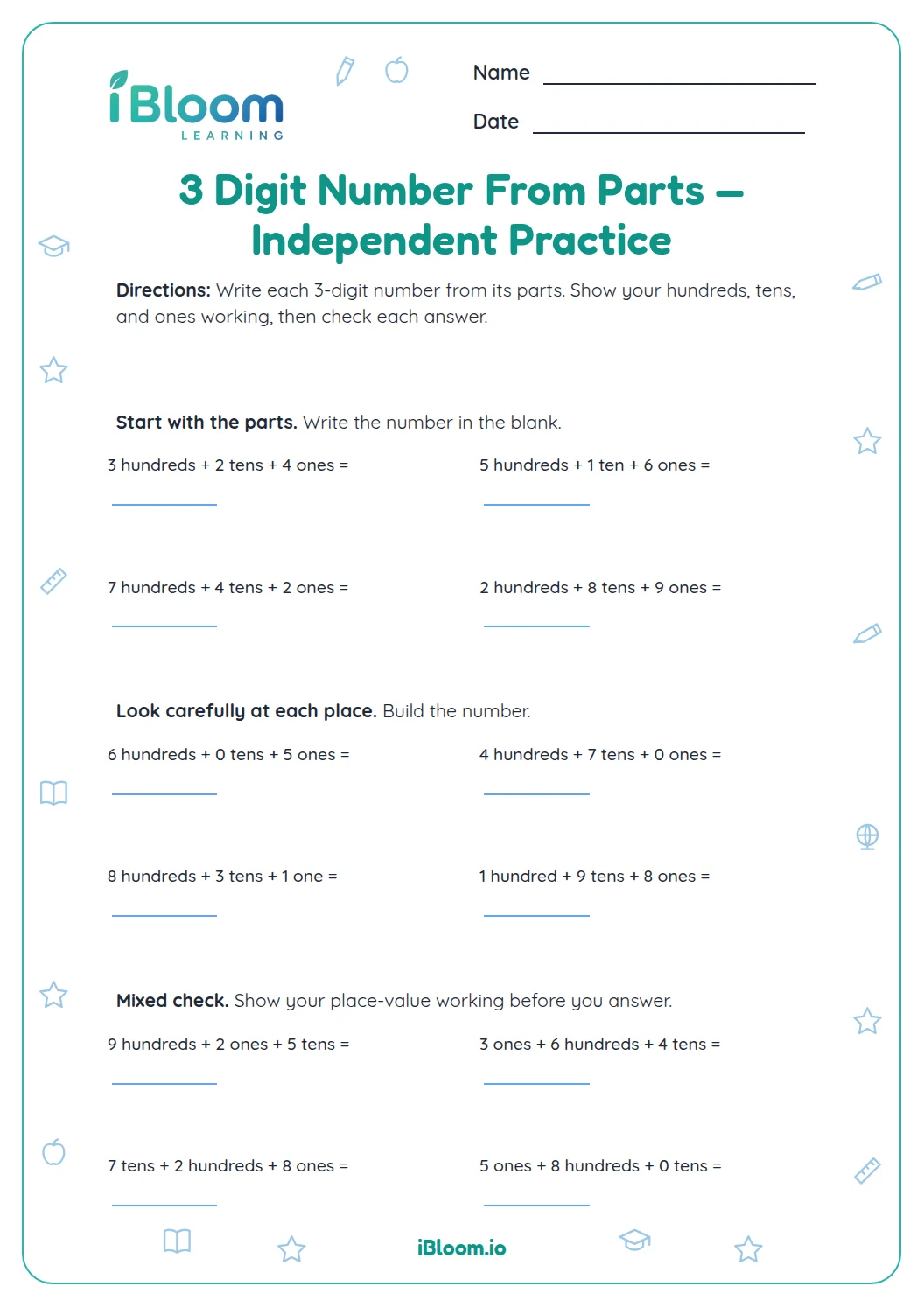
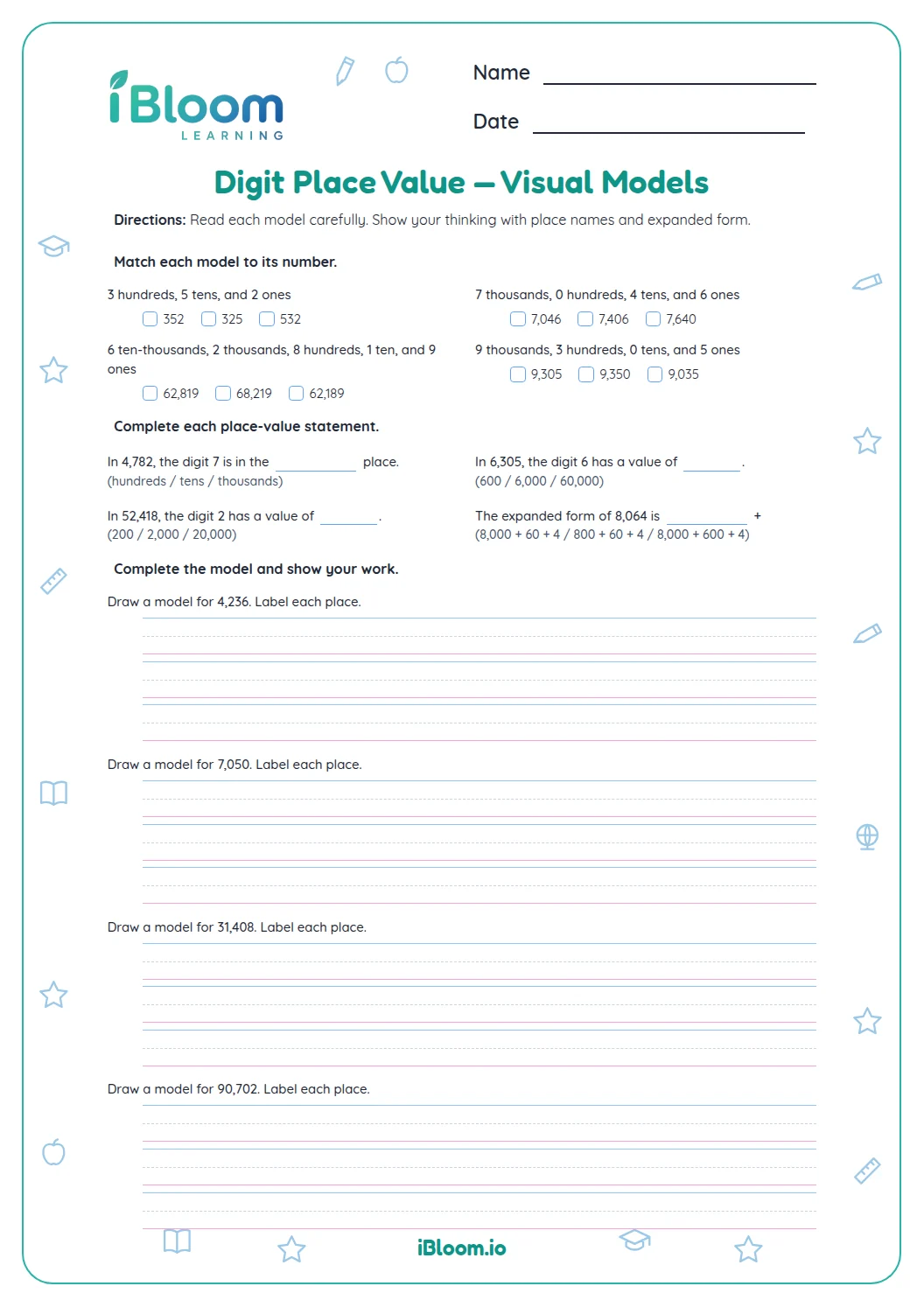
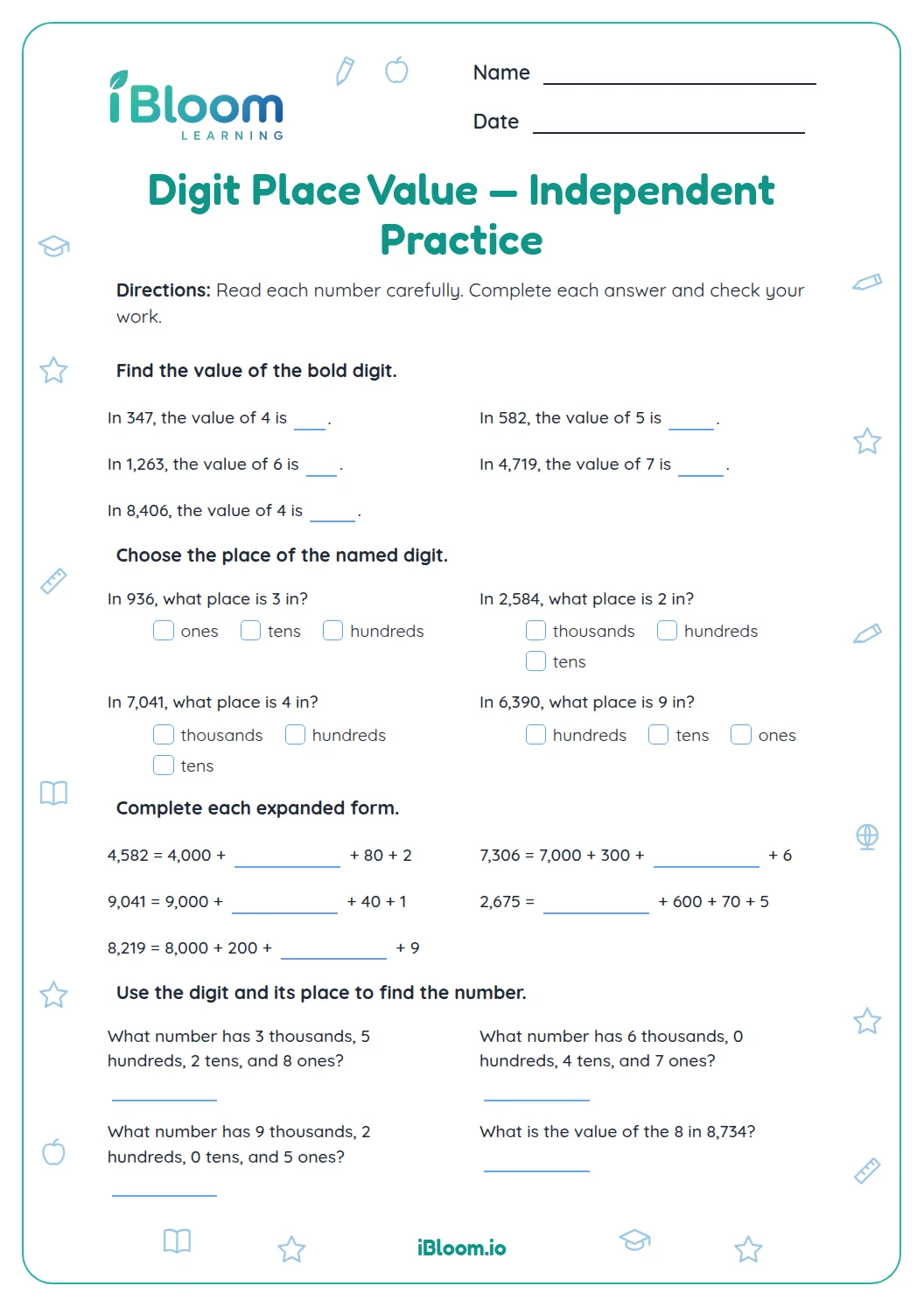
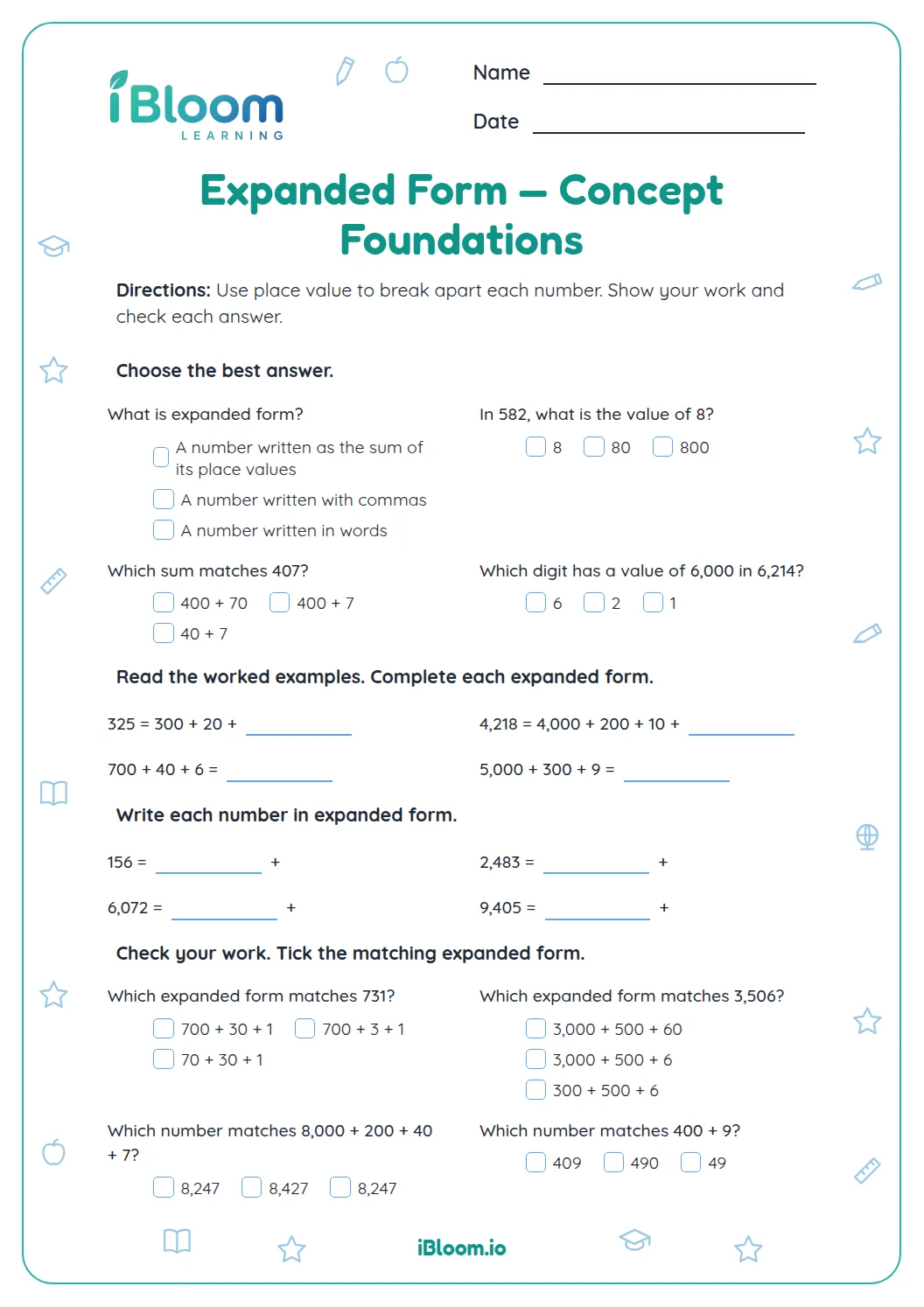
This Grade 3 place-value worksheet uses four base-ten block models and ten expanded-form equations to practice missing place values in three-digit numbers. Students identify a requested digit in each model, then find missing addends that complete an equation. The separate answer key lists all 14 answers. The work practices CCSS 2.NBT.A.1 by connecting hundreds, tens, and ones to a three-digit number.
Aligned to 2.NBT.A.1
How do base-ten blocks show a three-digit number?
A large square represents 100, a rod represents 10, and a small cube represents 1. Count each kind separately, then read the digits in hundreds, tens, and ones order. A missing-place question asks for just one of those digits.
How can expanded form reveal a missing digit?
Expanded form separates a number into hundreds, tens, and ones. Match each addend with its place, then use the known parts to identify the missing one.
- 1The model has 2 hundreds, 3 tens, and 4 ones.
- 2It represents 234, so the tens digit is 3.
- 3Answer: 3.
What models and equations does the page use?
Questions 1–3 and 14 show base-ten blocks and ask for a digit in the number. Questions 4–13 give expanded-form equations with one missing addend. The key lists the requested digit or missing place-value part for each item.
How to use this worksheet
- 1For each model, count the hundreds flats, tens rods, and ones cubes.
- 2Say the number in hundreds, tens, and ones order.
- 3Identify which place the prompt asks about.
- 4For expanded form, match each addend to its place value.
- 5Check that the completed parts make the three-digit number.
Common mistakes and quick fixes
The mistake
Reading the blocks in the wrong order.
The fix
Name hundreds first, then tens, then ones.
The mistake
Writing the number of rods instead of the tens digit.
The fix
Count the tens rods; their count is the tens digit.
The mistake
Confusing a missing digit with a missing value.
The fix
Use the prompt: block questions ask for a digit, equations ask for the missing addend value.
Common Core alignment
This activity gives children focused practice with the language and reasoning named in this standard.
Read hundreds, tens, and ones in base-ten models and expanded form.
On this sheet: The base-ten models and expanded forms show how hundreds, tens, and ones compose three-digit numbers.
Show the official wordingHide the official wording
Understand that the three digits of a three-digit number represent amounts of hundreds, tens, and ones; e.g., 706 equals 7 hundreds, 0 tens, and 6 ones.
What to practice next
Make more practice
Further reading
Questions parents and teachers ask
What does a base-ten block represent?
A flat represents 100, a rod represents 10, and a small cube represents 1. Count each kind and use the counts as the hundreds, tens, and ones digits. For example, two flats, three rods, and four cubes represent 234.
Why does question 3 have no tens rods?
Question 3 shows 6 hundreds, 0 tens, and 8 ones, so it represents 608. The zero is the tens digit even though there are no tens rods. It holds the tens place between the hundreds and ones, preserving the number’s place-value structure.
Are answers always digits?
Questions 1–3 and 14 ask for a digit shown by a base-ten model. Questions 4–13 ask for a missing addend in expanded form, which may be a place value such as 200 or a smaller value such as 2. Read the equation to see what the blank represents.
How can expanded form help check an answer?
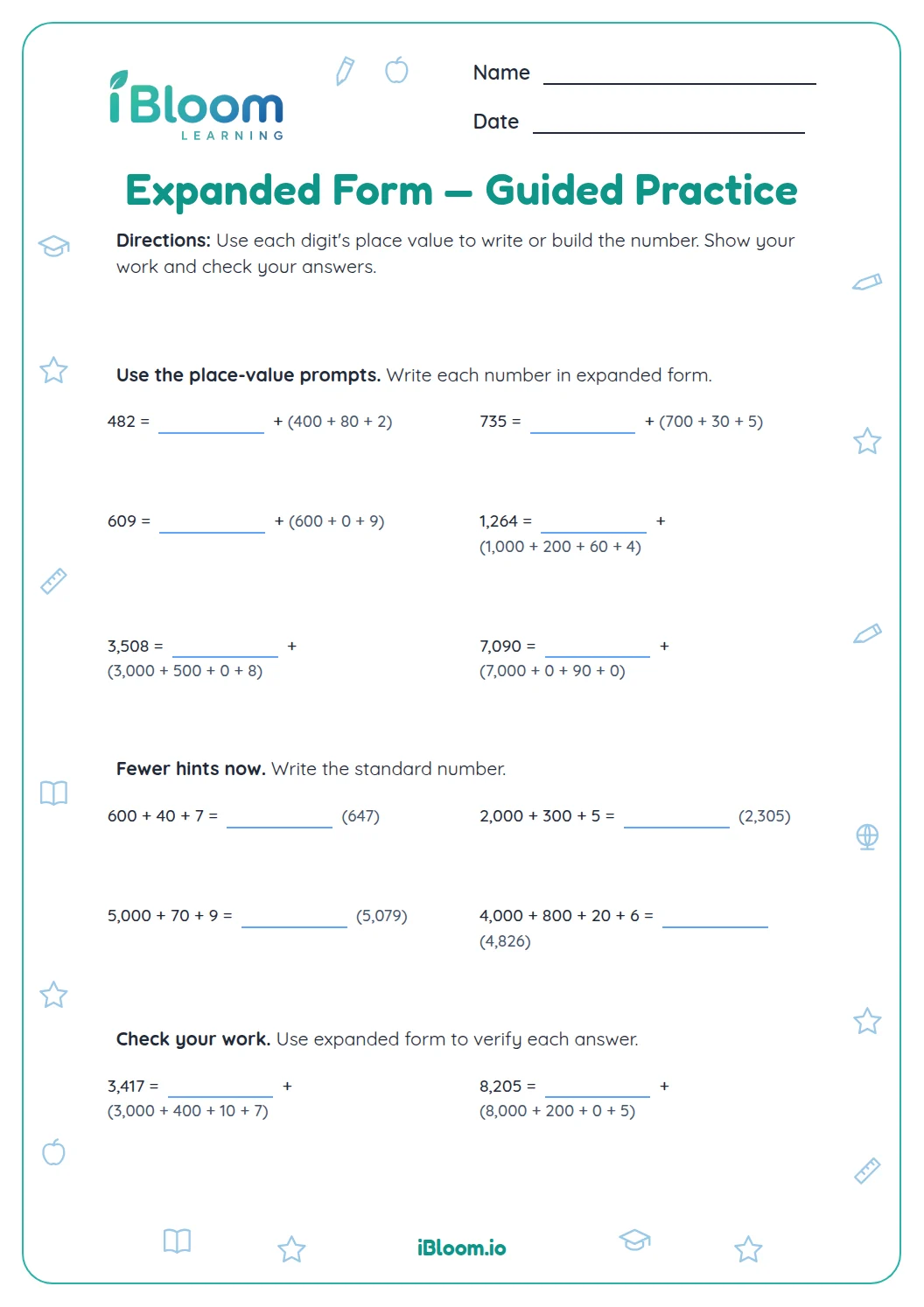
Add the hundreds, tens, and ones parts to see whether they make the number on the right. For example, 400 + 10 + 6 = 416, so the missing addend in that equation is 10. The answer key lists each completed value.
Does the answer key show the working?
The separate answer key lists each correct digit or addend. To review an item, count the blocks by kind or add the known place-value parts. Then compare the total with the three-digit number in the question to check the missing value.