




About this worksheet
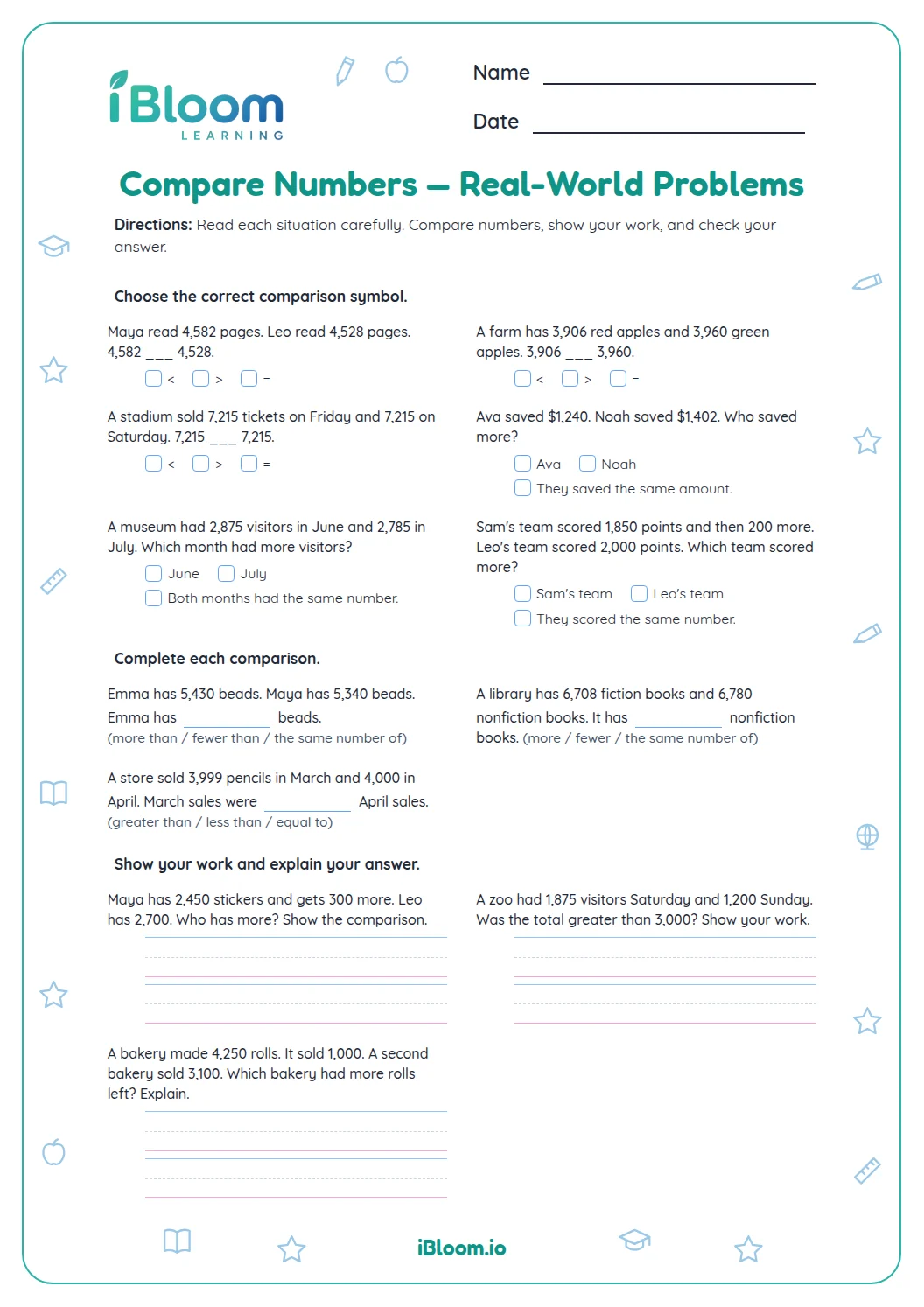
This Grade 3 worksheet develops number comparison through base-ten models and place-value reasoning. Students identify hundreds, tens, and ones, record comparisons with >, <, or =, and apply their thinking to scores and collections. The 15 questions keep the numbers within three digits and use visual models before moving to independent comparisons. The skill aligns with CCSS 2.NBT.A.4, which describes comparing three-digit numbers by the values of their digits.
Aligned to 2.NBT.A.4
How does a base-ten model show a number?
Count each group of hundreds, tens, and ones to identify the number before comparing it. The first two questions use models so students connect the blocks with the written numeral.
Which place should you compare first?
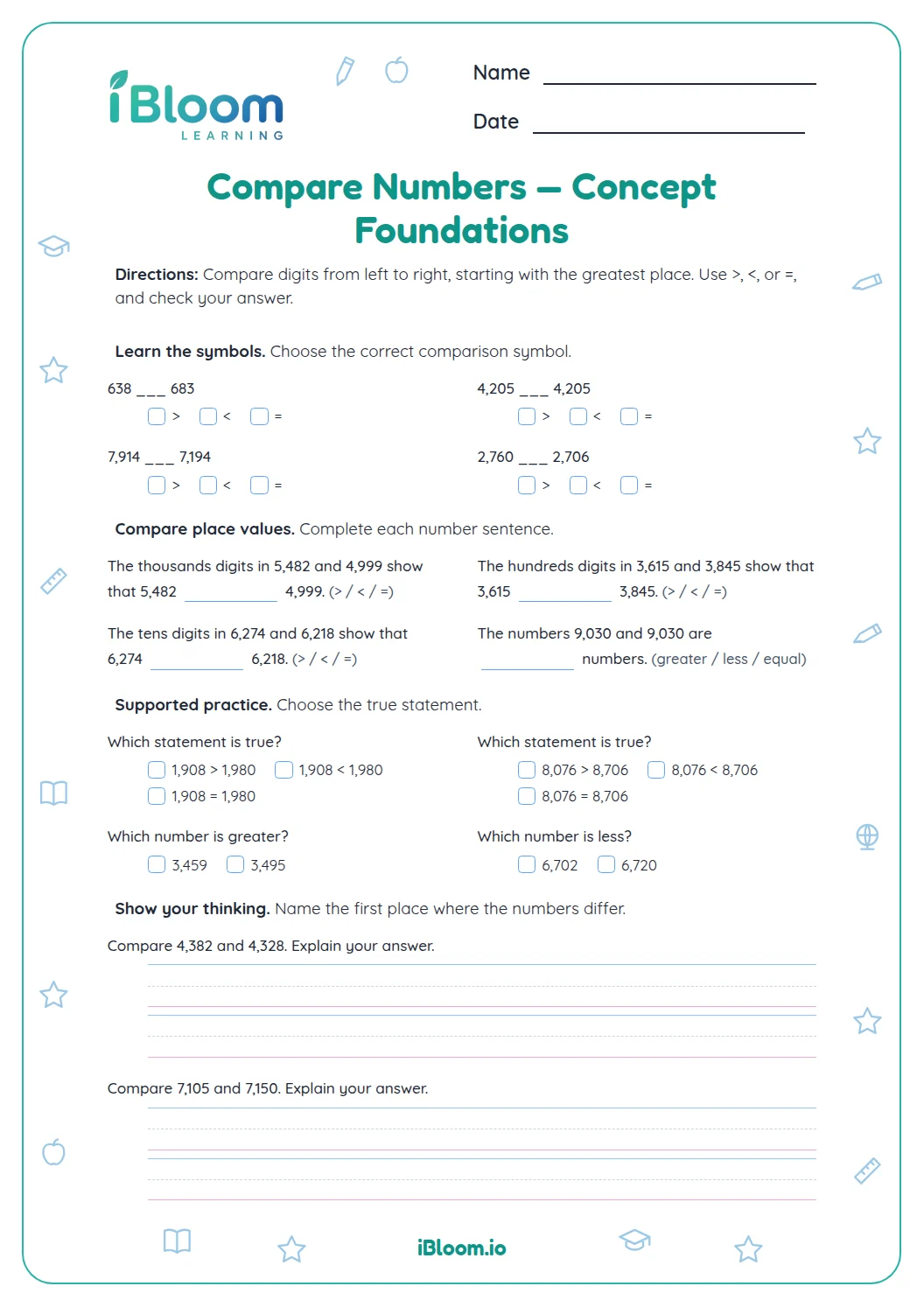
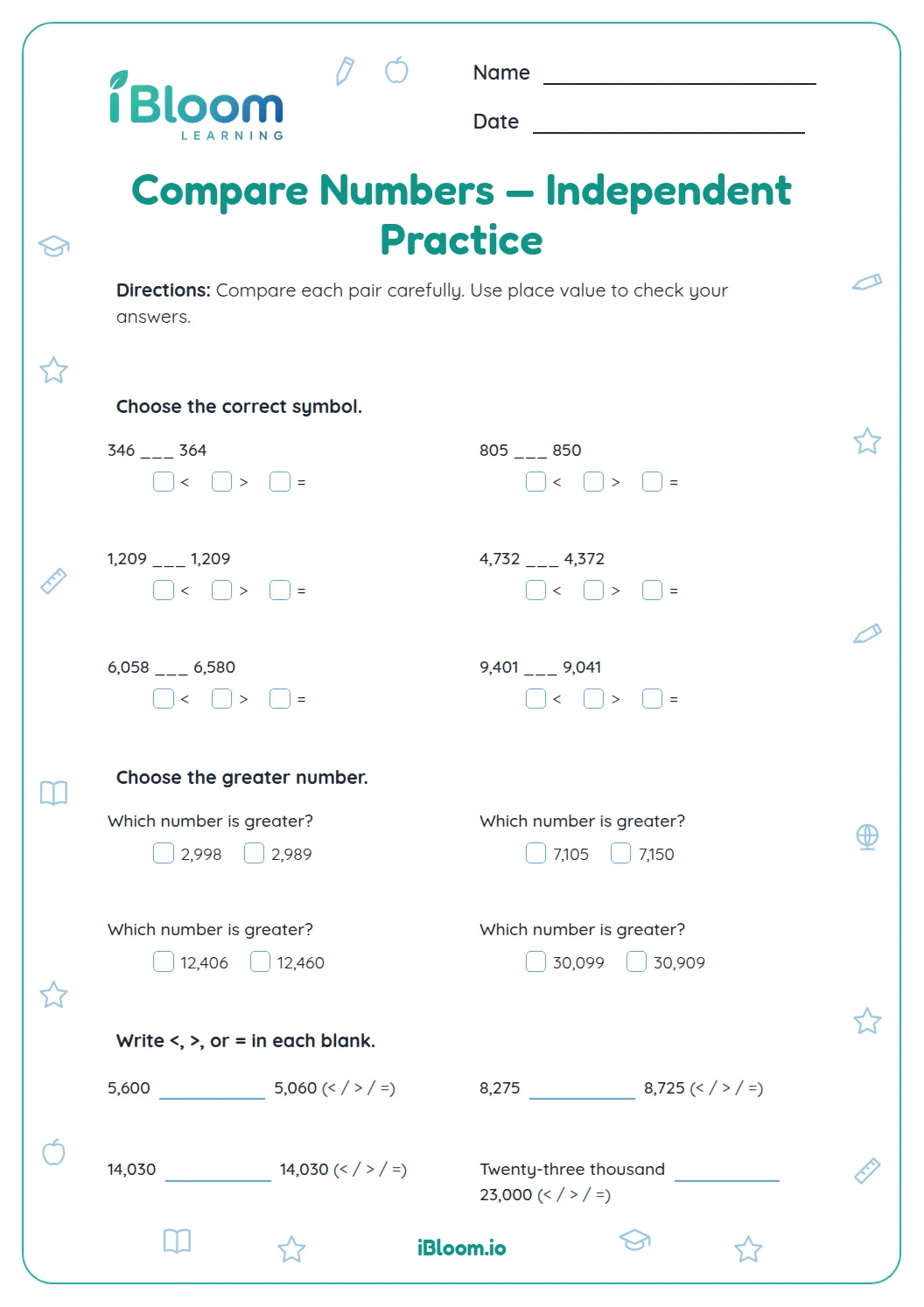
Compare the hundreds digits first. If they match, move to tens; if those match too, compare ones. The symbols >, <, and = record the result.
- 1462 and 426 have the same hundreds. Compare tens: 6 tens is greater than 2 tens, so 462 > 426.
How do comparisons help in everyday situations?
Students complete number comparisons, including models for 275 and 604. Each blank asks for a comparison symbol or a missing number, so they can check how each digit’s place affects the value.
How to use this worksheet
- 1Count hundreds, tens, and ones in each model.
- 2Compare the hundreds digits first.
- 3If the hundreds match, compare tens and then ones.
- 4Choose the symbol or explain which number is greater.
- 5Use the answer key to check the first place where values differ.
Mistakes to watch for
The mistake
Comparing the last digit first because it is easiest to notice.
The fix
Read both numbers from left to right, starting with hundreds.
The mistake
Treating a zero in the tens place as if it were no value in the whole number.
The fix
Keep the place columns aligned; 708 still has seven hundreds.
The mistake
Turning the symbol toward the smaller number.
The fix
Remember the open side faces the greater number.
Common Core alignment
The worksheet practices comparing three-digit numbers by place value.
Compare three-digit numbers by the value of hundreds, tens, and ones.
On this sheet: Students use place-value models and digit comparisons to compare three-digit numbers.
Show the official wordingHide the official wording
Compare two three-digit numbers based on meanings of the hundreds, tens, and ones digits, using >, =, and < symbols to record the results of comparisons.
What to practice next
Make more practice
Further reading
Questions parents and teachers ask
What do the base-ten blocks represent?
A large flat represents one hundred, a rod represents one ten, and a small unit represents one. Count each type to read the number before comparing it with another number. The two models each show one number, so read all three place values before answering.
How should students decide which number is greater?
Start at the hundreds place. If both digits match, compare the tens; if those match, compare the ones. The first place with different digits determines which number is greater. A short comparison can be checked by naming the value of each differing digit.
What do the symbols mean?
The symbol > means greater than, < means less than, and = means equal to. Read the open side toward the larger number: 462 > 426 means 462 is greater than 426. Reading a symbol aloud helps confirm that its open side faces the greater value.
How do the comparison symbols help?
The open side of > or < faces the greater number, and = means the values are equal. Students can first compare the hundreds, then the tens, then the ones. This check works for the number pairs and model questions on this worksheet.
Is the number comparison at the Grade 3 level?
The visual models and comparisons use three-digit numbers. The activity directly practices the place-value comparison standard for three-digit numbers, identified as 2.NBT.A.4. This comparison uses three-digit values and a familiar place-value rule. The place-value comparison is visible in each number pair.
What is one next step after this page?
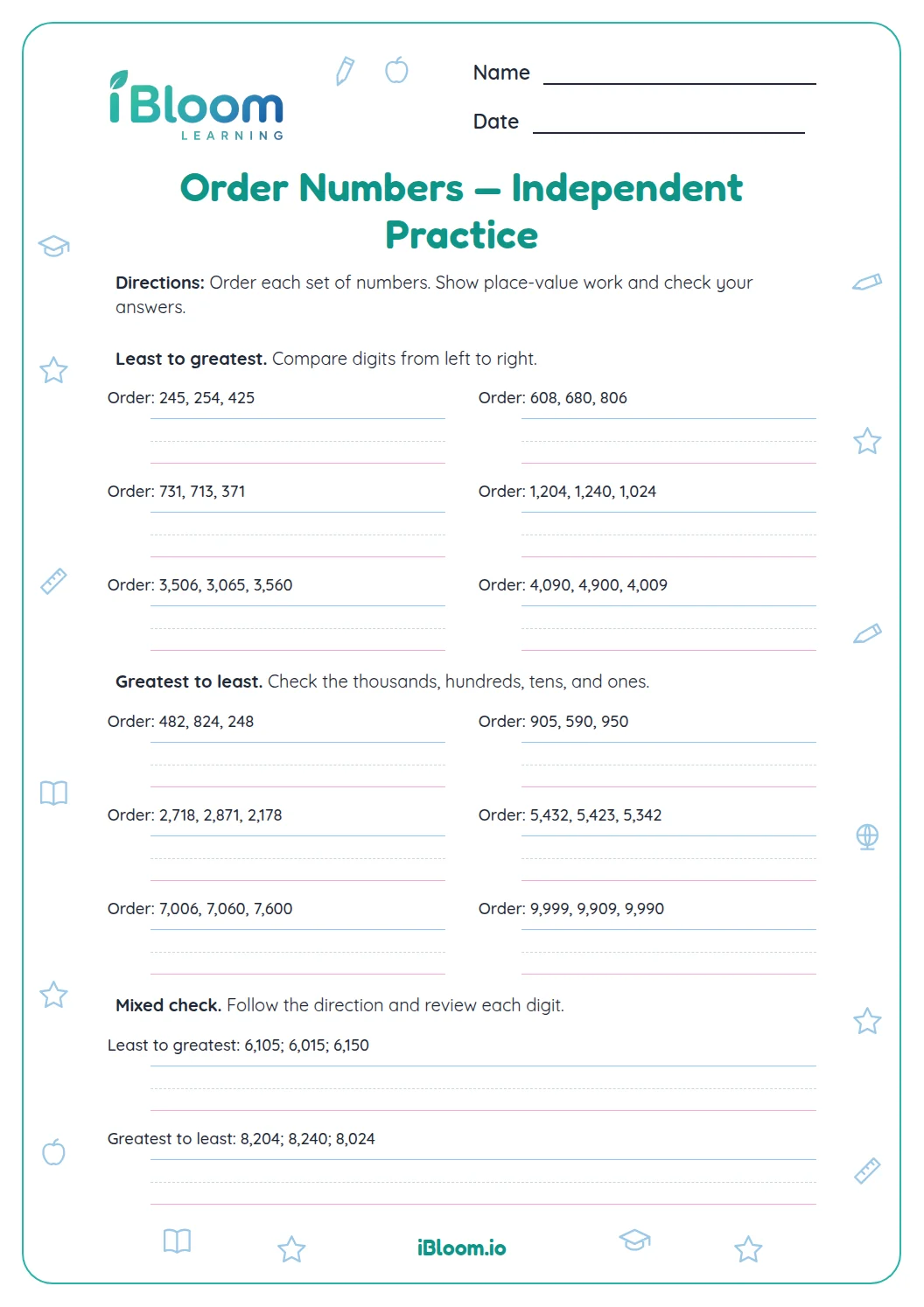
Order Numbers lets students compare several values at once, while Digit Place Value gives more practice naming the value of individual digits. Both are linked with related worksheets. Compare the hundreds first, then tens, then ones if the earlier places match.