


About this worksheet
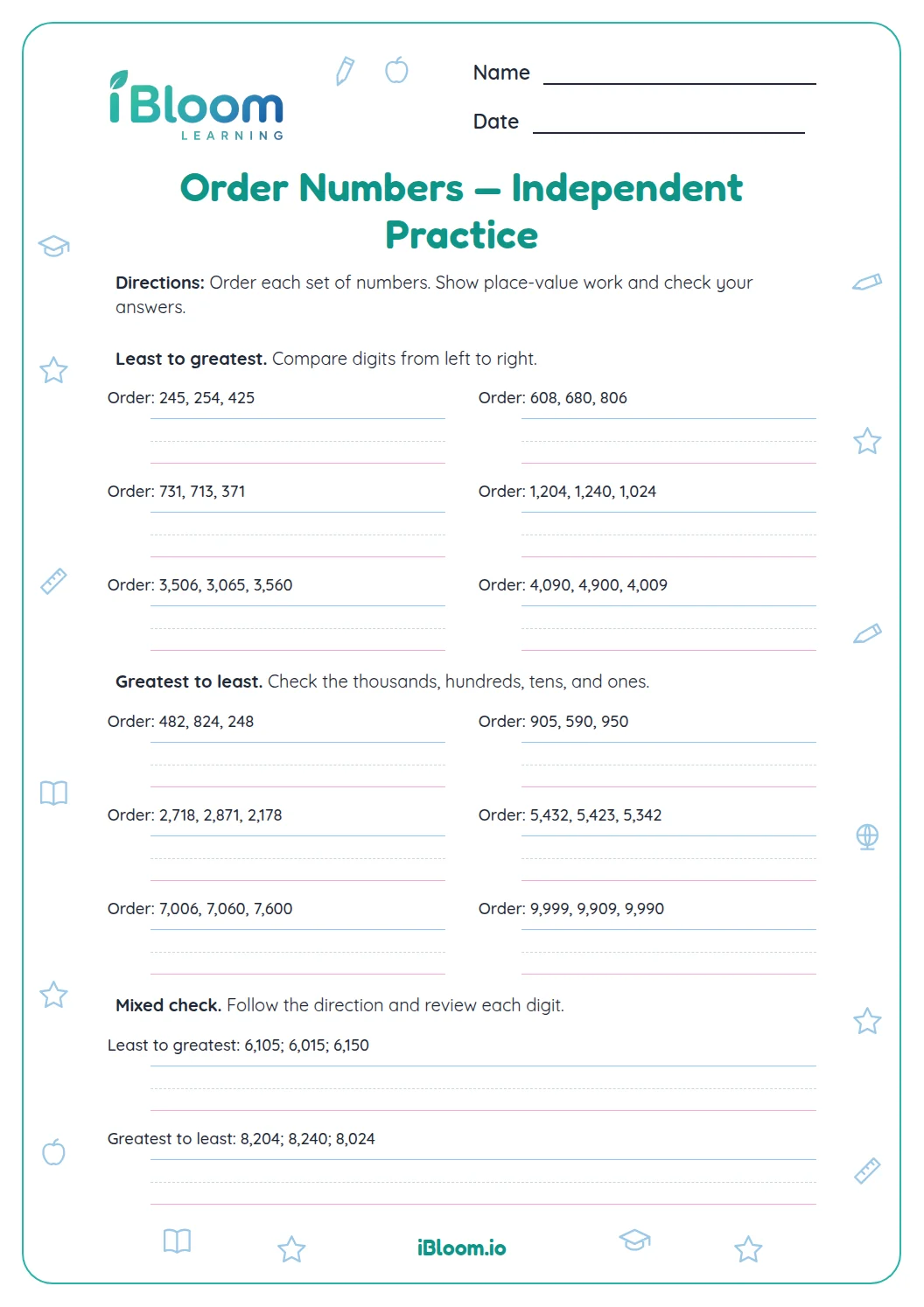
This Grade 3 guided practice includes rounding aligned to CCSS 3.NBT.A.1 and orders numbers by place value. The first eight questions ask learners to arrange three-digit numbers from least to greatest or greatest to least. The final eight ask for rounding to the nearest ten or hundred. A matching answer key shows the ordered sequences and rounded values.
Aligned to 3.NBT.A.1
What skills are practiced?
Questions 1–8 ask learners to order sets of three-digit numbers in both directions. Questions 9–16 ask them to round three-digit numbers to the nearest ten or hundred. Both tasks rely on noticing the value of digits by place.
How do you order 314, 341, and 134?
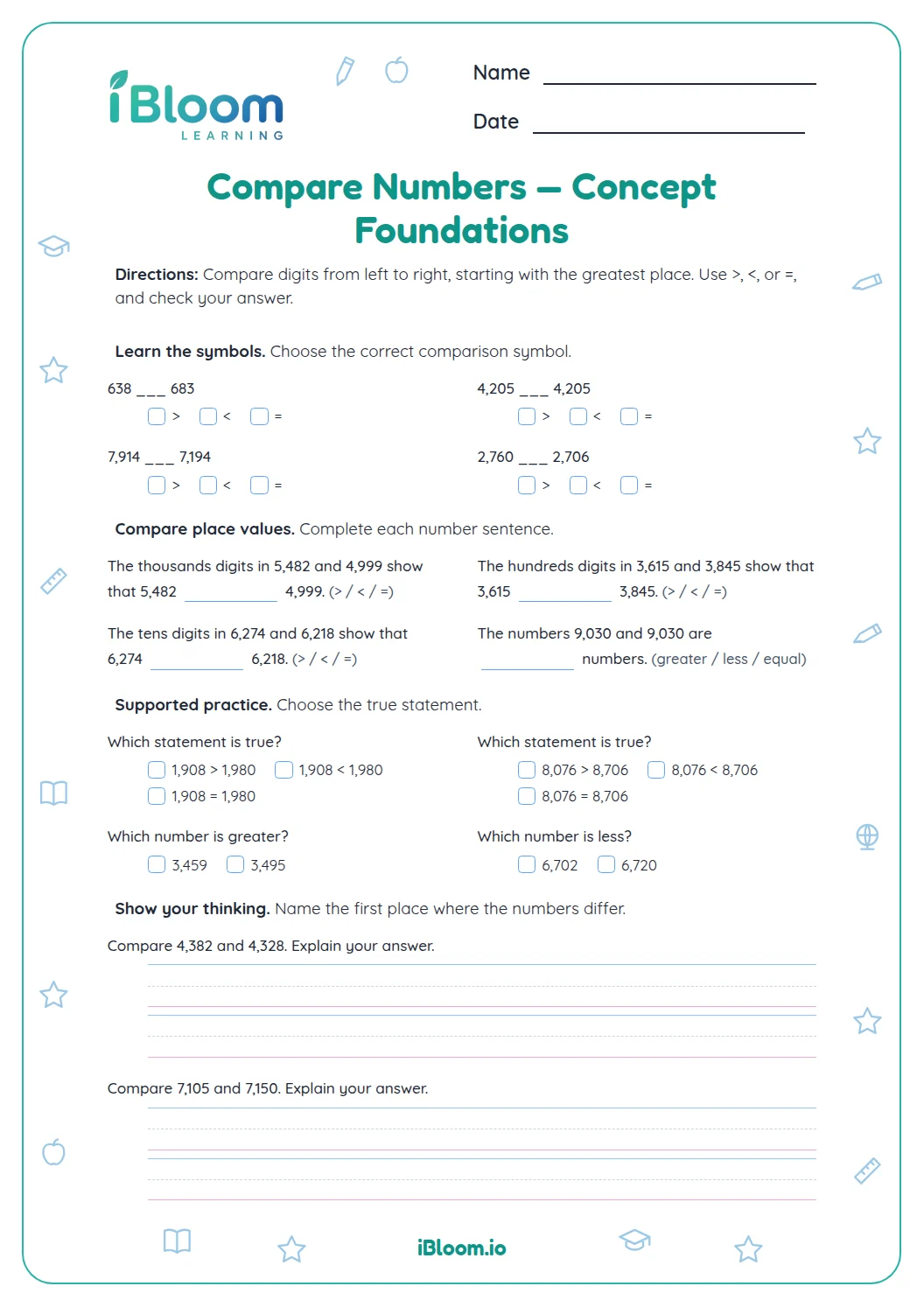
Compare hundreds first. Since 134 has 1 hundred, it comes first. The other numbers have 3 hundreds, so compare tens: 314 has 1 ten and 341 has 4 tens.
- 1134 has fewer hundreds than 314 and 341.
- 2314 has fewer tens than 341.
- 3Least to greatest: 134, 314, 341
How do you round 475 to the nearest ten?
Look at the ones digit, 5. Since it is 5, increase the tens digit by one and change the ones digit to zero: 475 rounds to 480. For nearest hundred, look at the tens digit instead.
What is in the rounding part?
The last eight questions alternate between nearest-ten and nearest-hundred rounding. The requested place is written in every prompt, so learners can focus on identifying the digit that controls the rounding decision.
How to use this worksheet
- 1Read whether the question asks for least to greatest or greatest to least.
- 2Compare hundreds first, then tens, then ones.
- 3Write each number once in the requested order.
- 4For rounding, identify the place named in the prompt.
- 5Look one place to its right; 5–9 rounds up and 0–4 stays.
- 6Check that digits to the right of the rounding place become zero.
Common mistakes and quick fixes
The mistake
Comparing the ones before the hundreds.
The fix
Start at the leftmost place. A different hundreds digit decides the order.
The mistake
Writing a least-to-greatest order for a greatest-to-least prompt.
The fix
Underline the requested direction before arranging the numbers.
The mistake
Looking at the digit being rounded instead of the digit to its right.
The fix
For nearest ten, use the ones digit; for nearest hundred, use the tens digit.
Common Core alignment
Round whole numbers to the nearest ten or hundred using place value.
On this sheet: Questions 9–16 ask learners to round three-digit numbers to the nearest ten or hundred.
Show the official wordingHide the official wording
Use place value understanding to round whole numbers to the nearest 10 or 100.
What to practice next
Make more practice
Further reading
Questions parents and teachers ask
How do you order three-digit numbers?
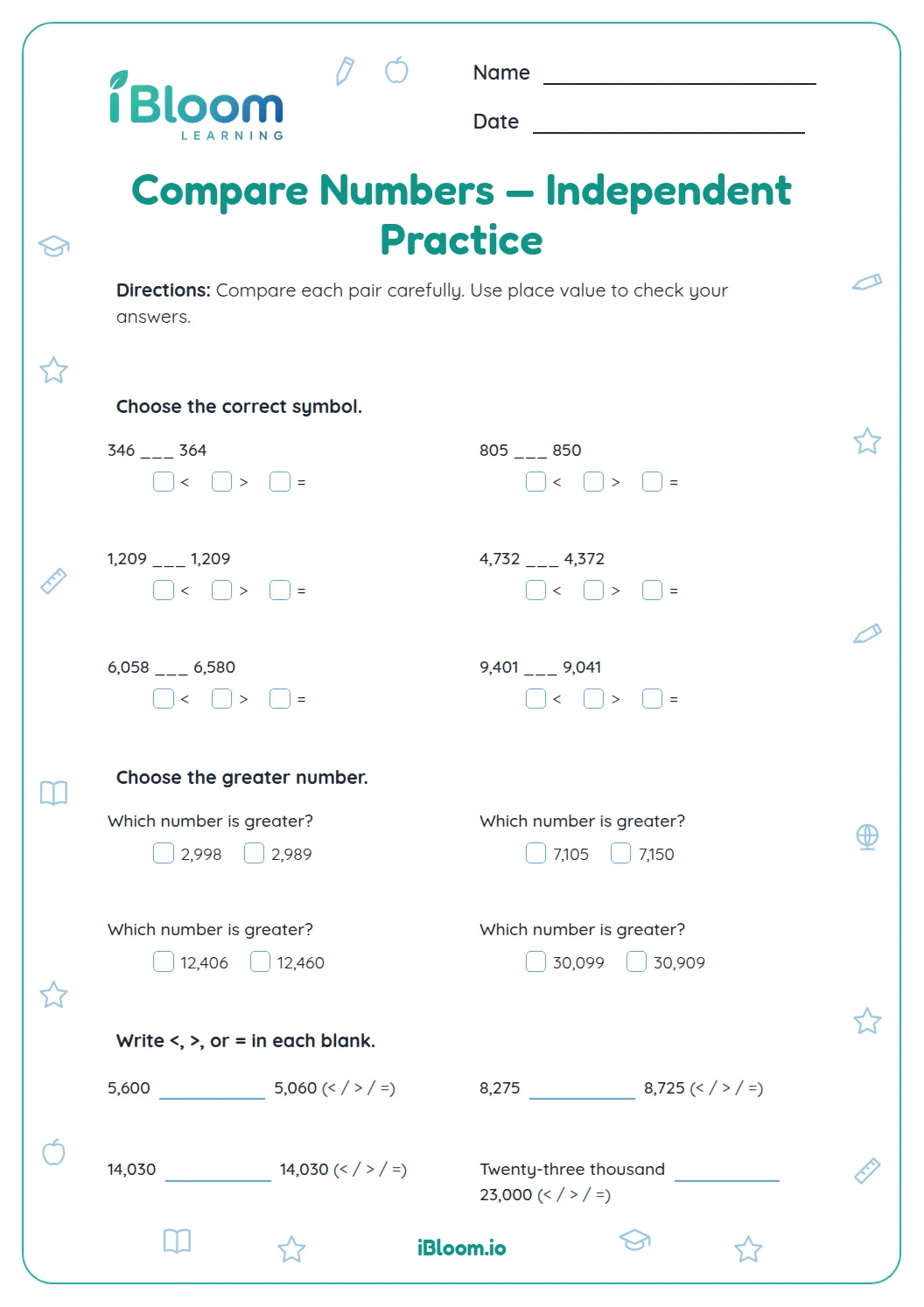
Compare the hundreds digits first. If they match, compare tens; if those match too, compare ones. Then write the numbers in the direction requested. This worksheet practices both least-to-greatest and greatest-to-least ordering, with eight sets to solve before moving to rounding.
How do you round to the nearest ten?
Look at the ones digit. If it is 5, 6, 7, 8, or 9, increase the tens digit by one. If it is 0, 1, 2, 3, or 4, keep the tens digit. Change the ones digit to zero.
How do you round to the nearest hundred?
Look at the tens digit. If it is 5 or more, increase the hundreds digit by one; if it is 4 or less, keep it. Then change the tens and ones digits to zero. For example, 650 rounds to 700.
How many ordering and rounding questions are there?
There are 16 questions: eight ordering sets and eight rounding prompts. The ordering section switches from least-to-greatest to greatest-to-least. The rounding section includes nearest-ten and nearest-hundred questions, four prompts for each place, so children practice both rounding targets.
Why does place value matter for both skills?
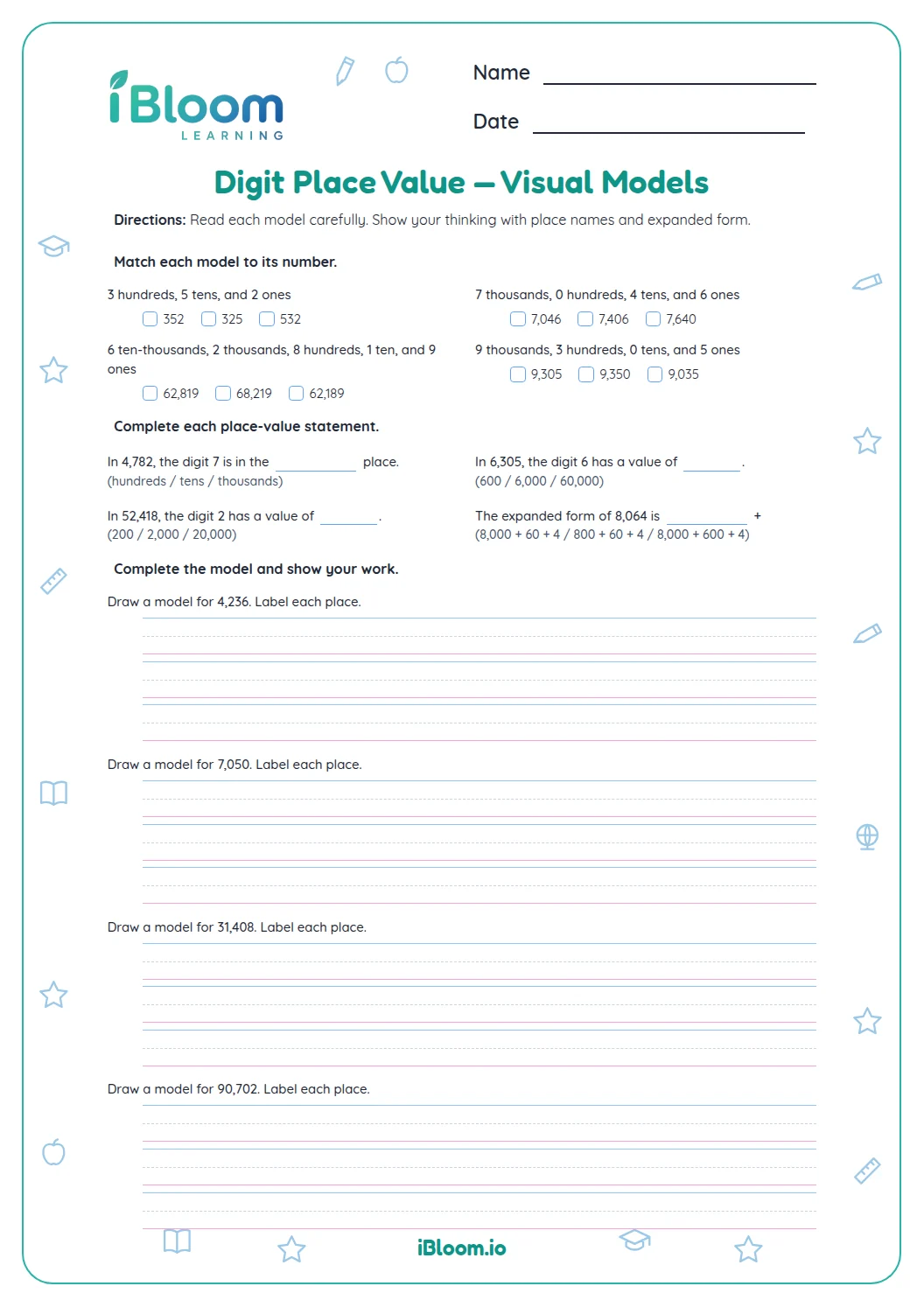
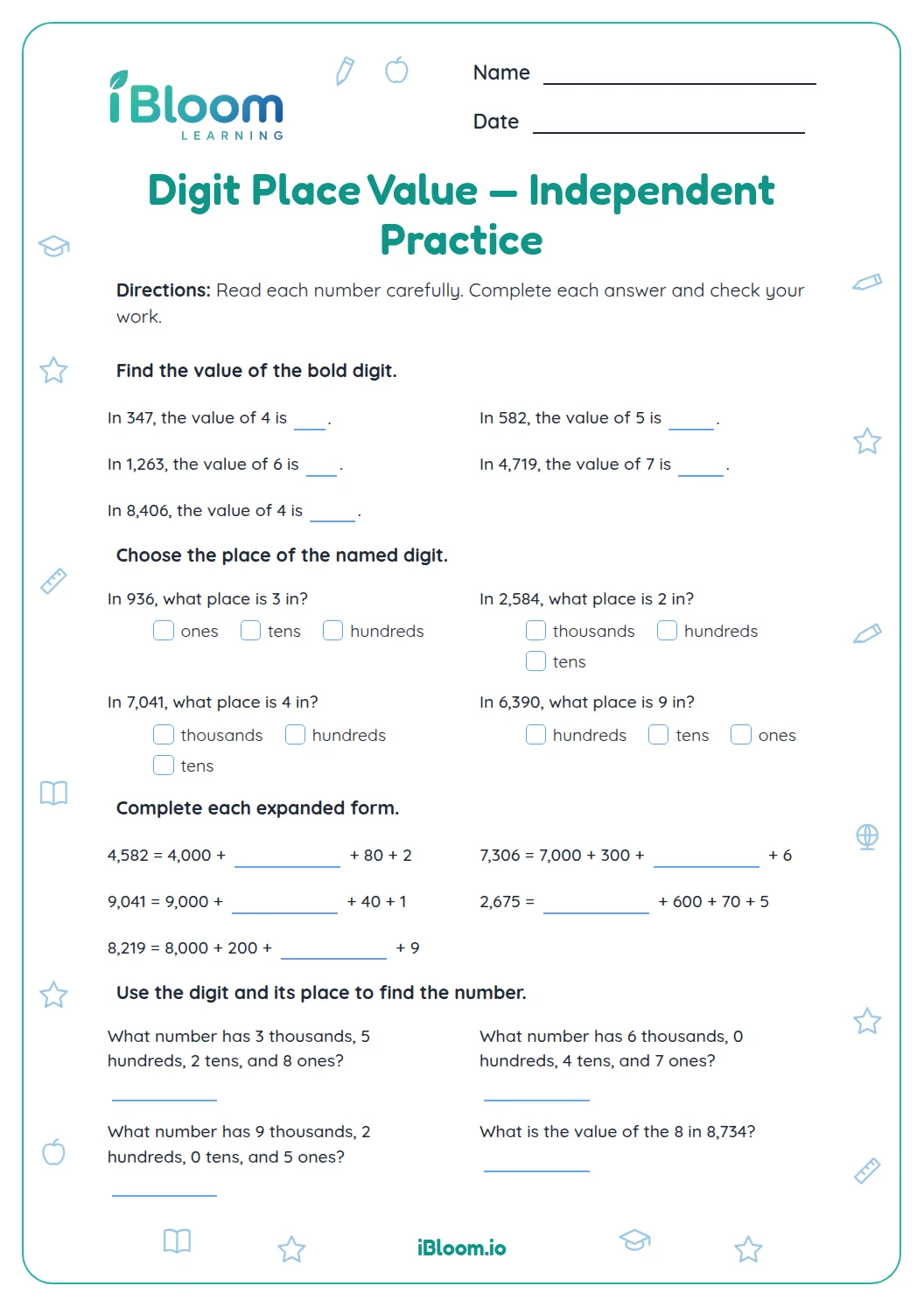
A digit means a different amount depending on its place. Hundreds decide many ordering questions, while the digit just to the right of the rounding place tells whether to round up or keep the named place. Each part asks learners to use that place-value information.