



About this worksheet
This Grade 3 printable combines three-digit number order, place-value comparisons, and rounding to the nearest ten or hundred. Students order five sets, compare five numbers or explanations, then round six values using the named place. The separate answer key lists the ordered sets, comparisons, and rounded values.
Aligned to 2.NBT.A.4 and 3.NBT.A.1
Where should you start when comparing numbers?
To order three-digit numbers, compare hundreds first. If the hundreds match, compare tens, then ones. For example, 324 comes before 342 because both have 3 hundreds and 2 tens is less than 4 tens.
- 1Order 342, 324, and 423.
- 2423 has 4 hundreds, so it is greatest.
- 3342 and 324 both have 3 hundreds; compare tens: 2 tens is less than 4 tens.
- 4Order: 324, 342, 423.
What if the hundreds digits are the same?
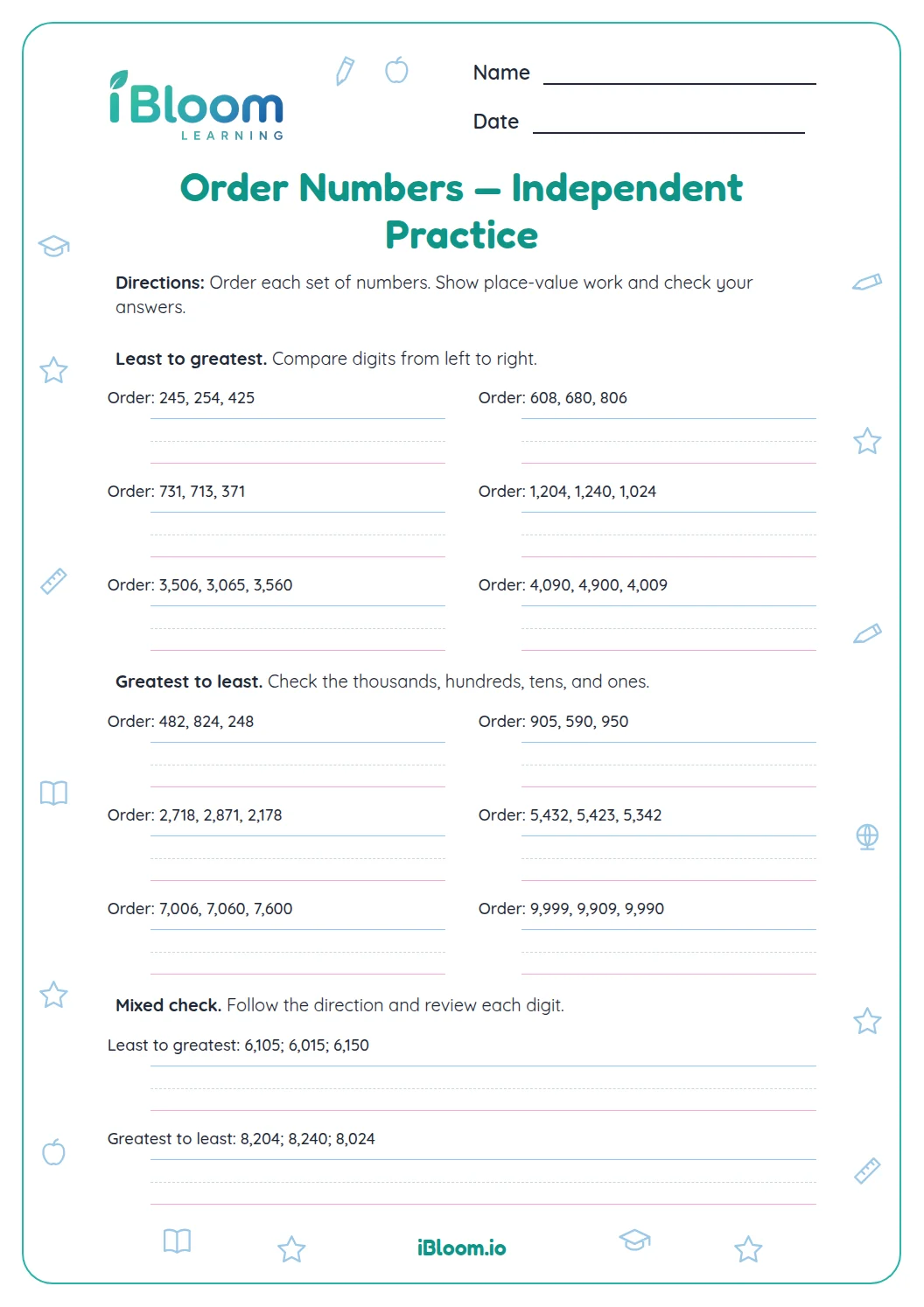
Part A orders five sets from least to greatest. Keep every number in the set and compare from the greatest place toward the ones.
How can a student explain an order?
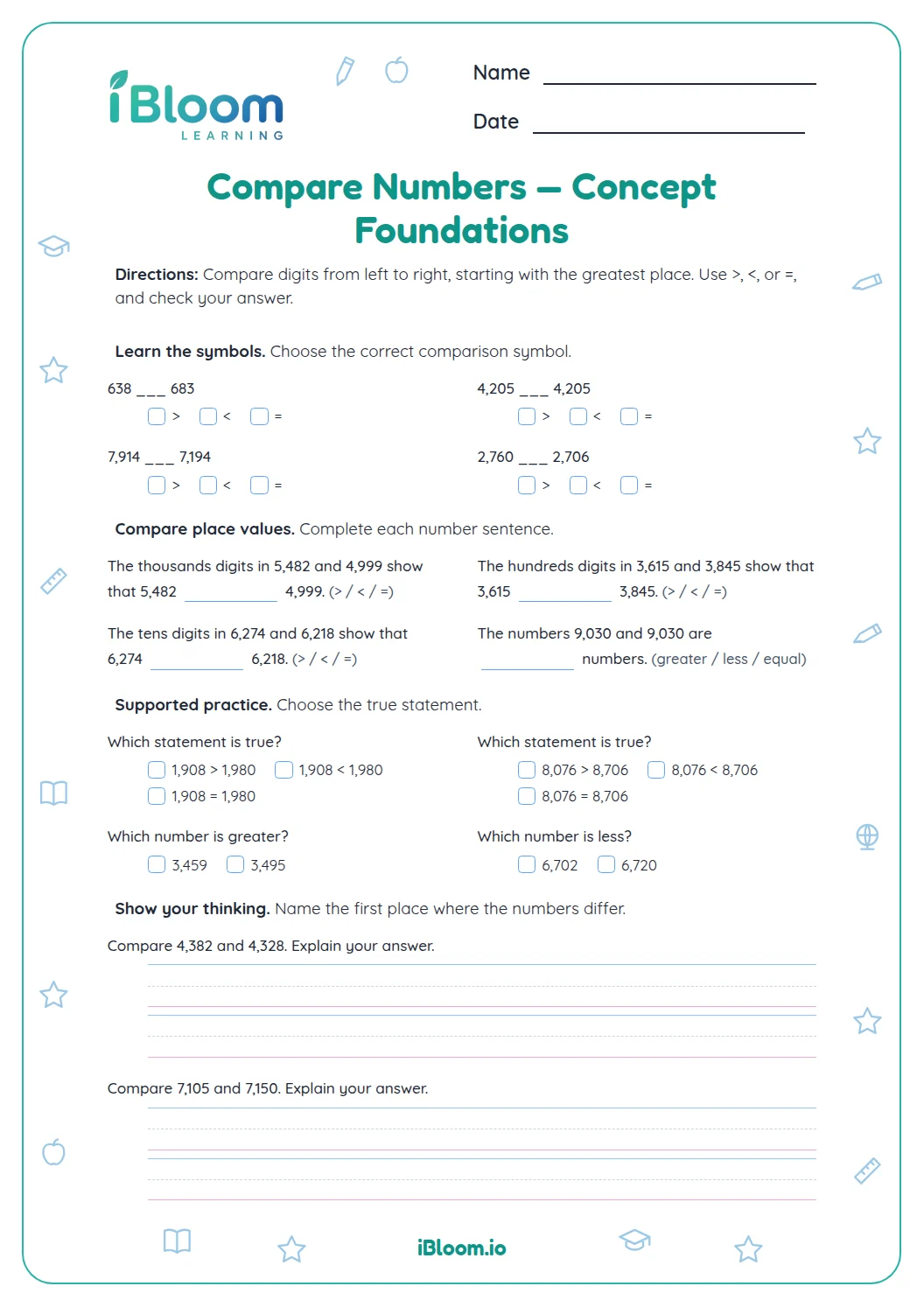
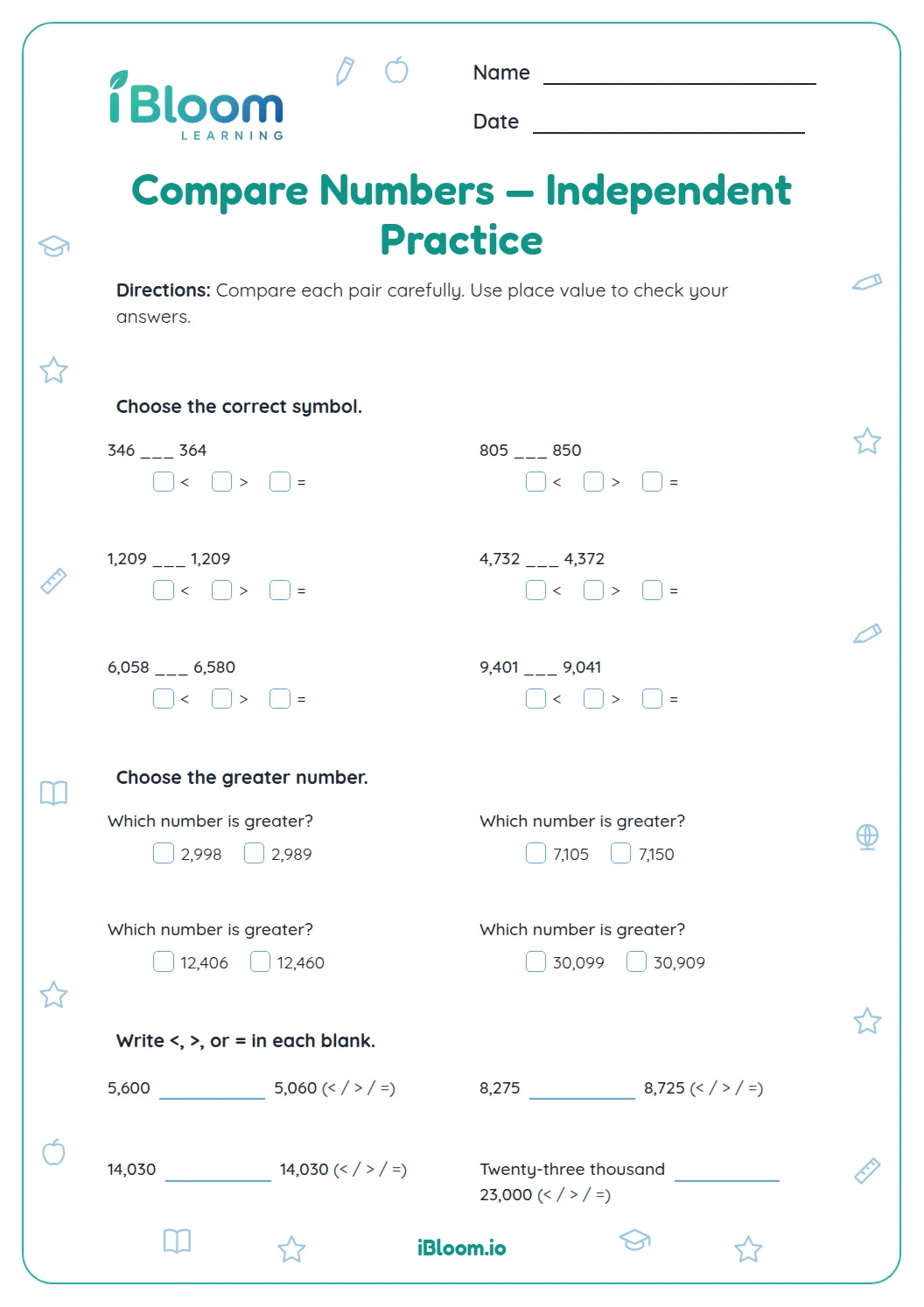
Part B compares numbers and identifies the first place where two values differ. Part C rounds to the nearest ten or hundred by checking the digit immediately to the right of that place.
- 1Round 347 to the nearest ten.
- 2The ones digit is 7, so round the tens digit up.
- 3347 rounds to 350.
How can you use this worksheet?
- 1Read all numbers in the set.
- 2Compare their hundreds digits.
- 3For a tie, compare tens, then ones.
- 4Write the set from smallest to largest.
- 5Check repeated values and reread the requested order.
Common mistakes and quick fixes
The mistake
Comparing ones before hundreds.
The fix
Start at the leftmost place, the hundreds.
The mistake
Adding digits to decide which number is larger.
The fix
Compare each digit’s place value instead of finding a digit sum.
The mistake
Leaving out a repeated number.
The fix
Count the list entries and copy every value, including duplicates.
Common Core alignment
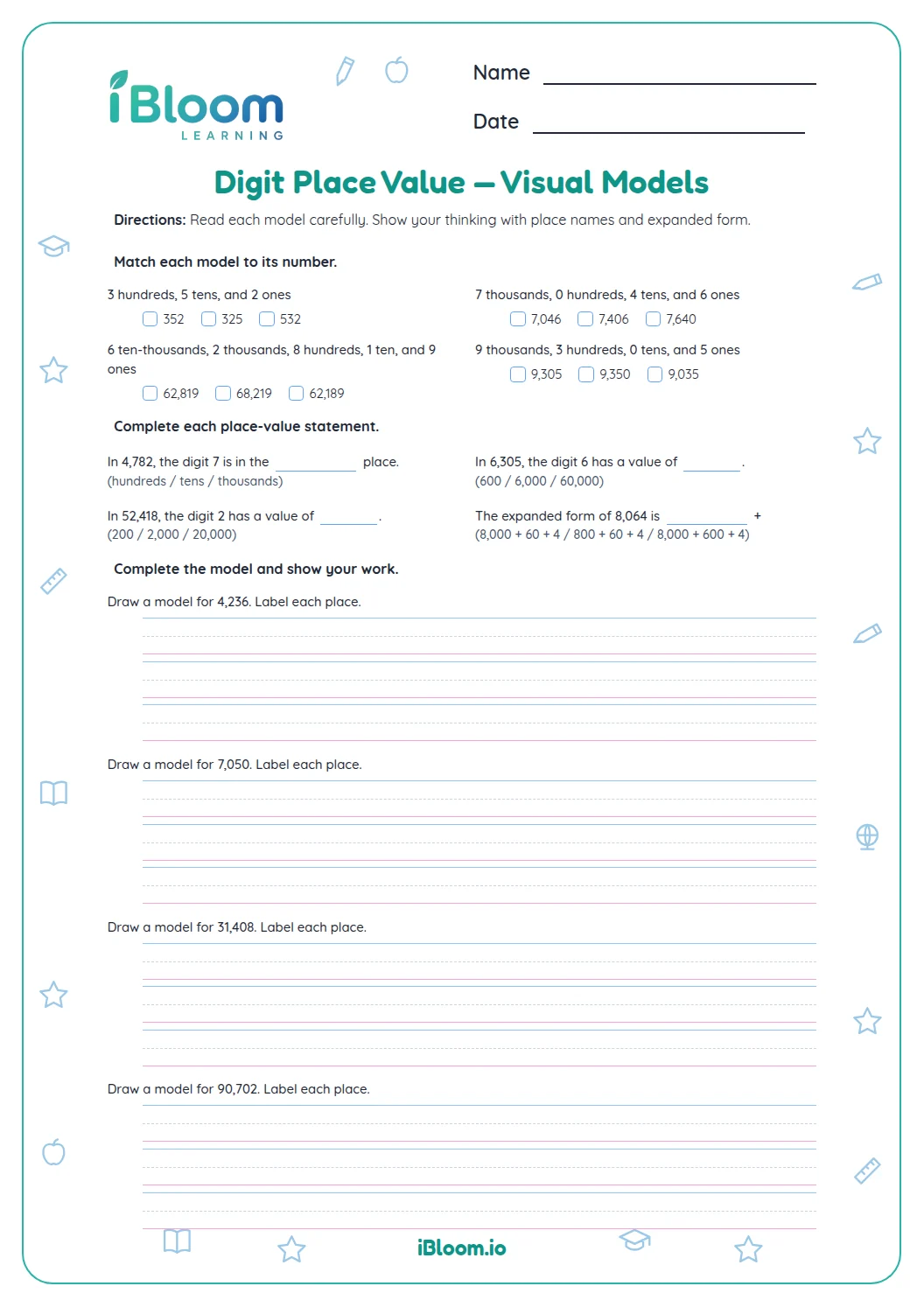
This worksheet connects number comparisons and rounding to the place-value ideas students use in each task.
Compare three-digit numbers by hundreds, tens, and ones.
On this sheet: Students compare and order three-digit numbers by their place values.
Show the official wordingHide the official wording
Compare two three-digit numbers based on meanings of the hundreds, tens, and ones digits, using >, =, and < symbols to record the results of comparisons.
Round whole numbers to the nearest ten or hundred.
On this sheet: Students round three-digit whole numbers to tens and hundreds.
Show the official wordingHide the official wording
Use place value understanding to round whole numbers to the nearest 10 or 100.
What to practice next
Make more practice
Further reading
Questions parents and teachers ask
How should students order three-digit numbers?
Compare the hundreds digits first, then the tens and ones if needed. For example, 324 is less than 342 because the hundreds match and 2 tens is less than 4 tens. The same left-to-right check helps students order each set.
Why can 721 be less than 712?
For 721 and 712, the hundreds digits match. The tens digits differ first: 2 tens is greater than 1 ten, so 721 is greater than 712. Looking at the ones first would give the wrong comparison because they are not the first place that differs.
What does the worksheet mean by least to greatest?
Least to greatest means writing the smallest value first and the largest last. Part A asks students to order five sets of three-digit numbers using hundreds, tens, and ones. The answer key shows each sequence in order so a child can check the full list.
How should equal numbers be handled in an ordered set?
To round to the nearest ten, check the ones digit. To round to the nearest hundred, check the tens digit. A digit of 5 or more rounds the named place up; a smaller digit keeps it the same. For example, 347 rounds to 350.
How many questions and pages are included?
There are 16 questions across two worksheet pages: five ordered sets, five comparison tasks, and six rounding items. The separate answer key takes two pages and includes the ordered lists, comparisons, and rounded values for checking the work at home or in class.