




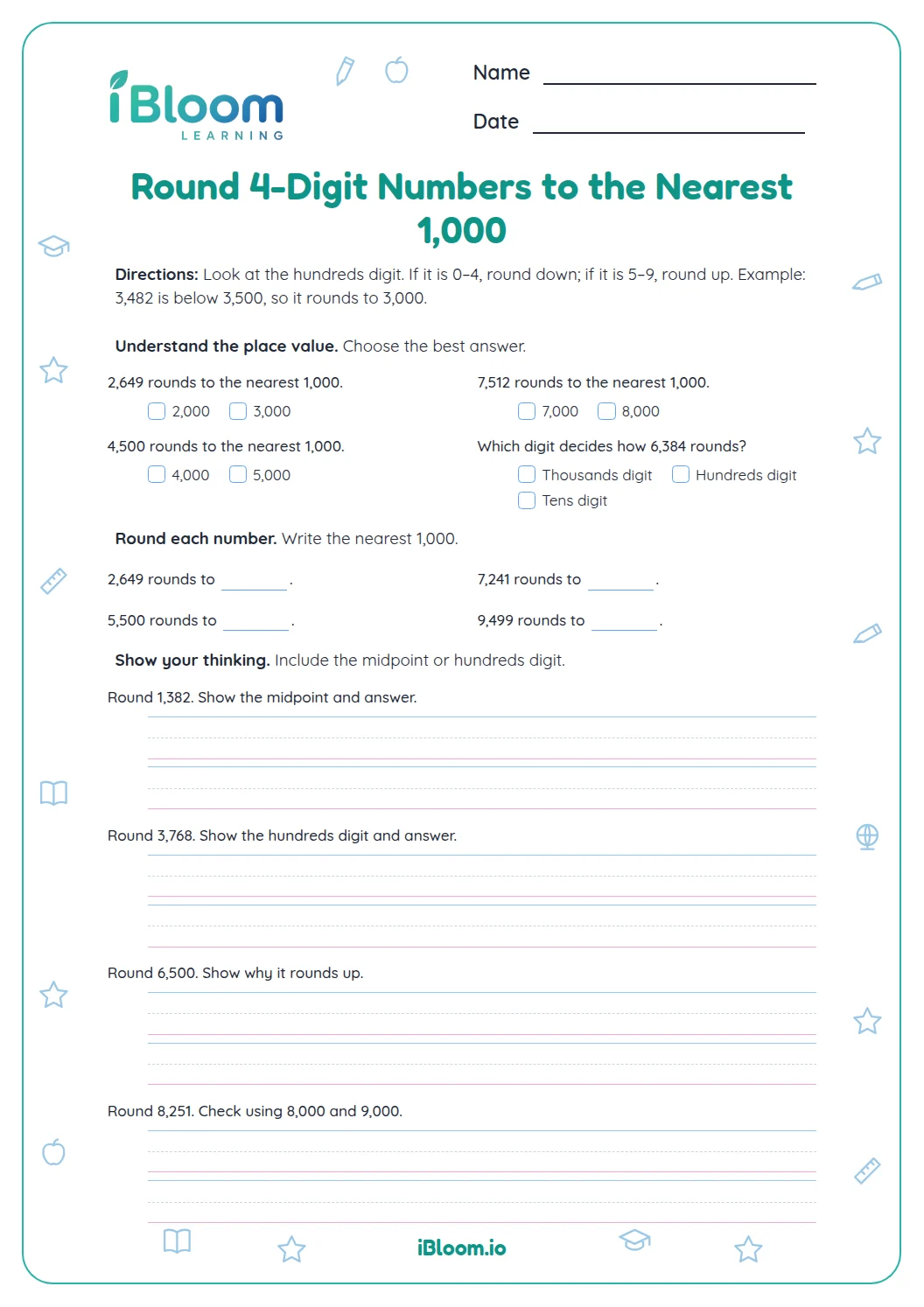
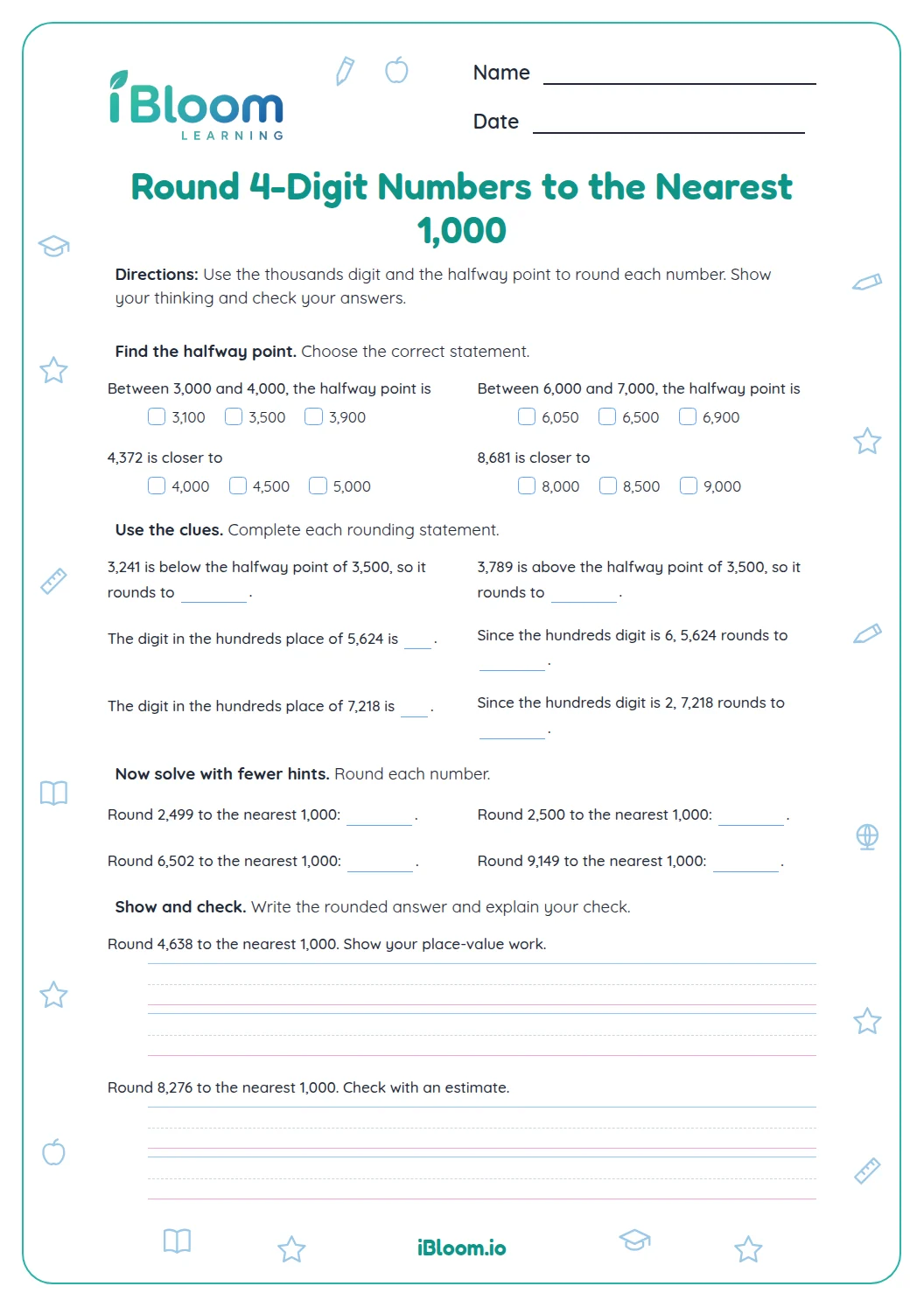

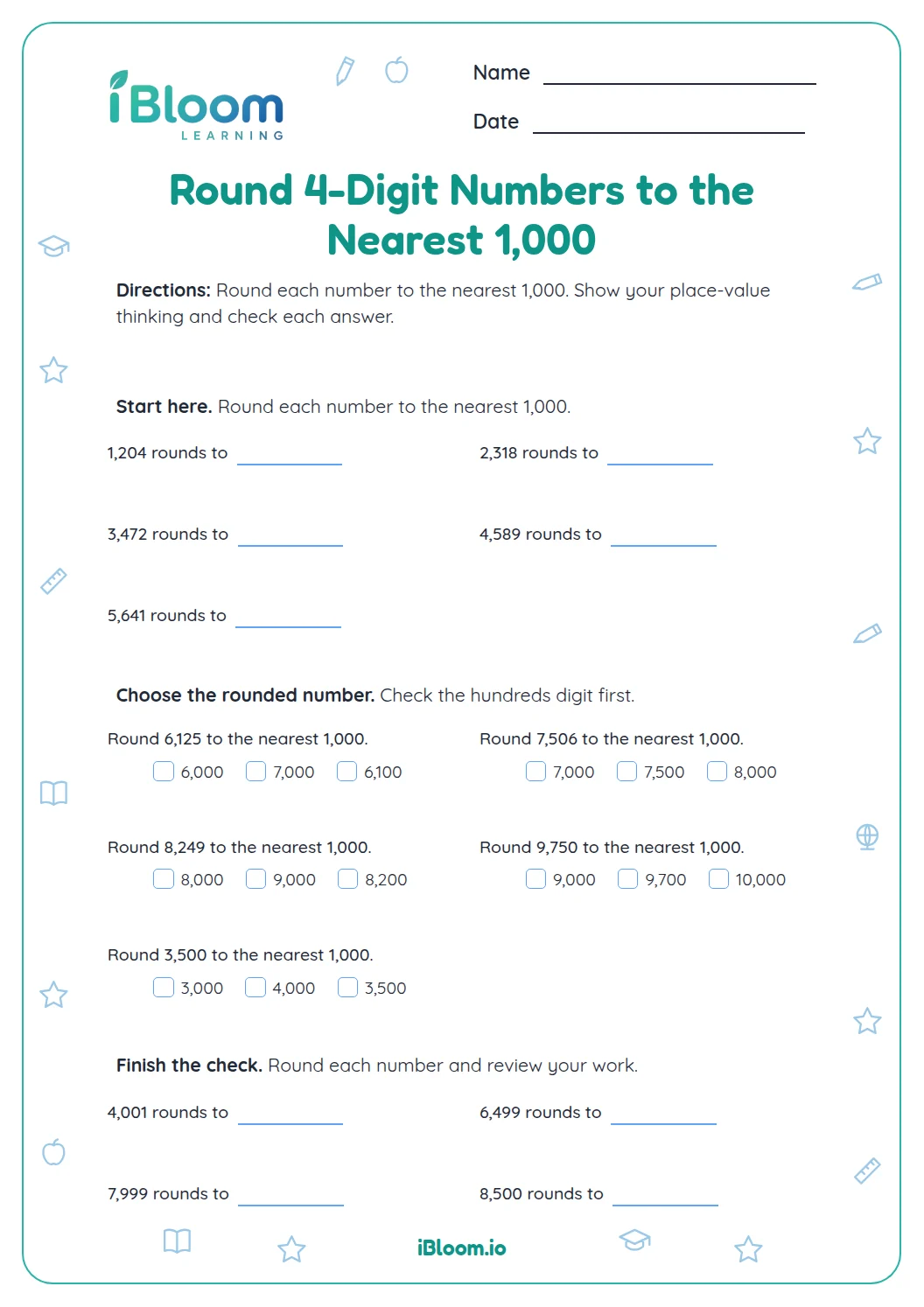
About this worksheet
Students round four-digit quantities to the nearest hundred, then use those estimates in everyday situations.
Aligned to 3.NBT.A.1
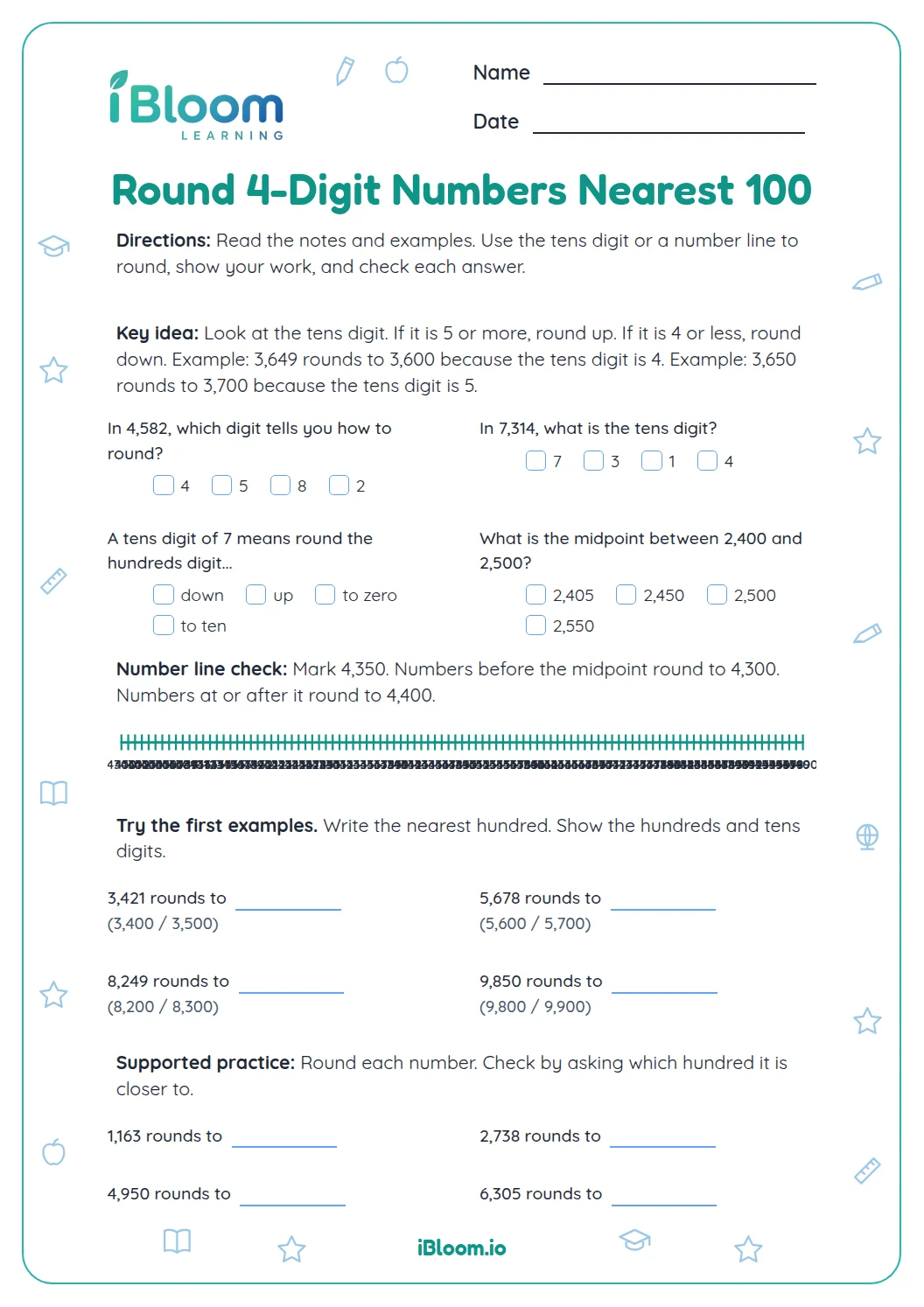
Round to the nearest hundred
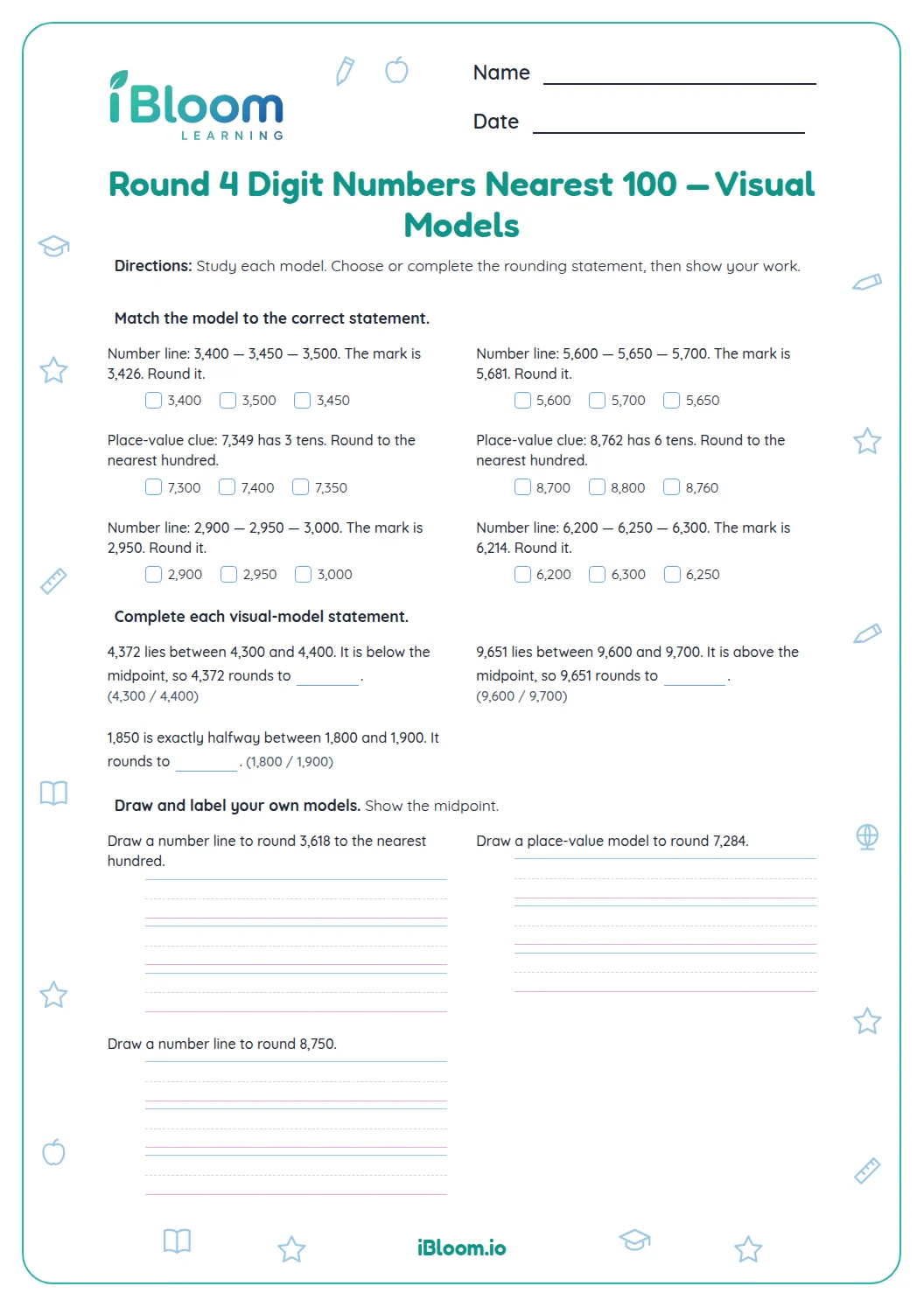
Check the tens digit to decide which hundred is closer. A tens digit of 5, 6, 7, 8, or 9 rounds up; a tens digit of 0, 1, 2, 3, or 4 rounds down. The thousands digit stays the same unless the hundreds roll over.
- 1A park counted 3,462 visitors. Round to the nearest hundred.
- 2The tens digit is 6, so 3,462 rounds to 3,500.
How does rounding help compare amounts?
Round both four-digit counts using the same tens-digit rule, then compare the nearby hundreds. This makes a pair of large counts easier to discuss.
- 1Monday: 2,680 apples; Tuesday: 3,240 apples. What is Monday’s count rounded to the nearest hundred?
- 22,680 rounds to 2,700.
How to use this worksheet
- 1Underline the tens digit before rounding.
- 2Write the hundred before and after the number, then choose the closer one.
- 3Check that the tens and ones digits are zero in your estimate.
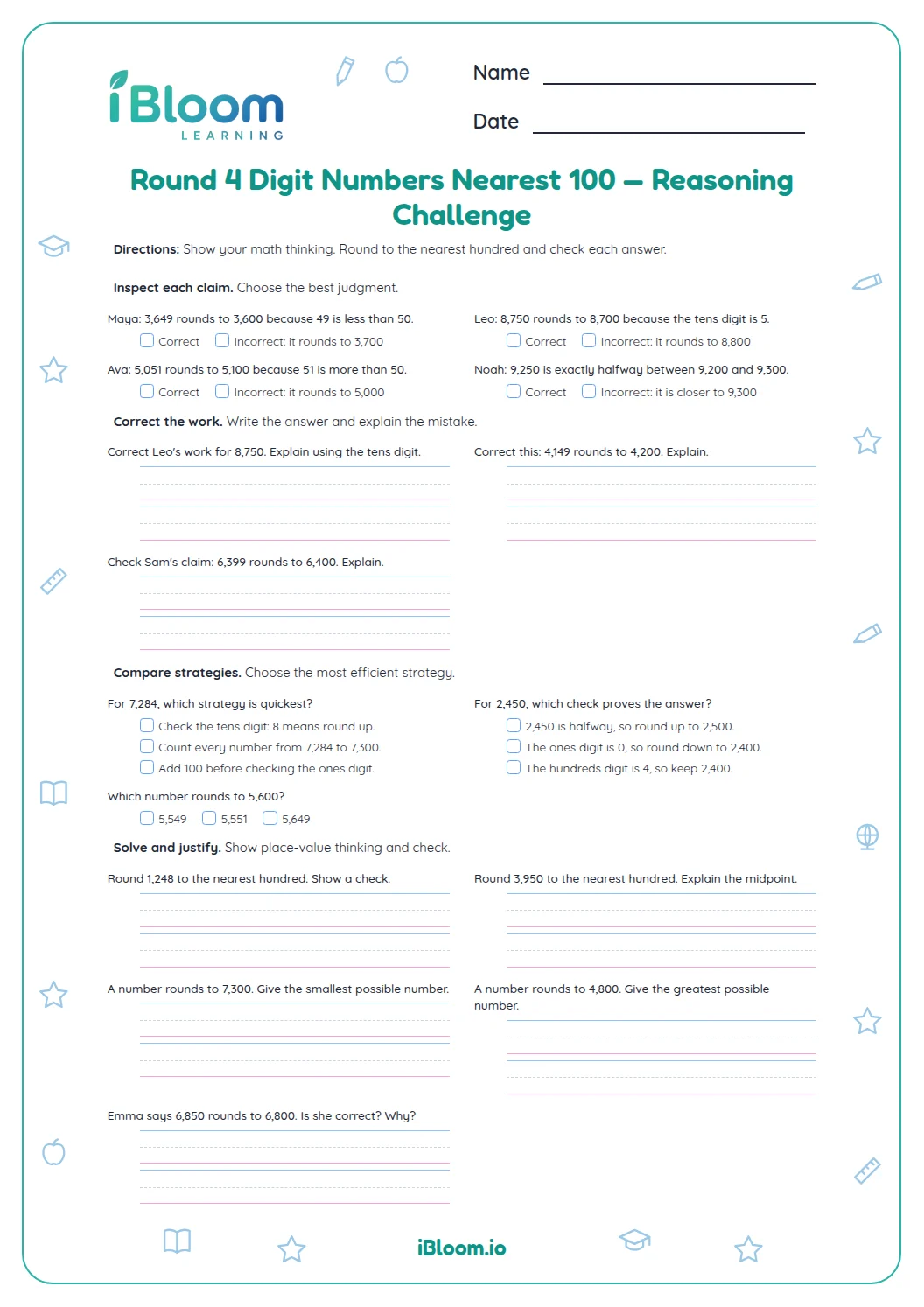
Check your work
The mistake
Changing the thousands digit when the rounded number stays in the same thousand.
The fix
Compare the original amount with both neighboring hundreds.
Curriculum alignment
Round whole numbers to the nearest hundred by using the tens digit.
On this sheet: The page repeatedly rounds four-digit whole numbers to the nearest hundred.
Show the official wordingHide the official wording
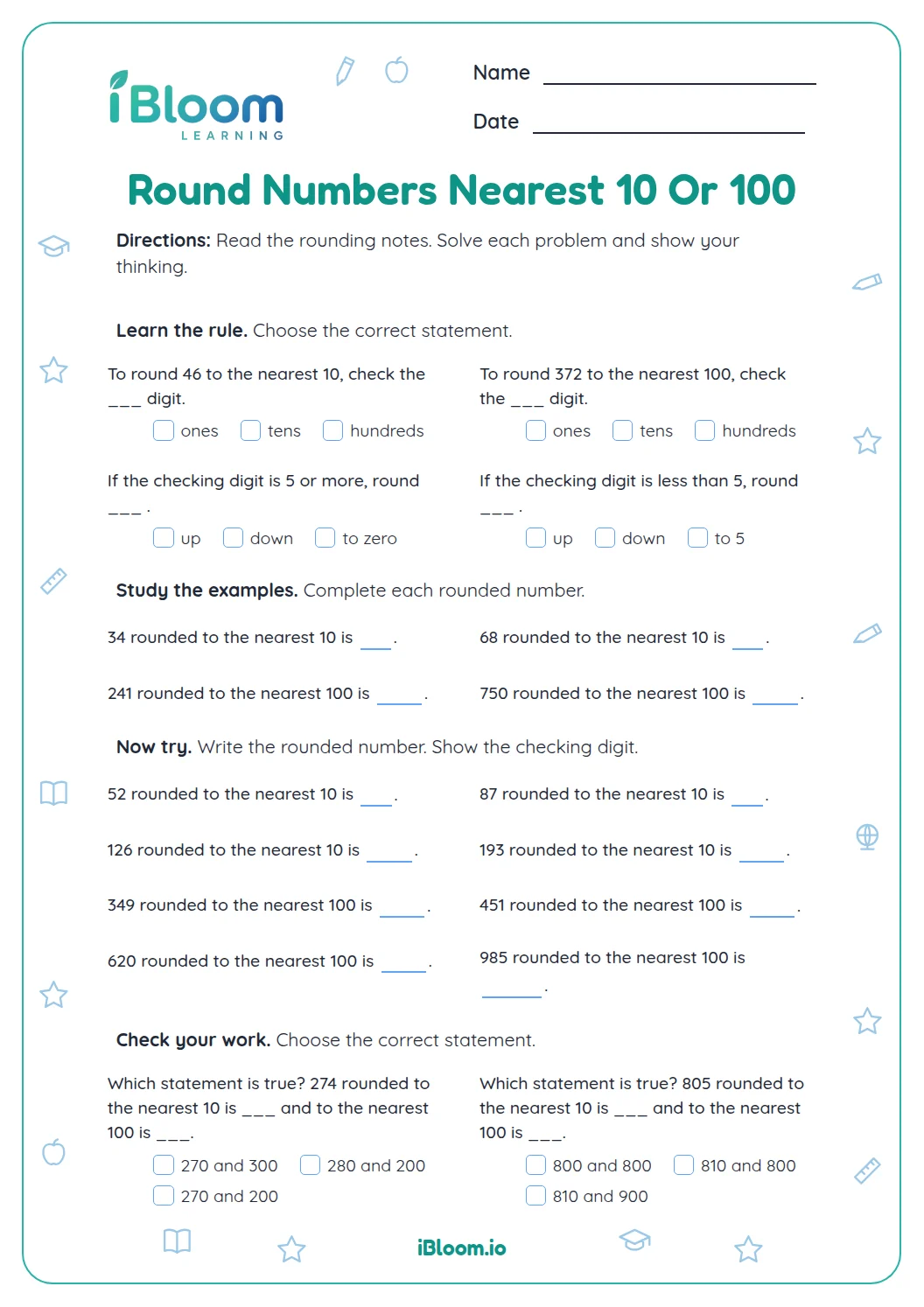
Use place value understanding to round whole numbers to the nearest 10 or 100.
What to practice next
Make more practice
Further reading
Questions parents and teachers ask
How do you round to the nearest hundred?
Look at the tens digit in the four-digit number. Digits 0 through 4 keep the hundreds digit the same, while 5 through 9 increase it by one; then change the tens and ones digits to zero. A child can mark the tens digit before rounding, then use the same rule on each story amount and each direct number question.
How many questions are on this worksheet?
There are 14 questions in three parts: real-world amounts, direct rounding practice, and comparisons in context. The answer key follows the worksheet pages and lists the rounded number or choice for each item. The key lists one response for every prompt, including the two comparison items, so a student can review the reasoning with an adult.
What does nearest hundred mean?
Nearest hundred means the multiple of 100 closest to a number. For 3,462, the choices are 3,400 and 3,500; since the tens digit is 6, the number rounds up to 3,500. For a number such as 3,462, compare 3,400 and 3,500; the tens digit 6 tells you to round up to 3,500.
What happens when the tens digit is 5?
A tens digit of 5 means the number is halfway between two hundreds, so round up to the next hundred. The question with 4,450 uses this rule and rounds to 4,500. The midpoint example 4,450 makes the tens digit 5 visible; moving to the next hundred produces 4,500.
Can students use the key to check their work?
Yes. After rounding each amount, students can compare their response with the key. If an answer differs, look again at the tens digit and check that the tens and ones places are zero. Use the listed rounded number to check the work, then return to the original four-digit amount and identify its tens digit.