



About this worksheet
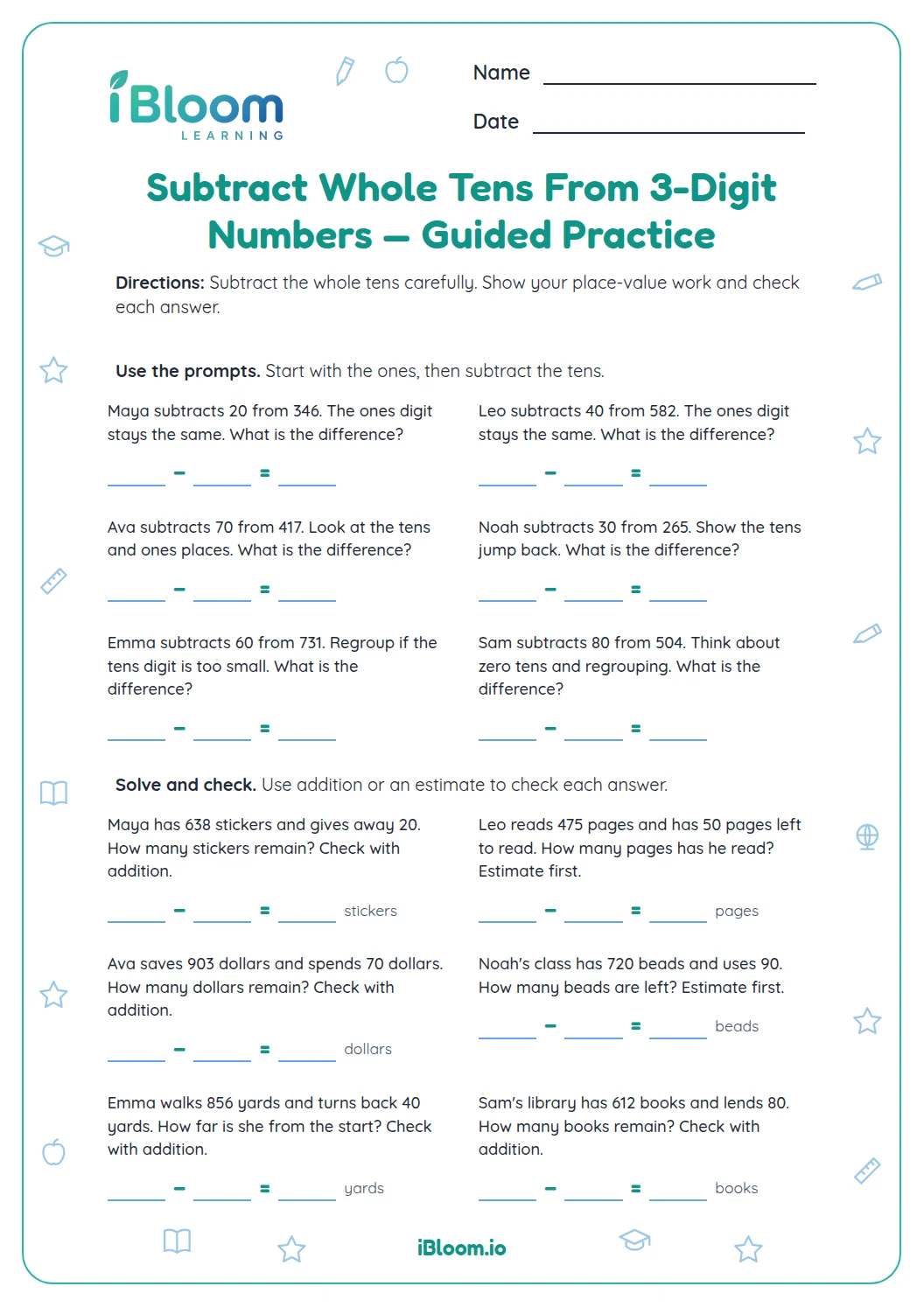
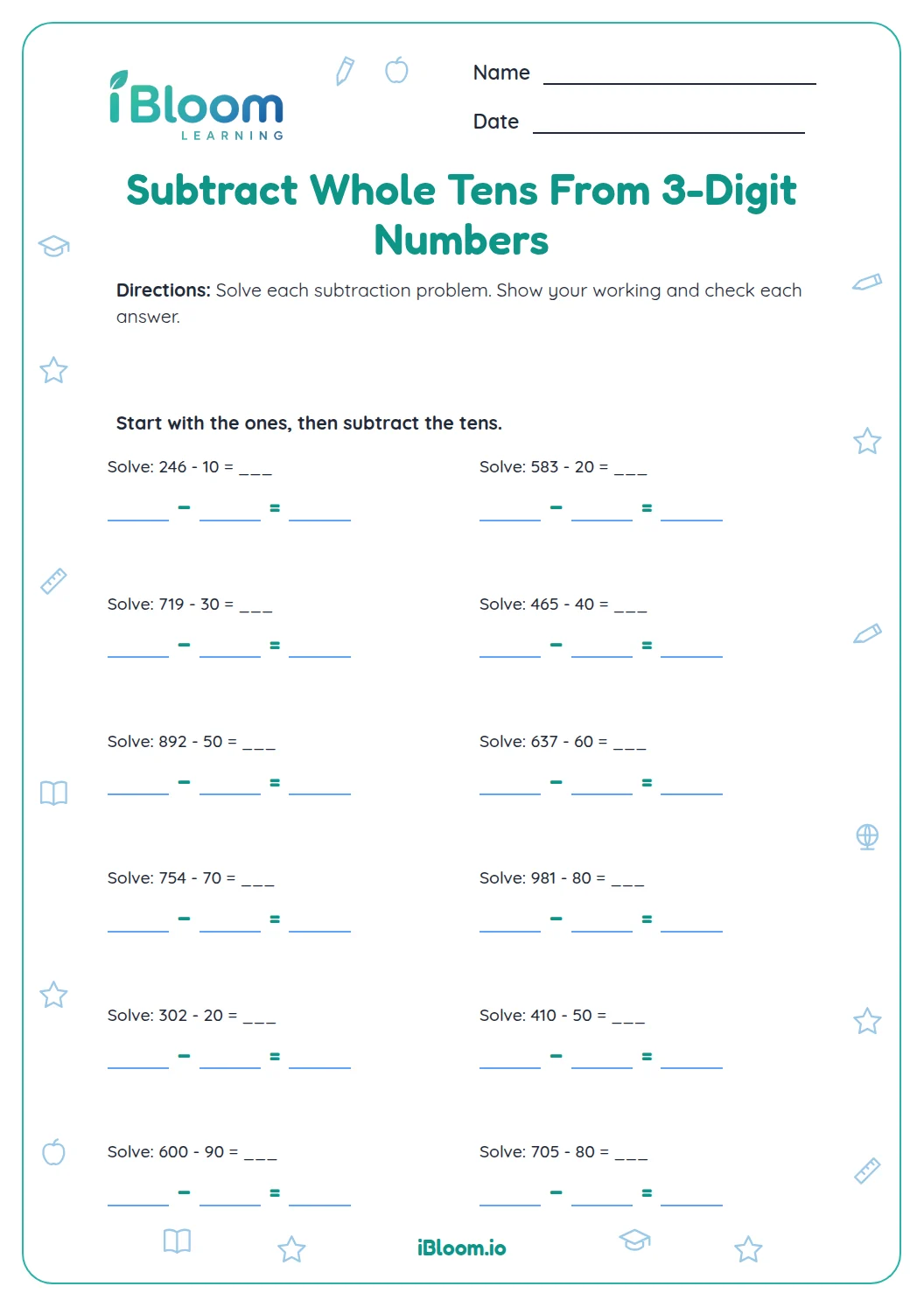
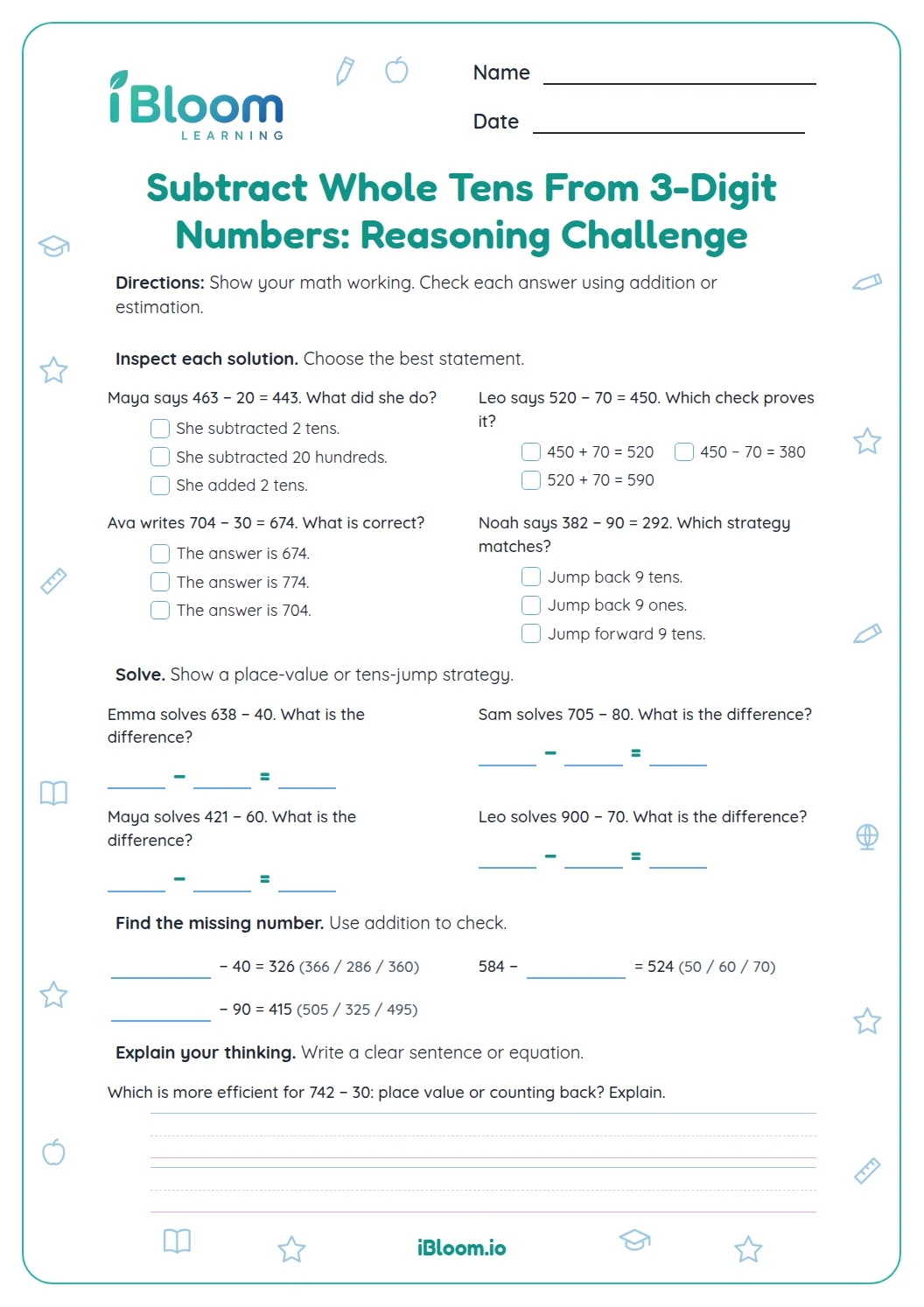
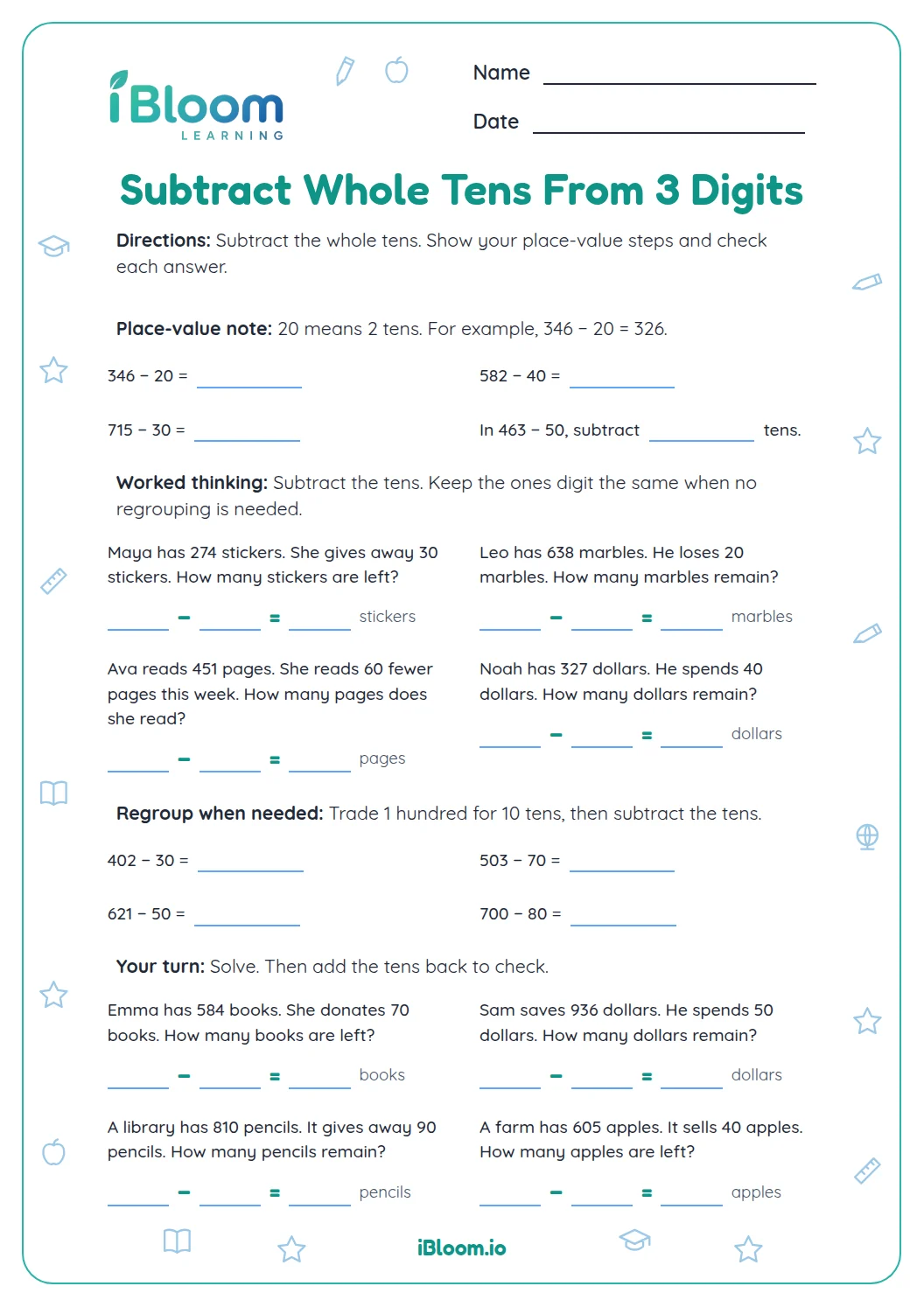
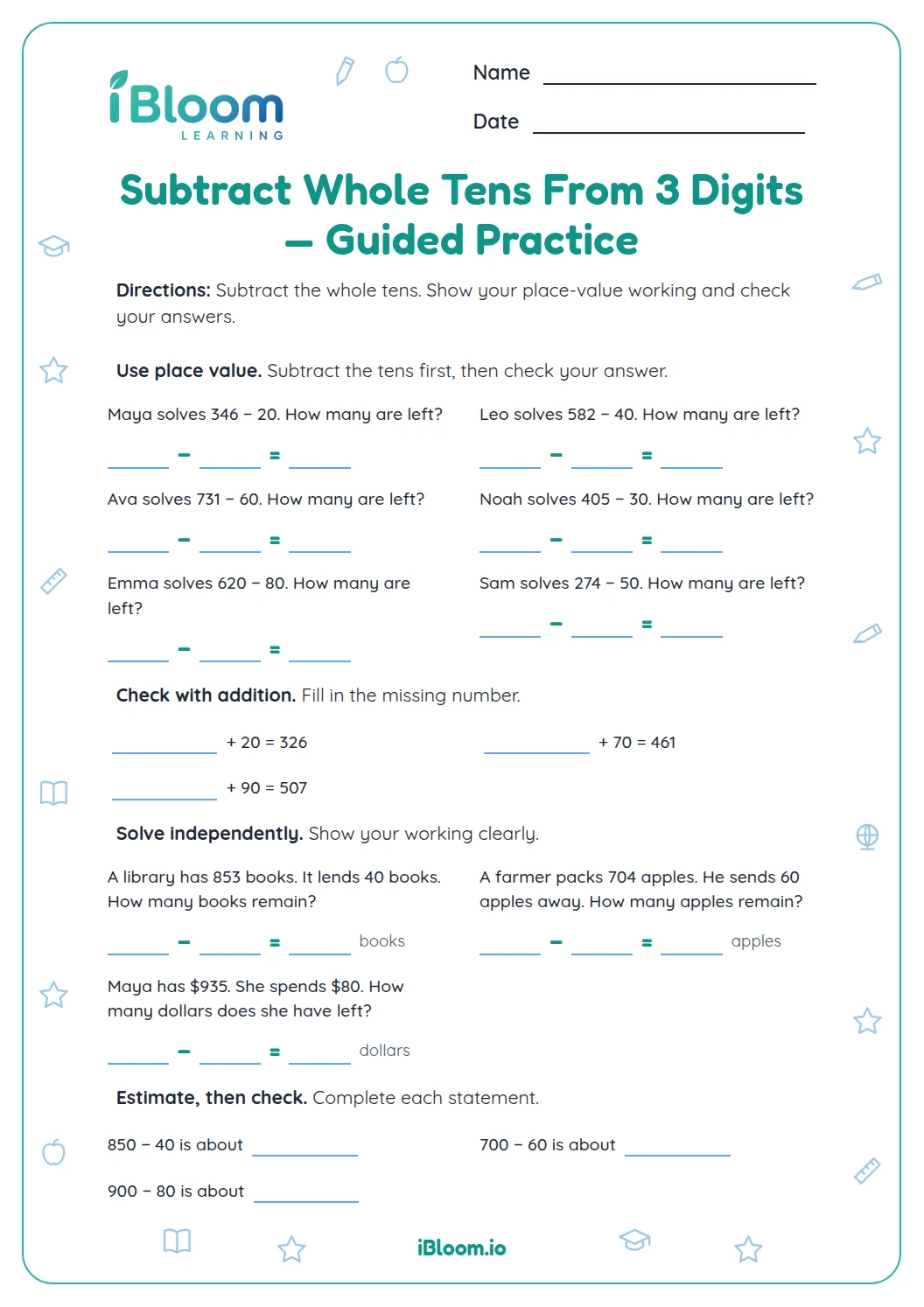
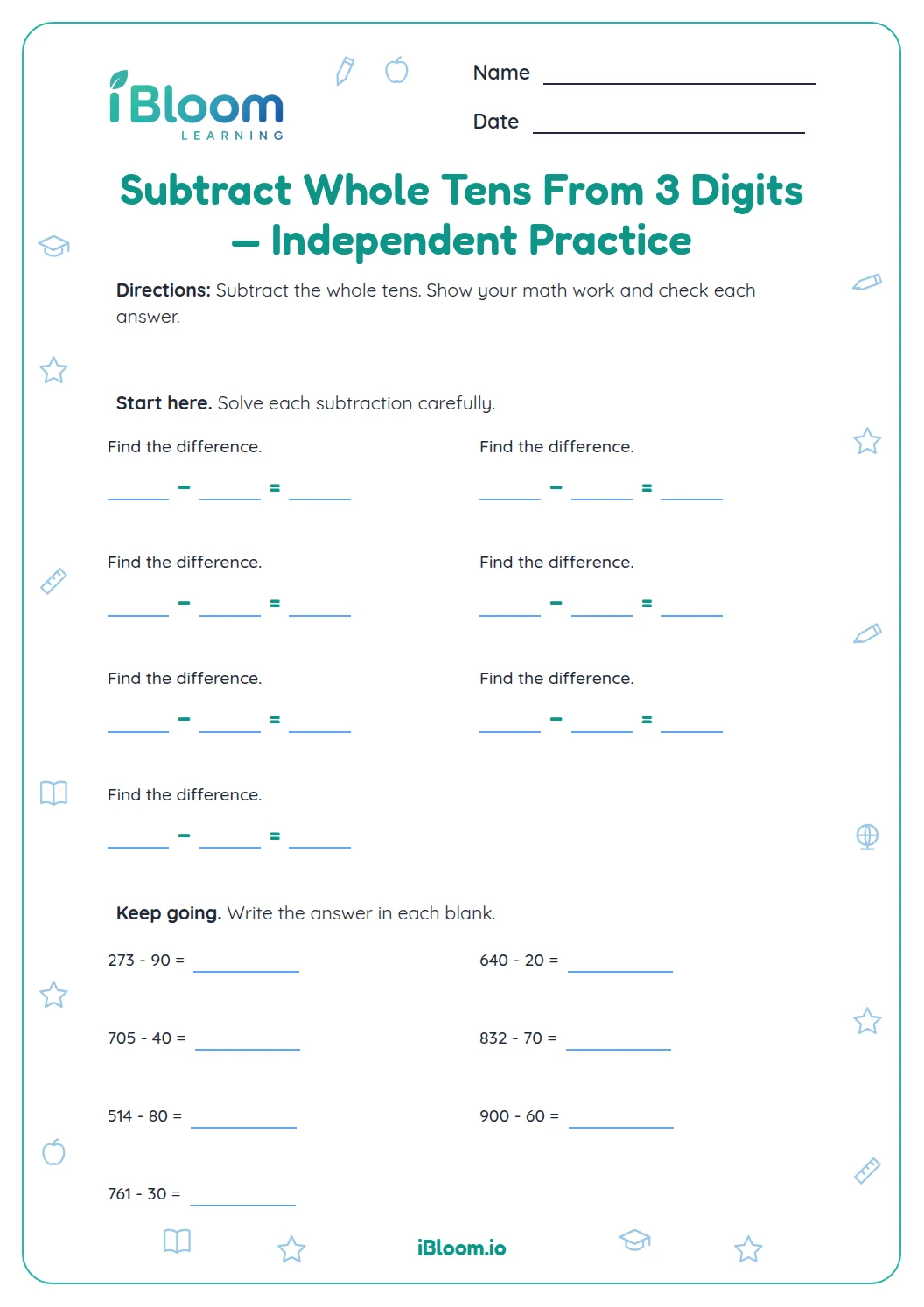
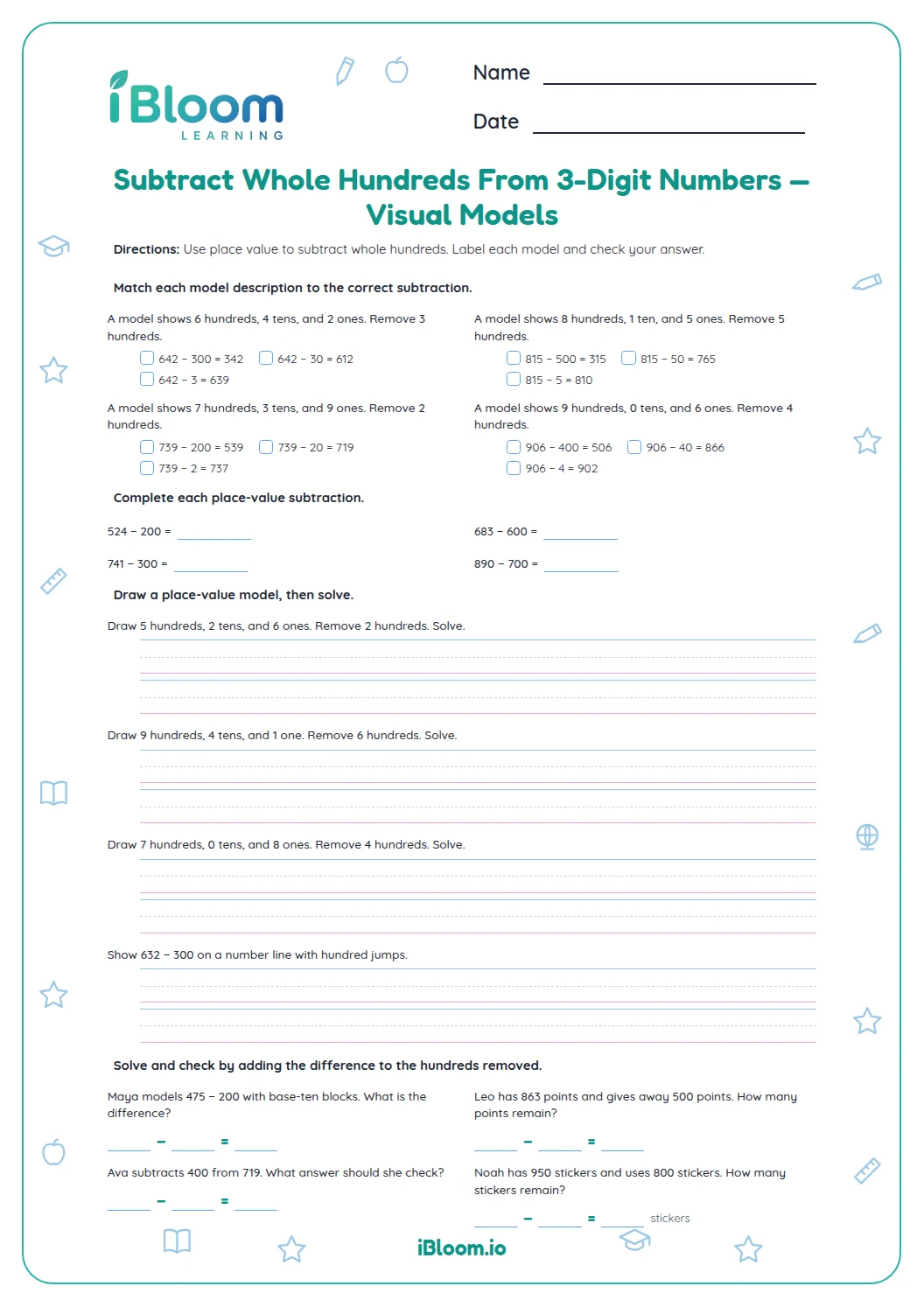
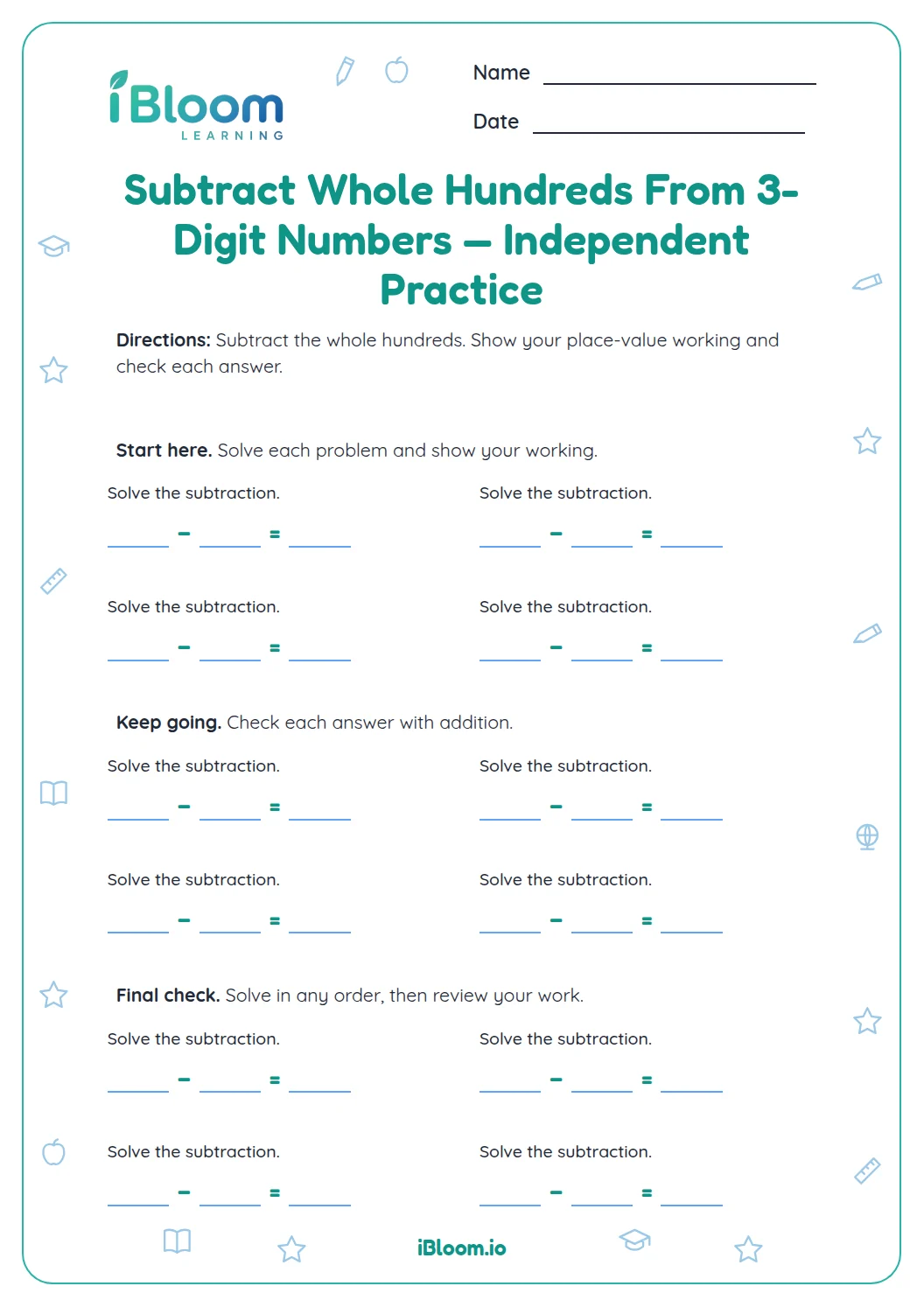
This Grade 3 visual-model worksheet practices subtracting a multiple of ten from a three-digit number. The first eight questions each show the starting number in hundreds, tens, and ones; students remove tens and record the difference. Six compact equations then give independent practice. The separate answer key lists all 14 results.
Aligned to 3.NBT.A.2
How does a base-ten drawing show the number?
Hundred flats, ten rods, and unit cubes show the value of each digit. In Question 4, 409 has four hundreds and nine ones, so trade a hundred for ten tens before removing six tens.
- 1409 − 60
- 2Trade 1 hundred for 10 tens: 3 hundreds and 10 tens remain.
- 310 tens − 6 tens = 4 tens.
- 4Answer: 349
When can students solve without a drawing?
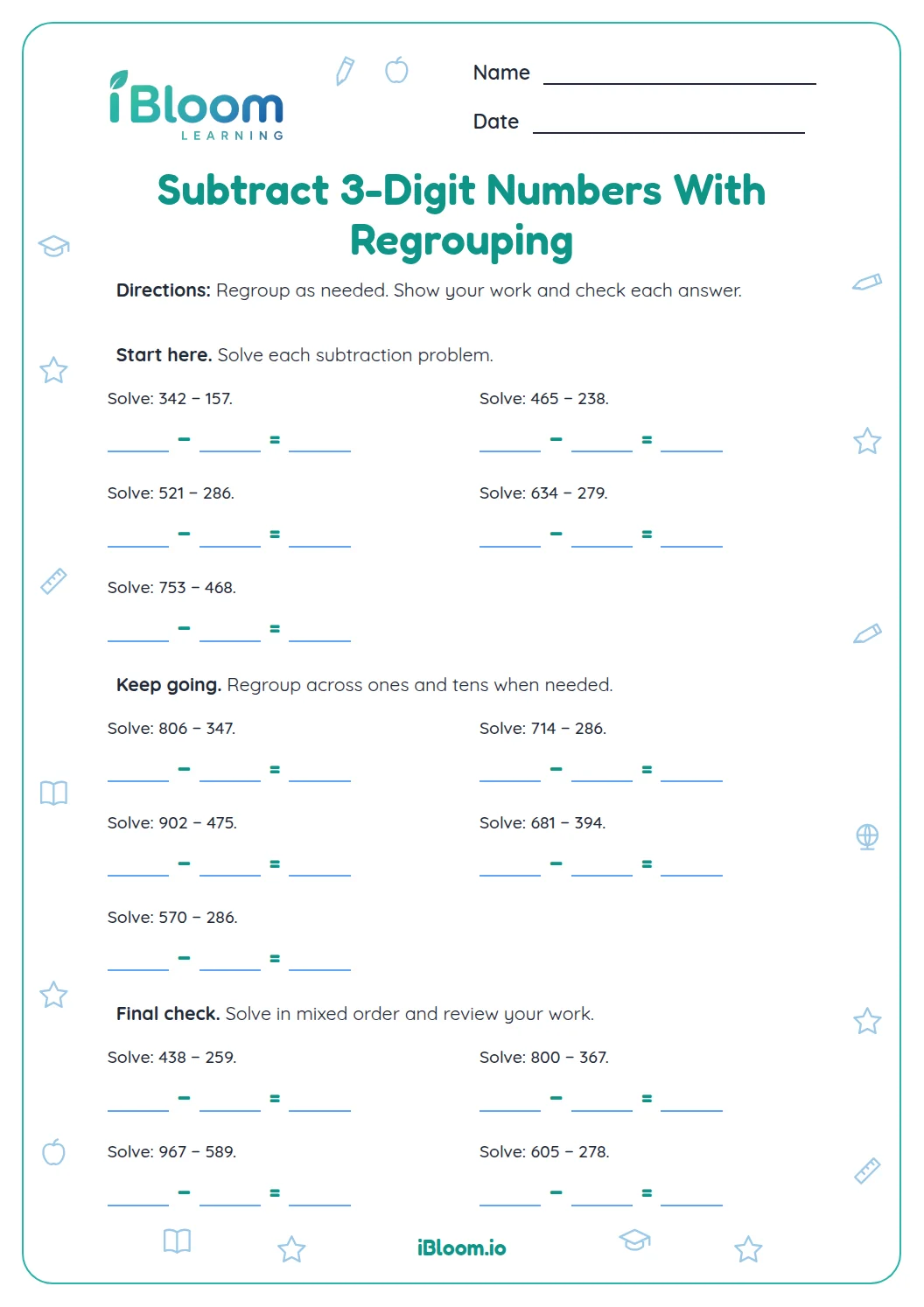
After using the first eight drawings, apply the same place-value steps to the six final equations. Add the tens back to verify a difference.
How to use this worksheet
- 1Read the directions and example aloud.
- 2Complete the first part together, naming the clue or rule.
- 3Let the student try the next part independently.
- 4Use the answer key to check each response.
- 5Review one missed item by explaining the correct choice.
Common subtraction slips and fixes
The mistake
Changing the ones digit even though only tens are subtracted.
The fix
Keep the ones digit, then check by adding the tens back.
The mistake
Subtracting the digit 6 instead of six tens in 409 − 60.
The fix
Read 60 as six tens, not six ones.
The mistake
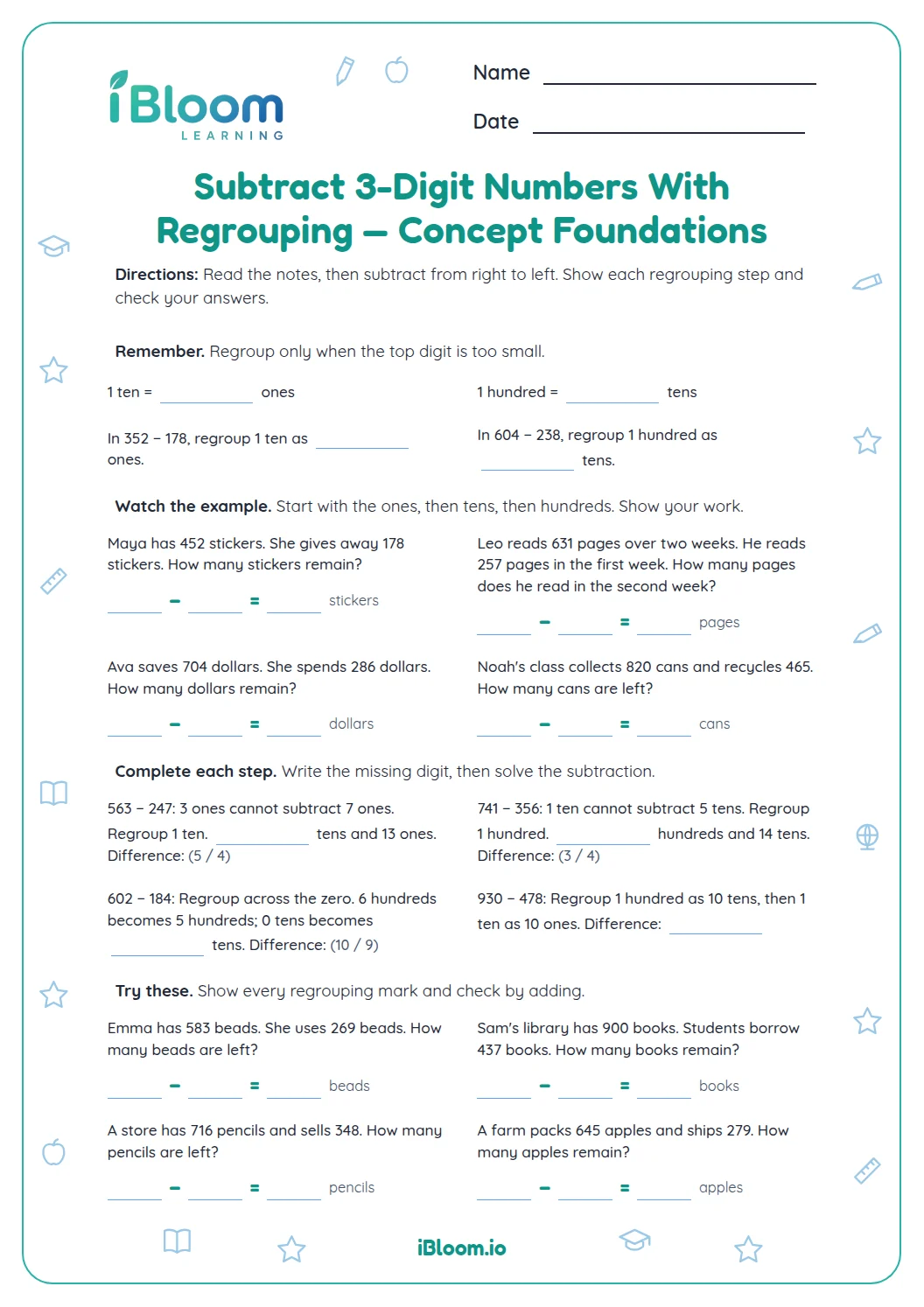
Forgetting to regroup when the tens digit is too small.
The fix
Trade one hundred for ten tens before subtracting.
Common Core alignment
This sheet practices a Grade 3 place-value strategy for subtraction.
Subtract whole tens within 1,000 using place-value strategies and models.
On this sheet: Students subtract multiples of ten from three-digit numbers and check the place values.
Show the official wordingHide the official wording
Fluently add and subtract within 1000 using strategies and algorithms based on place value, properties of operations, and/or the relationship between addition and subtraction.
What to practice next
Make more practice
Further reading
Questions parents and teachers ask
How do the base-ten models help?
The models show the hundreds, tens, and ones in each starting number. For Question 1, 347 has 3 hundreds, 4 tens, and 7 ones. Removing 2 tens leaves 3 hundreds, 2 tens, and 7 ones, or 327. Students can name each place as they check.
What does subtracting a whole ten mean?
A whole ten is a multiple of ten, such as 20, 50, or 80. In 347 − 20, the student removes two tens from the four tens in 347. The ones digit remains 7 because no ones are taken away.
Why does 409 − 60 require regrouping?
The number 409 has no tens, so it cannot give away six tens as written. Trade one hundred for ten tens first. Then subtract six tens from those ten tens, leaving 3 hundreds, 4 tens, and 9 ones: 349.
Can students check with addition?
Yes. Add the amount subtracted to the difference. For example, 327 + 20 should equal 347. If the sum does not match the starting number, revisit how many tens were removed and recalculate before moving on. Students can name each place as they check, then compare the regrouped model with the subtraction result.
When should students use the models?
Use the models to connect each digit to hundreds, tens, and ones, especially when regrouping is needed. The other equations let students apply the same place-value strategy without a model beside every problem, then verify answers with addition.