





About this worksheet
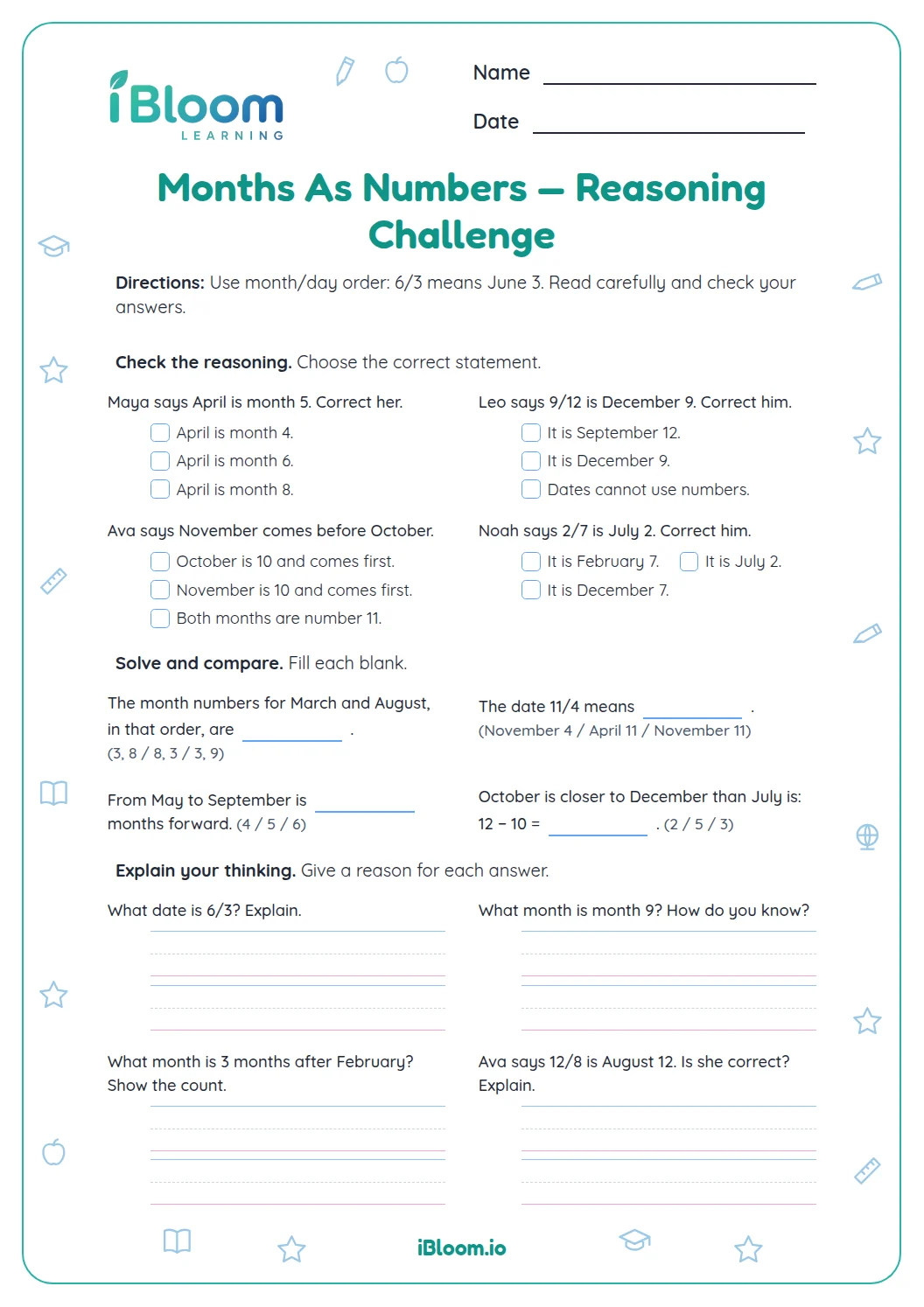
This free printable worksheet helps Grade 3 students connect a month’s name with its position in the year. Part A introduces six month-number pairs through choices. Part B completes the other six pairs by asking for missing month names. Part C uses those connections in four dates written in US month/day/year order. January is month 1, and December is month 12; the month number stays the same regardless of the day. The 16 questions move from choosing a number to reading a date, with a separate answer key for checking.
What will children practice?
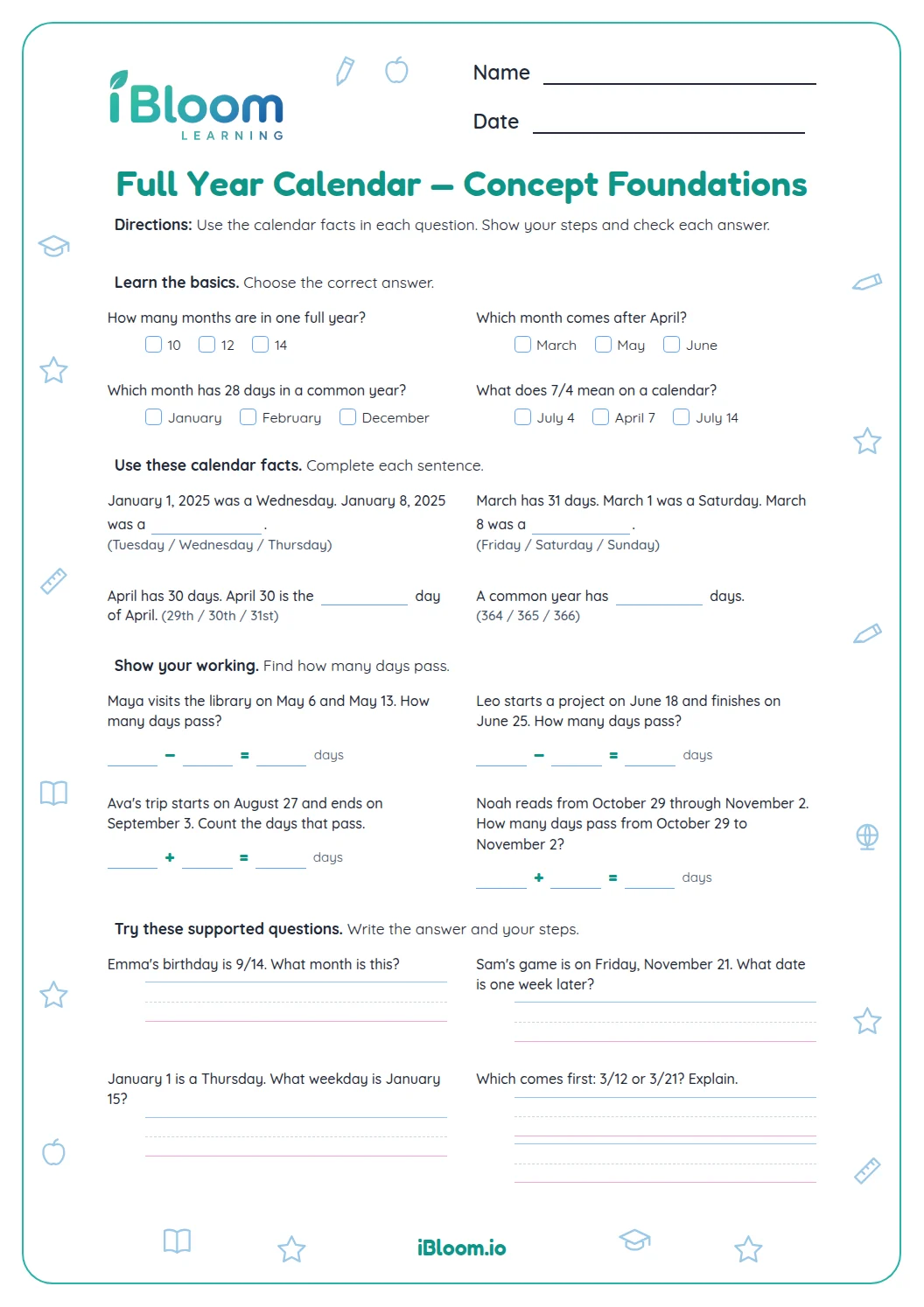
Part A asks for January, March, May, July, September, and November as numbers. Part B reverses the task for February, April, June, August, October, and December. Together, the two parts cover every month once.
Part C adds a practical reason to know those pairs: reading and completing dates. Its directions include March 5, 2026 = 3/5/2026 as a model, so students can see where the month number belongs.
How can a child find a month number?
Say the months from January and count each name once. Stop at the target month. Saying January as 1, rather than starting at 0, keeps every later month in the correct position.
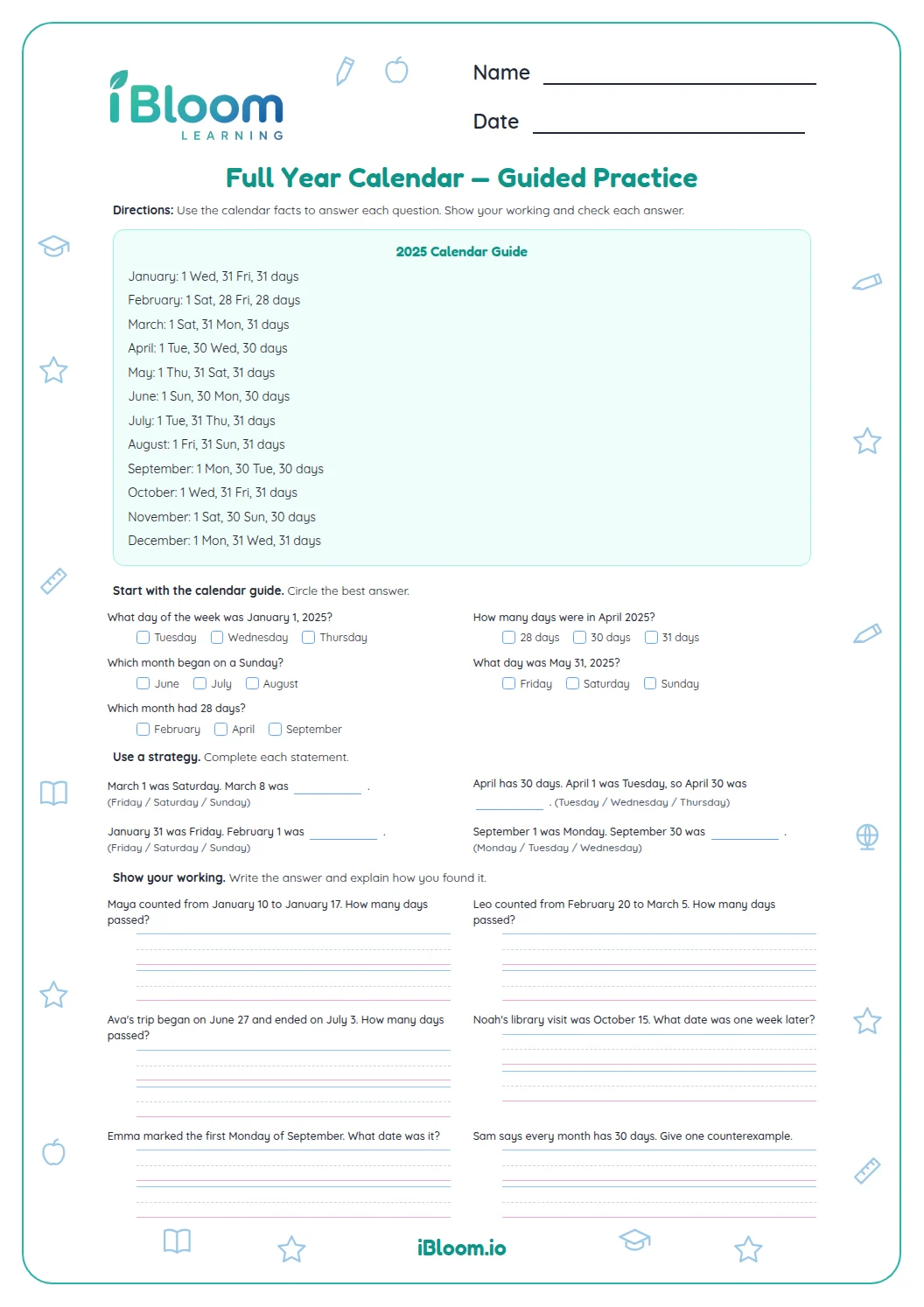
For a child who needs a reference, keep a yearly calendar nearby during Parts A and B. Then cover it and try one date from Part C.
- 1January 1, February 2, March 3, April 4, May 5, June 6, July 7, August 8, September 9.
- 2September is the ninth month, so choose 9.
How do month numbers work in US dates?
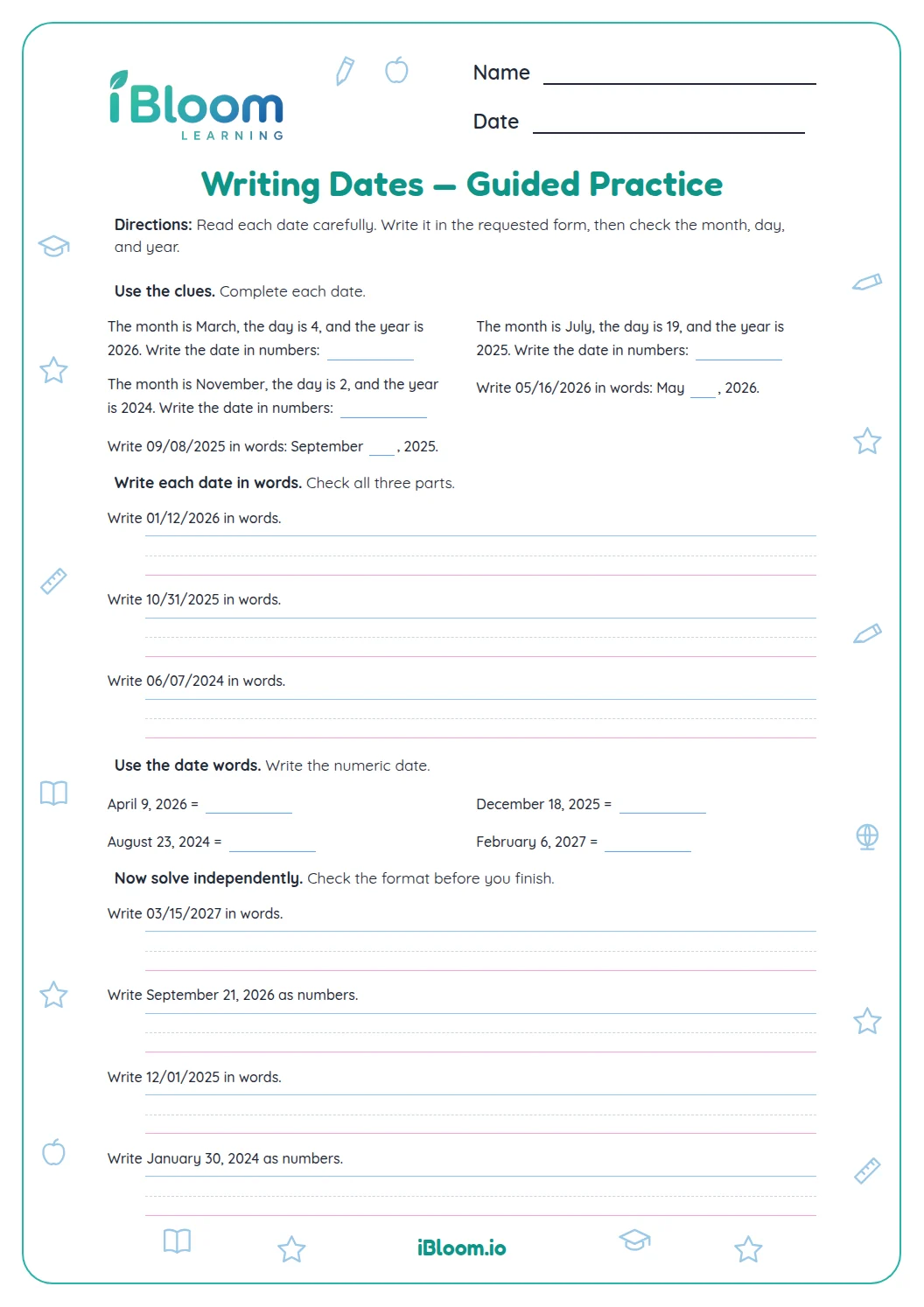
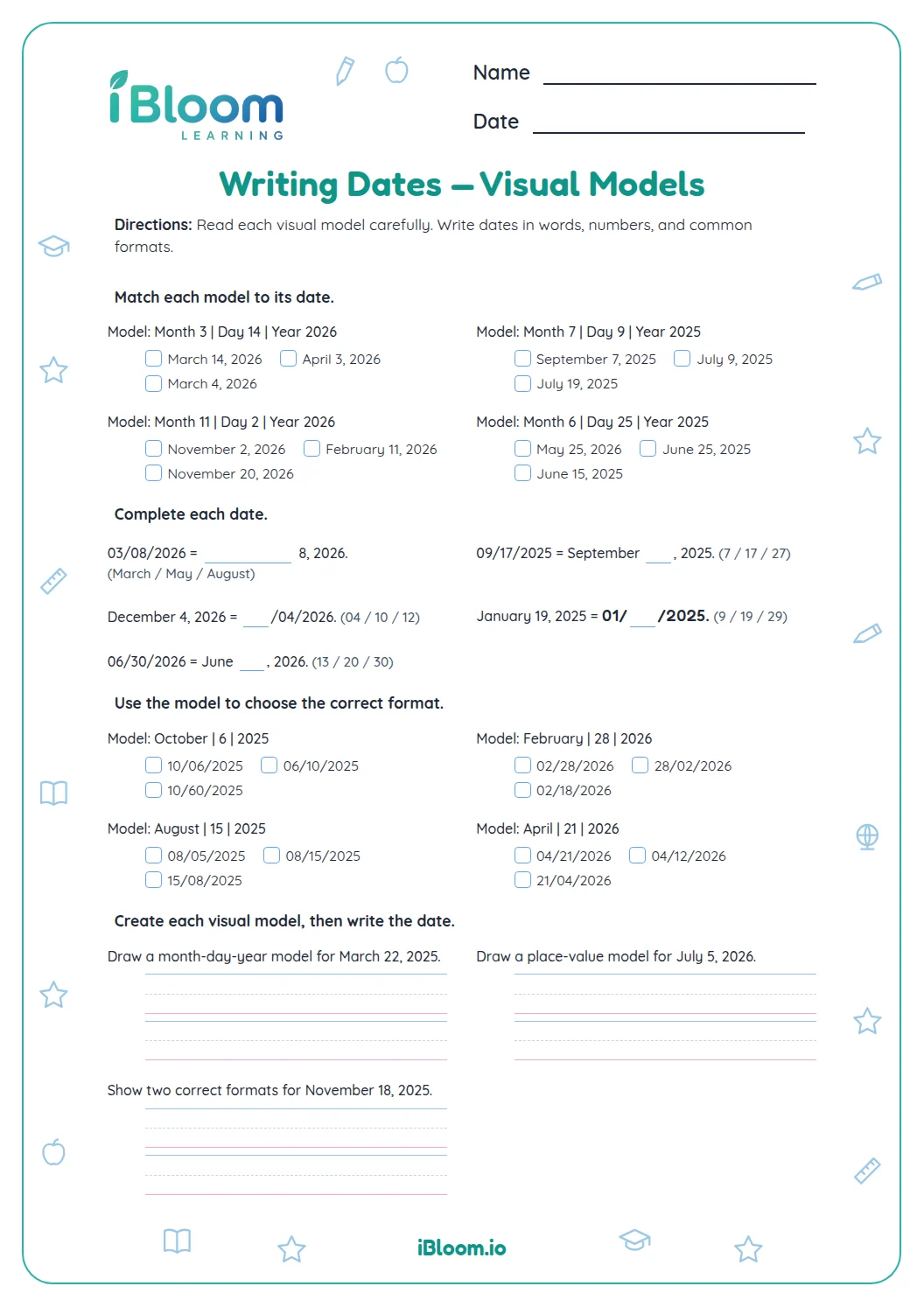
In the month/day/year format used here, the first number names the month, the middle number tells the day, and the last number gives the year. Read the three parts separately before saying the full date.
- 19/14/2026 has 9 before the slash.
- 2Month 9 is September, so 9/14/2026 means September 14, 2026.
- 3Write September in the blank.
How to use the worksheet
- 1Read January = 1 and December = 12 in the directions.
- 2Say the month names in order once, counting from 1.
- 3Complete the six choices in Part A and the six names in Part B.
- 4Read the March 5, 2026 = 3/5/2026 model before starting Part C.
- 5Check with the key, then say the full date for each Part C answer.
What to watch for
The mistake
Writing 0 for January.
The fix
Count January as 1. The month numbers run from 1 through 12.
The mistake
Choosing 8 for September because the month sequence was rushed.
The fix
Say August 8, September 9, October 10 slowly and check the neighboring months.
The mistake
Reading 12/3/2026 as March 12.
The fix
Use the stated US month/day/year order: 12 names December, and 3 is the day.
What to practice next
Make more practice
Questions parents and teachers ask
Does this worksheet cover every month?
Yes. The first twelve questions cover all twelve months, split between six number choices and six missing month names. The final four questions reuse selected months in US dates. Read the completed answers in calendar order afterward to connect the two parts into one full year.
What does 9/14/2026 mean on this sheet?
It means September 14, 2026 in the US month/day/year format used throughout Part C. The first number, 9, identifies September; 14 identifies the day, and 2026 gives the year. Question 13 asks only for the month name, so the child writes September rather than the entire date.
Can my child use a calendar while working?
Yes. A yearly calendar can help a child count the months from January and check their order. Keep it visible for the first two parts if needed. For Part C, try reading a date without the calendar first, then use it to check the month name.
Should children write 6 or 06 for June?
Write 6 for the June blank on this worksheet. Its model and answer key use month numbers without a leading zero. If your child writes 06 in question 14, it still identifies June correctly; discuss the matching meaning and keep the notation consistent when checking the sheet.
How can I check a mistaken month number?
Count the month names from January with your child, giving one number to each name. For September, the count ends at 9. Then check the nearby months, August and October, to anchor the answer. The separate key gives the expected response for every question on the sheet.