

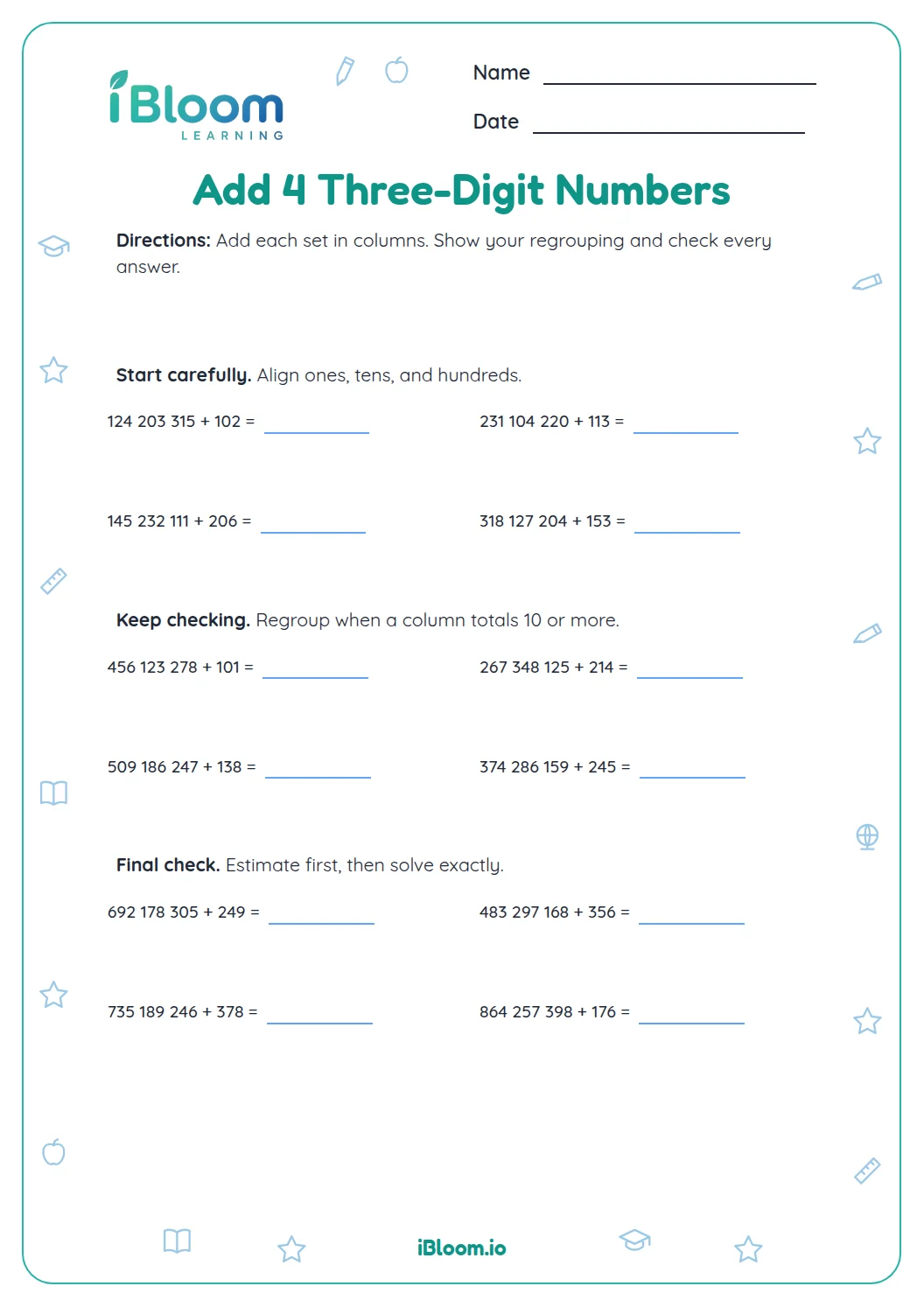
About this worksheet
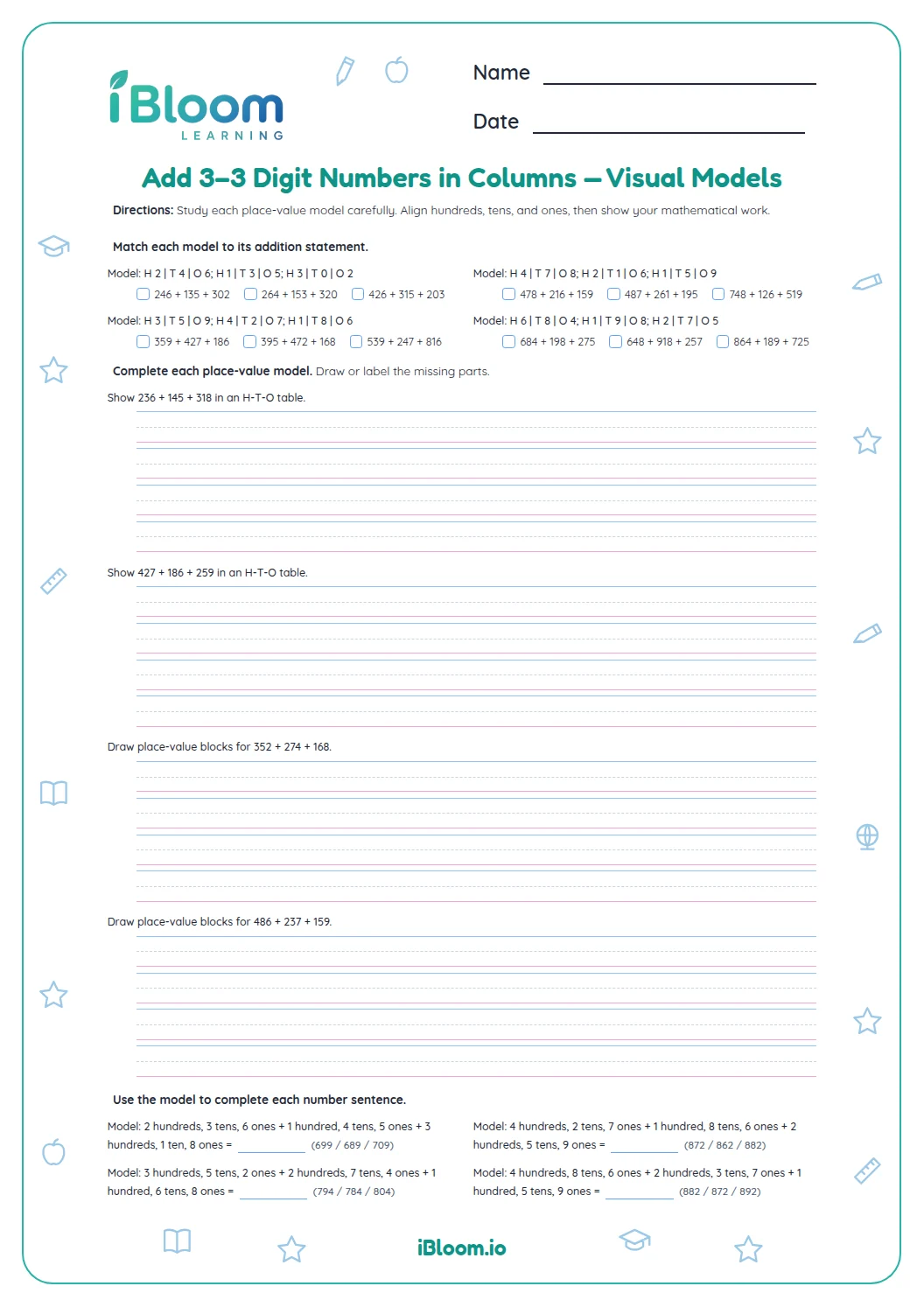
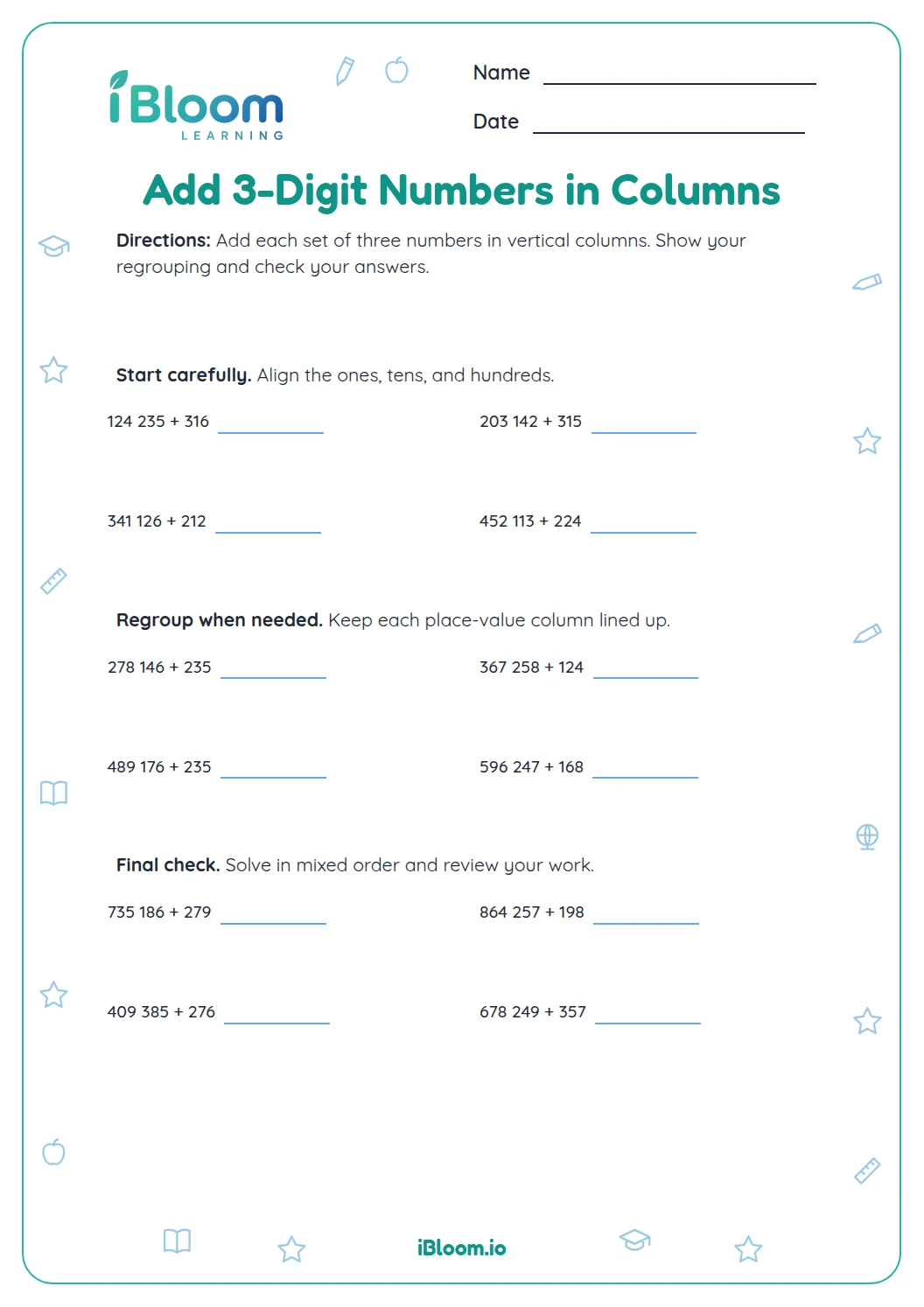
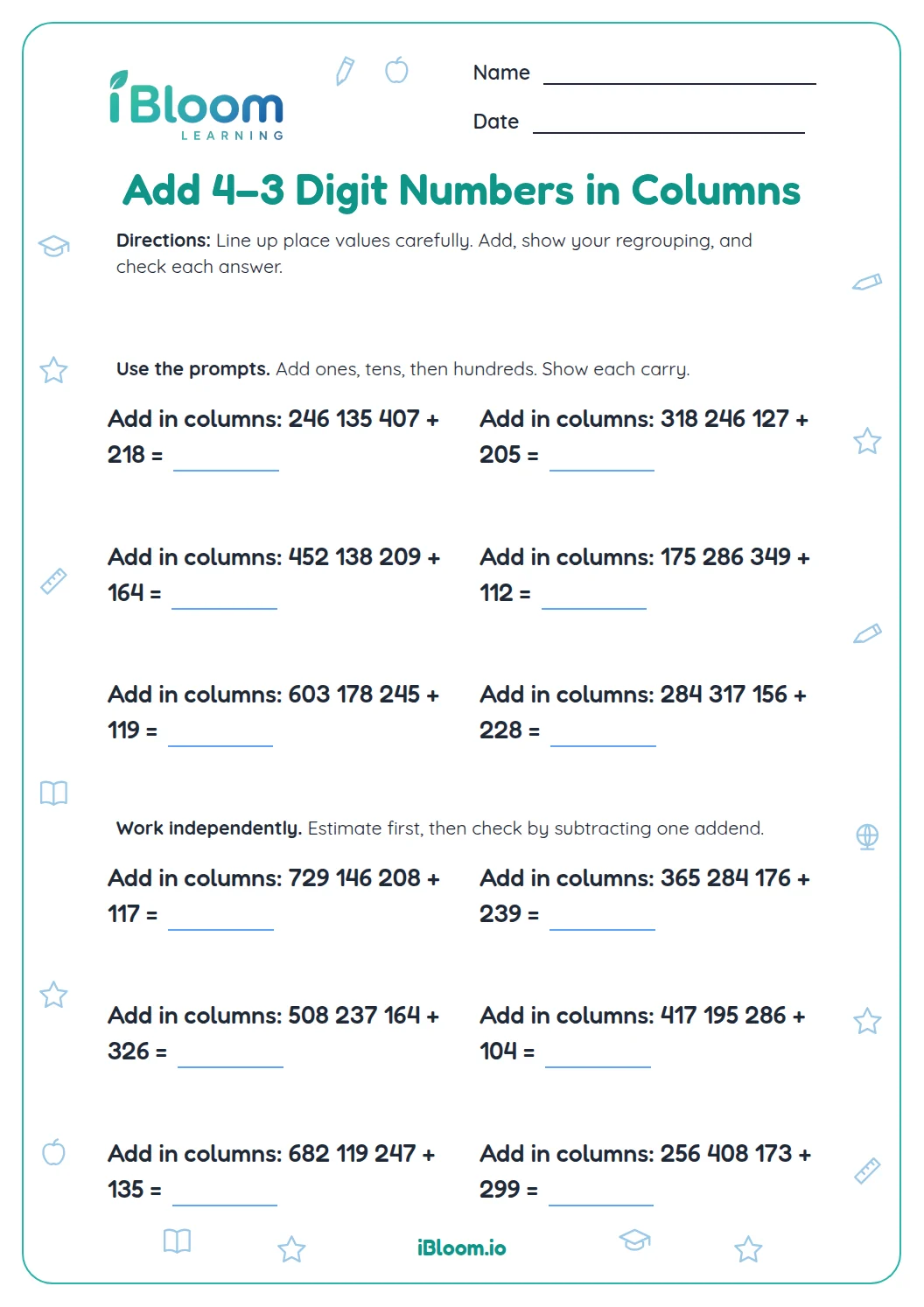
This Grade 4 printable gives 16 problems adding three three-digit numbers in columns. Children align ones, tens, and hundreds, then regroup when a column total reaches ten. The work practices CCSS 4.NBT.B.4, and the separate answer key lists each sum.
Aligned to 4.NBT.B.4
What is the column method?
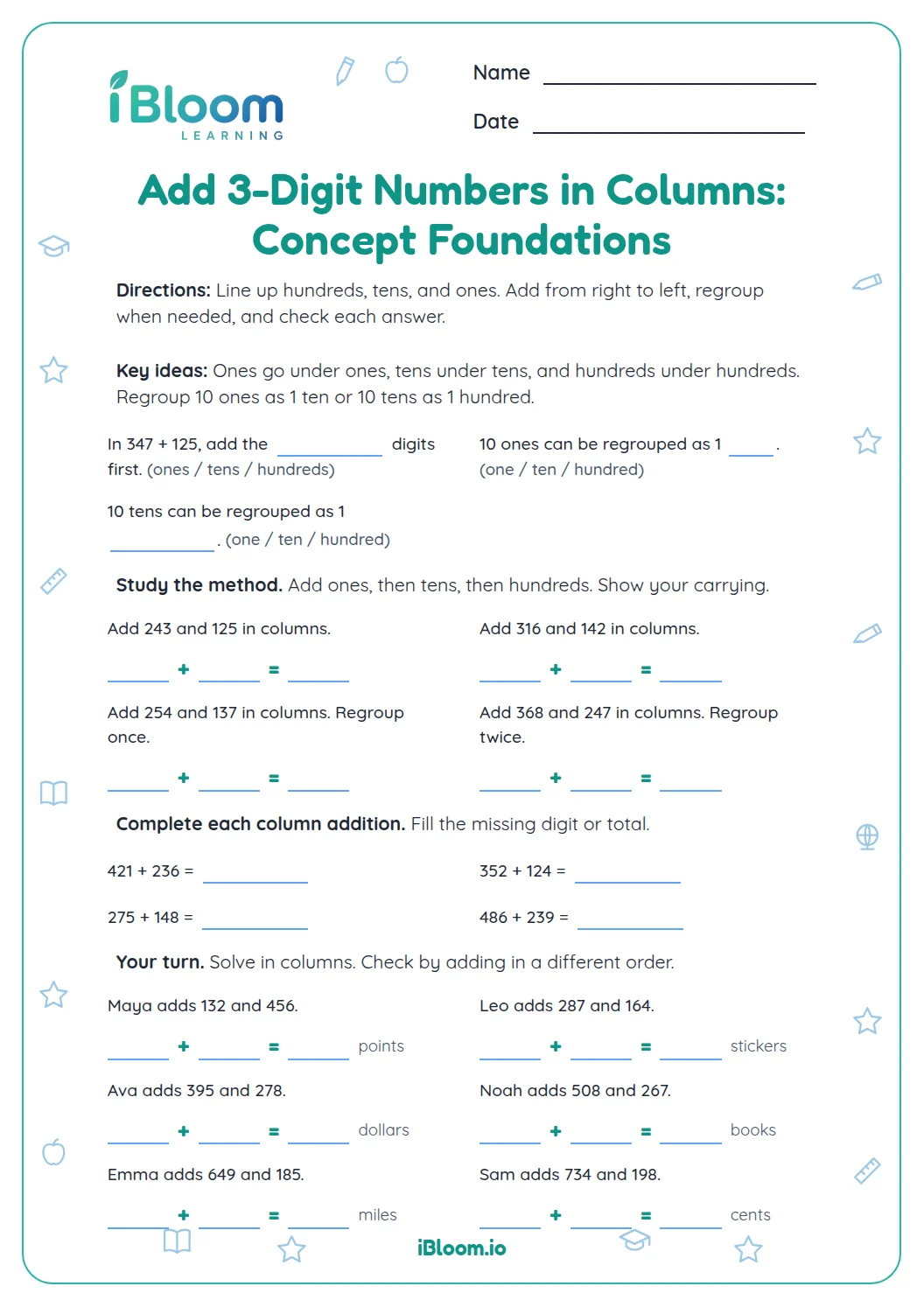
Write the three addends so ones are below ones, tens below tens, and hundreds below hundreds. Add from the ones column toward the hundreds. When a column total is ten or more, write the ones digit and regroup the tens to the next column.
How can you check a three-addend sum?
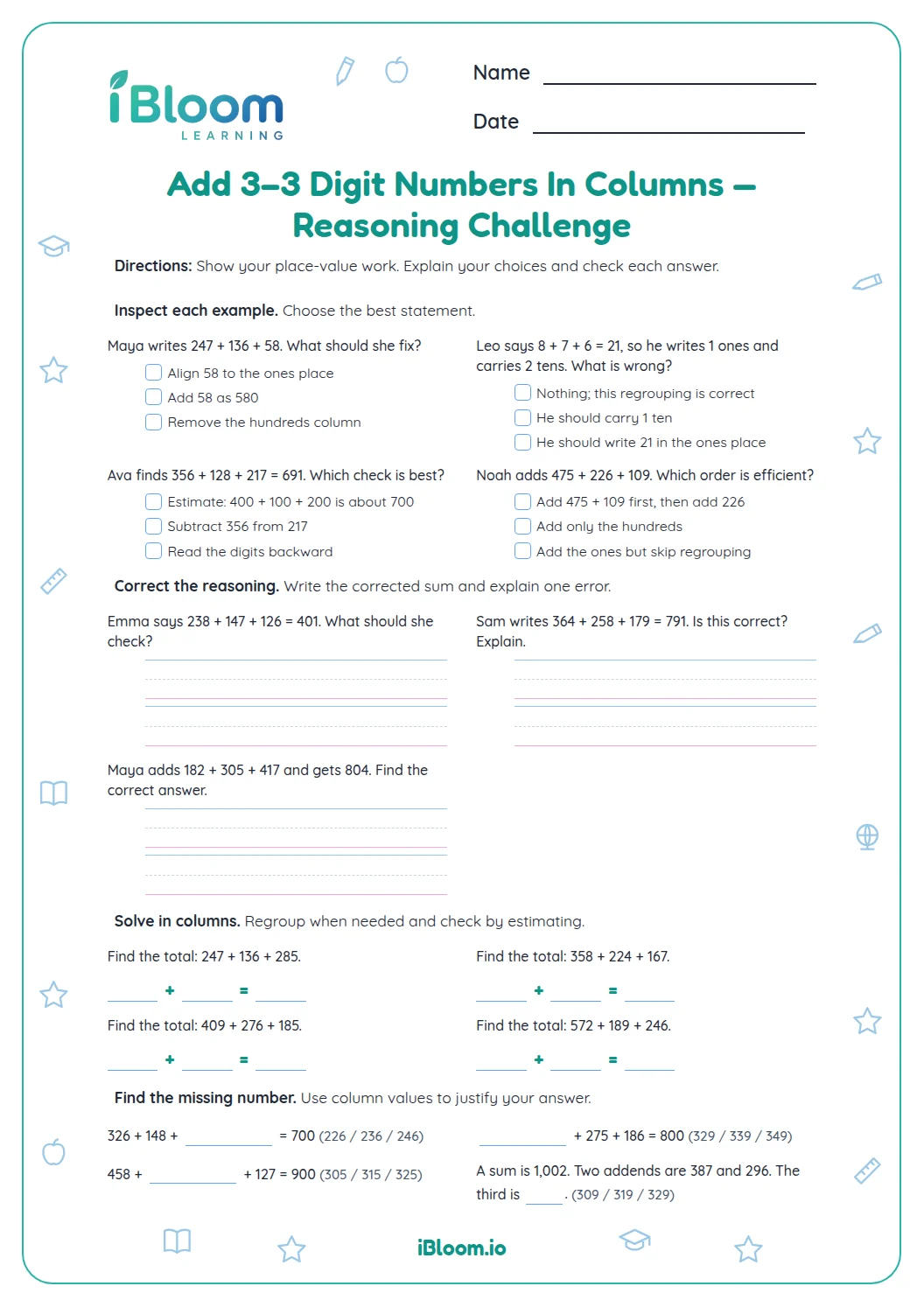
After adding each column and regrouping, estimate or add the numbers in a different order to check the total.
- 1248 + 137 + 326
- 2Ones: 8 + 7 + 6 = 21; regroup 2 tens.
- 3The complete sum is 711.
How to use this worksheet
- 1Copy each addend into its own row.
- 2Align the ones, tens, and hundreds digits.
- 3Add the ones and regroup if needed.
- 4Add tens and hundreds, including any regrouped value.
- 5Estimate or recompute to check the total.
Common mistakes and quick fixes
The mistake
Adding digits that are not in the same place.
The fix
Line up the ones digits in one column, tens in another, and hundreds in another.
The mistake
Forgetting to add a regrouped ten or hundred.
The fix
Write the regrouped value above the next column and include it in that sum.
The mistake
Writing a two-digit column total in one place.
The fix
Keep the ones digit in the current column and regroup the tens to the next place.
Common Core alignment
Children use the standard algorithm to add multi-digit whole numbers.
Add multi-digit whole numbers with the standard algorithm.
On this sheet: All 16 problems add three three-digit whole numbers in vertical column form.
Show the official wordingHide the official wording
Fluently add and subtract multi-digit whole numbers using the standard algorithm.
What to practice next
Make more practice
Further reading
Questions parents and teachers ask
What does this worksheet ask children to add?
Each problem has three three-digit whole numbers. Children add all three addends in columns, aligning ones, tens, and hundreds and regrouping as needed. The sheet gives 16 opportunities to practice the standard algorithm in writing. Each answer includes one total.
How many problems are included?
There are 16 addition problems arranged in two practice parts. Each problem gives three addends and space to show the column work before recording the total. The second part continues the same skill with another set of sums.
Why start with the ones column?
The ones column is the smallest place value. If its total is ten or more, the extra ten is regrouped into the tens column. The same process continues from tens into hundreds when a column total requires it.
How can a child check an answer?
Estimate the total or add the numbers in a different order. Then check that every regrouped ten or hundred was included in the next column. A quick estimate helps catch a total that is far too small or large.
Is an answer key provided?
Yes. The separate key lists the correct sum for every problem. Children can compare their column work with the total and revisit any regrouping step that changed the result. Checking each place value helps locate an error in the written work.