

About this worksheet
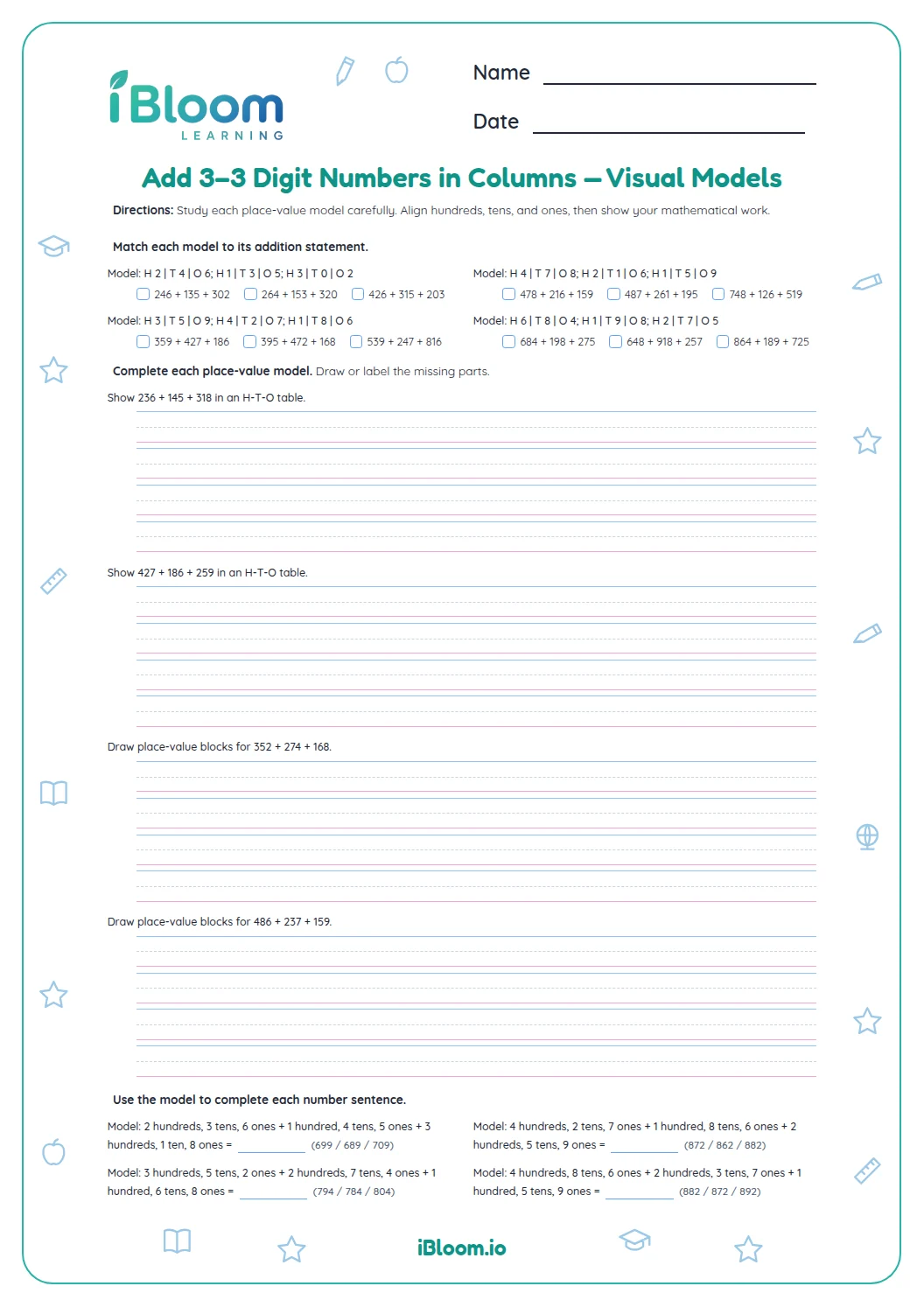
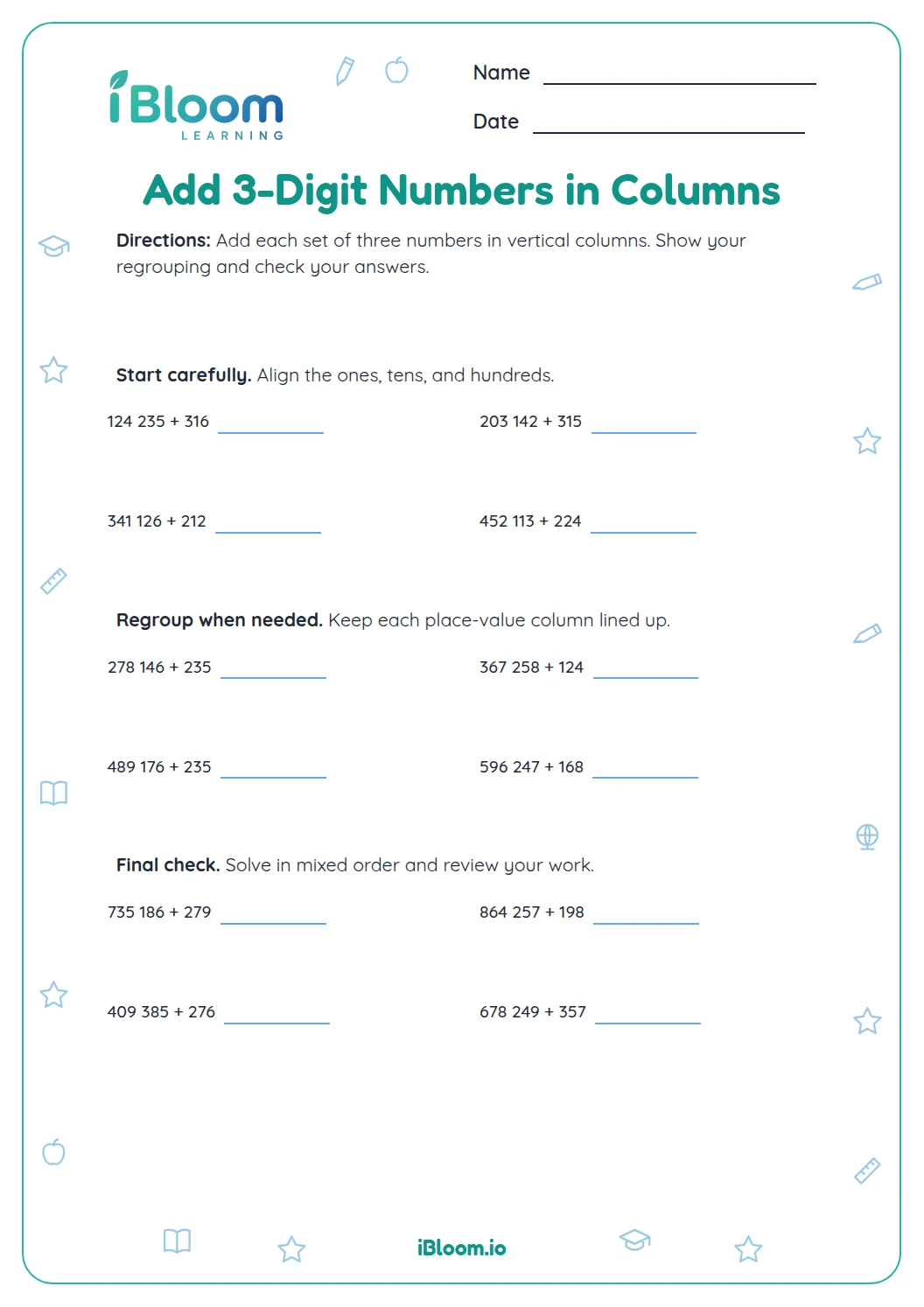
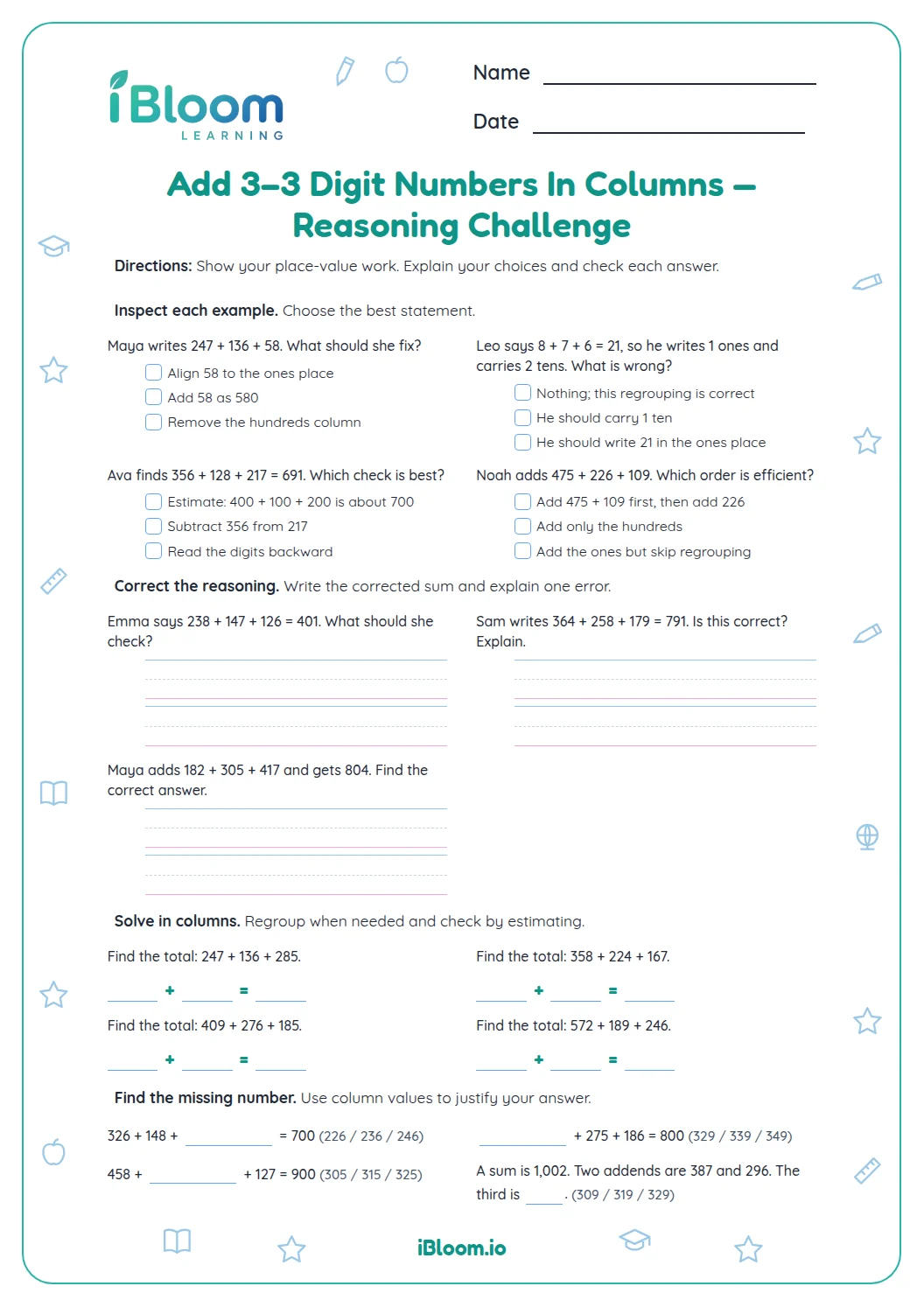
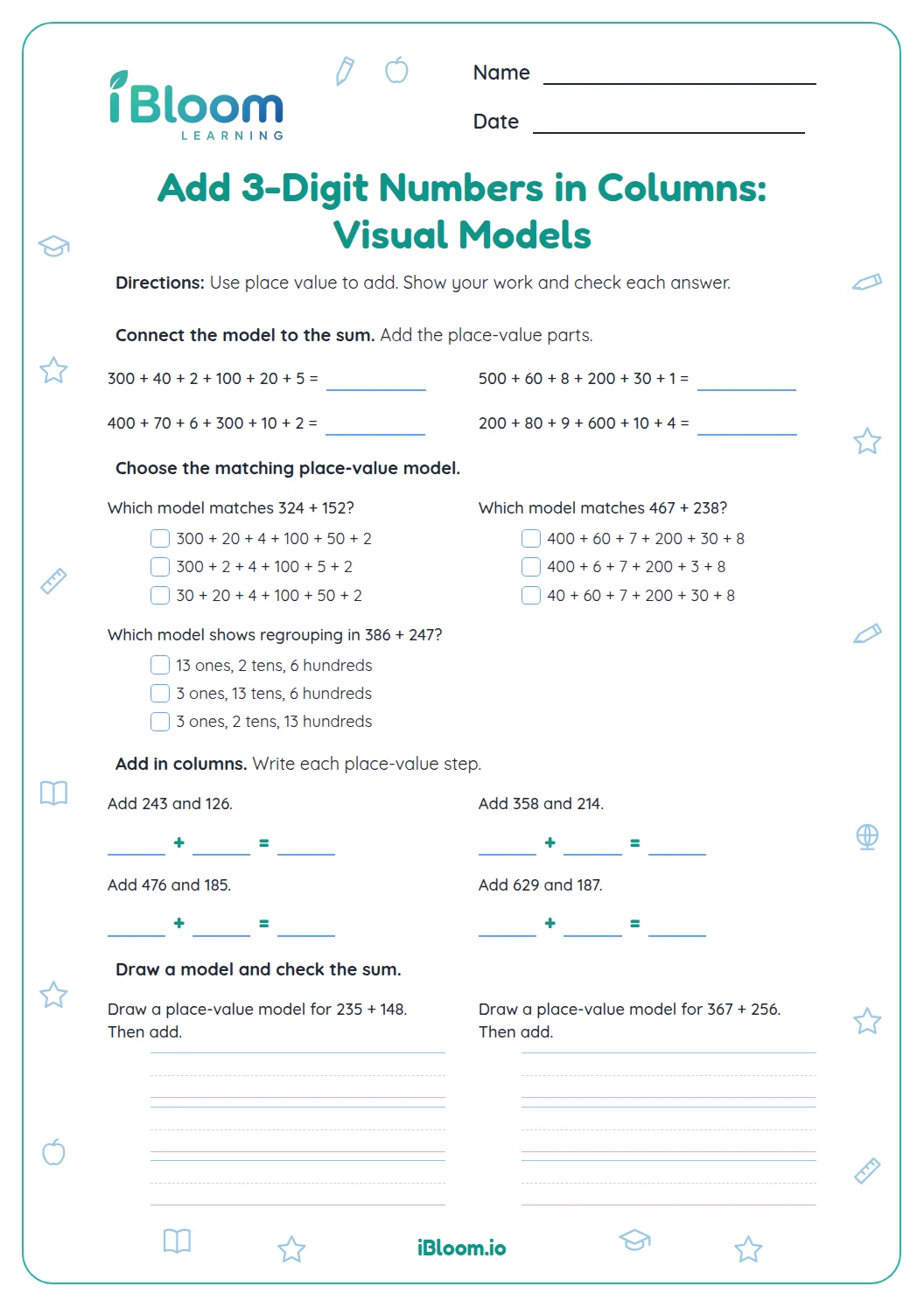
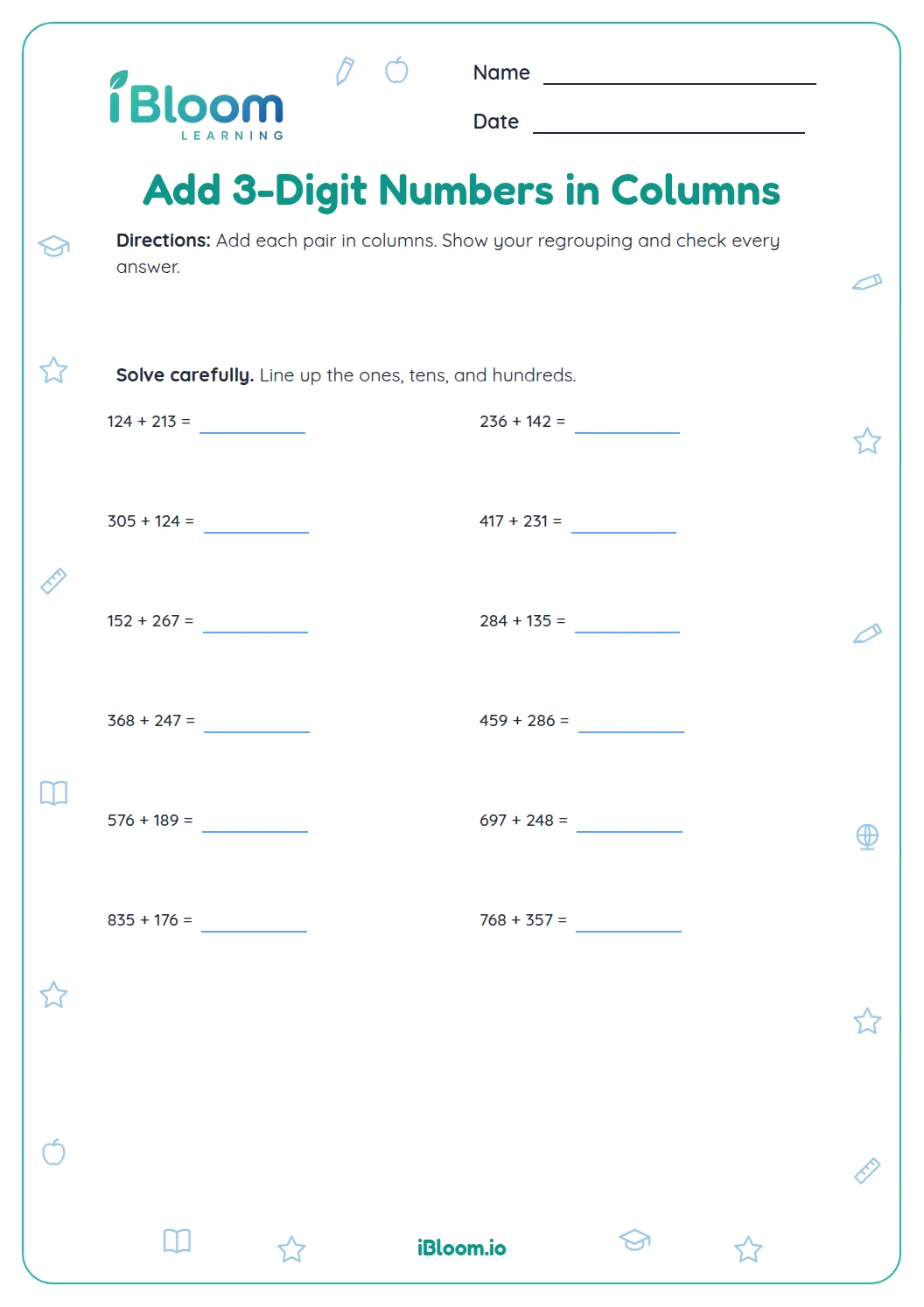
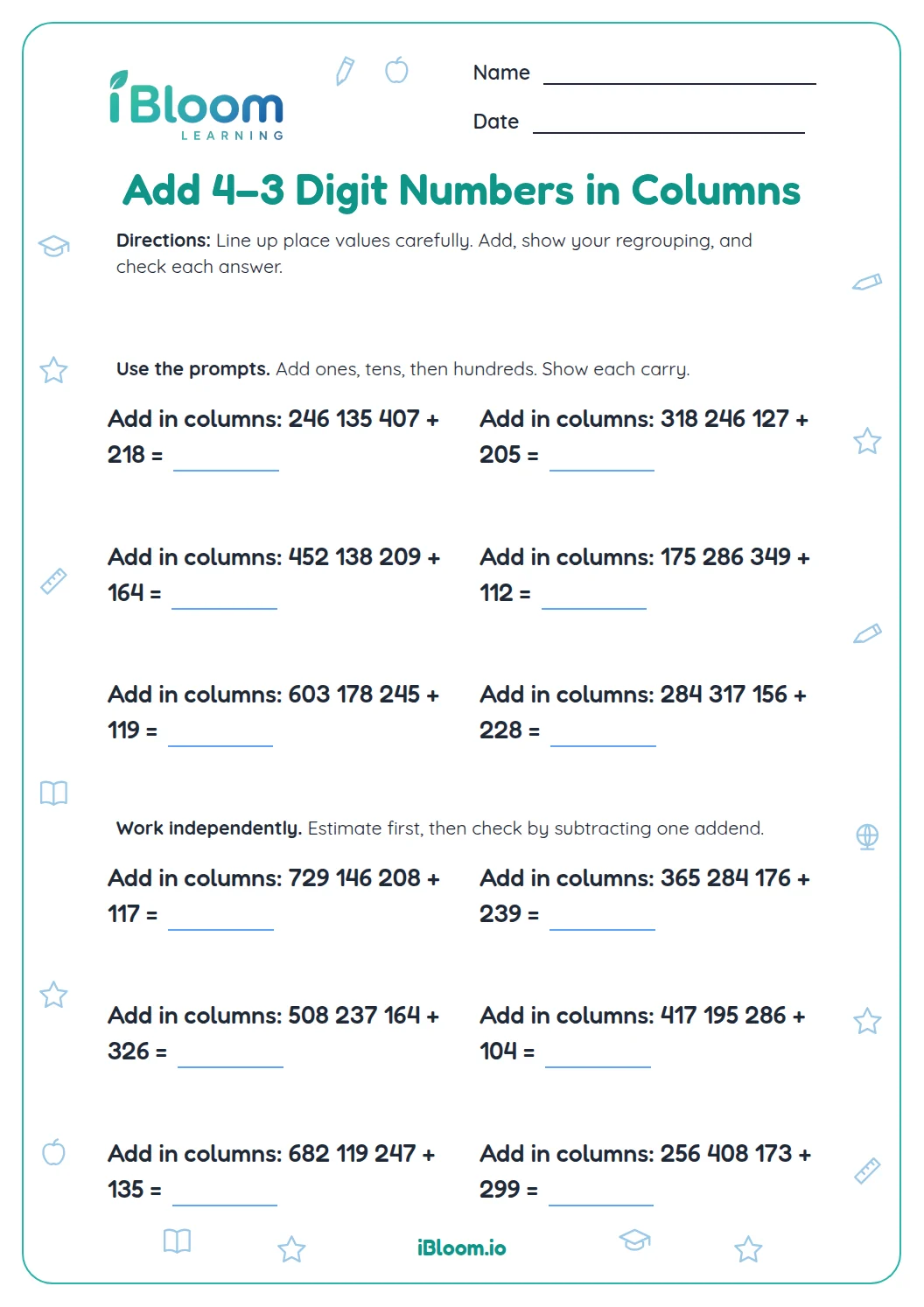
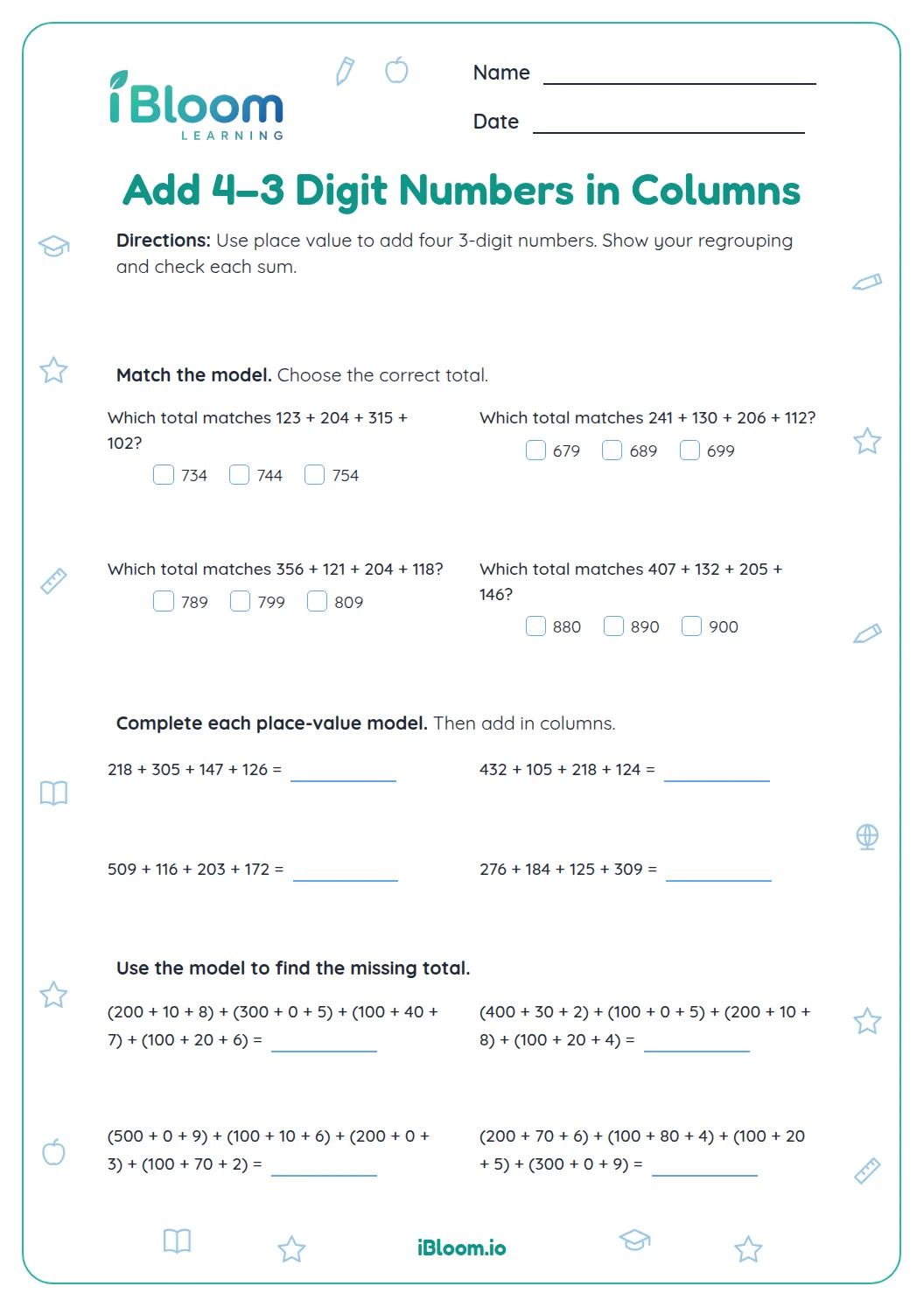
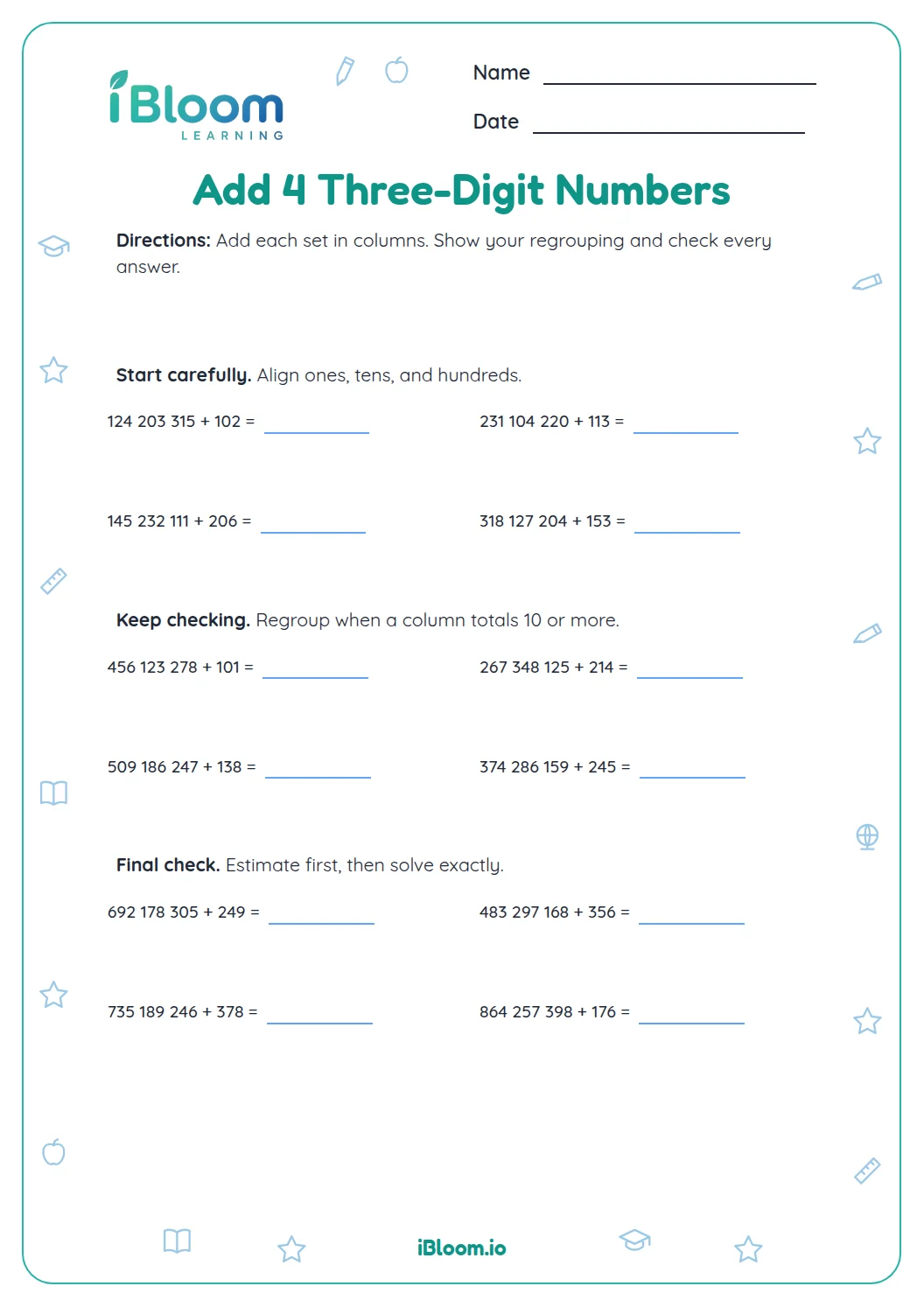
This Grade 4 guided practice page focuses on adding three three-digit numbers using place-value columns. Every problem gives a vertical stack so children can line up ones, tens, and hundreds, regroup as needed, and check the total. The 16 items vary which columns require regrouping and align with CCSS 4.NBT.B.4. A separate answer key lists each sum.
Aligned to 4.NBT.B.4
Why line up the digits?
Each digit must stay in its place-value column. Add ones to ones, tens to tens, and hundreds to hundreds. A regrouped ten moves into the next column.
- 1 348
- 2 276
- 3+ 159
- 4Ones: 8 + 6 + 9 = 23; write 3, regroup 2 tens.
- 5Tens: 4 + 7 + 5 + 2 = 18; write 8, regroup 1 hundred.
- 6Hundreds: 3 + 2 + 1 + 1 = 7. Sum: 783.
When do I regroup?
Regroup when the column total is ten or more. Record the ones digit in that column and carry the tens into the next column before adding it.
How can I check a three-addend sum?
Add the first two addends, then add the third to that total. You can also estimate with nearby hundreds to check that the answer is in a reasonable range.
How to use this worksheet
- 1Copy each addend into aligned columns.
- 2Start with the ones column and include all three digits.
- 3Write the ones digit and regroup any tens.
- 4Add the tens and hundreds, including regrouped amounts.
- 5Check the total by adding in a different order or estimating.
Mistakes to watch for
The mistake
Misaligning a digit.
The fix
Check that ones are directly below ones and hundreds below hundreds.
The mistake
Forgetting to include the third addend in a column.
The fix
Point to all three digits in each place-value column before adding.
The mistake
Writing the full column total without regrouping.
The fix
Keep the ones digit and carry the tens into the next column.
Curriculum alignment
This page connects the practice to the Common Core standard below.
Add multi-digit whole numbers using the standard algorithm.
On this sheet: Each item adds three three-digit addends in place-value columns, with regrouping.
Show the official wordingHide the official wording
Fluently add and subtract multi-digit whole numbers using the standard algorithm.
What to practice next
Make more practice
Further reading
Questions parents and teachers ask
How do I keep three addends lined up?
Write the ones digits in one column, tens digits in the next, and hundreds digits in the next. Keeping place values aligned lets you add each column accurately, even when regrouping is needed. A place-value chart can help children check alignment before they begin.
Do all these questions require regrouping?
The problems vary which columns need regrouping. In every item, include all three addends in each column and check whether the total reaches ten or more before moving to the next place. Regrouping can happen in more than one column within a single problem.
What is the sum in question 1?
The sum is 783. The ones column is 8 + 6 + 9 = 23, so write 3 and regroup 2 tens. The tens total becomes 18, so write 8 and regroup 1 hundred; the hundreds column then totals 7.
How can my child check an answer?
Add the numbers in a different order or combine two addends first and then add the third. An estimate using nearby hundreds can also show whether the answer is roughly the right size. Ask your child to name the place value while adding each column.
Which standard does this page practice?
It practices CCSS 4.NBT.B.4, which calls for fluent multi-digit addition and subtraction using the standard algorithm. Each item asks children to add three three-digit whole numbers in aligned columns. Look at the tens carried forward as well as the original digits.
How many problems are included?
There are 16 problems, each with three three-digit addends arranged in columns. The separate answer key lists each total. Children can use the empty workspace to record regrouping as they add the ones, tens, and hundreds. Check that each carried amount is added to the next column.