

About this worksheet
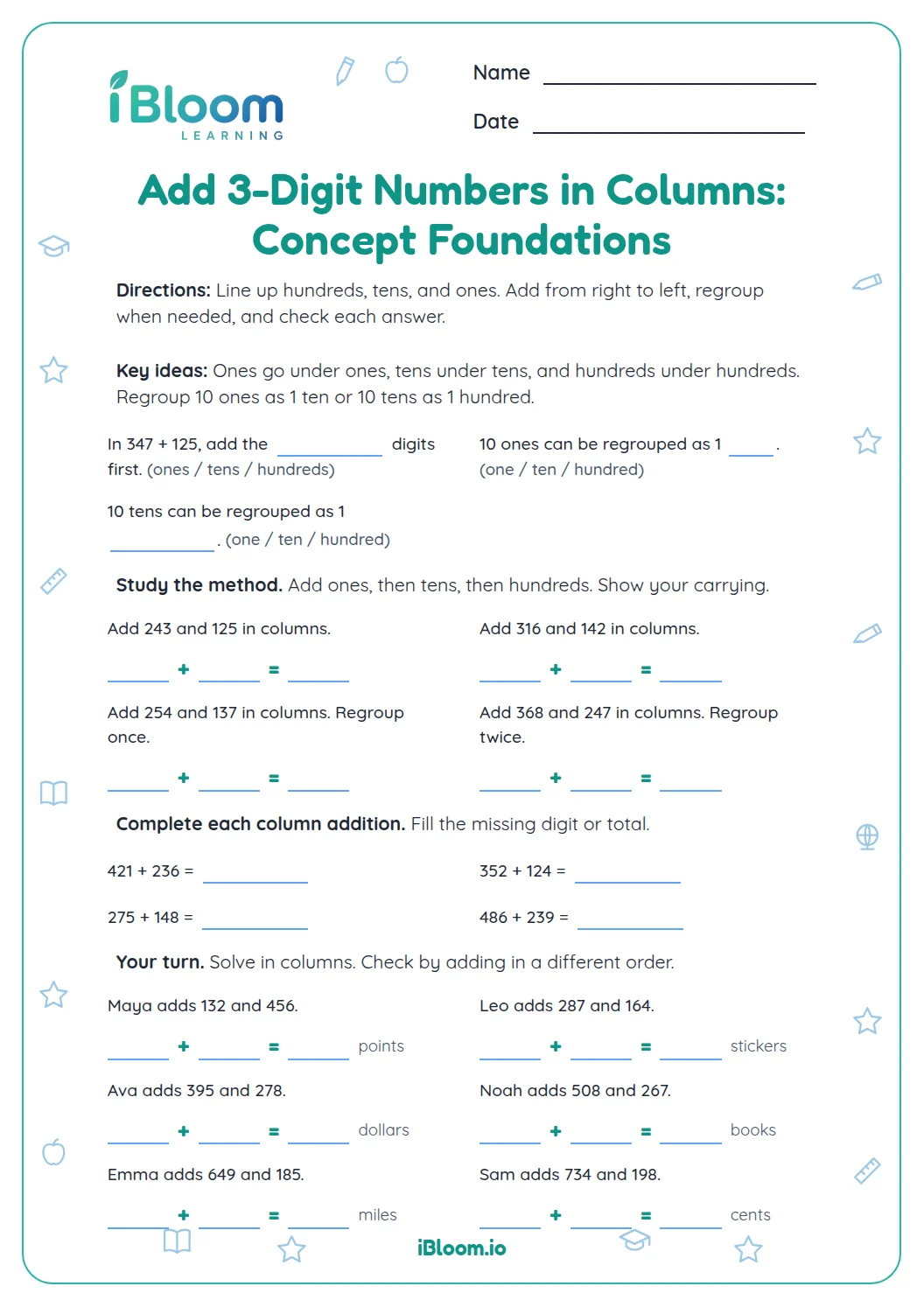
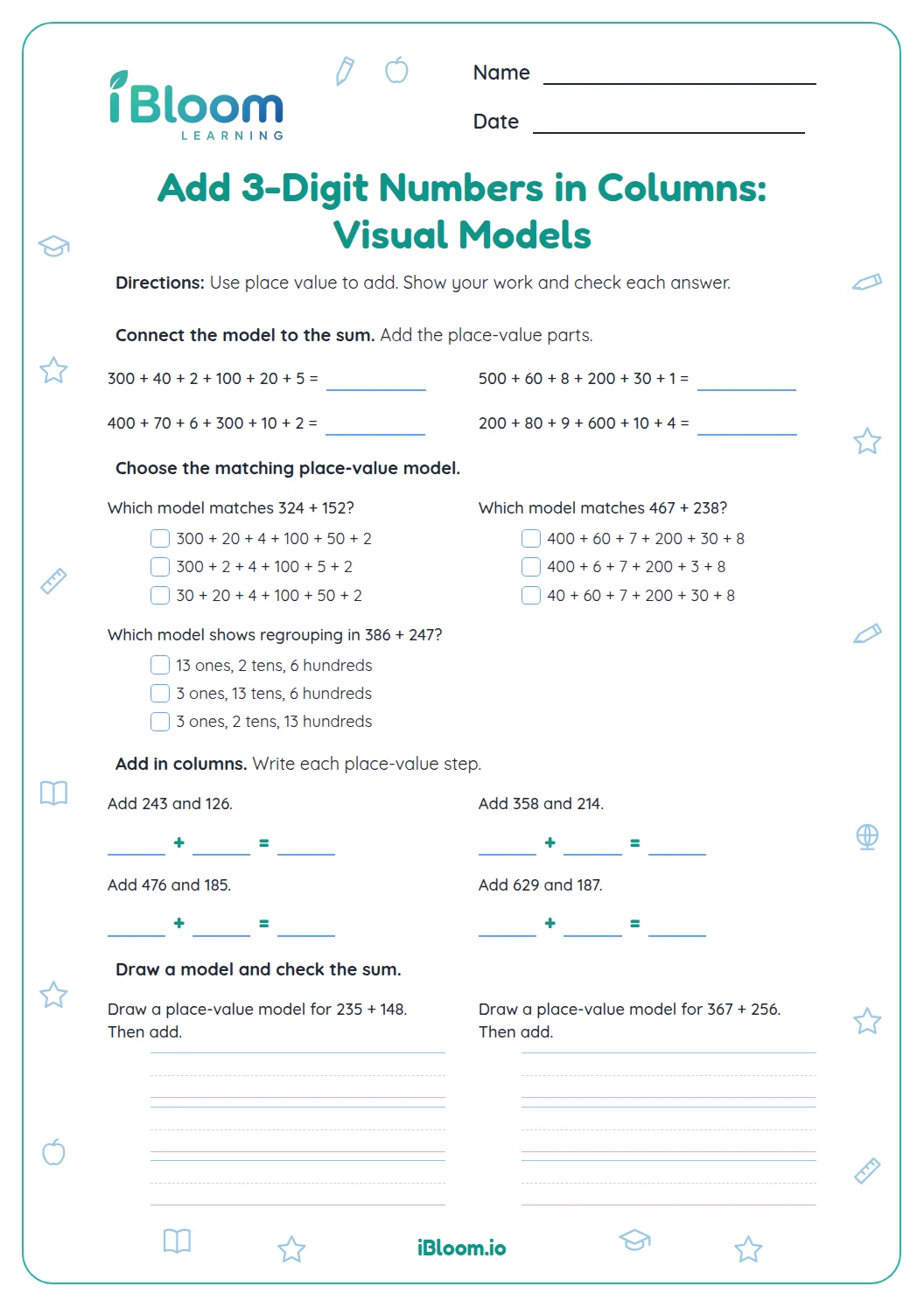
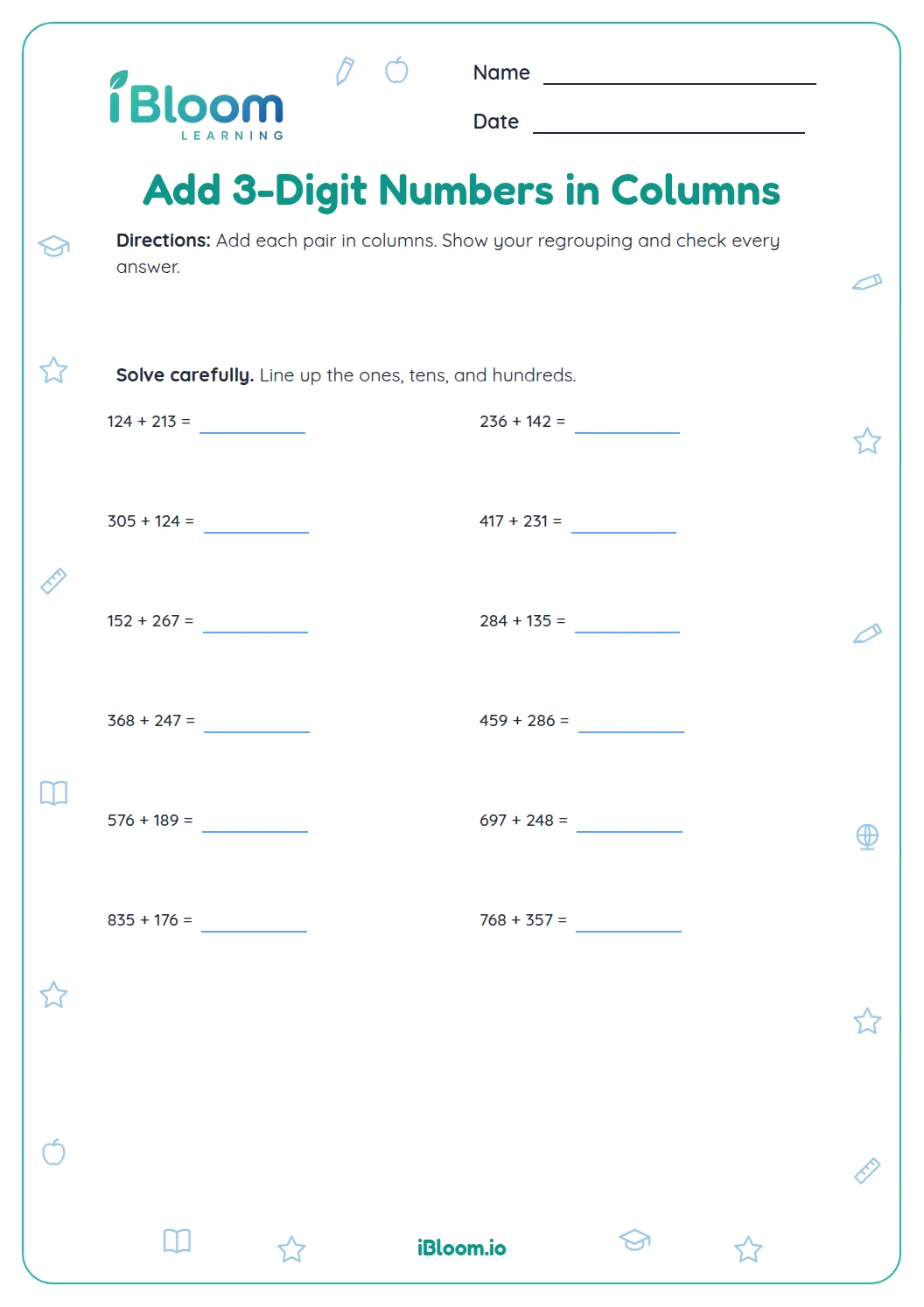
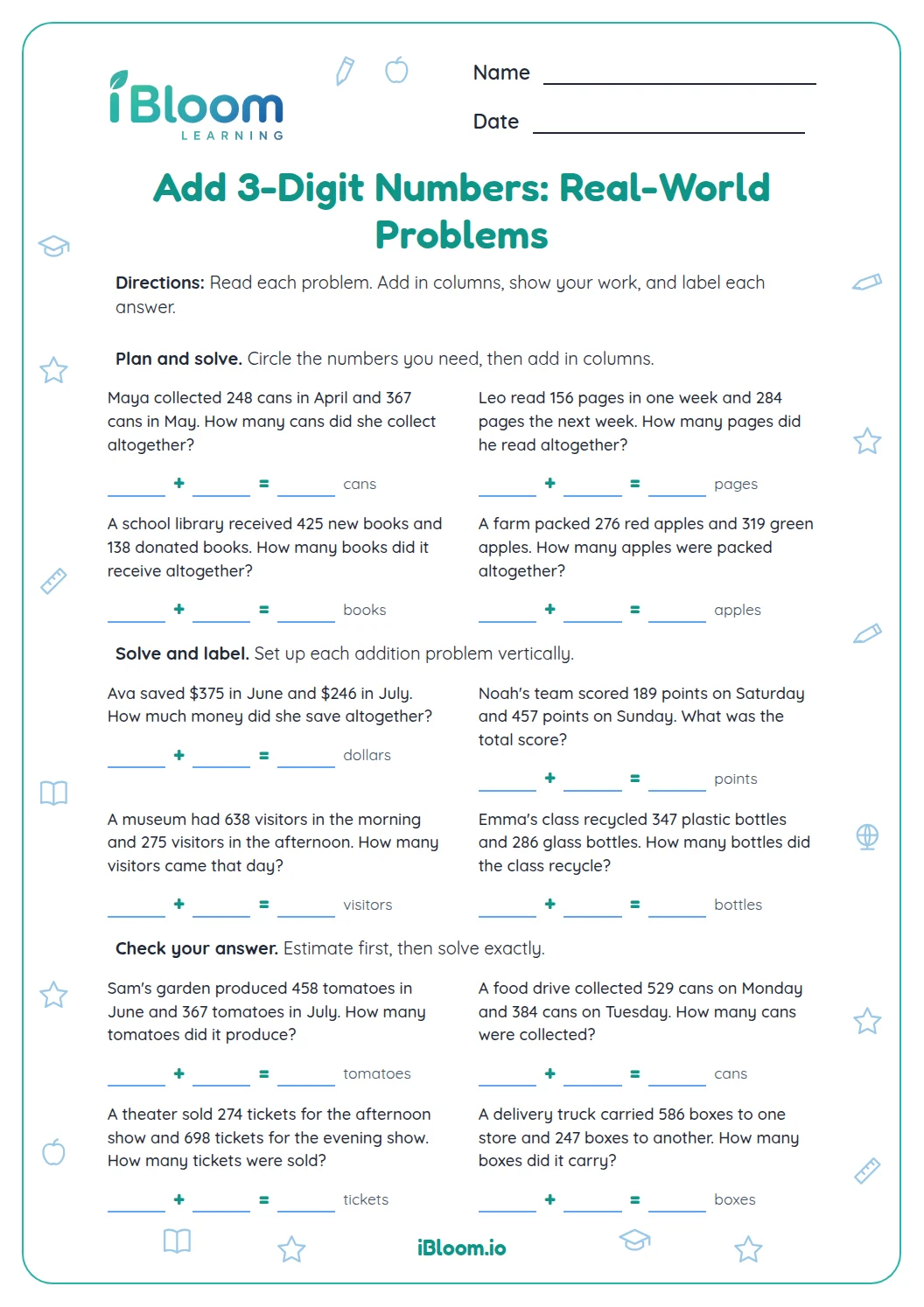
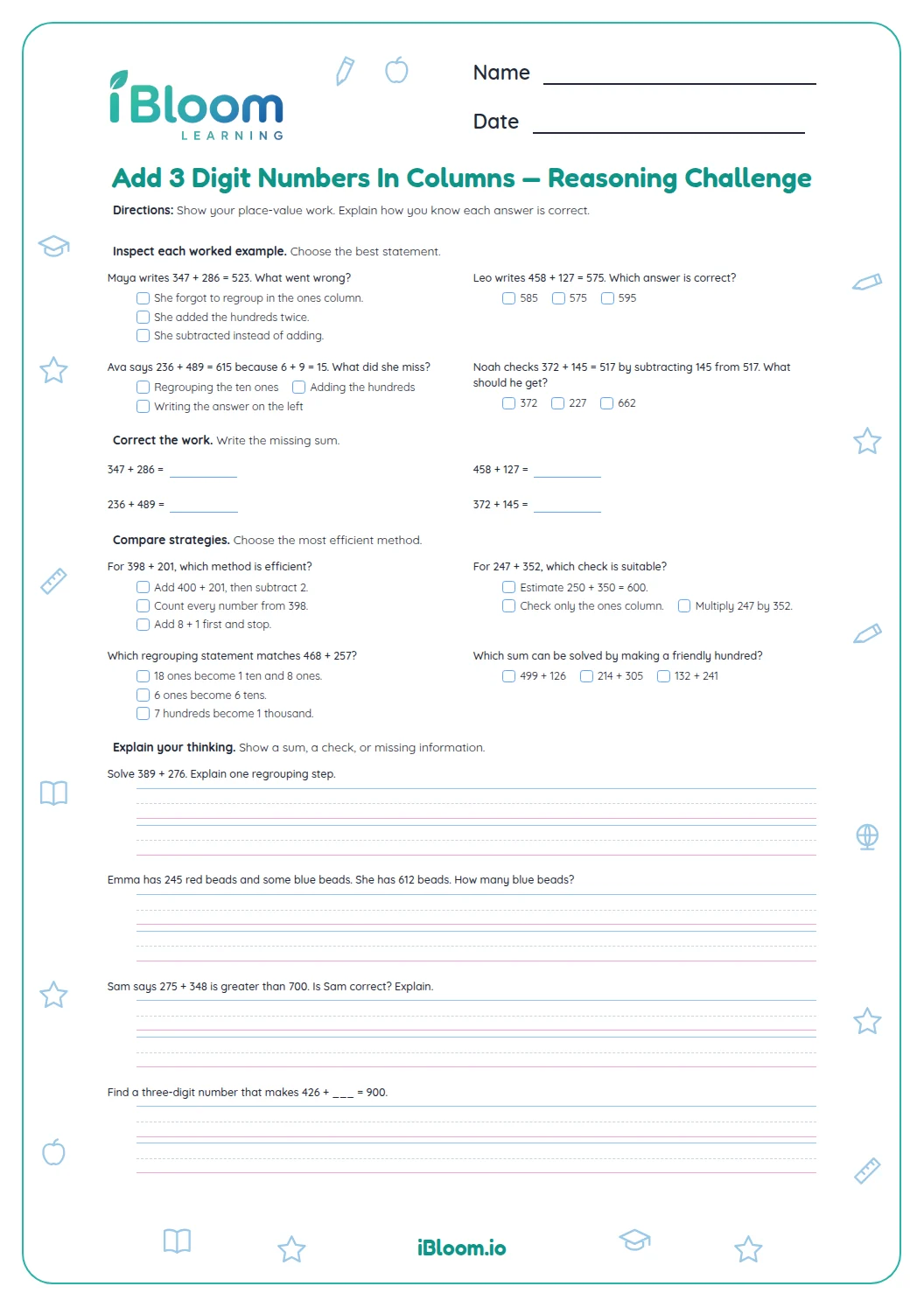
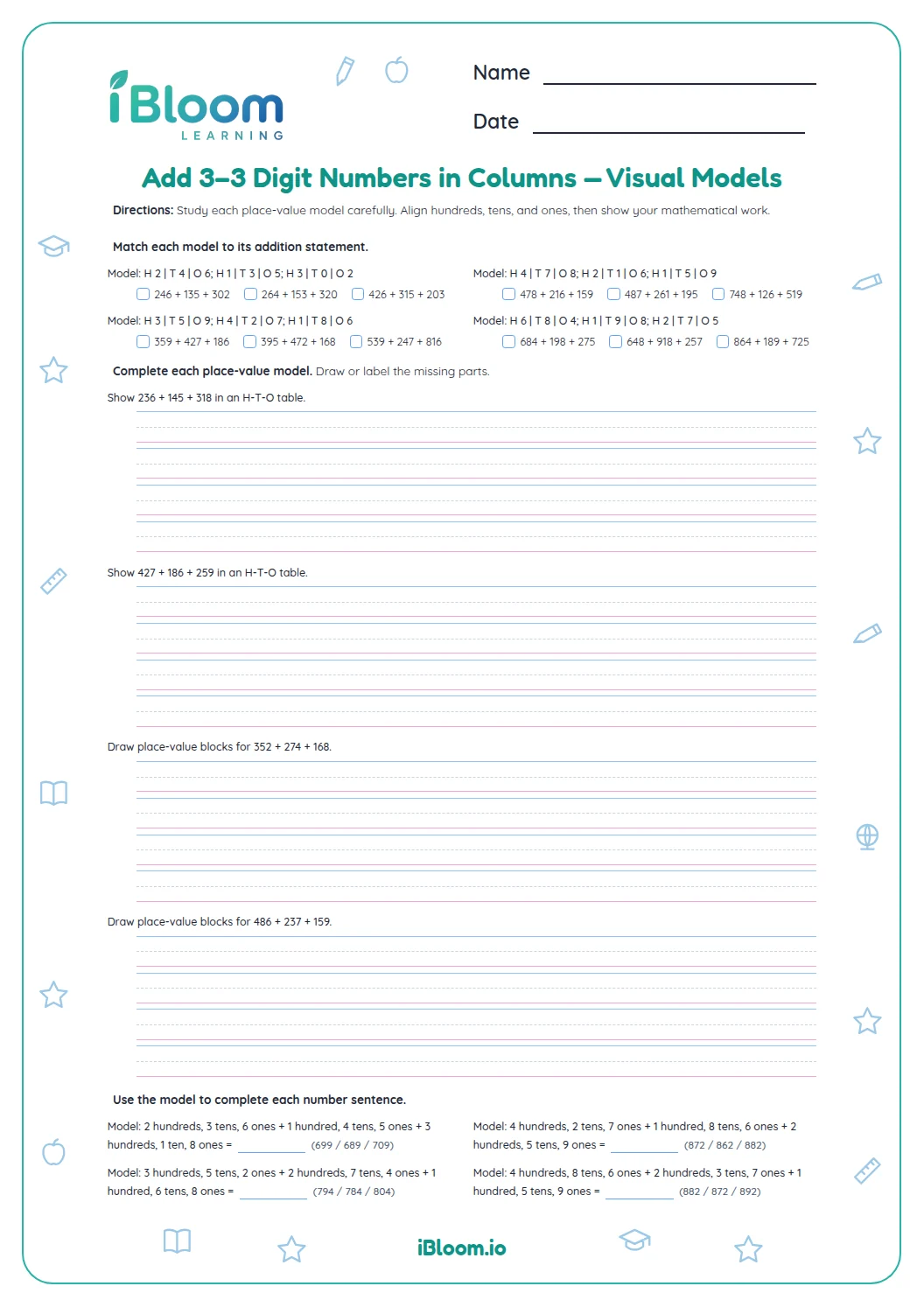
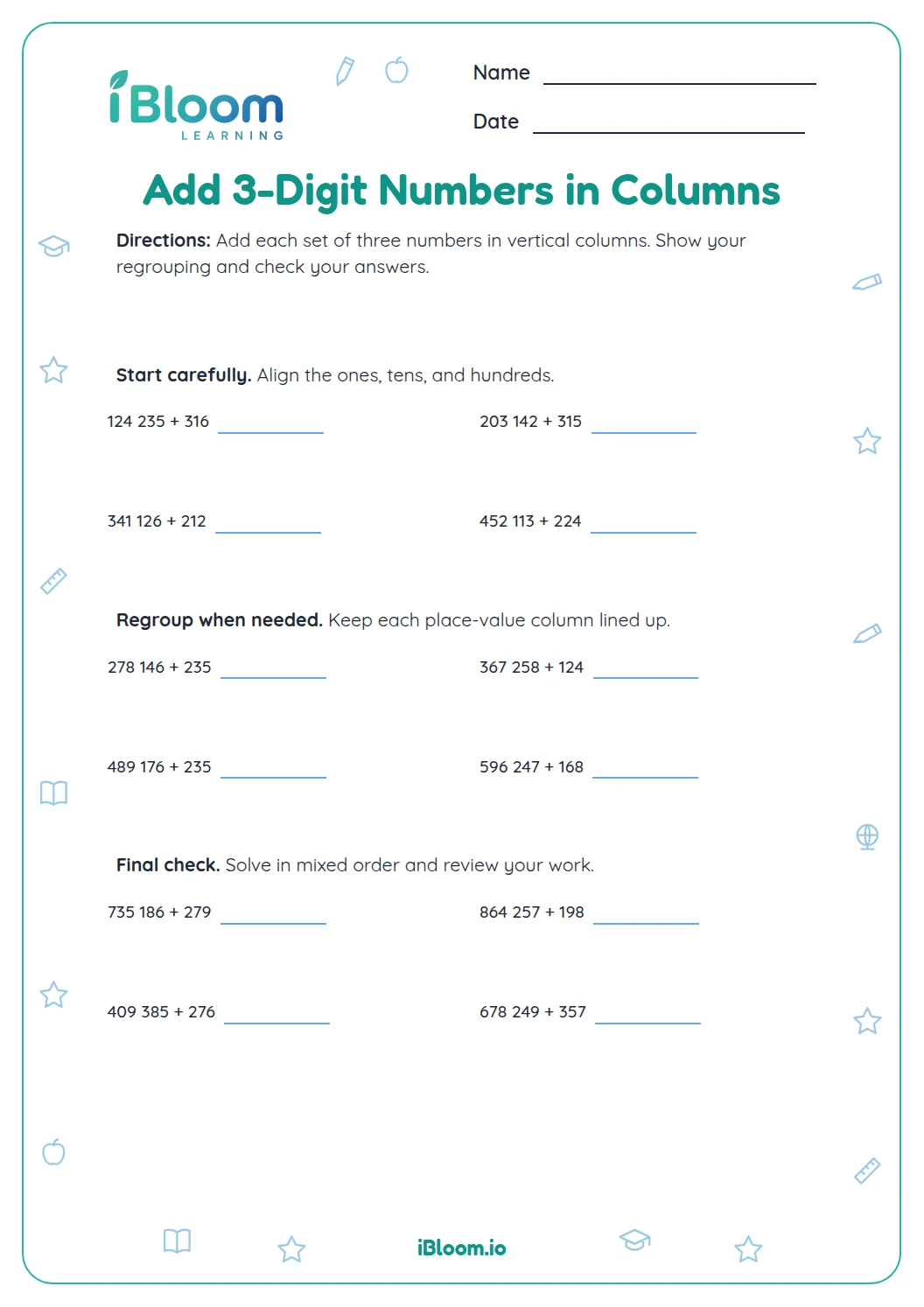
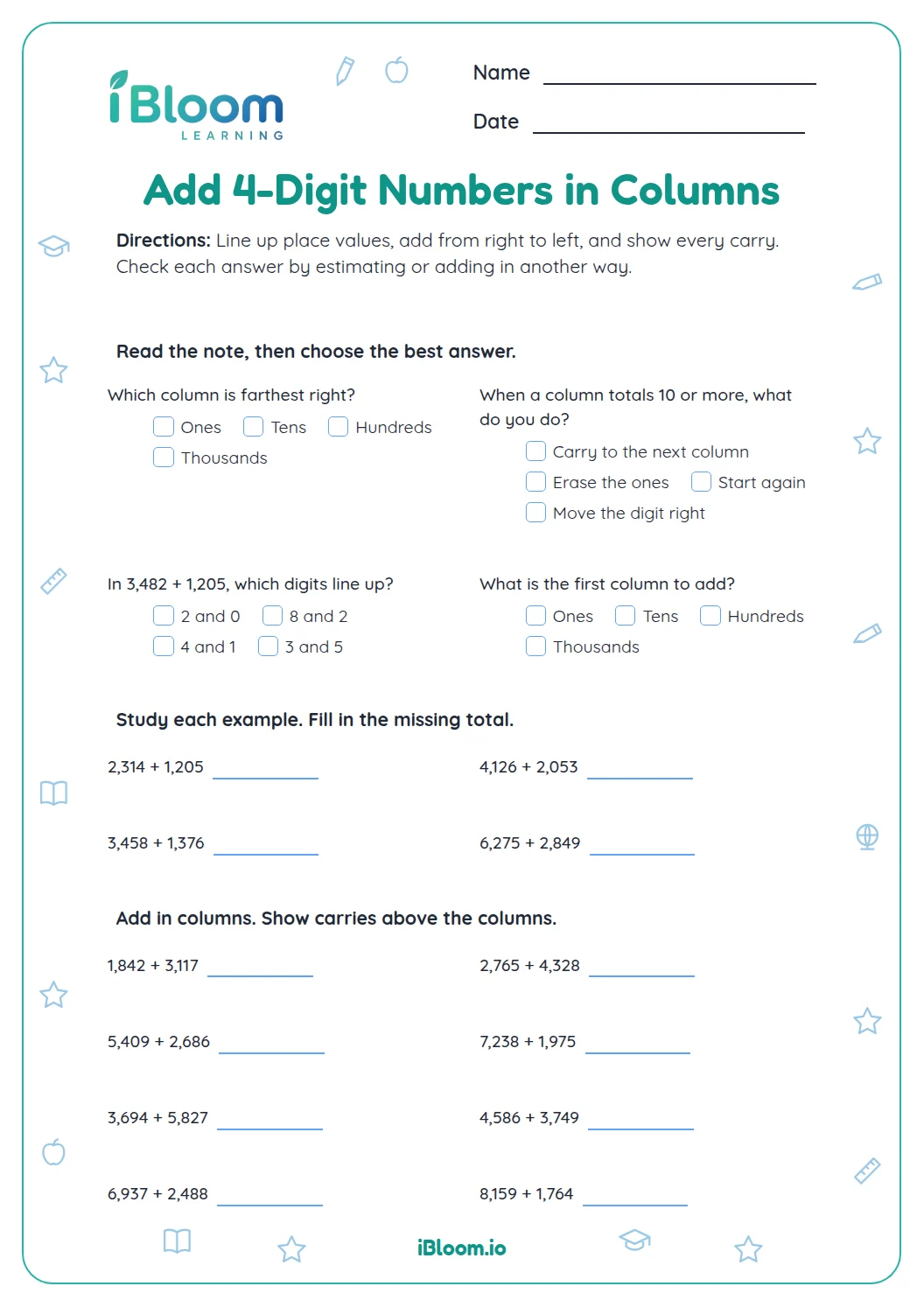
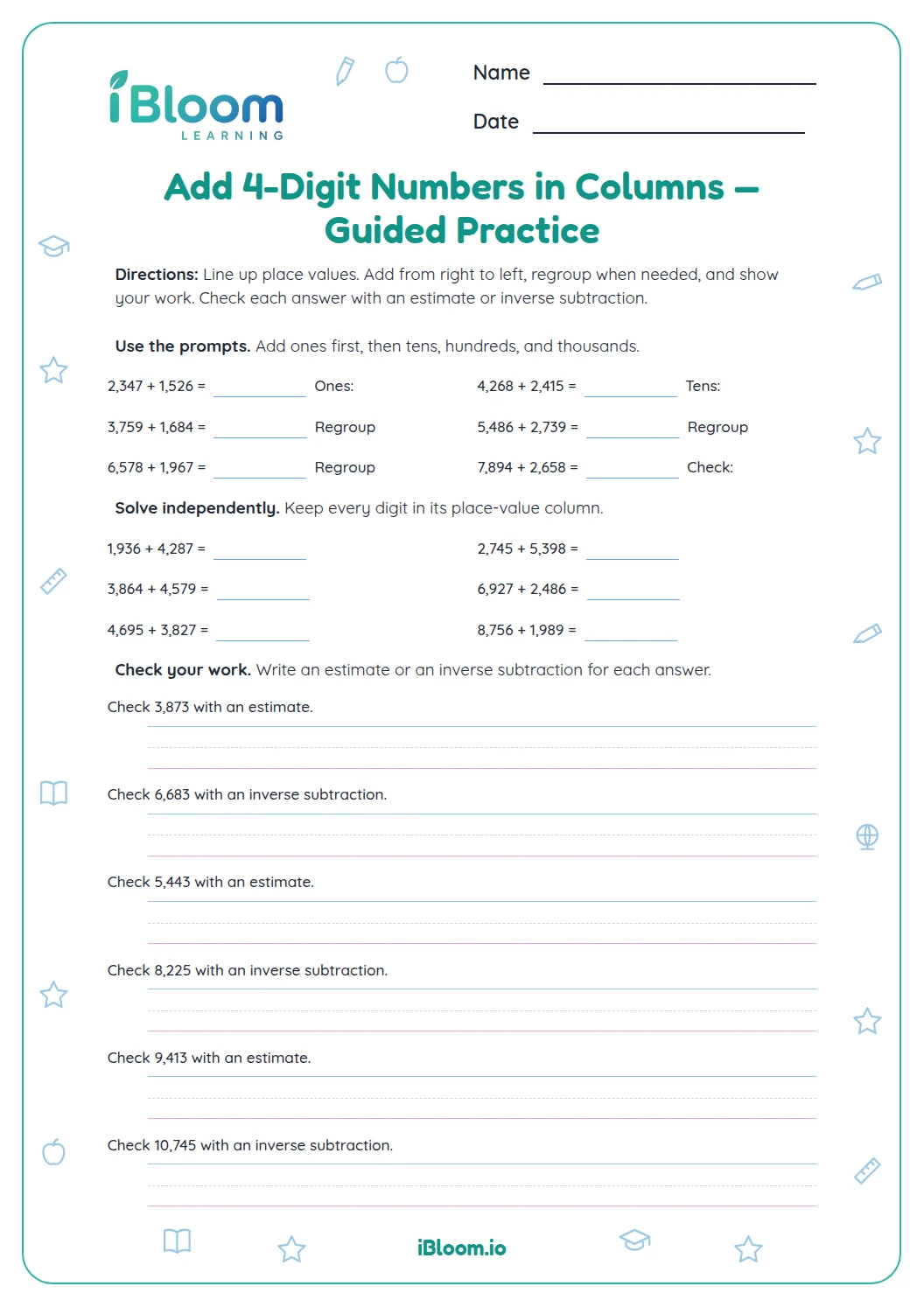
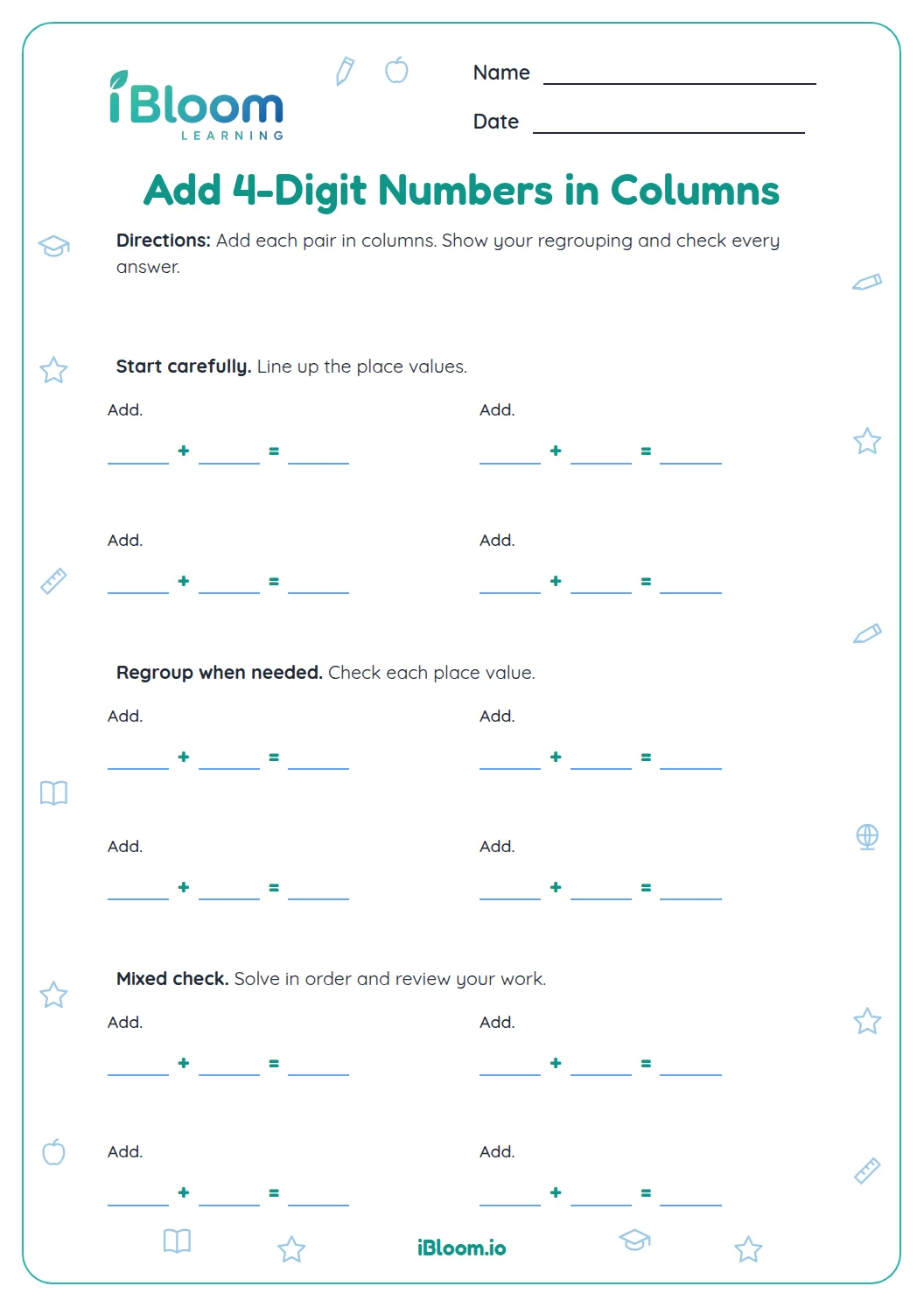
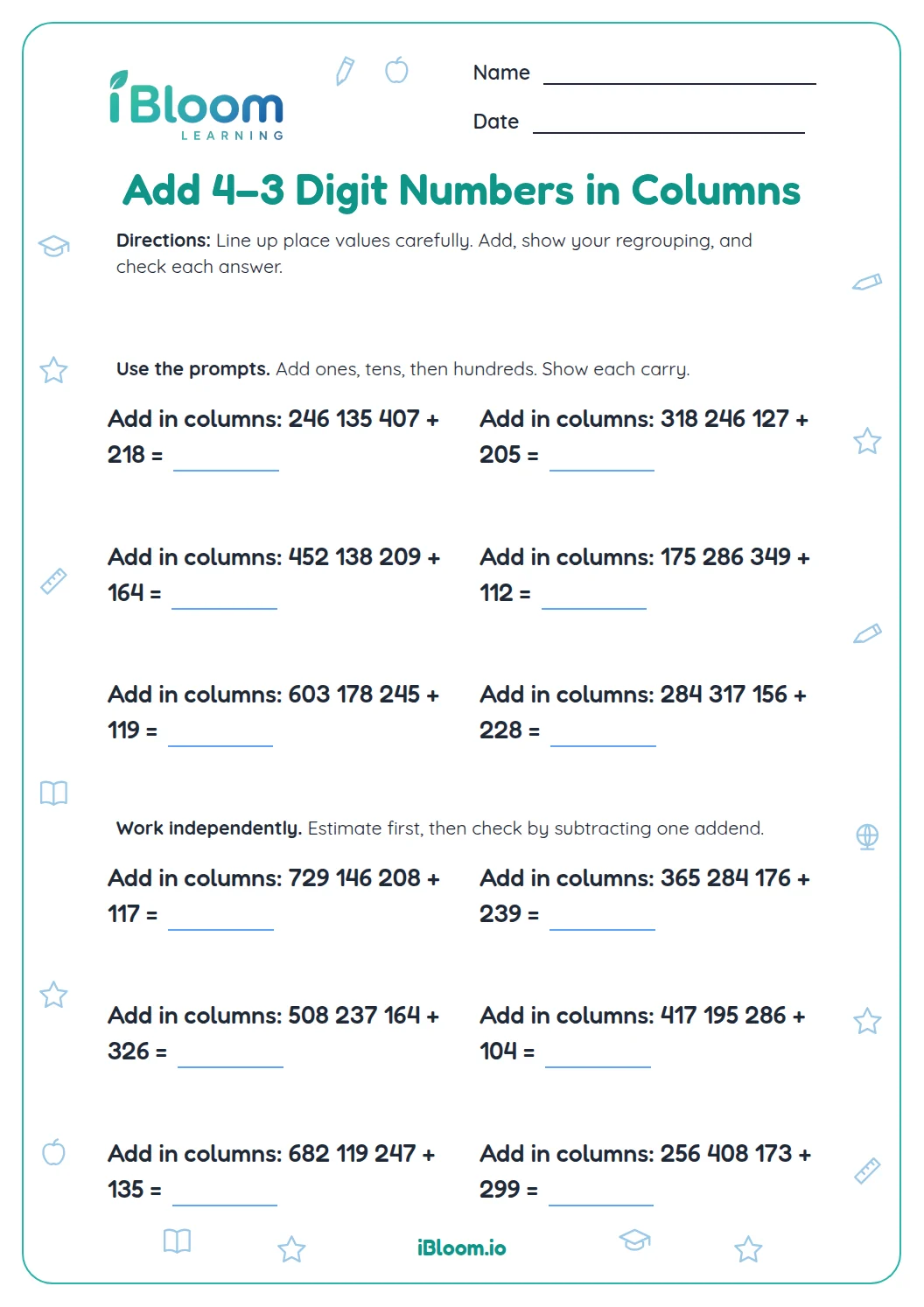
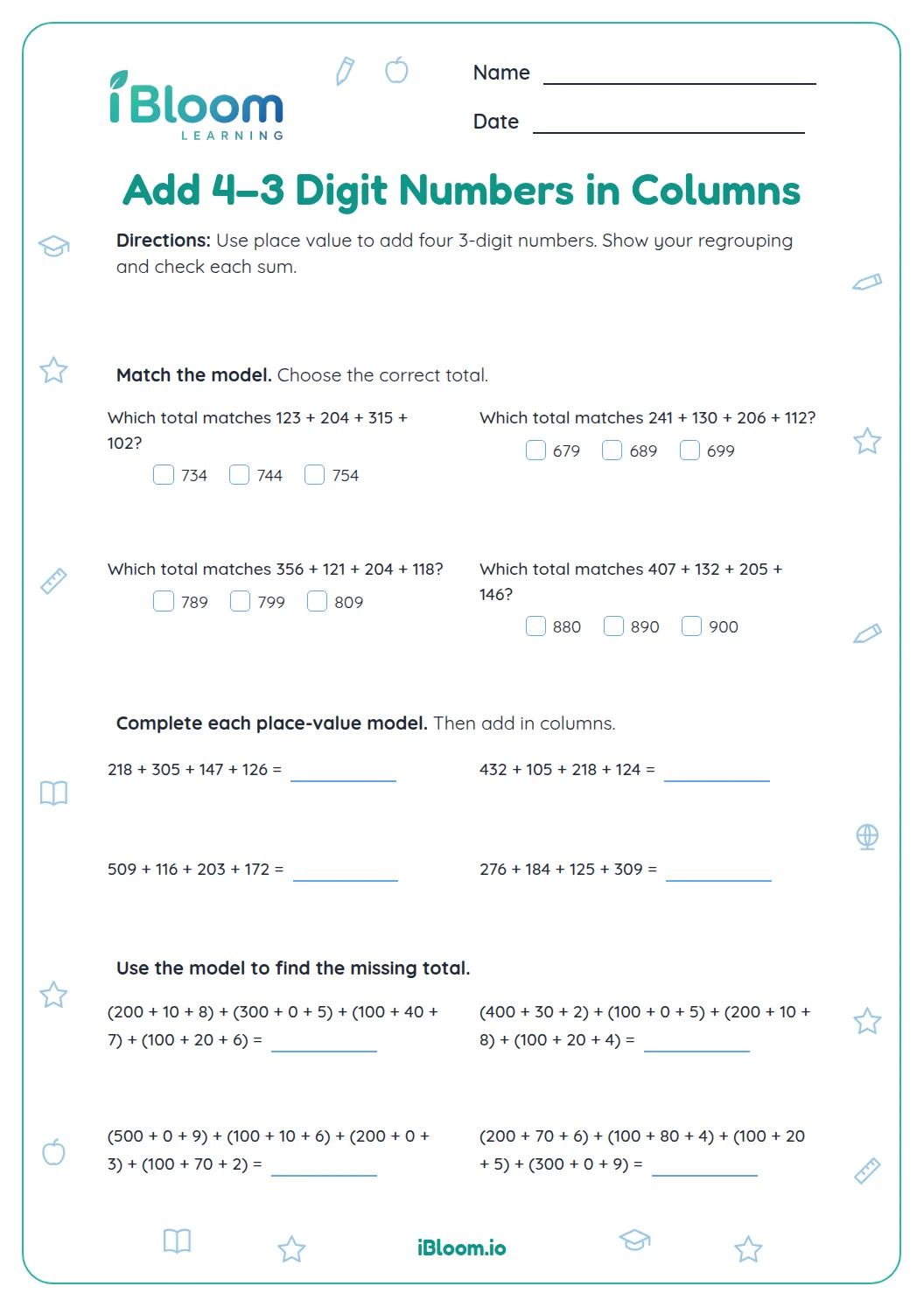
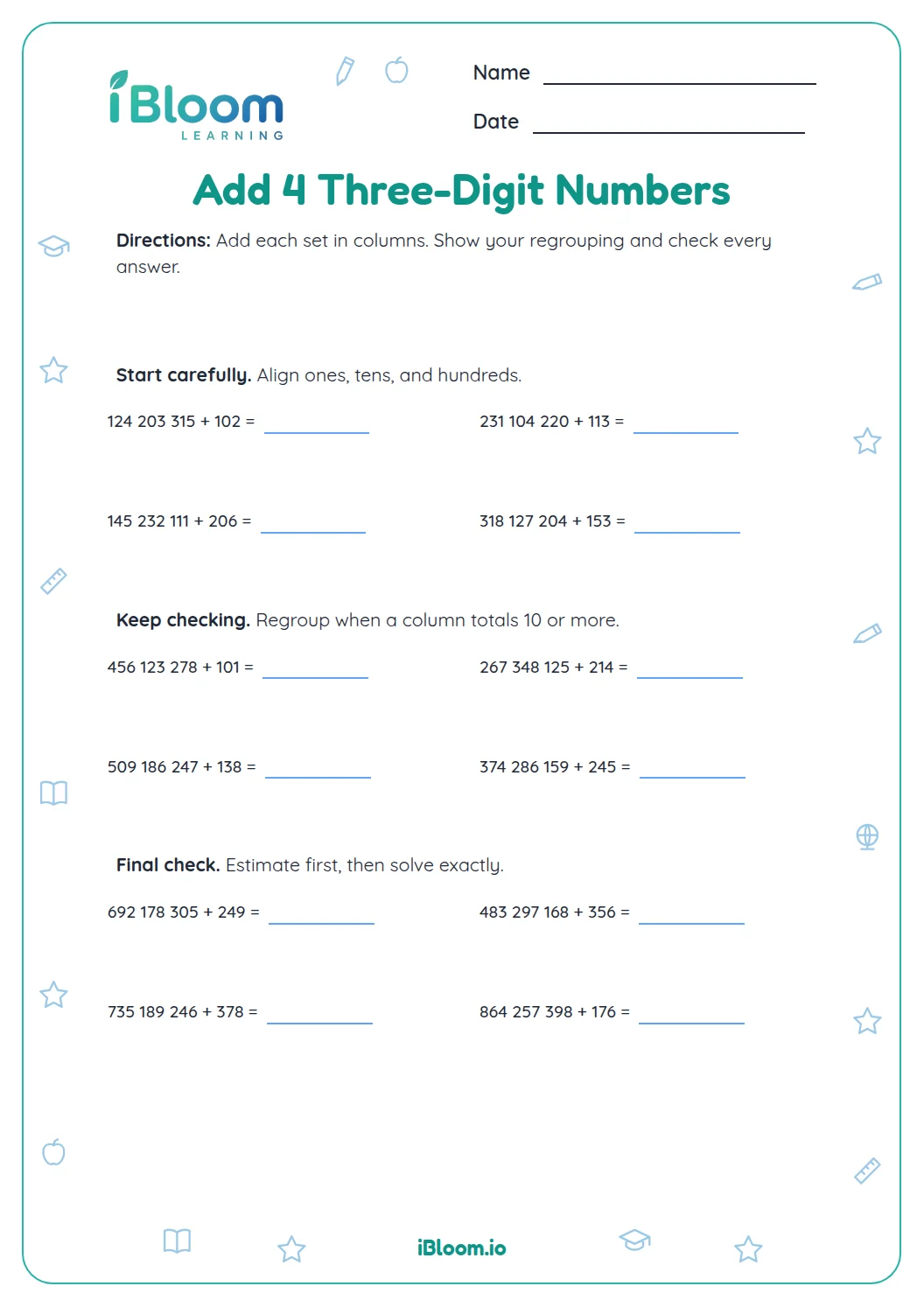
This free Grade 4 addition printable has 16 pairs of three-digit numbers for column addition, including sums that require regrouping. Learners line up place values and work from ones to hundreds, then check their sums with the separate answer key. It aligns with Common Core 4.NBT.B.4.
Aligned to 4.NBT.B.4
How does column addition keep place values clear?
Line up hundreds, tens, and ones. Add the ones first; when their sum is 10 or more, write the ones digit and carry a ten to the tens column. Repeat for tens, then hundreds.
- 1243 + 315
- 2Ones: 3 + 5 = 8; tens: 4 + 1 = 5; hundreds: 2 + 3 = 5.
- 3Sum: 558
When do you regroup?
A column needs regrouping when its digits add to 10 or more. For 367 + 458, the ones make 15, so write 5 ones and carry 1 ten. The tens then make 12, so carry another hundred before adding the hundreds.
How to use this worksheet
- 1Write the numbers in columns with matching place values.
- 2Add the ones digits and regroup a ten if needed.
- 3Add the tens digits, including any carried ten.
- 4Add the hundreds digits, including any carried hundred.
- 5Check by adding in a different order or estimating the sum.
Common mistakes and quick fixes
The mistake
Adding the digits but forgetting the carried ten.
The fix
Mark each carry above the next place before continuing.
The mistake
Writing a carried digit in the same column.
The fix
A group of ten ones becomes one ten; move it one place left.
The mistake
Starting with hundreds and missing a carry from below.
The fix
Work from ones to tens to hundreds so each carry is ready.
Common Core alignment
This practice connects the worksheet tasks to a specific Common Core skill.
Use the standard algorithm to add multi-digit whole numbers.
On this sheet: The 16 equations require adding three-digit whole numbers, including regrouping.
Show the official wordingHide the official wording
Fluently add and subtract multi-digit whole numbers using the standard algorithm.
What to practice next
Make more practice
Further reading
Questions parents and teachers ask
How many addition problems are included?
The worksheet has 16 questions: 12 direct equations and four word problems that call for adding two three-digit amounts. Both formats use the same column method, including regrouping when a place-value column totals ten or more. The key lists every sum.
What does regrouping mean here?
Regrouping trades ten units in one place for one unit in the next place. For example, 15 ones becomes 1 ten and 5 ones. Learners carry that ten into the tens column, then continue adding across the problem.
Should a child write the problems vertically?
Yes. The skill is adding in columns, so lining up ones under ones, tens under tens, and hundreds under hundreds makes each place value visible. The answer key provides the sums, while scratch paper or the worksheet space can hold the written column work.
How can a learner check a sum?
Estimate by rounding each addend to the nearest hundred, then compare the estimate with the exact sum. A second check is to subtract one addend from the sum and see whether the other remains. For example, 820 − 572 = 248.
What should I do if a carry is missed?
Return to the column where the digits reached ten or more. Circle that column total, write its ones digit in place, and move the extra ten or hundred one place left. Then recompute each column from right to left.