



About this worksheet
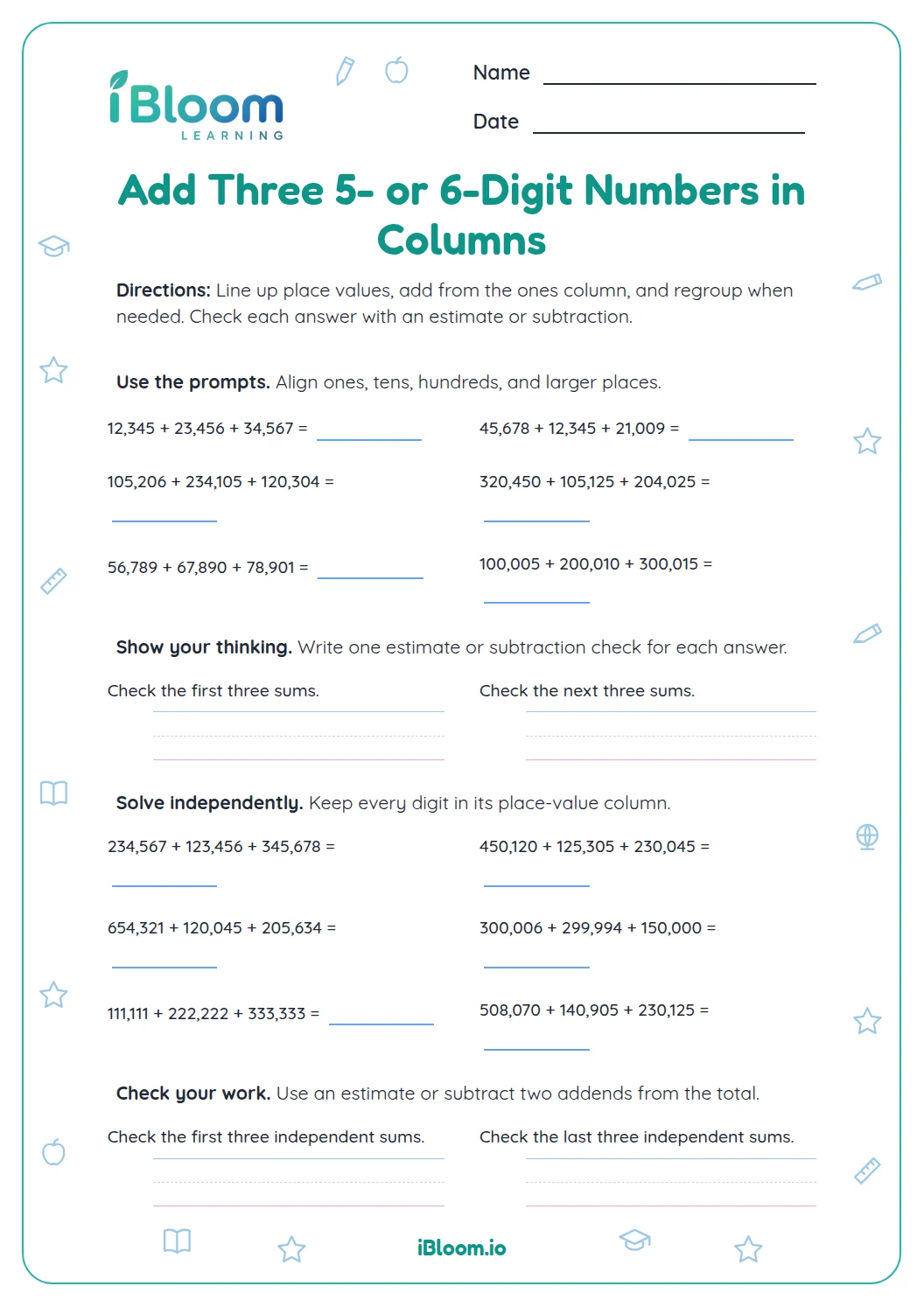
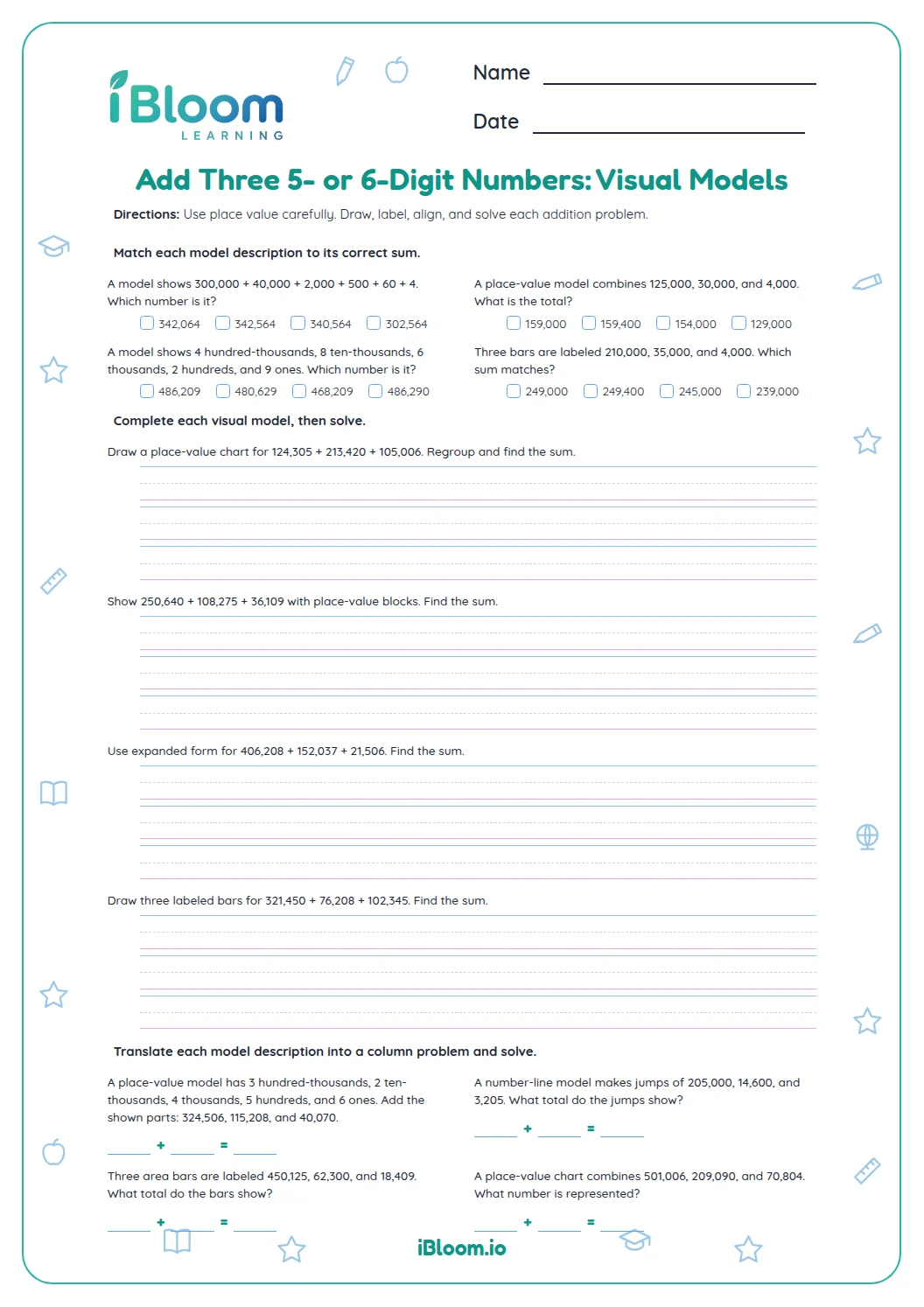
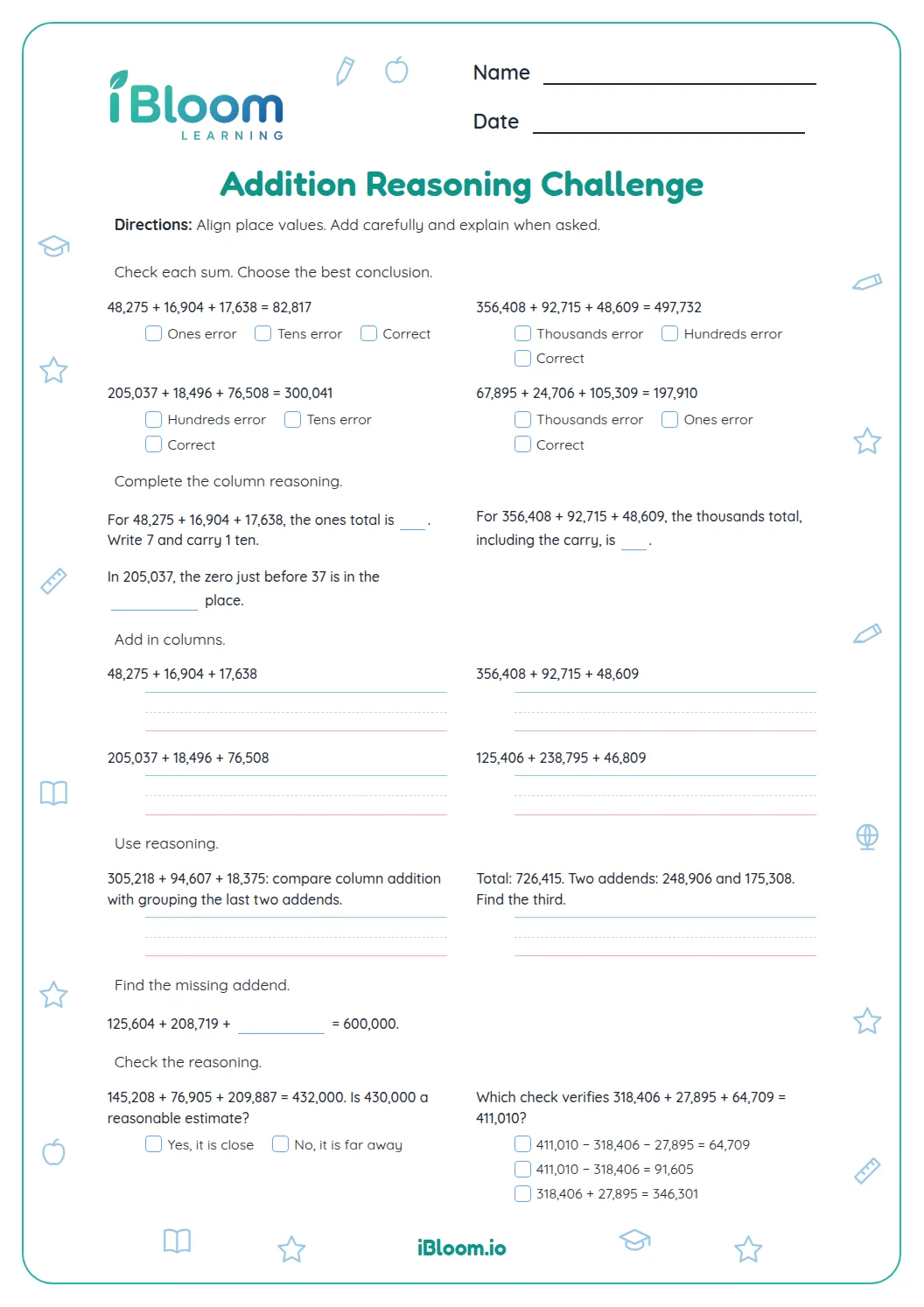
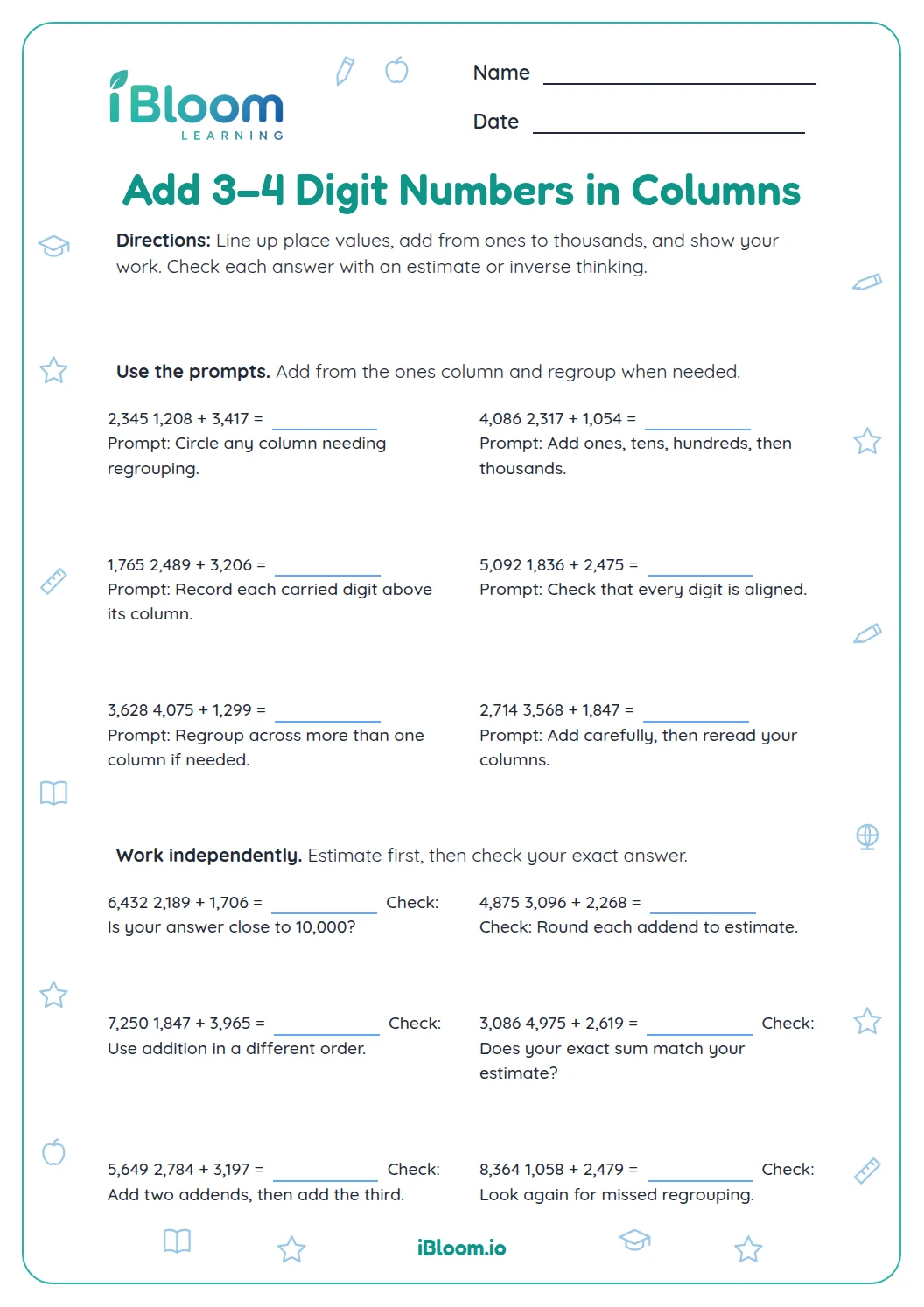
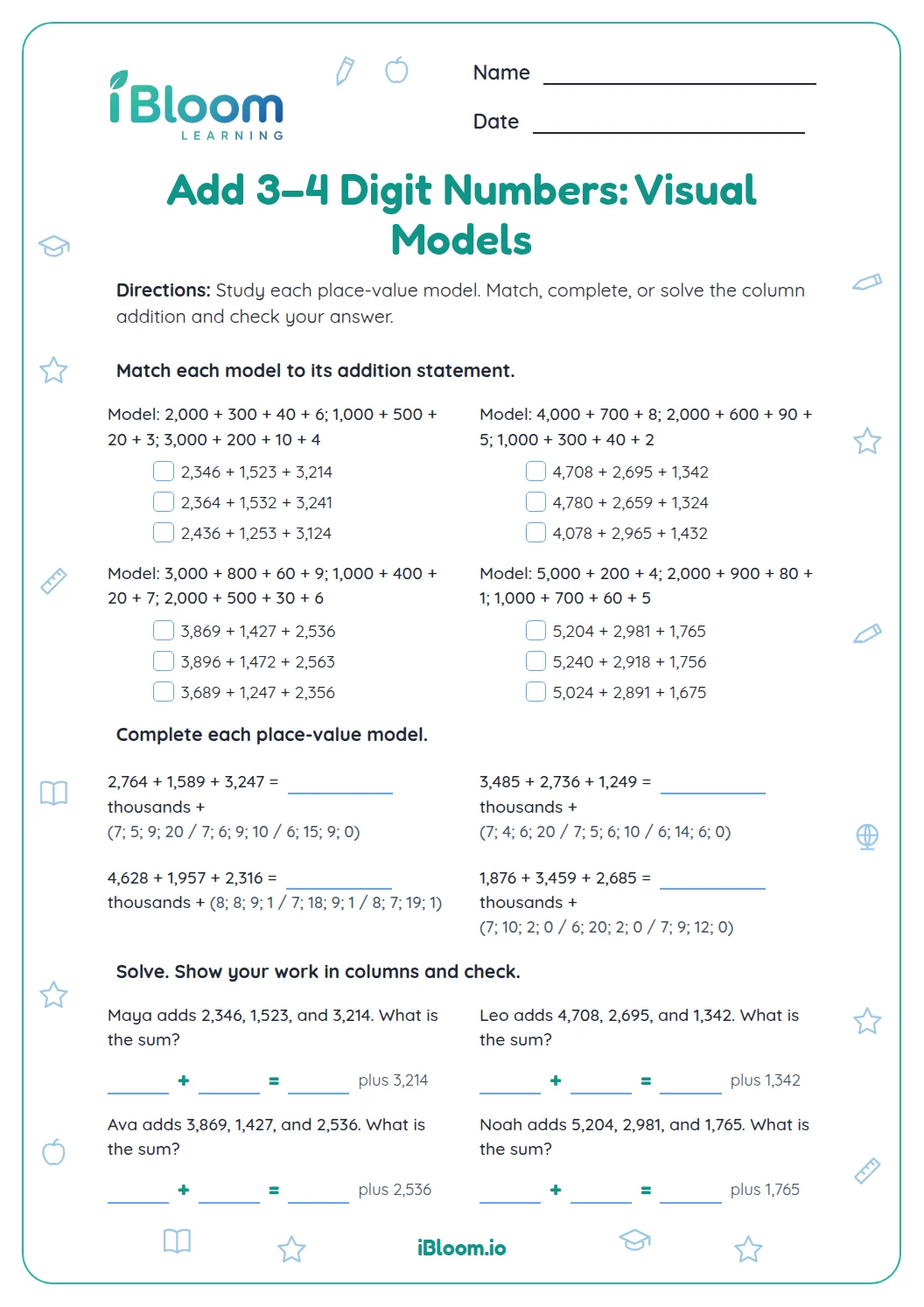
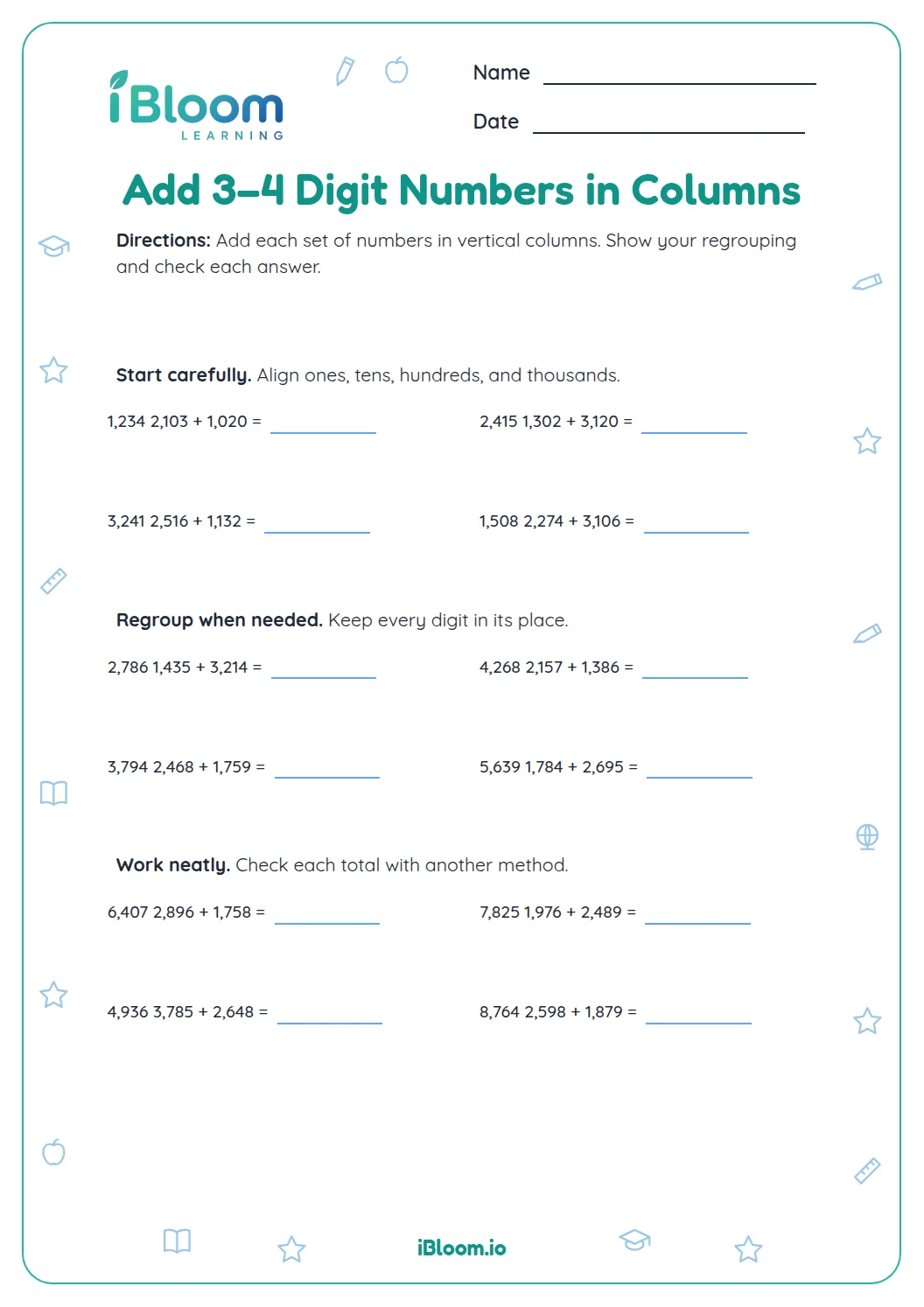
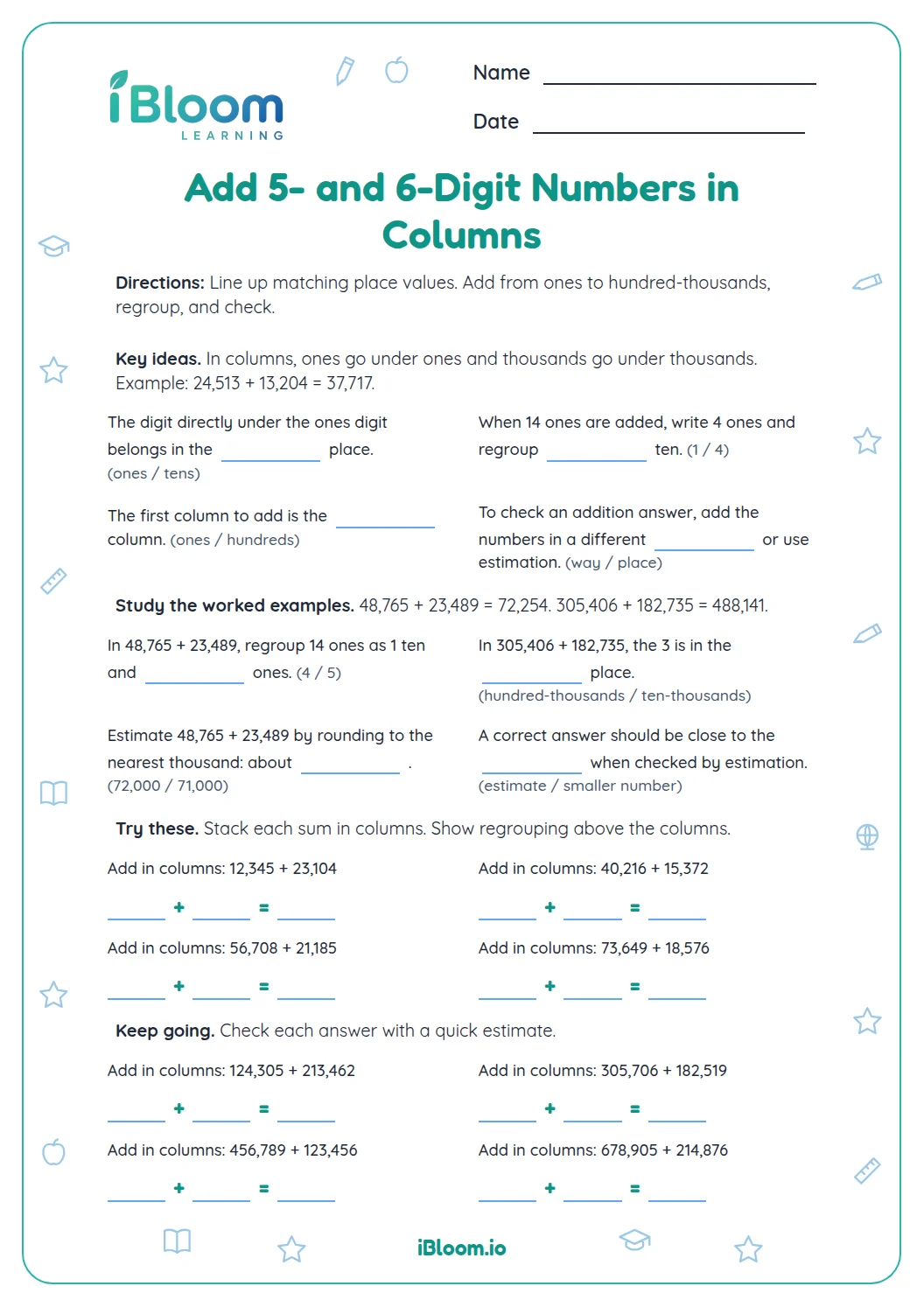
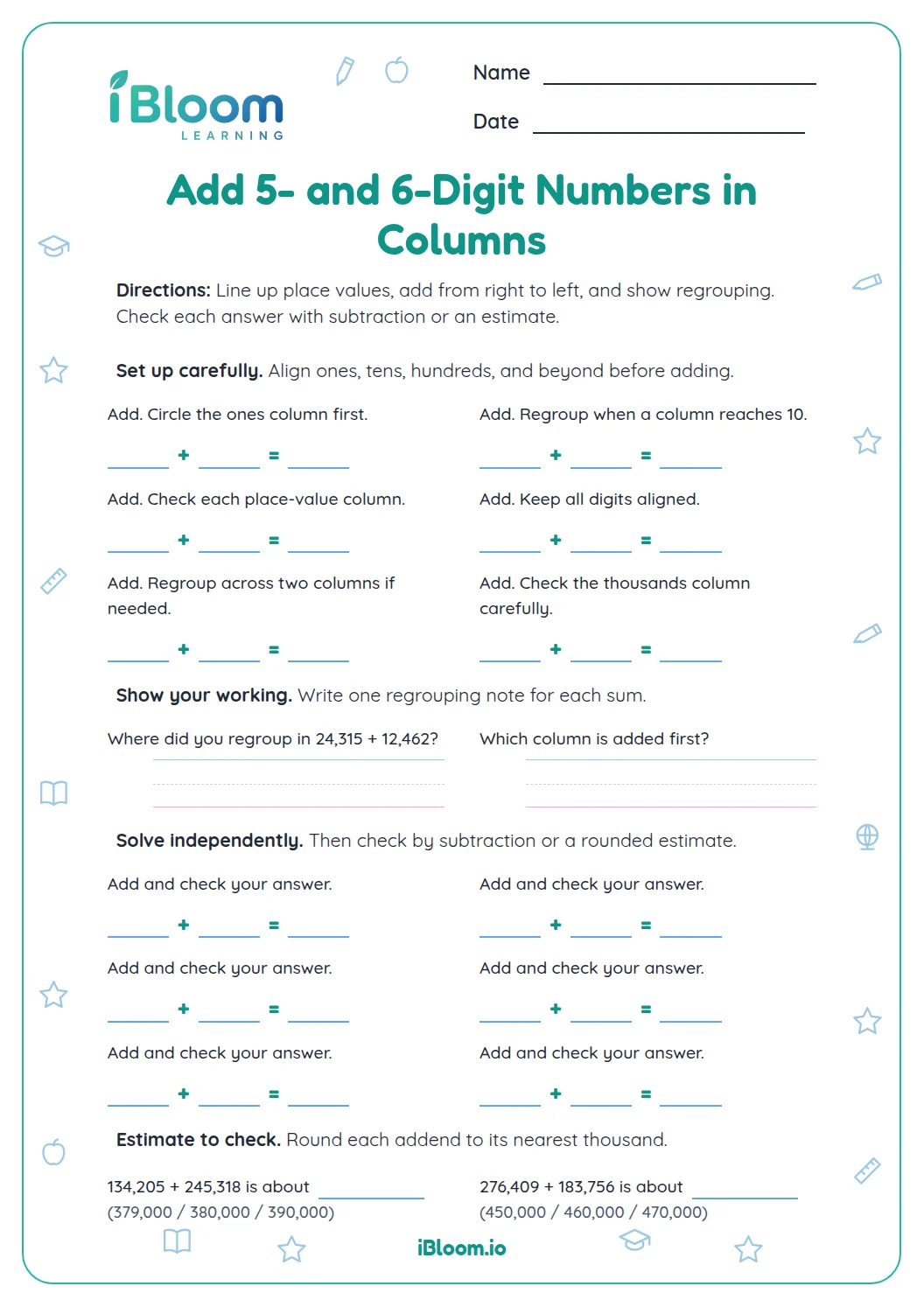
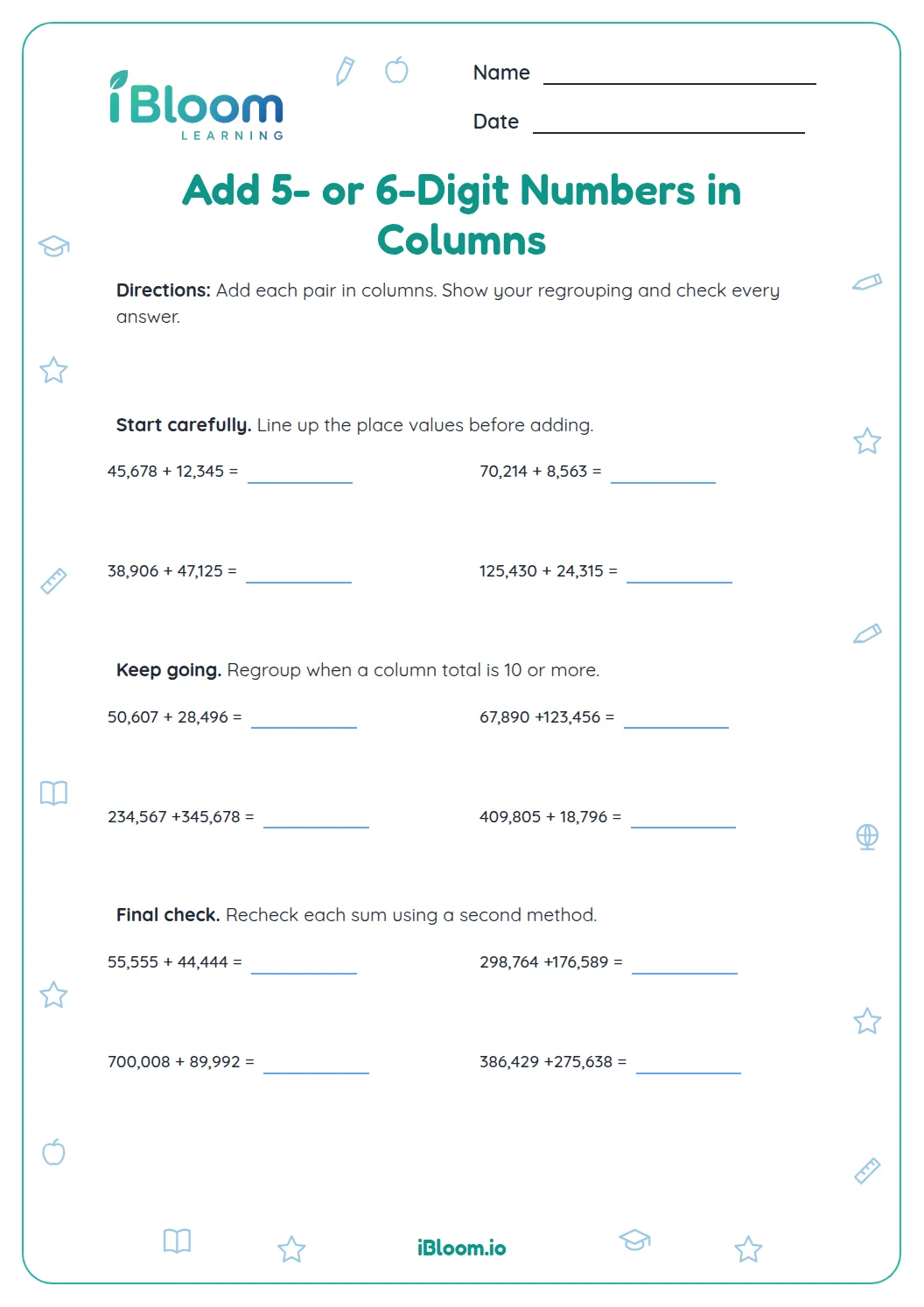
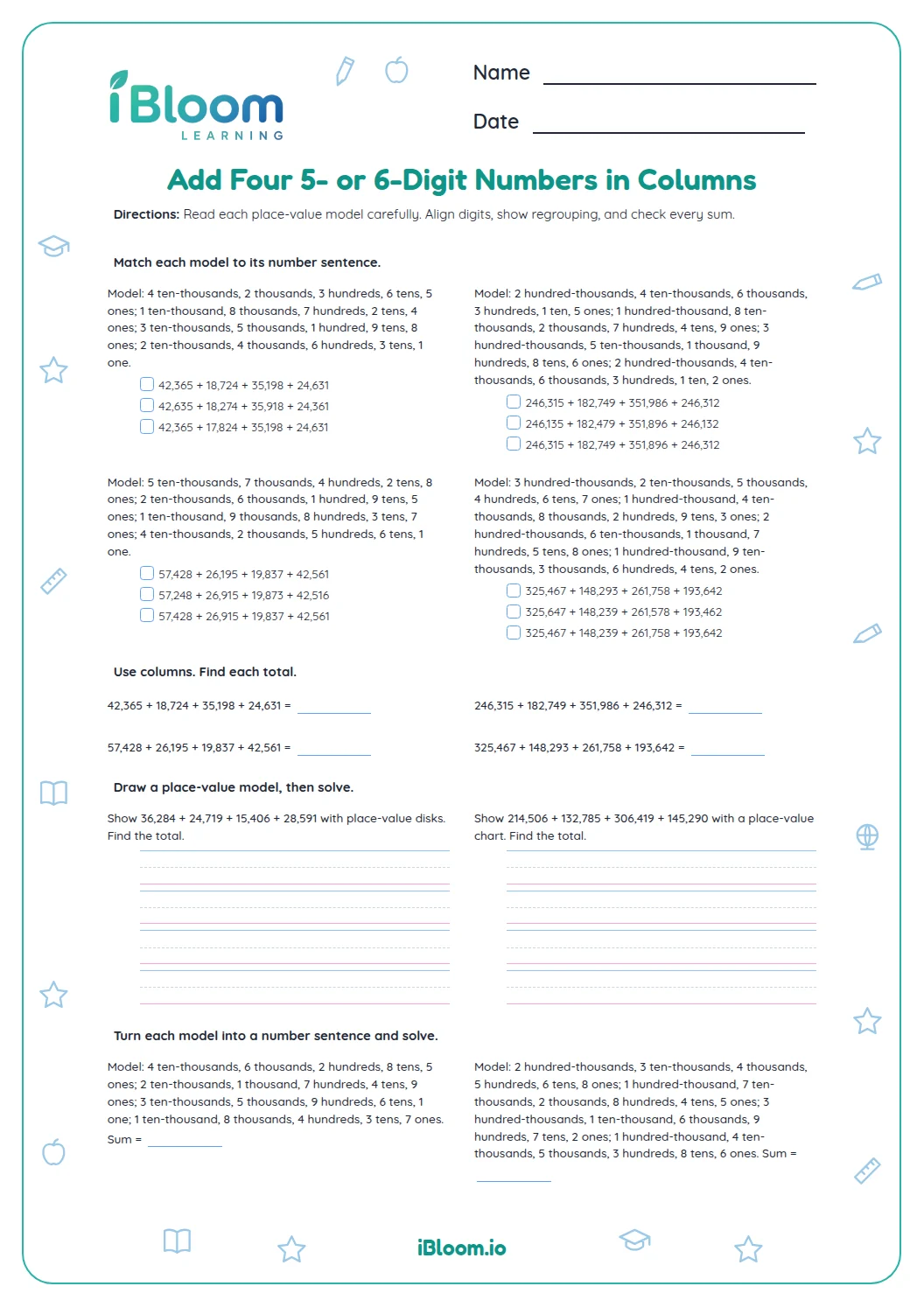
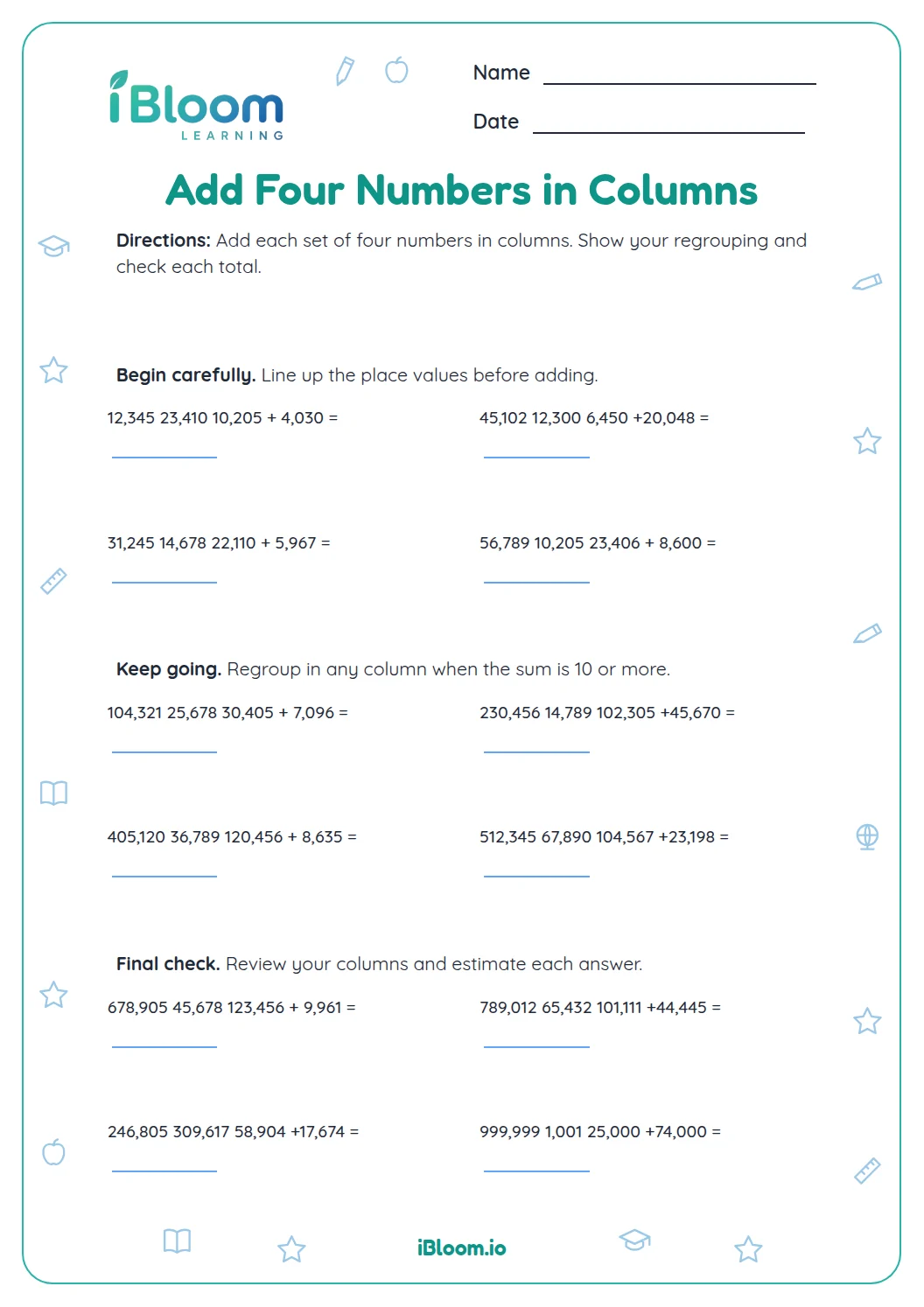
This Grade 4 printable gives students 14 problems adding three five- or six-digit numbers. Four items have working space for lining up addends and recording regrouping; ten compact sums continue the same calculation skill. Problems include zero places and columns that carry more than one ten. The separate key lists the totals. It practices the standard algorithm in CCSS 4.NBT.B.4.
Aligned to 4.NBT.B.4
How do you line up three addends?
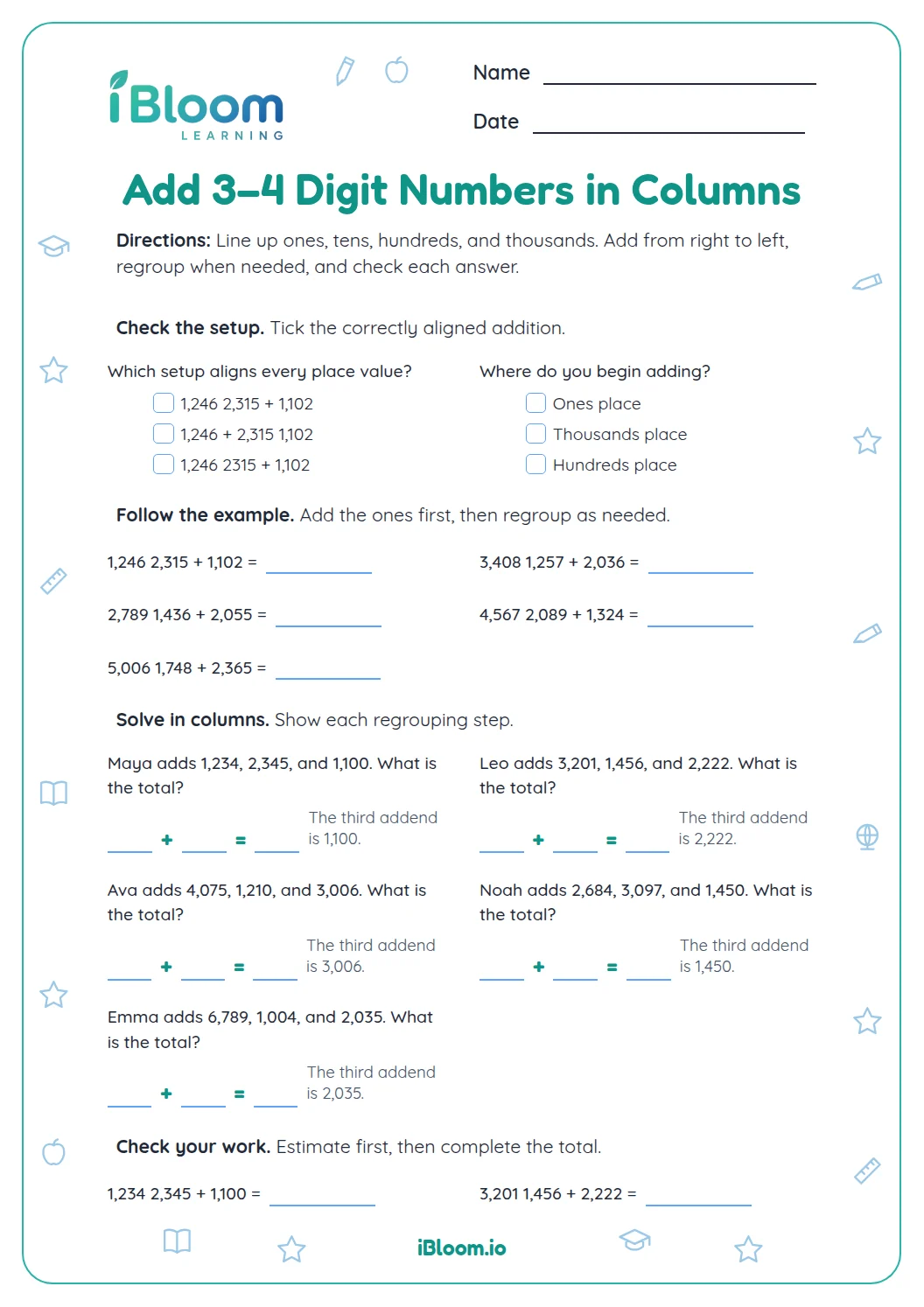
Four sums have dedicated column-work grids, and the remaining ten compact items continue adding three five- or six-digit numbers. The worked example uses the same skill throughout.
- 112,345 + 23,456 + 34,567
- 2Add right to left and regroup.
- 3The total is 70,368.
What if a column total is greater than 19?
Line up all three addends, then add every column from right to left. Question 1 gives space to record regrouping.
How can you check a large sum?
Estimate the total, then recompute the columns carefully. Keep every zero in its place so the addends stay aligned.
How to use this worksheet
- 1Write each addend in a column so like place values line up.
- 2Start with the ones column and add all three digits.
- 3Write the digit in that place and carry any tens to the next column.
- 4Repeat through the hundred-thousands place as needed.
- 5Estimate the total and compare it with your answer.
Common mix-ups
The mistake
Writing addends with their last digits in different columns.
The fix
Line up the ones digits first, then check each place above them.
The mistake
Carrying only one when a column total is 20 or more.
The fix
Regroup the full column total: write the ones digit and carry all remaining tens.
The mistake
Skipping a zero place in one addend.
The fix
Keep the zero aligned; add the other digits in that column as usual.
Common Core alignment
This worksheet gives focused practice with the standard below.
Use the standard algorithm to add multi-digit whole numbers accurately.
On this sheet: Each item adds three five- or six-digit whole numbers in aligned place-value columns.
Show the official wordingHide the official wording
Fluently add and subtract multi-digit whole numbers using the standard algorithm.
What to practice next
Make more practice
Further reading
Questions parents and teachers ask
How do you add three numbers in columns?
Align all three addends by place value. Add the digits in the ones column, write the ones digit of the total, and regroup the tens to the next column. Continue left until every place has been added, including the hundred-thousands place when needed.
Can a column require carrying more than one?
Yes. With three addends, a column total can be 20 or more. For example, a total of 23 means write 3 in that column and carry 2 tens to the next one. Check the full column total before moving left.
Why do some problems include zeros?
A zero holds a place while the other addends contribute digits in that column. Keep it aligned with the matching place values, then add the other digits as usual. The answer key helps confirm that each place was recorded correctly.
How many sums are included?
The sheet has 14 addition questions with three five- or six-digit addends. Four have a dedicated grid for column work, and ten use compact answer spaces. The separate key lists the total for every numbered question. Use its question number to find the matching entry in the separate answer key.
What is a good way to check a large total?
Estimate the size of the total first, then add the columns again from right to left. With three addends, remember to carry all tens from a column total, which may be more than one. Compare the recomputed total with the matching key entry.