







About this worksheet
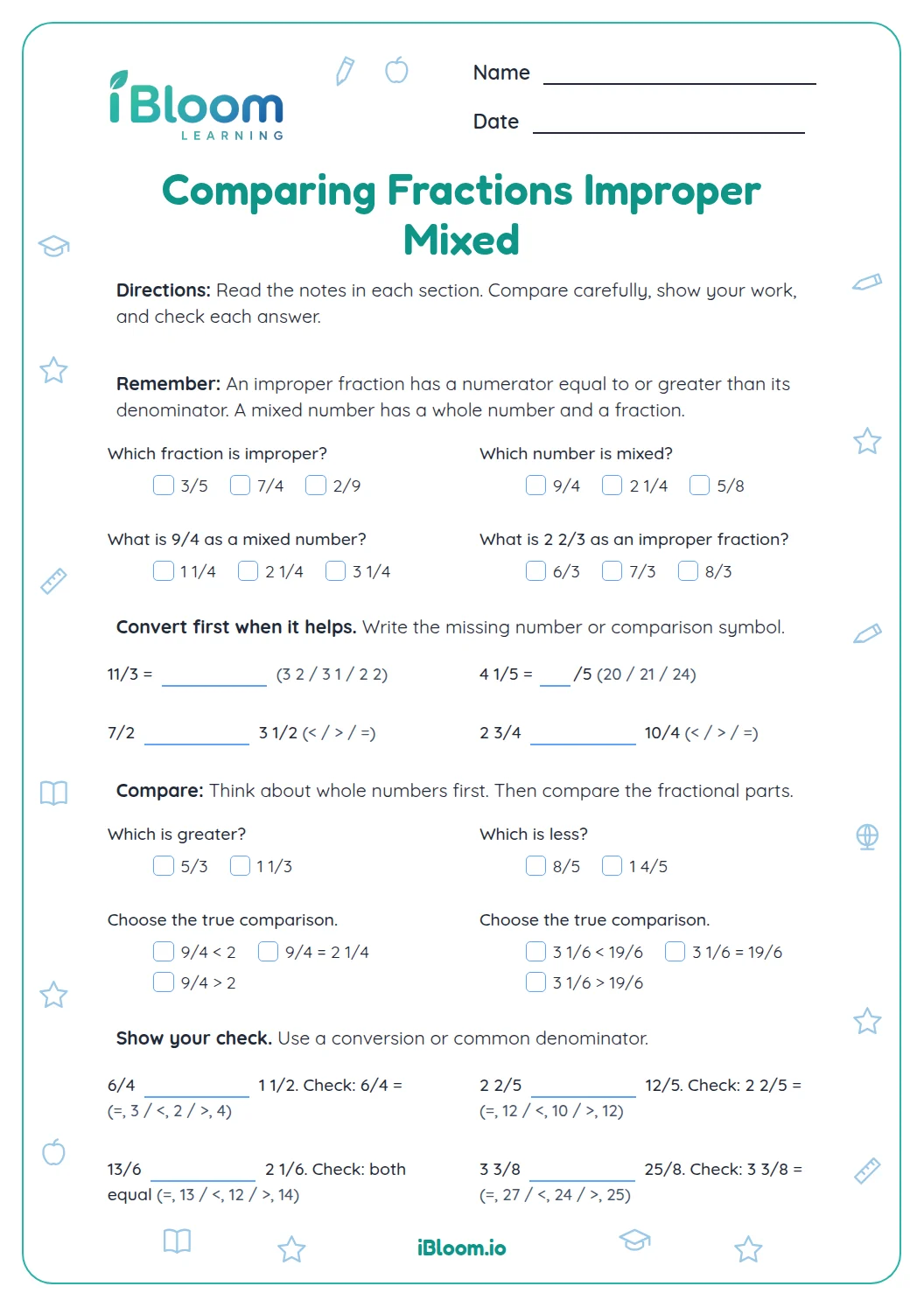
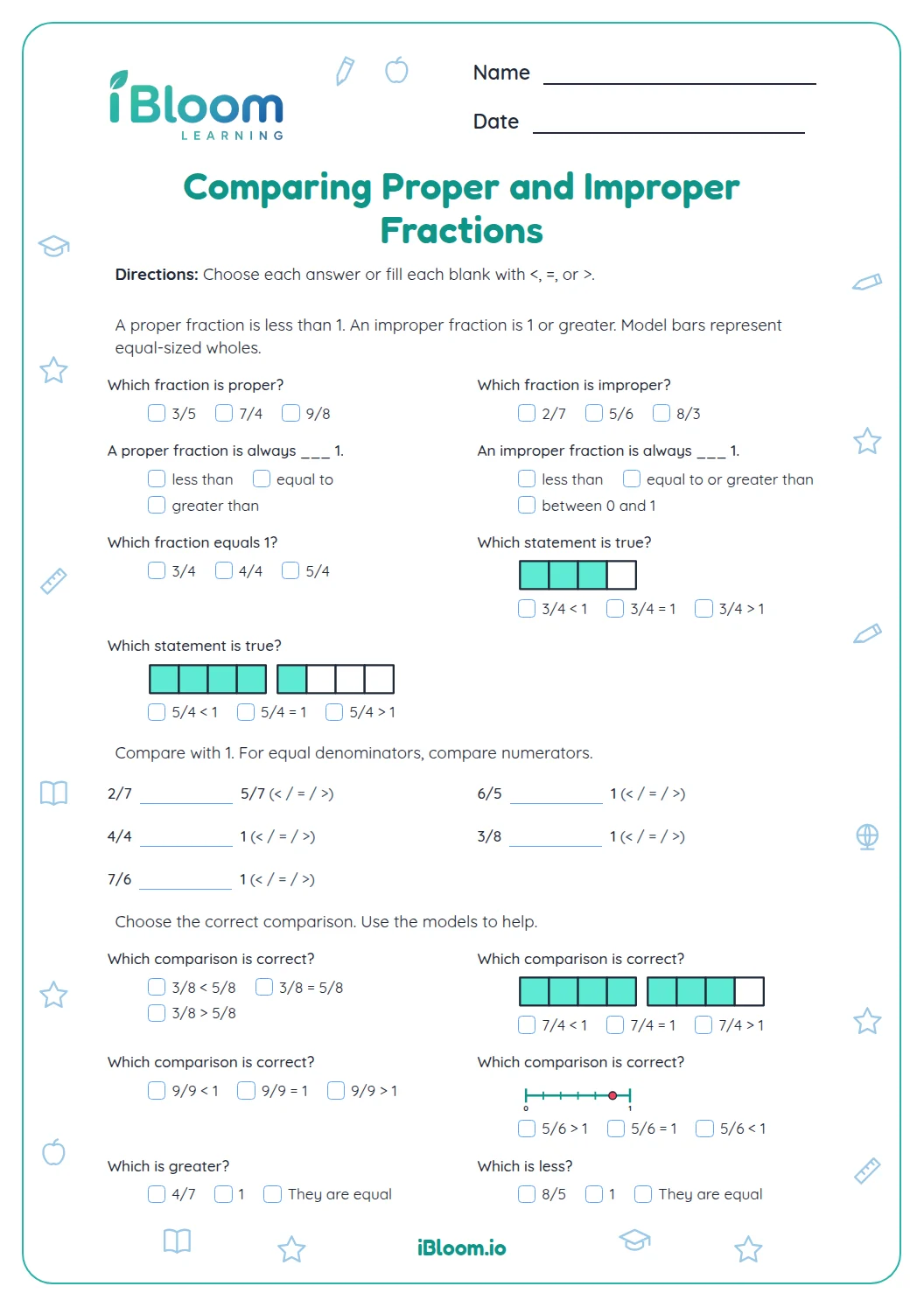
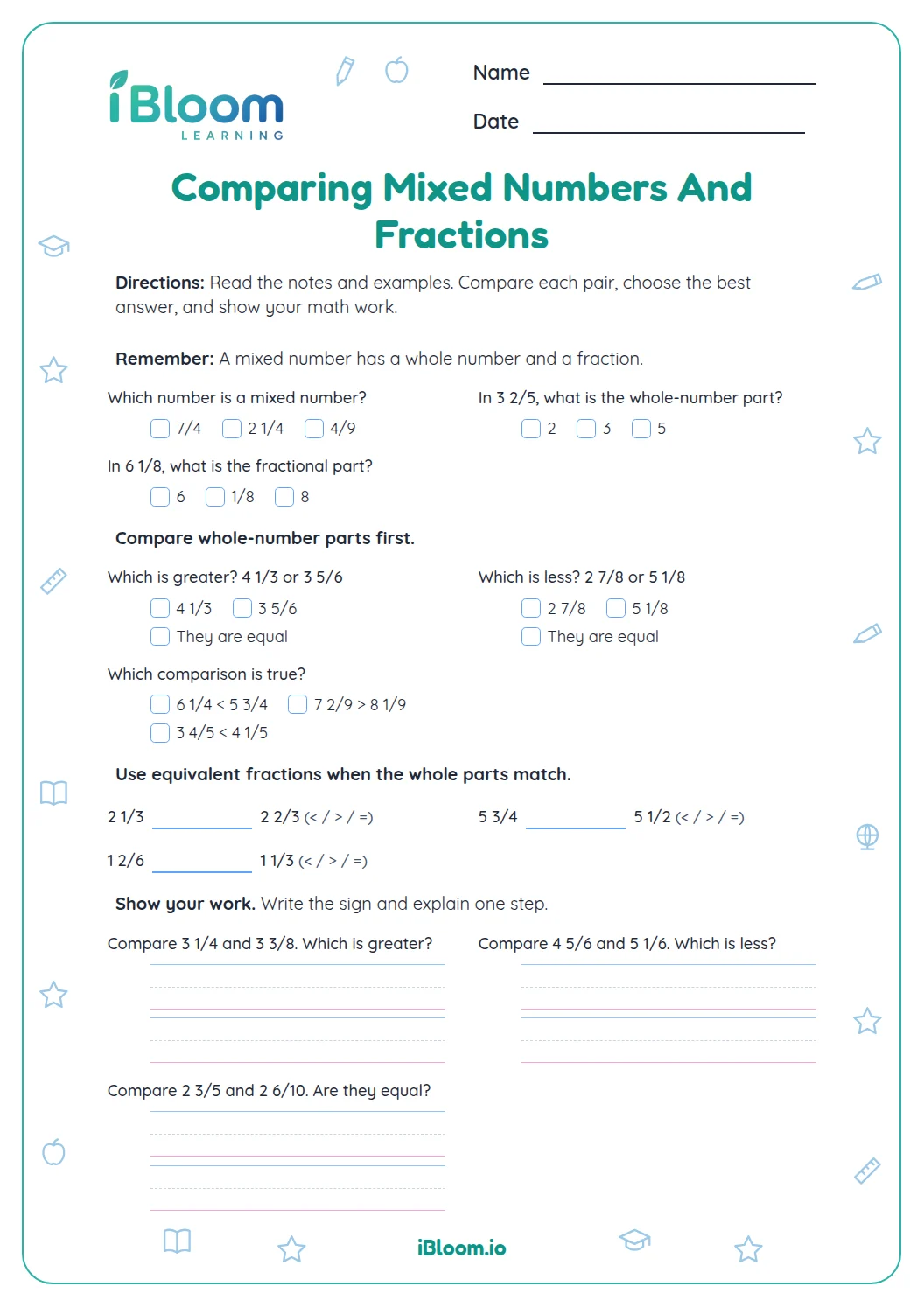
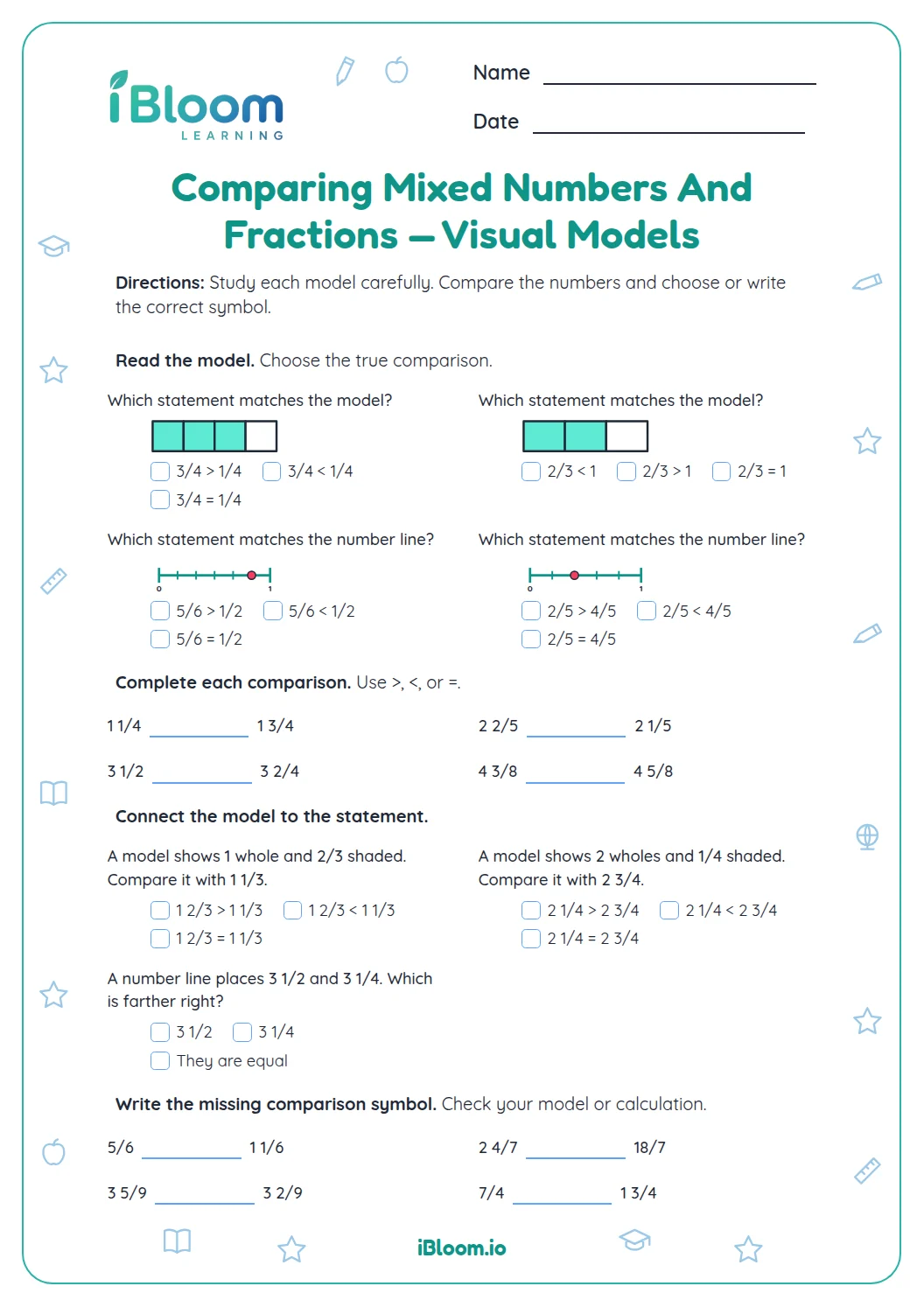
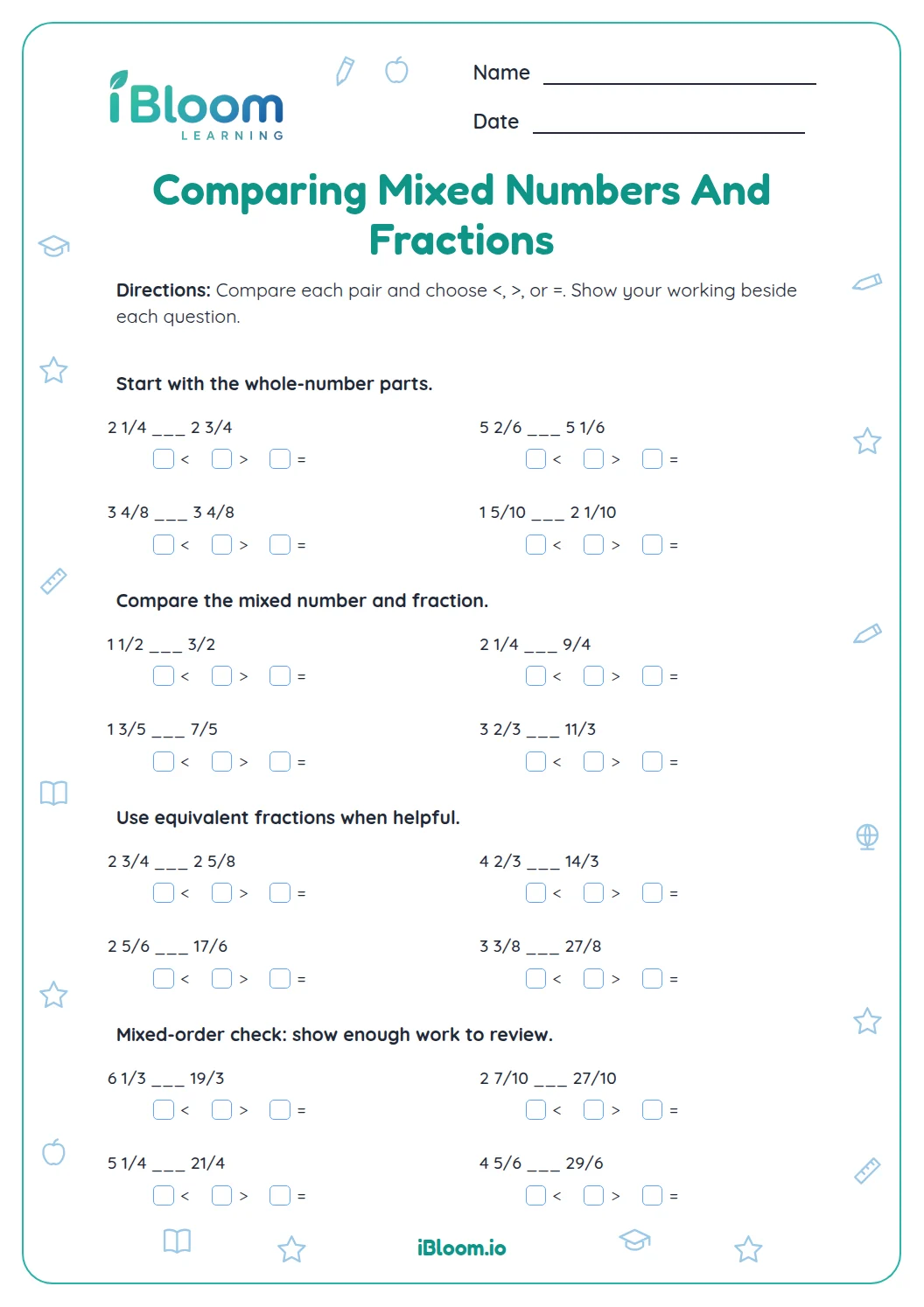
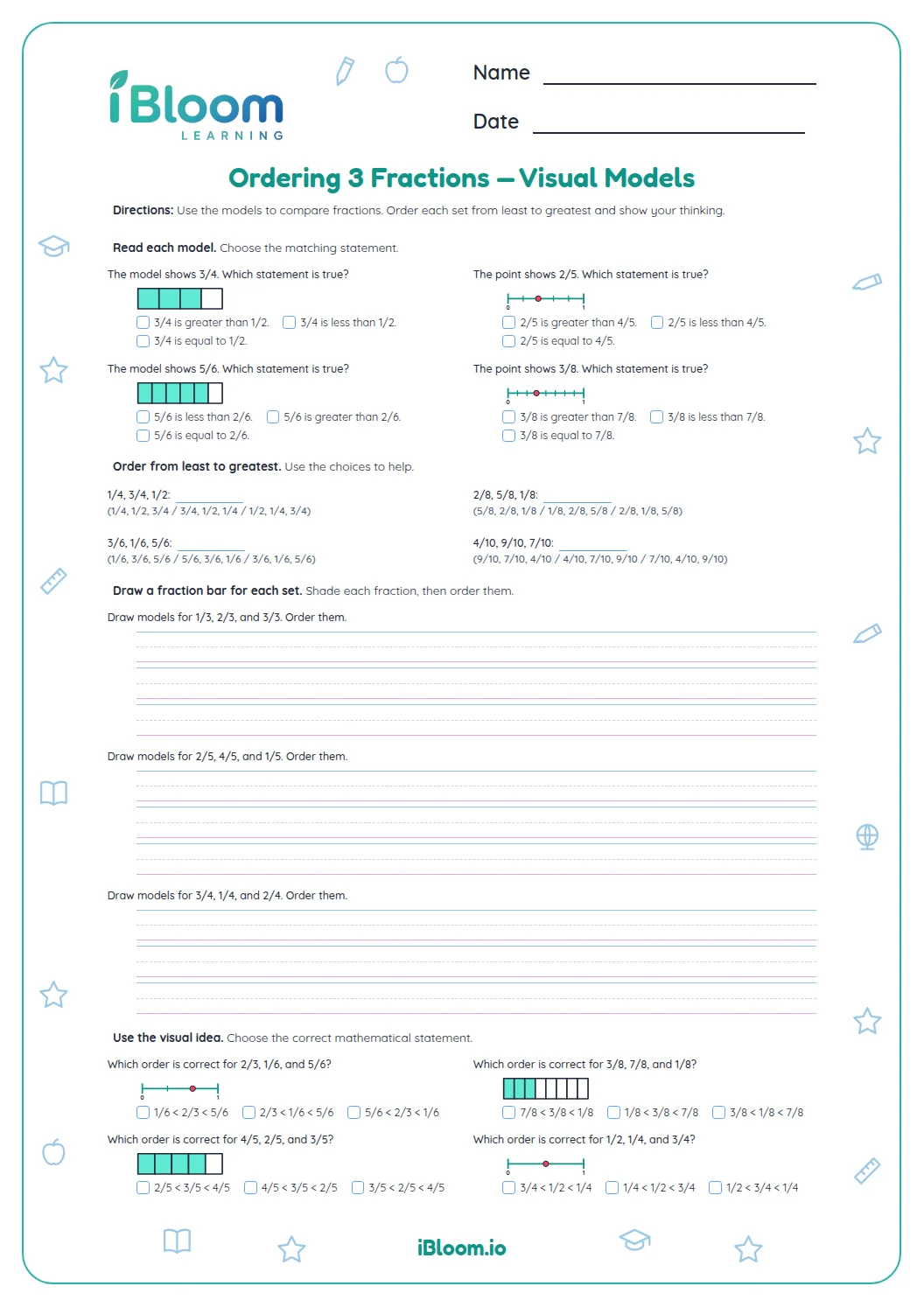
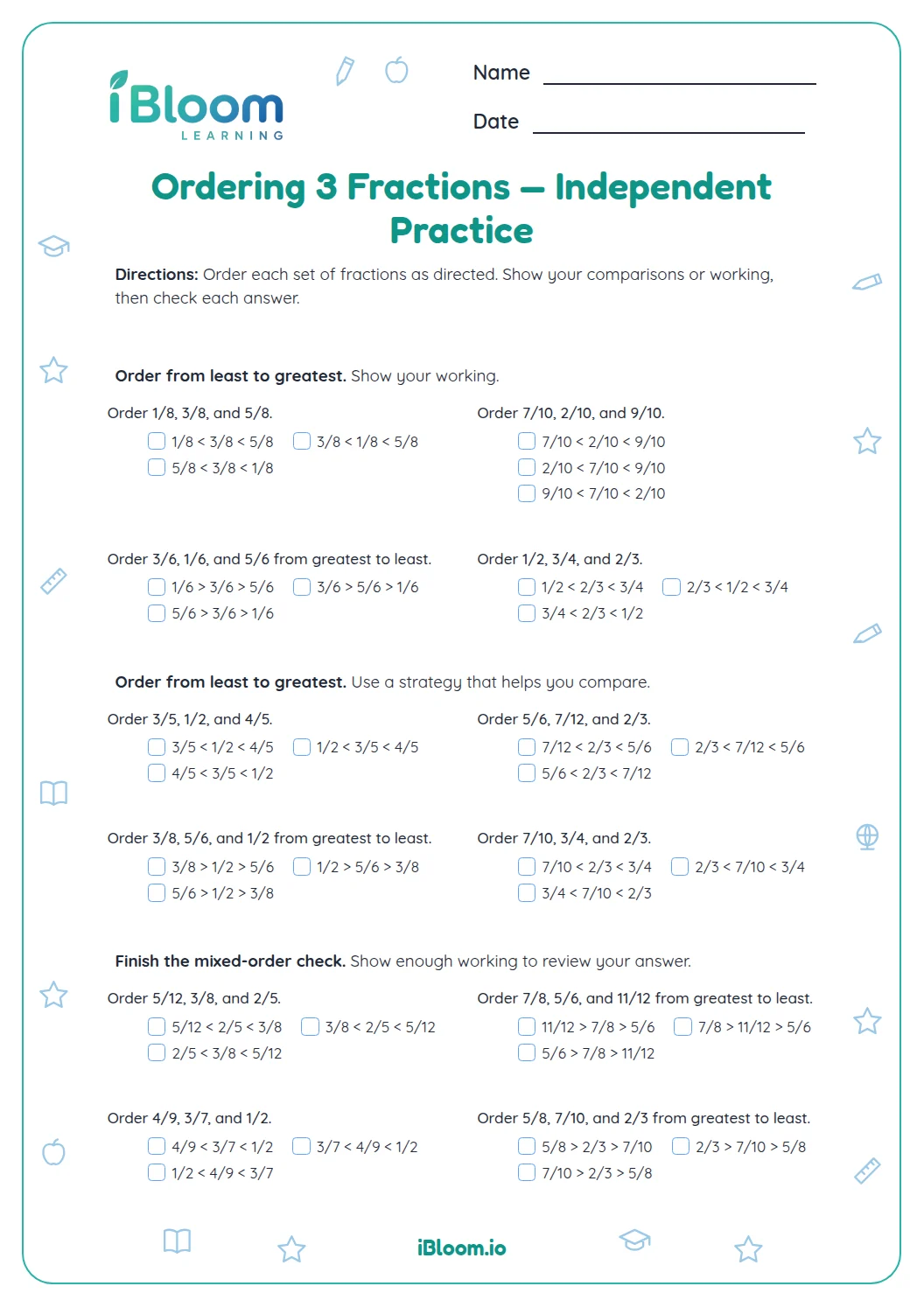
This Grade 4 printable practices comparing improper fractions and mixed numbers in real-world settings. Students compare measurements in the same units, record comparison symbols, and explain one comparison. The fractions use Grade 4 denominators; a separate answer key lists the choice, sign, or response for all 15 questions.
Aligned to 4.NF.A.2
What is the main idea in compare fraction values?
This Grade 4 printable practices comparing improper fractions and mixed numbers in real-world settings. Students compare measurements in the same units, record comparison symbols, and explain one comparison. The fractions use Grade 4 denominators; a separate answer key lists the choice, sign, or response for all 15 questions.
Compare each amount, then record or explain which value is greater.
- 1Walker A covered 9/4 miles; Walker B covered 2 1/4 miles. Which walker went farther?
- 2First walker
How does the practice build?
The worksheet has 14 questions in 4 parts. Each part has a single clear direction, and the separate key follows the same question order.
How to use this worksheet
- 1Read the direction for each part and identify the operation or comparison needed.
- 2Complete the first question together, using the worked example on this page.
- 3Work through the remaining questions in order and keep units with measurement answers.
- 4Check each answer with the answer key; redo any missed item and explain the correction.
Common mistakes and quick fixes
The mistake
Choosing an operation before identifying what the quantities represent.
The fix
Underline the relevant numbers and name the relationship before calculating.
The mistake
Recording a correct number with a missing unit or an incomplete answer.
The fix
Reread the question and include the requested unit, comparison sign, quotient, or remainder.
The mistake
Accepting an answer without checking its size.
The fix
Estimate first, then substitute the result or use the inverse operation to check.
Common Core alignment
This worksheet practices comparing improper fractions and mixed numbers through compare improper fractions and mixed numbers by value..
Compare fractions with different numerators and denominators using models or benchmarks.
On this sheet: The questions repeatedly ask students to comparing improper fractions and mixed numbers in the worksheet contexts.
Show the official wordingHide the official wording
Compare two fractions with different numerators and different denominators, e.g., by creating common denominators or numerators, or by comparing to a benchmark fraction such as 1/2. Recognize that comparisons are valid only when the two fractions refer to the same whole. Record the results of comparisons with symbols >, =, or <, and justify the conclusions, e.g., by using a visual fraction model.
What to practice next
Make more practice
Further reading
Questions parents and teachers ask
What skill does this comparing improper fractions and mixed numbers worksheet practice?
It gives Grade 4 students focused practice with comparing improper fractions and mixed numbers. The questions move from a direct calculation to a slightly more demanding application, and the separate answer key supports checking each result. The page is designed to be printed with the worksheet and key together.
How many questions are on the printable?
There are 14 questions arranged in a short progression across two worksheet pages. Each question has one keyed answer, and the separate key pages show the answers in the same order as the student sheet. Students can complete one part at a time.
What is the key idea for comparing improper fractions and mixed numbers?
Compare improper fractions and mixed numbers by value.. Students can use that idea to choose a strategy, calculate carefully, and check whether the result fits the quantities in the question. The worked example on this page uses one of the printable’s actual question types.
Is an answer key included?
Yes. A separate answer key is included with the printable. It lists one answer for every question, including all requested parts when a question has more than one blank, so an adult can check the work in order.
How can an adult help without solving every problem?
Ask the student to explain what each number represents and which relationship the question asks about. After the student works independently, use the answer key to find any mismatch, then have them check the calculation with an estimate or inverse operation.