
About this worksheet
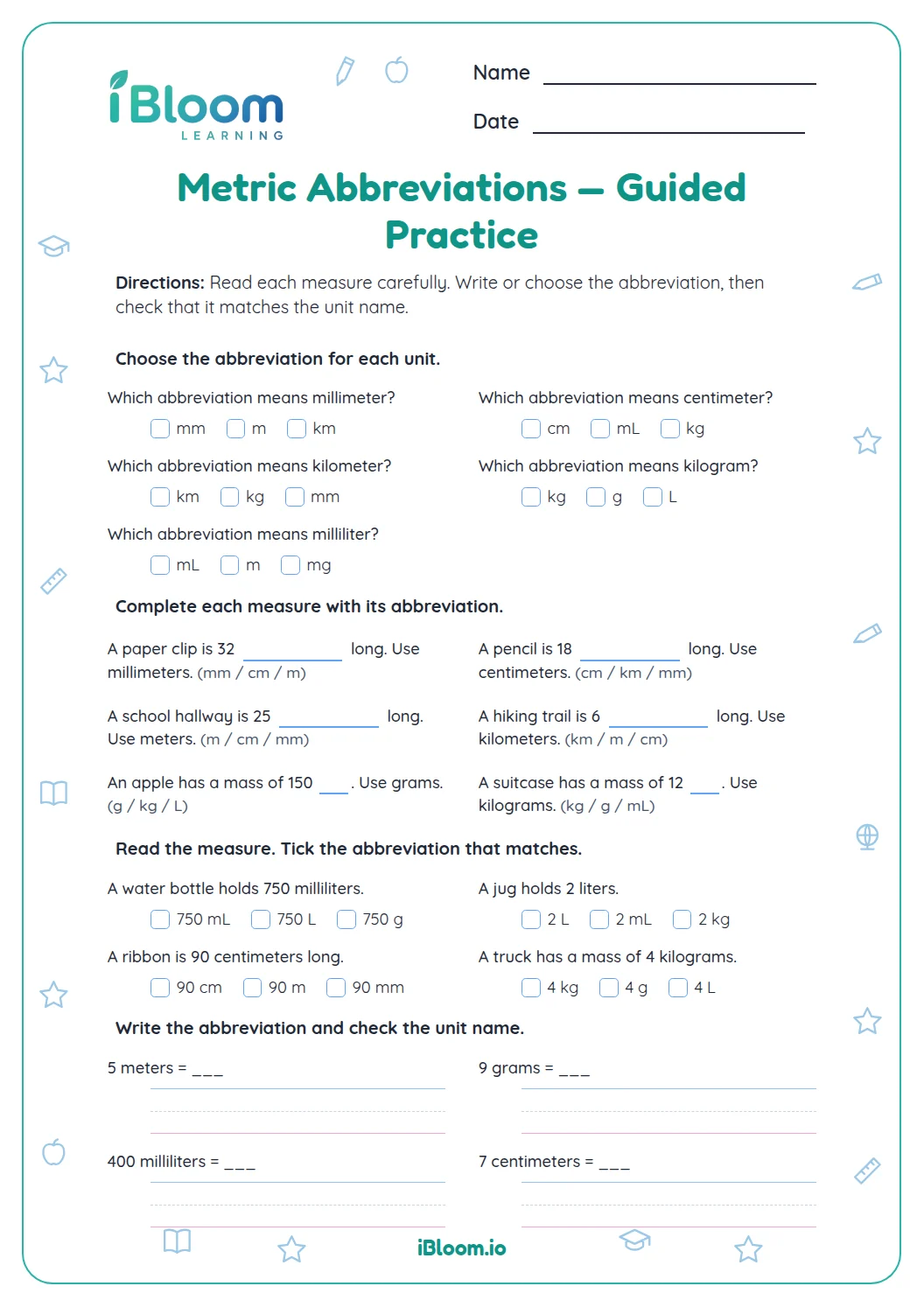
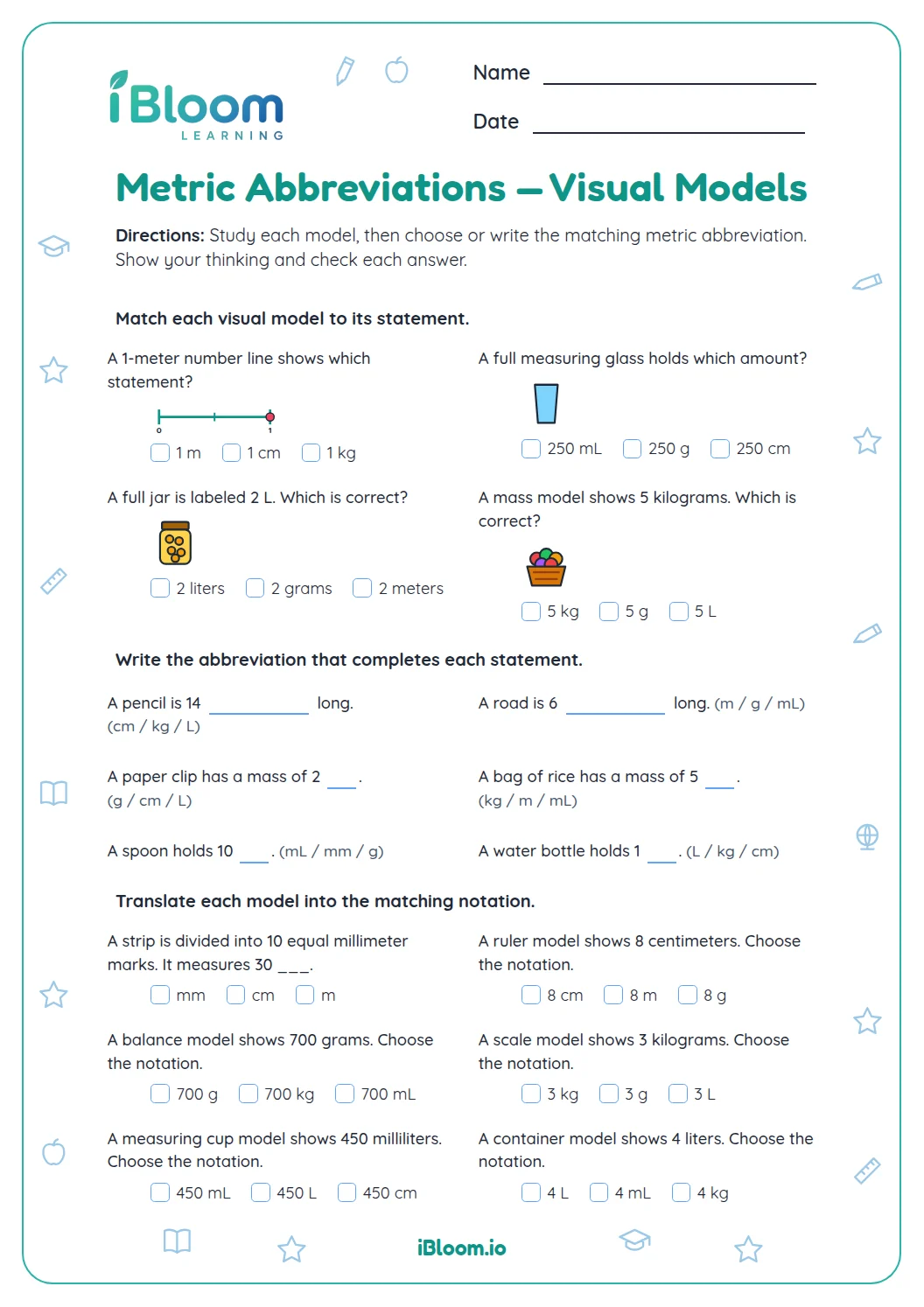
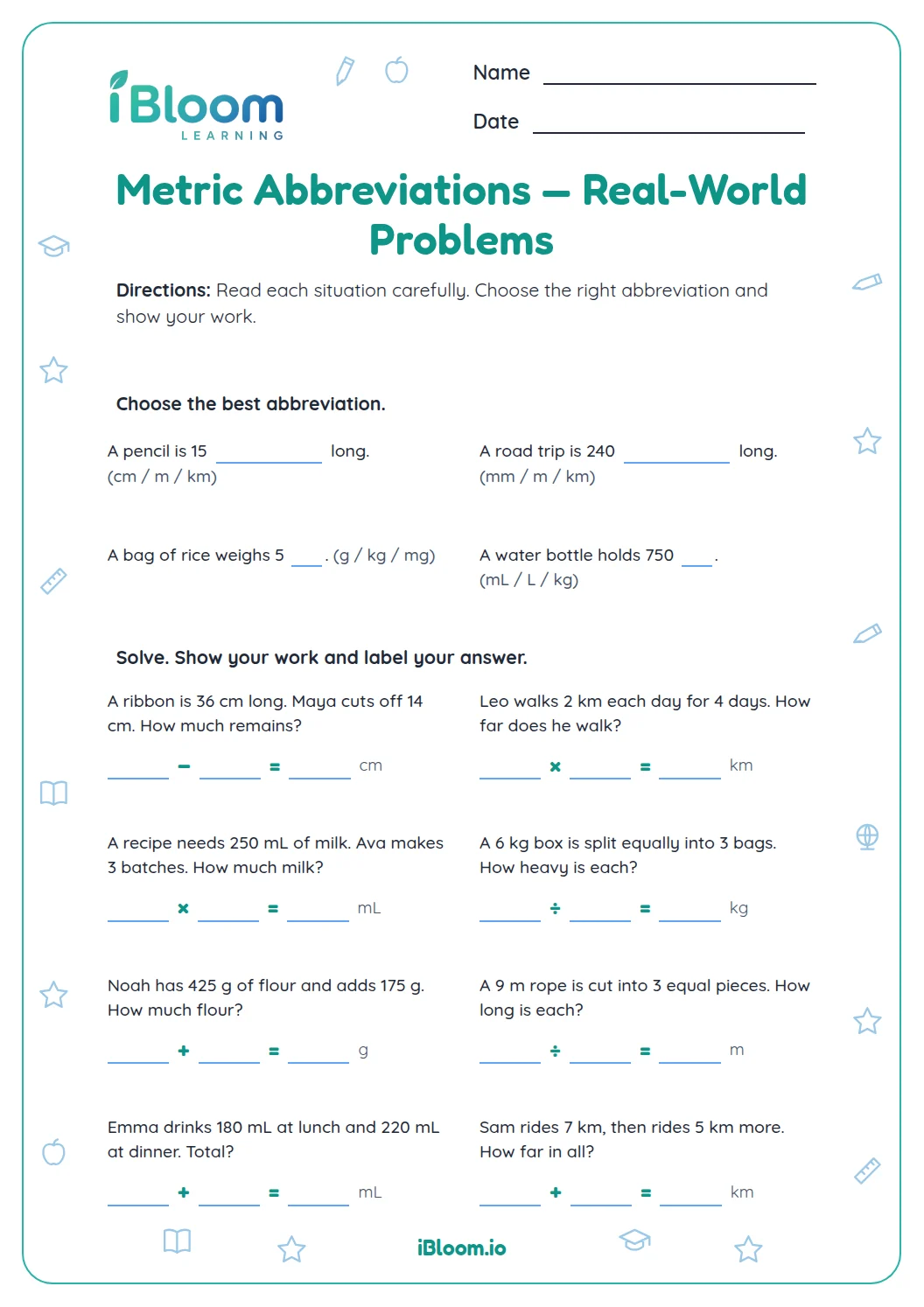
This Grade 4 worksheet practices the symbols km, m, cm, mm, kg, g, L, and mL. Students recognize and write abbreviations, choose units for familiar measurements, and judge whether a stated unit fits an object or amount. Each item uses a standard metric symbol and a concrete clue.
Aligned to 4.MD.A.1
What is on the worksheet?
Sixteen questions move from reading and writing metric symbols to using them with familiar measurements. The page practices kilometers, meters, centimeters, millimeters, kilograms, grams, liters, and milliliters.
How do measurement clues help?
First name what is measured: length, mass, or capacity. Then compare the size in the clue with everyday examples. A trail is measured in kilometers, while the length of a paper clip fits millimeters or centimeters.
How to use this worksheet
- 1Read the direction for each part before you begin.
- 2Work through the questions in order and return to the passage or clues when needed.
- 3Use the separate answer key to check each response.
A helpful way to check
The mistake
Choosing an answer before rereading the clue.
The fix
Point to the word, example, or sentence that supports your choice.
The mistake
Mixing up a unit, describing word, or angle name.
The fix
Name what the question asks about, then check that your answer matches it.
Curriculum alignment
This worksheet supports the listed skill in a US elementary classroom.
Know relative sizes of measurement units within one system.
On this sheet: Students use relative unit sizes and familiar quantities to select a suitable metric unit.
Show the official wordingHide the official wording
Know relative sizes of measurement units within one system of units.
What to practice next
Questions parents and teachers ask
Which abbreviations appear?
The questions use km for kilometer, m for meter, cm for centimeter, mm for millimeter, kg for kilogram, g for gram, L for liter, and mL for milliliter. Notice that capital letters matter in standard symbols. A quick check is to say the full unit name aloud before writing its symbol.
Does the sheet include unit conversions?
This foundation page practices reading and writing standard metric abbreviations and choosing units from context. Conversion practice is a separate skill; these questions ask students to name or select units that fit familiar measurements. This keeps the practice focused on measurement language and familiar quantities.
How can a student choose a sensible unit?
First decide whether the clue is about length, mass, or capacity. Then compare its size with a familiar object or amount. A trail is long, a peach has a small mass, and a bottle holds liquid. Students can compare a known object with the quantity named in the clue.
How many questions are included?
There are 16 questions in four parts: recognize abbreviations, write symbols, choose units in context, and check sensible unit choices. The separate answer key gives each answer and explains why the unit fits. Adults can ask children to explain what quantity each unit measures.