




About this worksheet
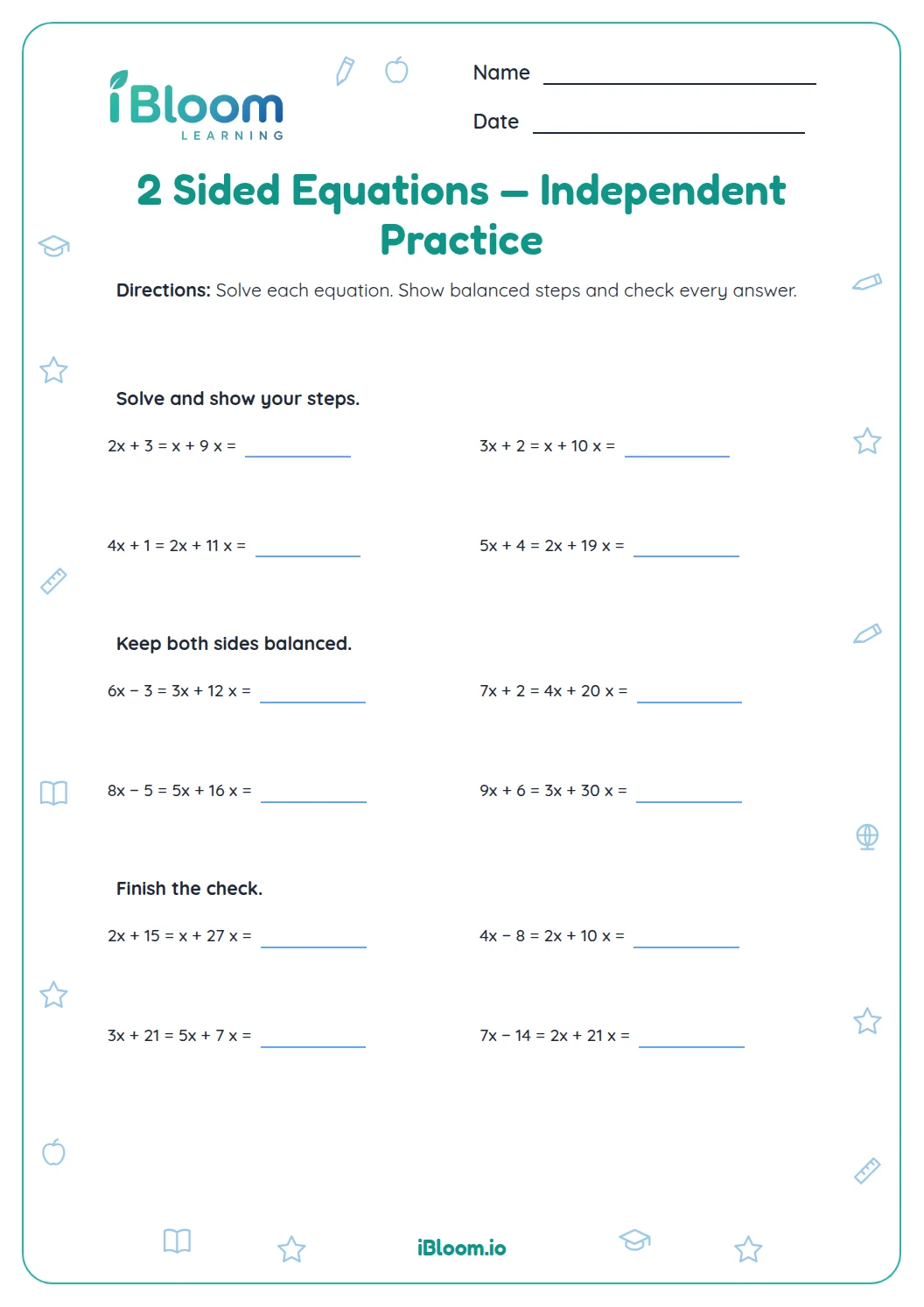
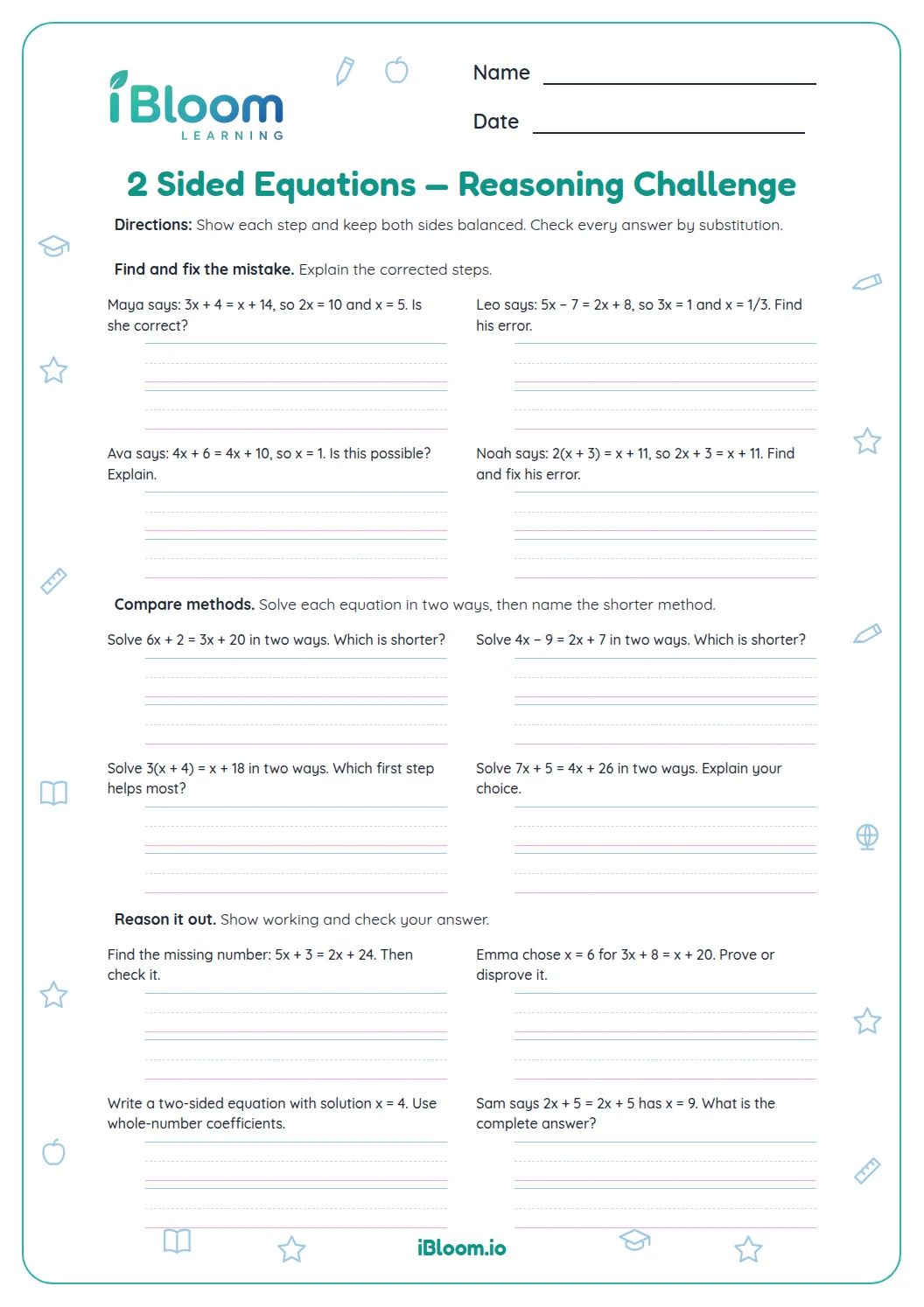
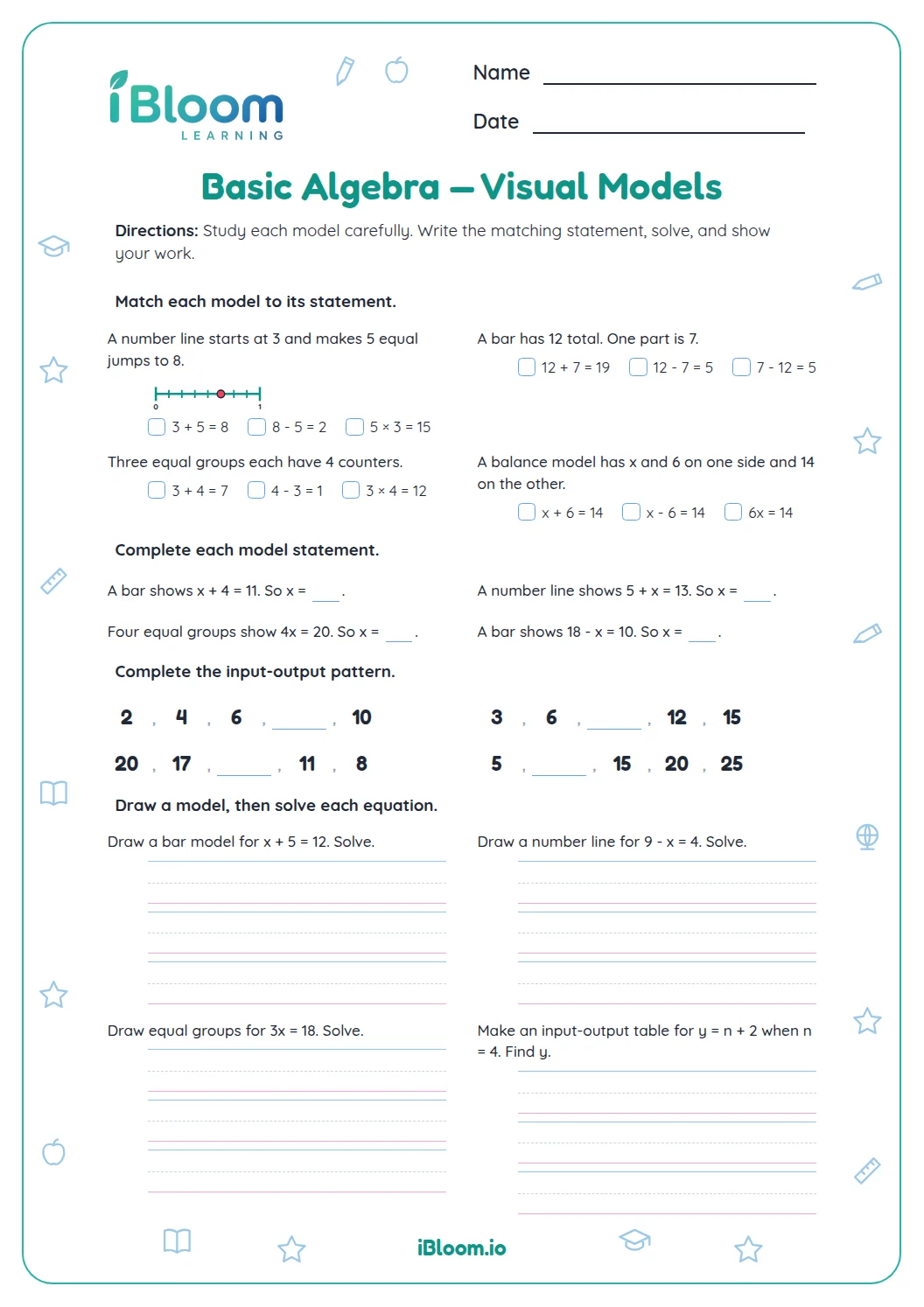
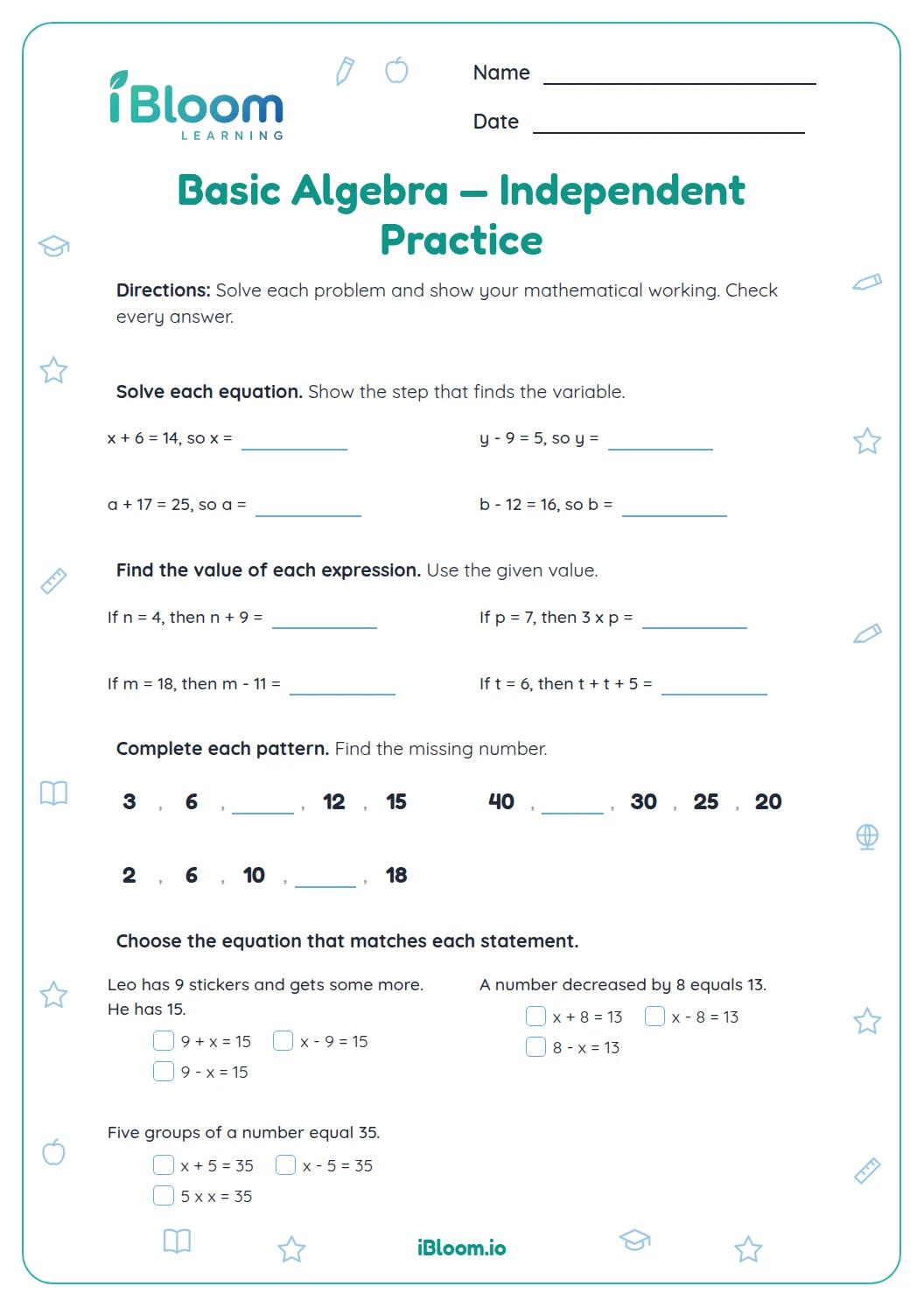
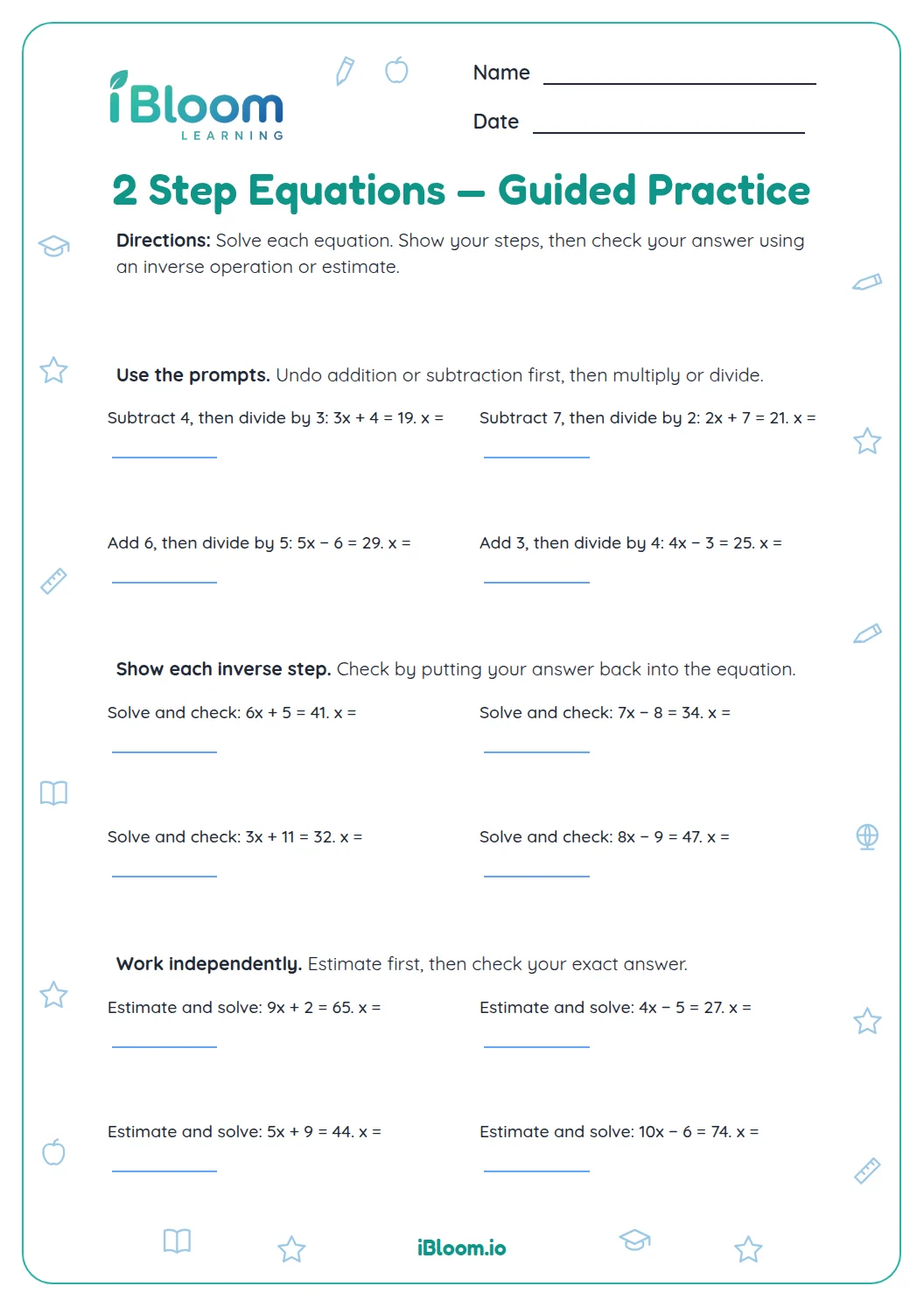
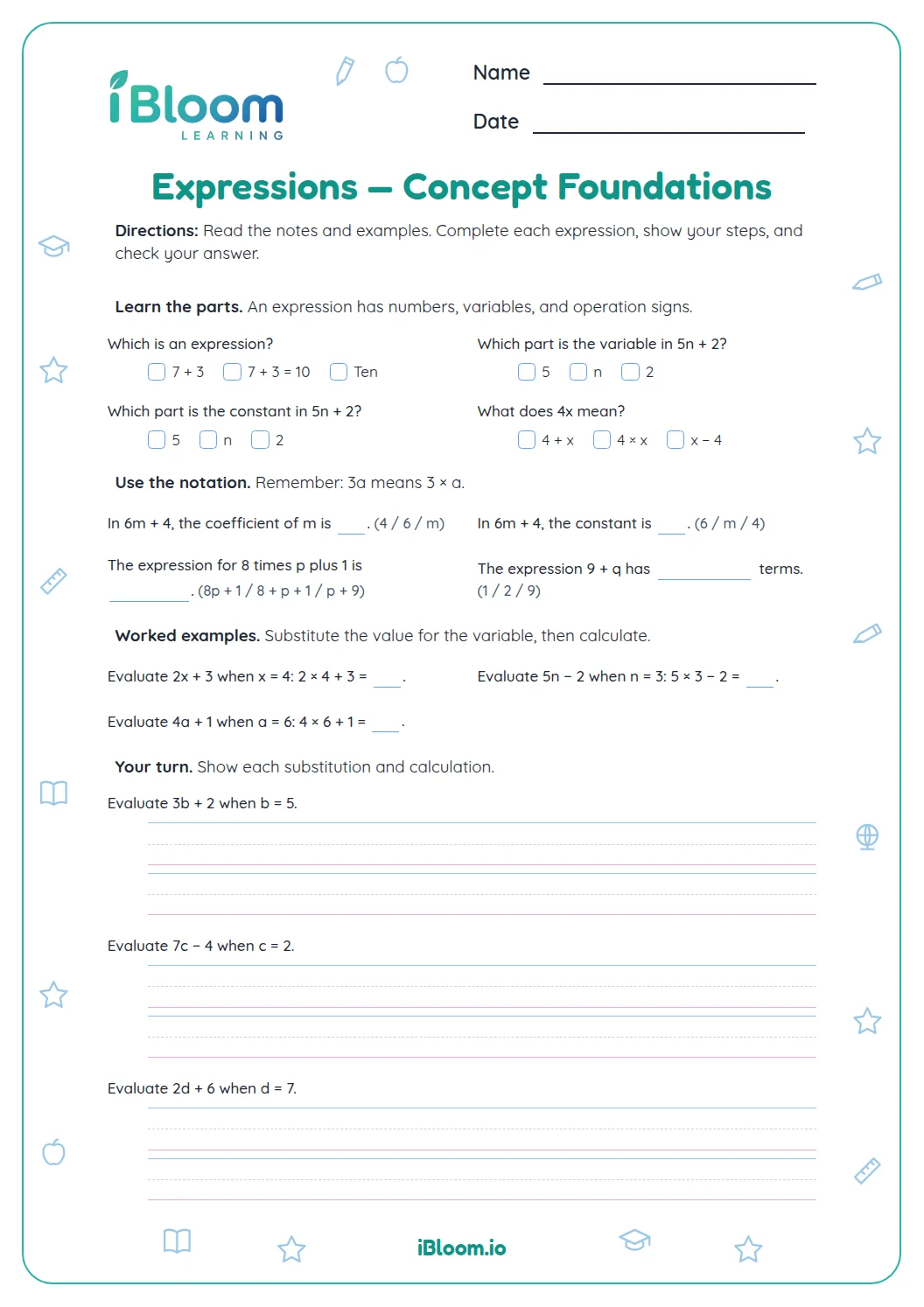
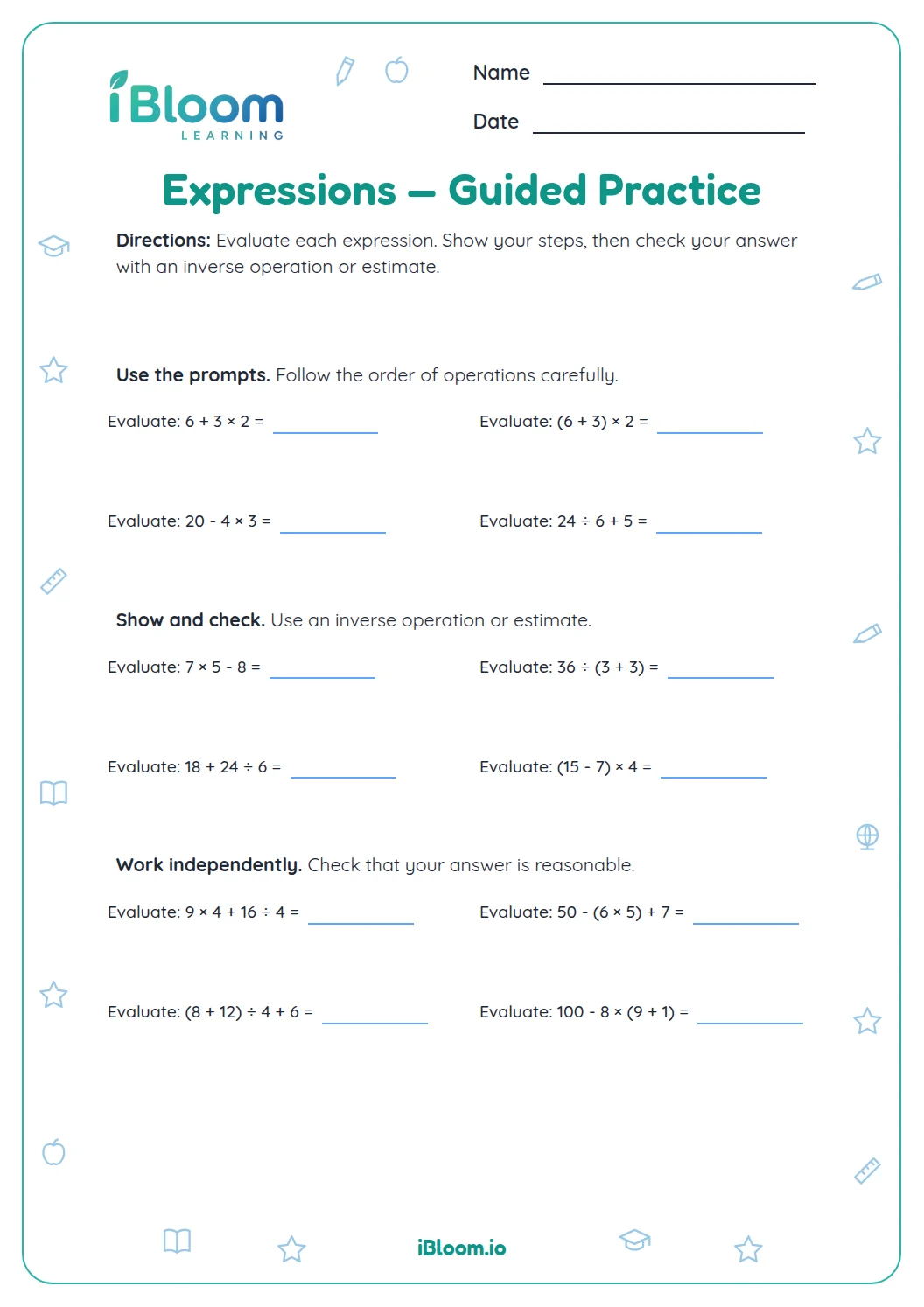
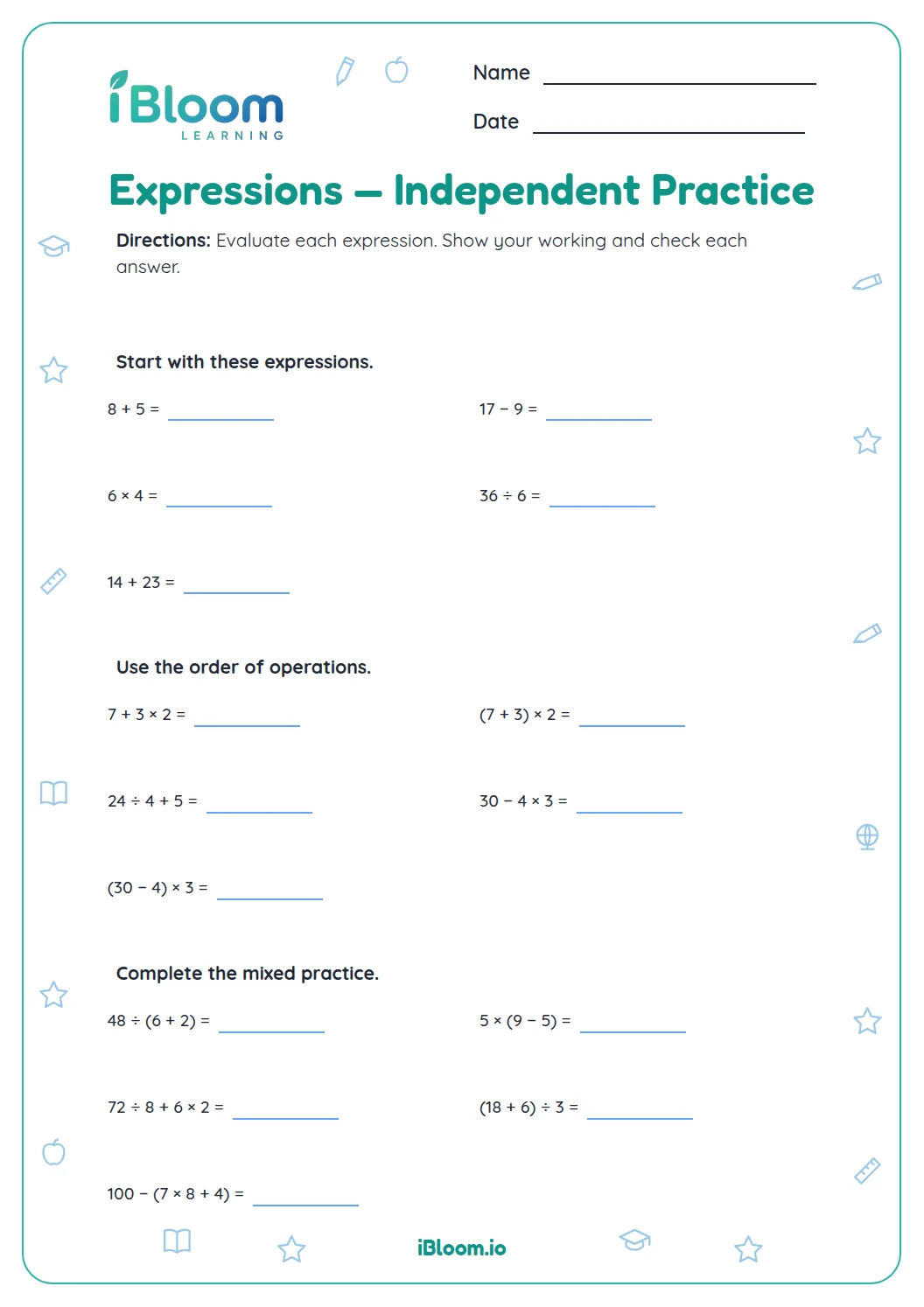
This printable practices two-sided equations, with a variable on each side of the equal sign. Learners solve 16 equations by removing matching terms, keeping both sides balanced, and checking each value by substitution. The worksheet has three guided parts and a separate answer key. It is labeled Grade 5 in the page collection and cites CCSS 8.EE.C.7, the standard that matches the equations practiced.
Aligned to 8.EE.C.7
What makes an equation two-sided?
A variable term appears on each side of the equal sign. In x + 4 = 2x + 1, subtract x from both sides to leave 4 = x + 1.
How can you keep the equation balanced?
Whatever operation you use on one side, use it on the other side too. Then isolate the variable and check by substitution.
- 1x + 4 = 2x + 1
- 2Subtract x from both sides: 4 = x + 1.
- 3Subtract 1 from both sides: x = 3.
- 4Check: 3 + 4 = 2(3) + 1, so 7 = 7.
How does the practice build?
The first part removes matching variable terms. The next part continues balancing both sides, and the last part asks learners to solve and verify the value.
What does a correct check show?
Substitute the value for x in the original equation. Both sides should evaluate to the same number.
How to solve a two-sided equation
- 1Find a variable term that can be removed from both sides.
- 2Subtract or add that same term on each side.
- 3Use inverse operations to isolate the remaining variable term.
- 4Divide by its coefficient if needed.
- 5Substitute the value into the original equation and compare both sides.
Common mistakes and quick fixes
The mistake
Changing only one side of the equation.
The fix
Apply each addition or subtraction to both sides.
The mistake
Combining unlike terms.
The fix
Combine variable terms with variable terms and constants with constants.
The mistake
Stopping without checking.
The fix
Substitute the value into the original equation and evaluate both sides.
Curriculum alignment
Students solve one-variable linear equations by keeping both sides equal through each step.
Solve linear equations in one variable.
On this sheet: Students solve one-variable linear equations with terms on both sides by collecting like terms, isolating the variable, and checking solutions.
Show the official wordingHide the official wording
Solve linear equations in one variable.
What to practice next
Make more practice
Questions parents and teachers ask
What is a two-sided equation?
A two-sided equation has a variable term on each side of the equal sign. For example, x + 4 = 2x + 1 has x on both sides. Solve by keeping the equation balanced while isolating the variable and checking your result.
Why do the same operations go on both sides?
An equation states that two expressions have equal values. Adding or subtracting the same quantity on each side preserves equality. The 16 guided questions use this idea, and two items invite learners to show balanced steps. That makes the equality visible as the variable is isolated.
How should learners check a solution?
Replace x in the original equation with the value found, then evaluate both sides. For x + 4 = 2x + 1 and x = 3, each side equals 7. If they differ, revisit the solving steps and check each operation carefully.
What is in the answer key?
The separate key lists the value of x for each of the 16 questions. Two questions also show sample balancing and substitution steps, so learners can compare their process as well as the final value. Check both sides of the original equation.
Which standard matches this skill?
The page cites CCSS 8.EE.C.7, which covers solving linear equations in one variable. It retains the Grade 5 collection label while practicing the two-sided equation skill named in its title. The code identifies the standard aligned to this algebra practice.