




About this worksheet
This worksheet presents 16 real-world situations that can be represented by subtracting a starting integer from a final integer. Students track positive and negative values in contexts such as temperatures, elevation, and game scores, then write an equation and include units. The answer key gives each signed change. The work connects signed quantities in context with subtraction on a number line.
Aligned to 7.NS.A.1
How do signed values describe a change?
A value below zero can describe a position, temperature, or balance relative to a reference point. The change from a starting value to a final value is final minus starting.
How do you subtract a negative starting value?
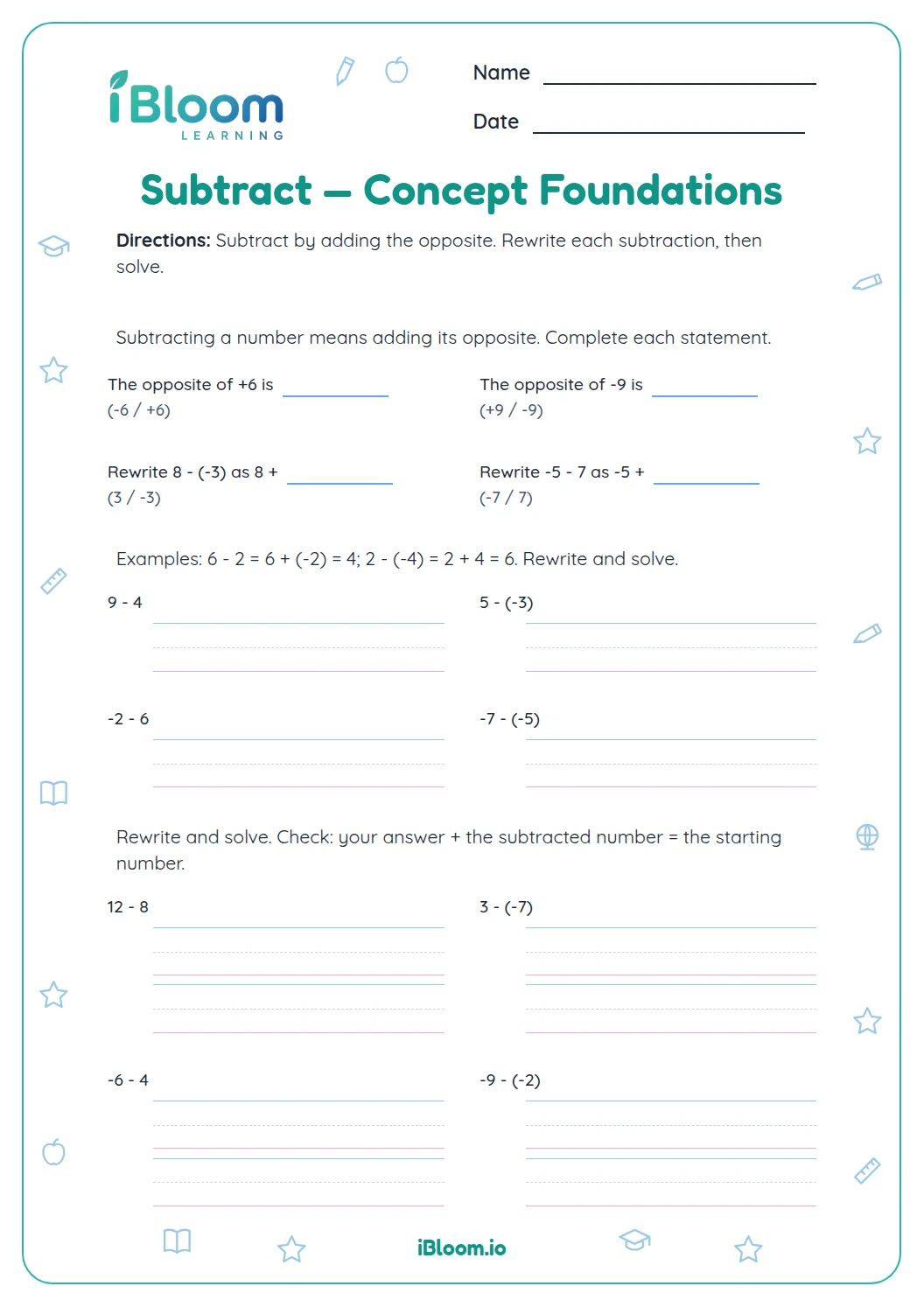
Subtracting a negative is equivalent to adding its opposite. In Question 1, 8 − (−3) = 8 + 3 = 11, so the temperature change is 11°F.
- 1Final minus starting: 8 − (−3)
- 2Rewrite: 8 + 3 = 11°F
How can students check the sign?
Compare the final and starting values. If the final value is greater, the change is positive; if it is lower, the change is negative. Then make sure the unit matches the story.
How to use this worksheet
- 1Mark the starting and final integers.
- 2Write final value − starting value.
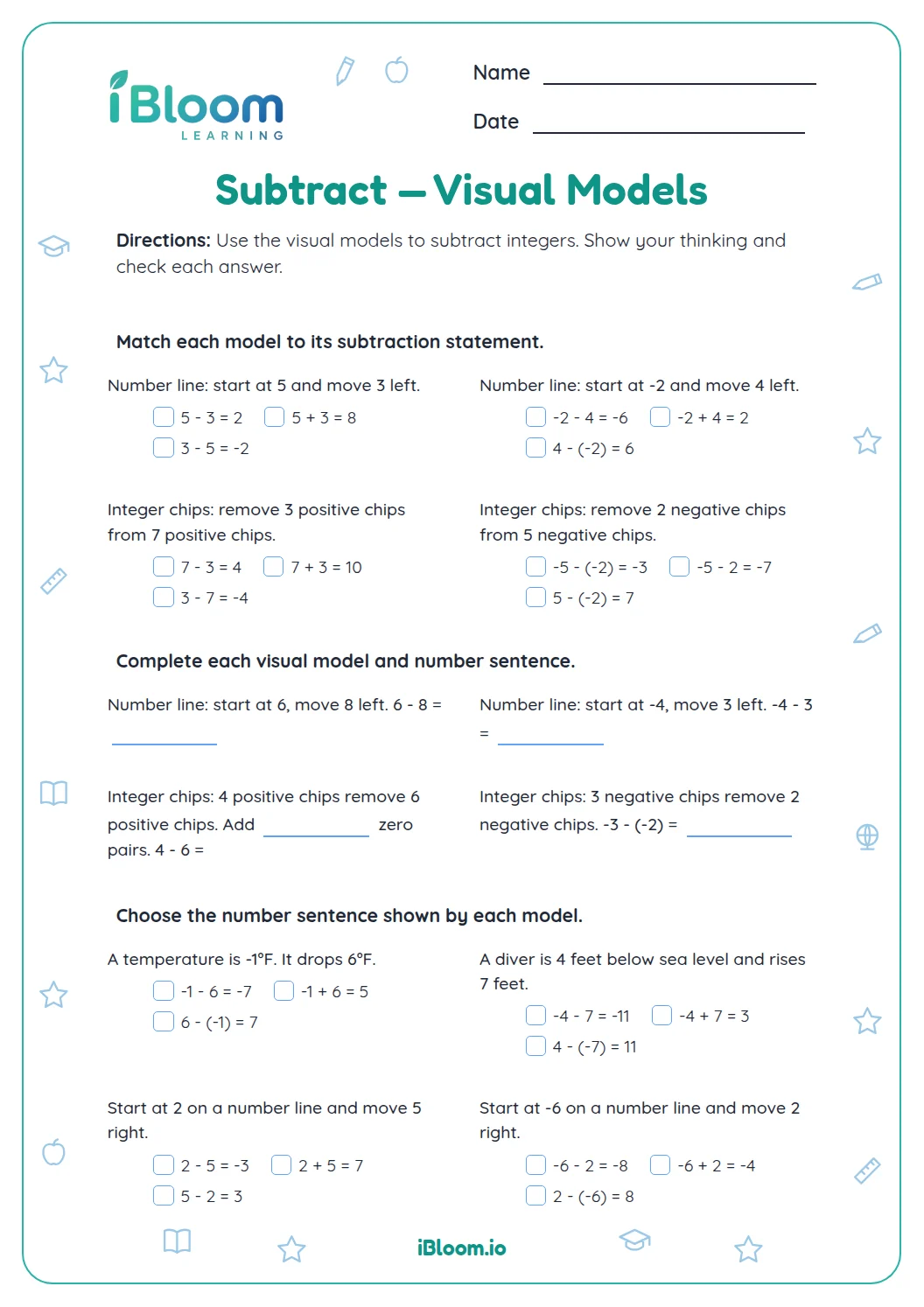
- 3Use a number line or rewrite subtracting as adding the opposite.
- 4Calculate the signed difference.
- 5Check that the sign and unit fit the situation.
Common mistakes and quick fixes
The mistake
Reversing the start and final values.
The fix
Keep the requested order: final minus starting.
The mistake
Dropping parentheses around a negative starting value.
The fix
Write a clear expression such as 8 − (−3).
The mistake
Giving only the size of the change.
The fix
Use the sign to show the direction of change.
Common Core alignment
This worksheet practices 7.NS.A.1 through its questions and examples.
Subtract signed quantities to find a real-world change or difference.
On this sheet: Subtract signed quantities to find a real-world change or difference.
Show the official wordingHide the official wording
Apply and extend previous understandings of addition and subtraction to add and subtract rational numbers; represent addition and subtraction on a horizontal or vertical number line diagram.
What to practice next
Make more practice
Further reading
Questions parents and teachers ask
How many problems are included?
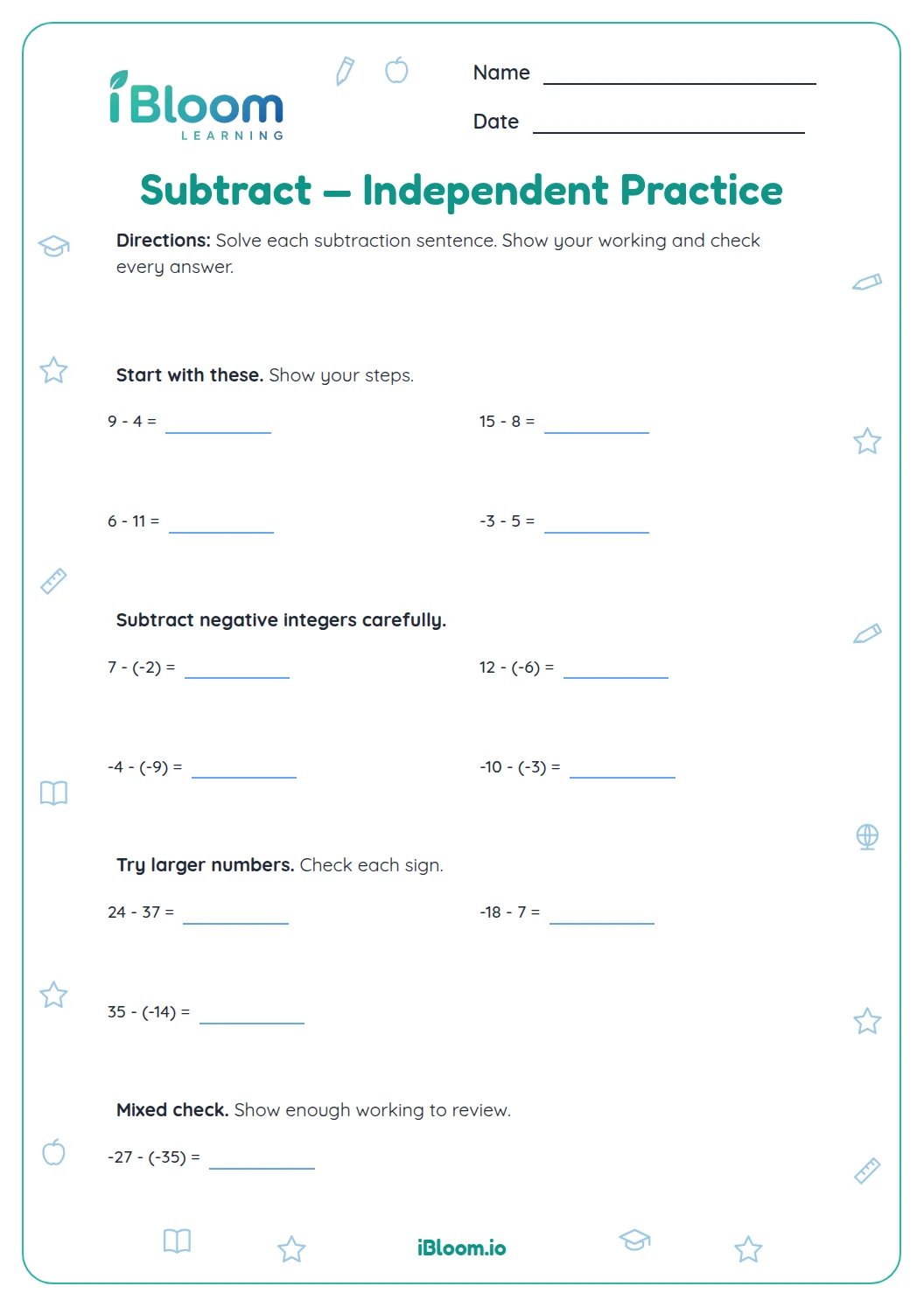
The page contains 16 real-world signed-change questions in a compact fill-in format. The answer key includes positive and negative results so students can check direction as well as size. Four items leave room for students who want to write a subtraction equation before solving.
What does a negative answer mean?
A negative change means the final value is lower than the starting value. For example, a temperature that changes from 2°F to −6°F changes by −8°F. The sign records the downward change; the context tells what is moving or becoming lower.
How should I write a subtraction problem with a negative?
Use parentheses to make the signed starting value clear. Moving from −3 to 8 is written 8 − (−3), which equals 11. Rewriting subtraction as adding the opposite gives 8 + 3, a useful way to check the result in this situation.
Why do the answers include units?
The unit tells what the signed number measures. Degrees Fahrenheit, feet, meters, dollars, and floors describe different quantities. Students should carry the unit from the story into their answer so the result communicates a real change, such as a temperature rise or a move to a lower floor.
Can a number line help with these questions?
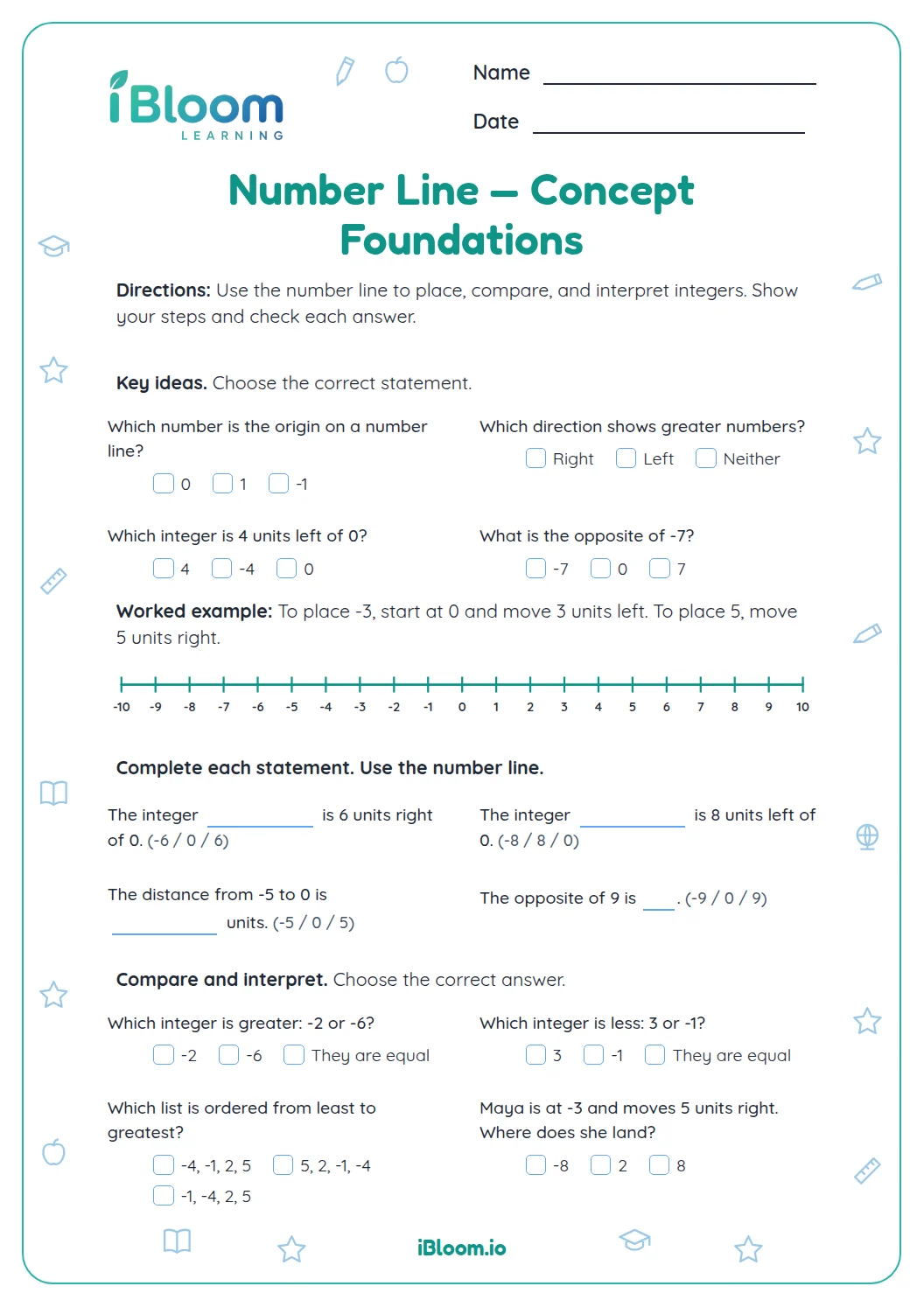
Yes. Locate the starting value, then compare it with the final value. The difference between them is the change, and its sign depends on direction. A number line can make a move from below zero to above zero easier to track.
What practice can follow this worksheet?
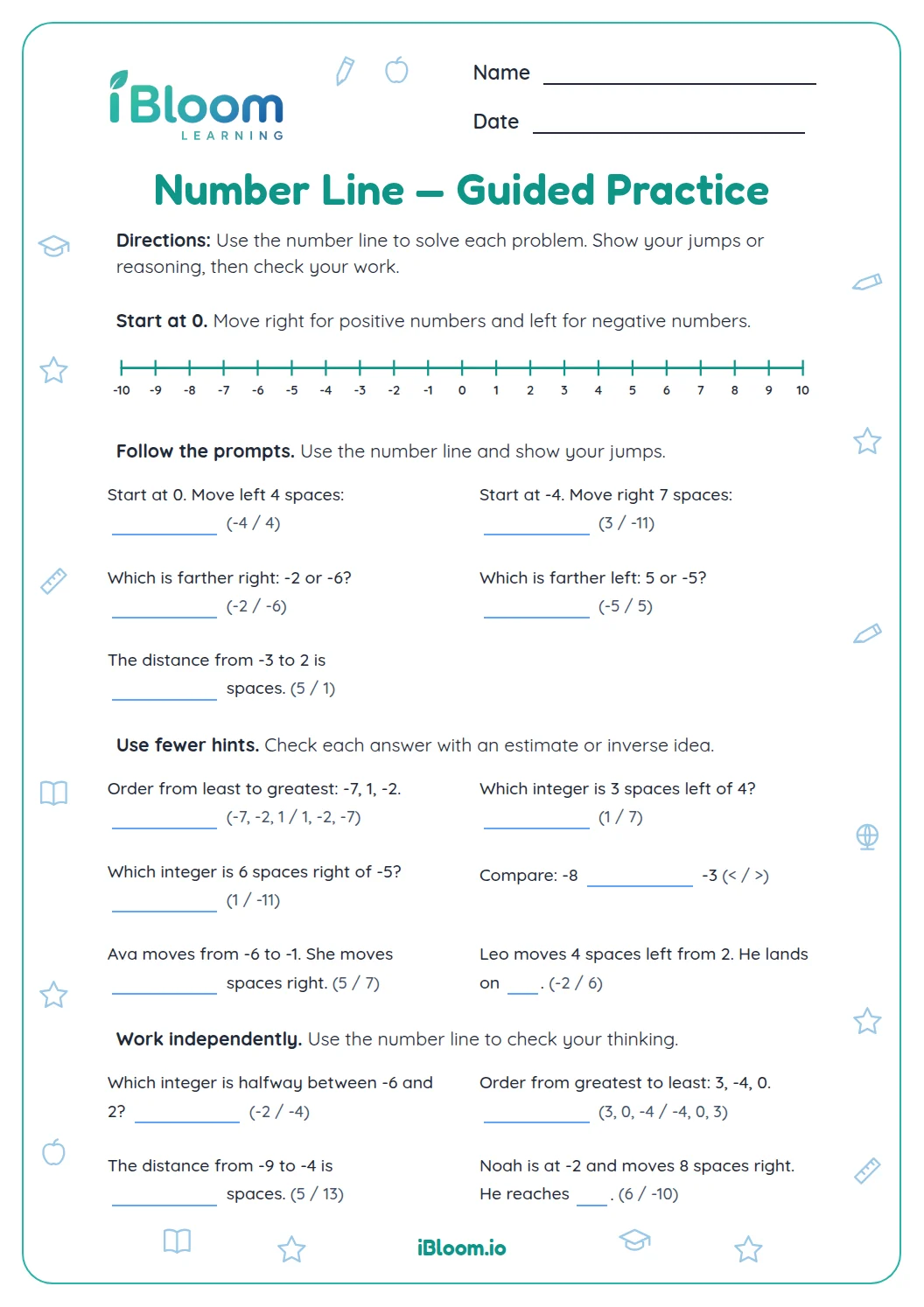
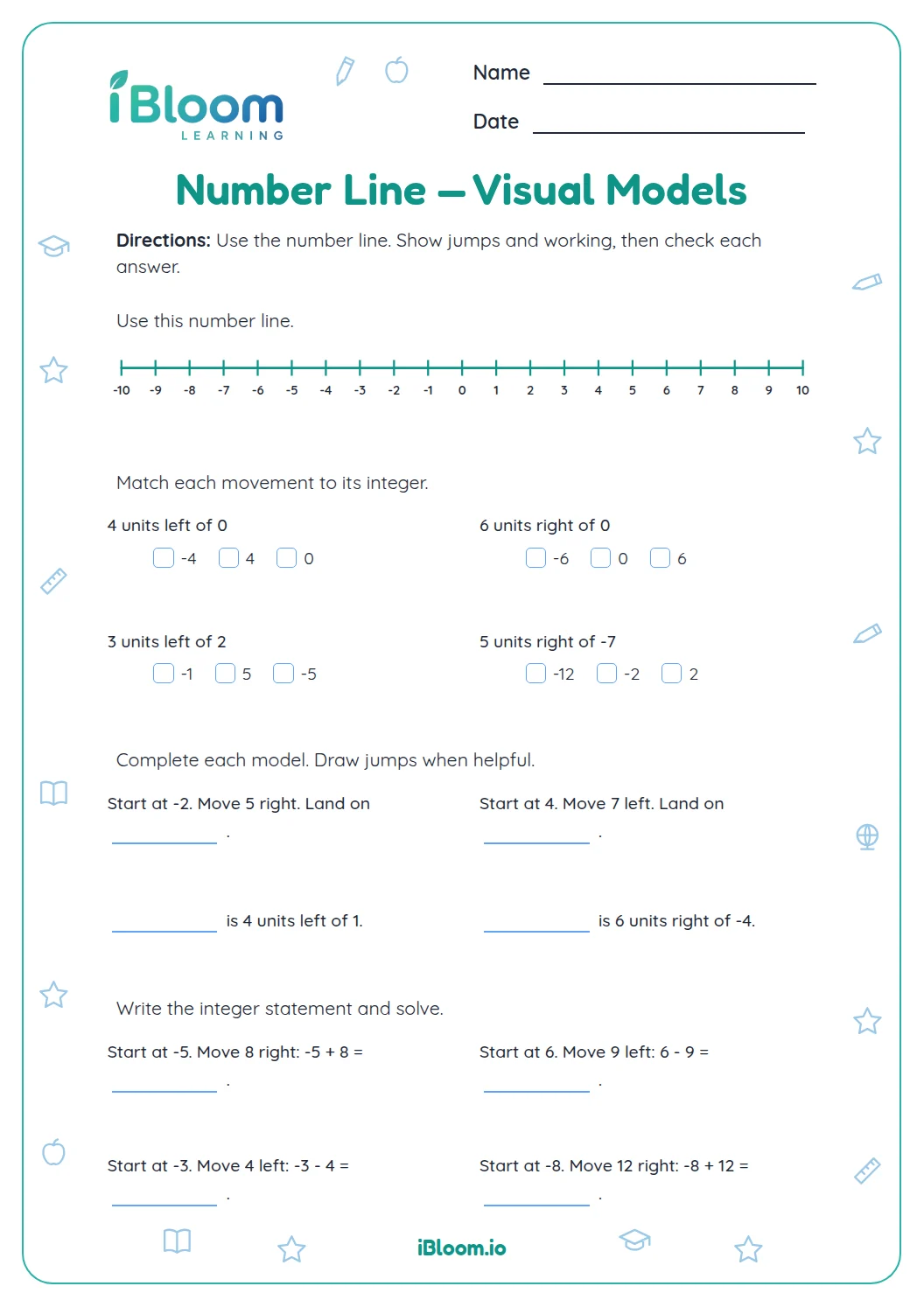
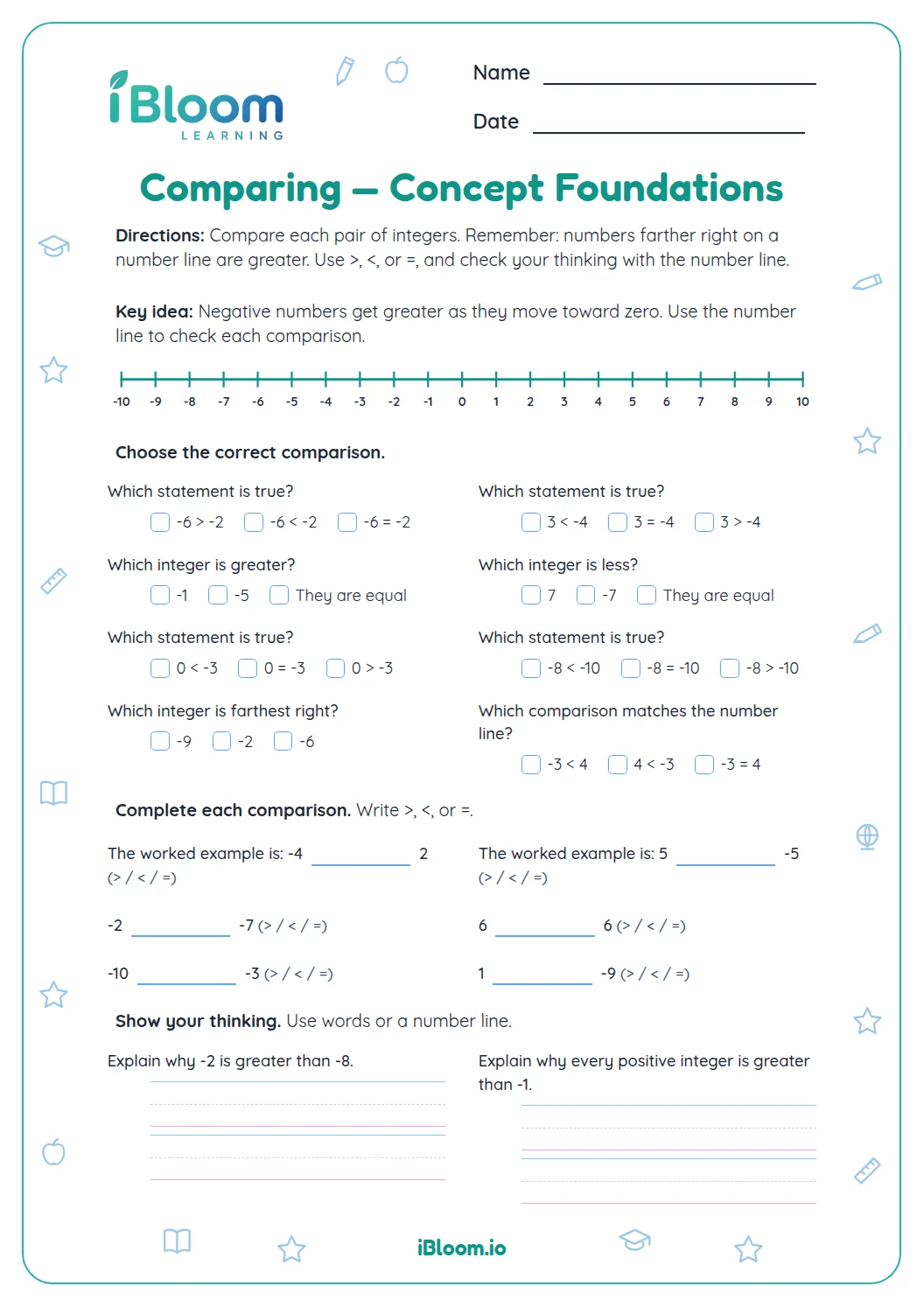
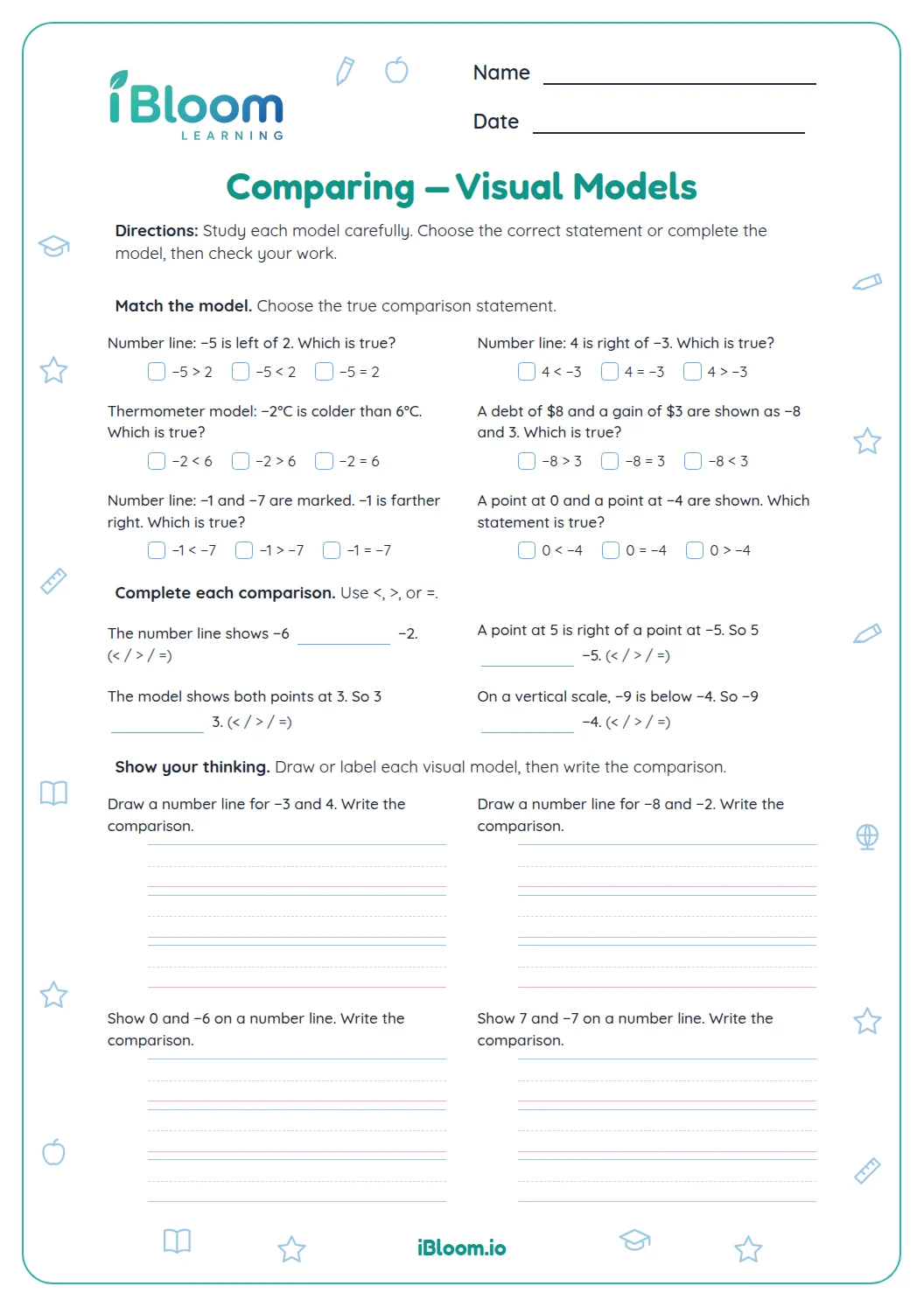
A number-line worksheet can show signed values and movement visually. Comparing and addition practice build related integer skills, while a combined add-and-subtract page gives students situations where they choose an operation. These links keep the focus on signed quantities in real contexts.