



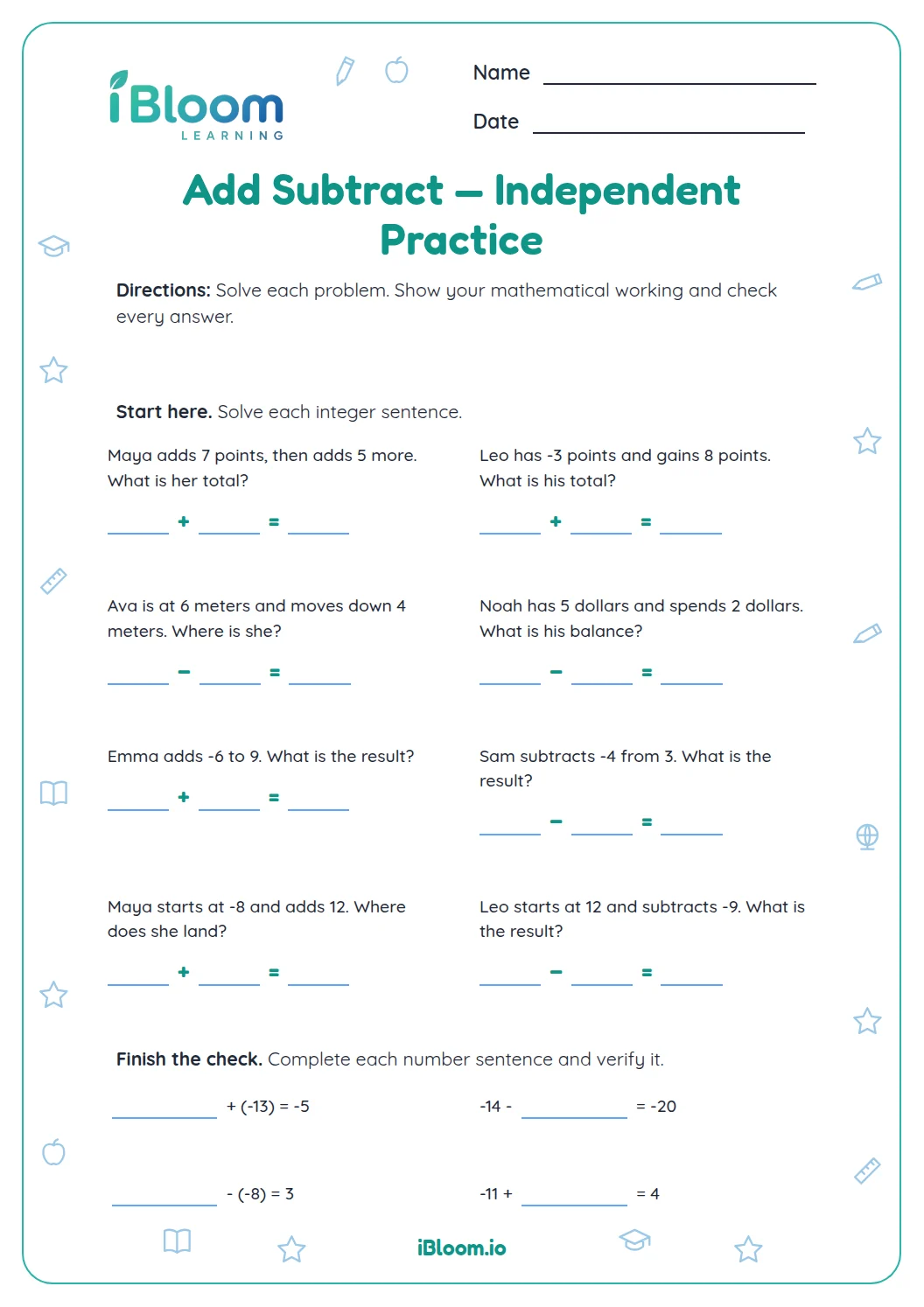
About this worksheet
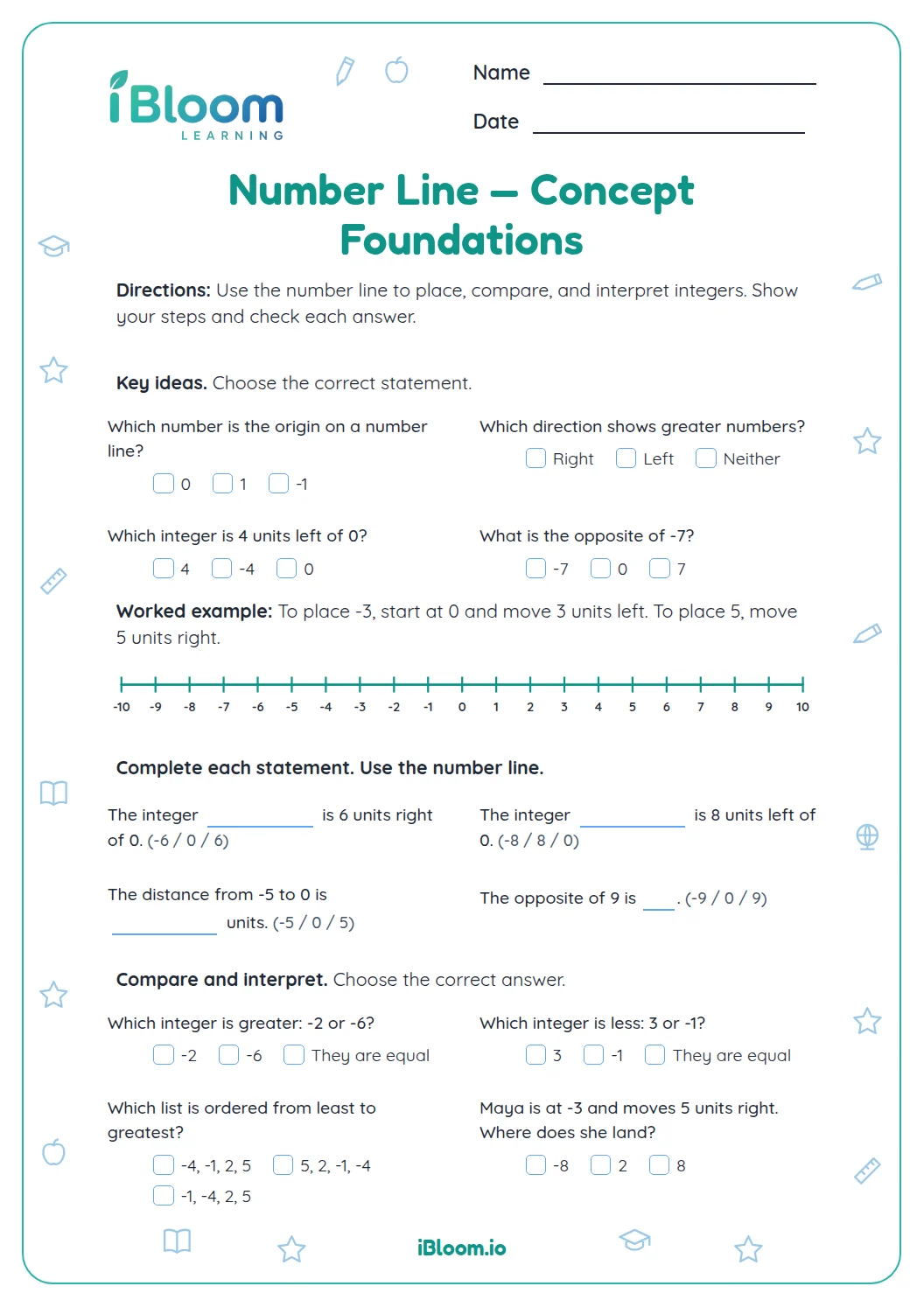
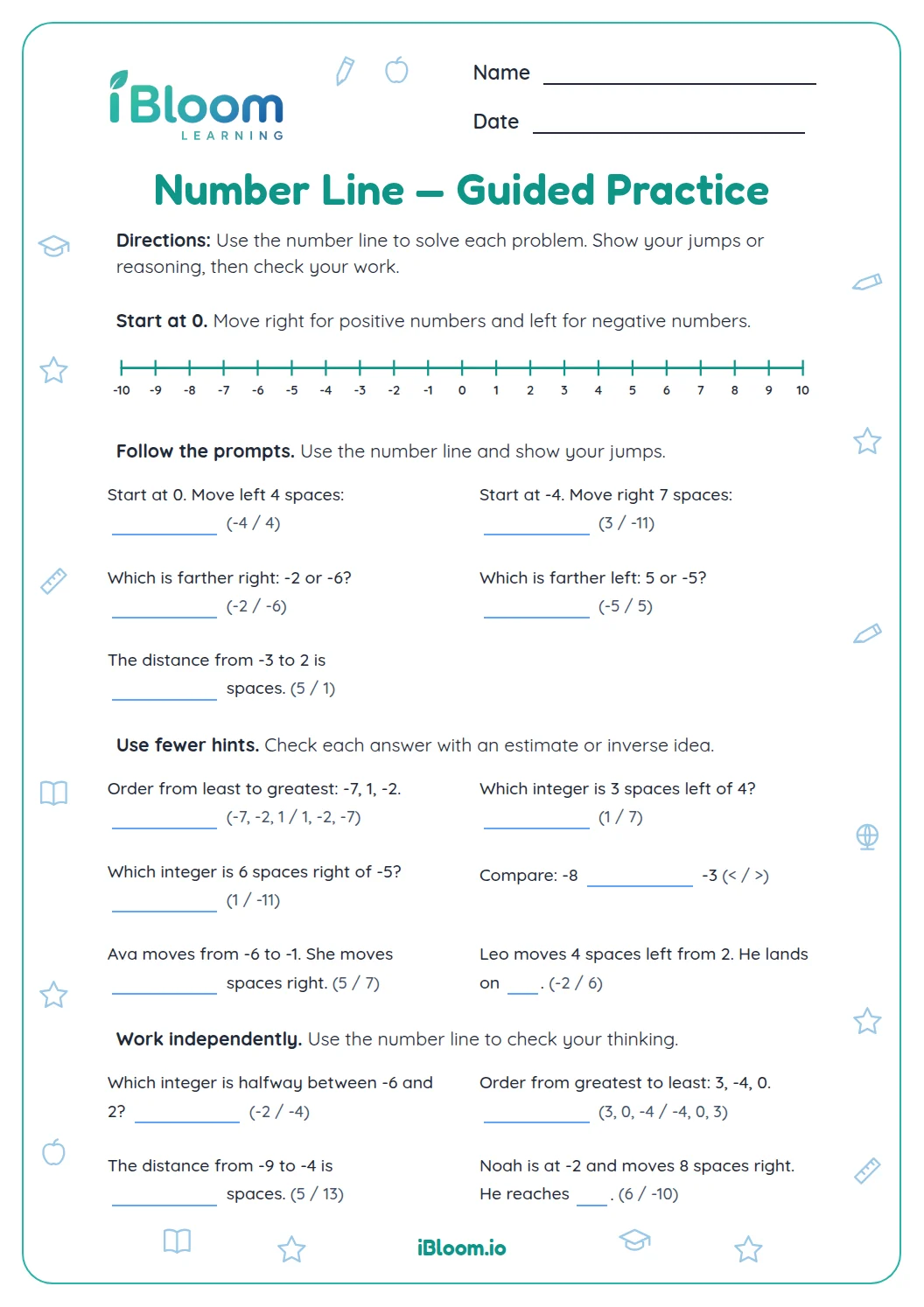
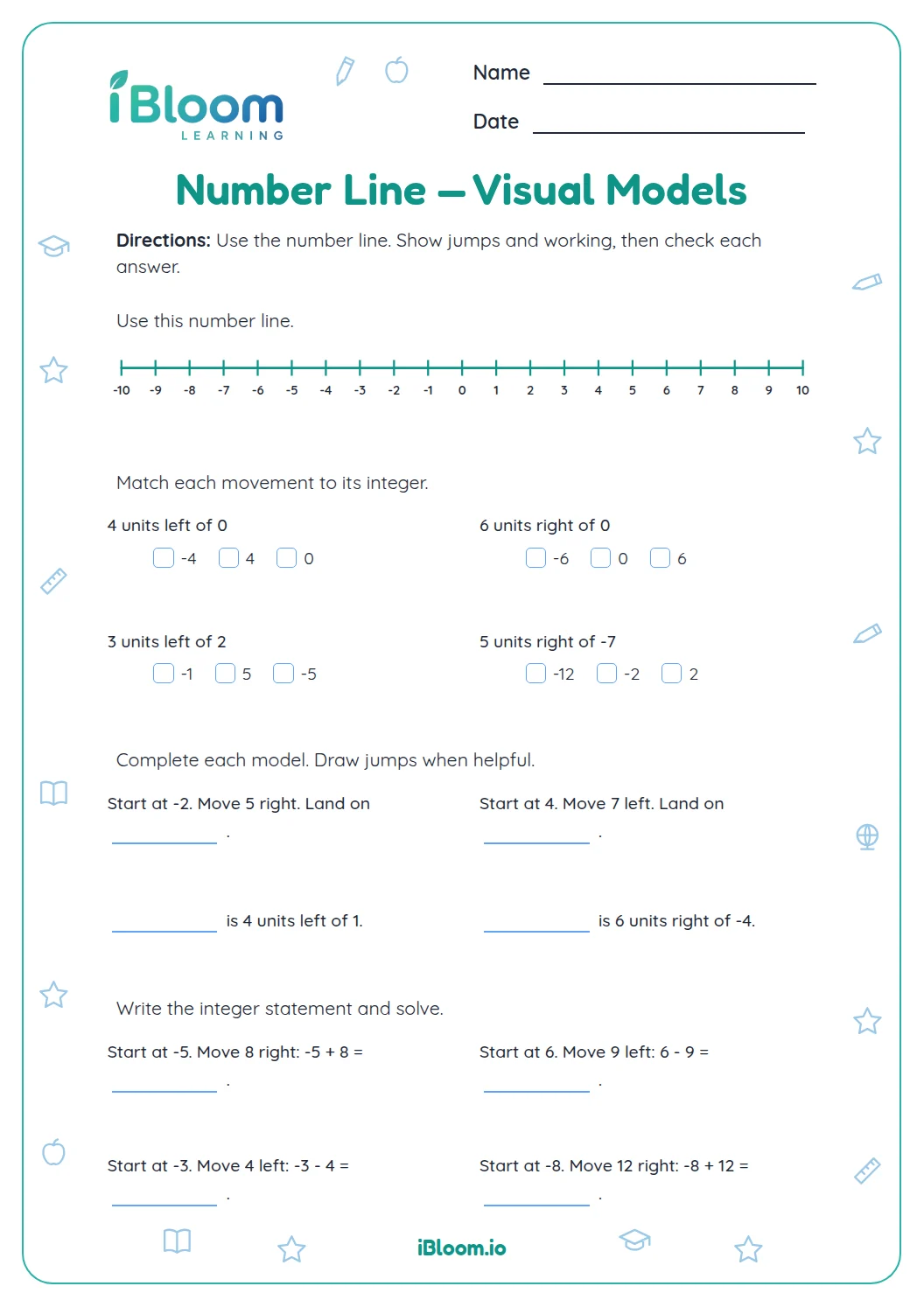
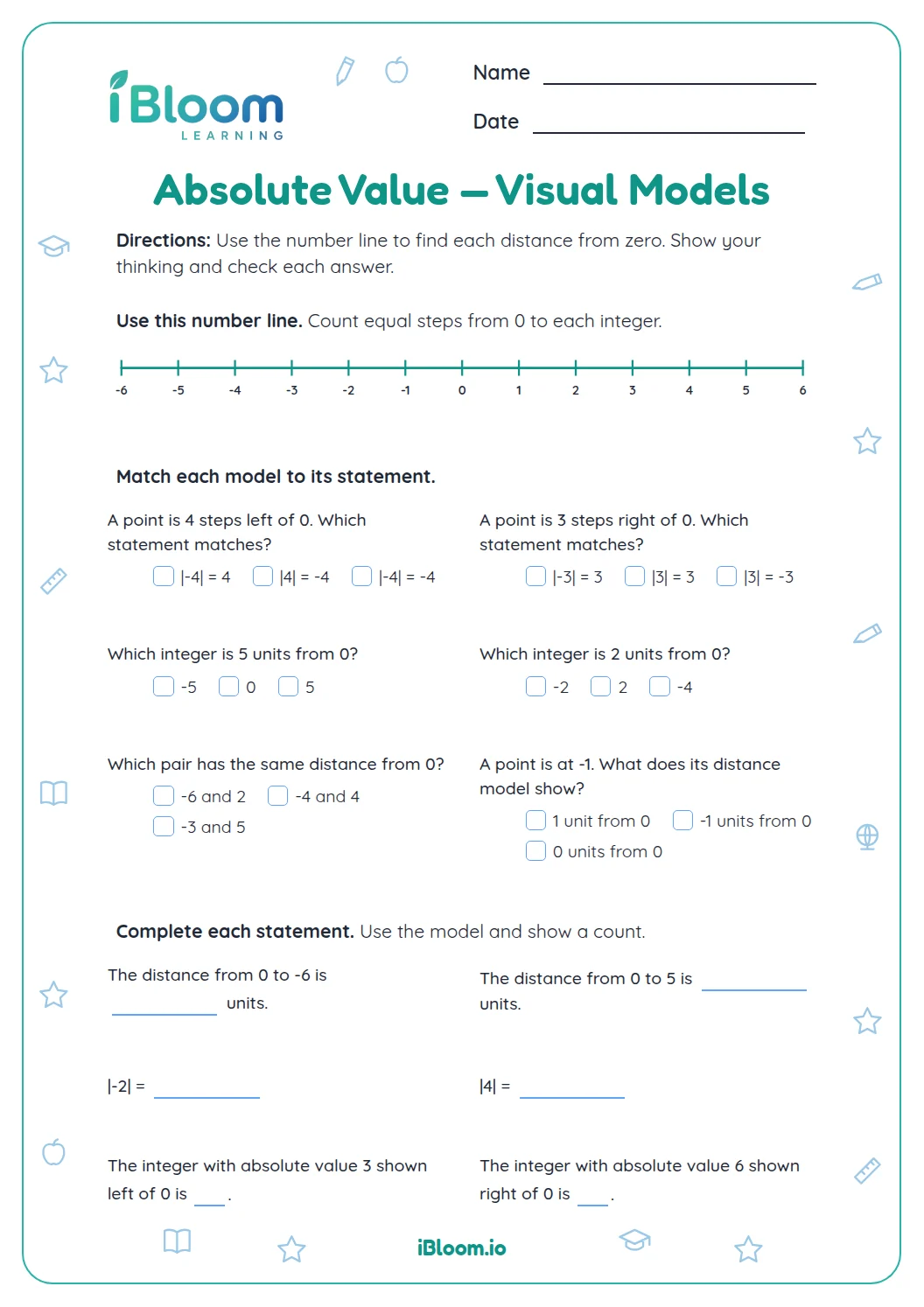
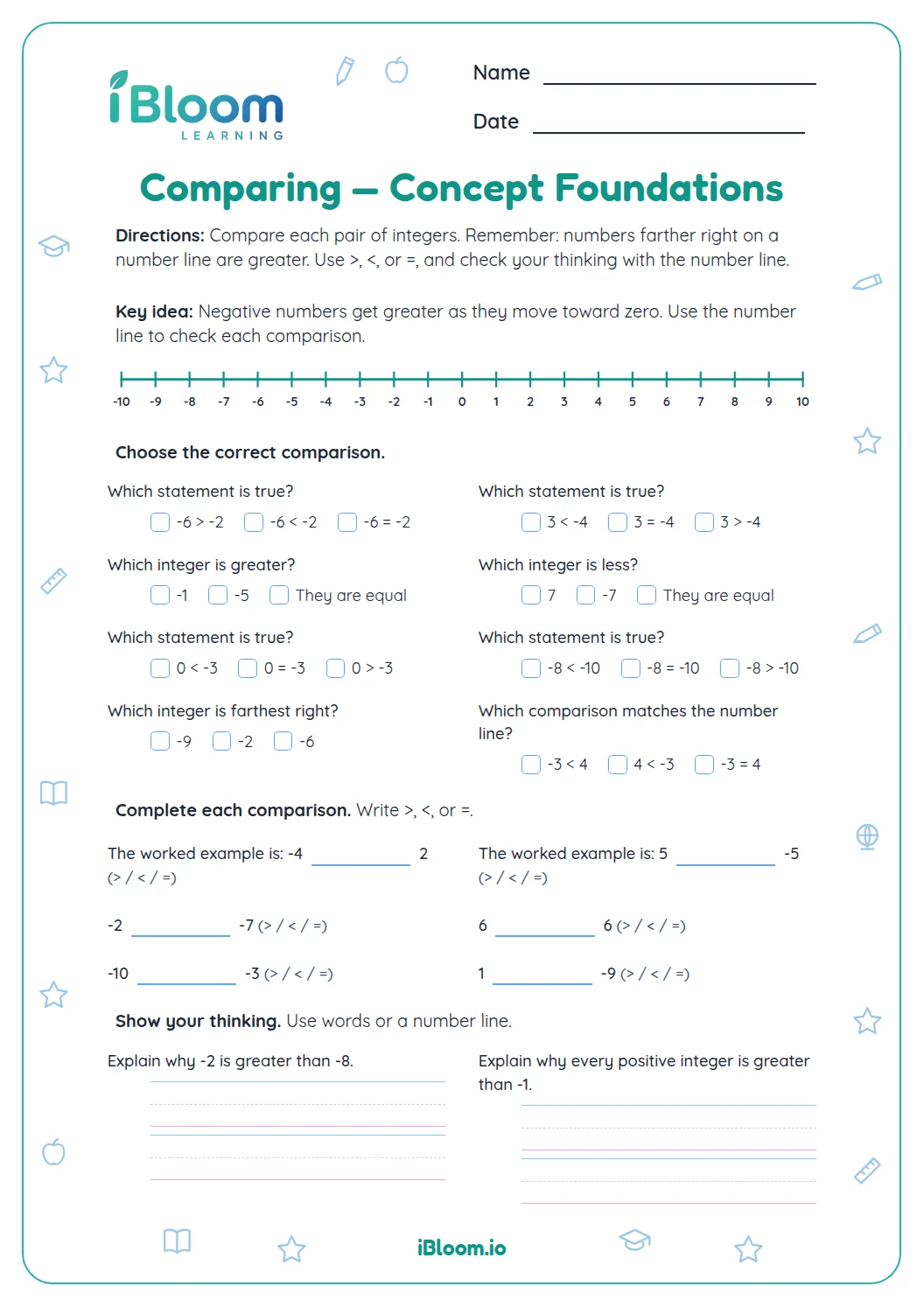
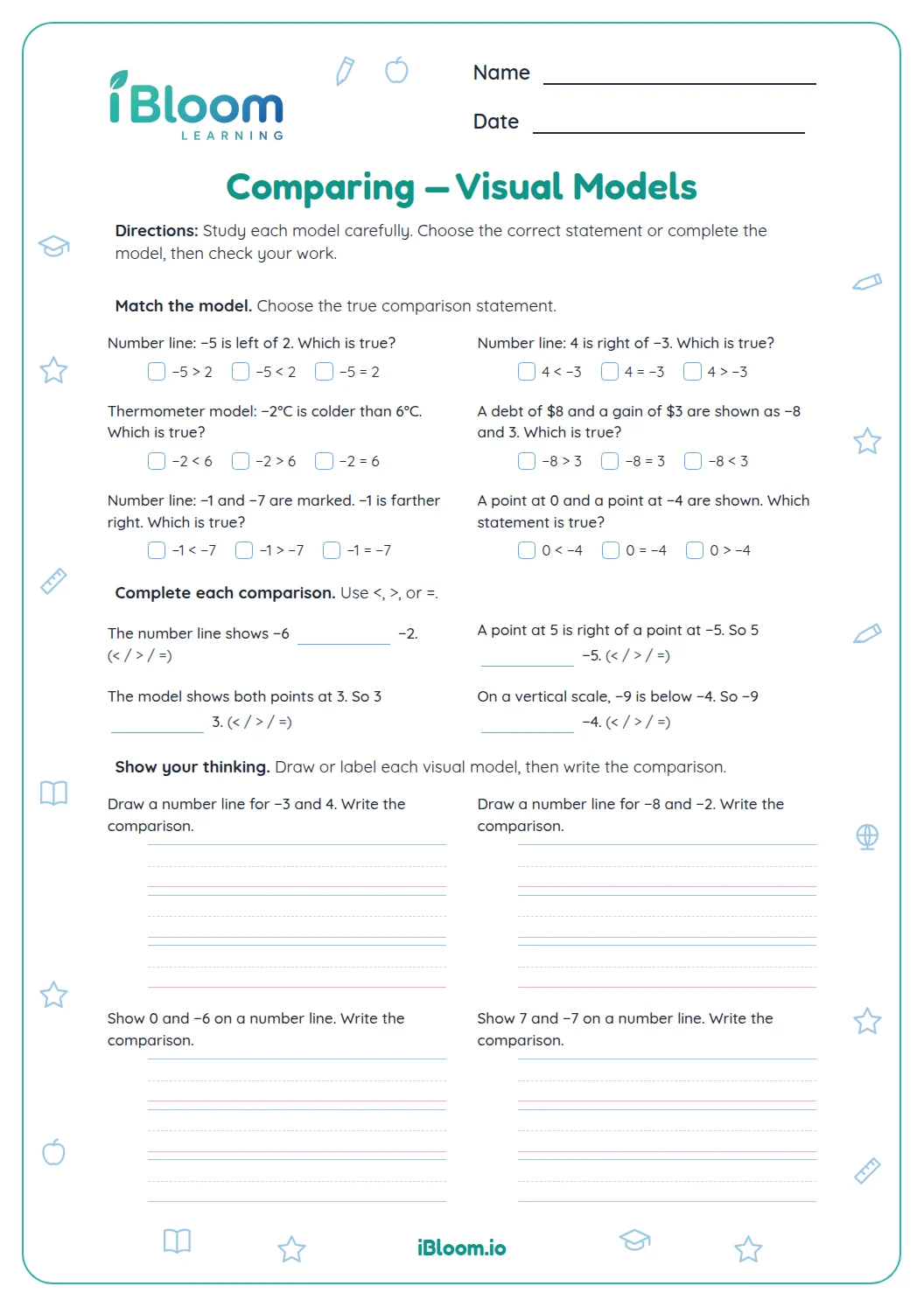
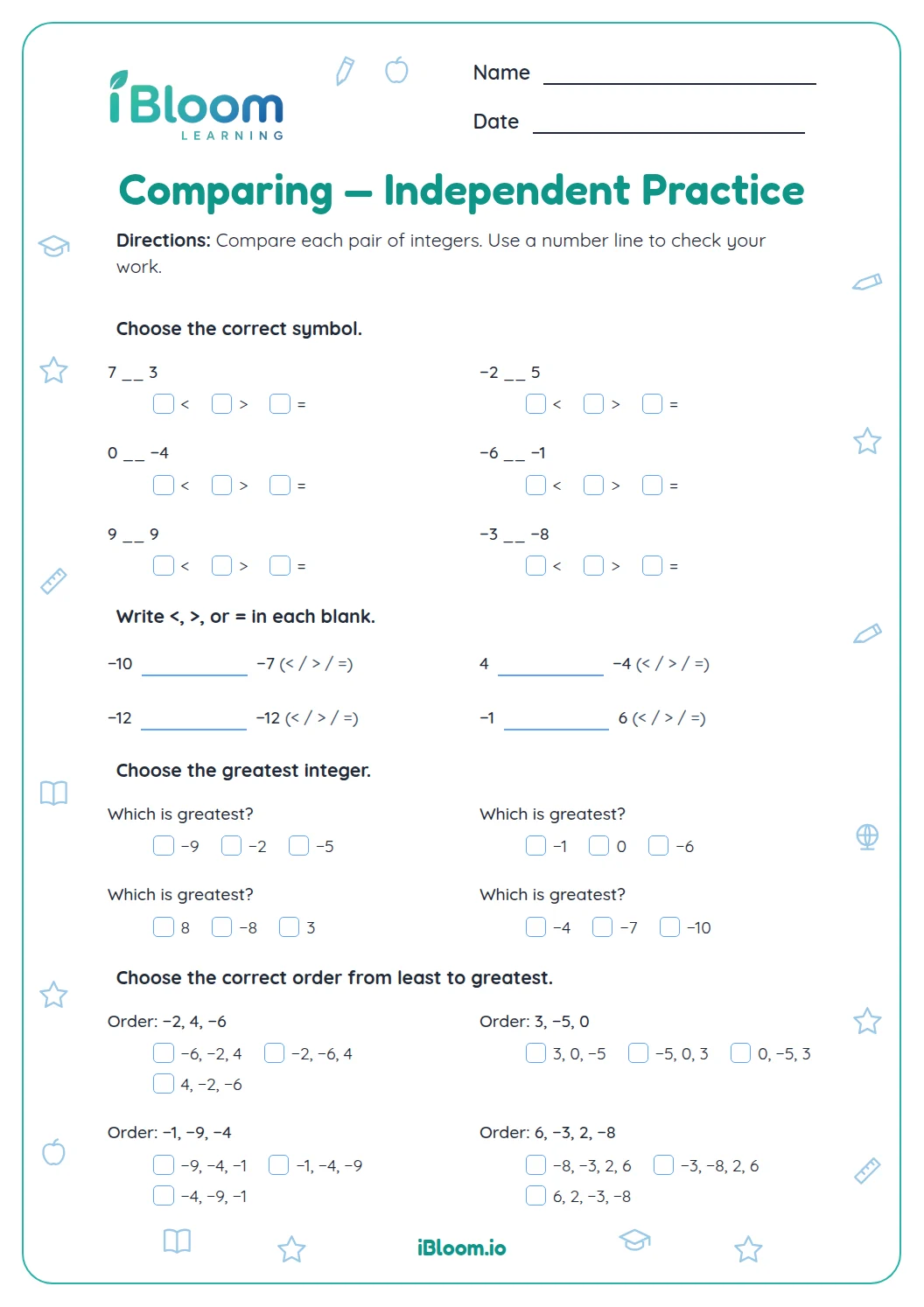
This independent practice sheet keeps the number line central. Students locate negative and positive integers, count equal moves left or right, compare integers by their positions, and order a mixed group. The 14 questions progress from reading and movement to comparison and ordering, with a separate key for checking results.
Locate and move?
On a horizontal number line, values increase to the right and decrease to the left. Count one tick for each unit moved.
- 1What integer is point A?
- 2Answer: −2
Compare integers?
Compare integers uses the same strategy in a new way: locating, moving, comparing, and ordering integers on number lines.
- 1Start at 3 and move 6 units left. Where do you land?
- 2Answer: −3
Order and explain?
Finish by applying locating, moving, comparing, and ordering integers on number lines and checking each result against the question.
- 1Which is farther left, −4 or −9? Explain.
- 2Answer: −9
How to use this worksheet
- 1Read the direction for locate and move.
- 2Work through each item and write one answer for each question.
- 3Use the model or number pattern to check the result.
- 4Finish the last part, then use the answer key to review.
Common mistakes and quick fixes
The mistake
Ignoring the key step in locating, moving, comparing, and ordering integers on number lines.
The fix
On a horizontal number line, values increase to the right and decrease to the left. Count one tick for each unit moved.
The mistake
Writing a result without its requested unit or form.
The fix
Reread the question and include the unit or comparison symbol it asks for.
The mistake
Checking only the final number.
The fix
Repeat the count, measurement, or addition step and compare it with the model.
What to practice next
Make more practice
Questions parents and teachers ask
What does this worksheet practice?
This sheet gives students 14 questions on locating, moving, comparing, and ordering integers on number lines. The separate answer key matches each question and includes the correct result. Start with the first part together if the model or vocabulary is new, then let the student finish the remaining items before checking.
Why is −9 farther left than −4?
Both values are negative, so compare their distances from zero: −9 is nine units left of zero, while −4 is four units left. The value farther left is smaller. A quick sketch with zero marked can make this comparison clear before writing the symbol.
How can students check a move across zero?
Count one tick at a time in the direction named, including each integer landing point. For example, starting at −2 and moving five units right passes through −1, 0, 1, 2, and 3. Checking the final point against the direction helps catch sign slips.
How can I use the answer key?
Have the student finish one part before opening the answer key. Compare each response with the matching question and revisit any difference by naming the step that led to the answer. The key is a check; the student can still explain a correct method in their own words.
Can this be used at home or in class?
This printable works for a short classroom practice session or at home. A teacher can assign one part at a time, while a family can review the model and then check the work with the included key. The questions use the same skill throughout so students can focus on the strategy.