


About this worksheet
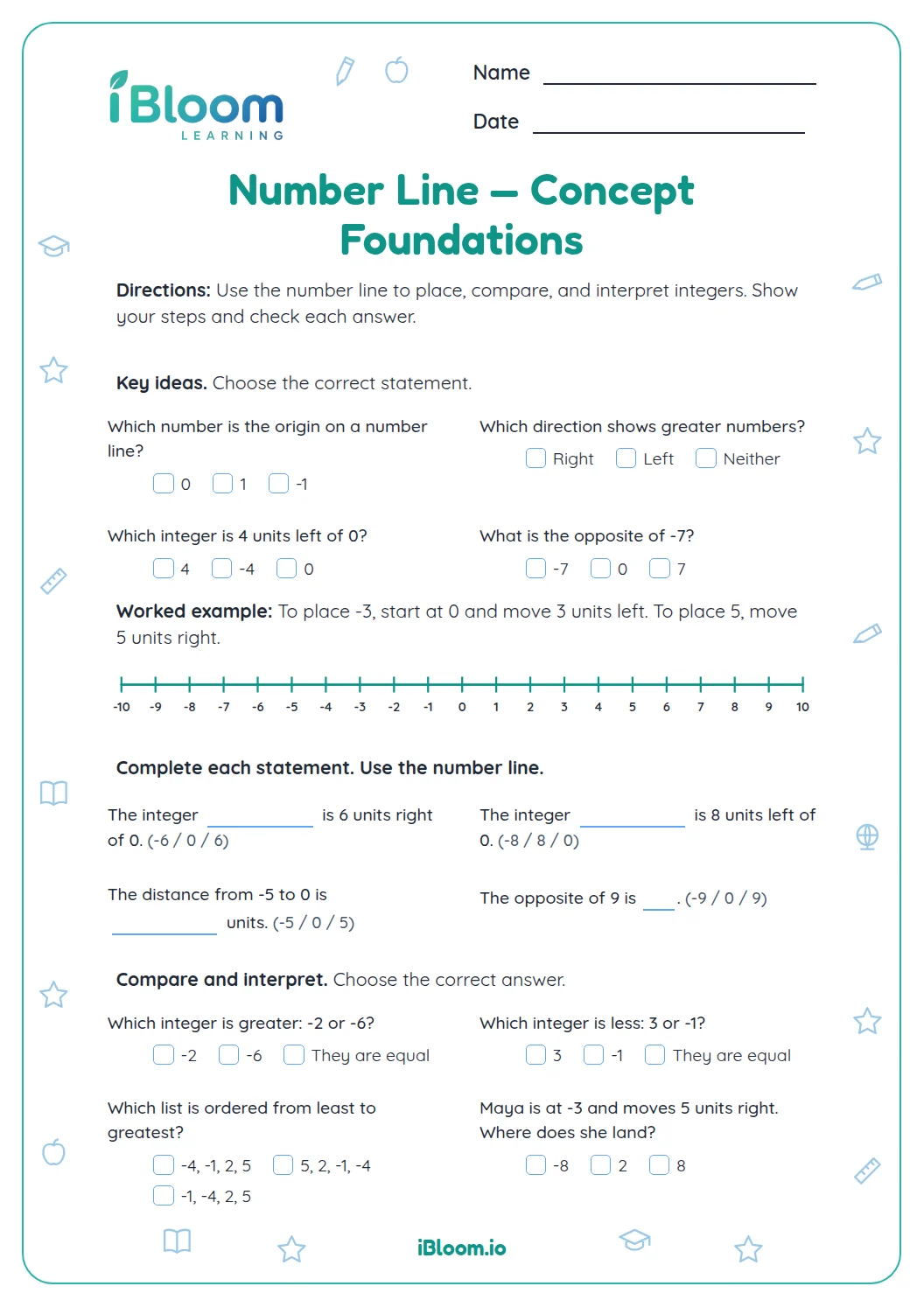
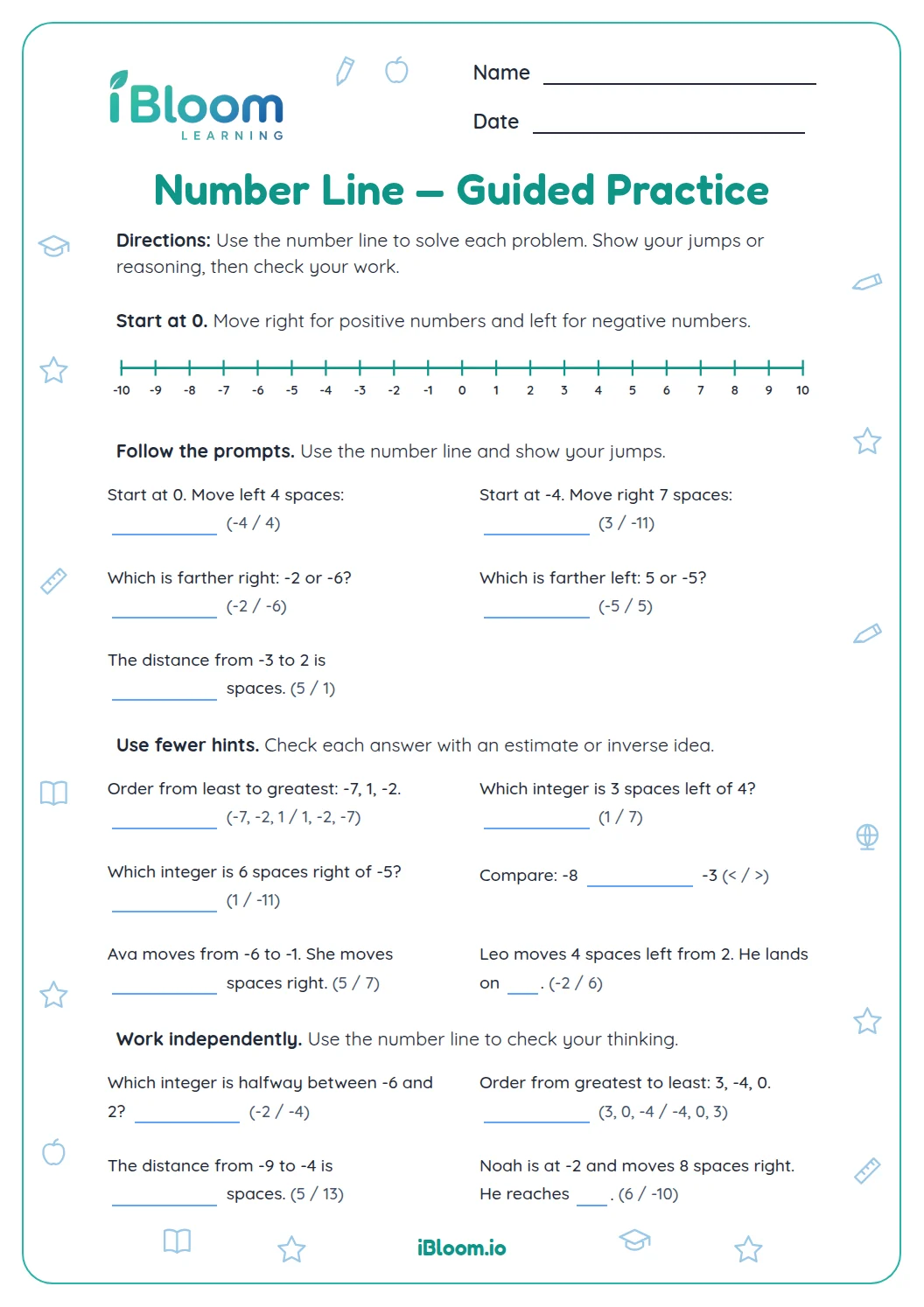
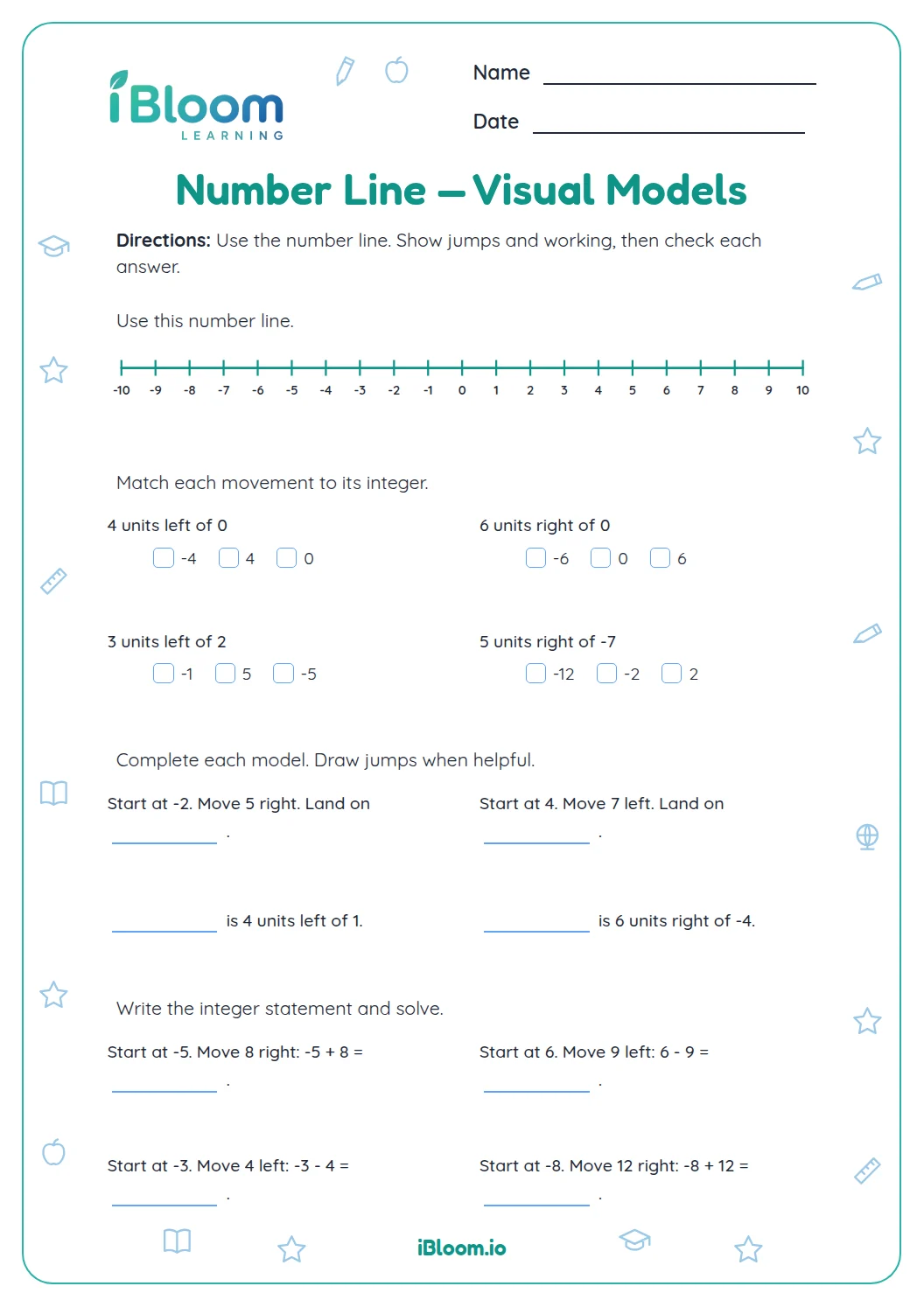
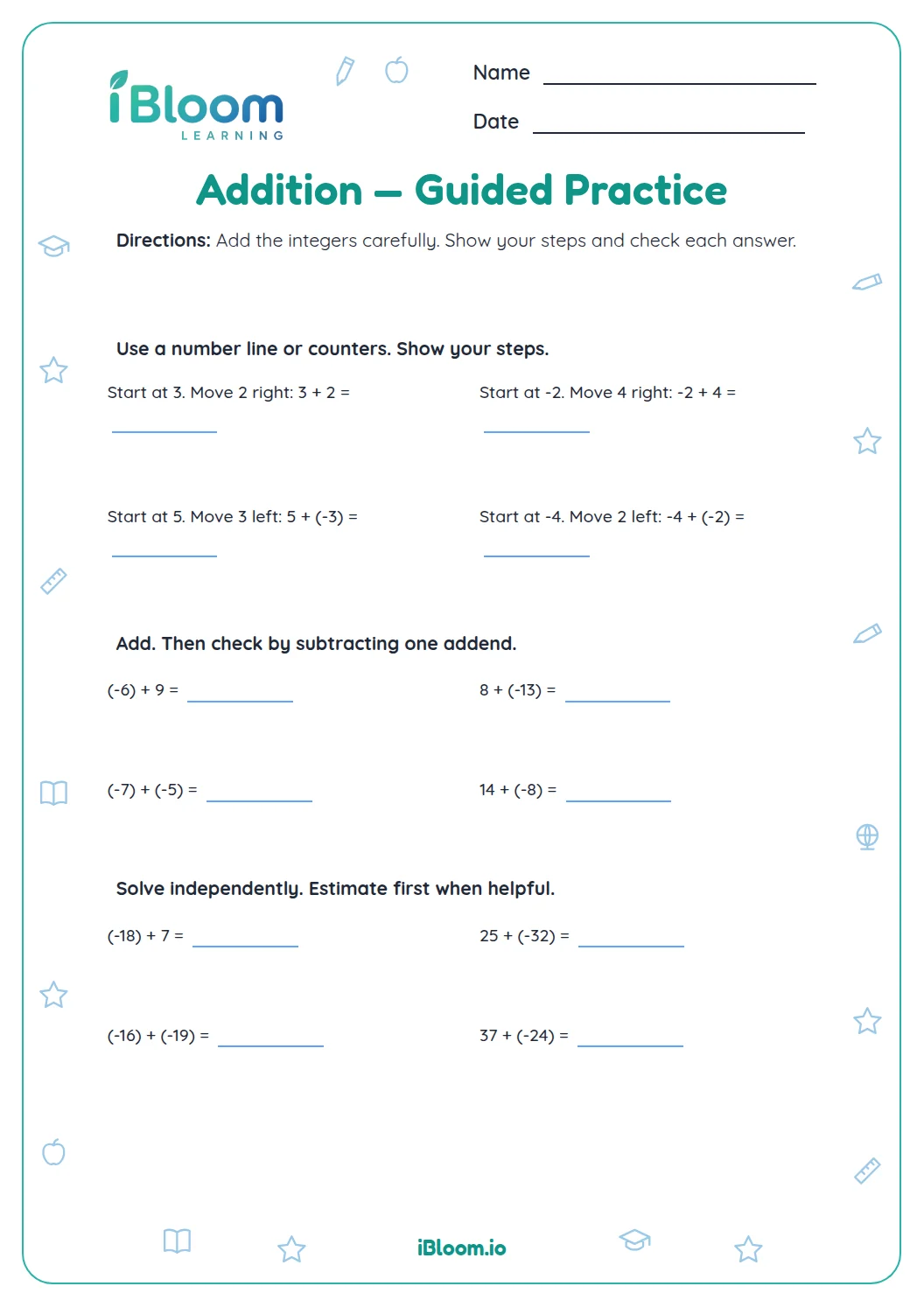
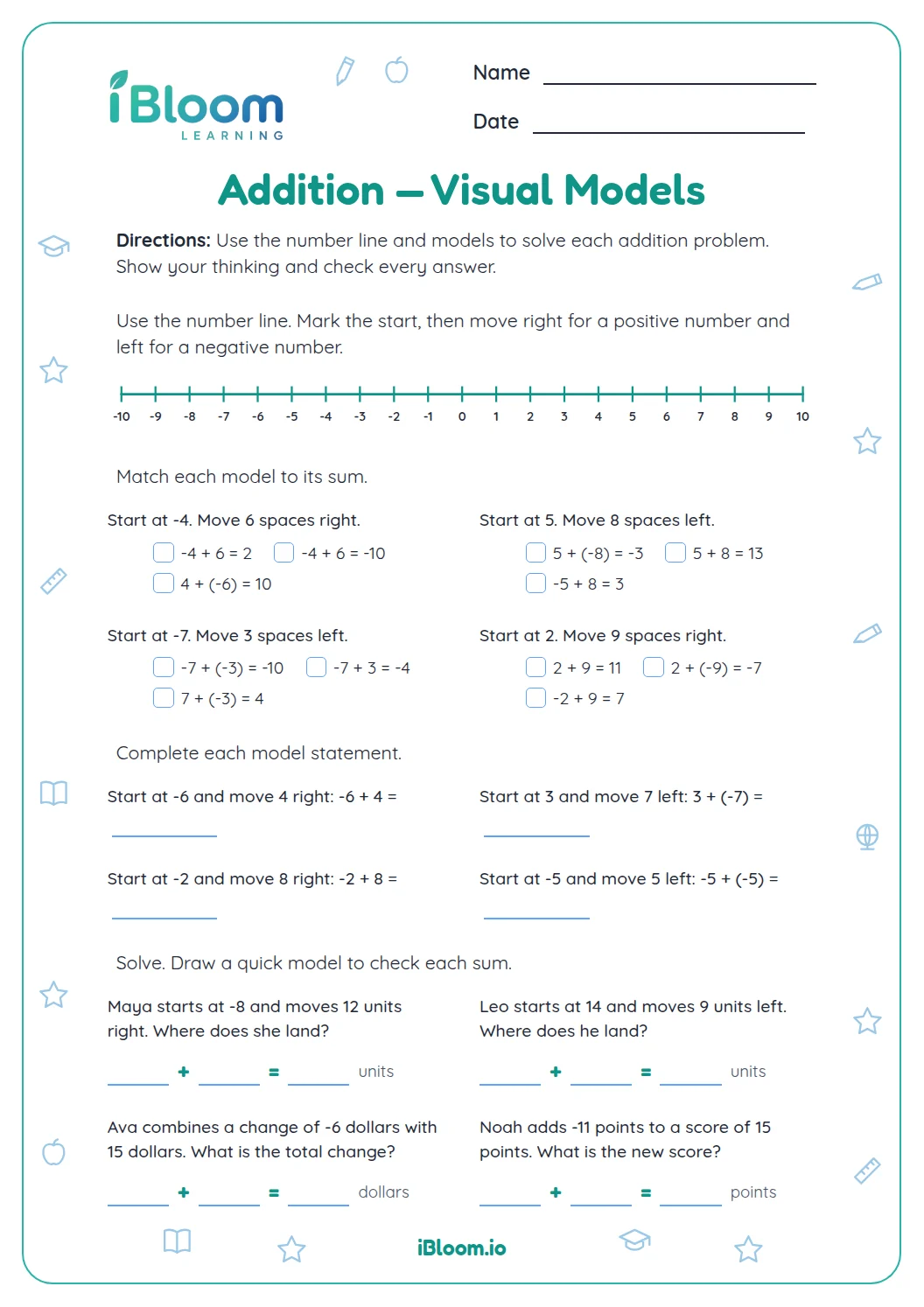
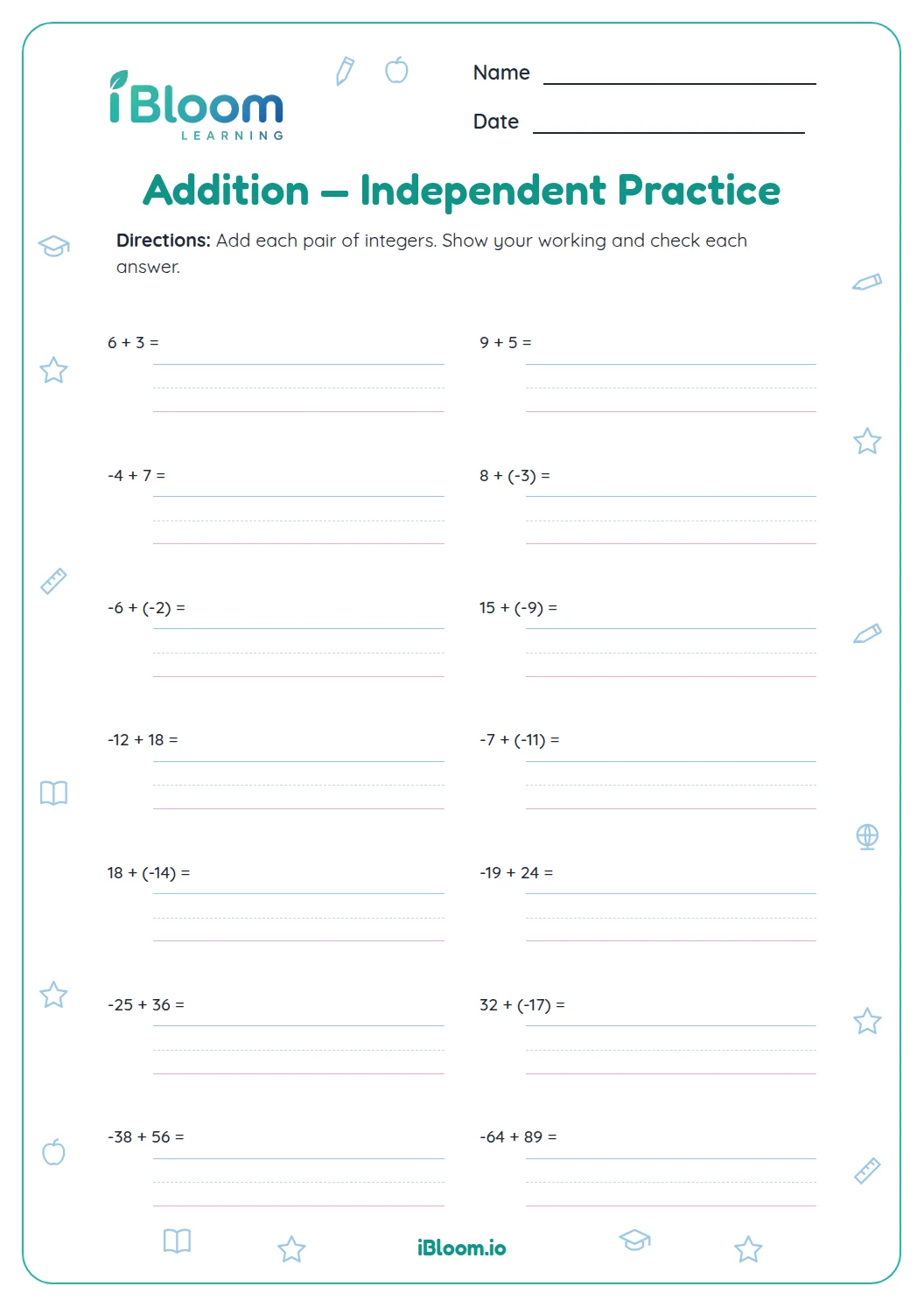
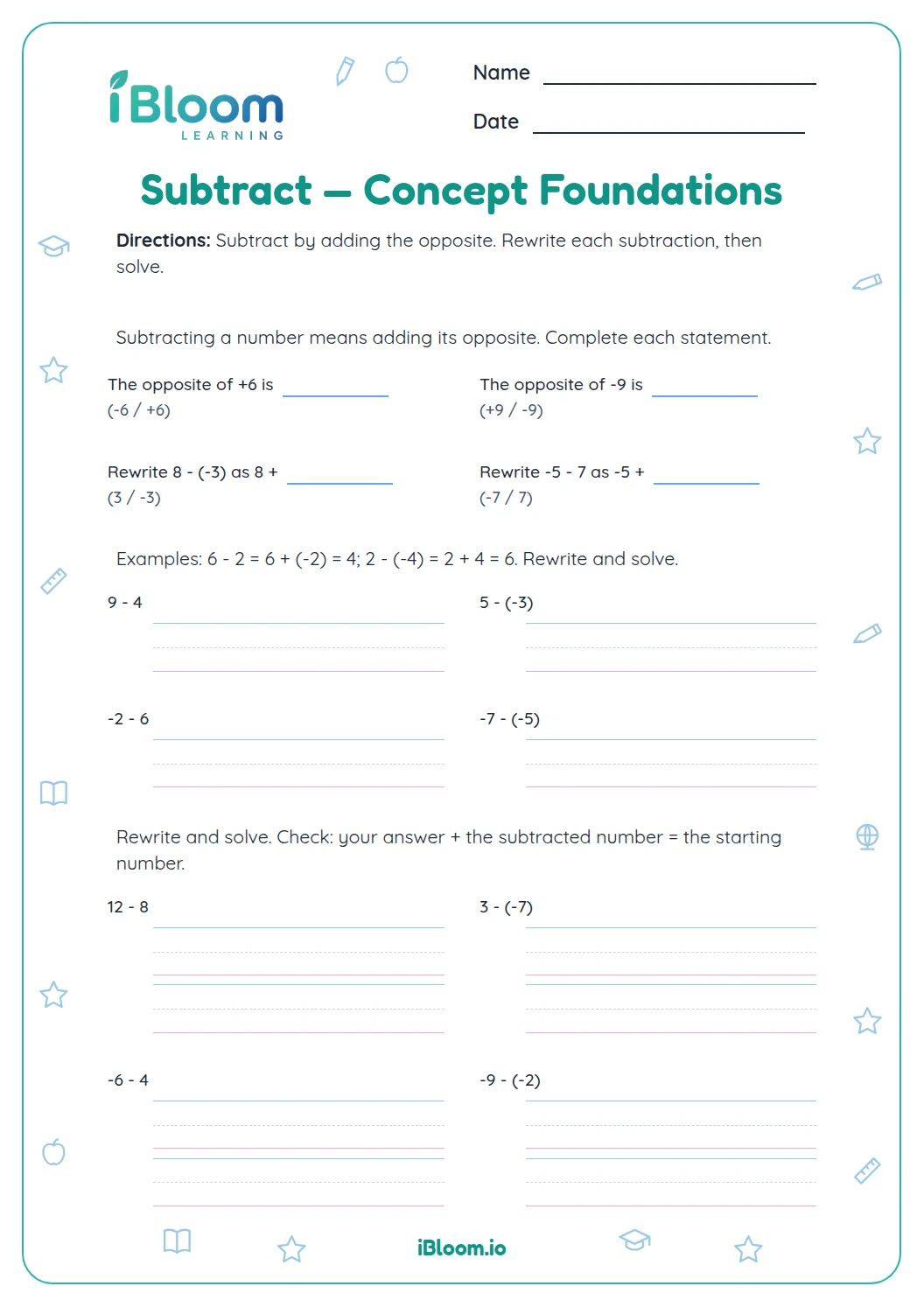
This Grade 5 printable includes 14 questions about integers on a number line. Students read four lines with a marked point, then compare integers, order values, find distance from zero, and follow left or right movement. The answer key lists each marked value and short response. The page practices interpreting integer position, order, and direction.
How does zero help locate an integer?
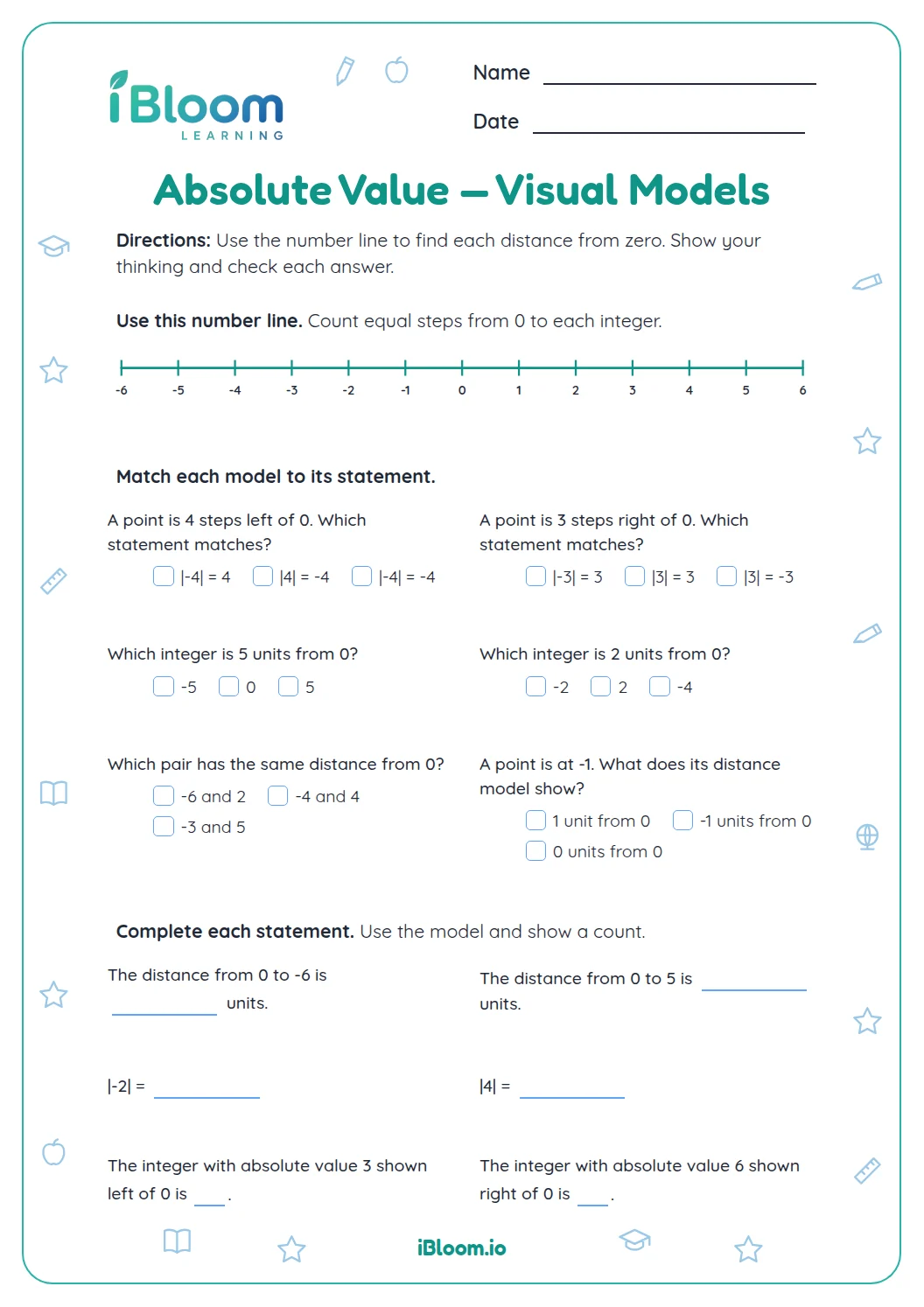
Zero is the reference point. Positive integers lie to its right and negative integers lie to its left. Each tick represents one equal step when the line counts by ones.
In Part A, count equal tick steps from a labeled whole number to the marked point, keeping its direction from zero in mind.
- 1If A is three steps left of 0, A = −3.
How can I compare two negative integers?
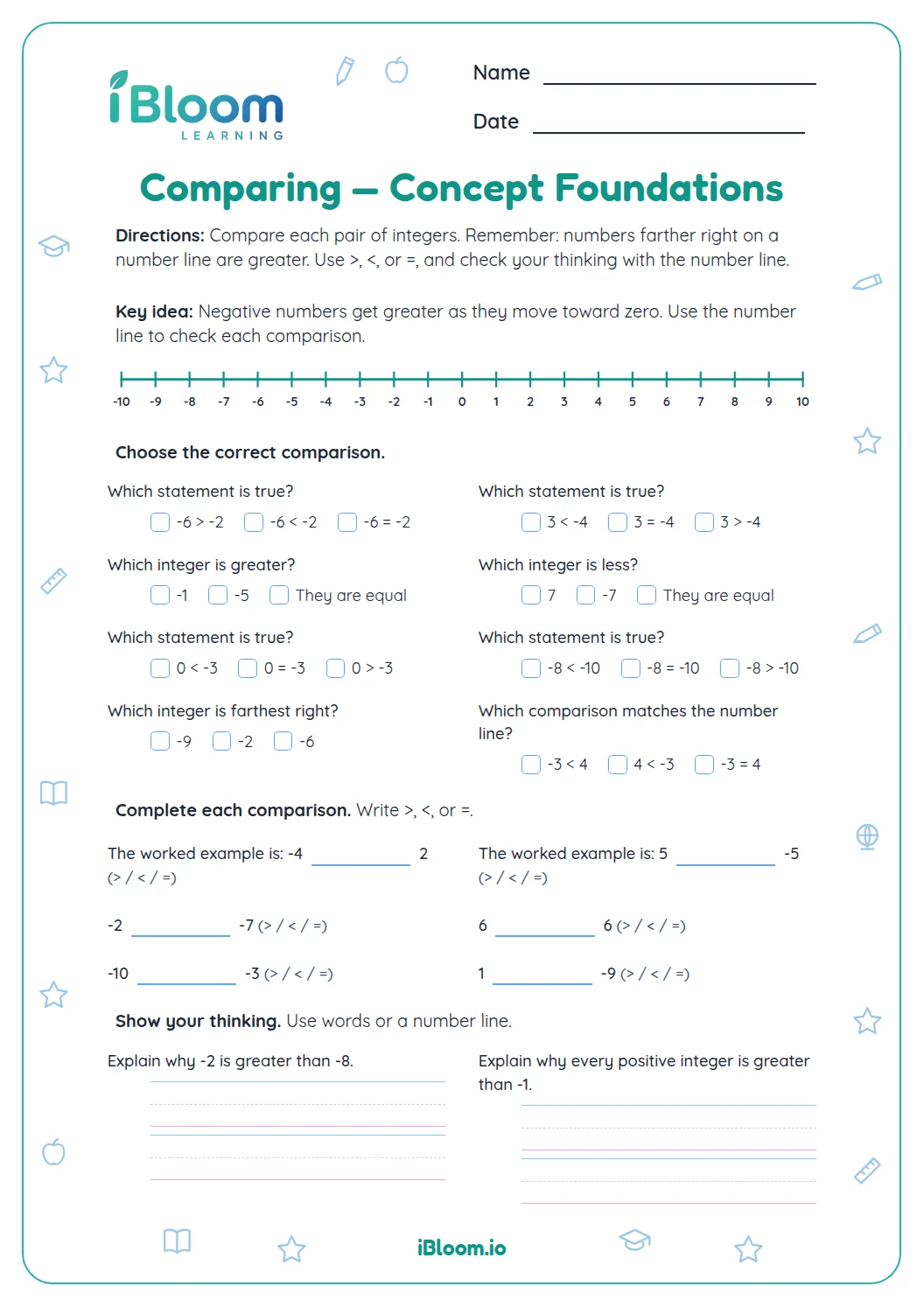
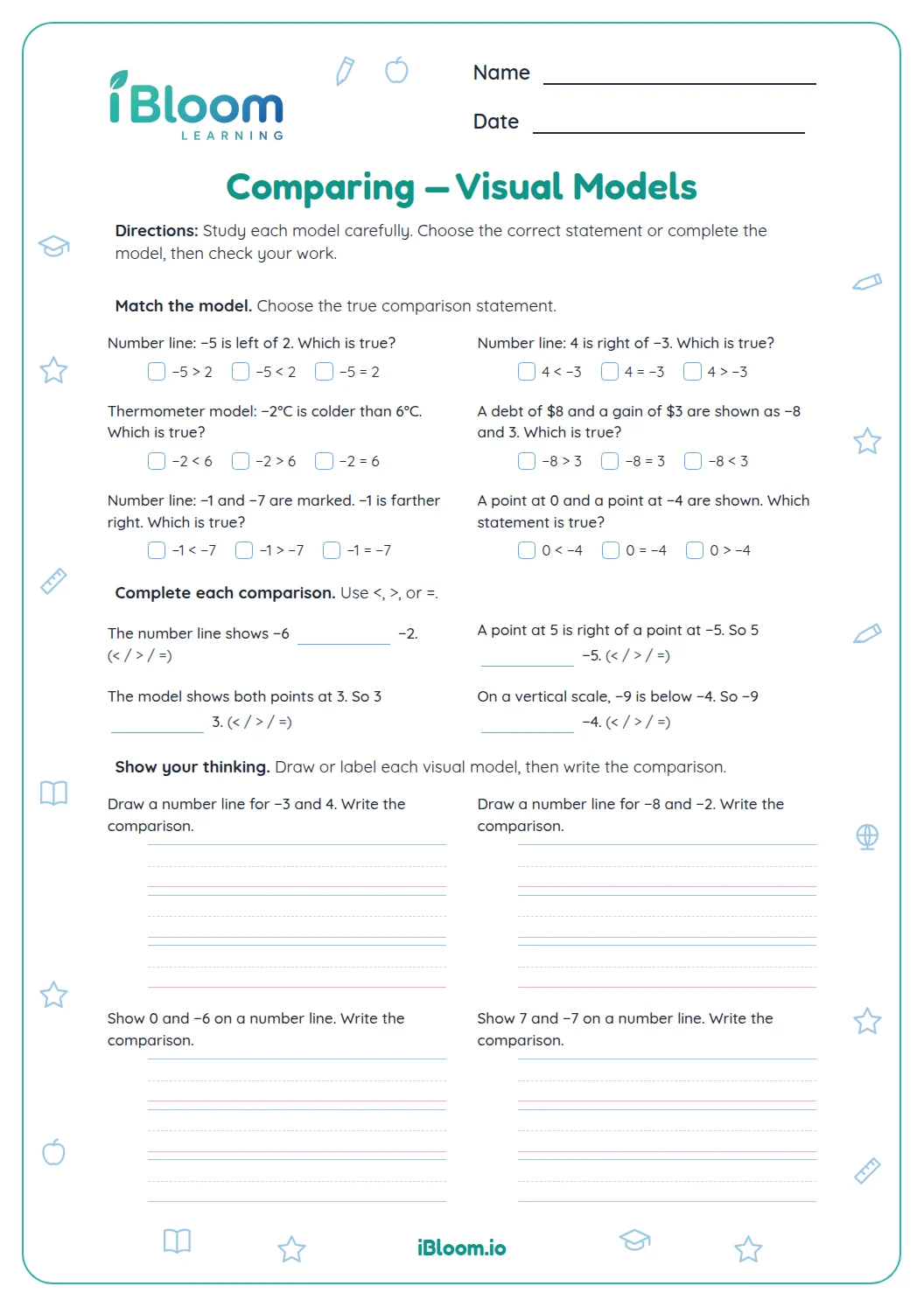
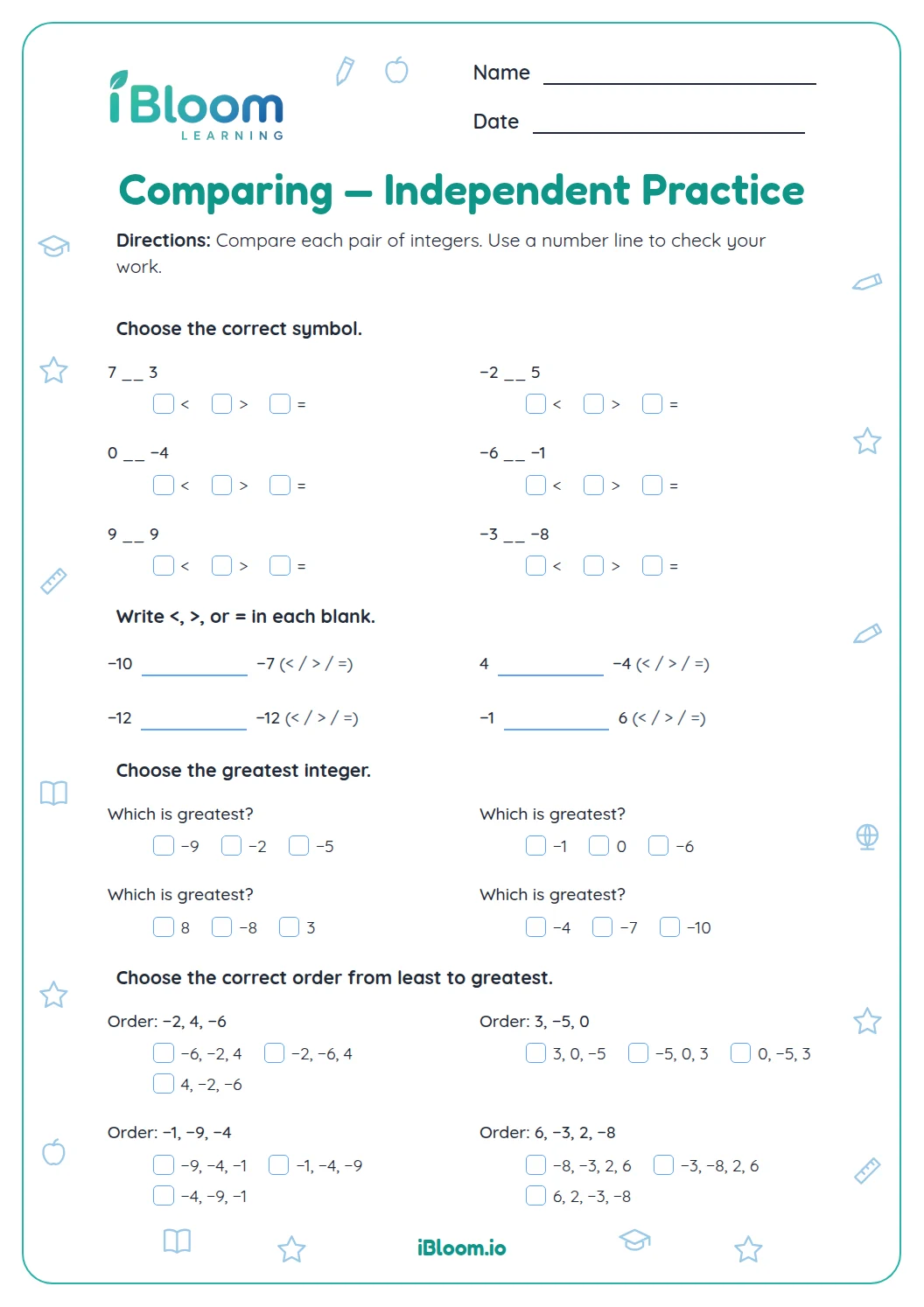
On a horizontal number line, the value farther right is greater. So −1 is greater than −4, even though 4 is larger than 1 when the minus signs are ignored.
How do left and right moves change a value?
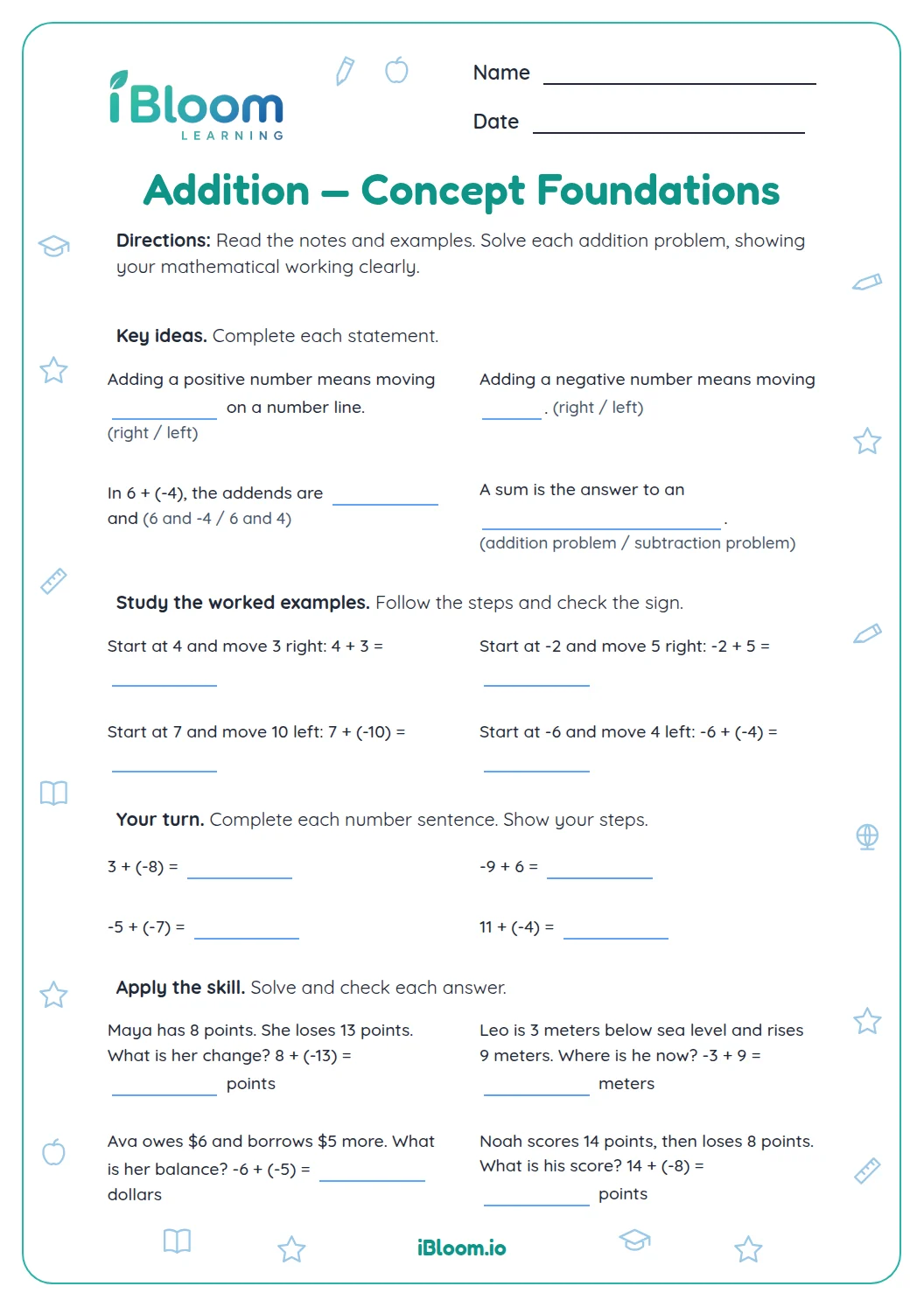
Moving right increases the value; moving left decreases it. Starting at −7 and moving five units right gives −2. The direction of travel matters as much as the number of steps.
How to use this worksheet
- 1Find zero and note which side of it the point is on.
- 2Count equal tick steps to read a marked value.
- 3For comparisons, identify which value lies farther right.
- 4For movement, start at the stated integer and count in the given direction.
- 5Check whether your answer matches the direction and number of steps.
Common mistakes and quick fixes
The mistake
Thinking −8 is greater than −3 because 8 is greater than 3.
The fix
Compare positions: −8 lies farther left.
The mistake
Moving left when the prompt says right.
The fix
Mark the start and follow the stated direction one tick at a time.
The mistake
Calling distance from zero negative.
The fix
Distance counts steps and is stated as a positive amount.
What to practice next
Make more practice
Questions parents and teachers ask
What does a negative number mean on the number line?
A negative integer is a value to the left of zero. The farther left it is, the smaller it is; for example, −6 is less than −2. In Part A, students read marked values on number lines that extend across zero.
How many number-line drawings are included?
Part A has four number lines, each with one point labeled A. Students write the integer at that point as a short answer. Later questions ask them to reason about order, distance, and movement, giving them more ways to use the same number-line model.
Is −8 greater than −3 because 8 is greater than 3?
No. On the number line, −8 is farther left than −3, so −8 is less. Compare the positions while keeping the negative signs; the size of the digit alone does not determine which negative integer is greater. The worksheet uses this idea in comparison questions.
What does distance from zero mean?
Distance counts the number of unit steps between a value and zero, without regard to direction. The distance from −6 to 0 is six units. The worksheet also asks students to compare distances and locate values halfway between two integers.
How should students solve movement questions?
Start at the given integer and count equal steps in the stated direction. Moving right increases the value, while moving left decreases it. For example, a point at −7 that moves five units right lands at −2. Follow the direction before counting steps.