


About this worksheet
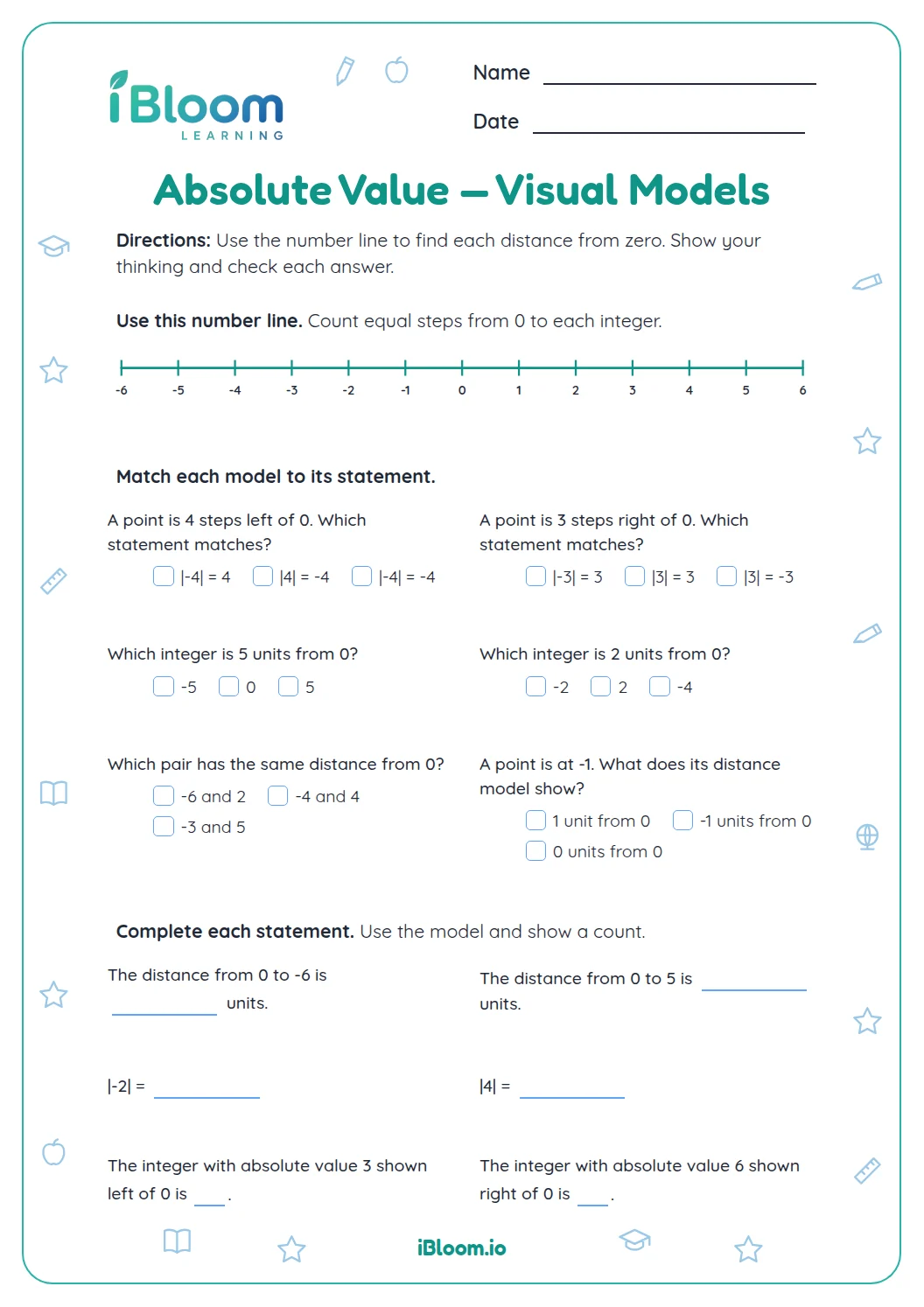
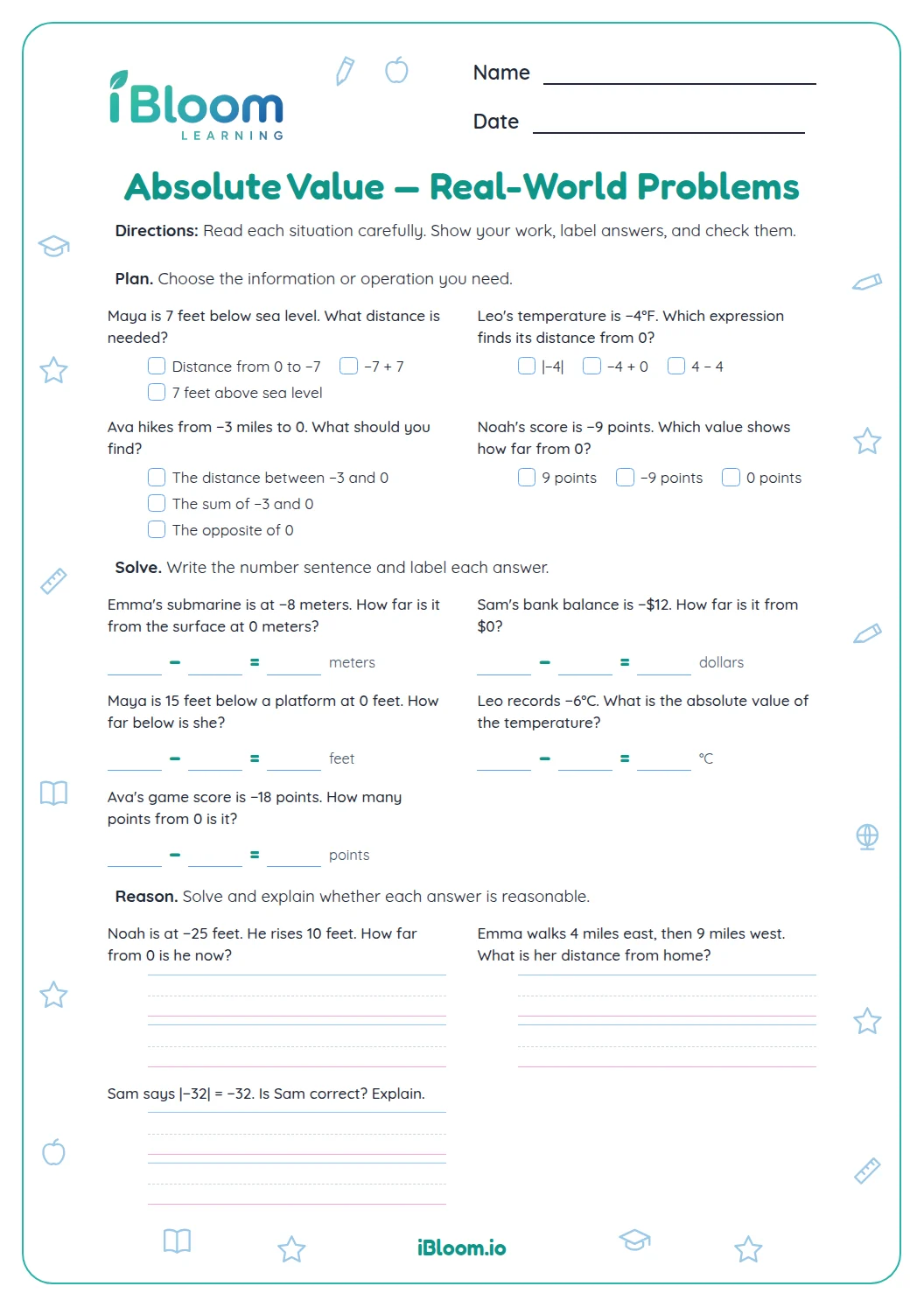
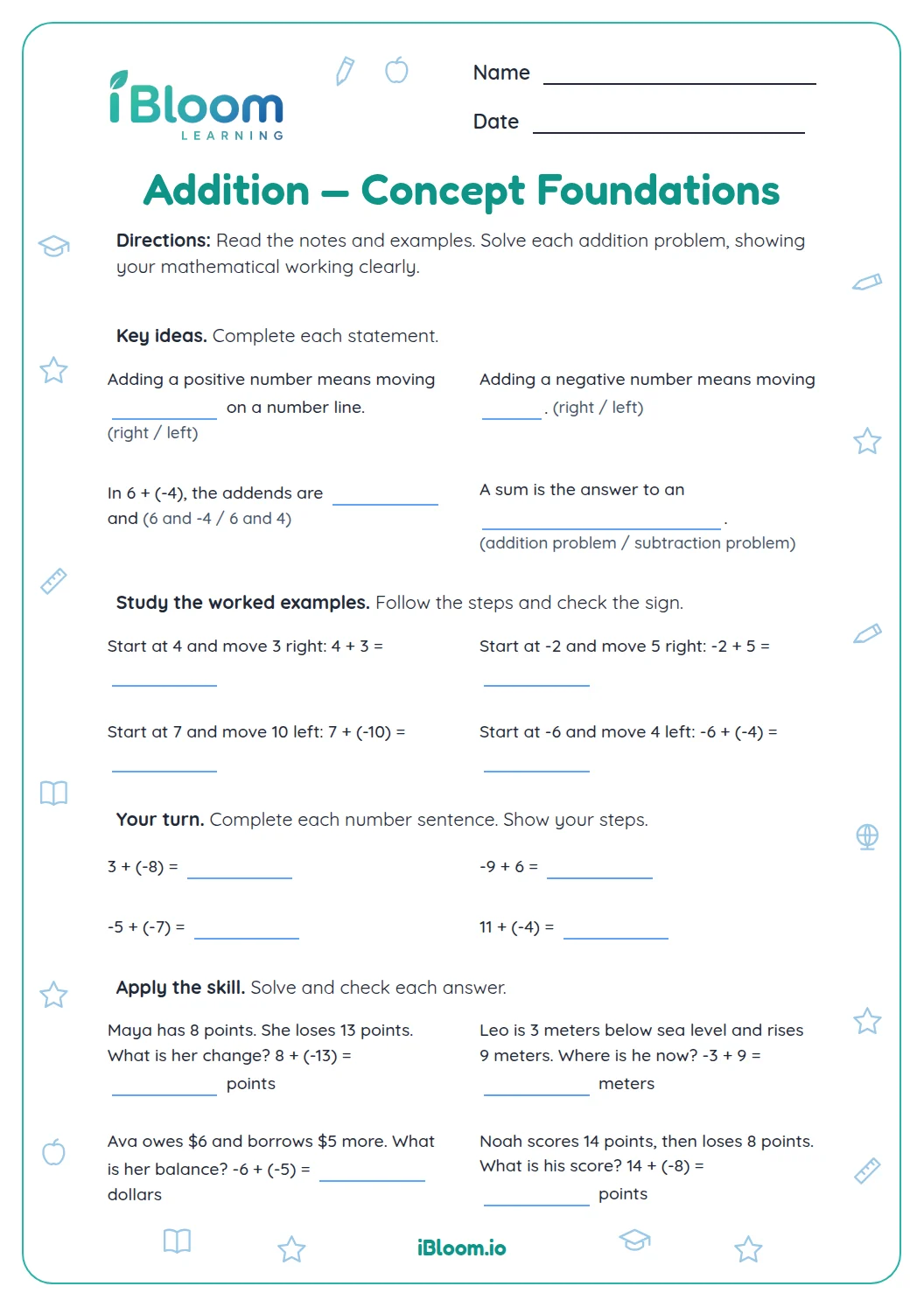
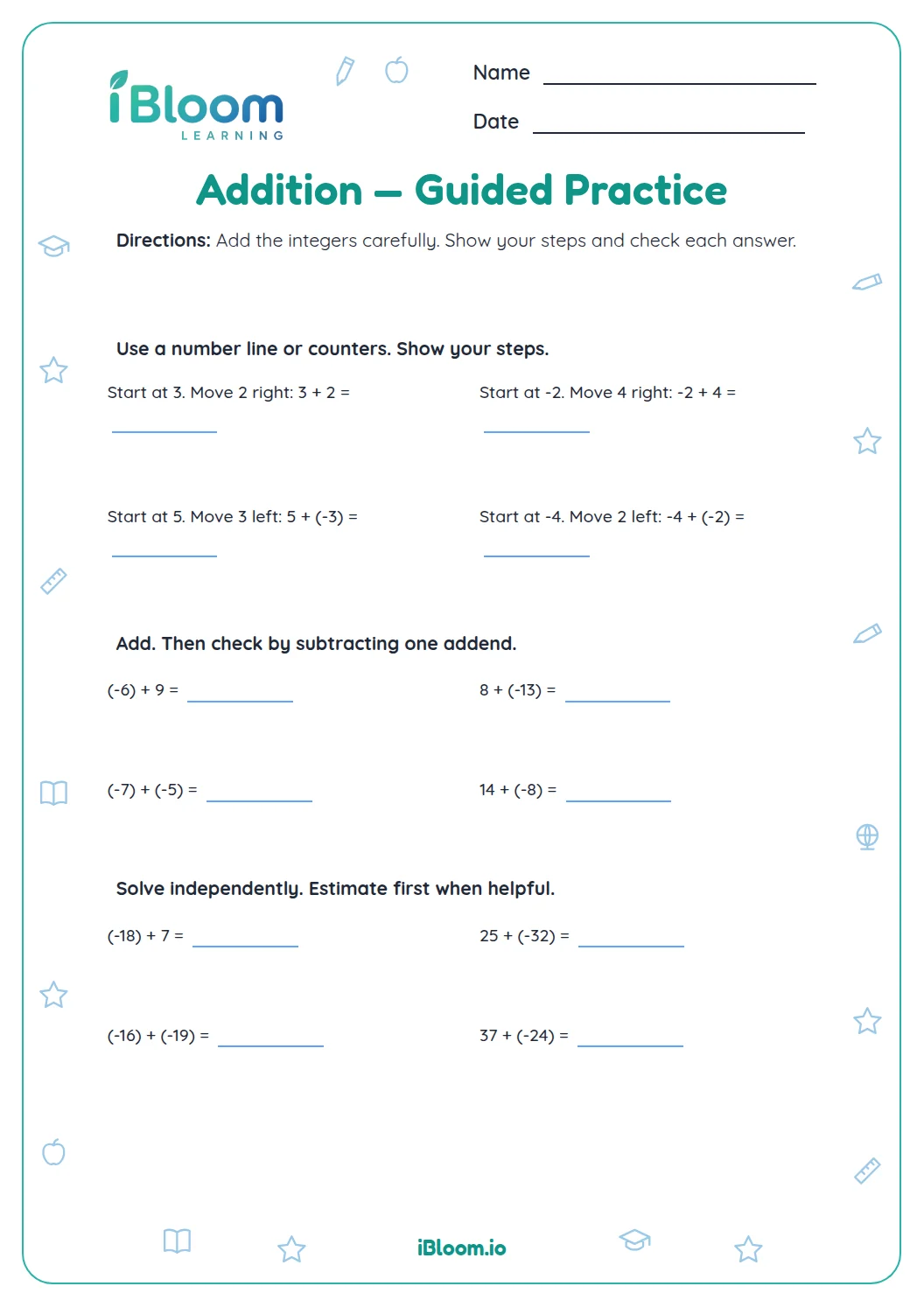
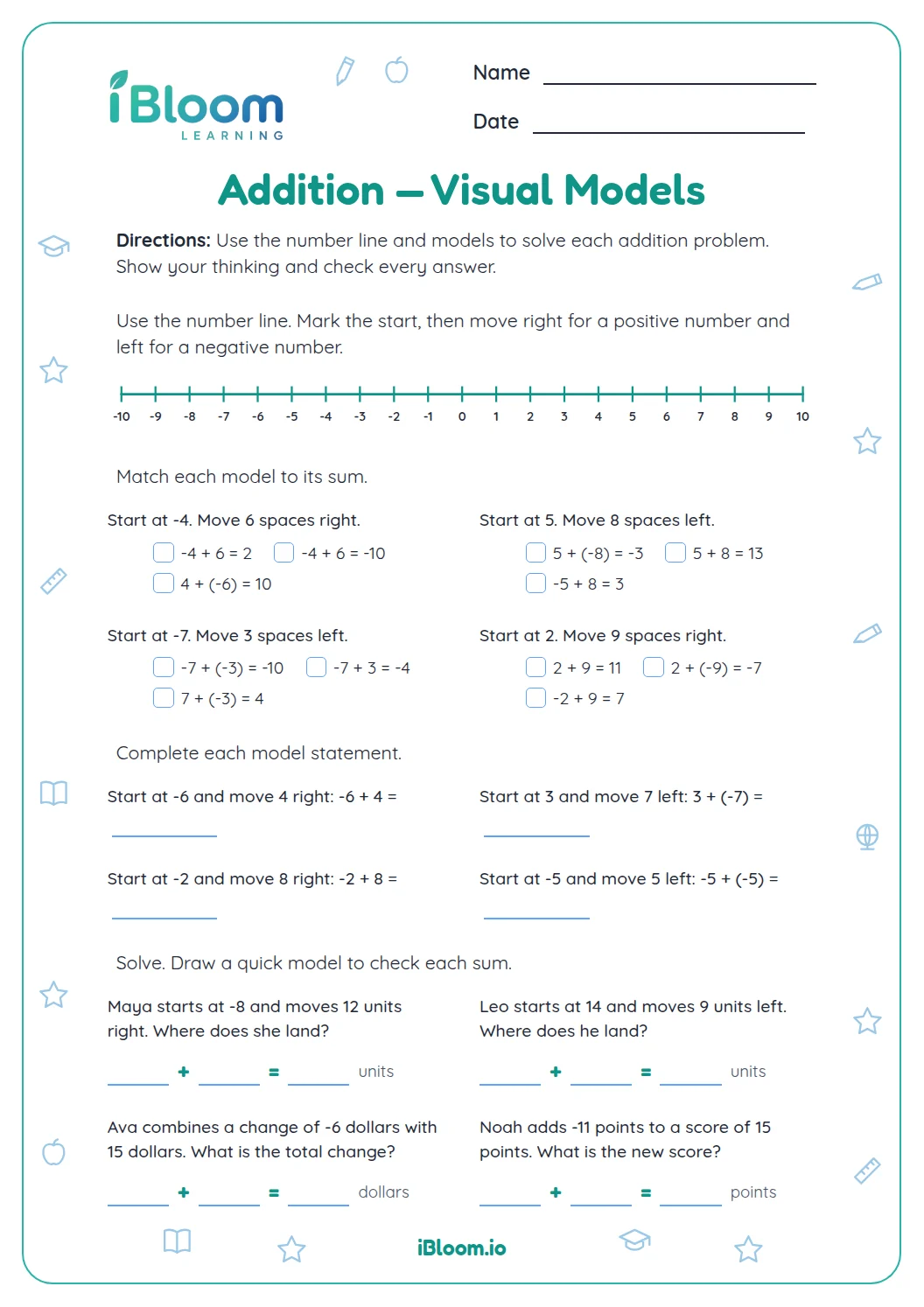
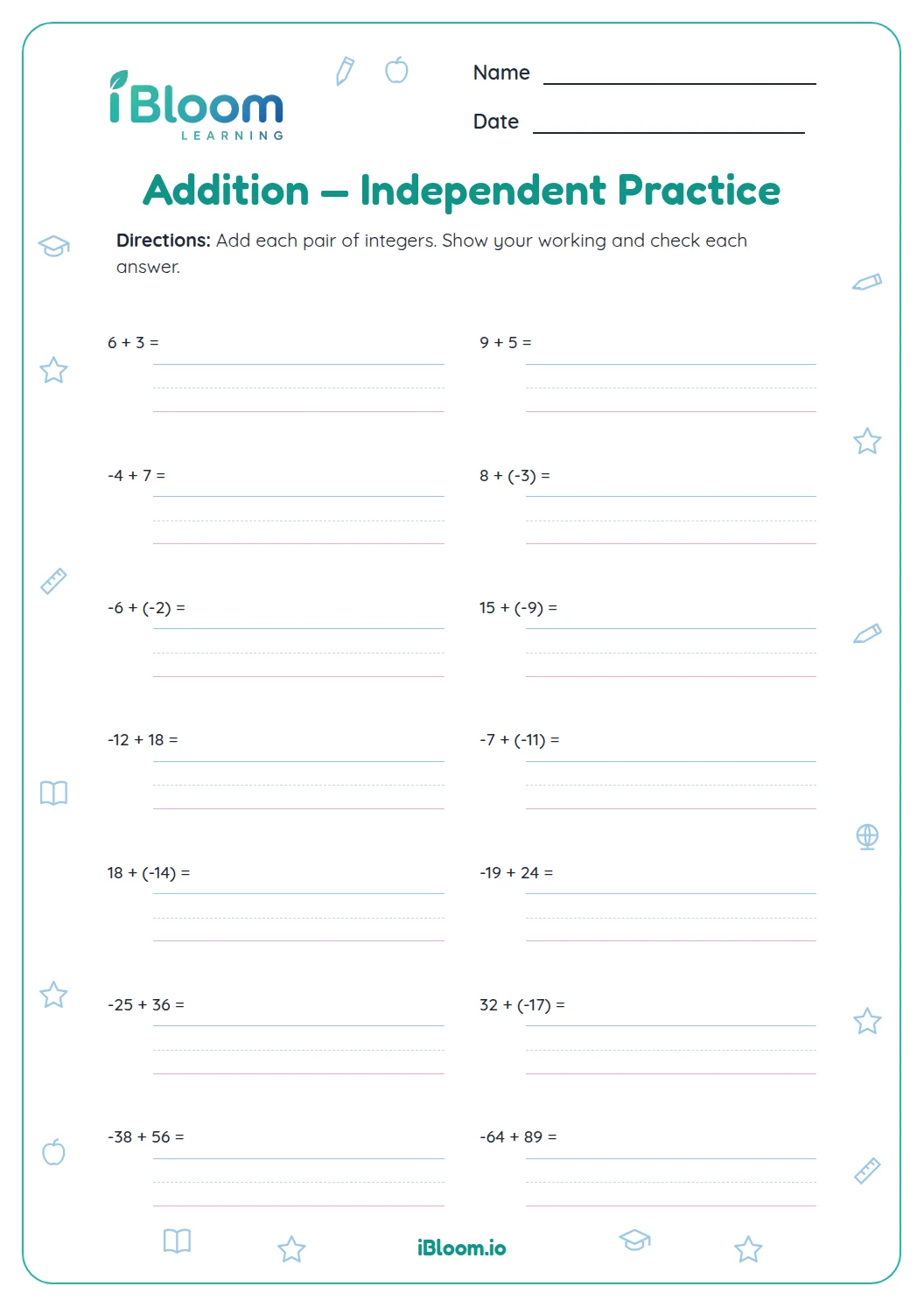
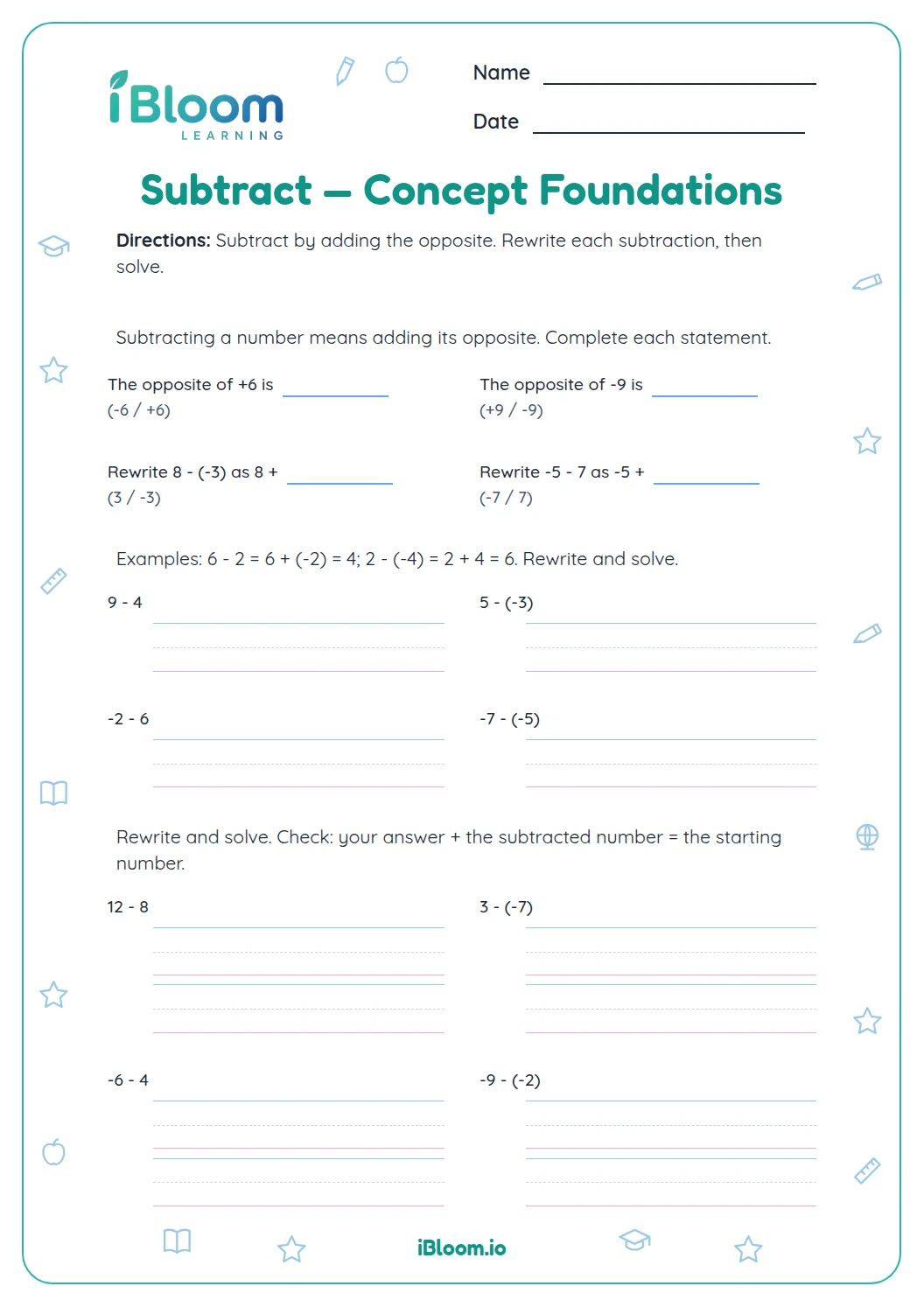
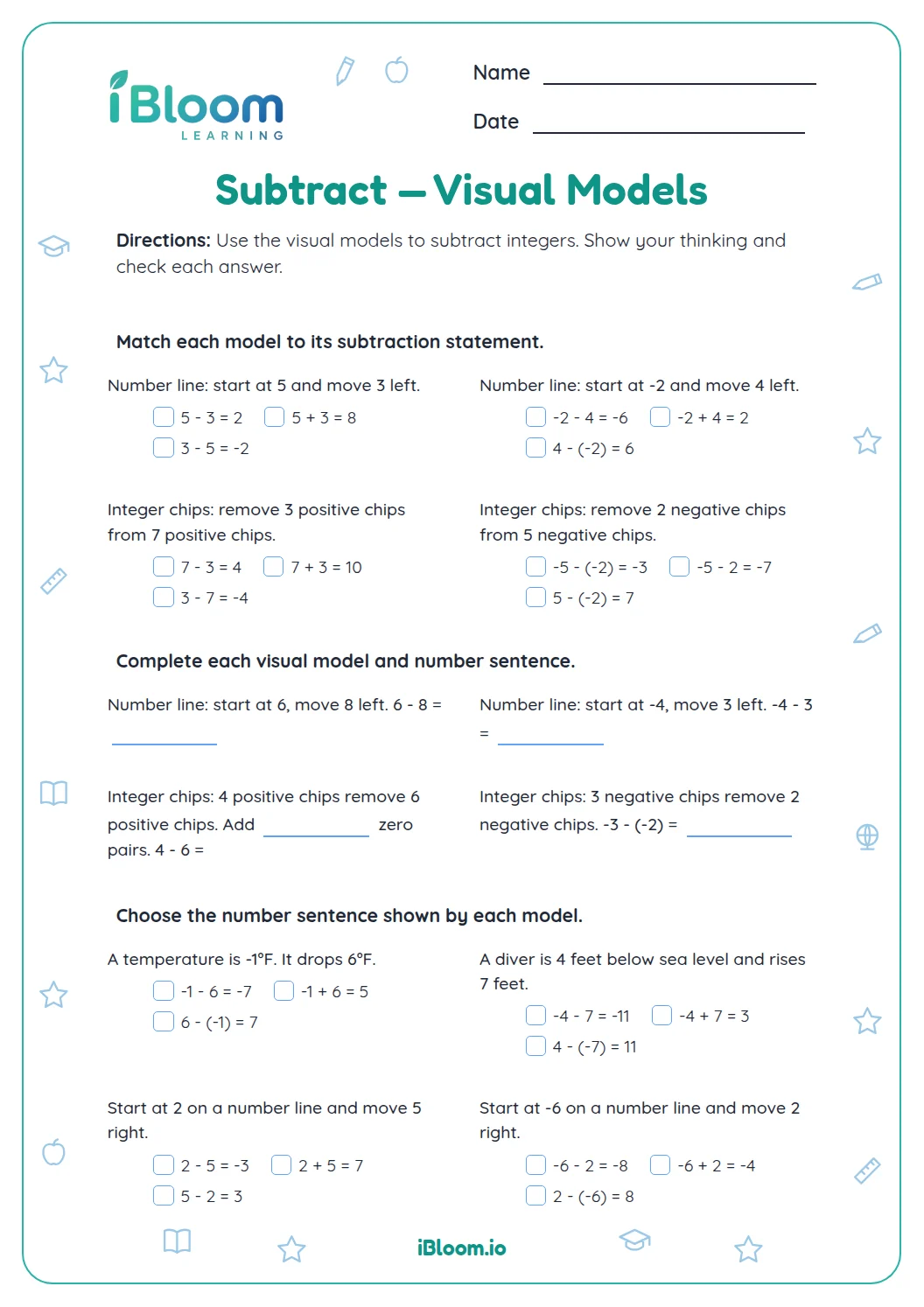
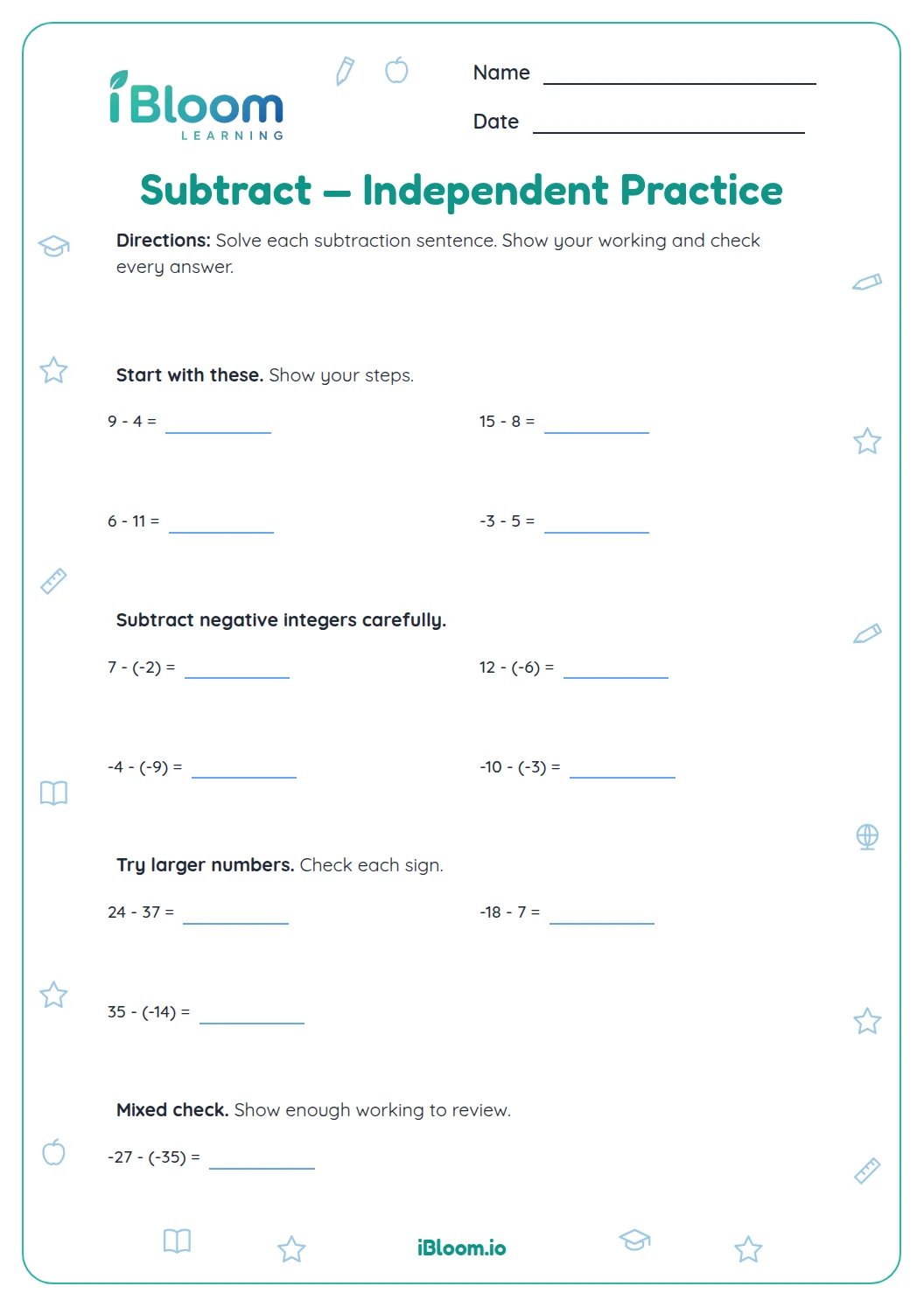
This Grade 5 integers worksheet builds absolute value as distance from zero. Students evaluate absolute-value expressions, compare integer distances, and explain examples involving positions on opposite sides of a marker. The 14 questions span three parts across two worksheet pages, with a separate answer key. The questions practice the absolute-value concept described in Common Core 6.NS.C.7.
Aligned to 6.NS.C.7c
How does the practice build?
Part A evaluates absolute values of positive and negative integers, including zero. Part B compares distances and identifies which integer is closer to zero. Part C applies distance from zero in real situations and explanations.
How do you evaluate |−7|?
Absolute value asks for distance from zero, not whether the number is positive or negative. On a number line, −7 is seven units to the left of zero, so |−7| = 7.
How do you compare two absolute values?
Find each distance from zero first. For −8 and 5, the distances are 8 and 5, so −8 has the greater absolute value. For −3 and 4, the distances are 3 and 4, so −3 is closer to zero.
How to use this worksheet
- 1Read the number inside the absolute-value bars.
- 2Think of its distance from zero on a number line.
- 3Write the distance as zero or a positive number.
- 4For comparisons, find both distances before choosing.
- 5For written questions, name the distance and its units or direction.
Common mistakes and quick fixes
The mistake
Keeping the negative sign in the absolute value.
The fix
Use distance from zero; distance is never negative.
The mistake
Assuming the positive integer always has greater absolute value.
The fix
Compare distances: −8 is farther from zero than 5.
The mistake
Mixing up closer to zero and greater absolute value.
The fix
The smaller distance is closer; the larger distance has greater absolute value.
Common Core alignment
This sheet gives students practice with the following standard.
Interpret absolute value as distance from zero and compare integer distances.
On this sheet: Interpret absolute value as distance from zero and compare integer distances.
Show the official wordingHide the official wording
Understand the absolute value of a rational number as its distance from 0 on the number line; interpret absolute value as magnitude for a positive or negative quantity in a real-world situation.
What to practice next
Make more practice
Further reading
Questions parents and teachers ask
What does the absolute-value symbol mean?
The vertical bars mean distance from zero. For example, |−7| equals 7 because −7 is seven units from zero. The symbol does not mean to keep or remove a negative sign mechanically; it asks how far the number is from zero.
Can an absolute value be negative?
No. Distance cannot be negative, so an absolute value is zero or positive. The final question asks students to explain why an integer cannot have an absolute value of −2. The number line idea helps explain why the result cannot be negative.
How do you compare −8 and 5 by absolute value?
Find each distance from zero: −8 is 8 units away and 5 is 5 units away. Therefore −8 has the greater absolute value. The worksheet also asks students to tell which of two integers is closer to zero. Writing both distances makes the comparison clear and easy to check.
What is the difference between closer to zero and greater absolute value?
Closer to zero means the distance is smaller. Greater absolute value means the distance is larger. For −3 and 4, −3 is closer because its distance is 3, while 4 is four units from zero. Find each distance first, then compare the two values with zero in mind.
Does the worksheet include an answer key?
Yes. A separate key gives the values and comparison choices, plus sample responses for the written explanations. Equivalent wording is fine when it correctly describes distance from zero. The key helps adults review each answer and revisit the distance idea.