



About this worksheet
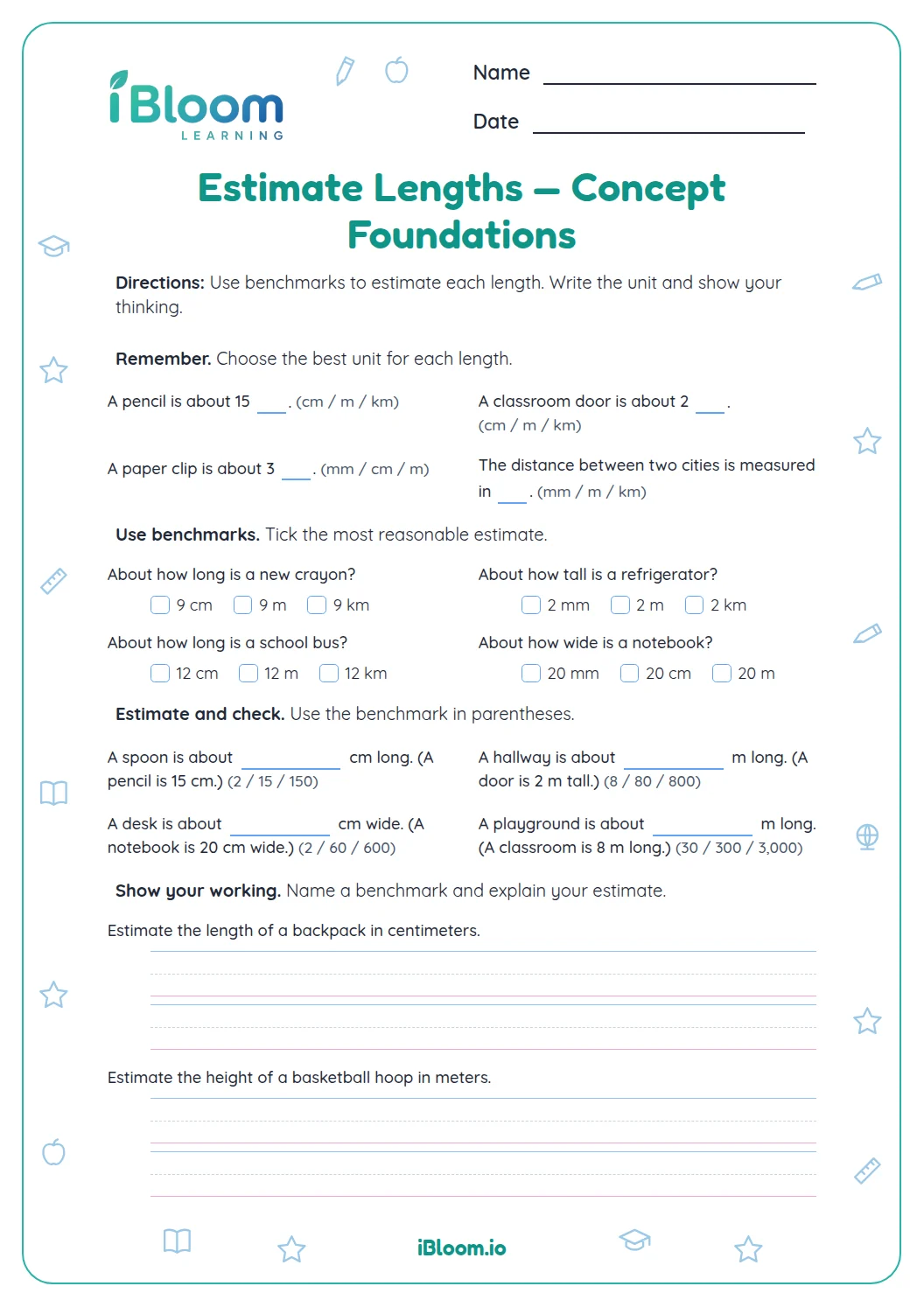
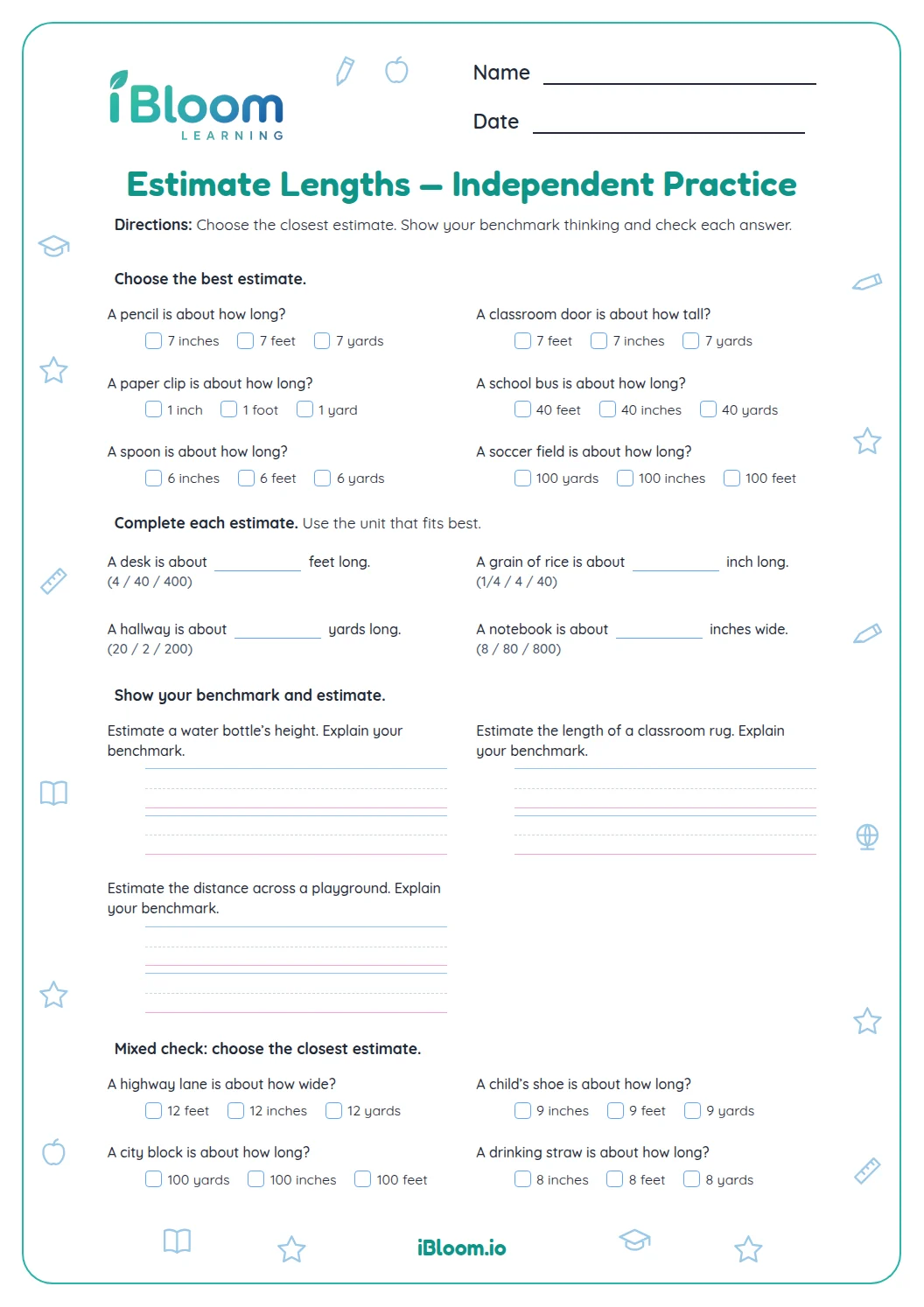
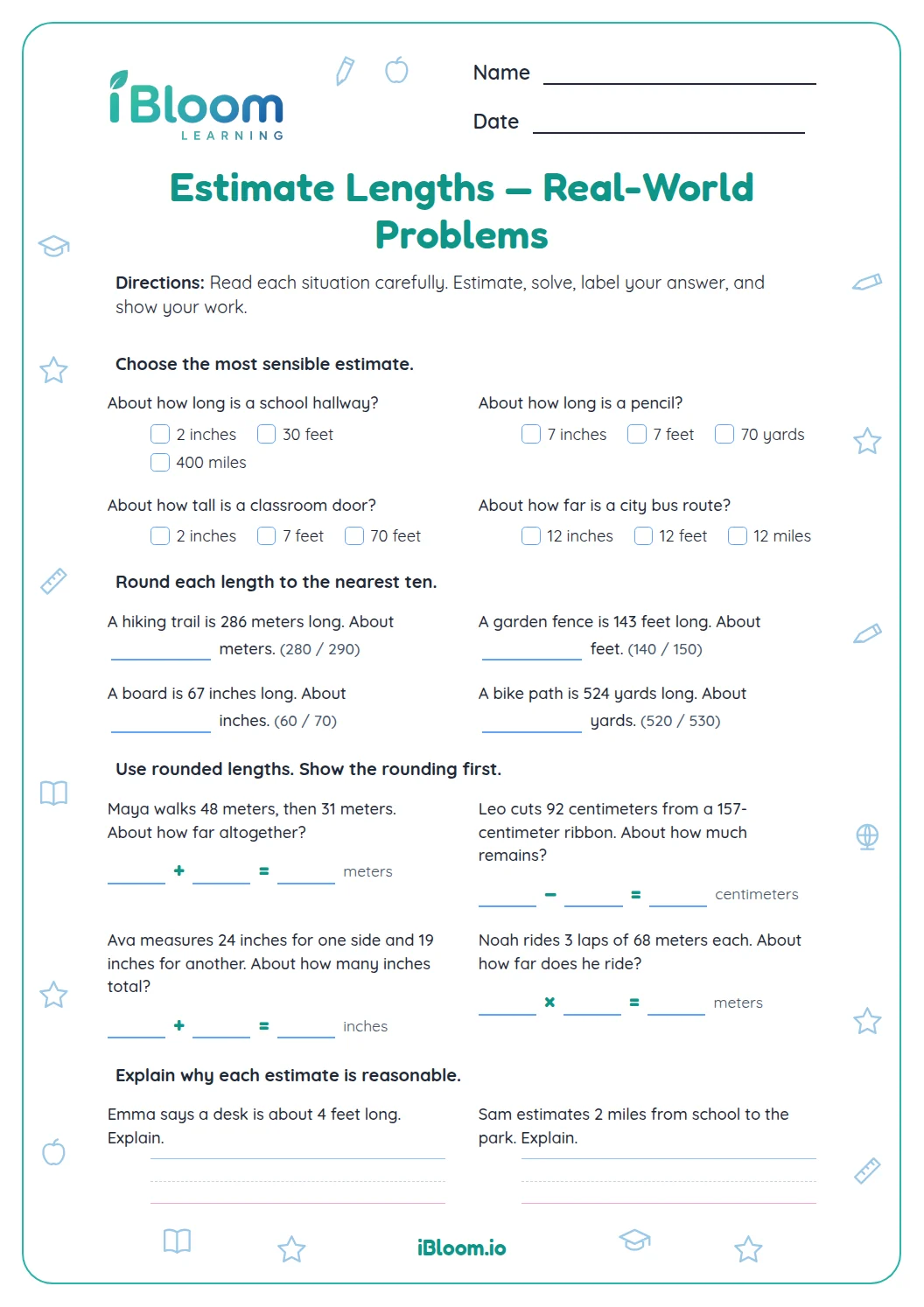
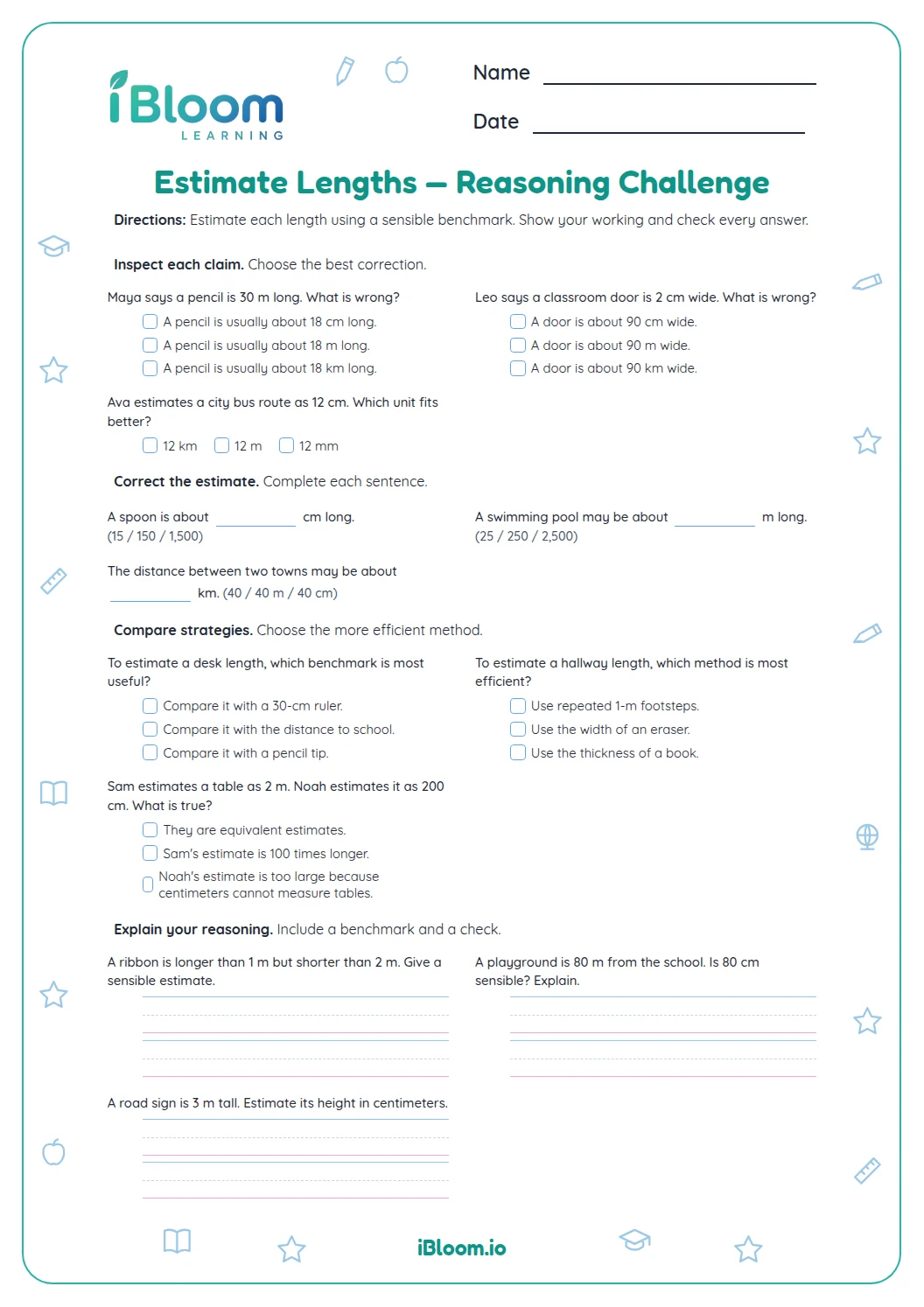
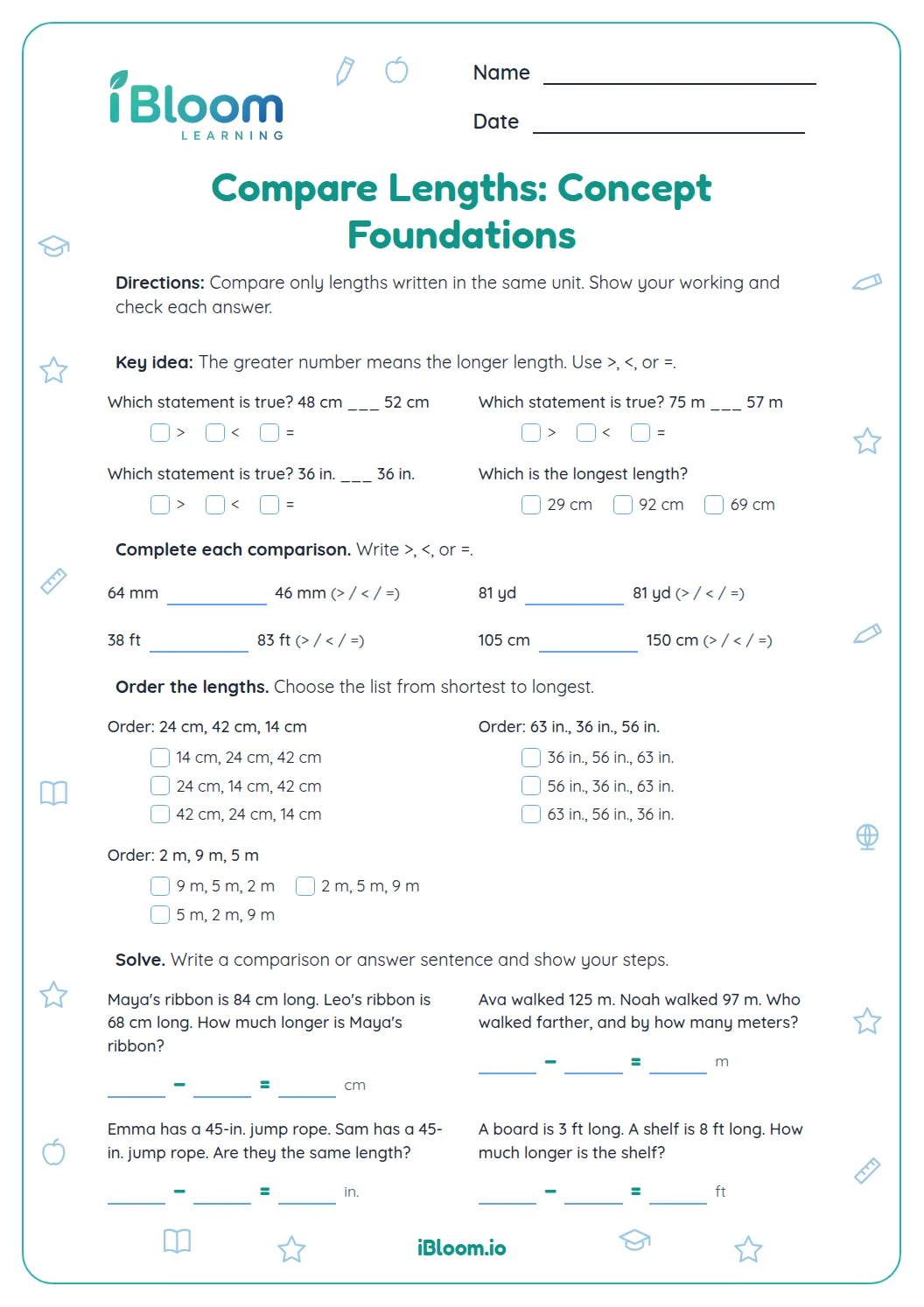
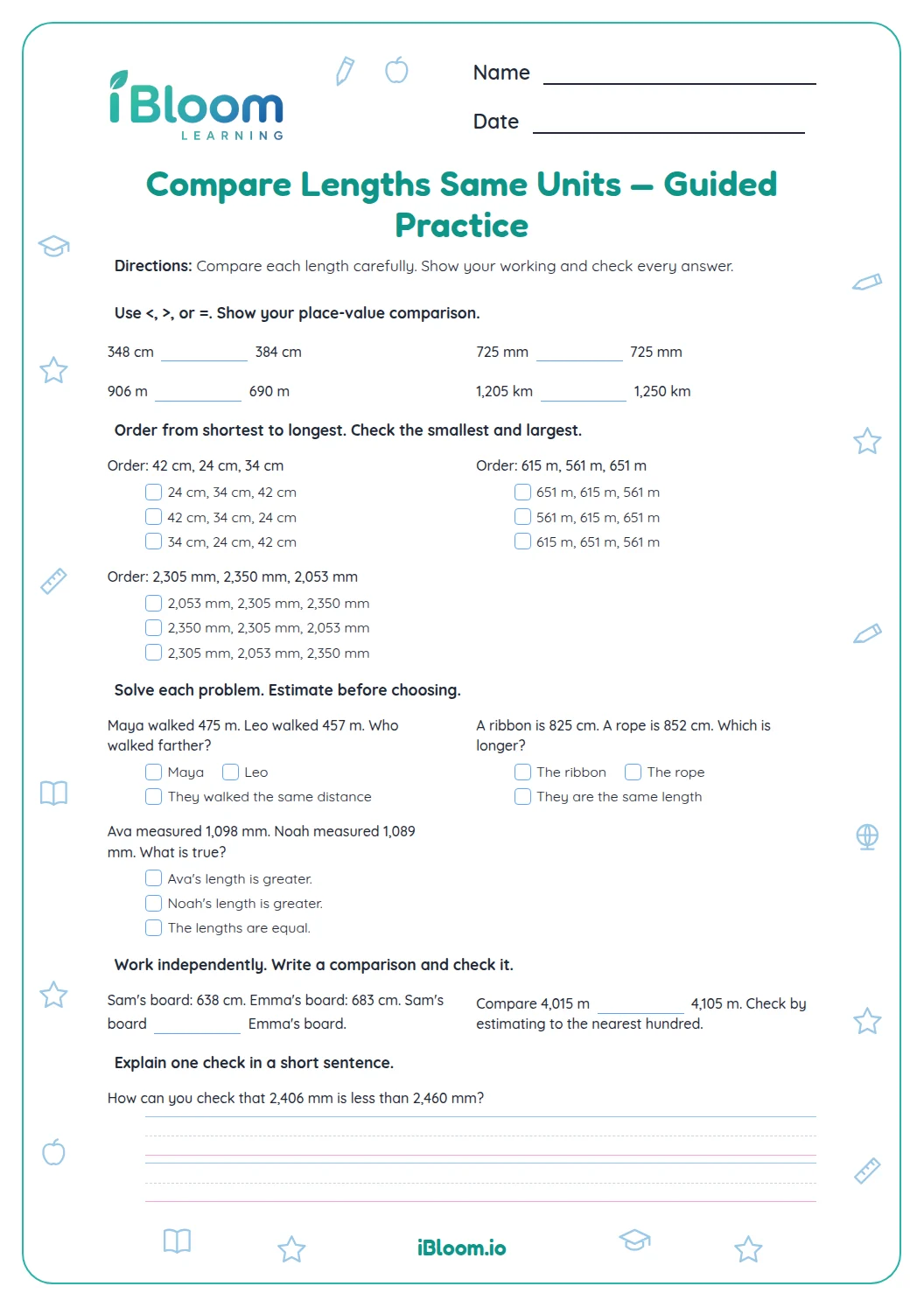
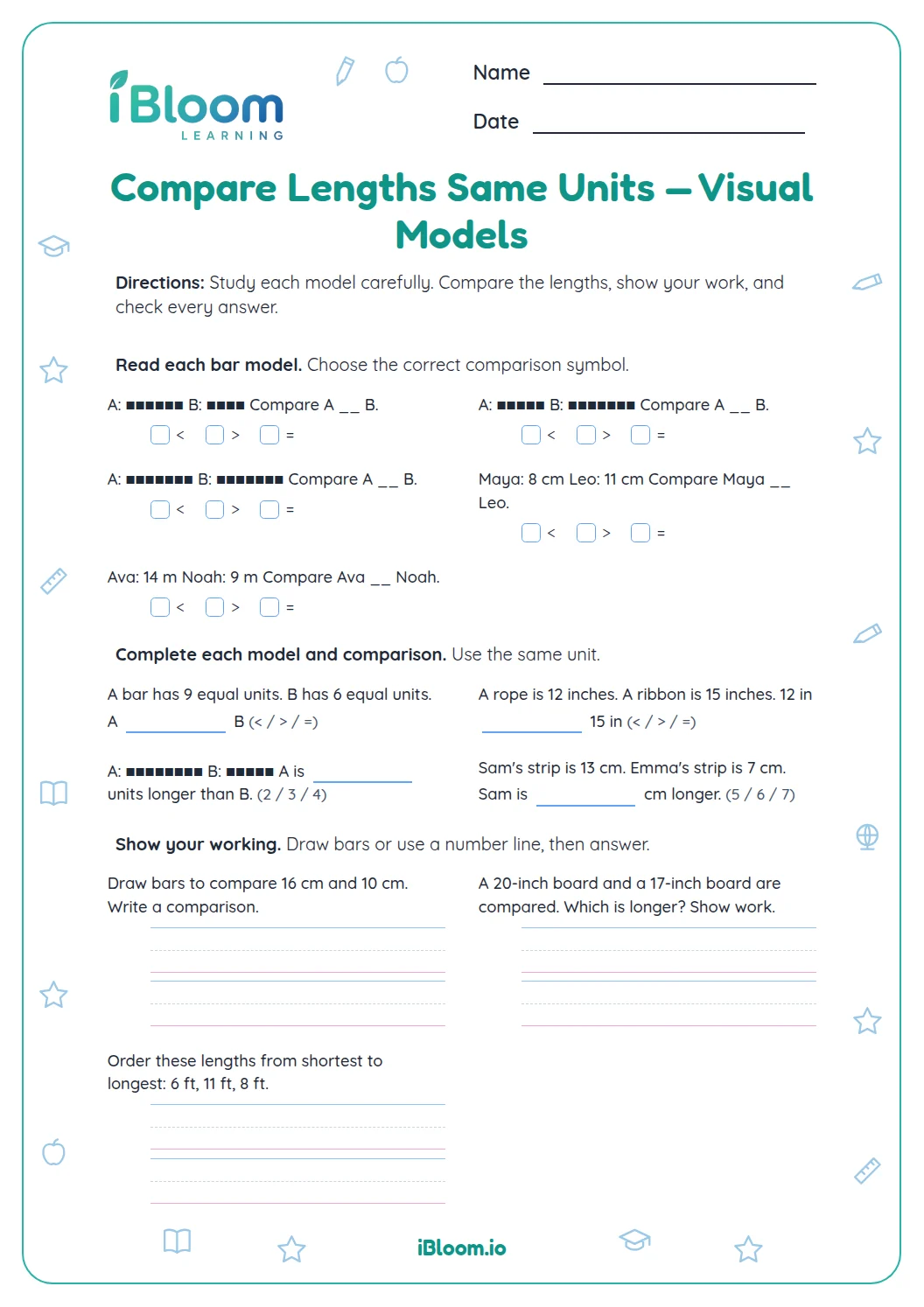
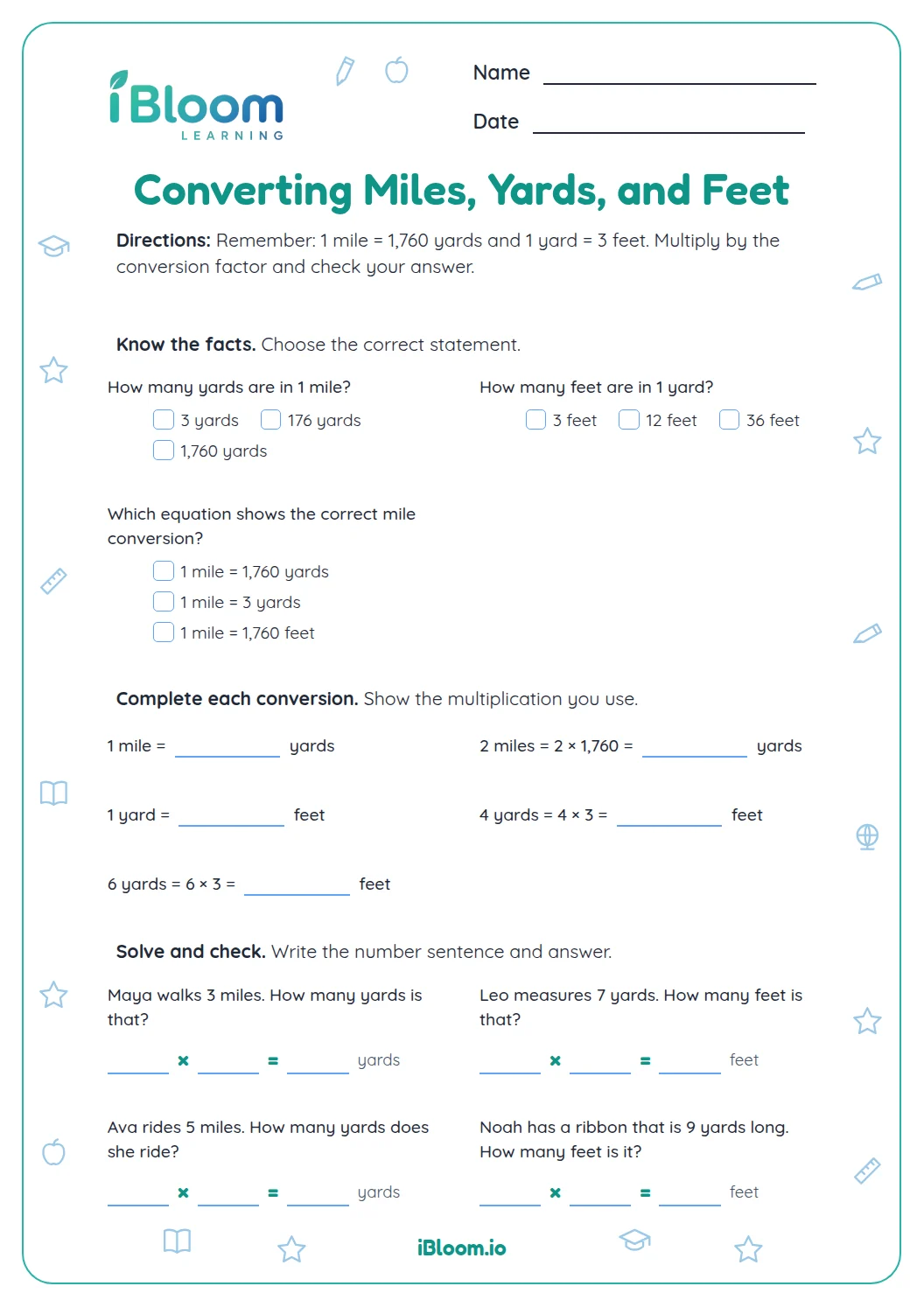
This Grade 5 worksheet uses picture clues and familiar benchmarks to practice estimating lengths. Children choose sensible measures for 14 objects and distances, using inches, feet, yards, miles, centimeters, meters and kilometers. They consider both the unit and number, from a pencil to a route between parks. The work practices the length-estimation skill described in CCSS 2.MD.A.3, and a separate answer key gives the best estimate for each item.
Aligned to 2.MD.A.3
What does it mean to estimate a length?
An estimate is a reasonable measurement close to an object’s actual size. It uses familiar benchmarks rather than an exact ruler reading. A pencil is measured in inches, a door in feet, and a long trail in miles or kilometers.
How do children choose a unit?
Think first about the object’s scale. Inches and centimeters suit small hand-held objects. Feet and meters fit furniture and room-sized objects. Yards, miles and kilometers describe longer spans. Then check whether the number sounds plausible.
- 1A classroom door is several feet tall.
- 2Seven inches is too short; seven yards is much taller than a door.
- 3Answer: 7 feet
What objects appear on the sheet?
Part A asks about small school and home objects such as a pencil, crayon, shoe and meterstick. Part B moves to furniture, trees and longer distances, including a bus, field and route between parks. Each question pairs a matching picture with three estimates.
How to use this worksheet
- 1Look at the object and picture its size in real life.
- 2Choose a unit that fits: inches, feet, yards or miles.
- 3Compare the number with a familiar benchmark.
- 4Rule out choices that are far too small or too large.
- 5Choose the estimate that best matches the object.
- 6Check the key and talk through any surprising choice.
Common mistakes and quick fixes
The mistake
Choosing a unit that is too small for a long distance.
The fix
A trail is measured in miles or yards, not inches.
The mistake
Picking a reasonable number with an unreasonable unit.
The fix
Check both parts: 7 inches and 7 feet describe very different lengths.
The mistake
Choosing the biggest number because an object seems large.
The fix
Ask whether the unit and number together match a real-life benchmark.
Common Core alignment
The questions practice estimating lengths with familiar units and benchmarks.
Estimate lengths with familiar customary and metric units.
On this sheet: Children use pictured objects and familiar benchmarks to choose reasonable length estimates.
Show the official wordingHide the official wording
Estimate lengths using units of inches, feet, centimeters, and meters.
What to practice next
Make more practice
Further reading
Questions parents and teachers ask
What is a reasonable length estimate?
A reasonable estimate is close to an object’s real size, even when it is not exact. A pencil is measured in inches, while a classroom door is several feet tall. The questions pair familiar objects with possible numbers and units so children can judge both parts.
Which units appear on this worksheet?
The choices include inches, feet, yards and miles, as well as centimeters, meters and kilometers. Children match the unit and number to the object’s scale, from a pencil or shoe to a bus or a route between parks in a familiar setting.
How many questions are included?
There are 14 picture-supported multiple-choice questions across two worksheet pages. The objects range from school supplies to longer distances. The separate two-page answer key lists the best estimate for each object or route. Children can explain which unit makes sense.
Why does each question include a picture?
The picture identifies the object whose length is being estimated. Children can connect it to a familiar real-life benchmark, then decide whether the number and unit are plausible together. The picture supports the estimate without showing an exact measurement of the object.
How can I help if my child is unsure?
Choose a familiar benchmark, such as a foot-long ruler or the height of a door. Ask whether the proposed length is far too short or tall, and whether the unit fits the object. Considering the number and unit together can narrow the choices.
Is an answer key included?
Yes. A separate two-page key gives the best estimate for all 14 questions. Use it to check the choice, then discuss which benchmark makes the unit and number sensible. Some real objects vary in size, so the pictured context and answer choices guide the intended estimate.