



About this worksheet
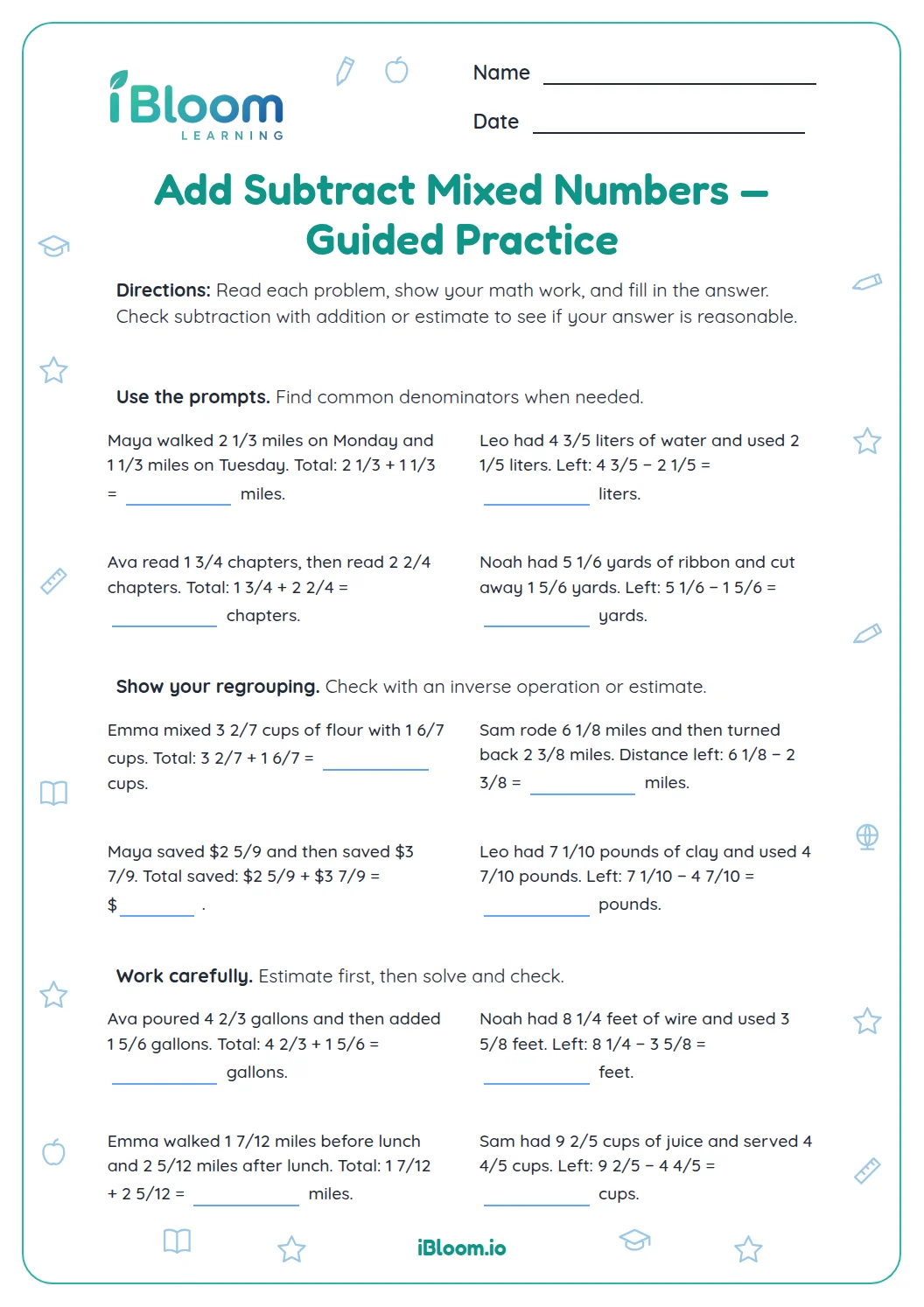
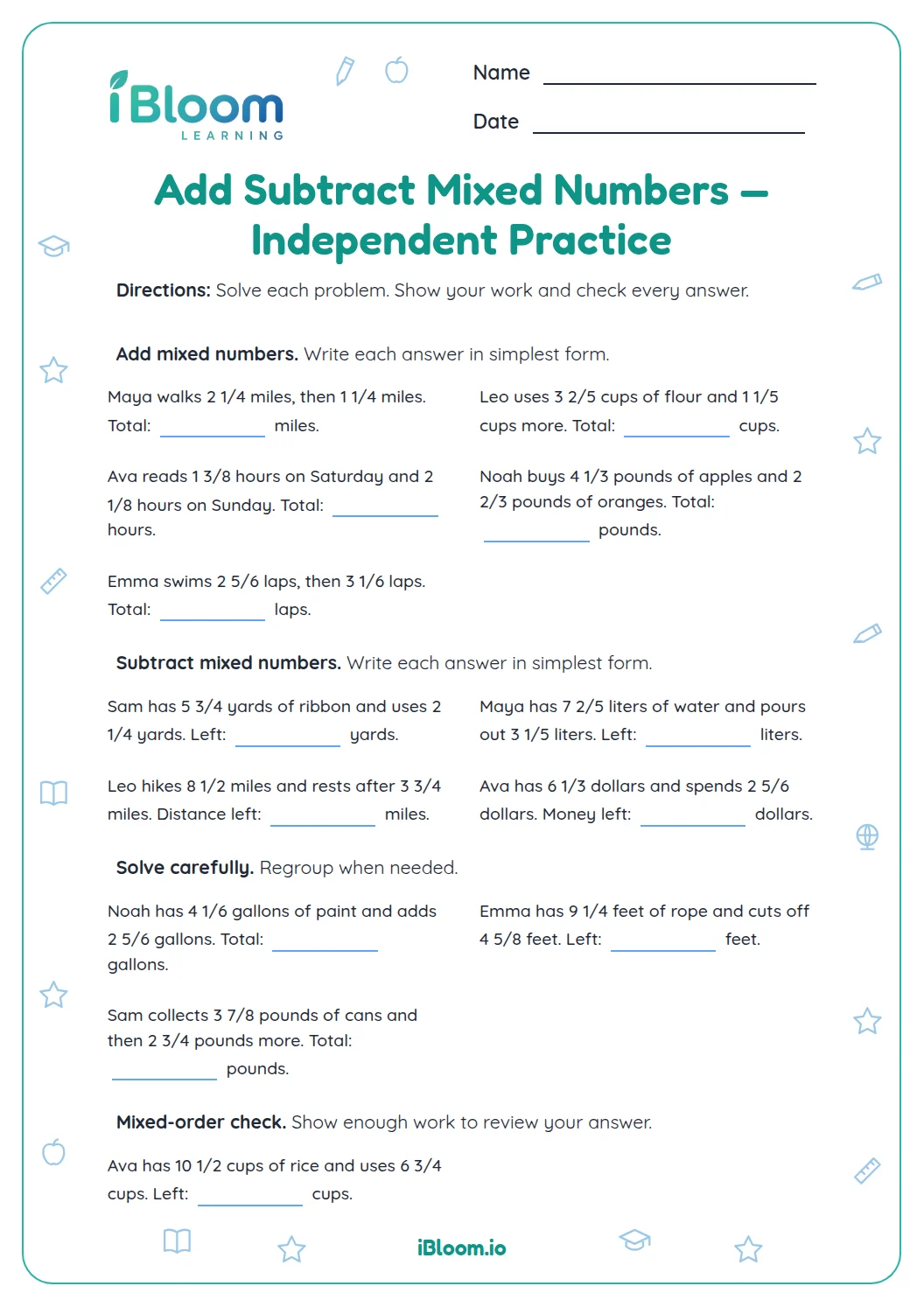
This free printable worksheet gives Grade 5 learners focused practice with decimal operations and models. Children work through 14 questions that move from identifying the skill to applying it in context. The page includes clear directions and a separate answer key.
Aligned to 5.NBT.B.7
How can learners approach decimal operations and models?
Read the full prompt, then identify the detail that matters for decimal operations and models. Use the model or sentence frame when one is provided.
Question 1 asks: A jug holds 1.25 liters. Another holds 0.60 liter. How much altogether? Check the answer key after completing the page.
- 1A jug holds 1.25 liters. Another holds 0.60 liter. How much altogether?
- 2Answer: 1.85 liters
What is included in the practice?
The 14 questions are arranged in three parts, from supported practice to independent application. A separate key gives a response for every item.
How should answers be checked?
Compare each response with the key. If an answer differs, return to the prompt and check the operation, spelling pattern, or capitalization clue before correcting it.
How to use this worksheet
- 1Read the directions at the top of the page.
- 2Complete each part in order.
- 3Use the drawing or sentence clues when provided.
- 4Check each response with the separate key.
Common mistakes and quick fixes
The mistake
Rushing past a clue in the prompt.
The fix
Underline the words or numbers that tell what the question asks.
The mistake
Changing more than the question asks.
The fix
Make only the correction needed to meet the skill.
The mistake
Leaving an answer unchecked.
The fix
Use the key and reread any item that does not match.
Common Core alignment
This worksheet practices the following Common Core skill.
Use models and strategies to operate on decimals to hundredths.
On this sheet: Decimal models and word problems use operations with hundredths.
Show the official wordingHide the official wording
Add, subtract, multiply, and divide decimals to hundredths, using concrete models or drawings and strategies based on place value, properties of operations, and/or the relationship between addition and subtraction; relate the strategy to a written method and explain the reasoning used.
What to practice next
Further reading
Questions parents and teachers ask
How many questions are on this Grade 5 worksheet?
There are 14 questions across three parts. The sections move from focused practice to applying decimal operations and models. A separate answer key includes a response for every question, so learners can check the work after completing the sheet. Invite the learner to explain one answer aloud; saying how the clue connects to the answer can make checking more useful.
Is an answer key included?
Yes. A separate answer key lists responses to all 14 questions, including short written answers where needed. Complete the worksheet first, then use the key to check and correct responses. Invite the learner to explain one answer aloud; saying how the clue connects to the answer can make checking more useful.
How should we use the worksheet?
Work through the parts in order and read each direction carefully. Some items ask learners to use a drawing or sentence clue. After finishing, compare answers with the key and revisit any item that needs correction. Invite the learner to explain one answer aloud; saying how the clue connects to the answer can make checking more useful.
How long does it take?
Plan for about 20 minutes, with extra time if the learner wants to explain an answer or correct mistakes. The worksheet has 14 questions in three parts, followed by a separate answer key page. Invite the learner to explain one answer aloud; saying how the clue connects to the answer can make checking more useful.
What skill does the page practice?
The page focuses on decimal operations and models. Its questions use varied prompts so learners can recognize the skill and apply it independently. The Common Core alignment section identifies the standard addressed by the practice. Invite the learner to explain one answer aloud; saying how the clue connects to the answer can make checking more useful.