




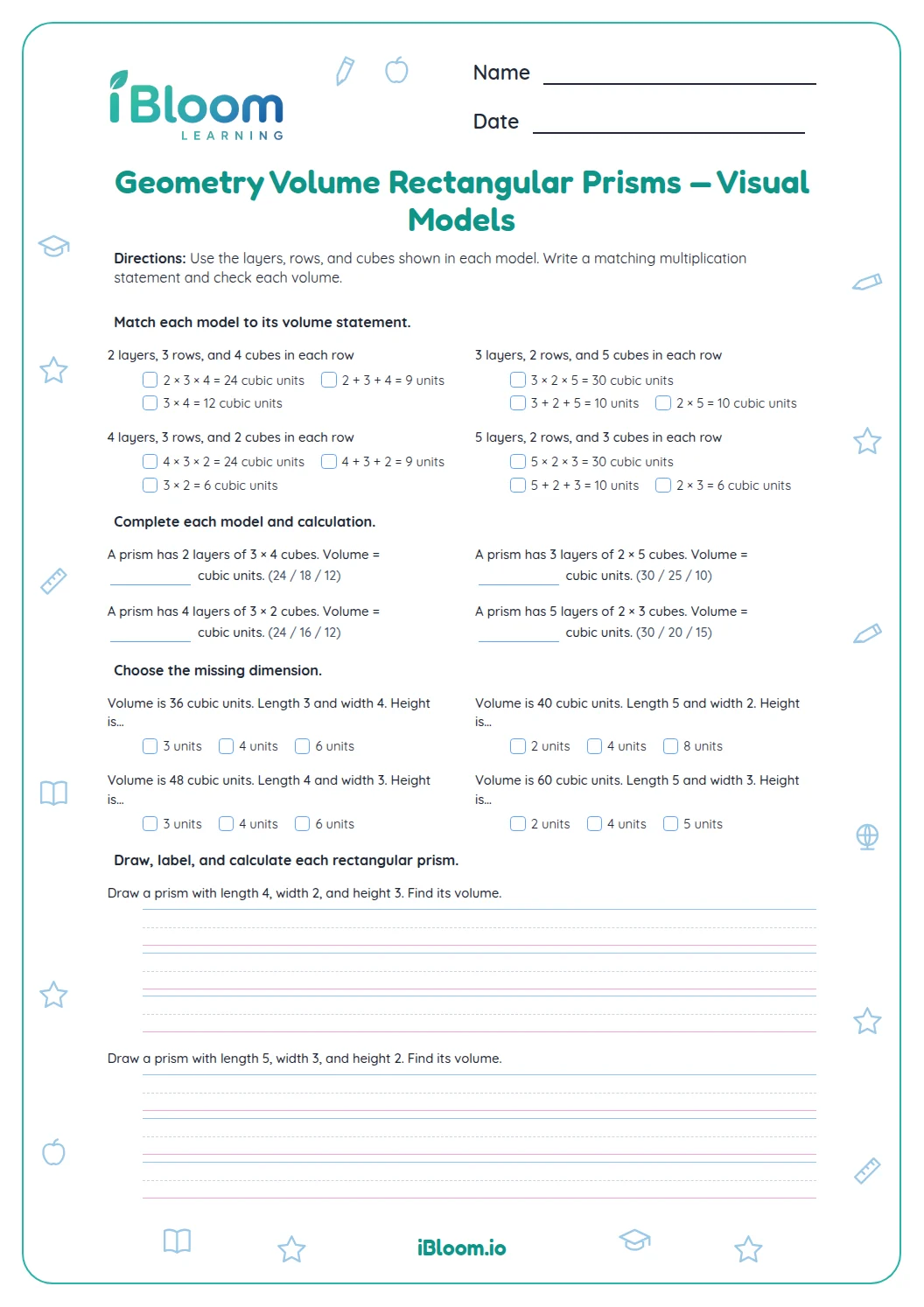
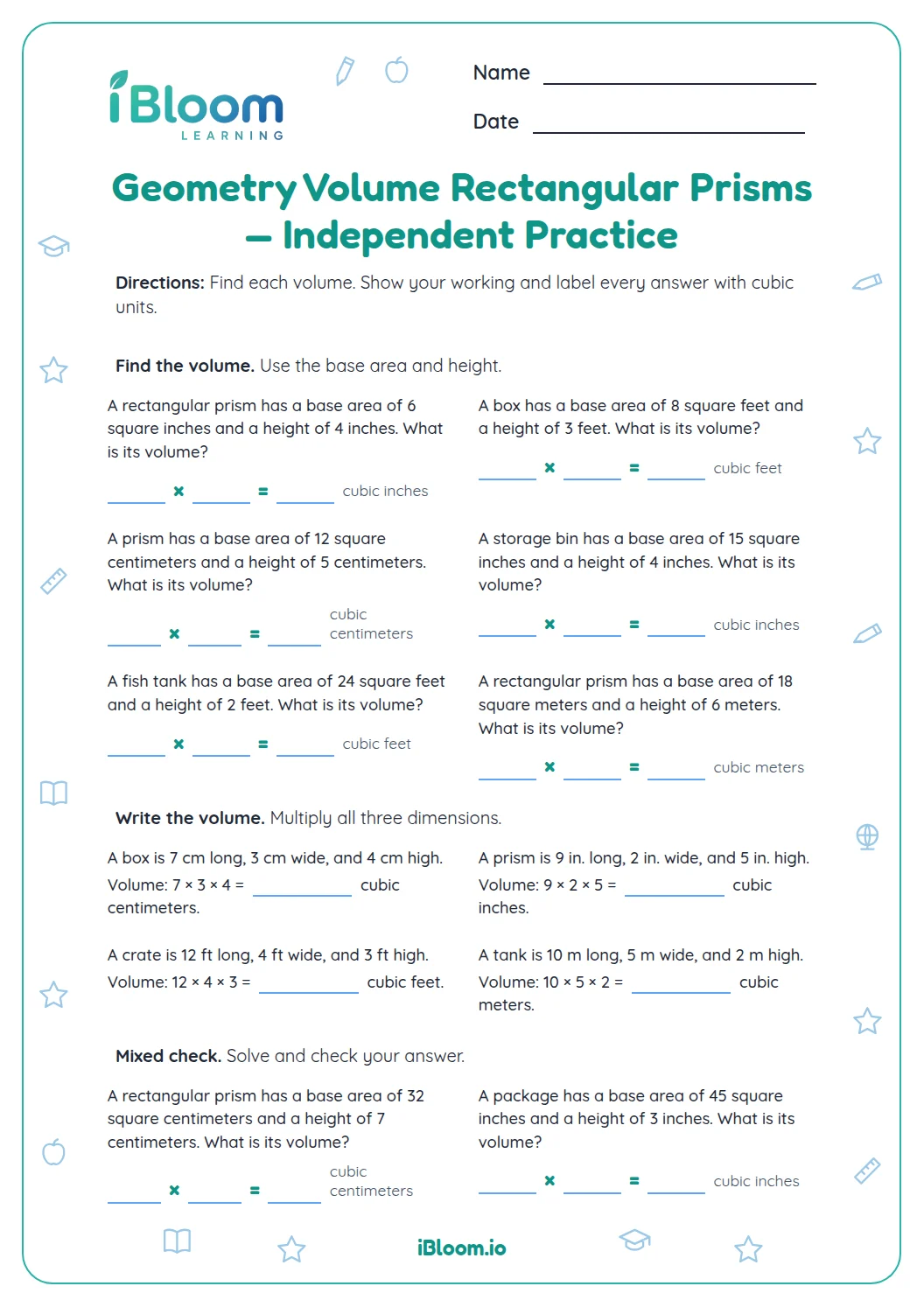
About this worksheet
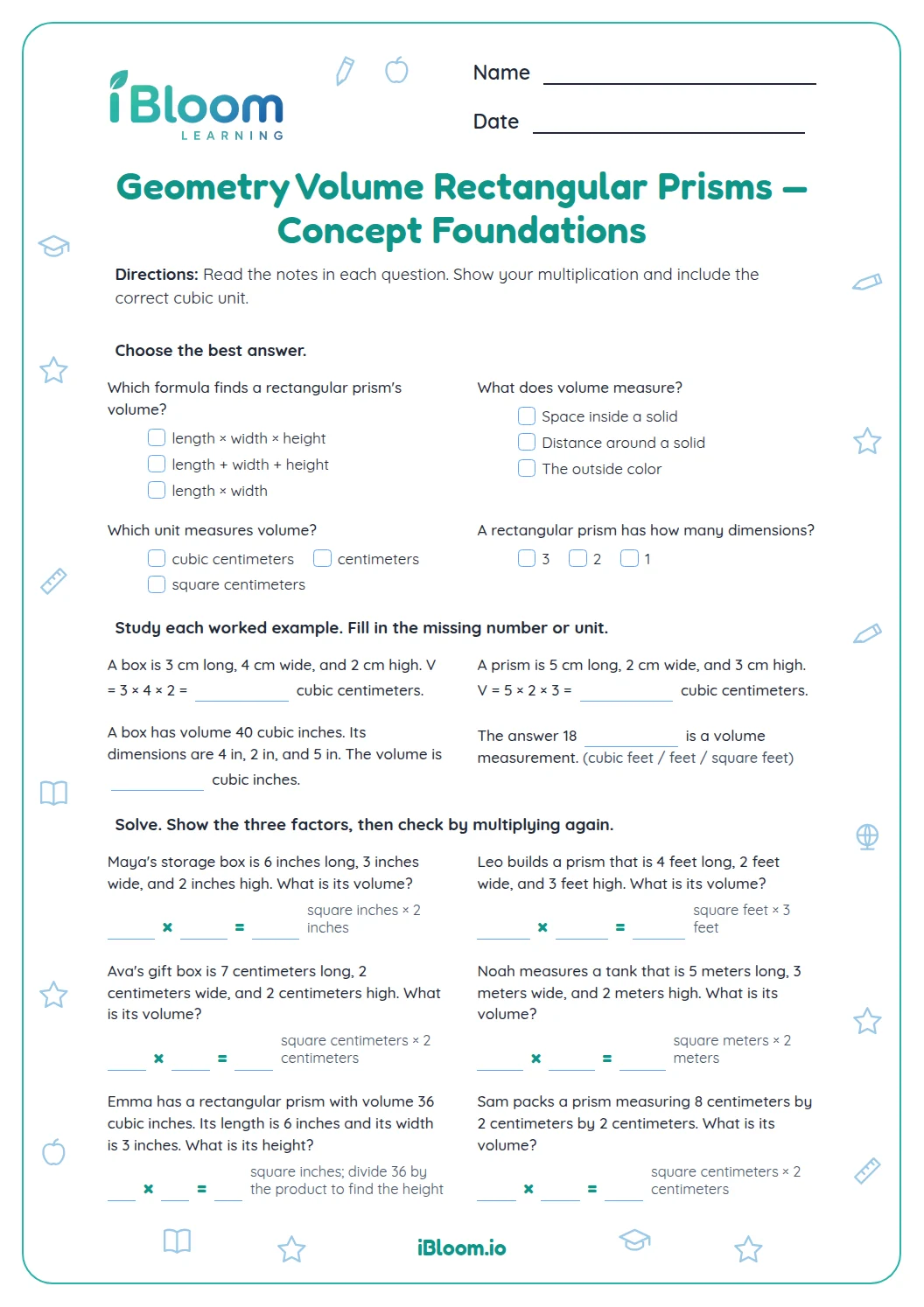
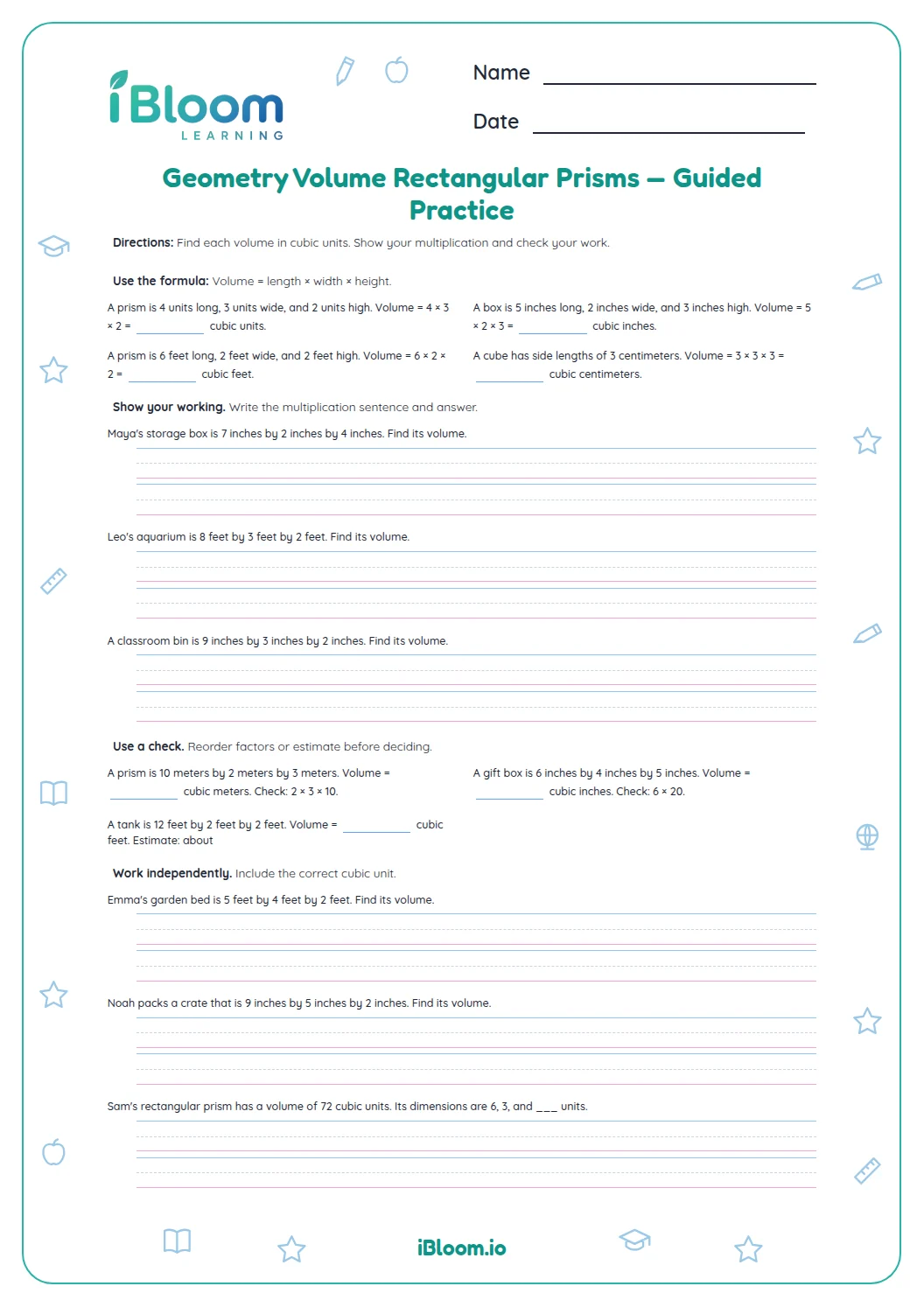
These problems ask students to choose operations from realistic contexts rather than follow one procedure. They include equal groups, fraction addition and multiplication, decimal operations, division, and rectangular-prism volume. Students should label answers and check whether each result makes sense.
Aligned to 5.NF.A.1 and 5.NBT.B.7
How can you choose an operation in a word problem?
Identify the quantities and the question before choosing an operation. An estimate or inverse operation can check whether the result is reasonable, and units keep the answer tied to the story.
- 1A 9.6-liter jug fills 8 equal bottles.
- 29.6 ÷ 8 = 1.2 liters per bottle
What does this worksheet ask students to do?
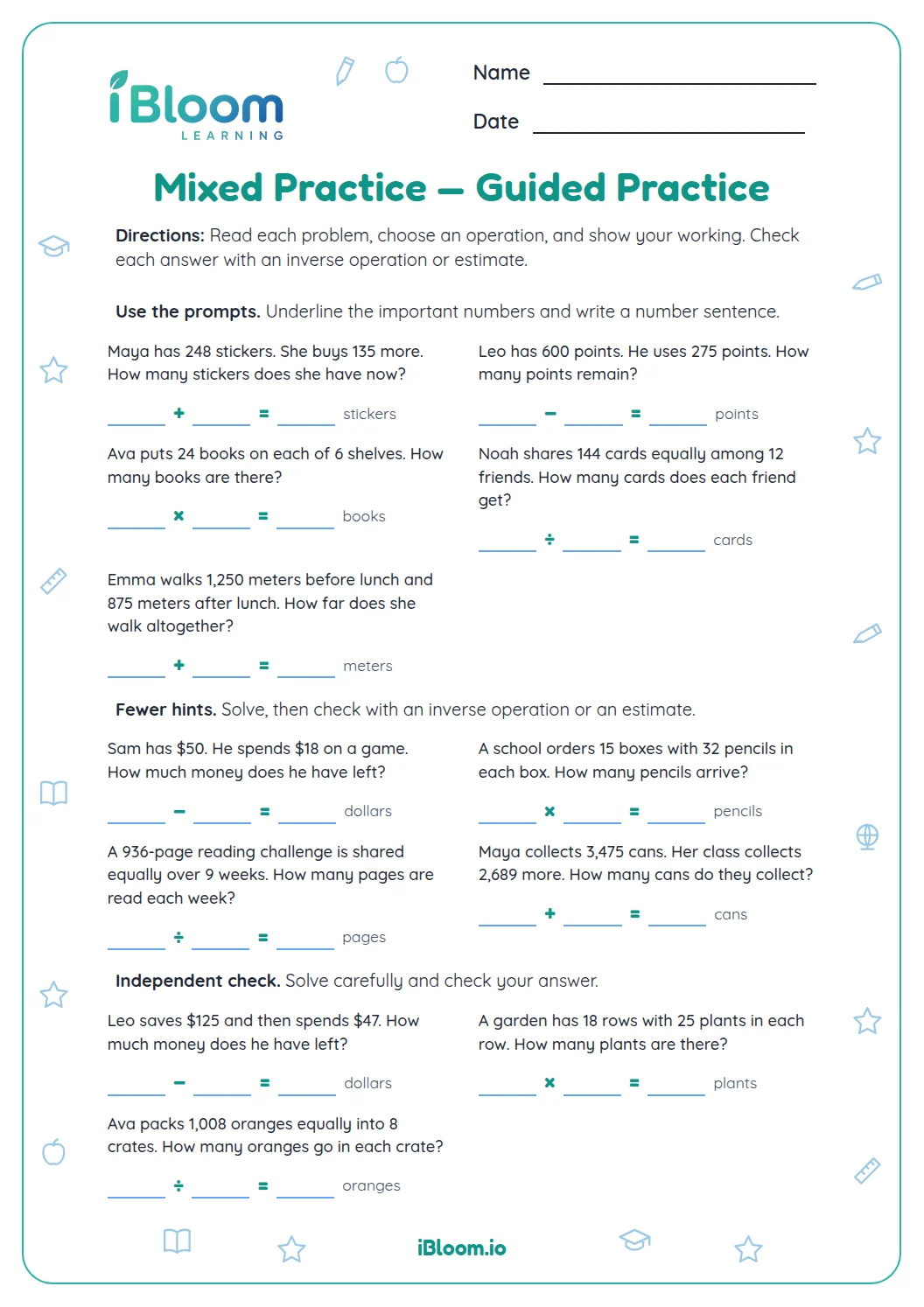
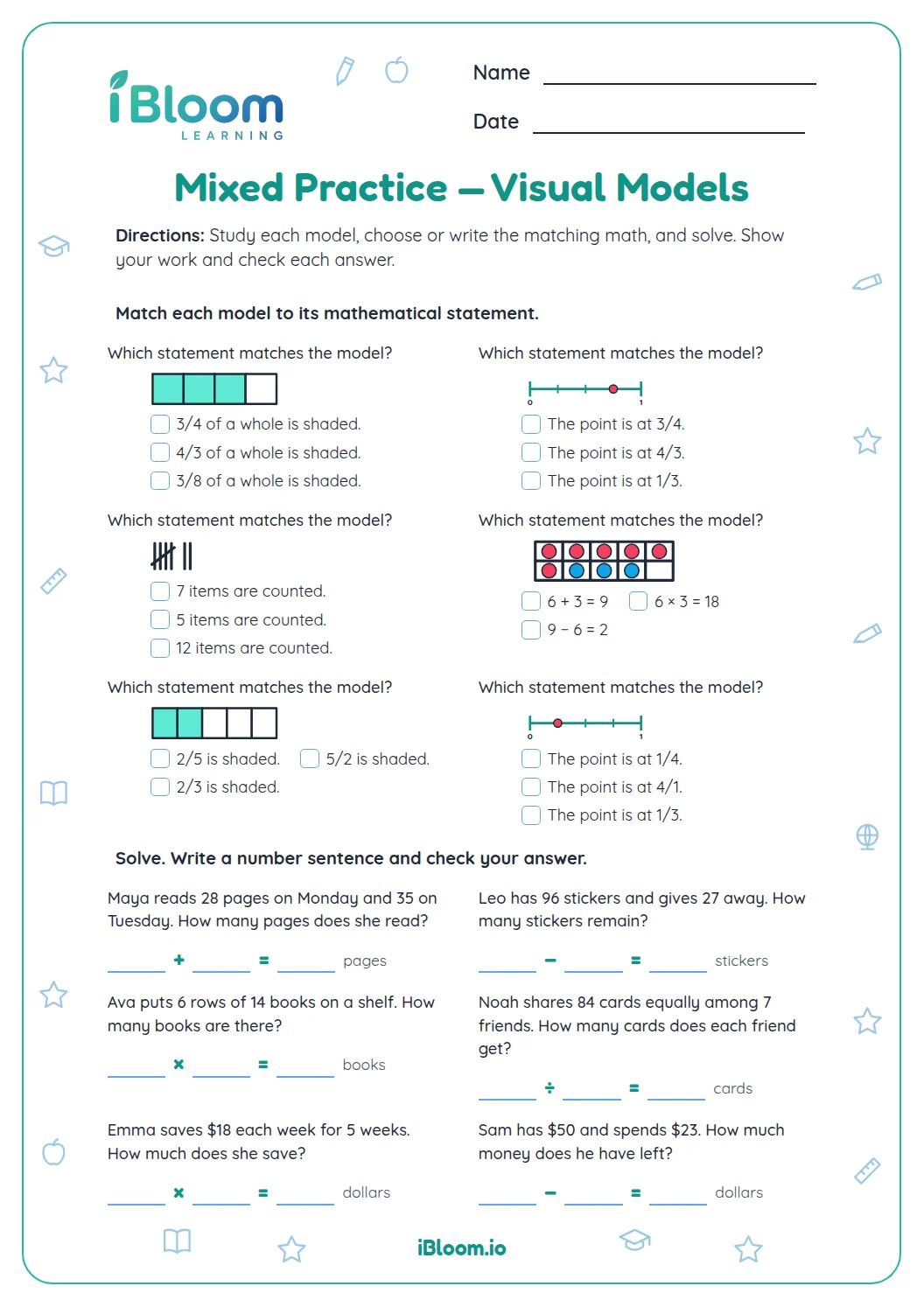
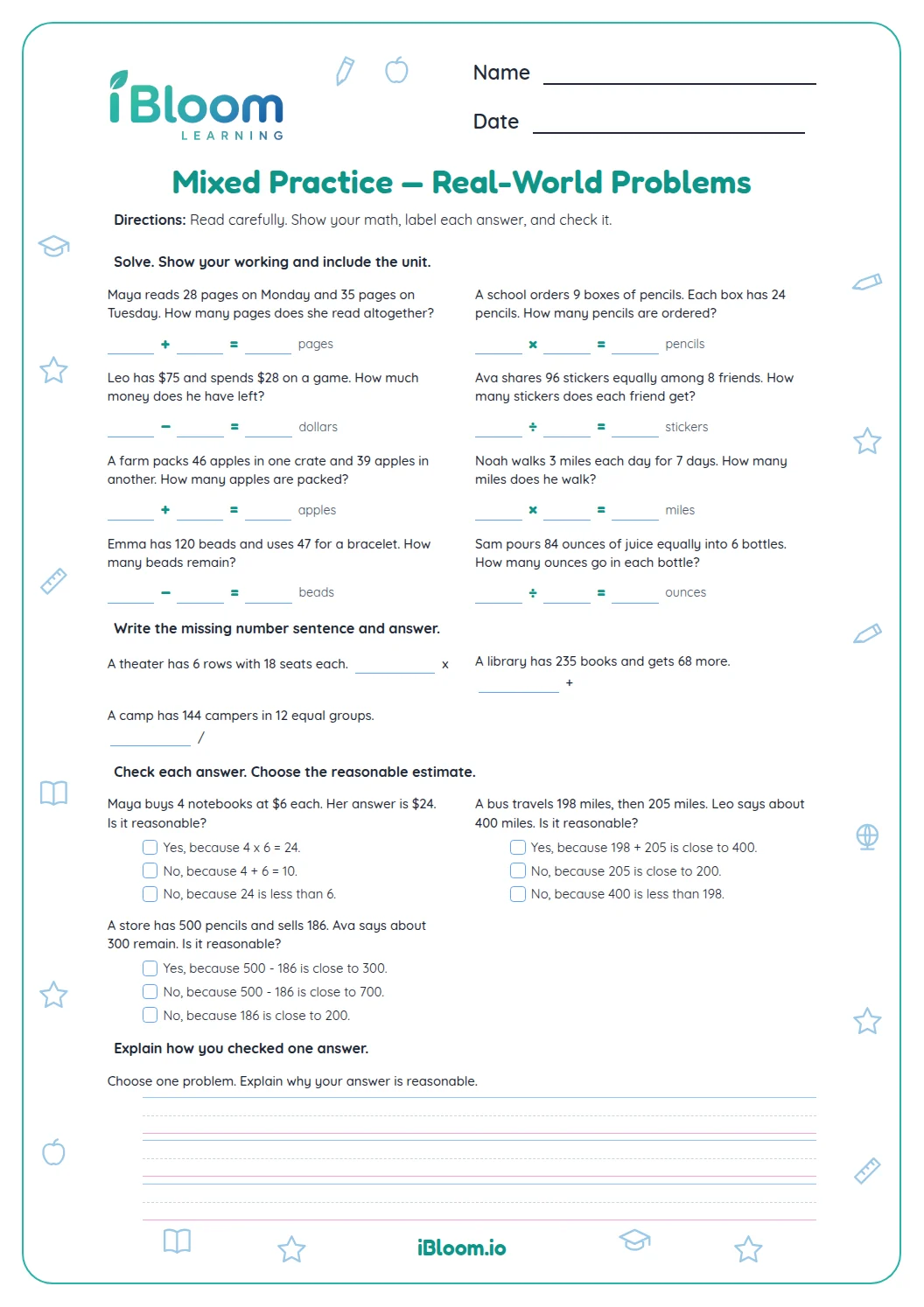
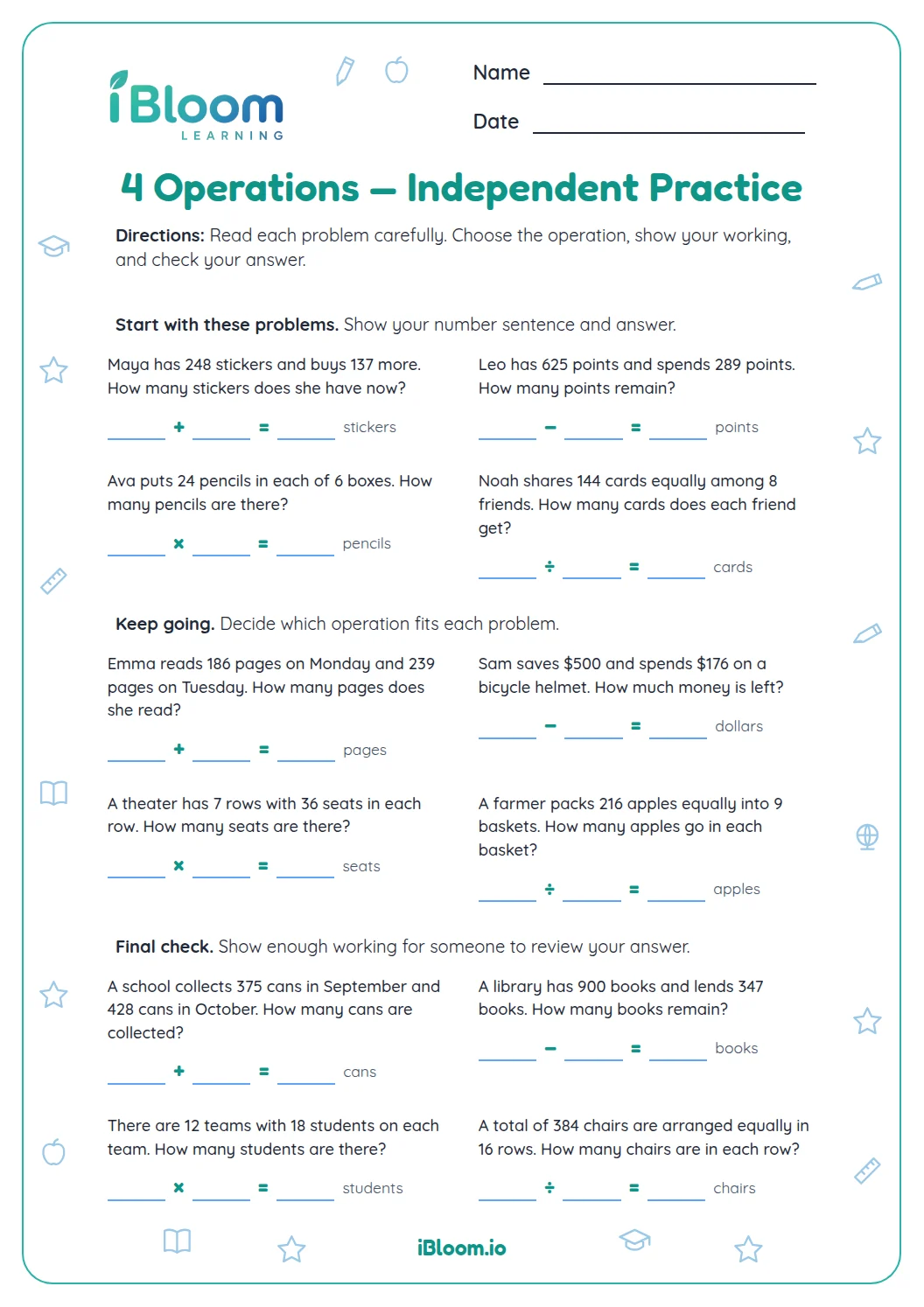
Sixteen stories include whole-number operations, fraction calculations, decimal calculations, and volume. Students select a strategy and use the requested units.
- Read the whole prompt before writing an answer.
- Use the separate answer key to check completed work.
How can an adult support practice?
Ask what the question is asking for, what operation fits, and whether the unit and size of the answer make sense.
How to use this worksheet
- 1Underline quantities and units.
- 2Choose an operation or sequence of operations that matches the story.
- 3Estimate first, solve, and check the answer with its unit.
Common mistakes and quick fixes
The mistake
Rushing and overlooking a direction or important detail.
The fix
Read the whole item, mark the information you need, then check that the answer fits.
The mistake
Stopping after getting an answer without checking it.
The fix
Use the inverse operation, reread the sentence, or compare the response with the prompt.
Curriculum alignment
This worksheet practices the following Common Core skills.
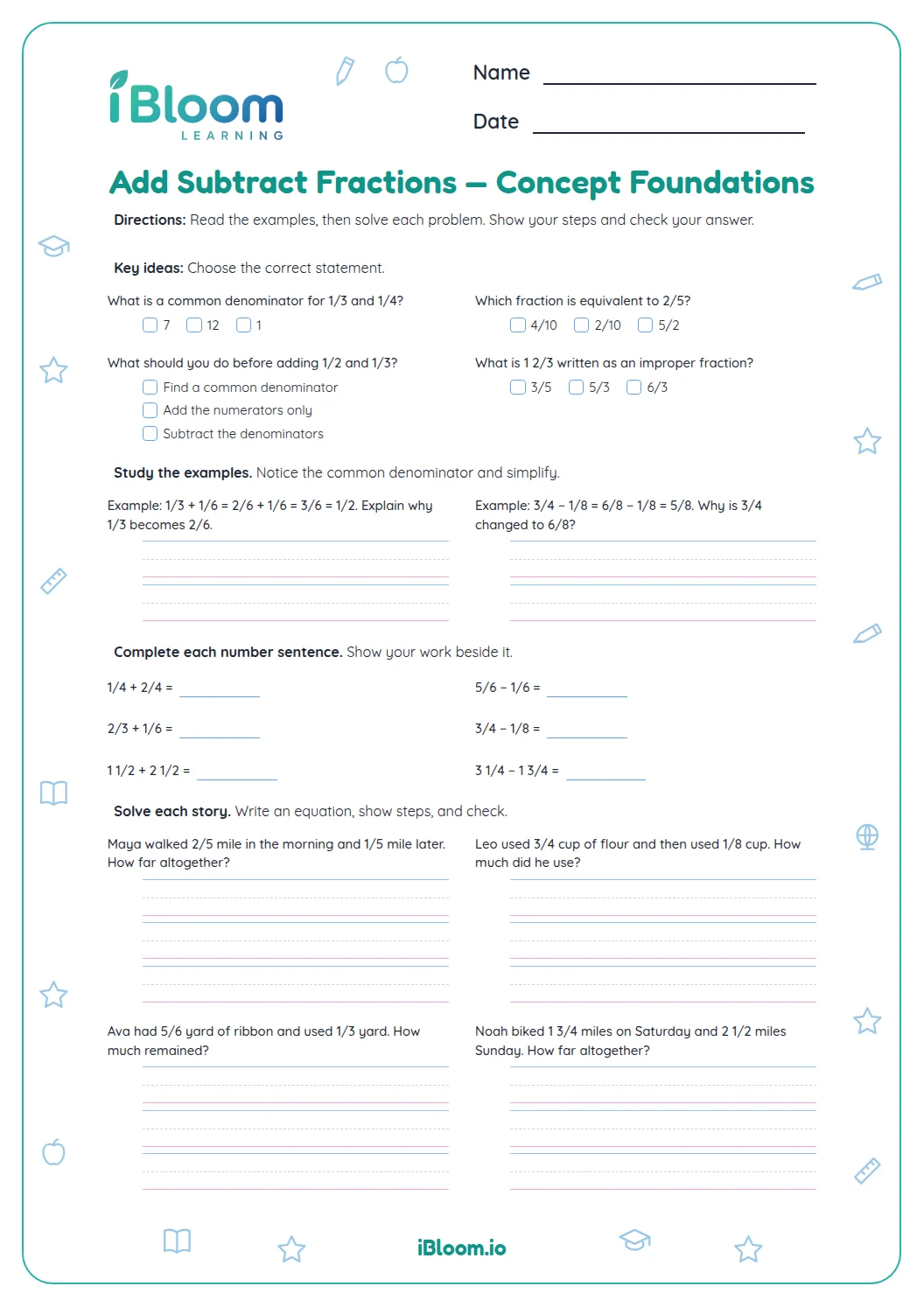
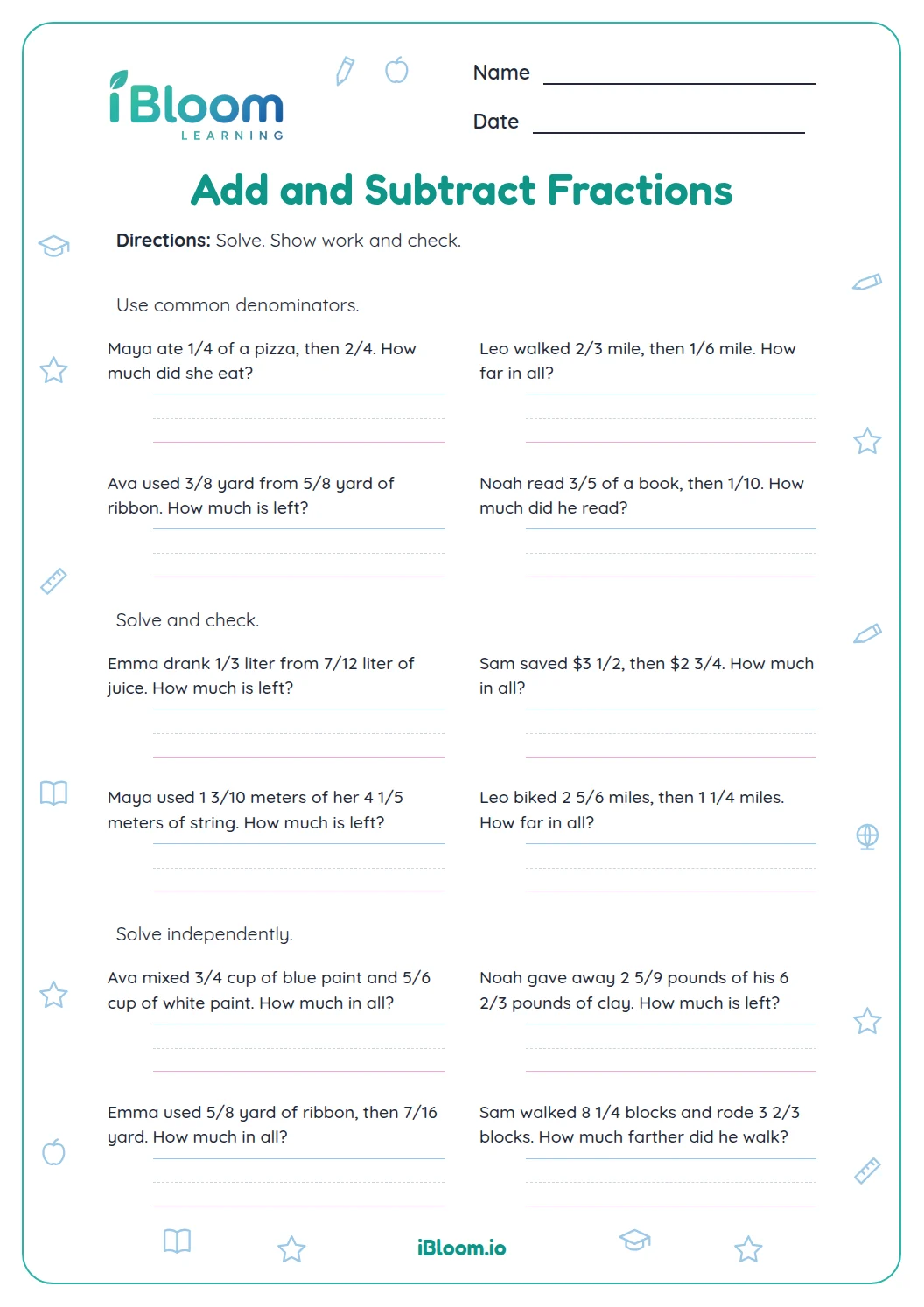
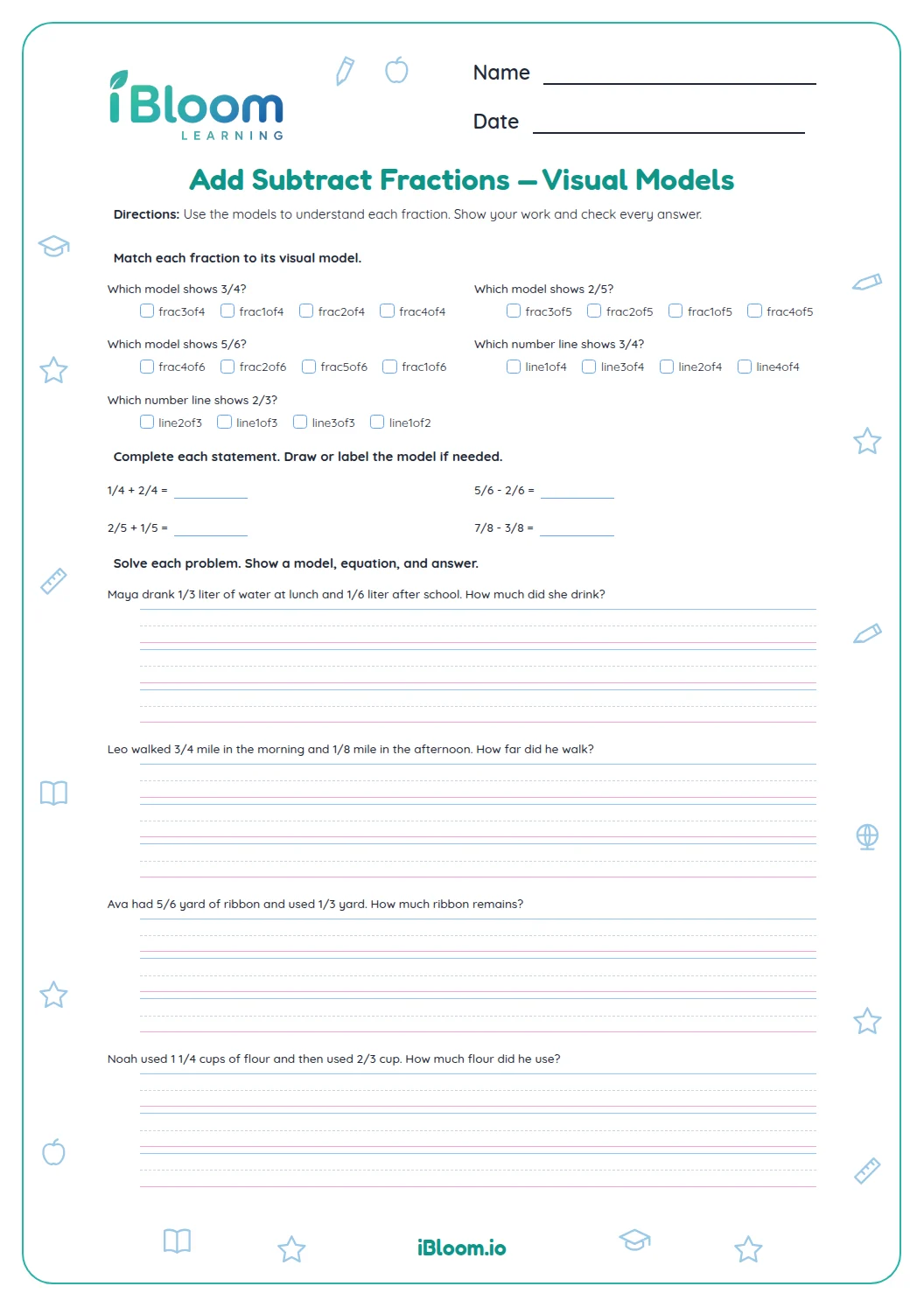
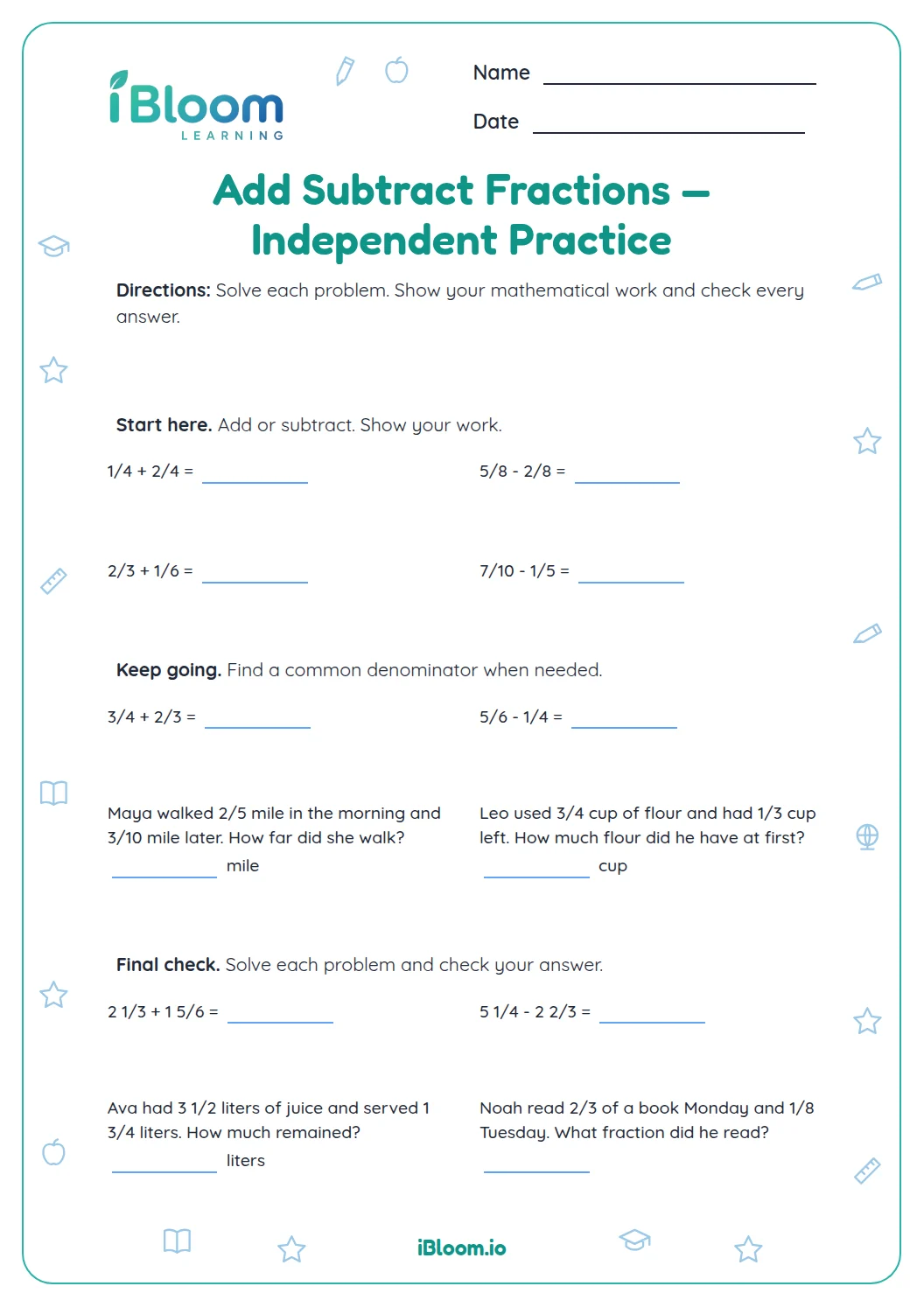
Add and subtract fractions with unlike denominators.
On this sheet: Students add fraction amounts with unlike denominators.
Show the official wordingHide the official wording
Add and subtract fractions with unlike denominators (including mixed numbers) by replacing given fractions with equivalent fractions in such a way as to produce an equivalent sum or difference of fractions with like denominators.
Add, subtract, multiply, and divide decimals.
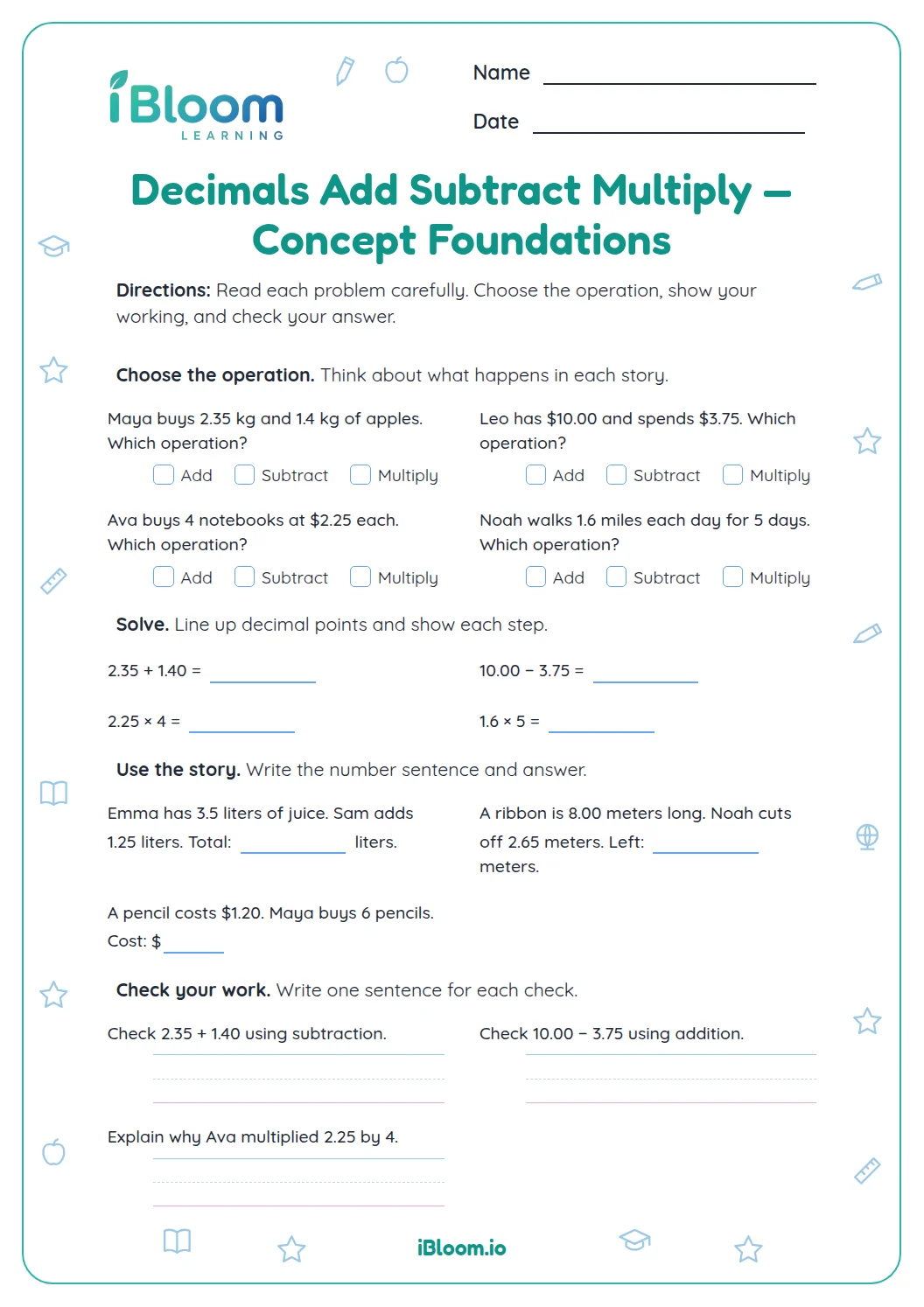
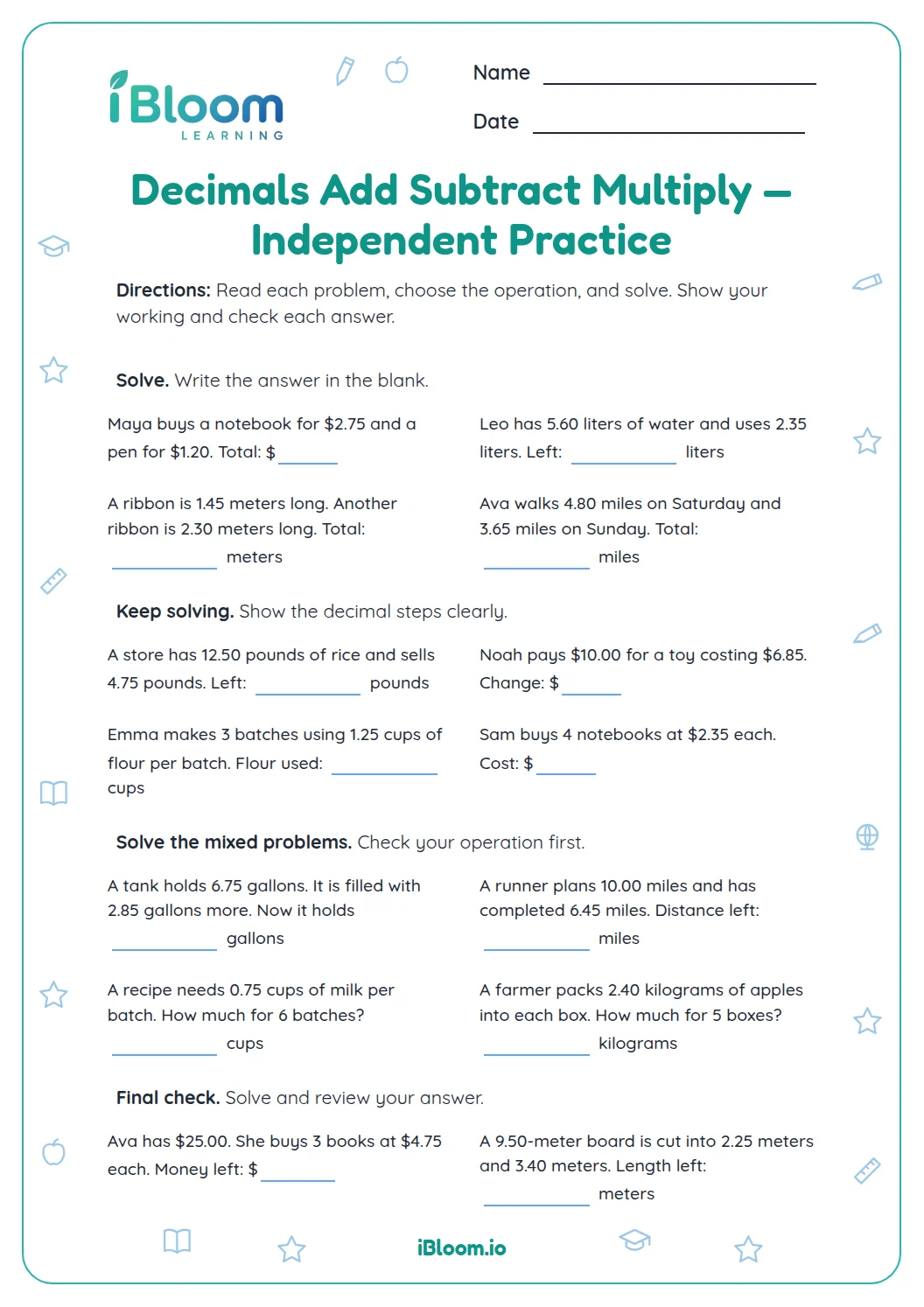
On this sheet: Decimal prices, distances, and capacities appear in the contexts.
Show the official wordingHide the official wording
Add, subtract, multiply, and divide decimals to hundredths, using concrete models or drawings and strategies based on place value, properties of operations, and/or the relationship between addition and subtraction; relate the strategy to a written method and explain the reasoning used.
What to practice next
Make more practice
Further reading
Questions parents and teachers ask
What kinds of problems are included?
The 16 Grade 5 stories mix whole-number addition, subtraction, multiplication, and division with fraction and decimal calculations and a volume problem. Students need to read carefully, select an operation, calculate, and label the answer. The examples and separate answer key make it easy to review each response together.
How can a student choose an operation?
Start with what the question asks. Equal groups suggest multiplication, sharing equally suggests division, and a change in an amount may call for addition or subtraction. The wording and quantities in each story guide the choice. The examples and separate answer key make it easy to review each response together.
Does the worksheet include an answer key?
Yes. A separate answer key gives a result for each question. For written work, students can also record an equation and check whether the answer’s size and unit make sense in the original situation. The examples and separate answer key make it easy to review each response together.
How can fraction answers be checked?
For fraction addition, rename unlike fractions with equivalent fractions that share a denominator, then combine them. For multiplication, multiply the fraction by the whole-number count and simplify or express the result as a mixed number. The examples and separate answer key make it easy to review each response together.
What should I check in decimal problems?
Line up decimal places when adding or subtracting, and use place-value reasoning when multiplying or dividing. Then check the unit: a price, distance, or amount of liquid should match the quantity the question asks for. The examples and separate answer key make it easy to review each response together.