



About this worksheet
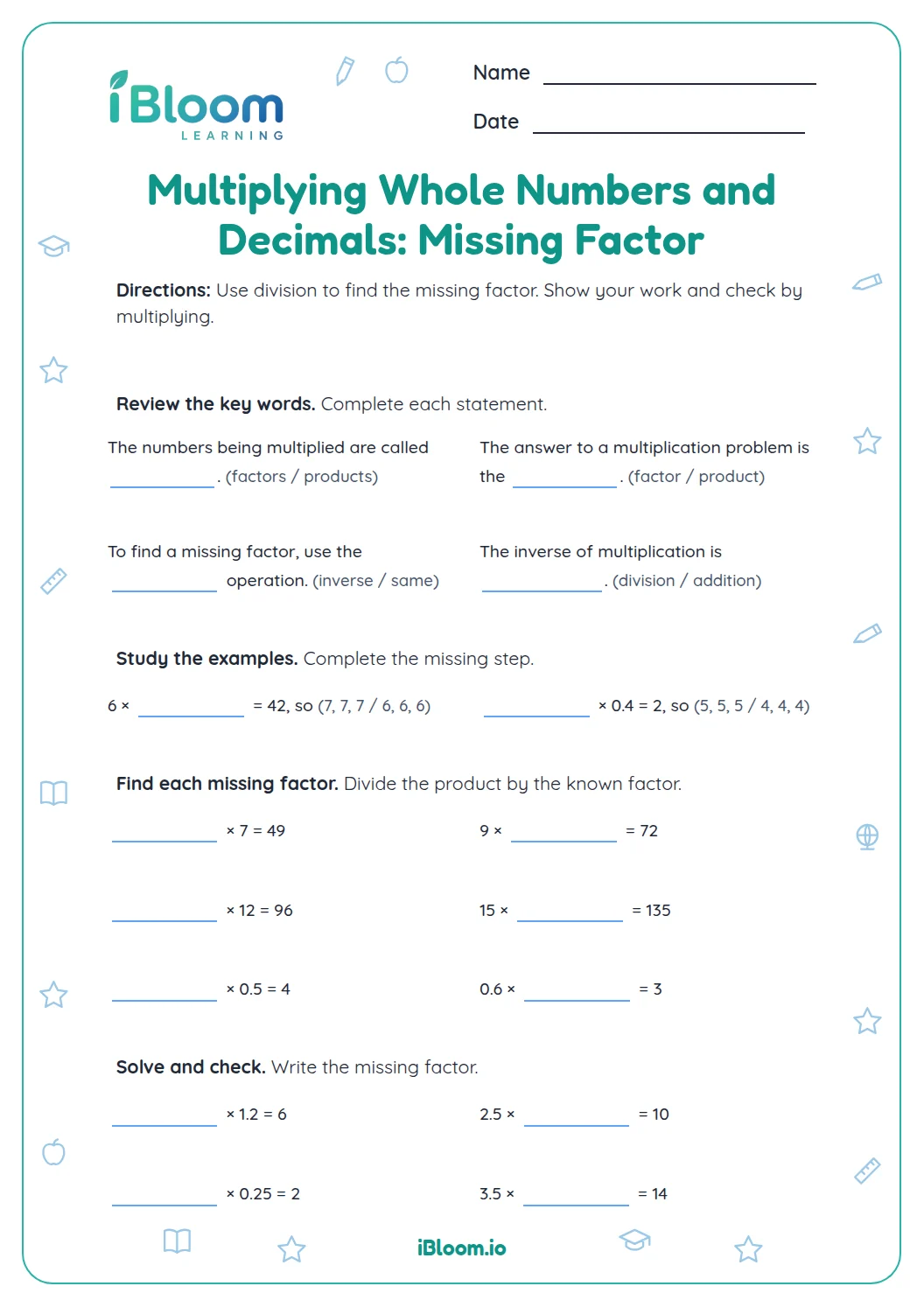
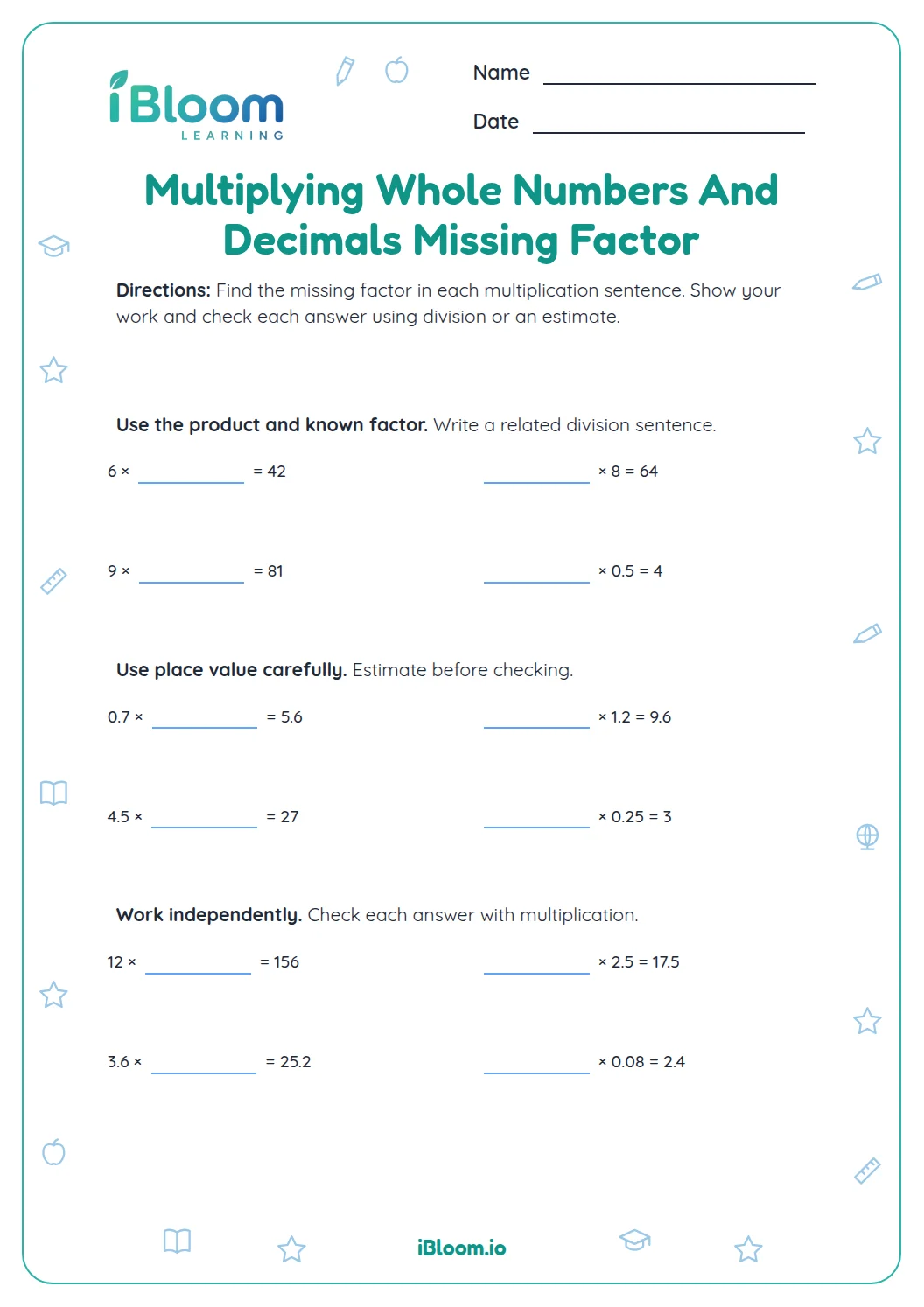
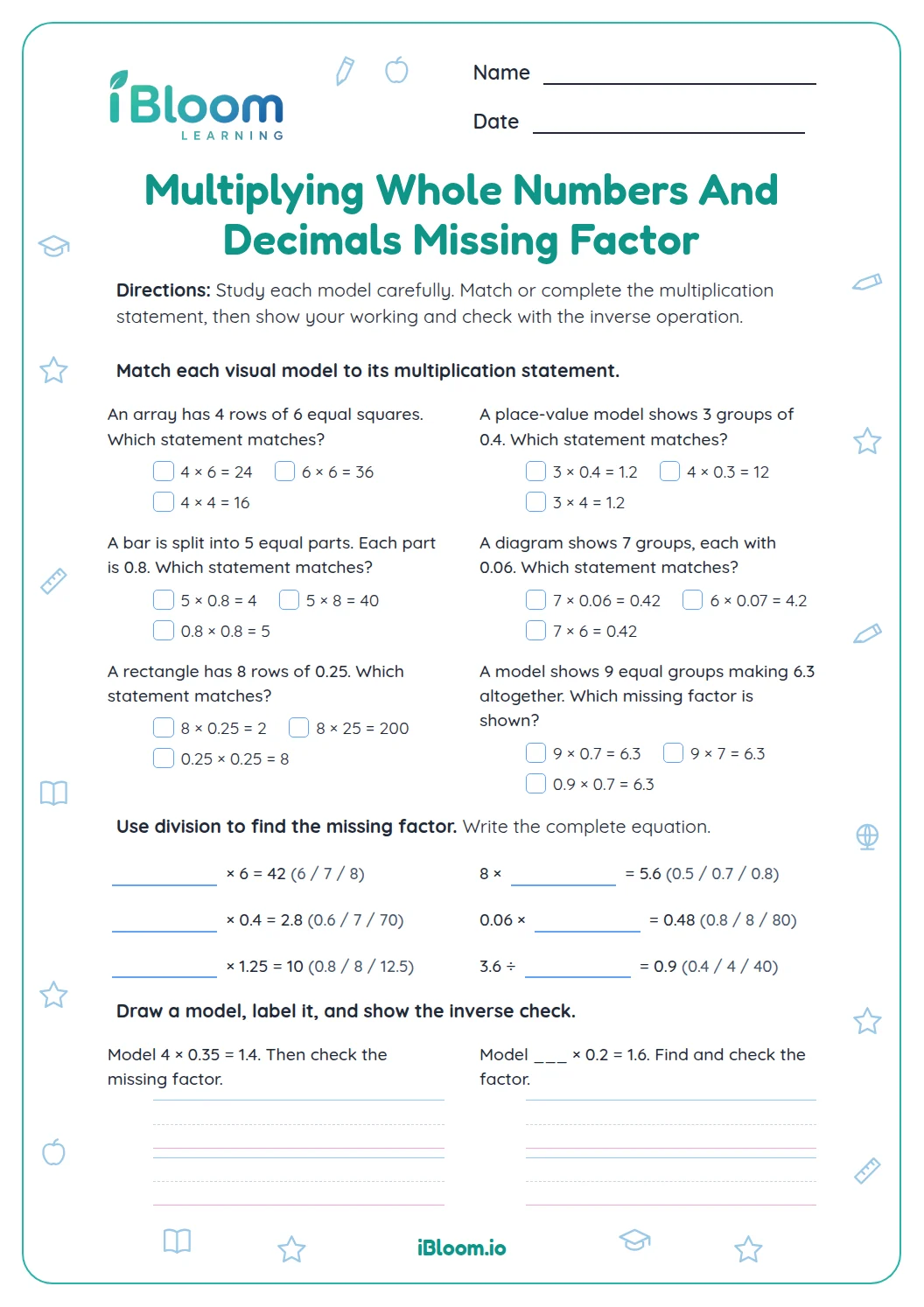
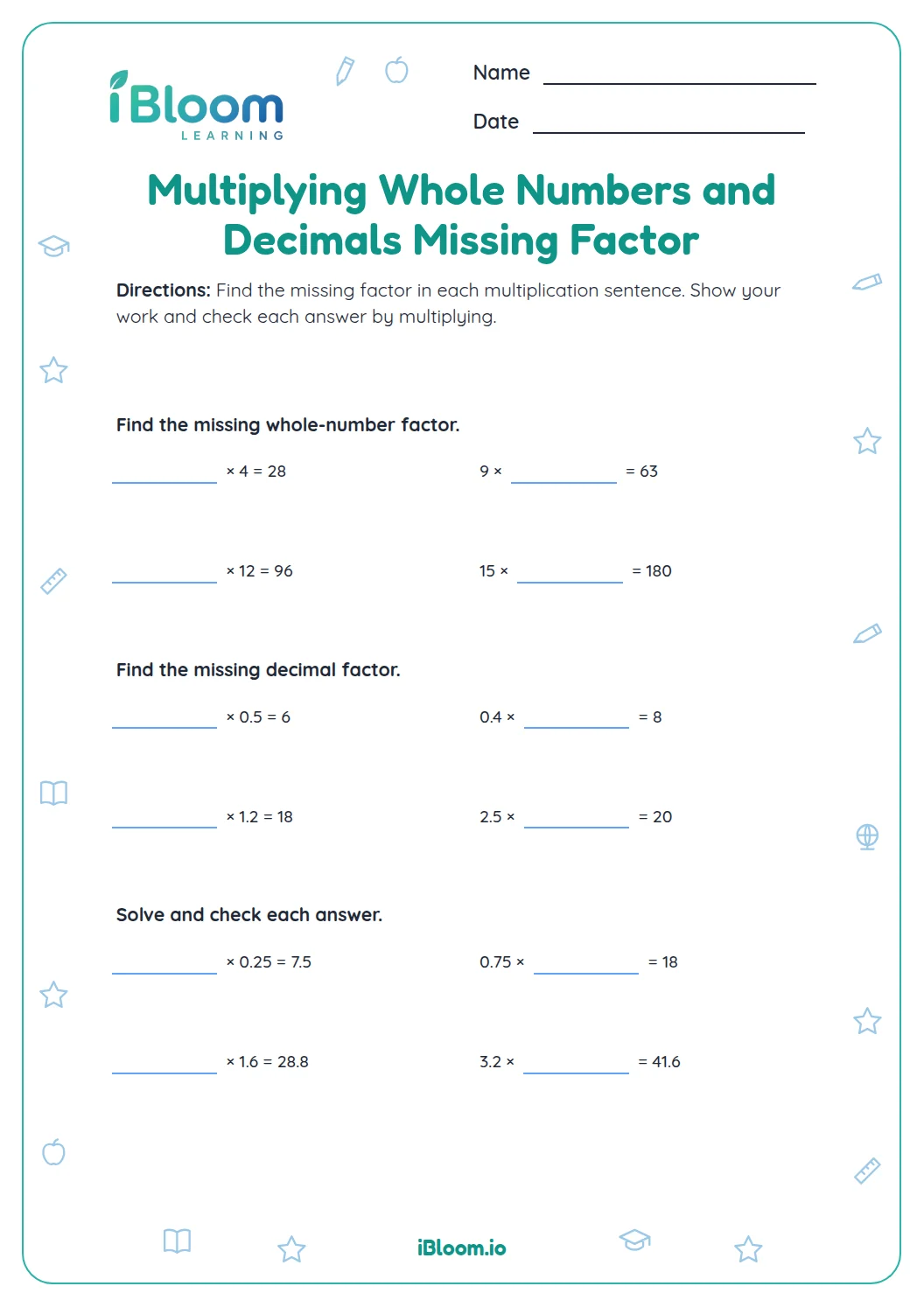
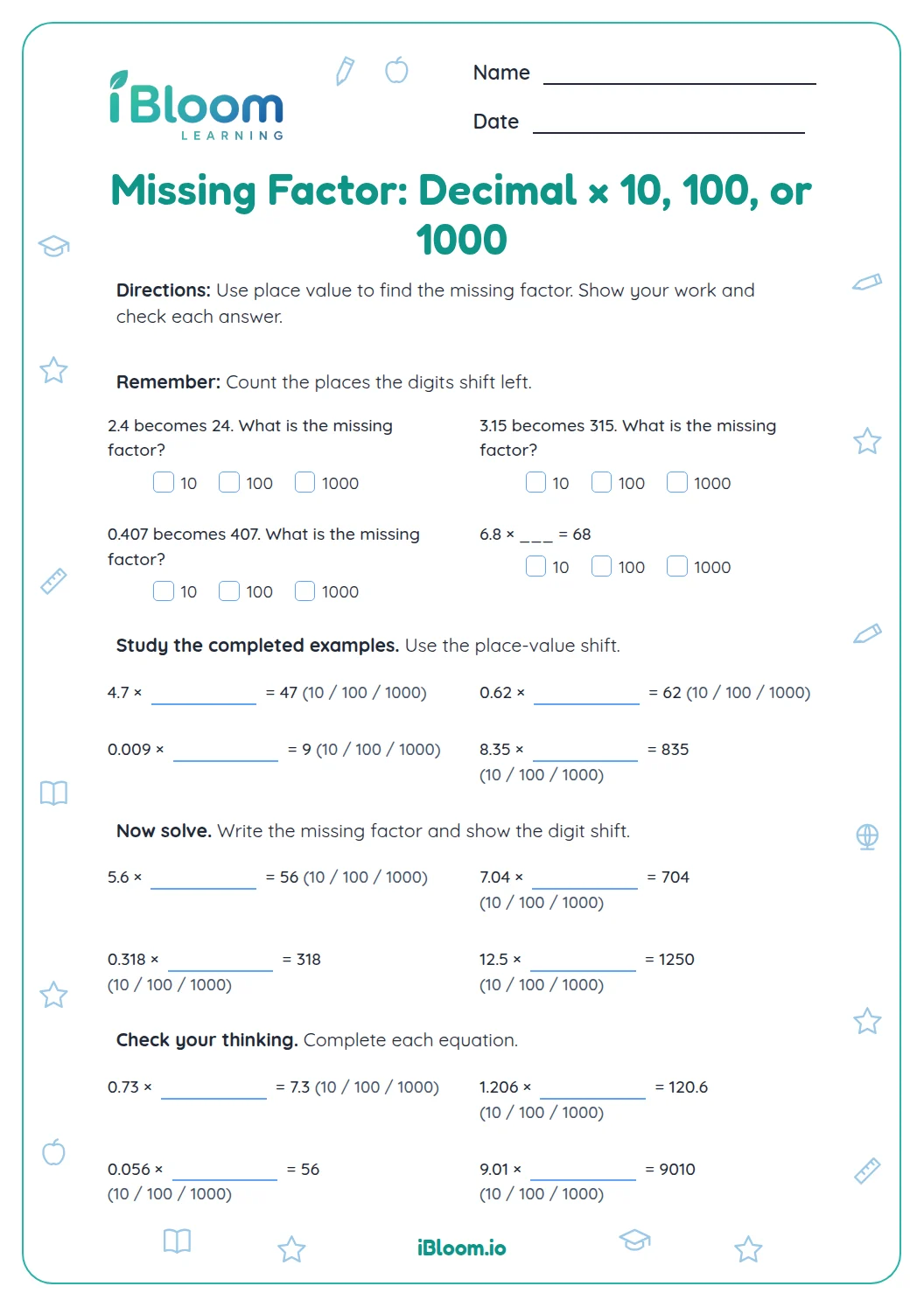
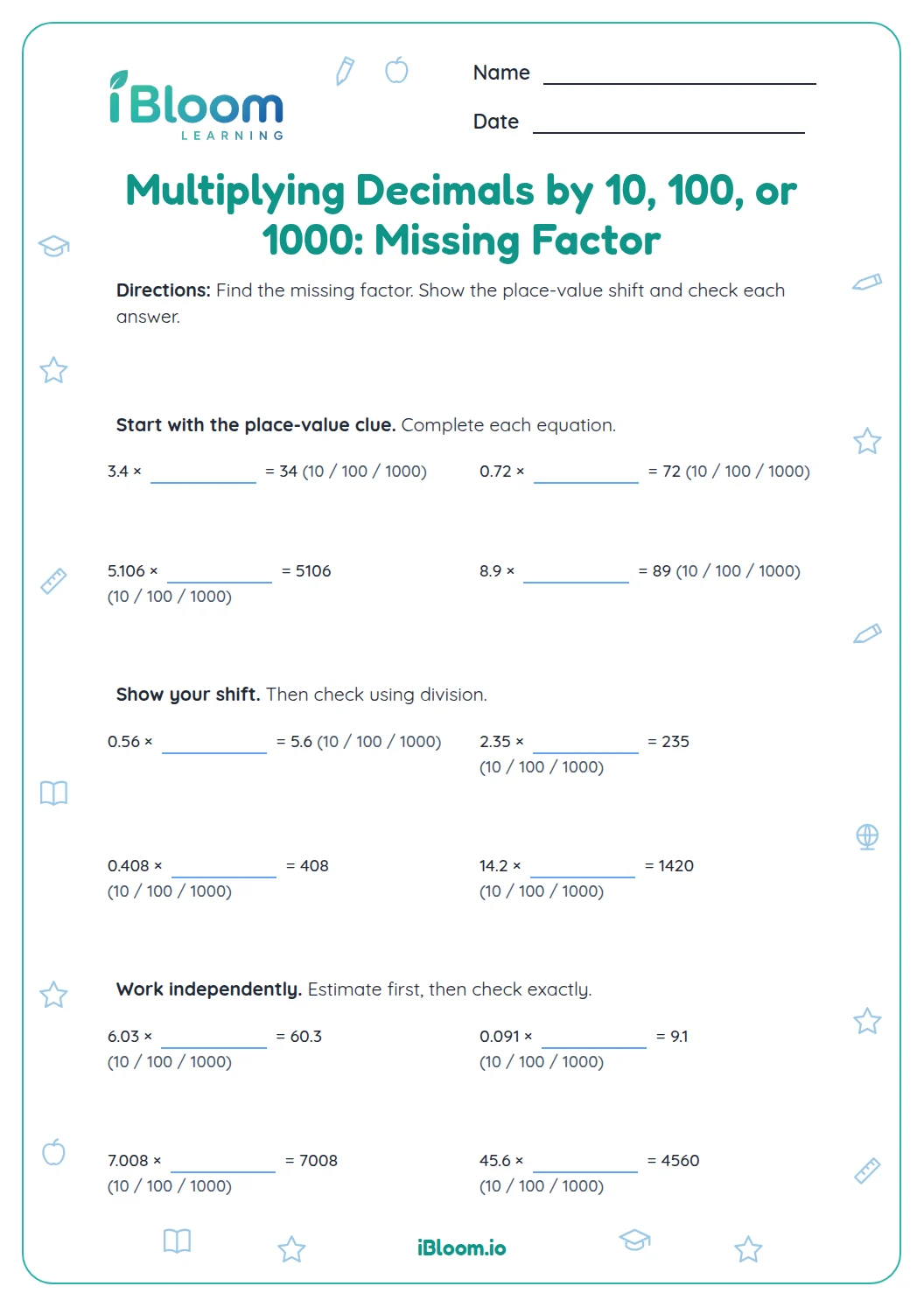
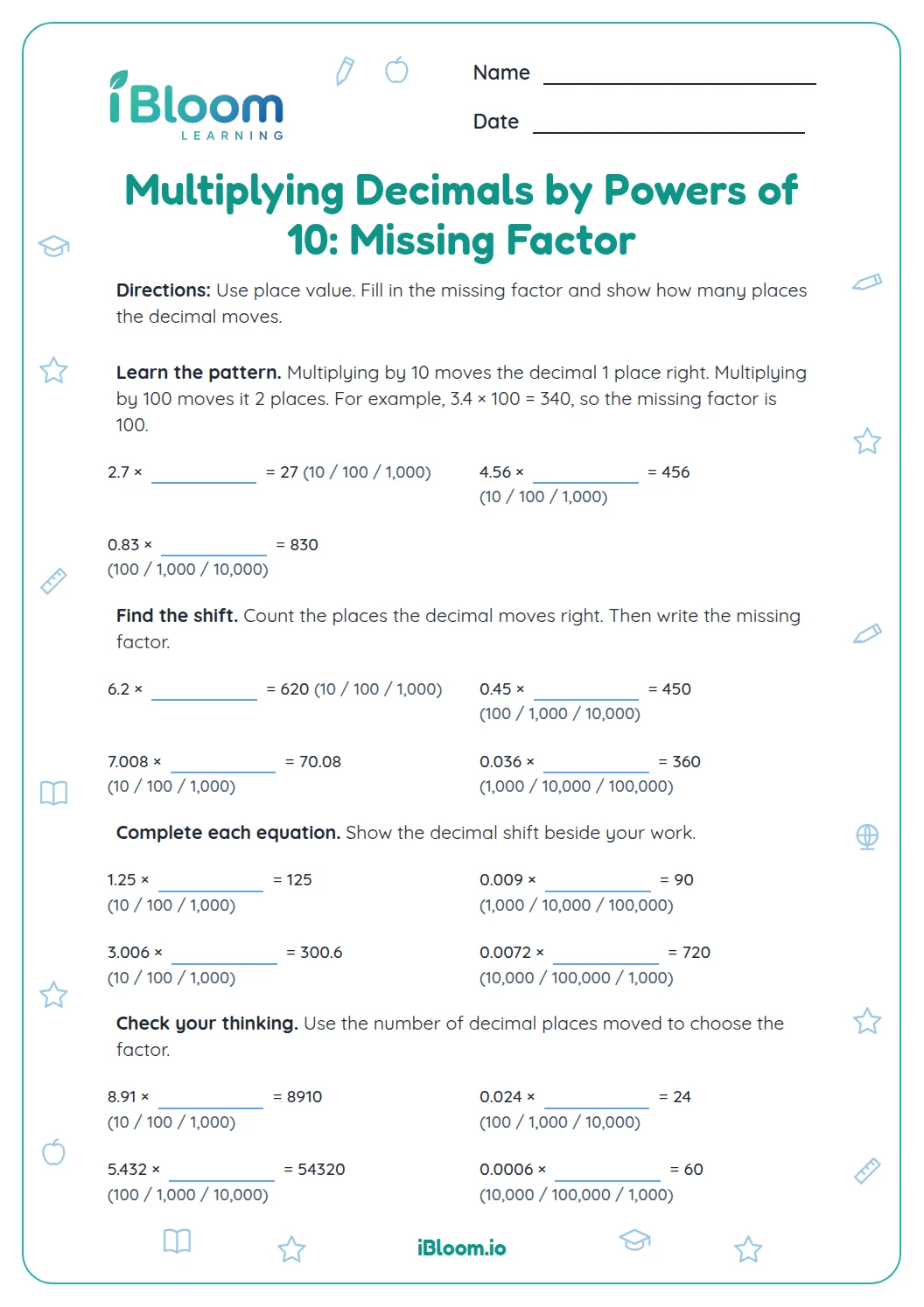
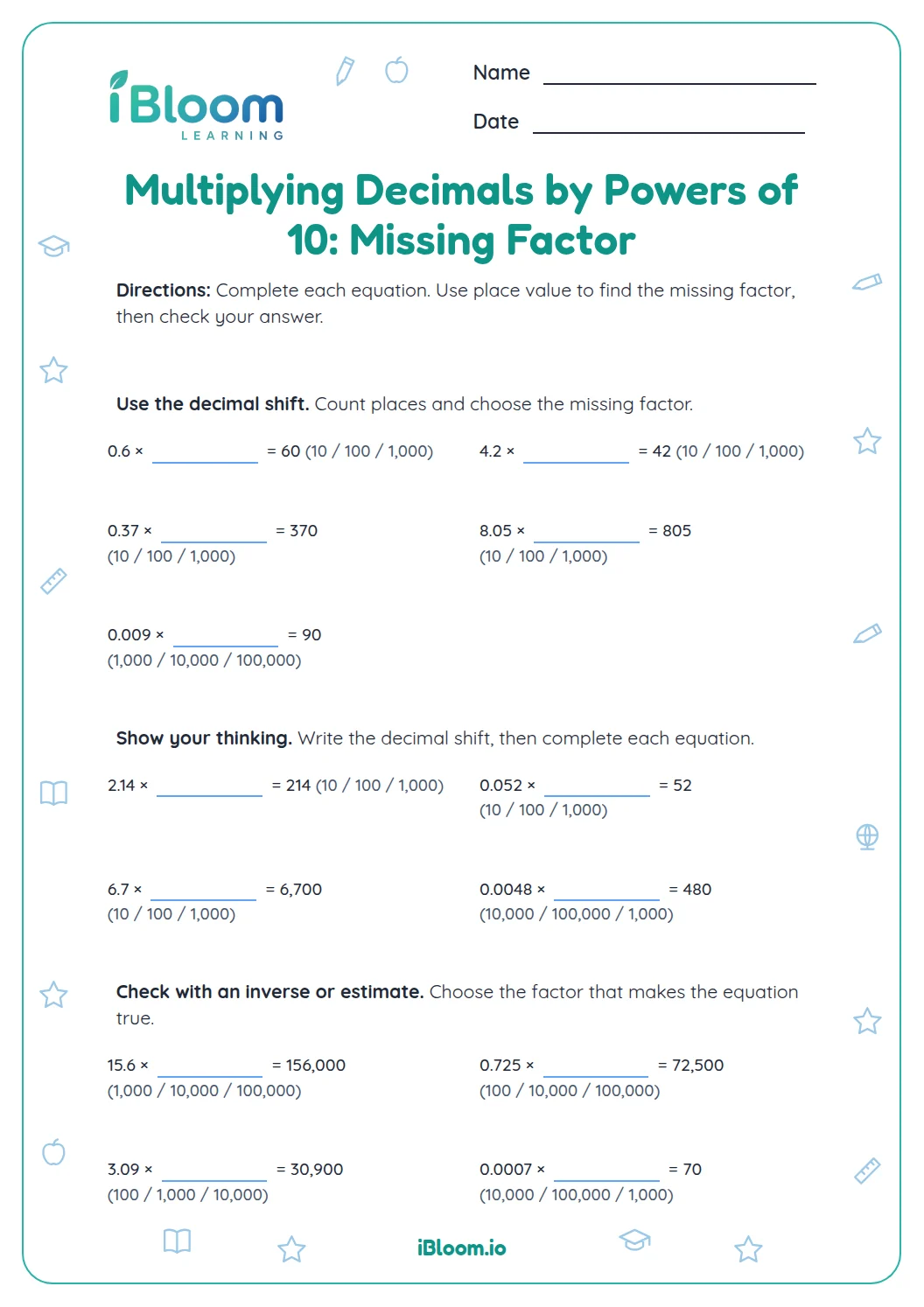
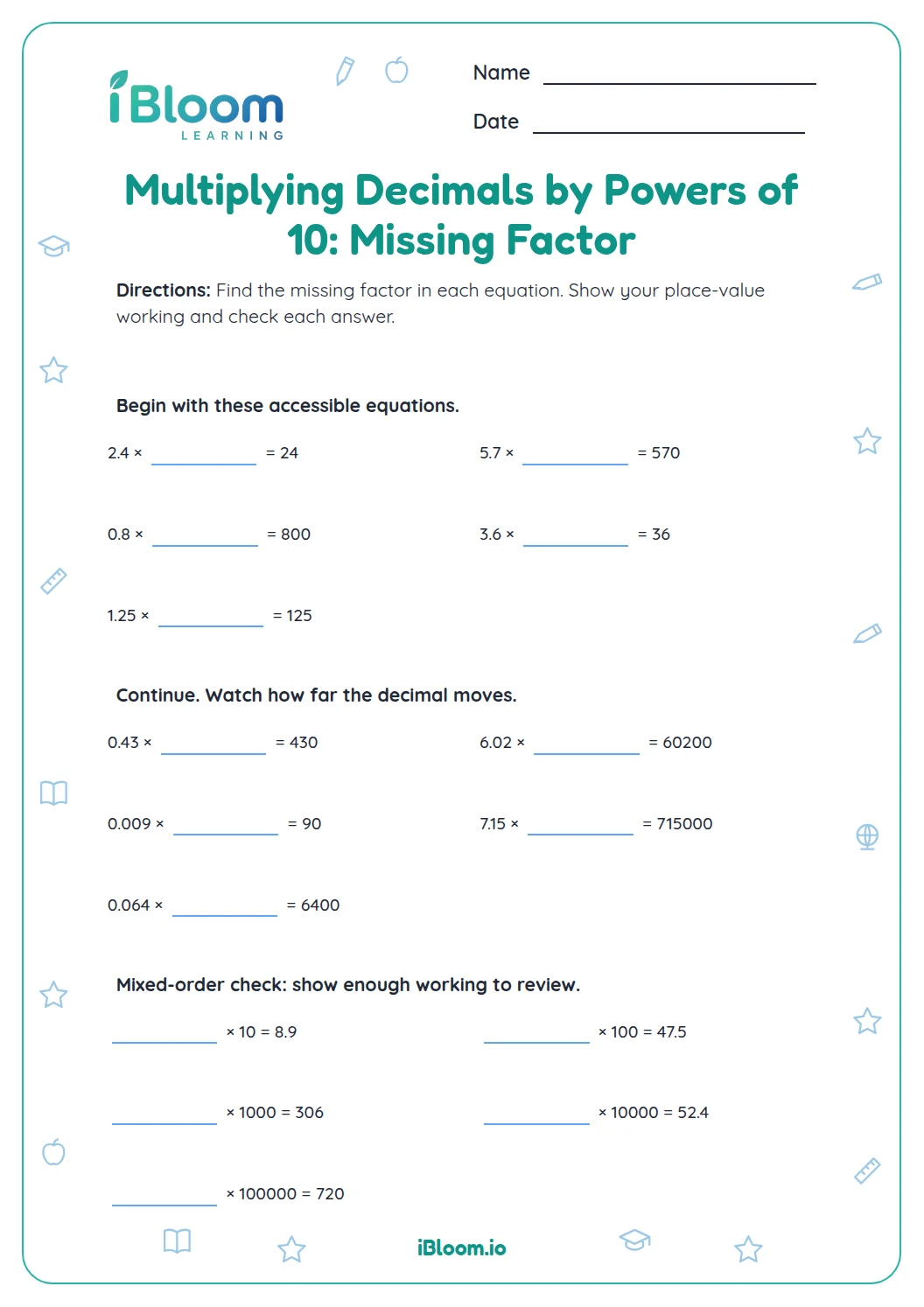
This Grade 6 worksheet gives students practice finding a missing factor in multiplication equations with whole numbers and decimals. Students use division to reverse multiplication, then check by multiplying. Sixteen questions progress from direct equations to short applications and a reasoning check. A separate answer key lists each factor.
How does division reveal the missing factor?
Multiplication and division undo each other. In question 1, 4 × ___ = 1.2, divide 1.2 by 4 to get 0.3. Check: 4 × 0.3 = 1.2.
How can I check a decimal factor?
Multiply the factor you found by the given factor. Keep decimal places in the product and compare it with the target.
What is on the practice page?
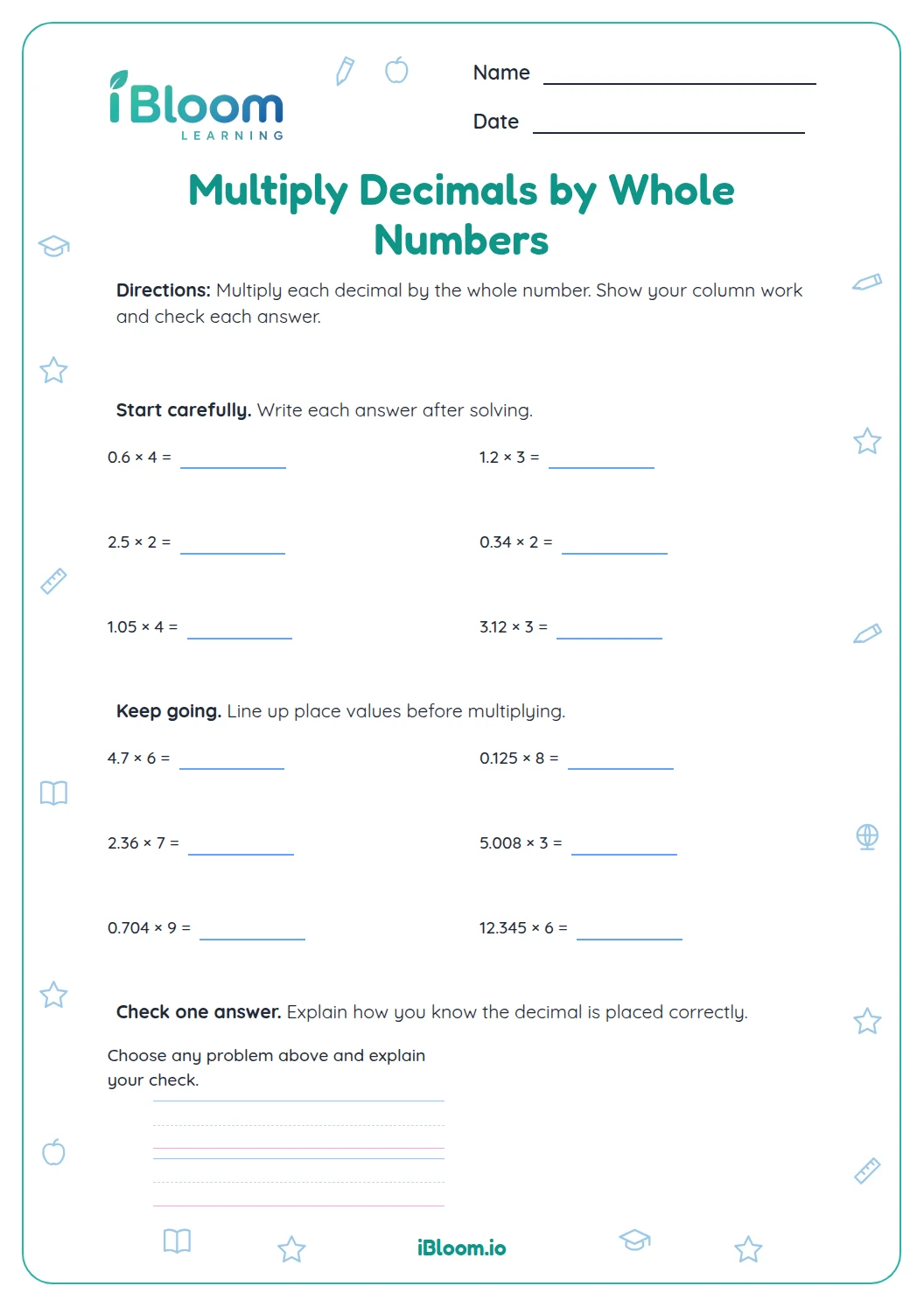
Parts A and B use whole-number and decimal factors in equations. Part C applies the same relationship in short situations and a reasoning check.
How can I use this sheet?
- 1Read the factor and product carefully.
- 2Divide the product by the known factor.
- 3Estimate first to judge whether the answer is reasonable.
- 4Multiply to check the equation.
Mistakes to watch for
The mistake
Dividing the known factor by the product.
The fix
Use product ÷ known factor.
The mistake
Moving a decimal without checking place value.
The fix
Estimate the product before calculating.
The mistake
Forgetting to verify the answer.
The fix
Substitute the factor into the original equation.
What to practice next
Make more practice
Questions parents and teachers ask
Why use division to find a missing factor?
Division reverses multiplication and gives the factor that combines with the known factor to make the product. In 4 × ___ = 1.2, compute 1.2 ÷ 4 = 0.3. Multiplying 4 by 0.3 checks that the product returns to 1.2.
How can I check a decimal factor?
Substitute the factor into the original equation and multiply. The product should match the number on the other side of the equals sign. Estimating first can also help catch a misplaced decimal, such as an answer ten times too large.
Does this sheet include whole-number factors?
Yes. The first part mixes whole-number and decimal factors, including 4 × ___ = 1.2 and ___ × 0.7 = 4.2. Later equations use decimal factors on both sides of the missing value, so students use division to reverse multiplication in more than one setting.
What do the application questions ask?
The last part gives short situations and equations to solve with a missing factor. Students identify the known factor and product, find the unknown value, and use multiplication to check. The answer key provides a concise result for each question.
Is an answer key included?
Yes. A separate answer key lists all 16 missing factors in question order. After checking a value, students can multiply it by the known factor to confirm the product, especially on items where the missing factor is a decimal. This check reinforces the inverse relationship.