
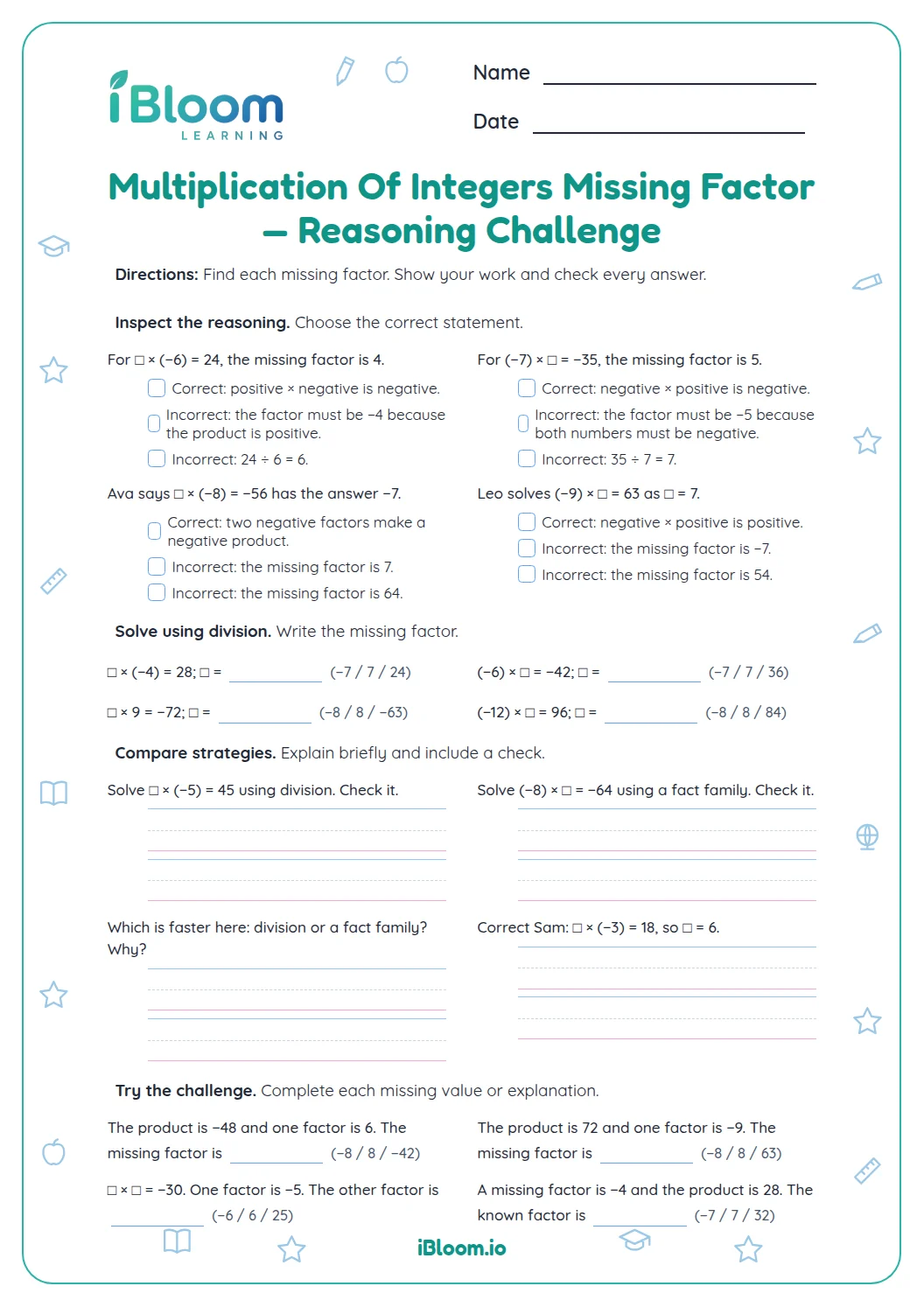
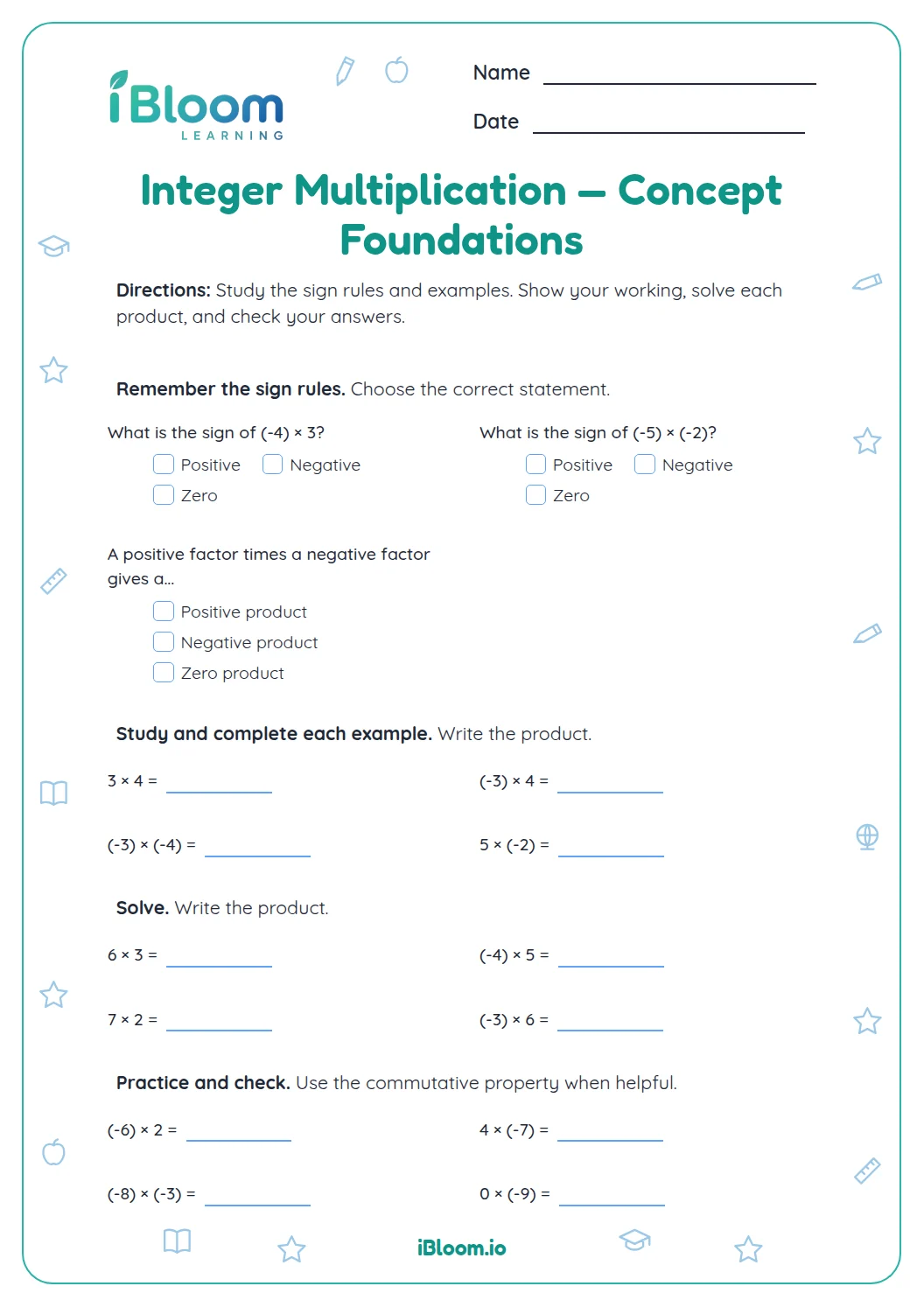
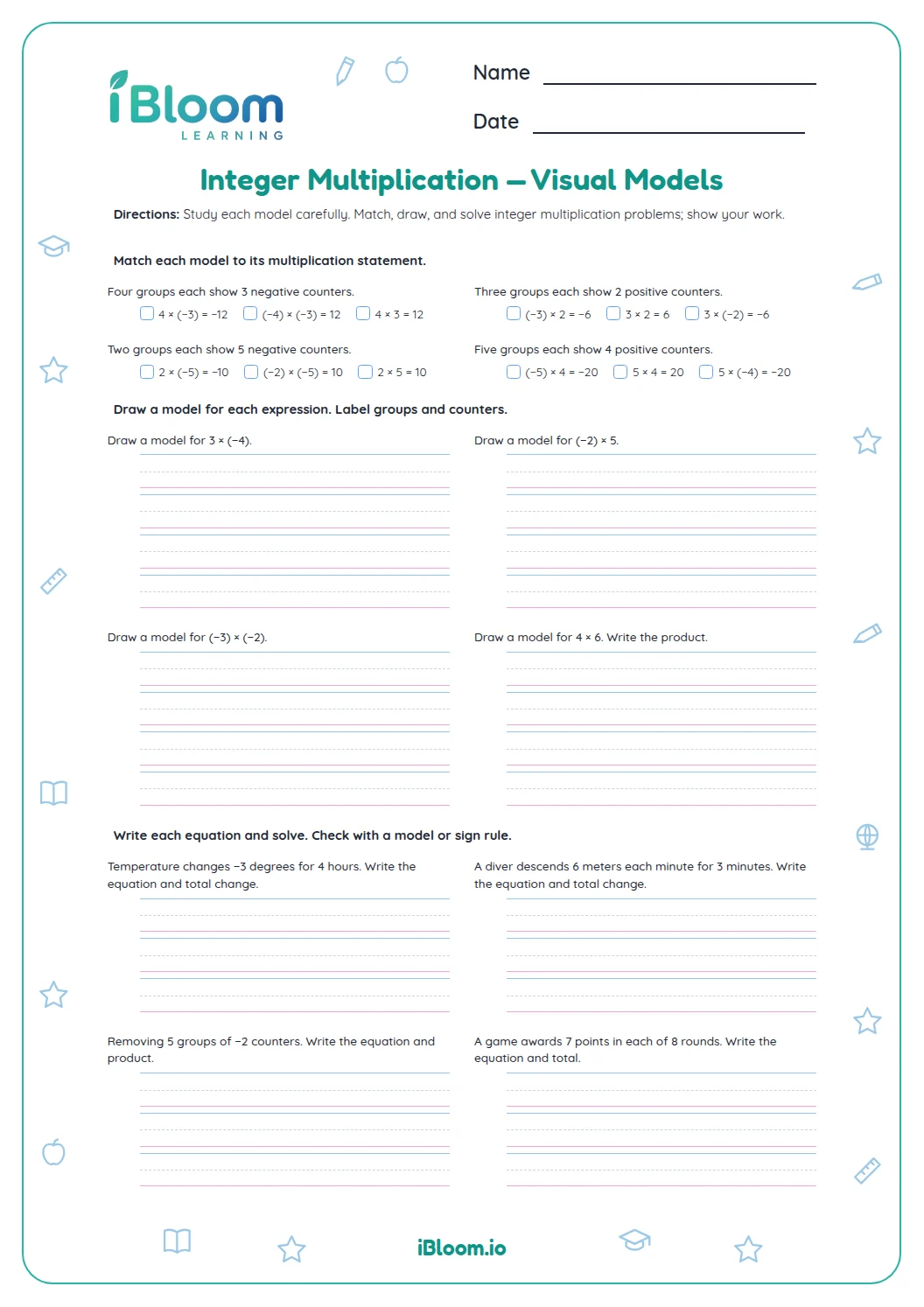

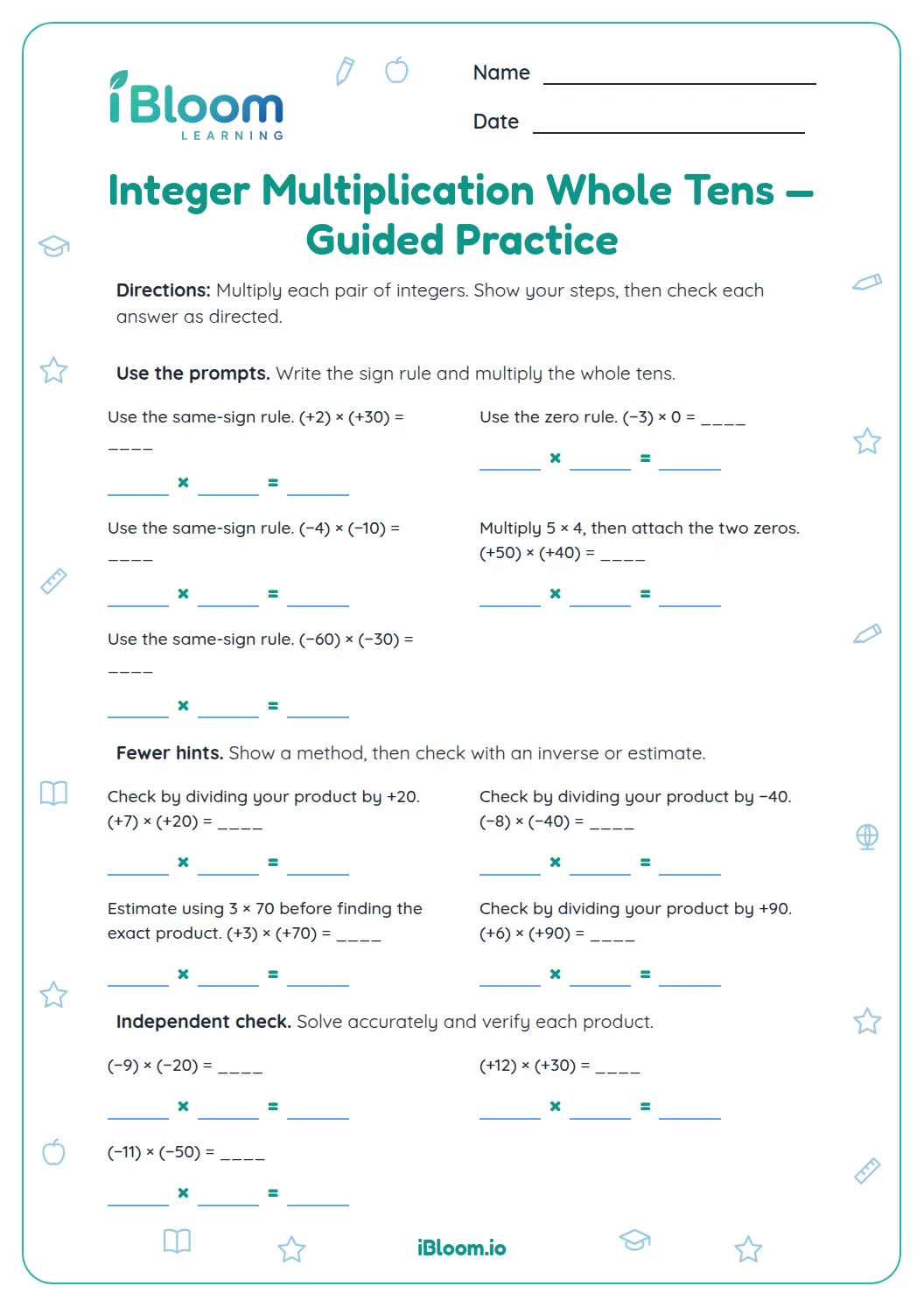
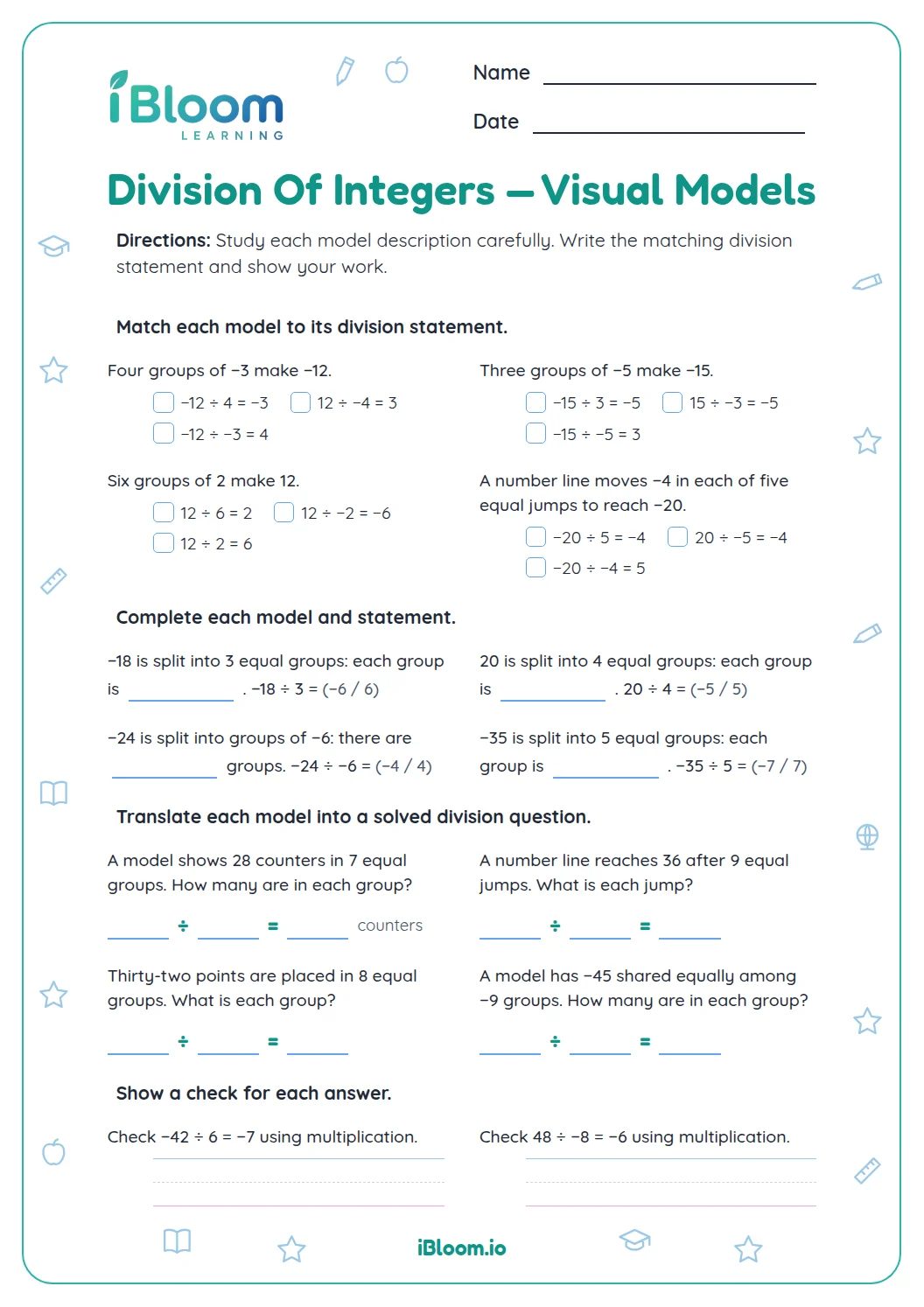
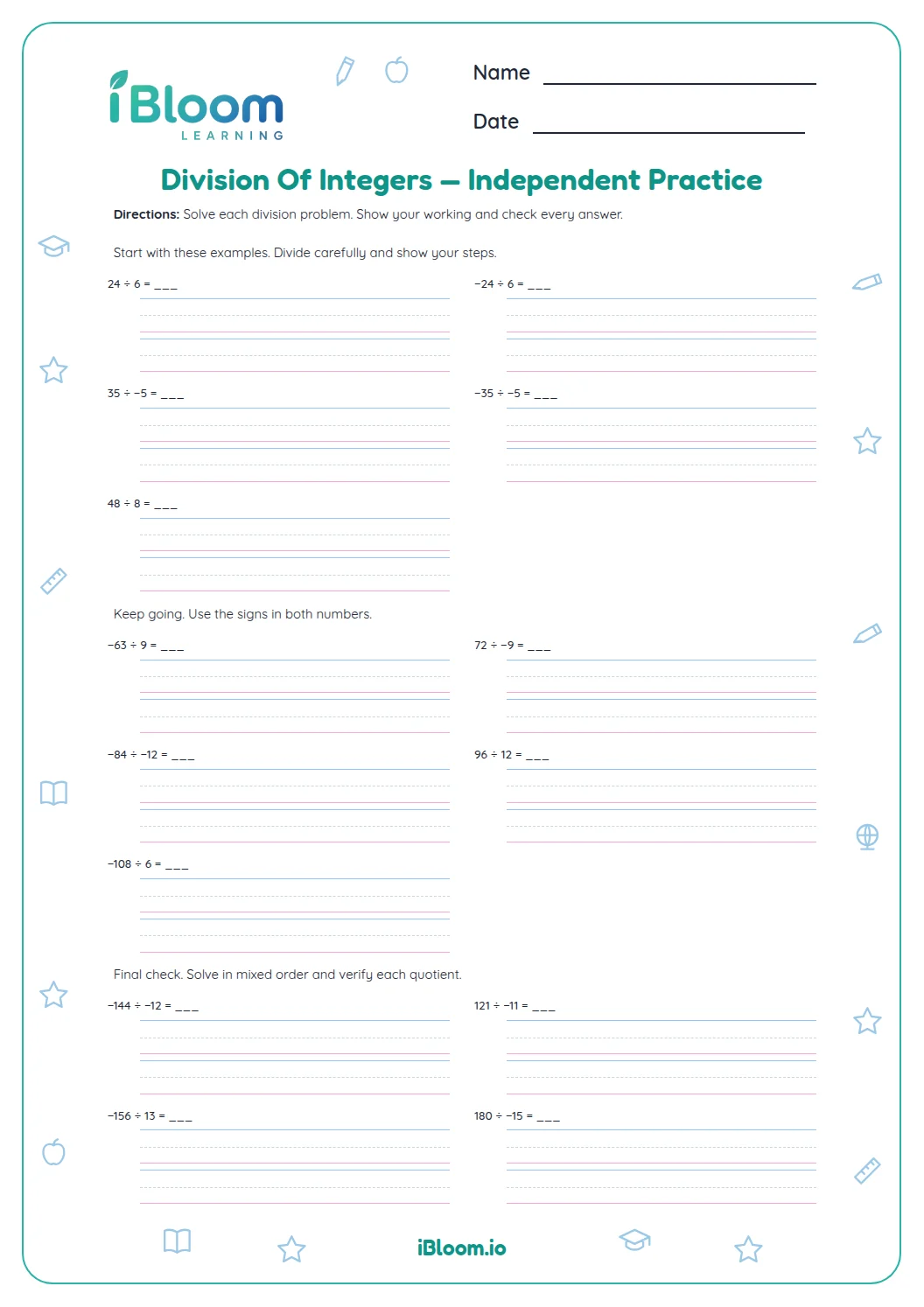
About this worksheet
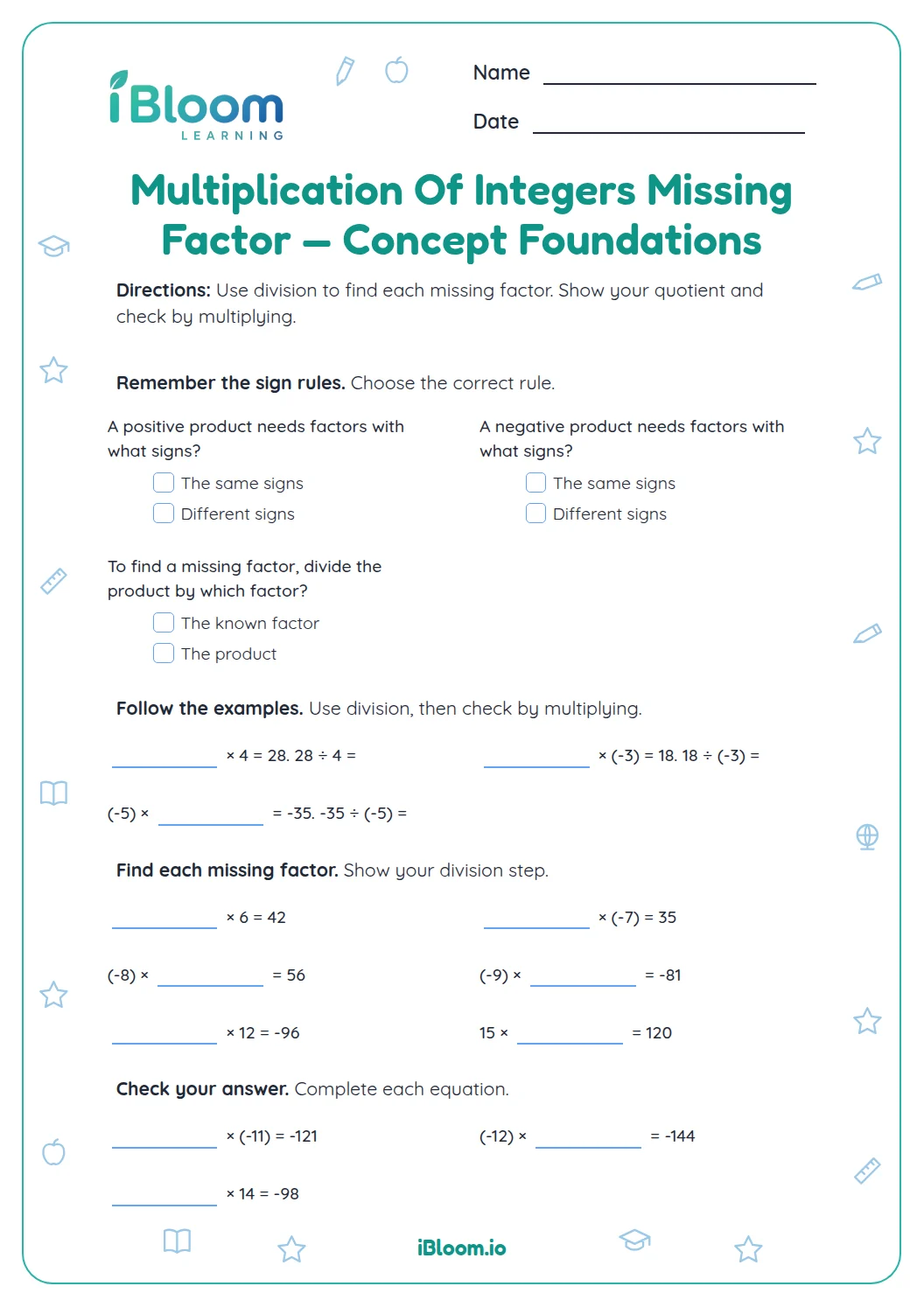
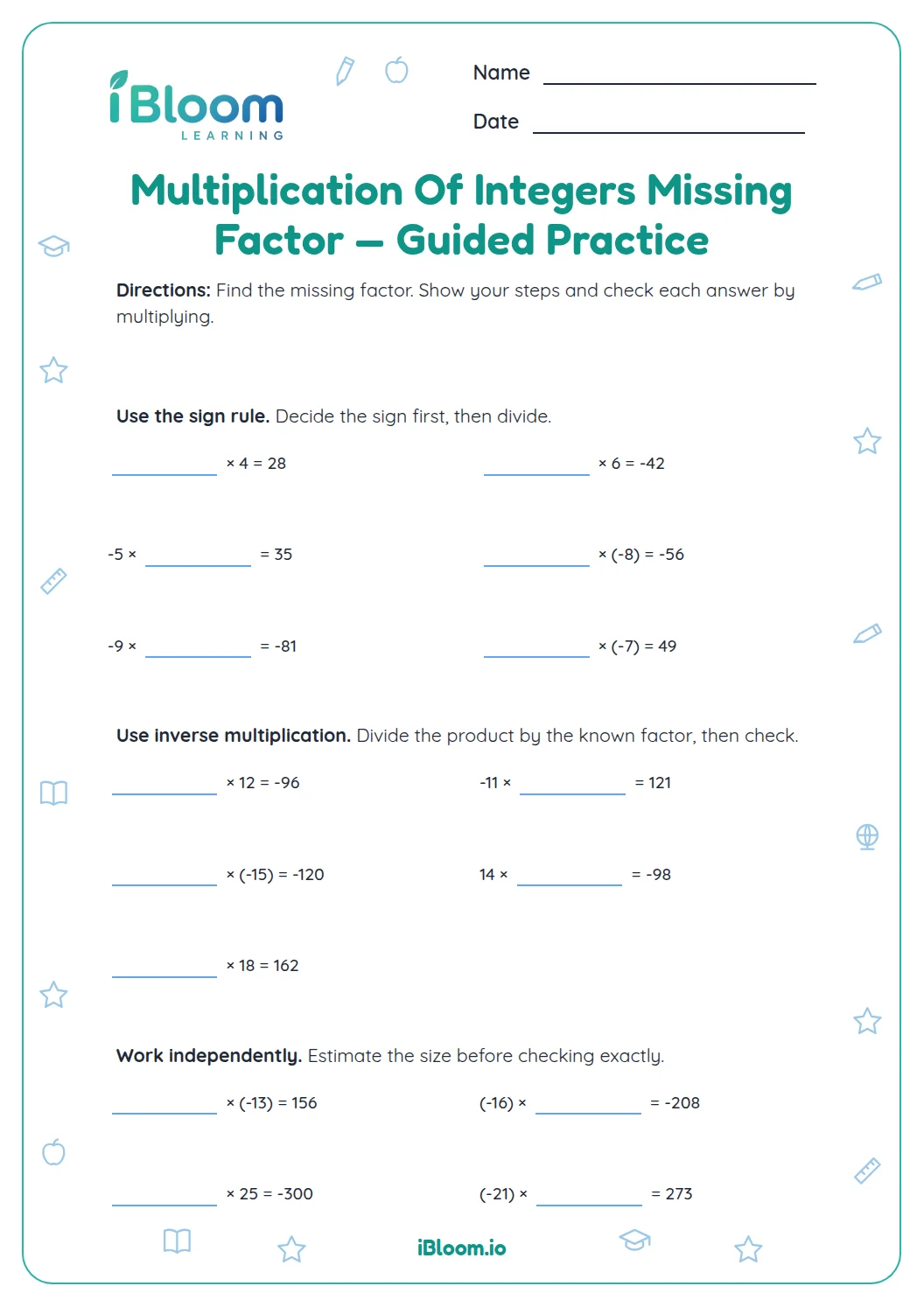
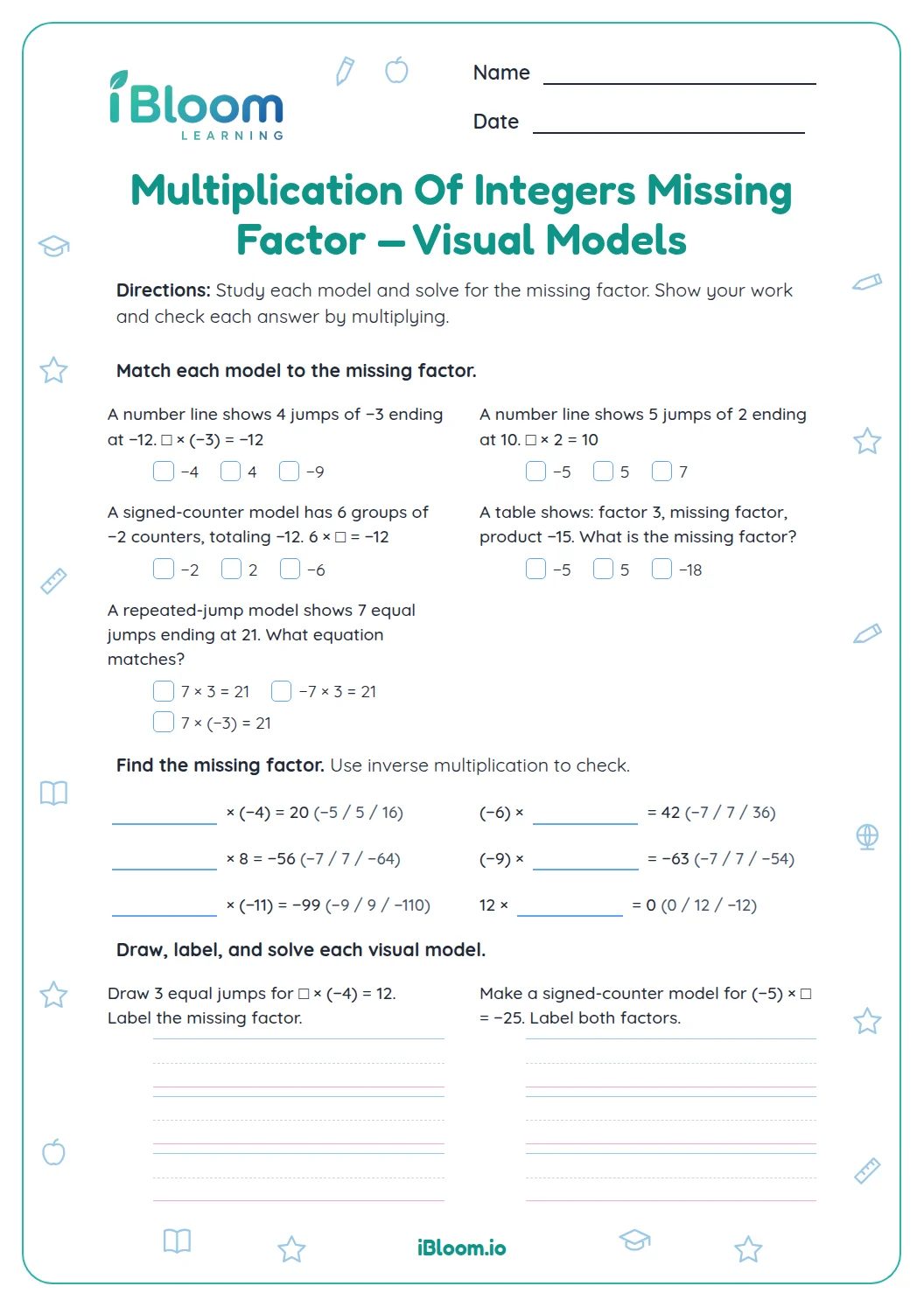
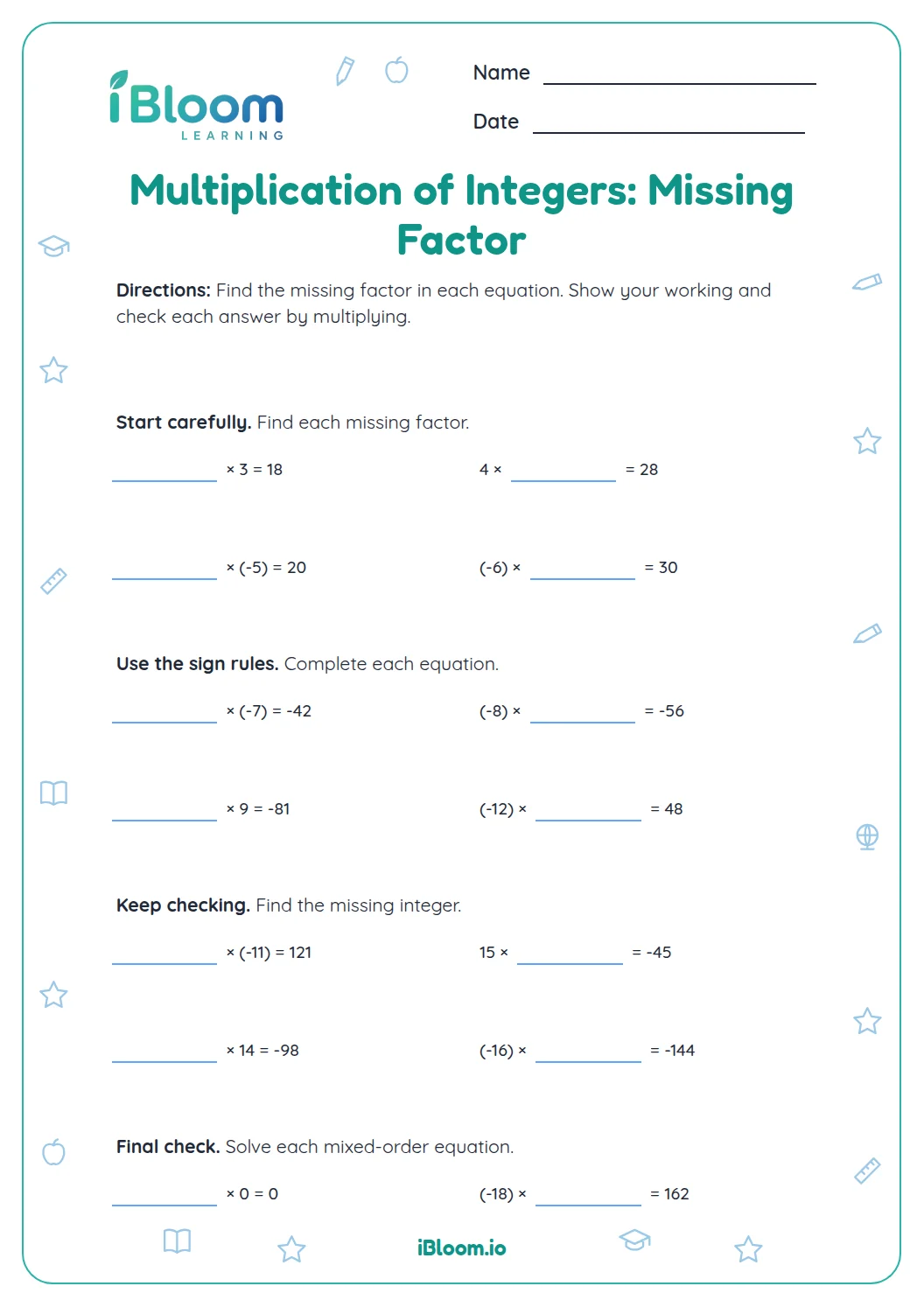
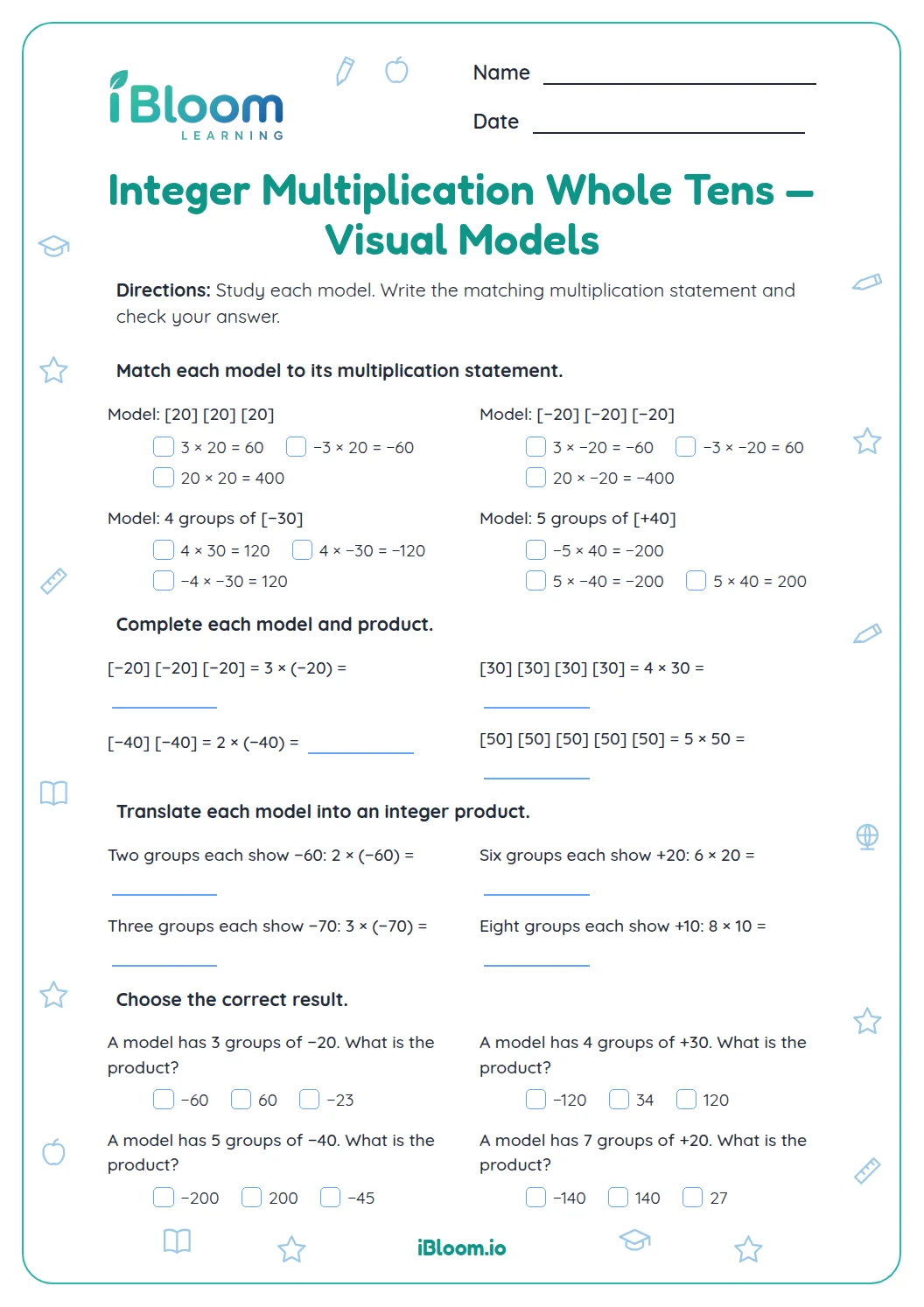
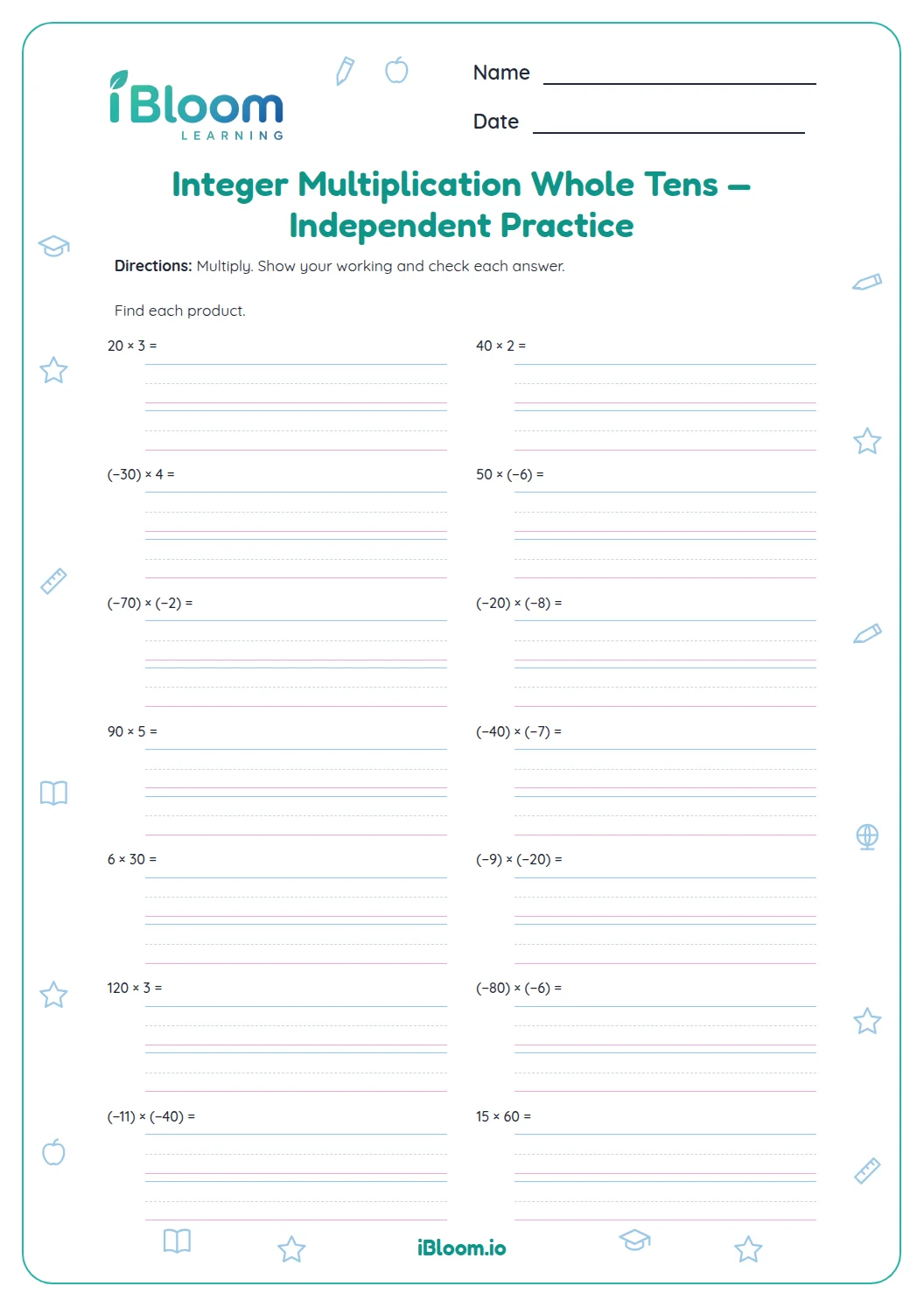
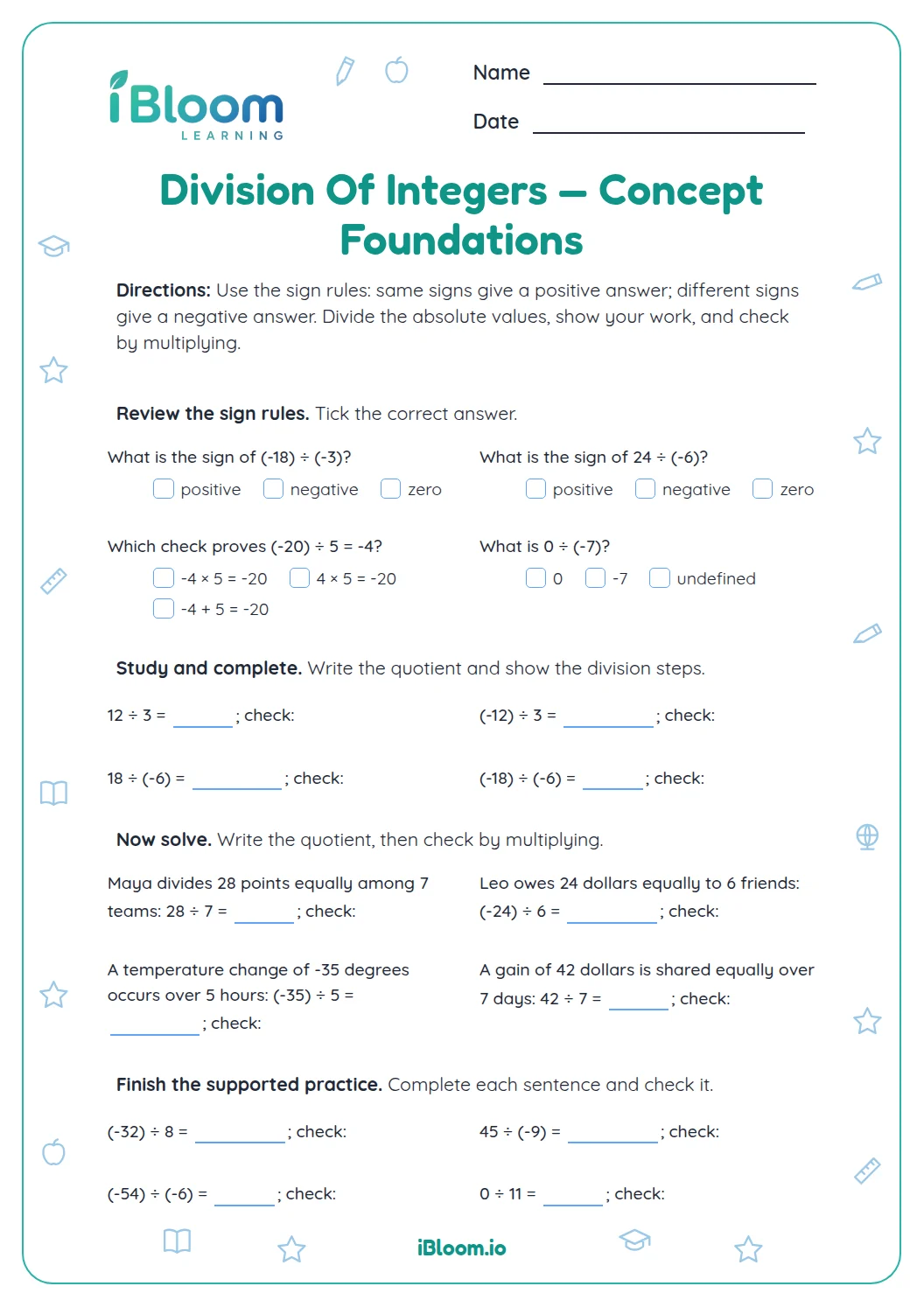
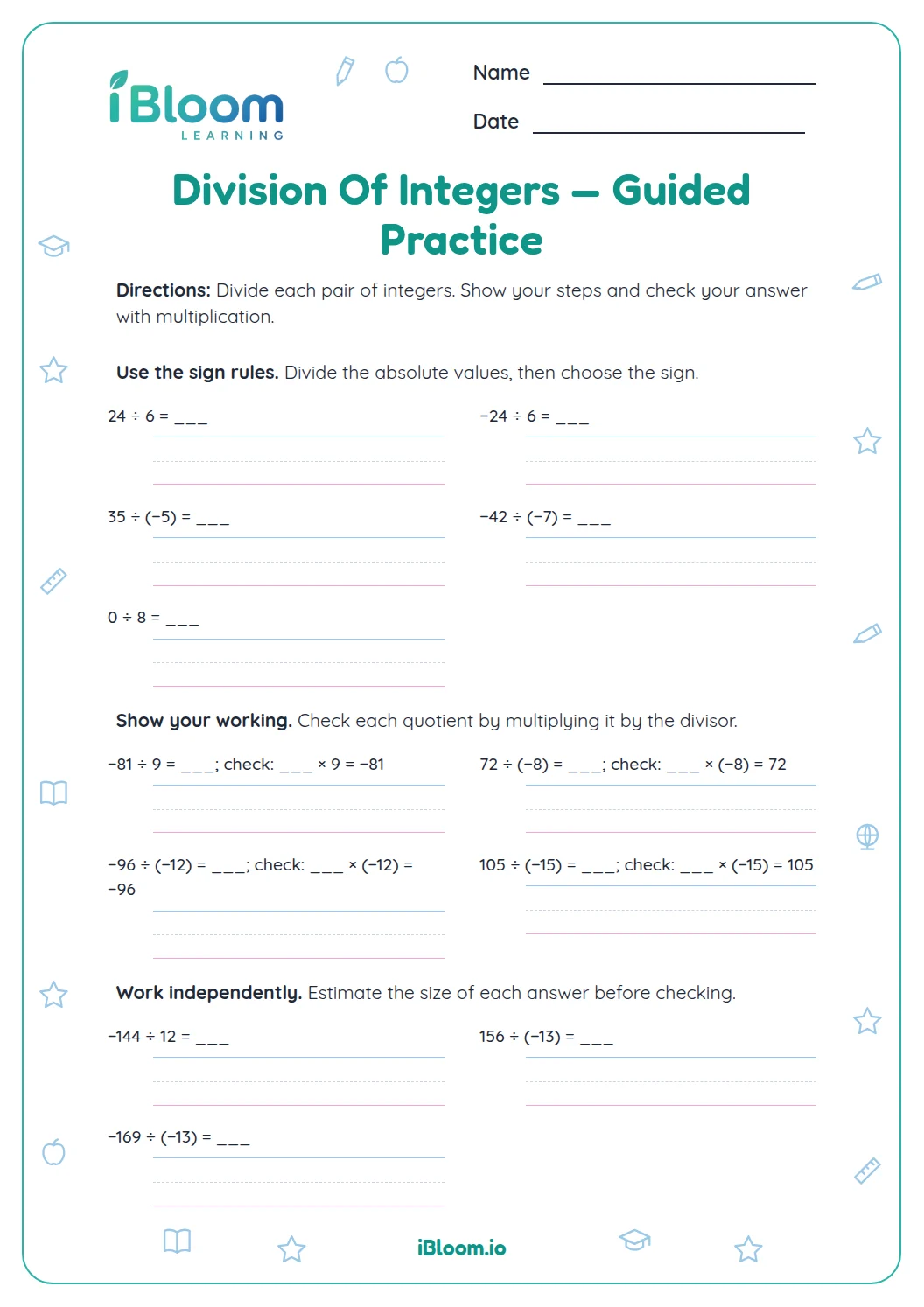
This free printable Grade 6 worksheet helps learners practice finding a missing integer factor in signed multiplication situations. It contains 14 questions in 3 parts, with two worksheet pages and a separate two-page answer key. Use total change ÷ number of equal intervals to find the signed change in each interval. It practices Common Core 7.NS.A.2.a through these signed multiplication situations.
Aligned to 7.NS.A.2.a
How can a learner work through finding a missing integer factor in signed multiplication situations?
Start by identifying what each question asks, then use its picture, number sentence, or context as a clue. Use total change ÷ number of equal intervals to find the signed change in each interval.
Have the learner show or say one step before checking the answer. That makes the method visible and helps pinpoint where a sign, place value, or word part changed.
- 1A total change of −42 feet occurs over 6 minutes.
- 2−42 ÷ 6 = −7 feet per minute.
- 3The negative sign matches a decrease in elevation.
What appears in each part of the worksheet?
The 14 questions move from direct practice to another way of applying the skill. Each group has its own direction so learners can focus on one task at a time.
- Find the missing factor
- Use context and signs
- Explain the sign
How can families check the work?
Use the separate answer key after the learner finishes each group. For a missed item, return to the clue in the prompt and solve it again. Use total change ÷ number of equal intervals to find the signed change in each interval.
How to use this worksheet
- 1Read the directions and name the skill: finding a missing integer factor in signed multiplication situations.
- 2Complete the first group together, saying the reasoning aloud.
- 3Let the learner try the next questions independently and show a step when helpful.
- 4Check answers with the separate key after finishing a group.
- 5For a missed item, find the clue or calculation step that changes the answer, then solve it again.
Common mistakes and quick fixes
The mistake
Treating every missing factor as positive
The fix
Use the signs in the total and known factor to determine the missing factor’s sign.
The mistake
Confusing total change with change per interval
The fix
Divide the total change by the number of equal intervals, then multiply back to check.
The mistake
Reporting a rate when the question asks for time
The fix
Identify the missing unit in the prompt and make sure the answer gives that quantity.
Common Core alignment
Interpret signed products in real-world contexts, including changes over equal intervals.
On this sheet: Students find signed factors and interpret products in contexts such as elevation and points.
Show the official wordingHide the official wording
Understand that multiplication is extended from fractions to rational numbers by requiring that operations continue to satisfy the properties of operations, particularly the distributive property, leading to products such as (−1)(−1) = 1 and the rules for multiplying signed numbers. Interpret products of rational numbers by describing real-world contexts.
What to practice next
Make more practice
Further reading
Questions parents and teachers ask
What does this integer worksheet ask students to find?
Students find missing factors in multiplication situations with positive and negative quantities. Contexts include elevation, points, temperature, floors, and time. The 14 questions are in three parts across two worksheet pages, with a separate two-page answer key. Several questions ask learners to interpret a rate or duration, then check the factor by multiplying it by the number of intervals.
How can students find a missing change per interval?
Divide the total change by the number of equal intervals. A total of −42 feet over 6 minutes gives −42 ÷ 6 = −7 feet per minute. Multiplying back, 6 × (−7) = −42, checks the missing factor. The multiplication check confirms both the number and its sign.
Why does the sign matter in a word problem?
The sign tells whether the quantity increases or decreases. A descent is represented by a negative elevation change, while a rise is positive. In the hiker example, −42 feet over 6 minutes means a change of −7 feet each minute.
Can a missing number represent time instead of a rate?
Yes. Some questions give a total signed change and a signed change per interval, then ask how many intervals occurred. For example, −54 points changing by −6 points per round gives 9 rounds because 9 × (−6) = −54. Check the requested unit before writing the missing value.
Which standard is listed for the integer practice?
The page aligns signed multiplication and division contexts with CCSS 7.NS.A.2.a. Learners use signed rational-number products to describe situations, while the worksheet is labeled for Grade 6 practice. The answer key provides the value and unit for each context. The examples connect an integer equation to a concrete situation.