









About this worksheet
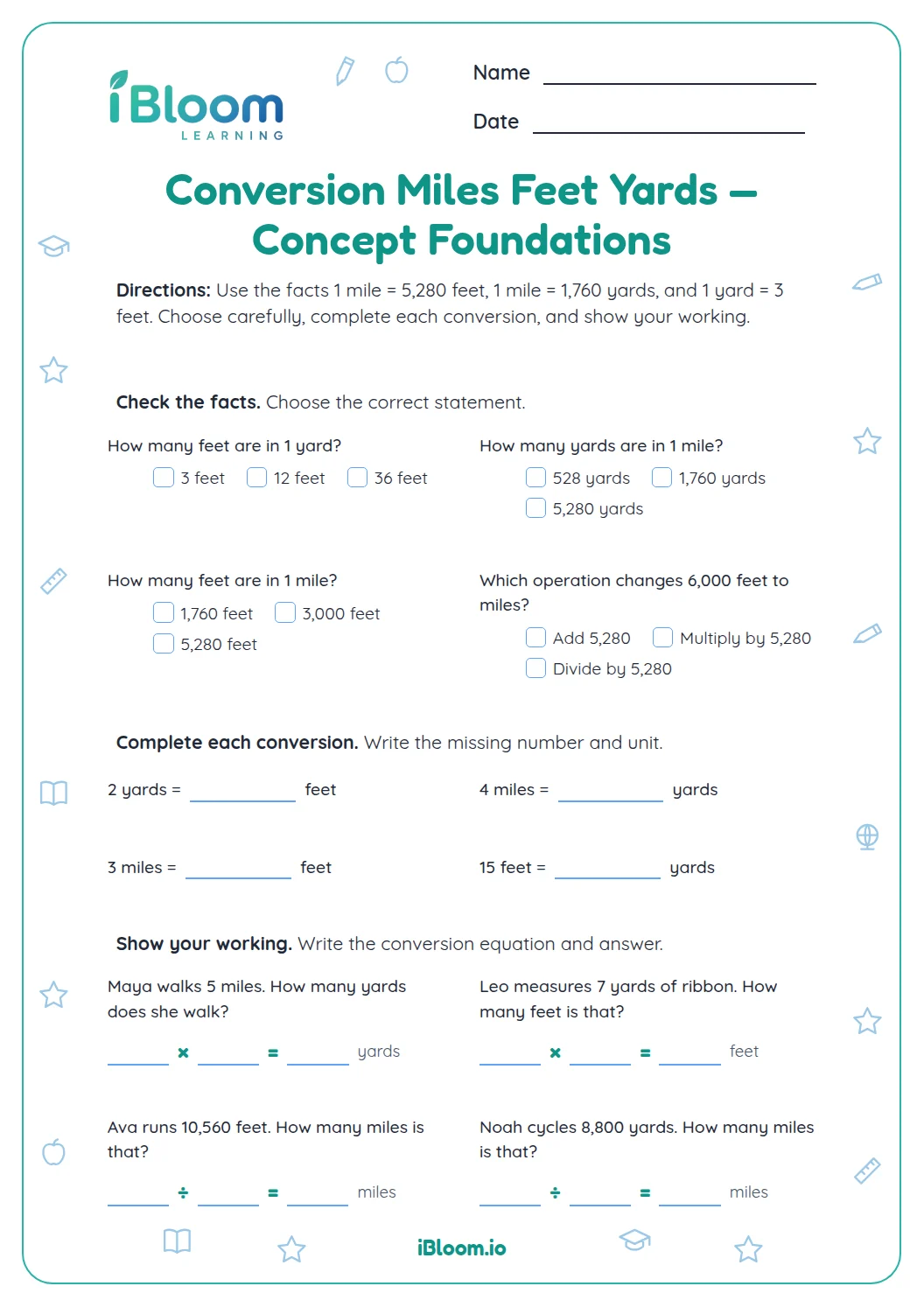
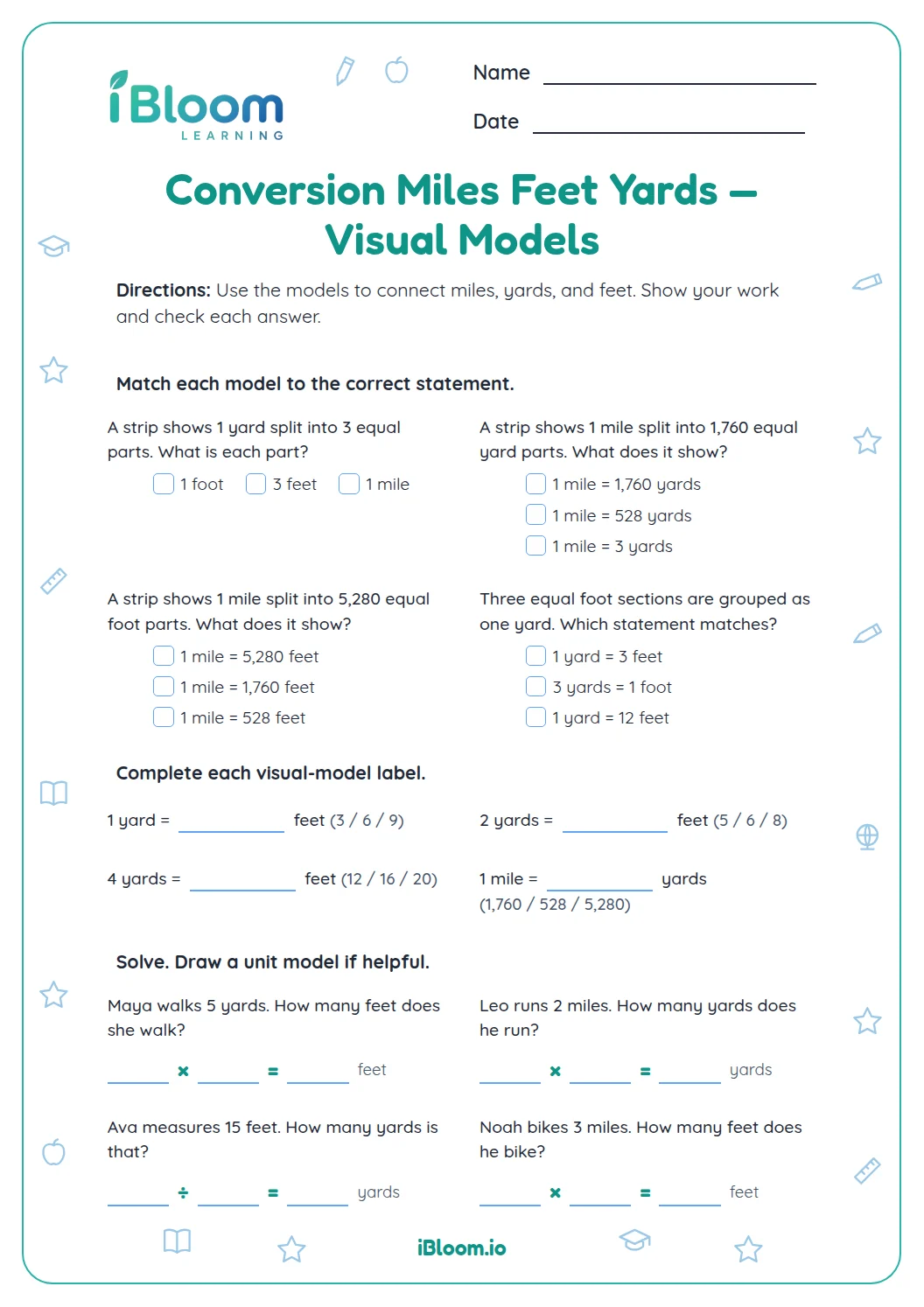
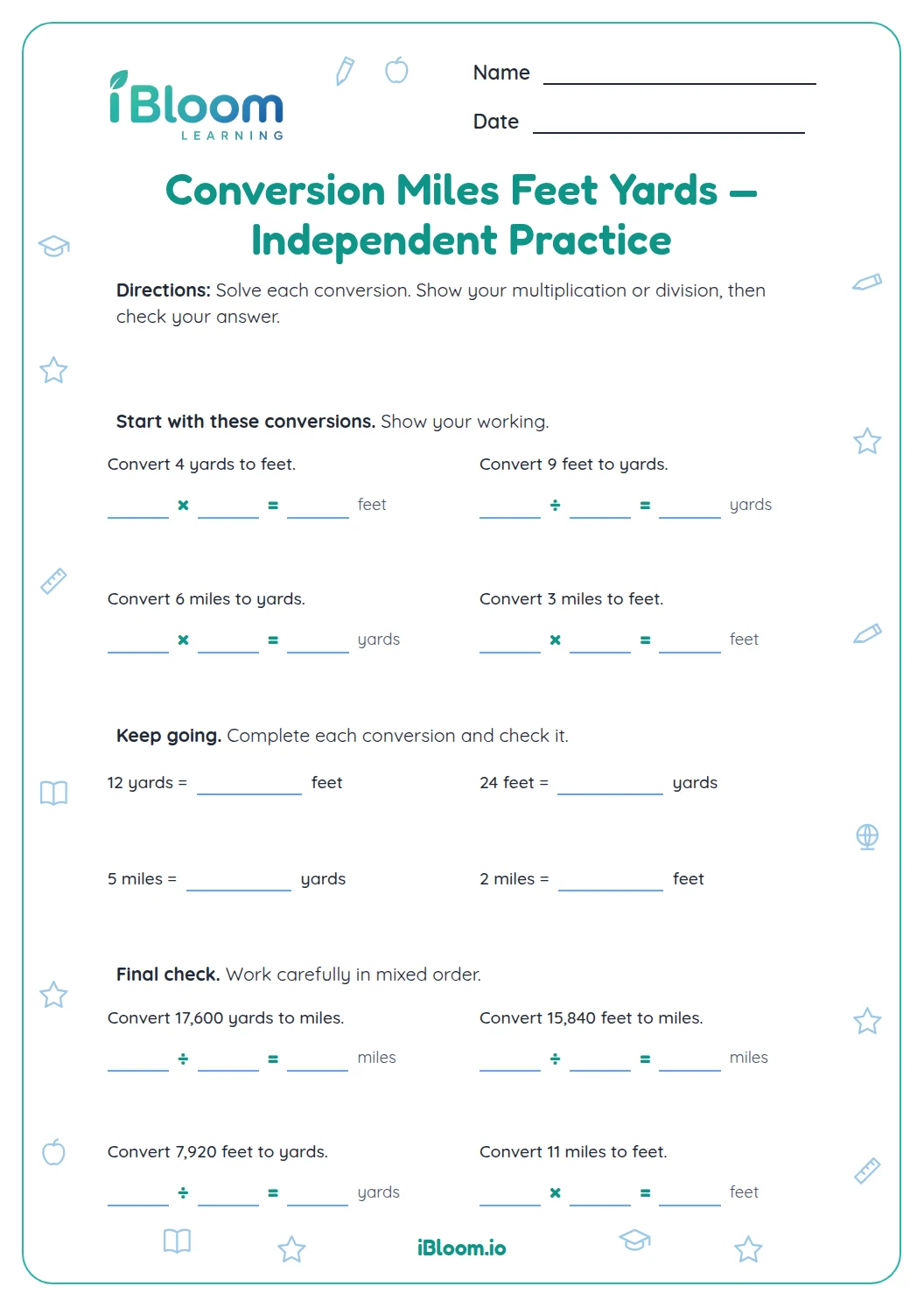
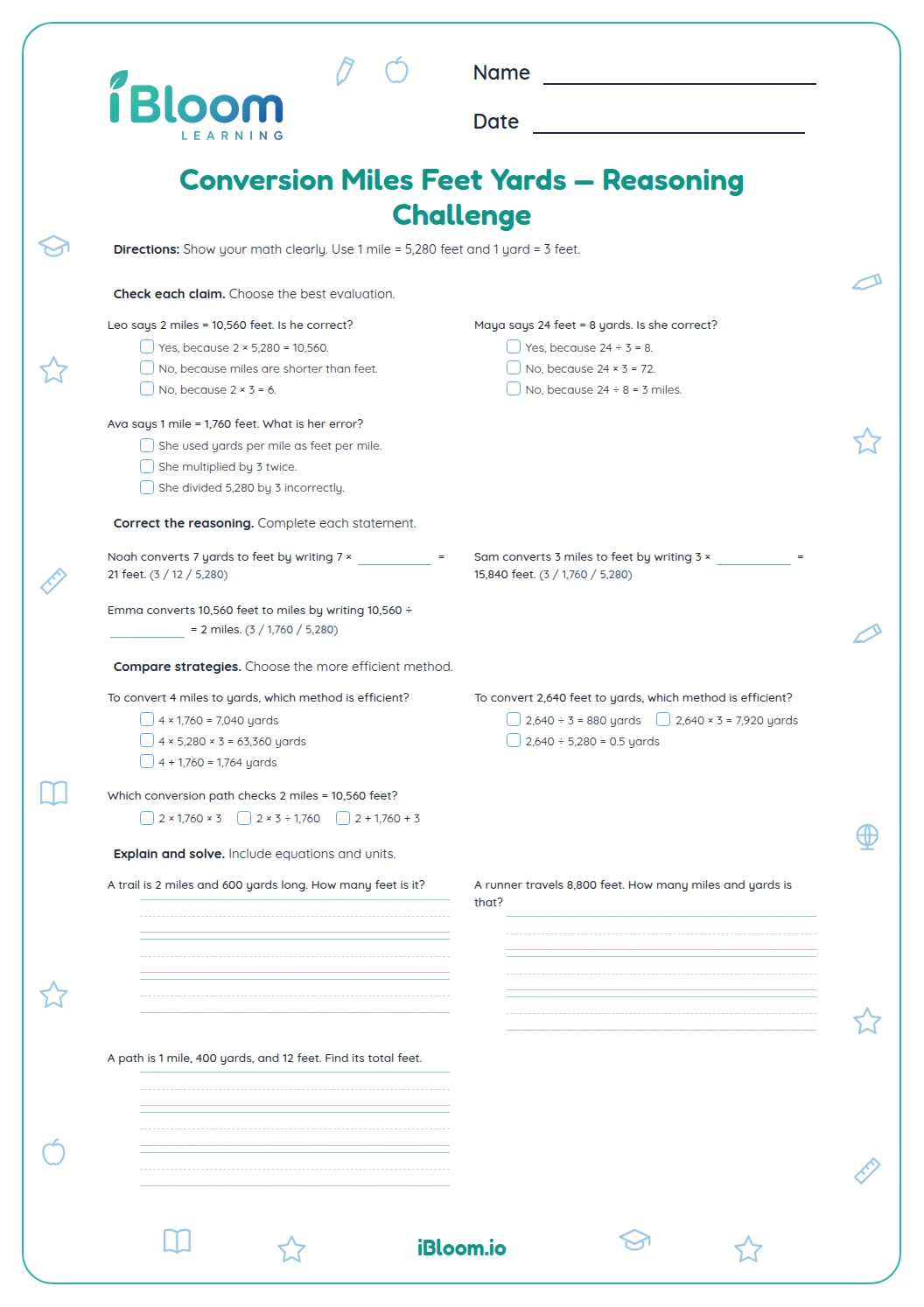
This free printable worksheet gives Grade 6 students guided practice converting miles, yards and feet. It starts with the two facts everything depends on, 1 mile = 1,760 yards and 1 yard = 3 feet, and with the question of whether to multiply or divide. Next come three lines with the first step already written, then four conversions to do alone and three word problems with working space. It supports Common Core 6.RP.A.3.d, using ratio reasoning to convert measurement units. An answer key with every conversion and the units for the word problems is included.
Aligned to 6.RP.A.3.d
What is on this miles, feet and yards worksheet?
Four parts, each a little less supported than the last. Part A checks the facts and the direction of a conversion with four multiple-choice questions. Part B writes the first step of three conversions and leaves the answer blank. Part C asks for four conversions with nothing written, going both from miles to yards and from yards or feet back up to miles. Part D has three word problems with room for working.
Every conversion uses the same two facts, so children can practice the thinking without hunting for new numbers.
- Part A: the two facts and which way to go (questions 1 to 4)
- Part B: finish the calculation (questions 5 to 7)
- Part C: convert on your own (questions 8 to 11)
- Part D: word problems with working space (questions 12 to 14)
When do you multiply and when do you divide?
Going to a smaller unit means you need more of them, so multiply. A mile is made of 1,760 yards, so 5 miles is 5 × 1,760 = 8,800 yards. Going to a larger unit means you need fewer, so divide: 7,040 yards ÷ 1,760 = 4 miles.
A quick check is to compare the size of the two numbers. Yards are shorter than miles, so a measurement should have a bigger number in yards than in miles.
- 12 miles = 2 × 1,760 = 3,520 yards
- 29 yards = 9 × 3 = 27 feet
- 310,560 feet ÷ 5,280 = 2 miles
Where does 5,280 feet in a mile come from?
It comes from the two facts together. One mile is 1,760 yards, and every yard is 3 feet, so one mile is 1,760 × 3 = 5,280 feet. Children who see this can rebuild one fact if they forget it, instead of memorizing three numbers.
Question 7 uses it directly: 3 miles = 3 × 5,280 = 15,840 feet.
How should children work the word problems?
Write the facts you need, convert, then answer with a unit. In question 14, Dana’s 2 miles must be turned into 3,520 yards before the two distances can be compared with Sam’s 4,000 yards. Sam ran 4,000 − 3,520 = 480 yards farther.
Notice that Part D keeps units in the answer. “5,280” alone does not say whether it counts yards or feet.
How to use this worksheet at home or in class
- 1Read the two facts in the directions aloud together: 1 mile is 1,760 yards, and 1 yard is 3 feet.
- 2Do Part A, then ask: when we change yards to feet, do we need more or fewer?
- 3In Part B, point to each first step and read it as a sentence: two miles is two times 1,760 yards.
- 4Let your child do Part C alone, using the facts at the top.
- 5In Part D, ask your child to write the fact needed before doing any arithmetic.
- 6Check with the key, then try the Mixed Practice worksheet for customary units.
Common mistakes and quick fixes
The mistake
Dividing when changing miles to yards, such as 5 ÷ 1,760 for question 8.
The fix
Ask whether the answer should be a bigger or smaller number. Yards are shorter than miles, so there are more of them: multiply.
The mistake
Using 1,760 to go from miles to feet, which gives 1,760 for question 2 instead of 5,280.
The fix
Check the unit in the fact. 1,760 is yards in a mile. For feet, use 5,280, or multiply by 3 once more.
The mistake
Comparing 2 and 4,000 in question 14 without converting first.
The fix
Put both distances in the same unit. Dana’s 2 miles are 3,520 yards, so Sam’s 4,000 yards is farther.
Common Core alignment
Grade 6 students use ratio reasoning to convert between units. This sheet builds that with the length units miles, yards and feet.
Use the ratio of one unit to another to convert miles, yards and feet.
On this sheet: Every question converts between miles, yards and feet by multiplying or dividing by 1,760, 5,280 or 3.
Show the official wordingHide the official wording
Use ratio reasoning to convert measurement units; manipulate and transform units appropriately when multiplying or dividing quantities.
What to practice next
Make more practice
Further reading
Questions parents and teachers ask
How many feet are in a mile?
There are 5,280 feet in a mile. You can get this from the two facts used on this worksheet: a mile is 1,760 yards and a yard is 3 feet, so 1,760 × 3 = 5,280. Question 2 asks for it, and question 7 uses it to convert 3 miles into feet.
Do students need to memorize 1,760 and 5,280?
Knowing 1,760 yards in a mile and 3 feet in a yard is enough, because 5,280 comes from multiplying them: 1,760 × 3 = 5,280. On this guided sheet both facts are printed in the directions and at the top of Part A, so children can look back while they learn which way to convert.
Why do the first three conversions show the first step?
Seeing 2 × 1,760 written out shows what the multiplication means before children try it alone. Part B leaves only the arithmetic, so a child can focus on the calculation and confirm the method. Part C then removes the written step, and Part D asks for the whole process with working space.
What if my child divides instead of multiplies?
Ask whether the answer should be more or fewer of the new unit. A mile is longer than a yard, so a distance measured in yards needs a bigger number than the same distance in miles. That comparison catches most direction mistakes before any arithmetic begins.
Why does question 14 compare two different units?
Comparing a distance in miles with one in yards is a realistic reason to convert, and it requires both distances to use the same unit. Children change 2 miles into 3,520 yards and then compare with 4,000 yards. It also shows that a bigger number does not always mean a longer distance.
What should my child practice next?
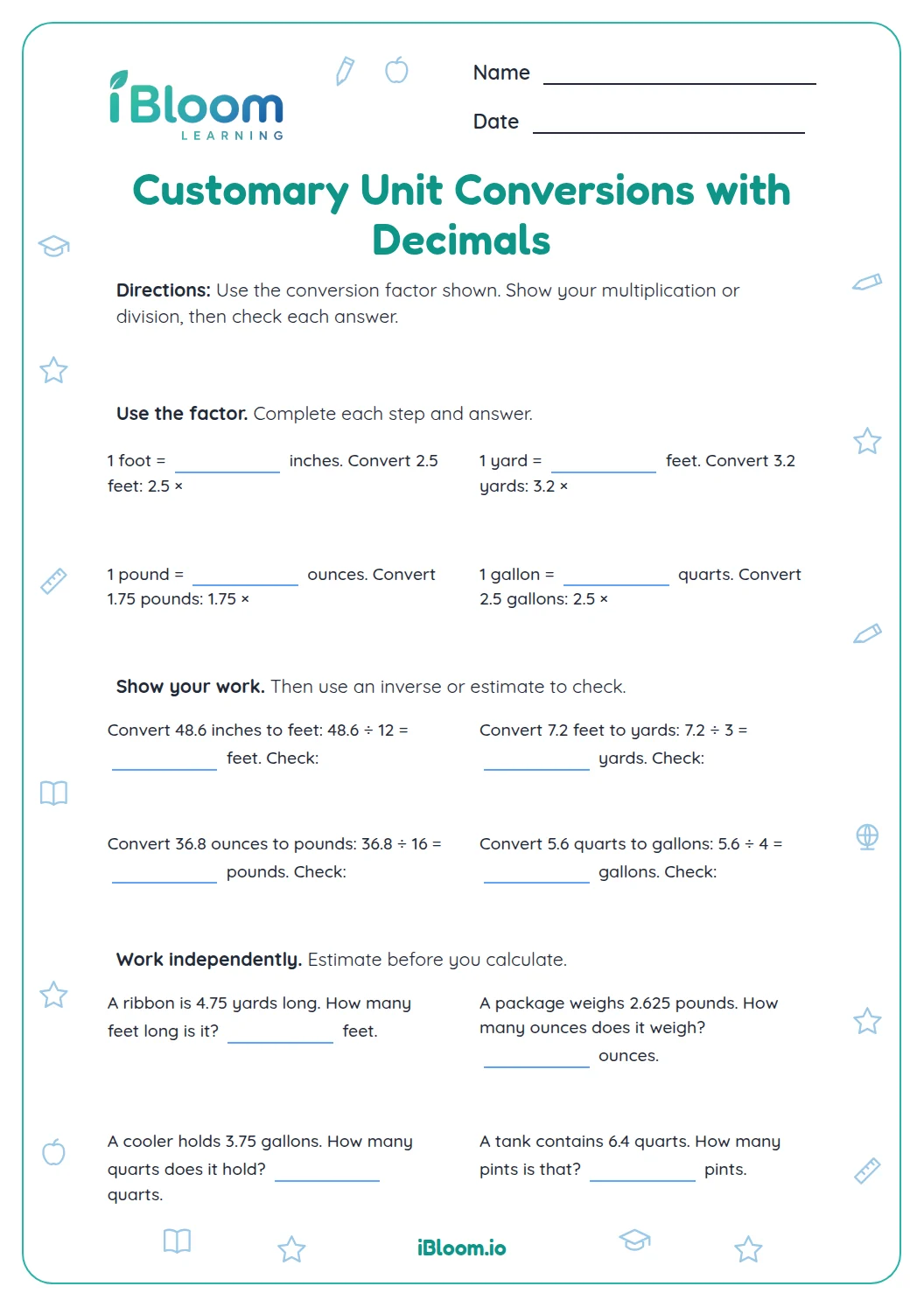
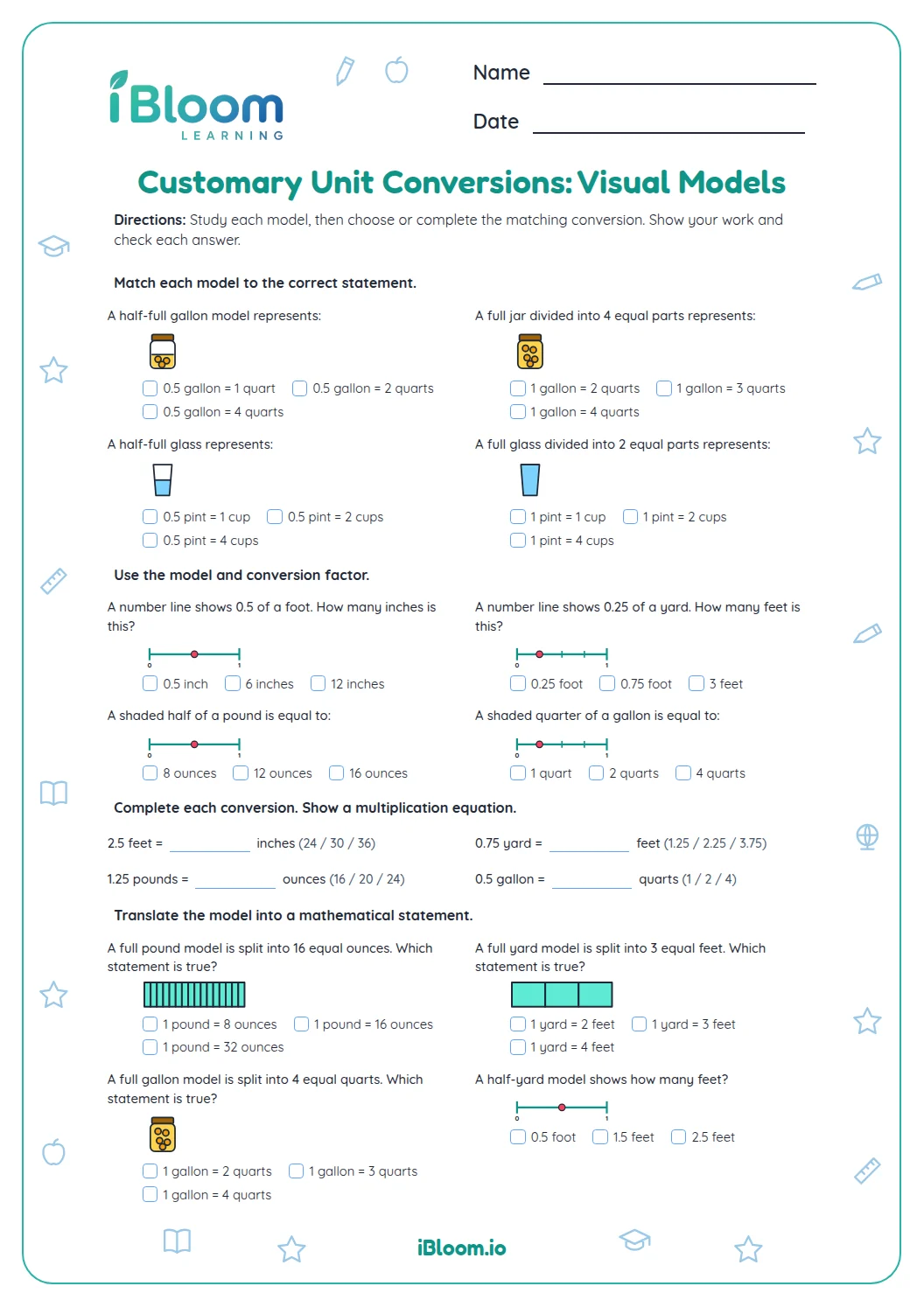
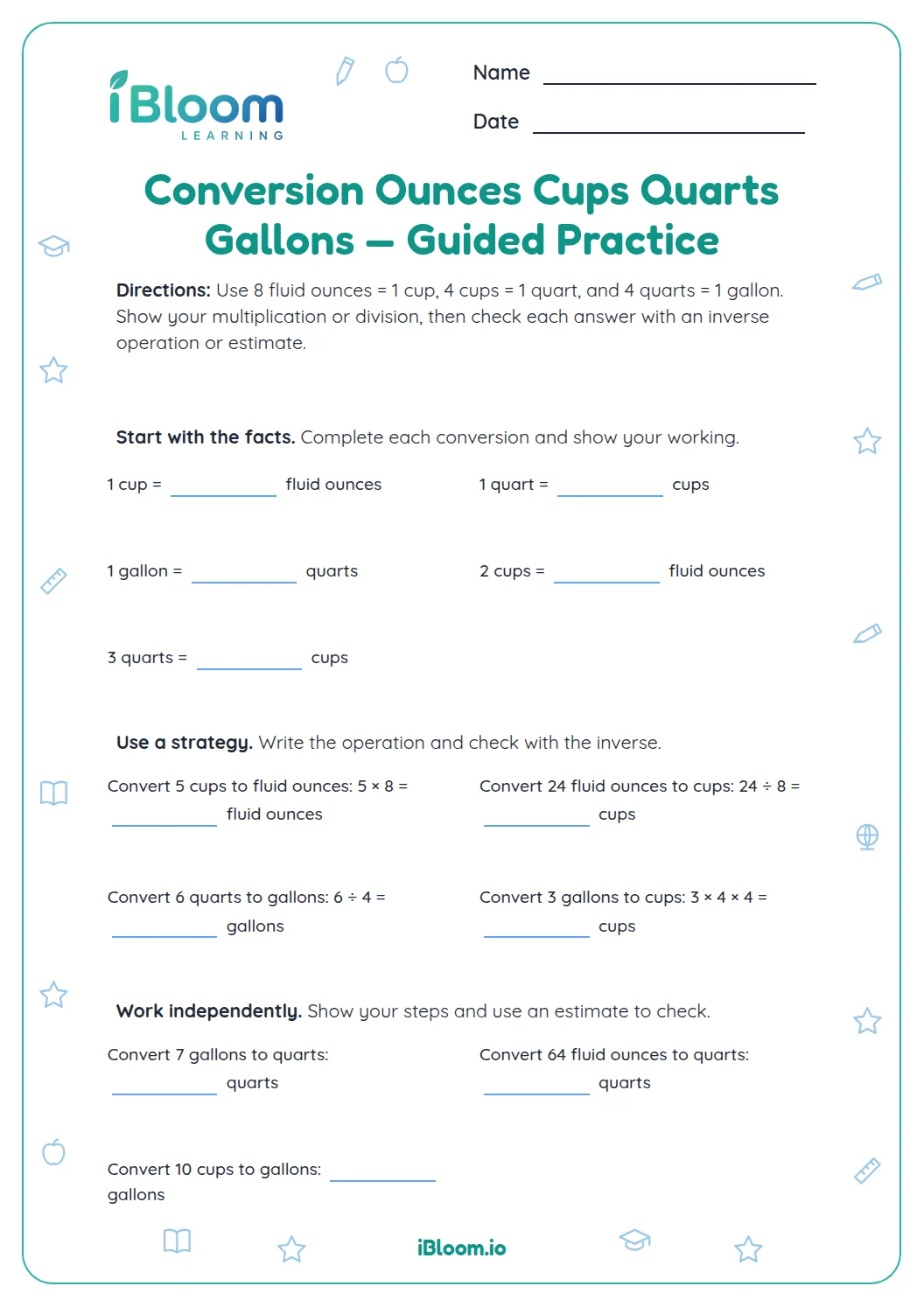
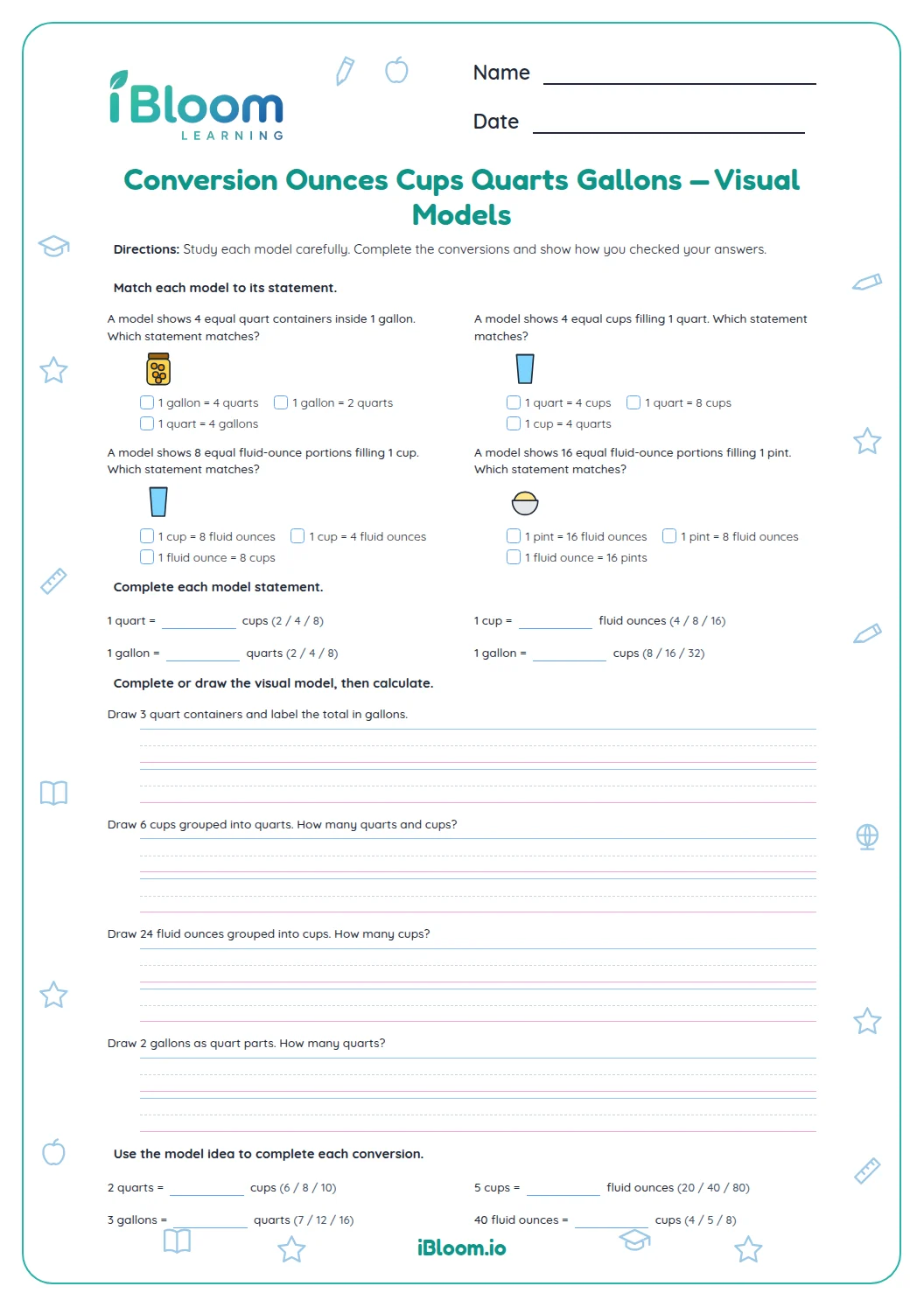
Try the Customary Units Mixed Practice worksheet, which combines length with volume and weight, or the Ounces, Cups, Quarts and Gallons worksheet for liquid volume. If decimals are next in your class, the Customary Units Using Decimals worksheet continues with the same conversion thinking on measurements like 2.5 miles.