
About this worksheet
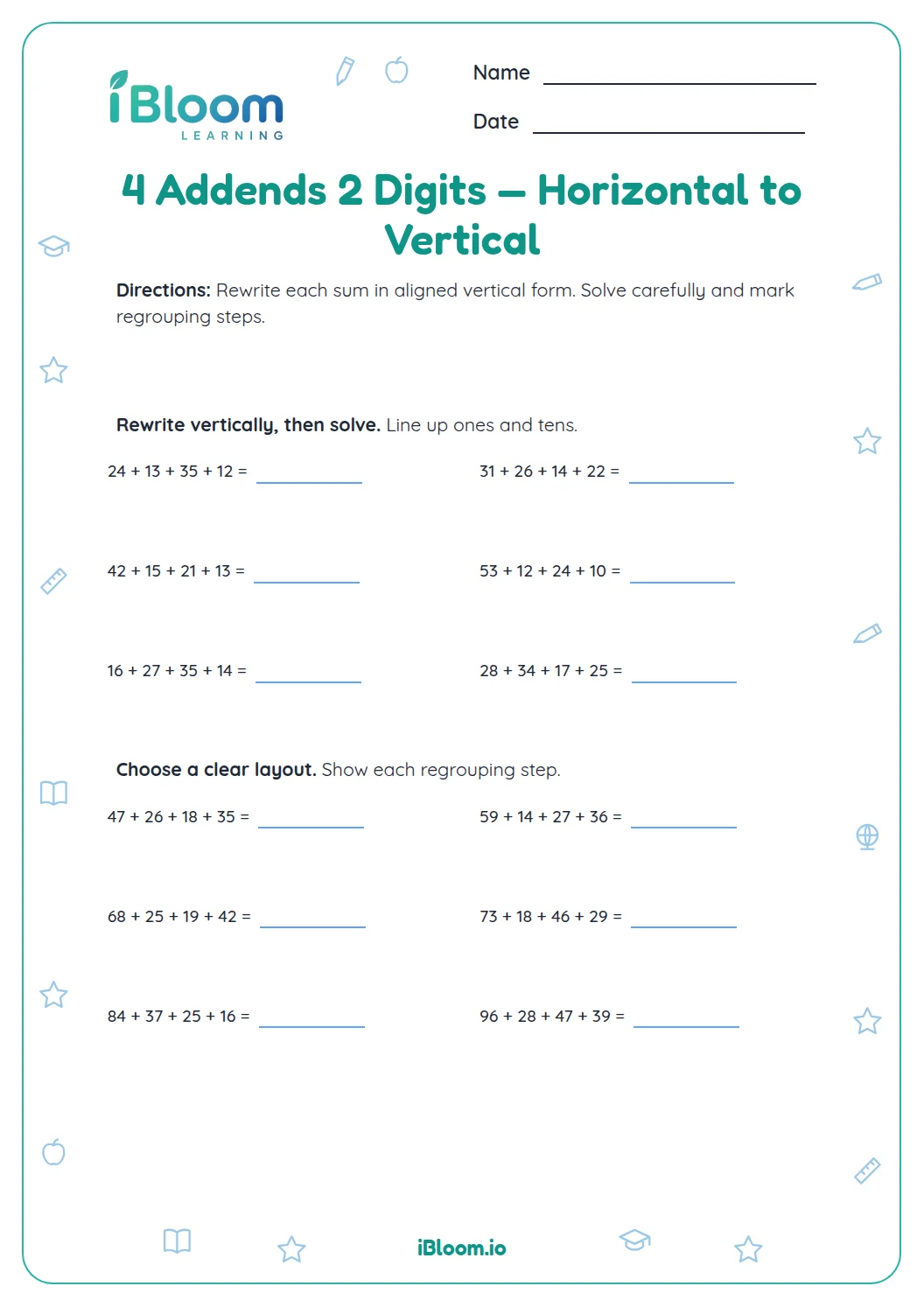
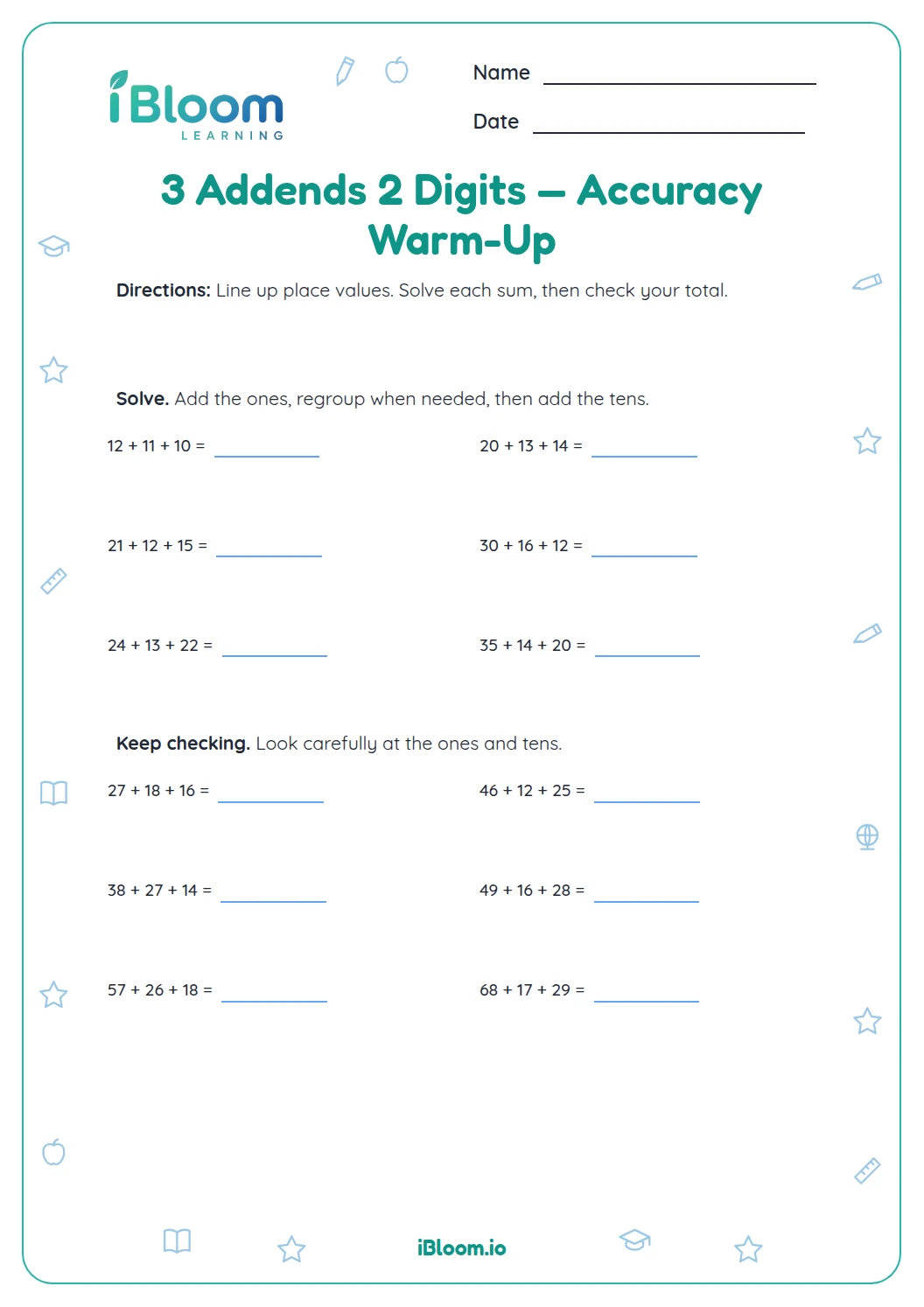
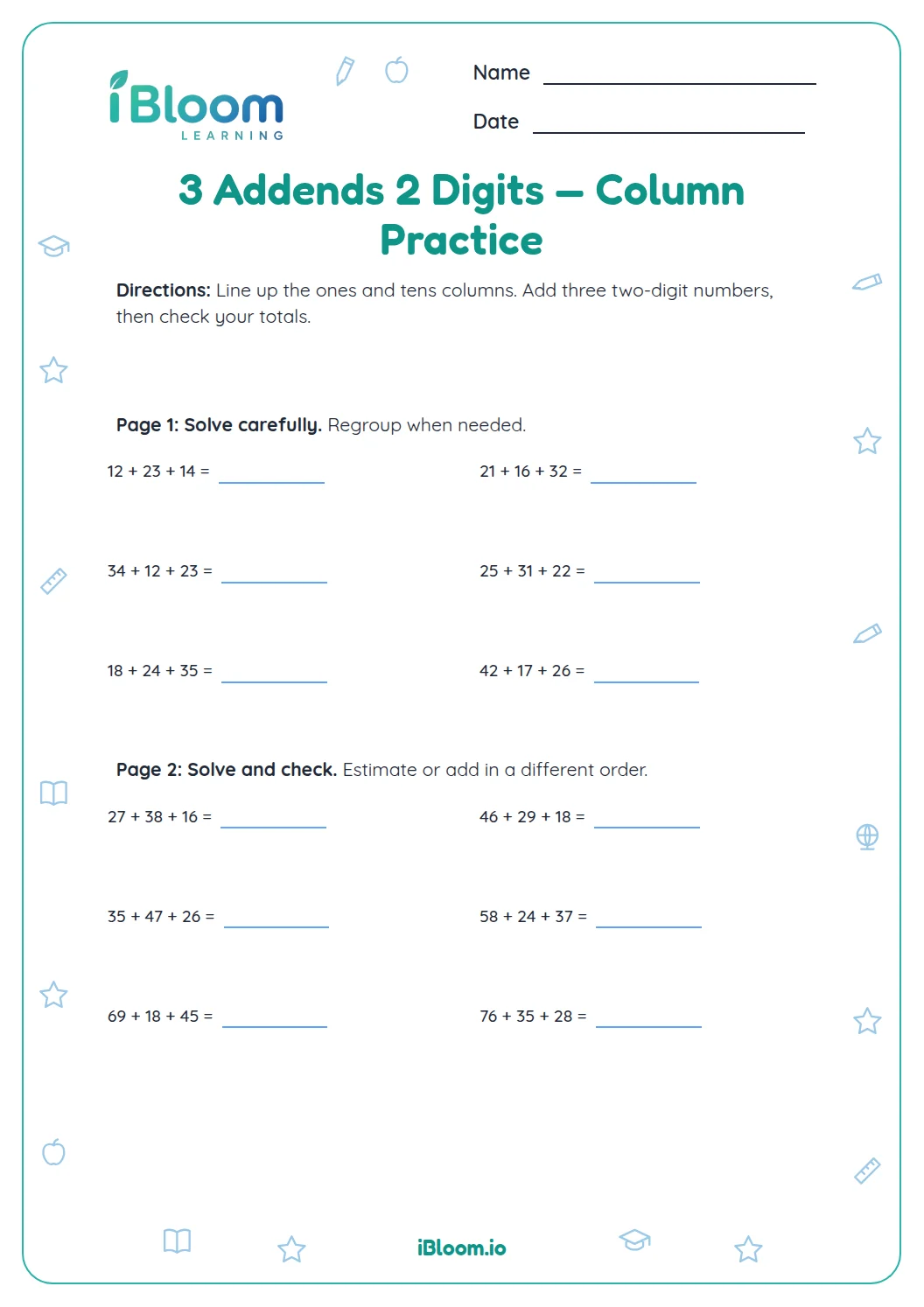
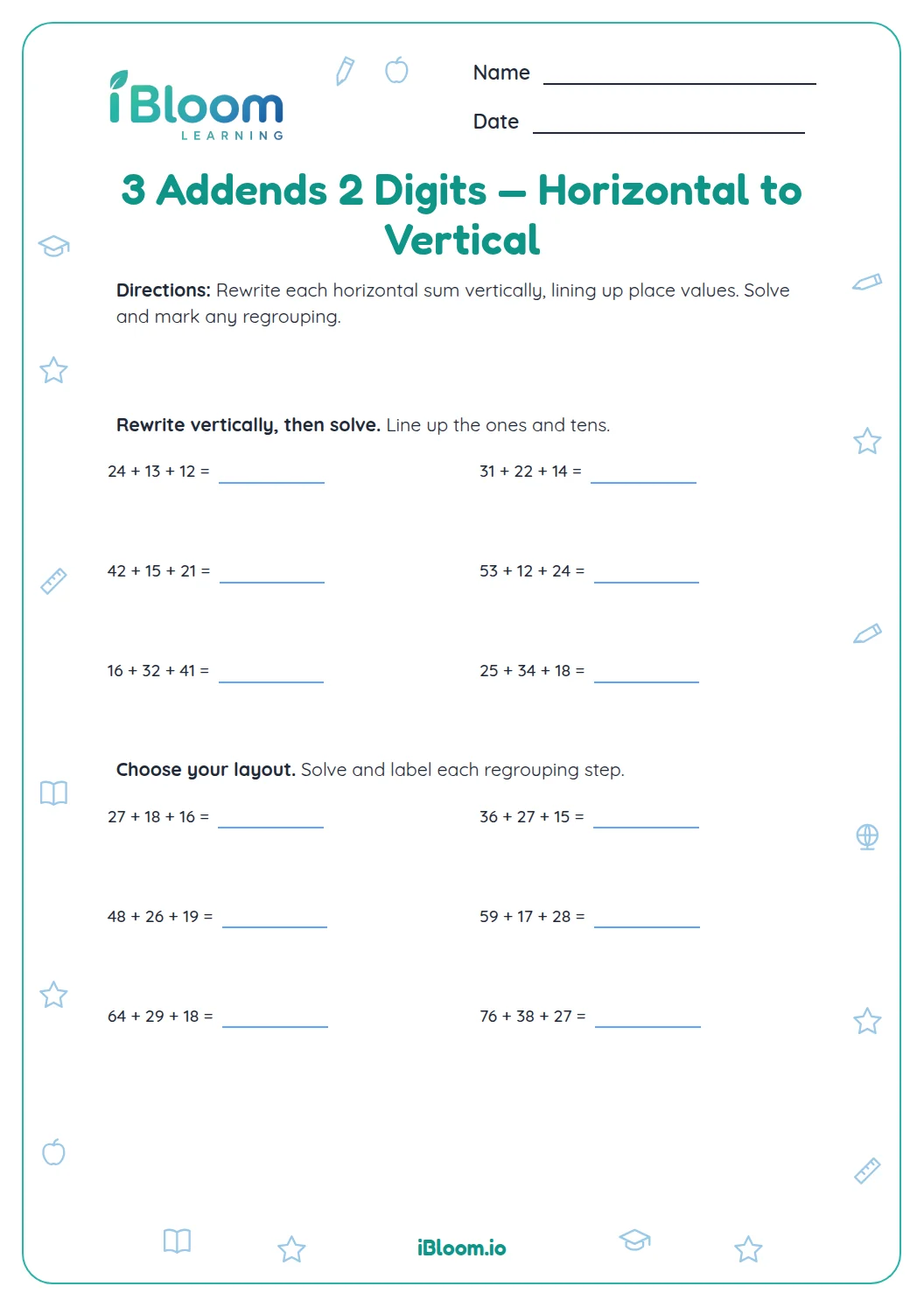
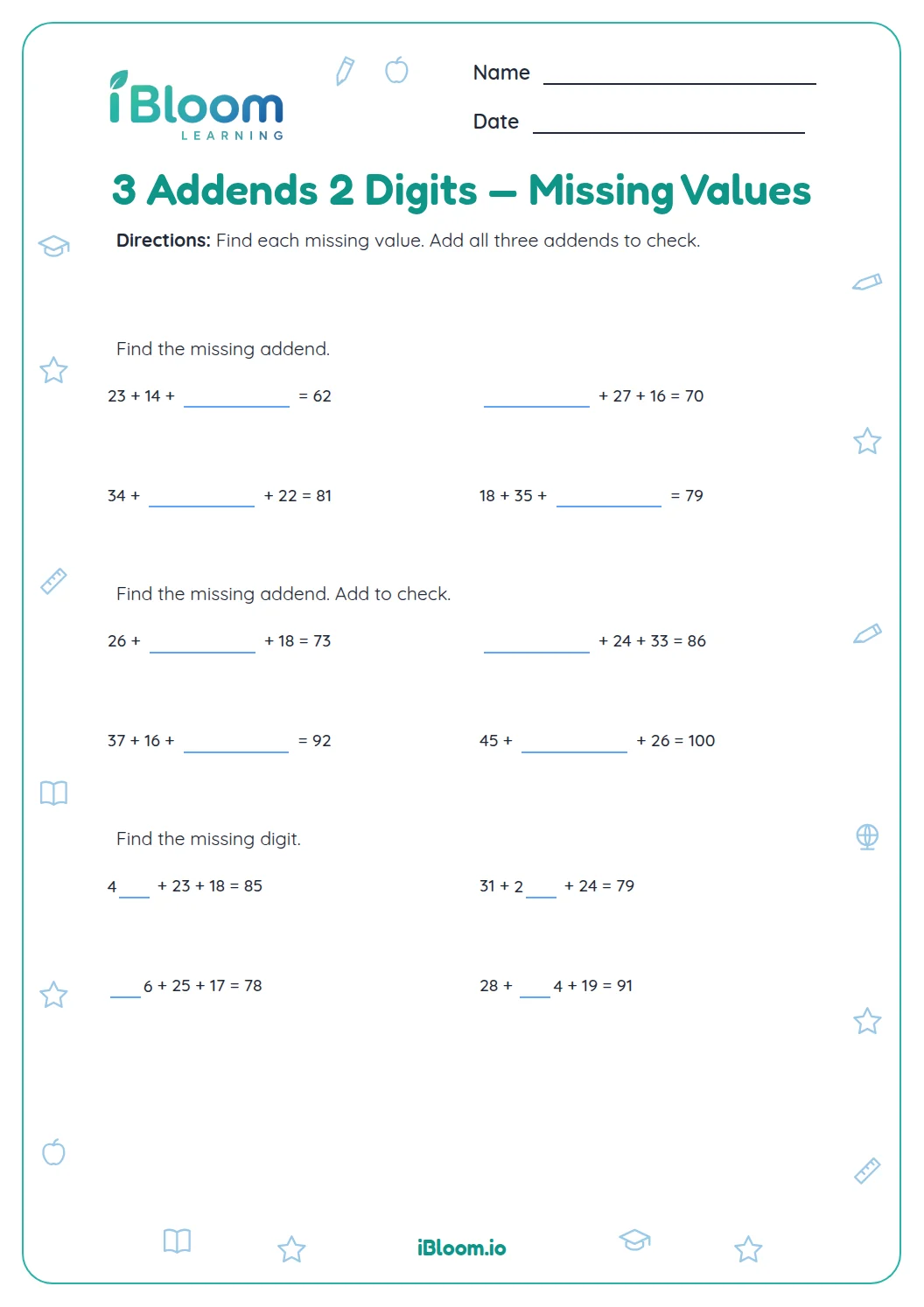
This printable gives Grade 2 and Grade 3 learners 15 addition drills, each with four two-digit addends. Children can set up each expression vertically in the work space, align ones and tens, and add the columns carefully. The sums include regrouping practice and stay within a manageable three-digit range. The work supports Common Core 2.NBT.B.6, adding up to four two-digit numbers using place-value strategies.
Aligned to 2.NBT.B.6
What does column addition help children see?
A column keeps each digit in its place-value position. For four two-digit addends, line up all four ones digits and all four tens digits before adding.
Several ones may make more than ten, so the ones column may need regrouping. The new ten joins the tens column.
How can a child solve one of these problems?
Take question 1: 24 + 35 + 16 + 12. Add the ones: 4 + 5 + 6 + 2 = 17, so write 7 ones and regroup 1 ten. Add the tens: 2 + 3 + 1 + 1 + 1 regrouped ten = 8 tens. The sum is 87.
- 124 + 35 + 16 + 12
- 2Ones: 4 + 5 + 6 + 2 = 17 ones
- 3Tens: 2 + 3 + 1 + 1, plus 1 regrouped ten
- 4Sum: 87
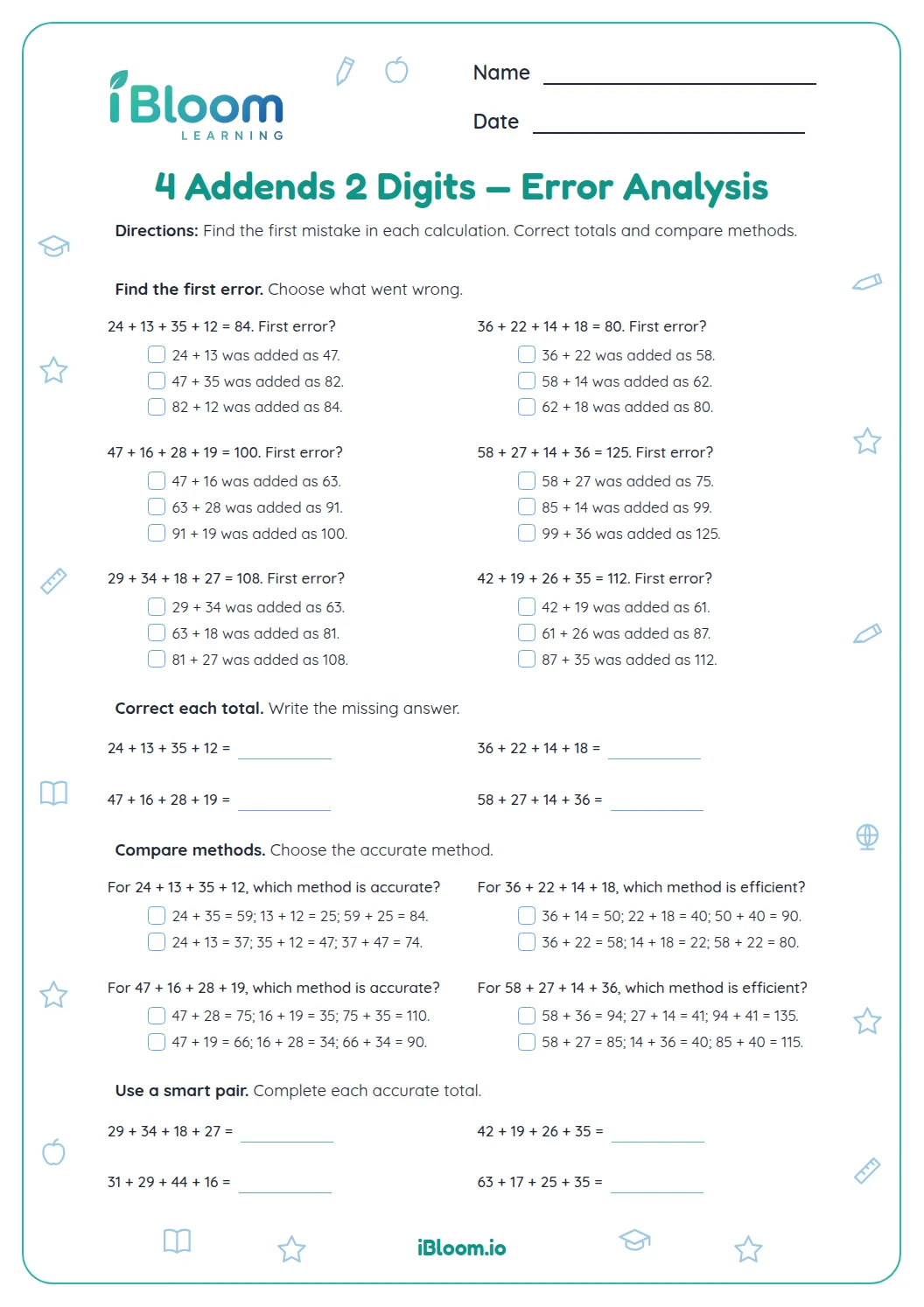
How can children check a multi-addend sum?
Add the numbers in a different order or add two pairs first. For question 1, 24 + 16 = 40 and 35 + 12 = 47; then 40 + 47 = 87.
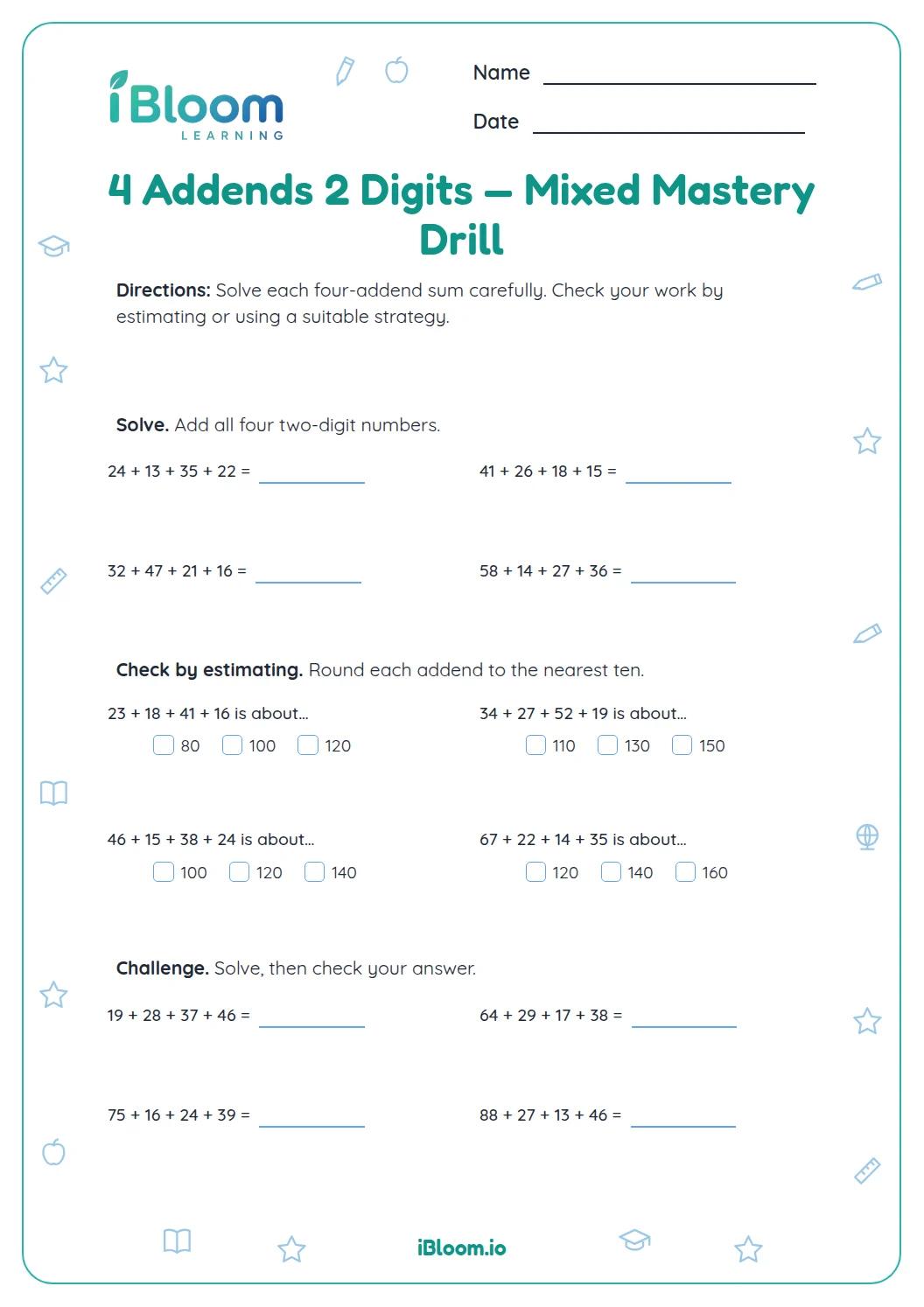
A quick estimate also helps: round each addend to the nearest ten and check that the exact sum is close.
How to use this worksheet
- 1Copy the four addends in a vertical stack.
- 2Check that every ones digit is under the ones column.
- 3Add the ones digits and regroup a ten when needed.
- 4Add the tens digits and any regrouped ten.
- 5Check by adding two pairs or estimating.
Common mistakes and quick fixes
The mistake
Lining up a ones digit under the tens.
The fix
Use the final digit of each number to check the ones column alignment.
The mistake
Forgetting a ten made by the ones column.
The fix
Write the regrouped ten clearly above the tens column.
The mistake
Stopping after adding only two or three addends.
The fix
Count four addends in the vertical stack before solving.
Common Core alignment
This drill builds multi-addend addition with place-value alignment and regrouping.
Add up to four two-digit numbers using place-value strategies.
On this sheet: Every equation contains four two-digit addends for children to add.
Show the official wordingHide the official wording
Add up to four two-digit numbers using strategies based on place value and properties of operations.
What to practice next
Make more practice
Further reading
Questions parents and teachers ask
How many addends are in each problem?
Each expression has four two-digit addends. Set them up vertically with ones under ones and tens under tens, then add each place-value column. Count the addends before calculating so none are left out. Regroup in the ones column when the total reaches ten or more.
Do the problems include regrouping?
Yes. Several ones columns total more than 9, so regroup a ten into the tens column. Check that you include that regrouped ten in the final sum. Question 1, for example, makes 17 ones, so it needs regrouping. Question 1, for example, makes 17 ones, so it needs regrouping. Add the regrouped ten to the tens column.
How many problems and pages are included?
The worksheet contains 15 problems on two practice pages, followed by a separate answer key page. Each problem has four two-digit addends. The problems practice aligning four numbers and regrouping when needed. The problems practice aligning four numbers and regrouping when needed. Check each result with the key on the following page.
What should a child do after finding the sum?
Check the sum by adding the numbers in a different order or by combining pairs. For question 1, 24 + 16 = 40 and 35 + 12 = 47; 40 + 47 = 87. This check uses all four addends and confirms the answer is 87.
How can a child keep the columns aligned?
Write each addend on its own line and line up the ones digits in one column and the tens digits in another. A quick visual check of the right edge catches most alignment slips. Keep the digits in the same place-value columns all the way down.