
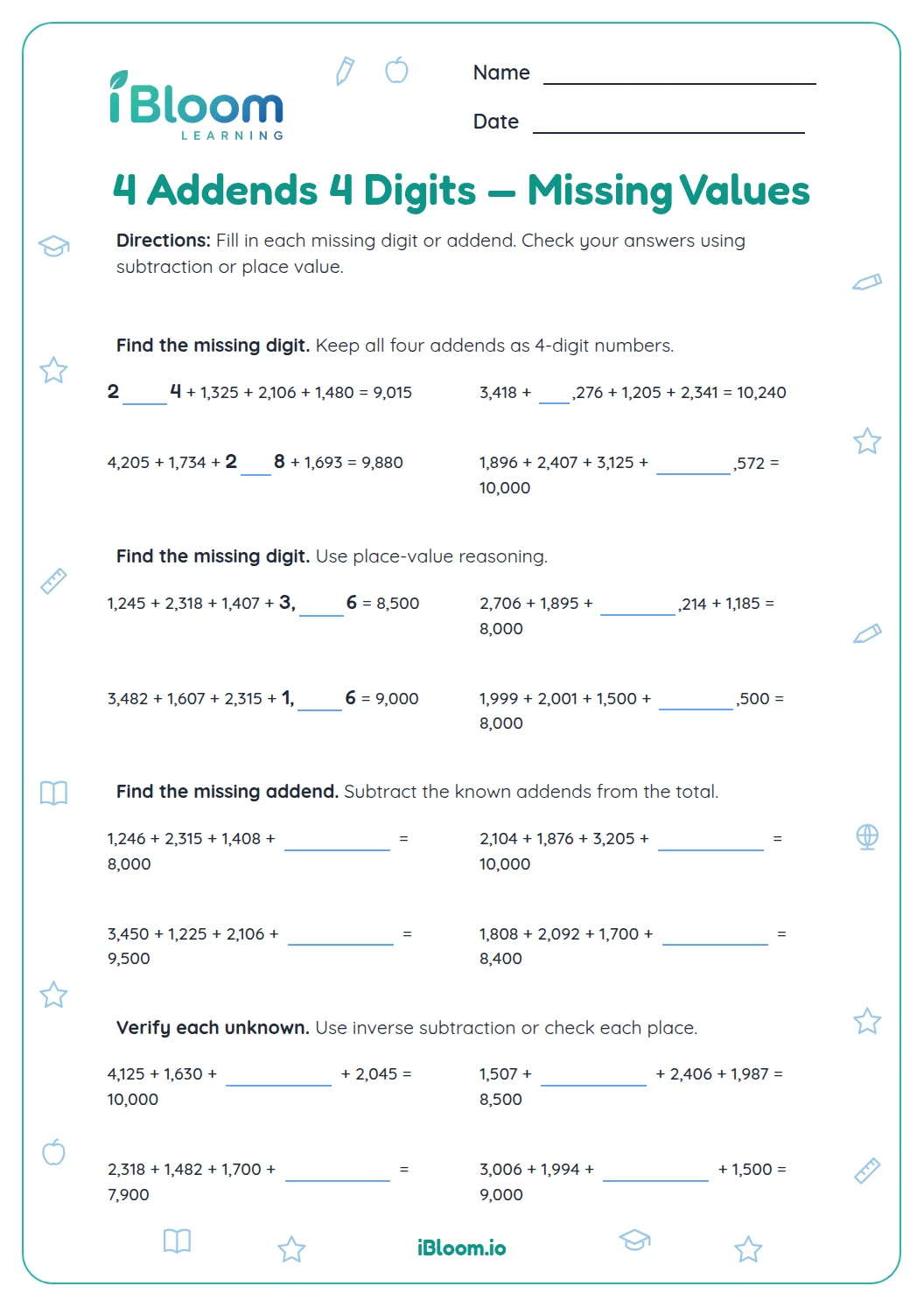
About this worksheet
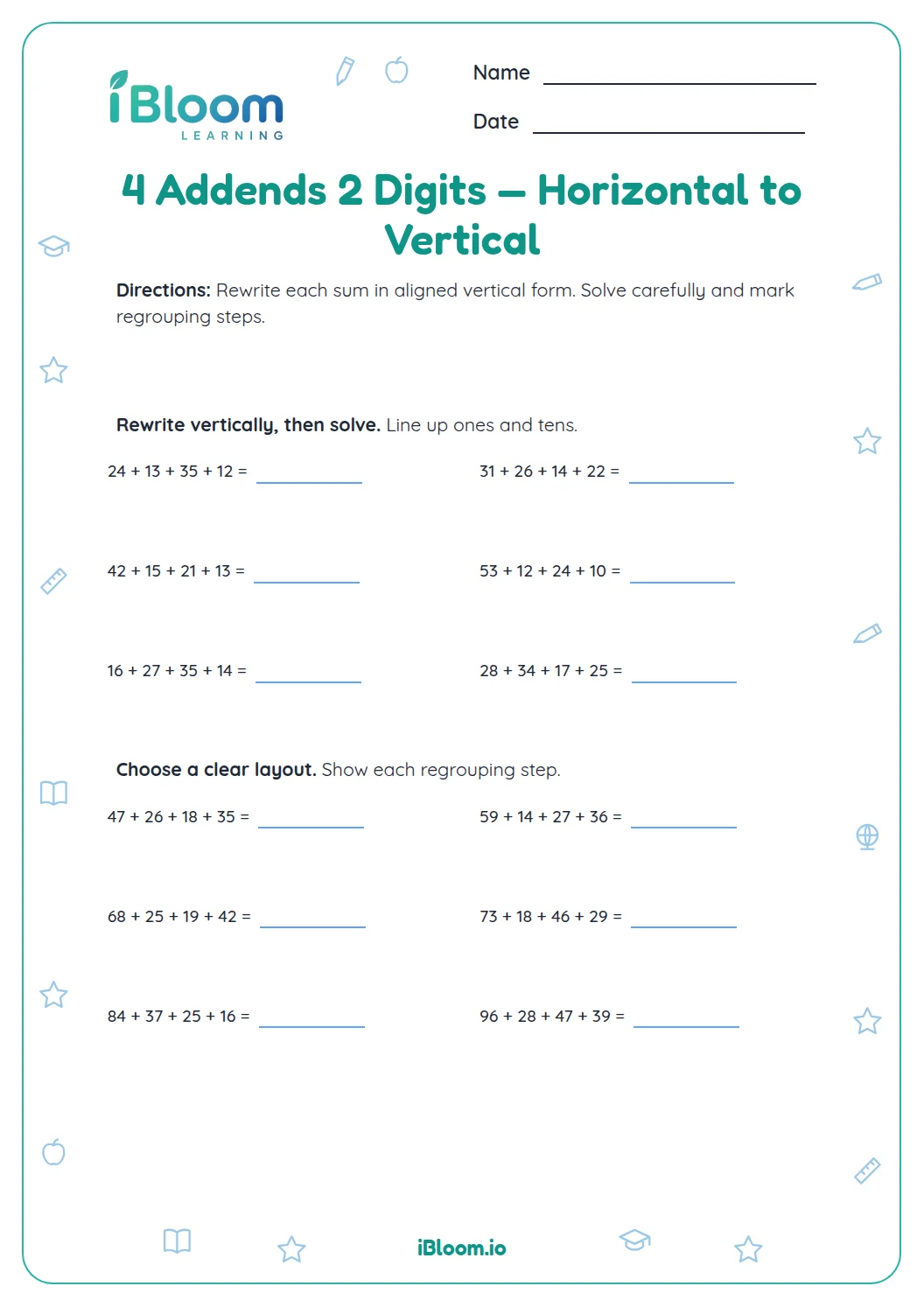
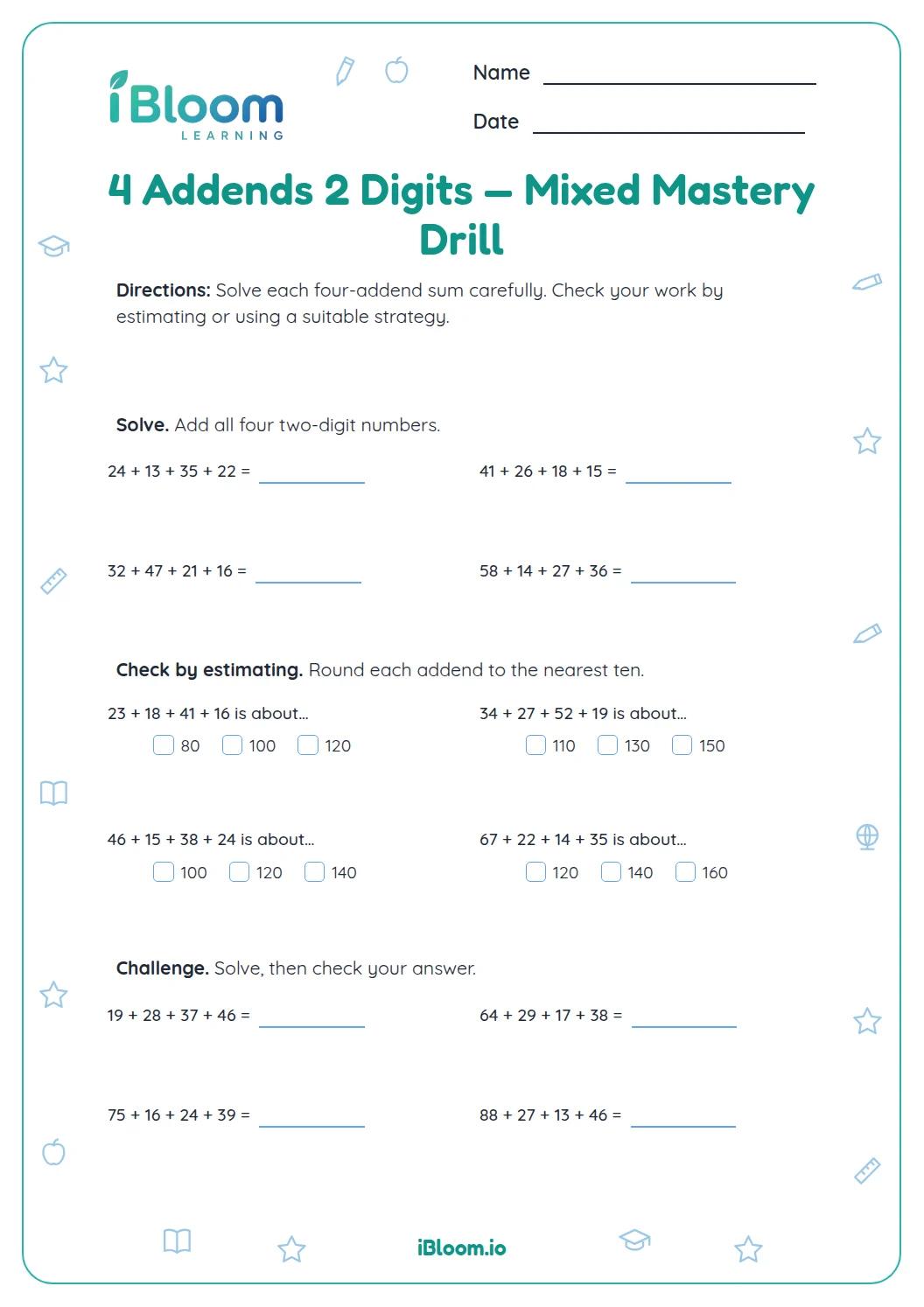
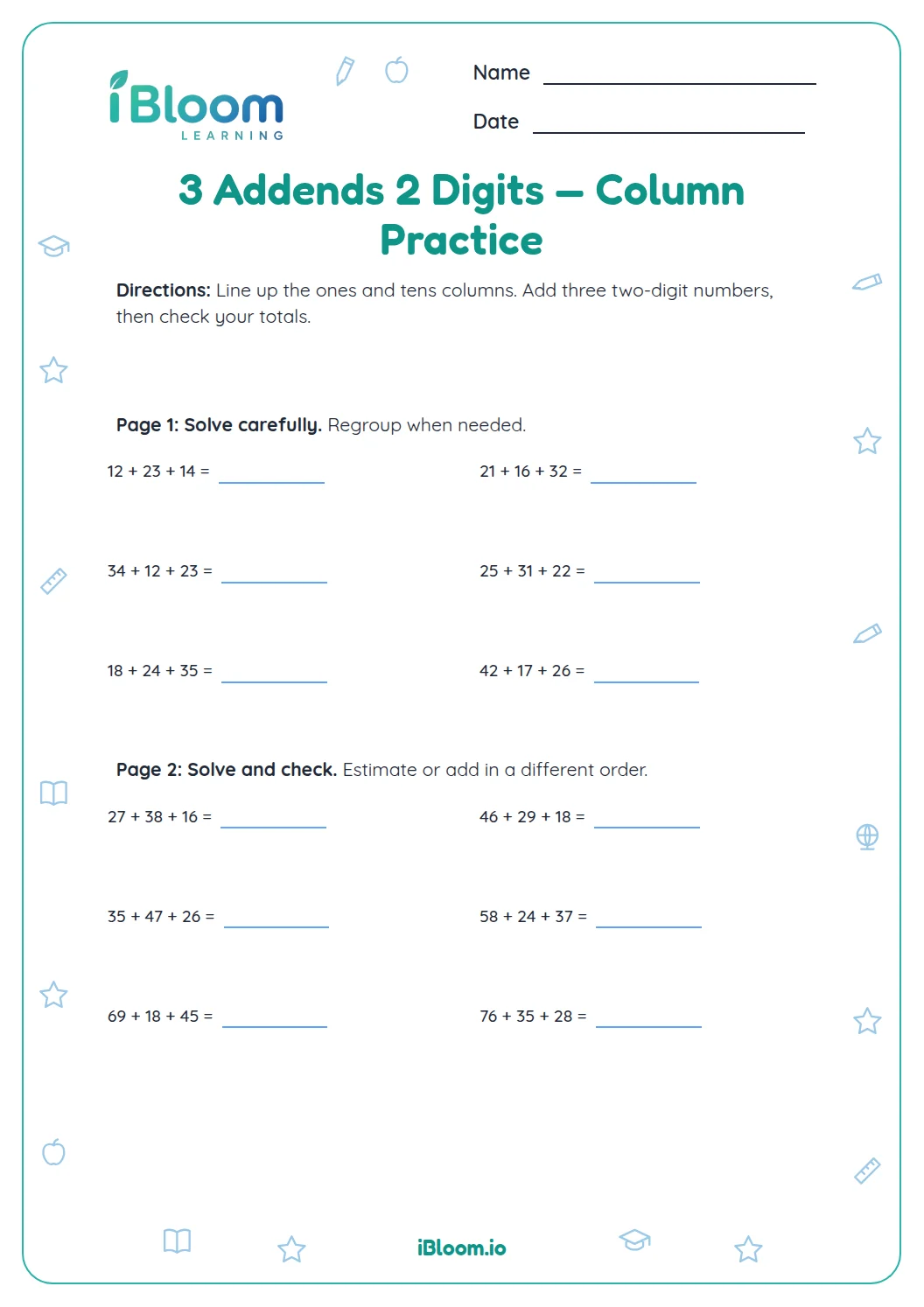
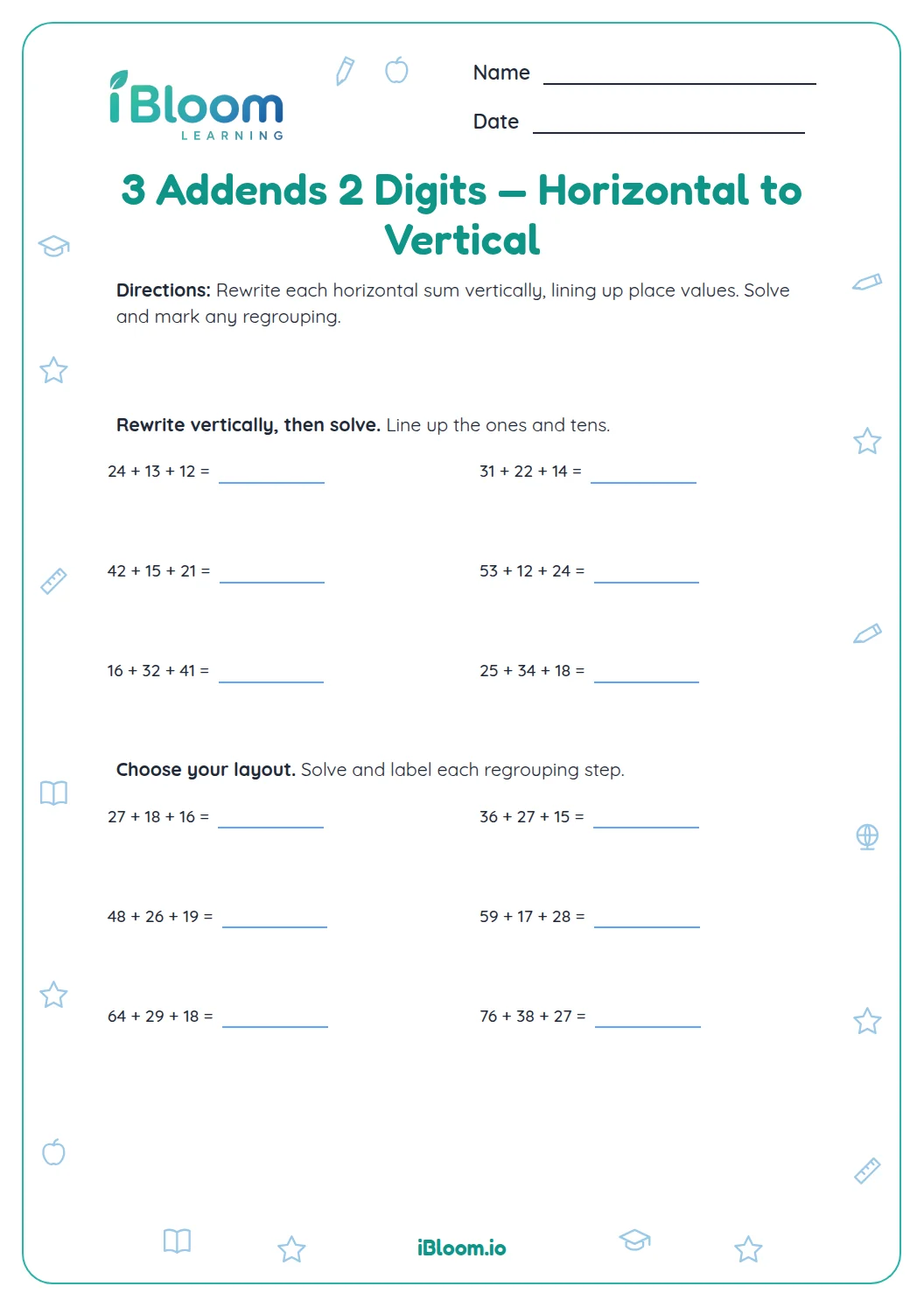
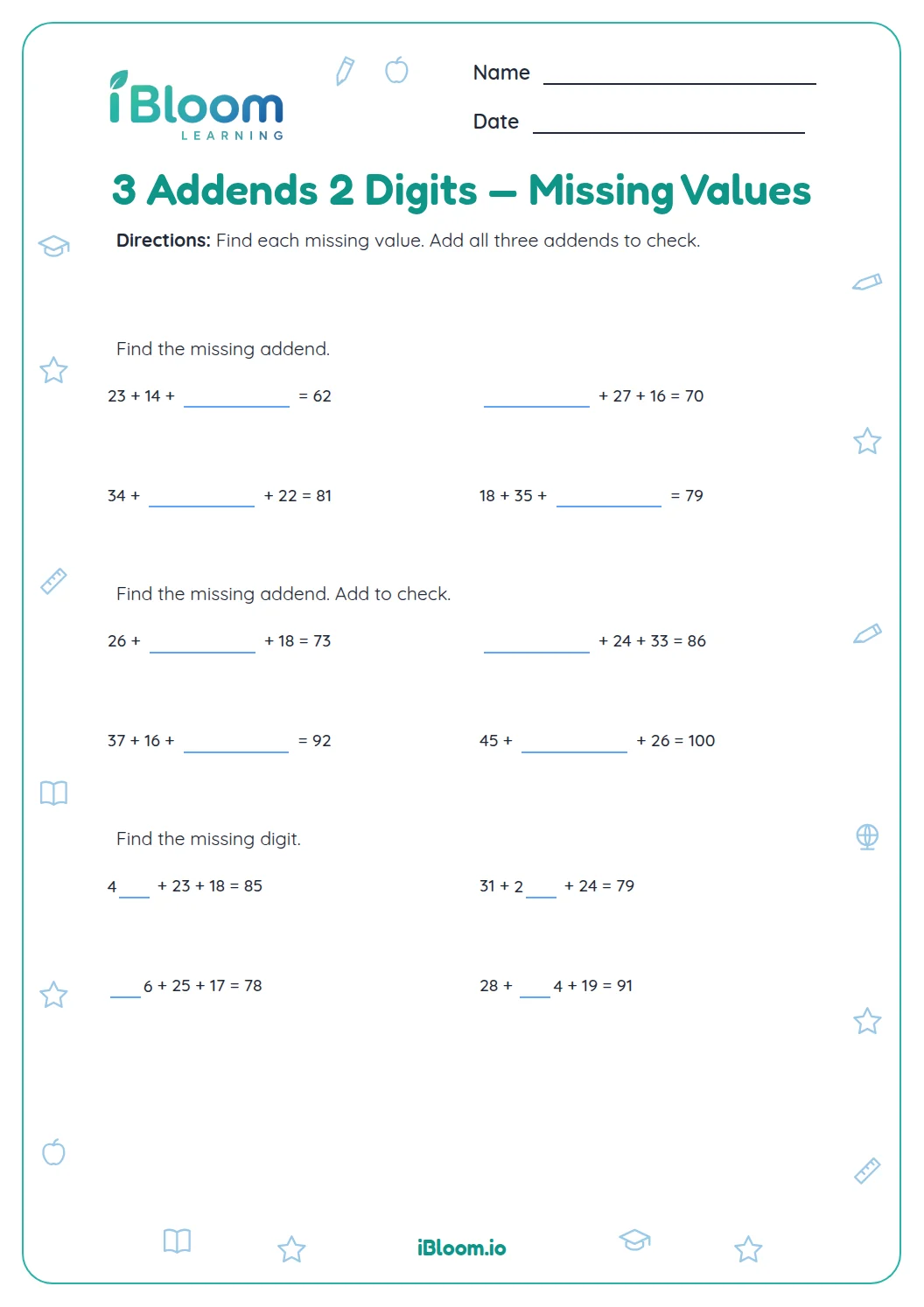
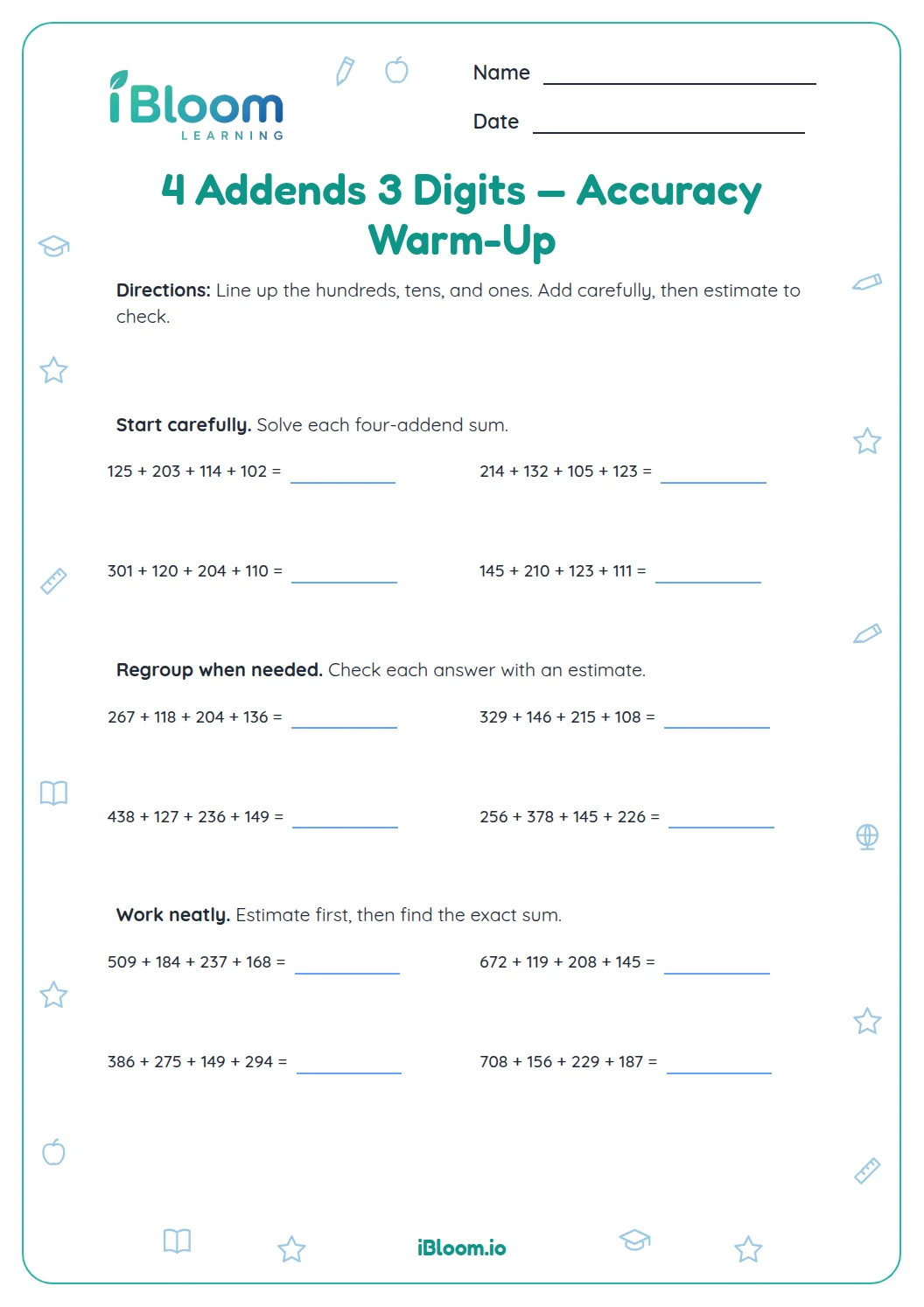
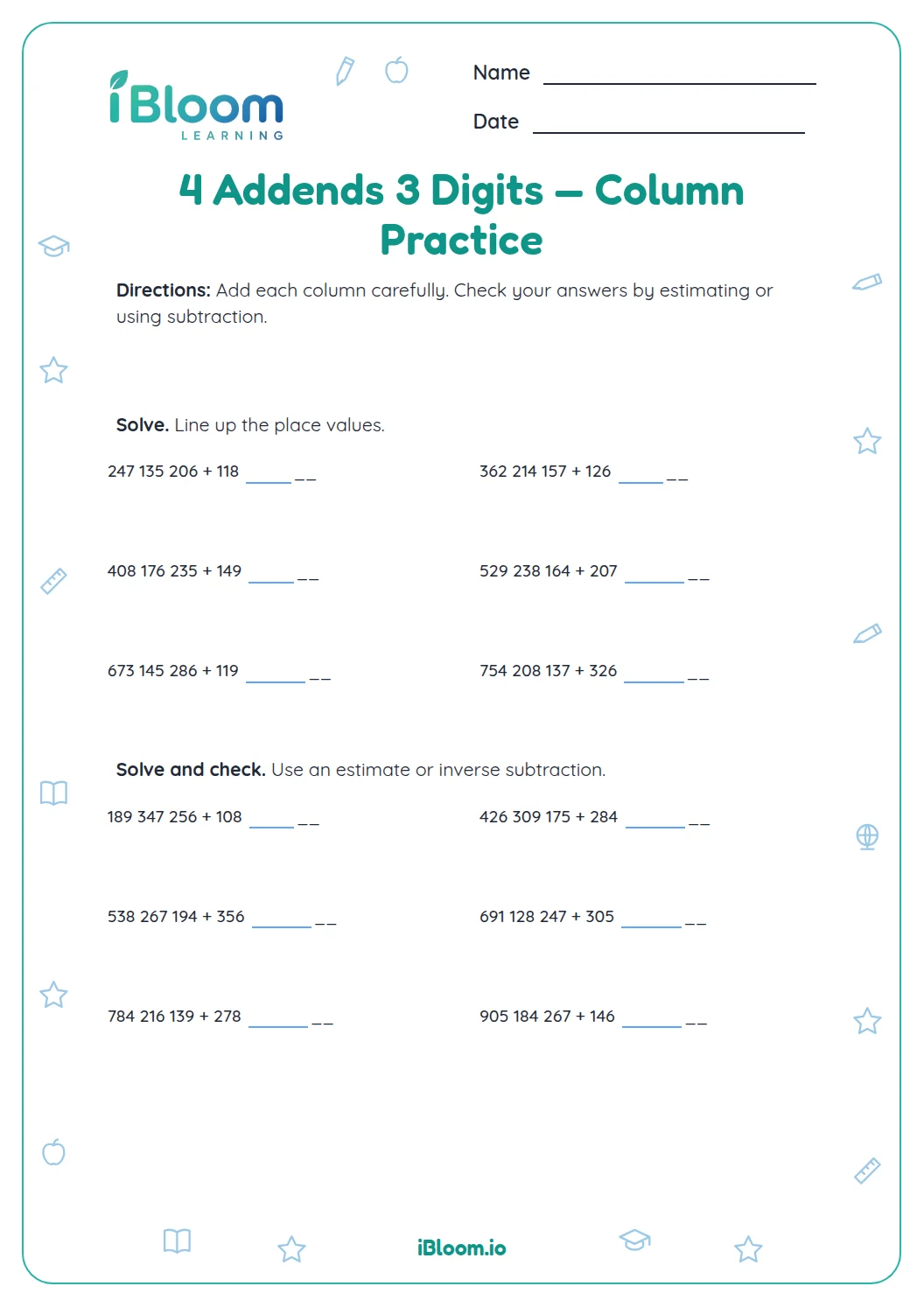
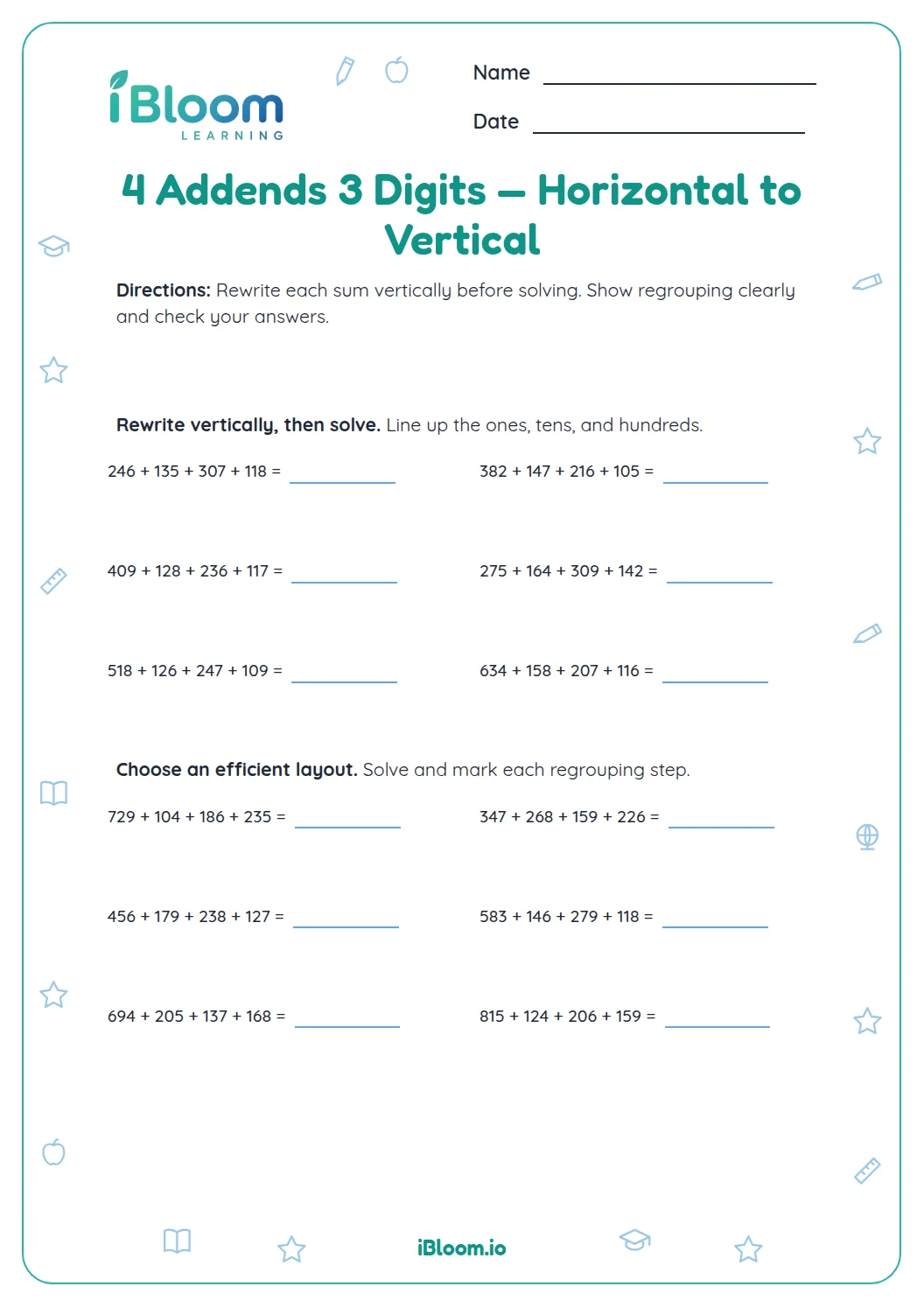
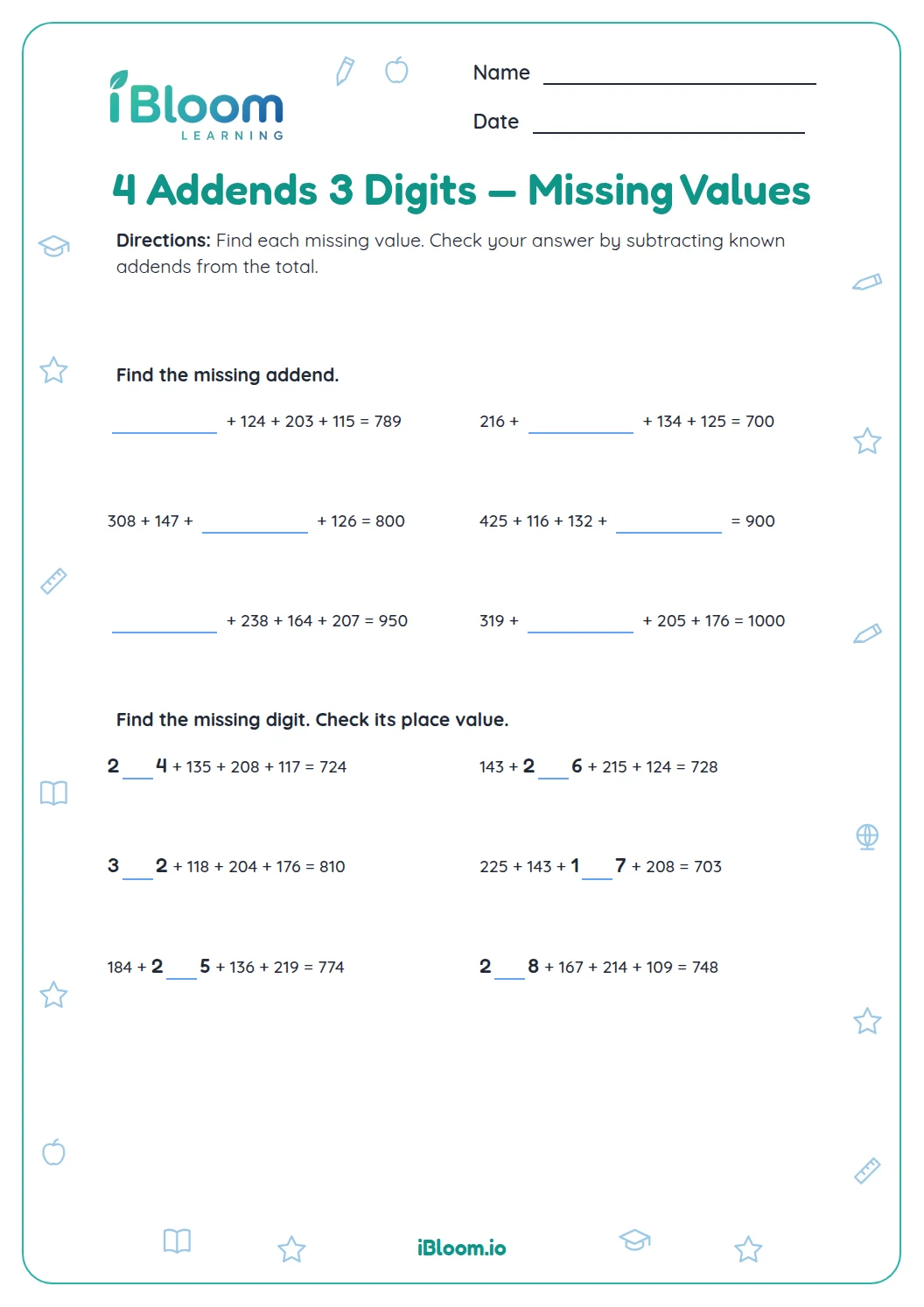
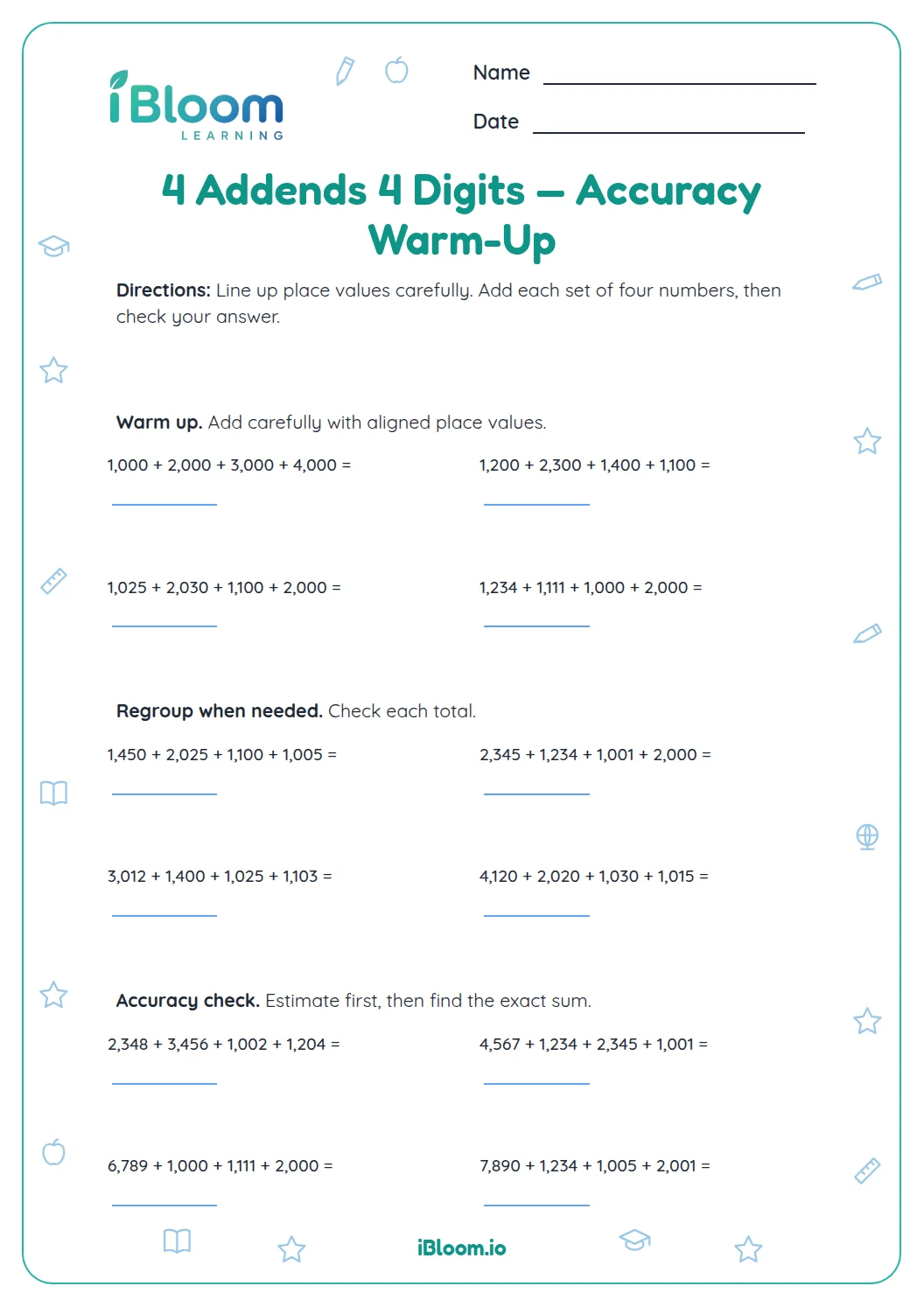
This Grade 3 printable is a focused accuracy warm-up for adding four two-digit addends. The 16 number sentences ask students to track ones and tens carefully, combine the partial sums and check each total. Every problem has four addends, and the sums stay within 100. The work practices place-value addition under CCSS 3.NBT.A.2. A separate key lists all sums.
Aligned to 3.NBT.A.2
How can you keep four addends organized?
Add the ones and tens separately or combine two numbers at a time. Keep each partial sum visible so no addend is skipped.
- 1Question 1: 12 + 23 + 14 + 21 = 70. Combine 12 + 23 = 35 and 14 + 21 = 35; then 35 + 35 = 70.
How can you check a sum?
Add the numbers in a different grouping or estimate by tens. If regrouping was needed, check that each ten was carried into the tens total.
How to use this worksheet
- 1Read the full number sentence before calculating.
- 2Group two addends, then add the other two.
- 3Combine both partial sums.
- 4Check that all four addends were included.
- 5Estimate with tens or regroup in a different order to verify.
Common mistakes and fixes
The mistake
Skipping one addend.
The fix
Point to each of the four numbers as you include it in a partial sum.
The mistake
Combining ones without regrouping.
The fix
When the ones total is ten or more, exchange each ten ones for one ten.
The mistake
Copying a digit into the wrong place.
The fix
Keep ones with ones and tens with tens when using a written method.
Common Core alignment
This page practices the reading and writing skills named below.
Fluently add within 1,000 using strategies and algorithms based on place value.
On this sheet: Students add four two-digit numbers using place-value strategies; totals stay within 100.
Show the official wordingHide the official wording
Fluently add and subtract within 1000 using strategies and algorithms based on place value, properties of operations, and/or the relationship between addition and subtraction.
What to practice next
Make more practice
Further reading
Questions parents and teachers ask
How many numbers are in each problem?
Each number sentence has four addends, and every addend is a two-digit number. The sums stay below 100, so students can focus on including every value and keeping ones and tens organized. They can mark each partial sum before adding the pairs together.
Do the problems require regrouping?
Some problems need regrouping when the ones total is ten or more; others do not. Students can group two addends at a time, then check the partial sums and final total. For instance, the first problem’s ones add to ten, so regrouping is useful.
What is a good way to add four numbers?
Pair numbers that make convenient totals, or add the first two and last two separately. Then combine the partial sums and check that all four original numbers were included. For example, 12 + 23 and 14 + 21 make equal partial sums of 35.
Why does the page emphasize accuracy?
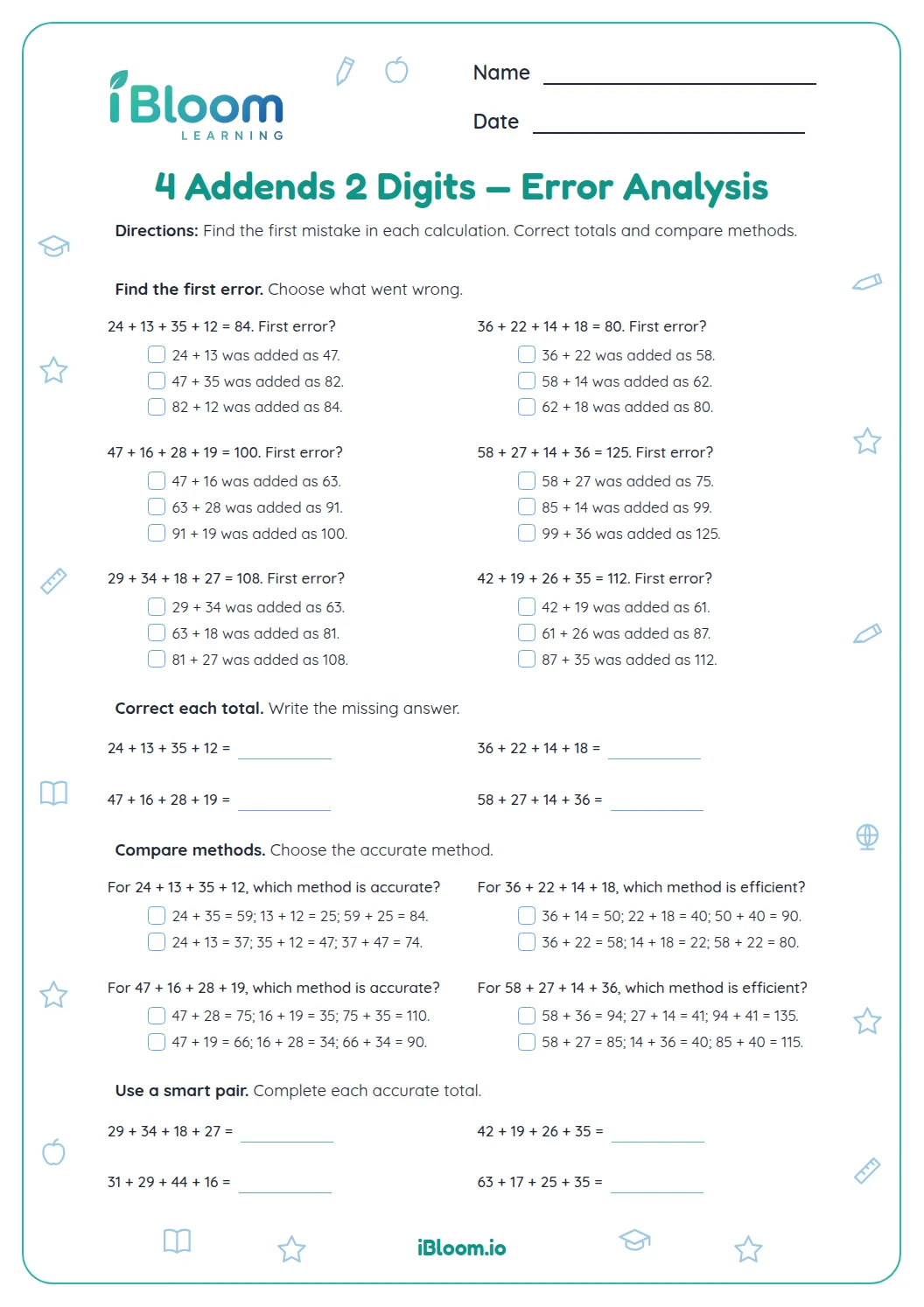
Four addends create more chances to skip a value or lose track of a regrouped ten. Marking each number as it is used and checking the ones and tens helps catch those errors. Estimate the total first so a misplaced digit is easier to notice.
Is there an answer key?
Yes. A separate answer key lists the sum for each of the 16 number sentences. After checking a total, students can retry a mismatch by grouping the four addends in a different order. It shows a total for every question, rather than only selected examples.
What should students practice next?
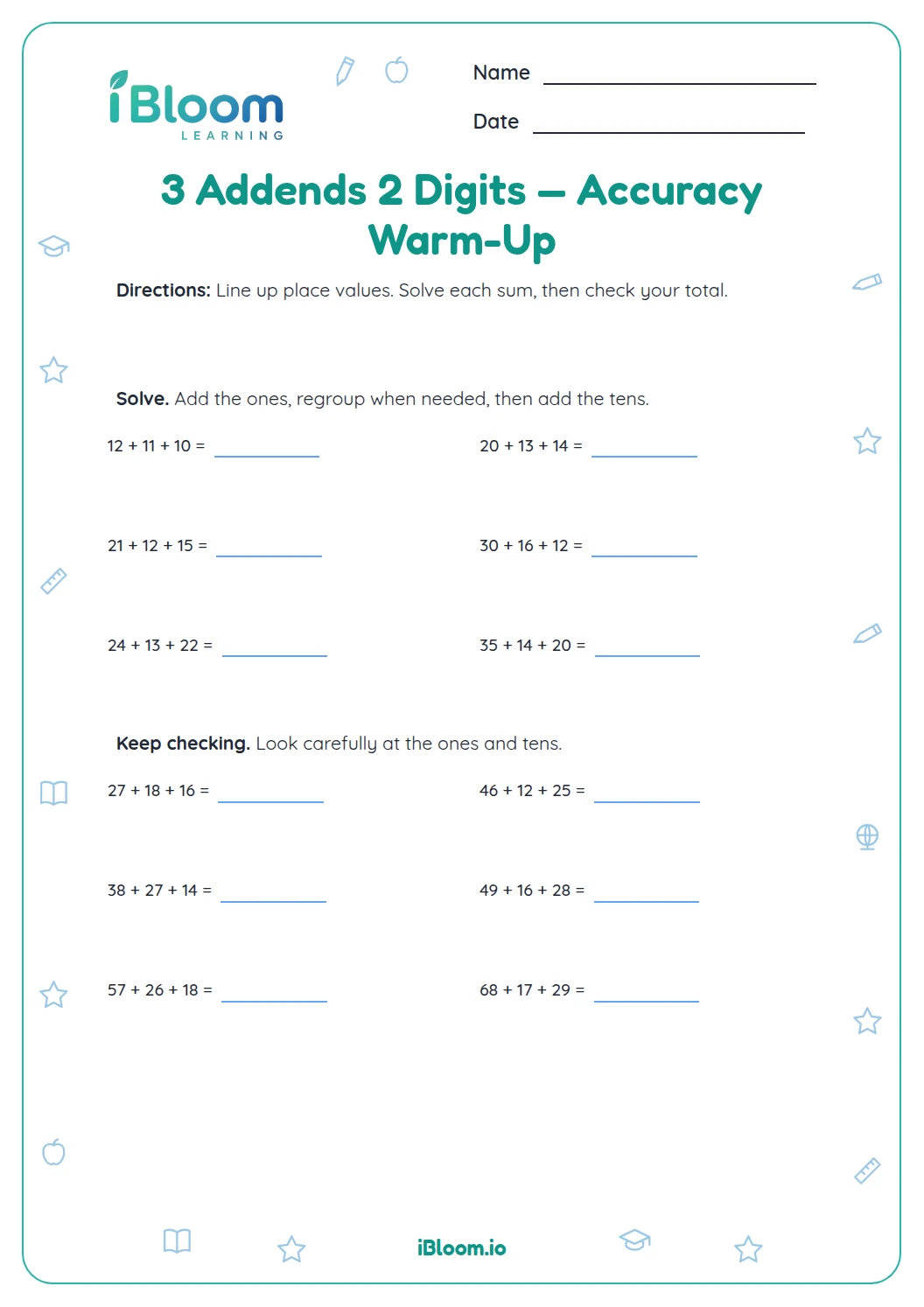
Try the linked three-addend page to practice combining fewer values, or move to a four-addend page with larger place values. The same habit of tracking each addend and checking place value carries into both options. Choose the three-addend option for a small step, or larger numbers for a challenge.